




Time and materials contract is a construction agreement that is used for projects where the exact scope of work cannot be completely determined at the start. The client pays for the labor hours, materials, equipment, and other costs that are used in the building.
Moreover, time and materials contracts are generally preferred in the Philippines, as the renovation and maintenance sector often experiences fluctuations, and this type of contract provides the flexibility needed to adapt.
 Key Takeaways
- A time and materials contract is a construction agreement where clients pay for the actual labor hours, materials, and other costs incurred during construction.
- Components within time and materials contract are labor, material, equipment, and payment terms.
- Advantages of a time and materials contract include lower contractor risk, improved cost transparency, and greater adaptability to project changes.
- ScaleOcean Construction ERP Software helps construction companies manage time and materials contracts, and cost tracking efficiently.

1. What is Time and Materials Contract?
A Time and materials contract (T&M Contract or TNM Contract) is a construction agreement where the client pays the workers according to the real time that they have worked on the project and the actual cost of materials, throughout the project.
Unlike fixed-price contracts that establish a predetermined cost, this contract calculates project expenses according to real labor hours, material purchases, equipment usage, and other agreed project costs.
Furthermore, this type of contract is advantageous if there are uncertainties about project requirements beforehand. With the objective being to change, contractors can modify resources or materials without having to go through extensive contract renegotiation.
Many contractors and project owners consider time and materials contracts a practical solution when project complexity, unforeseen conditions, or changing requirements make fixed-cost estimates unreliable.
2. How do Time and Materials Contract Work?

Project owners can better manage their projects’ budgets and contractors’ performance by understanding how this agreement functions. This allows the contractor to log each hours of work and take notes on what materials are being bought. The process generally like these:
- The pay rates are agreed upon up front.
- The pricing methods for materials and mark-ups have been agreed.
- Contractors monitor the amount of time spent on the project and the costs incurred.
- The progress report and cost records are regularly submitted.
- The price is reviewed and approved by clients.
- Payment for amounts expended on the project.
In the Philippines, construction contracts are typically subject to the Civil Code of the Philippines, and the construction contract can be based on industry-standard construction contract documents like CIAP Document 102 and others.
3. Components of Time and Materials Contract
It’s important for both parties to understand the cost elements of a time and materials contract before signing onto one. The following items should be part of the within the contract agreement:
- Labor Costs: These are the amounts paid to workers, supervisors, engineers and other workers on the project per hour or per day.
- Material Costs: These are the labour costs of the materials used in the work throughout the project.
- Equipment Charges: The cost of the equipment, tools, vehicles, or equipment that must be hired or purchased to perform construction activities.
- Contractor Markup: A percentage added to the labor, materials or equipment cost to help the contractor cover overheads and their profit.
- Project Schedule: Contract must include the schedule, milestones, reporting obligations and project completion date.
- Documentation Requirements: Contractors need to keep proper records including timesheets, progress reports, receipts, and invoices as payment is based on actual expenses.
- Payment Terms: It specifies the frequency of the payment of invoices and the due date. Generally it is done in weekly or monthly bills.
 Also Read: How Does a GMP Contract Work in Construction?
4. Advantages of Time and Material Contract
A time and materials contract offers several benefits for contractors and project owners. Therefore, making it suitable for projects with uncertain requirements. Below here are some advantages of time and material contract for a project involving a construction bond:
a. Low Risk for Contractors
Contractors are paid for the actual materials and labor costs, not estimates that are made in the beginning of construction. This helps to minimize the impact of unforeseen conditions on the site, changes to design, and cost changes of materials.
b. Cost Transparency
Secondly, clients can have visibility into the project spending, since labor hours, purchases, and equipment costs are recorded and reported regularly. For this reason, companies are also adopting construction document control software to optimize documentation.
c. Faster Project Initiation
Because the entire project scope does not need to be finalized before work begins, projects can start sooner compared to some fixed-price arrangements. This advantage is especially valuable for urgent repairs, facility maintenance, and time-sensitive construction projects.
e. High Flexibility
Another key advantage of this contract is its versatility. Although the project is still at its initial stages, contractors will be able to revise their work crews or materials as they progress. This flexibility can be hard to come by in other types of construction contracts that use fixed prices.

5. Disadvantages of Time and Material Contract
Although this contract serves flexibility, time and materials, contracts also present several challenges that project owners should carefully consider. Here are a few disadvantages of time and material contract that all parties should aware of:
a. High Risk for Clients
Since project costs depend on actual work performed, the final project value may exceed initial expectations. Without effective monitoring, expenses can increase significantly over the course of construction.
b. Potential for Misuse (No Incentive)
Contractors may not be as motivated as possible to complete work rapidly as they are paid by the hour, and not by the job. One approach to this problem is to use performance-based mechanisms, like an incentive contract, in some organizations.
c. Lack of Budget Certaincy
There is one particular disadvantage, which is that it is hard to determine the final costs of the project. There are other issues that can impact the budget, such as unexpected site conditions, design changes, worker shortages, or price changes in materials.
d. High Client Involvement
Typically, the project owner will have to check the project throughout the project life cycle for invoices, timesheets, progress reports, and material purchases. This degree of control takes time and resources, and close cooperation amongst all stakeholders.
6. When You Should Use Time and Material Contract?
A time and materials contract is best suited for situations where it’s not possible to specify the exact scope of a project during the planning phase. There are several instances where this type of contract is often used:
- Renovations and Remodeling Projects: There may be conditions that were not apparent in the very early planning of a renovation project. Under this contract, contractors can handle unforeseen problems without having to make numerous changes to the contract.
- Maintenance and Repair Work: Routine maintenance and repair projects frequently involve unpredictable tasks and varying workloads. This contract structure provides flexibility to perform necessary work as conditions arise.
- Emergency Construction Activities: Urgent repairs that are caused by natural disasters, structural damage, or equipment failures often require immediate action. Since there may not be enough time to prepare detailed estimates, this agreement enables work to begin quickly.
If the project scope is unlikely to change, other contract arrangements such as a design-build construction contract or fixed-price contract may provide better cost certainty and budget predictability.
7. In Conclusion
A time and materials contract is a flexible construction agreement that allows project owners to pay for actual labor, materials, equipment, and related project costs. This approach is useful for renovation projects or construction activities where the project scope may change over time.
While this contract type offers advantages such as flexibility and faster project initiation, it also requires strong cost monitoring, documentation, and active project oversight to prevent budget overruns.
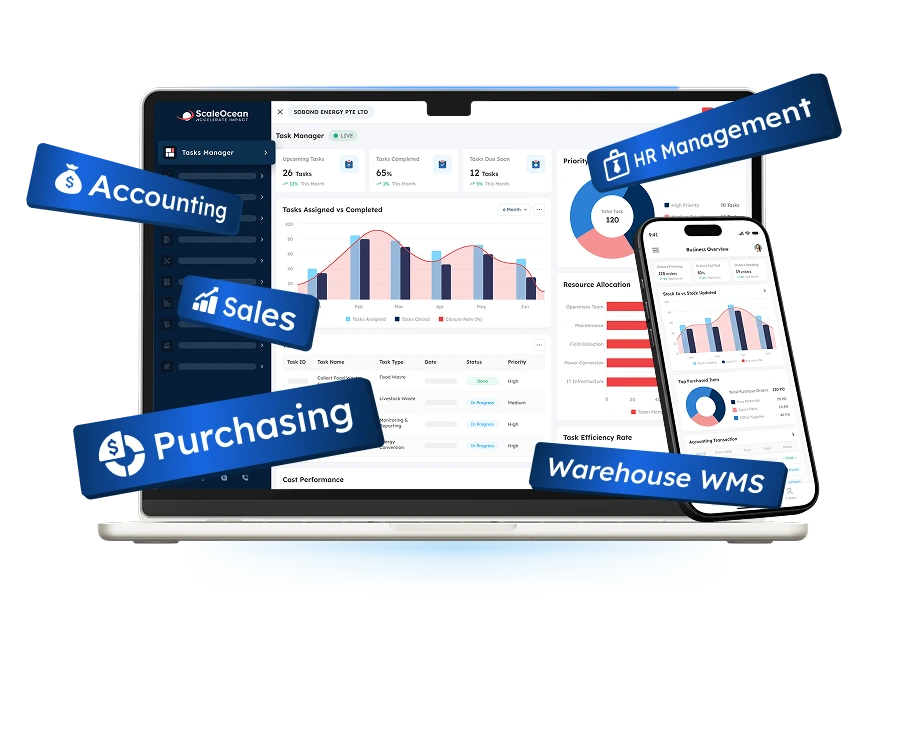
To manage time and materials contracts effectively, construction companies can benefit from using project management solutions such as ScaleOcean Construction ERP Software. The platform helps businesses streamline contract management within a single system.
If you want to improve project visibility, control construction costs, and manage contracts more efficiently, request a free demo and discover how ScaleOcean can support your construction operations.
FAQ:
1. Which is better, fixed price or T&M?
Neither is universally better. A fixed-price contract works best when the project scope is clearly defined, while a T&M contract is more suitable when requirements may change or costs are difficult to estimate in advance.
2. When to use time and material contract?
A Time and Materials Contract is ideal when the project scope, duration, or costs cannot be accurately determined before work begins. It provides flexibility for projects with changing requirements or uncertain conditions.
3. What is the profit of a time and materials contract?
Contractors typically earn profit through an agreed markup added to labor, material, and equipment costs. This markup helps cover overhead expenses and generates profit while ensuring transparency in project billing.
















.png)