




Guaranteed Maximum Price (GMP) Contract is one of the most common types of building contracts. This keep project expenses in check, ensure project owner does not pay more than the price guaranteed by the contract.
GMP is gaining popularity in the Philippines for a range of projects. Because construction costs can fluctuate with material costs or the complexity of the project, this suitable for owners who want to minimize financial risk.
 Key Takeaways
- A Guaranteed Maximum Price Contract sets a maximum amount that an owner will pay for a construction project.
- GMP contract provides budget certainty, cost transparency, and protection against major cost overruns.
- Common GMP contract advantages include improved financial planning, encourages teamwork between parties, and provides detailed cost reporting.
- ScaleOcean Construction ERP Software helps construction companies manage GMP contracts, budgets, procurement, and project documentation more efficiently.

1. What is Guaranteed Maximum Price Contract?
A Guaranteed Maximum Price Contract (GMP contract) is a construction contract in which the contractor agrees to undertake the construction project for an amount of money that does not exceed a fixed maximum.
As opposed to fixed-price contracts, GMP contracts are flexible in cases where the project scope is still under development. Meanwhile, they shield the owner from too many cost overruns since the contractor is likely to take on responsibility for any costs that are above the price.
The rules and requirements for public construction projects are covered by the Government Procurement Reform Act (Republic Act No. 9184) which lays down the procurement standards for government-funded construction projects.
2. What Makes Up a GMP Contract?

There are several critical elements to a Guaranteed Maximum Price (GMP) contract that help define cost boundaries, accountability and risk between the project owner and contractor. Here’s components in GMP so all parties have clear expectations:
- Scope of Work: This is a document which describes all the work, deliverables, materials and quality required for a project. It is the basis of the agreement and can help avoid misunderstandings about project responsibilities.
- Guaranteed Maximum Price (GMP): This is the maximum amount the owner will have to pay for the project, unless approved changes are made in the scope of work in the contract. It offers more budget predictability and reduces financial risk to the owner.
- Cost of Work: Cost of work includes direct construction costs such as labor cost, material cost, and other direct costs that are required to complete the work as a result of various project activities.
- Contractor’s Fee: Contractors are paid a fee for managing, supervising and coordinating the project, in addition to the construction costs. This fee is generally a flat rate or percentage of the cost of the overall project.
- Contingency Allowance: Many GMP contracts have a contingency allowance to cover any unforeseen conditions, design changes, or costs that can occur during the construction process.
To better manage and document contracts, a lot of construction companies are embracing construction document management software that has the ability to centralize the approval, revision and project record in the duration of the project.
3. Benefits of Guaranteed Maximum Price Contract
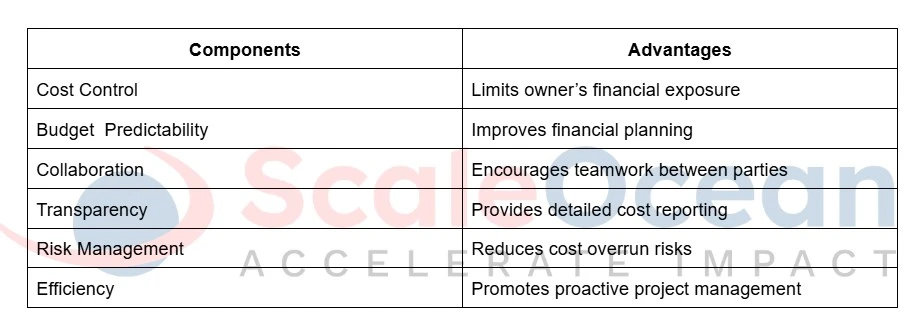
The Guaranteed Maximum Price (GMP) contracts are being widely used due to the fact that they balance the cost-control, risk-management and flexibility of the project. Here’s the advantages of GMP contracts for owner and contractor as a construction bond during project:
a. For Owners
Guaranteed Maximum Price contracts have a number of benefits for project owners, especially when they want to have more financial control and predictability over the project during construction. Below here’s the benefits that owners will get from GMP contract:
- Greater Budget Certainty: Under a GMP contract, the owner has greater certainty of the maximum project cost, and has reduced risks of major budget surprises.
- Reduced Risk Overruns: Since the contractor typically assumes responsibility for costs exceeding the agreed GMP, owners gain protection against many unexpected cost increases.
- Better Cost Transparency: With a GMP contract, there are usually detailed breakdowns and reporting, providing them with increased visibility of how the project funds are being allocated.
- Improved Collaboration: GMP contracts can foster communication and collaboration among both parties, as they have a shared interest in keeping costs under control.
- Predictable Cash Flow: Owners can make better financing decisions, payment schedules and investments in the project.
The advantages are even more significant when discussed for the Philippines projects, where the variability in material costs, labor expenses, and supply chain dynamics can affect the budgets. Moreover, this contract can be optimized to enhance the value of the project.
b. For Contractors
Although the GMP contracts put certain demands on contractors, they offer a number of benefits that can lead to long-term success in business. Below are the advantages of GMP contract for contractors:
- Stronger Client Trust: Giving the client a guaranteed maximum price allows the contractor to prove its ability to manage costs, leading to greater client trust.
- Potential Shared Savings: Where the final costs of a job are less than the GMP, the contractor has the incentive to execute the job efficiently because of potential shared savings.
- Early Involvement: It’s common to involve contractors earlier in the design and budgeting process, enabling them to provide valuable feedback on constructability and cost optimization.
- Better Project Coordination: This contract is more collaborative and this translates to better project coordination and closer lines of communication between parties throughout the project.
- Enhanced Reputation: Achieving the goals of the GMP can help build a contractor’s reputation for cost management, reliability, and project management skills.
Compared to other construction contract types, GMP contracts often promote a more collaborative approach that aligns the interests of both owners and contractors. Furthermore, GMP serves more stable benefits for all parties.
4. Guaranteed Maximum Price Contract Disadvantages
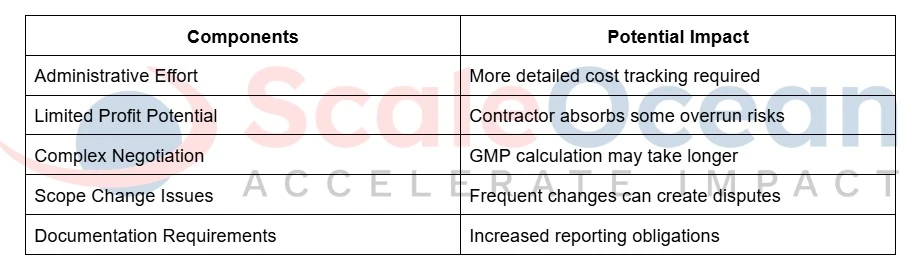
While Guaranteed Minimum Price (GMP) contracts offer many advantages, they also have some disadvantages that need to be acknowledged in order for both parties to prepare the appropriate risk management strategies and avoid problems.
a. For Owners
The owner has a number of disadvantages during the project lifecycle though, despite the cost protection that may be found in GMP contracts. Some disadvantages of adopting GMP that the owners should be aware of are discussed below:
- Complex Contract Development: The preparation of a GMP contract may be more time-consuming than other contracts due to the complex nature of contract development which involves extensive planning.
- Higher Costs of Changes: If a substantial design change or scope modification occurs after the GMP is set, then there may be extra costs and contract changes.
- Limited Flexibility: If the guaranteed maximum price is established, the project can become more complex if major changes are made, and change orders may be necessary.
- Greater Cost Responsibilities: Owners must scrutinize cost reports, contingency usage and project expenditures more closely to achieve transparency and adherence to contract requirements.
b. For Contractors
Contractors also face several challenges when working under a Guaranteed Maximum Price contract. Further, contractors also should understand the drawbacks to prevent any issues or risks when the project begins:
- Responsibility for Overruns: In many cases, contractors must absorb project costs that exceed the GMP unless the overrun results from approved scope changes or owner-directed modifications.
- Increased Administrative Requirements: GMP contracts typically require detailed cost tracking, reporting, and documentation, which can increase administrative workloads.
- Higher Financial Risk: Inaccurate estimates, unforeseen site conditions, or unexpected market fluctuations can negatively impact contractor profitability.
- Potentially Lower Profit Margins: If project costs rise unexpectedly, contractors may experience reduced profits because they are responsible for managing expenses within the agreed maximum price.
 Also Read: Incentive Contracts: Types, Benefits, & Example
5. When Should You Use GMP Contracts?

The best use of a Guaranteed Maximum Price (GMP) contract is in projects where there is the need for significant control over the cost and flexibility in the construction process. It’s a popular choice for projects where owners wish to have more financial certainty.
- Maintaining Budget: GMP contracts are perfect when the budget is capped, thereby minimizing risk of major budget overages for the owner.
- Projects with Completed Designs: This contract works best when the design is substantially developed but may still require minor refinements or adjustments during construction.
- Transparency Requirements: Owners who want detailed visibility into project expenses can benefit from the open-book pricing structure commonly used in GMP contracts.
- Complex Projects: GMP contracts are useful for large projects or projects, as they help prevent costs from spiraling out of control and allow the contractor to engage in the project at an early stage.
- Cost Overrun Protection: GMP contracts can offer a definite figure if the owner requires more protection from unforeseen rises in construction expenses.
However, GMP contracts may not be suitable for every project. For projects with highly uncertain scopes or continuously changing requirements, a time and materials contract may offer greater flexibility because costs are based on actual labor, materials, and equipment used.
Likewise, projects seeking a single point of responsibility for both design and construction may benefit from a design and build contract, which integrates project delivery under one contract and can help streamline coordination.
According to a study published in the International Journal of Project Management, collaborative contract arrangements can improve project performance by strengthening owner-contractor relationships, better teamwork, and more effective communication throughout project delivery.

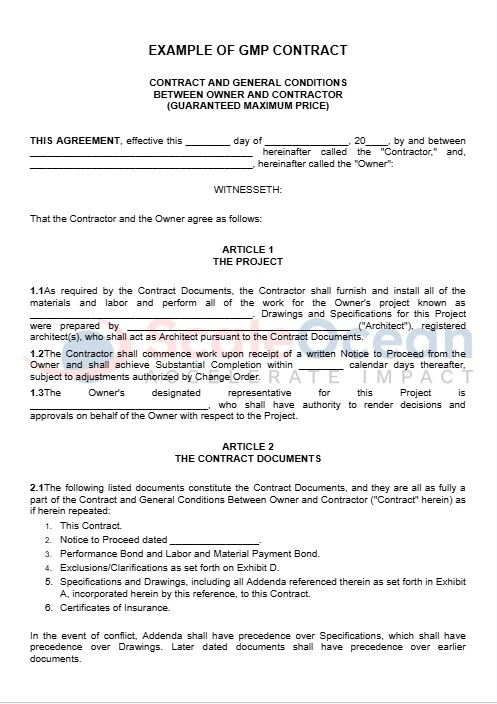
6. Guaranteed Maximum Price Contract Example
After understanding the benefits, disadvantages, and key components of a GMP contract, reviewing an example can help clarify how the agreement operates in practice. The following example demonstrates the general concepts commonly found in GMP contracts.
7. In Conclusion
A Guaranteed Maximum Price Contract is a construction contract that provides a fixed maximum price for the job, yet will be flexible and transparent. It enables owners to manage budgets, mitigate risk of cost overruns and enhance financial predictability.
To run a GMP contract, budgeting and project collaboration are essential. Businesses can leverage on ScaleOcean Construction ERP Software, an integrated solution to help construction businesses manage contracts and document workflows to support these processes.
With real-time visibility into project performance and financial data, ScaleOcean helps construction teams improve efficiency and maintain greater control over project execution. If you want to see how it can support your construction operations, request a free demo today.
FAQ:
1. What is a guaranteed maximum price contract?
A Guaranteed Maximum Price (GMP) contract is a construction agreement that sets a maximum project cost. The owner pays actual construction expenses plus the contractor’s fee, but costs cannot exceed the agreed limit unless approved changes are made.
2. Is Gmax the same as GMP?
Yes. GMAX and GMP both refer to Guaranteed Maximum Price. They describe the same contract model, where project costs are reimbursed up to a pre-established maximum amount.
3. What is the guaranteed maximum amount?
The guaranteed maximum amount is the highest total price an owner agrees to pay under a GMP contract. It includes project costs and contractor fees while limiting exposure to unexpected cost overruns.
















.png)