





Material management is part of the supply chain process to make sure the right materials are available at the right time, quality, and cost. Moreover, effective material management helps businesses avoid stock shortages and maintain production.
In the Philippines, industries such as manufacturing, construction, food processing, and logistics rely heavily on efficient material management to keep supply chains running smoothly. In this article, you’ll explore material management and how to enhance it.
 Key Takeaways
Material management refers to the planning, purchasing, receiving, and distributing materials throughout an organization. Its primary objective is to ensure materials are available whenever needed while minimizing inventory costs and operational waste.
Material management covers every stage of the material flow, from supplier selection and procurement to inventory storage. By coordinating these activities, businesses can improve productivity, reduce delays, and optimize overall supply chain performance.
For companies handling large inventories, integrating warehouse management software into their operations provides better inventory visibility, real-time stock tracking, and automated warehouse processes.
Material management plays an important role in improving operational efficiency, reducing business costs, and ensuring customer satisfaction. Below are some of the benefits of implementing effective material management:
Material management consists of several activities that ensure smooth operations. Each type focuses on a specific part of the material flow. Understanding each type help warehouse efficiency, here are some of the types of material management:
Materials Requirement Planning (MRP) determines the quantity and timing of materials needed for production. By analyzing production schedules, inventory levels, and customer demand, MRP helps maintain purchase materials before shortages occur.
Purchasing and procurement involve selecting suppliers, negotiating prices, and acquiring materials on time. A well-managed procurement process helps businesses reduce costs, improve supplier relationships, minimize risks, and ensure a steady supply of materials.
Inventory and warehouse management focus on storing, tracking, and organizing materials efficiently. Combined with effectively managing a warehouse practices, businesses can improve inventory accuracy and speed up order fulfillment.
Transportation management coordinates the movement of materials from suppliers to warehouses or production sites. Efficient shipment planning, route optimization, and delivery tracking help reduce logistics costs.
Quality control ensures materials meet required standards before storage or production. Through inspections, testing, and supplier evaluations, businesses can identify defects early, reduce production errors, and maintain consistent product quality.
The 5Rs of material management serve as guiding principles that help businesses store and utilize materials efficiently while minimizing costs and operational disruptions. Here are 5Rs to improve inventory control and ensure smooth production:
Material managers are responsible for overseeing the planning, procurement, storage, and distribution of materials to ensure business operations run efficiently. Their responsibilities in the warehouse include:

A food manufacturing company in the Philippines receives hundreds of raw material deliveries each week, including flour, sugar, packaging materials, and ingredients from local suppliers.
Moreover, receiving process begins with verifying purchase orders and recording inventory into the system. Materials are then stored in designated warehouse racks based on their storage requirements and inventory methods, such as First-In, First-Out (FIFO), to maintain product freshness.
As production schedules are updated, inventory levels are monitored continuously to ensure materials are available without overstocking. Automated inventory tracking also enables managers to identify low-stock and reorder them early .
Therefore, for businesses involved in food production, the Food Safety Act of 2013 (Republic Act No. 10611) also supports proper handling, storage, and traceability of materials throughout the supply chain.
 Also Read: Putaway in Warehousing: Process & Best Practices
Businesses should combine accurate planning and digital technologies to build a responsive and cost-effective supply chain. Below are several practical strategies for material handling:
Optimize inventory by conducting regular cycle counts, applying FIFO or FEFO methods, using ABC analysis, and monitoring slow-moving items. Following proven warehouse management tips also improves inventory accuracy.
Accurate demand forecasting uses historical sales, market trends, and production plans to estimate future material needs. This helps businesses prevent stock shortages, reduce excess inventory, improve procurement planning, and lower inventory costs.
Modern technologies like AI, barcode scanning, RFID, mobile warehouse apps, and Warehouse Management Systems (WMS) automate material management. These tools improve inventory visibility, reduce manual errors, and support data-driven decisions.
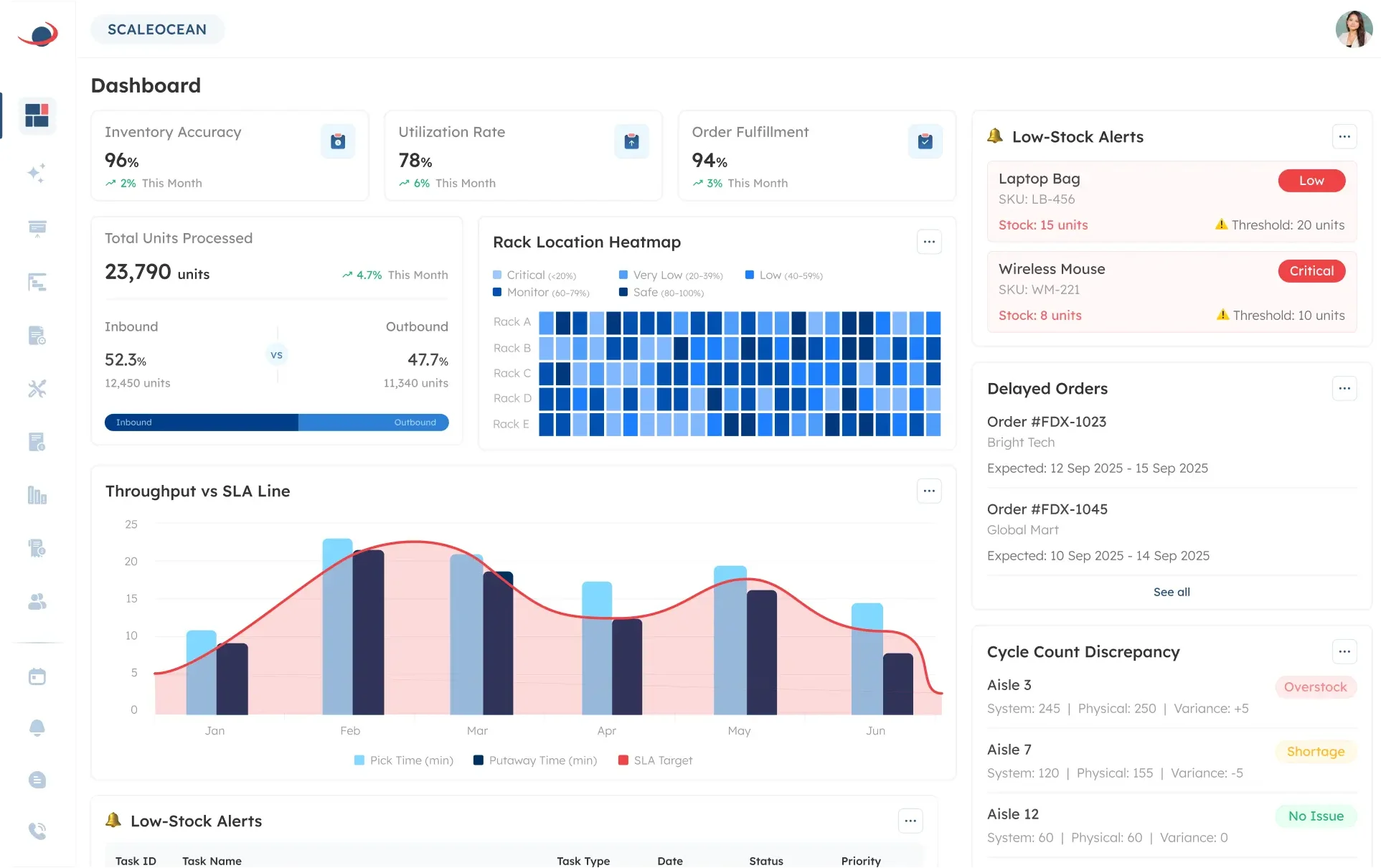
Managing materials manually often leads to inventory inaccuracies, inefficient warehouse operations, and higher operational costs. As businesses grow, these challenges become more difficult to manage and can disrupt production operations.
To address these issues, ScaleOcean Warehouse Management System (WMS) automates key material management processes, including receiving, inventory tracking, and order fulfillment.
Furthermore, ScaleOcean is powered with AI-driven automation which helps businesses improve inventory accuracy, reduce manual work, and optimize material flow across the warehouse.
ScaleOcean Warehouse ERP Software is one of the best warehouse management solutions that enables businesses to manage materials more efficiently while improving collaboration across departments.
Additionally, ScaleOcean seamlessly integrates with other business processes to support business growth. Request a free demo to discover how ScaleOcean can optimize your material management. In it, you’ll have access to features such as:
Material management is a critical business function that ensures materials are distributed efficiently to support daily operations. By implementing proper inventory planning, businesses can reduce costs and build a more resilient supply chain.
For companies looking to further optimize their material management process, ScaleOcean WMS ERP Software offers an integrated solution with real-time inventory visibility, AI-powered automation, barcode support, and seamless ERP integration.
Whether you operate in manufacturing, retail, distribution, or logistics, ScaleOcean can help streamline warehouse operations. Try a demo of ScaleOcean WMS ERP Software and discover how a solution can help your business improve efficiency.
Material management ensures the right materials are available when needed while reducing costs, preventing shortages, minimizing waste, and supporting smooth production and supply chain operations.
Effective material management includes inventory control, procurement planning, demand forecasting, quality checks, logistics management, waste reduction, and using digital systems like WMS to improve efficiency.
Material management helps lower costs, improve inventory accuracy, reduce material waste, prevent production delays, optimize warehouse space, and ensure materials are available for smooth business operations.