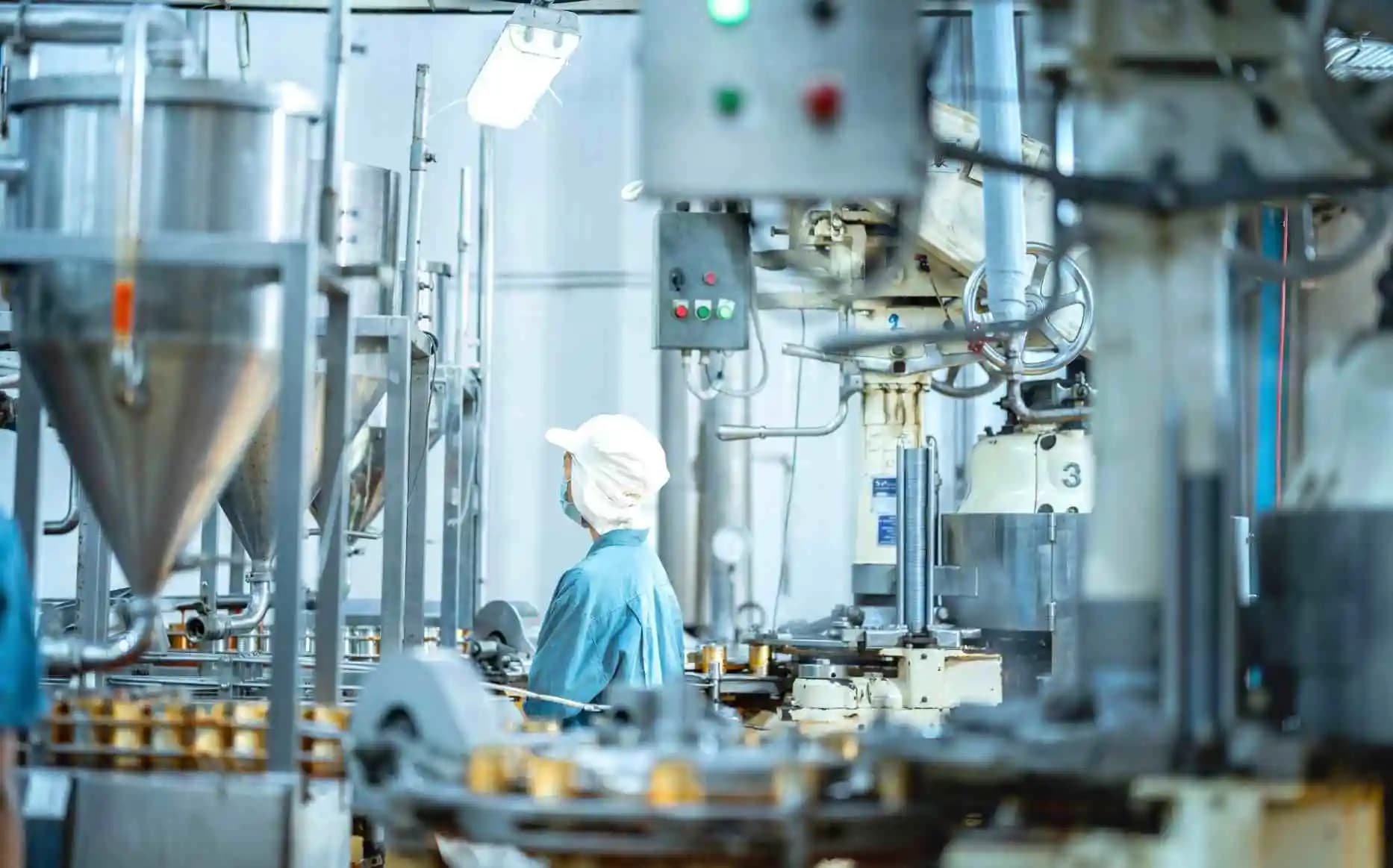






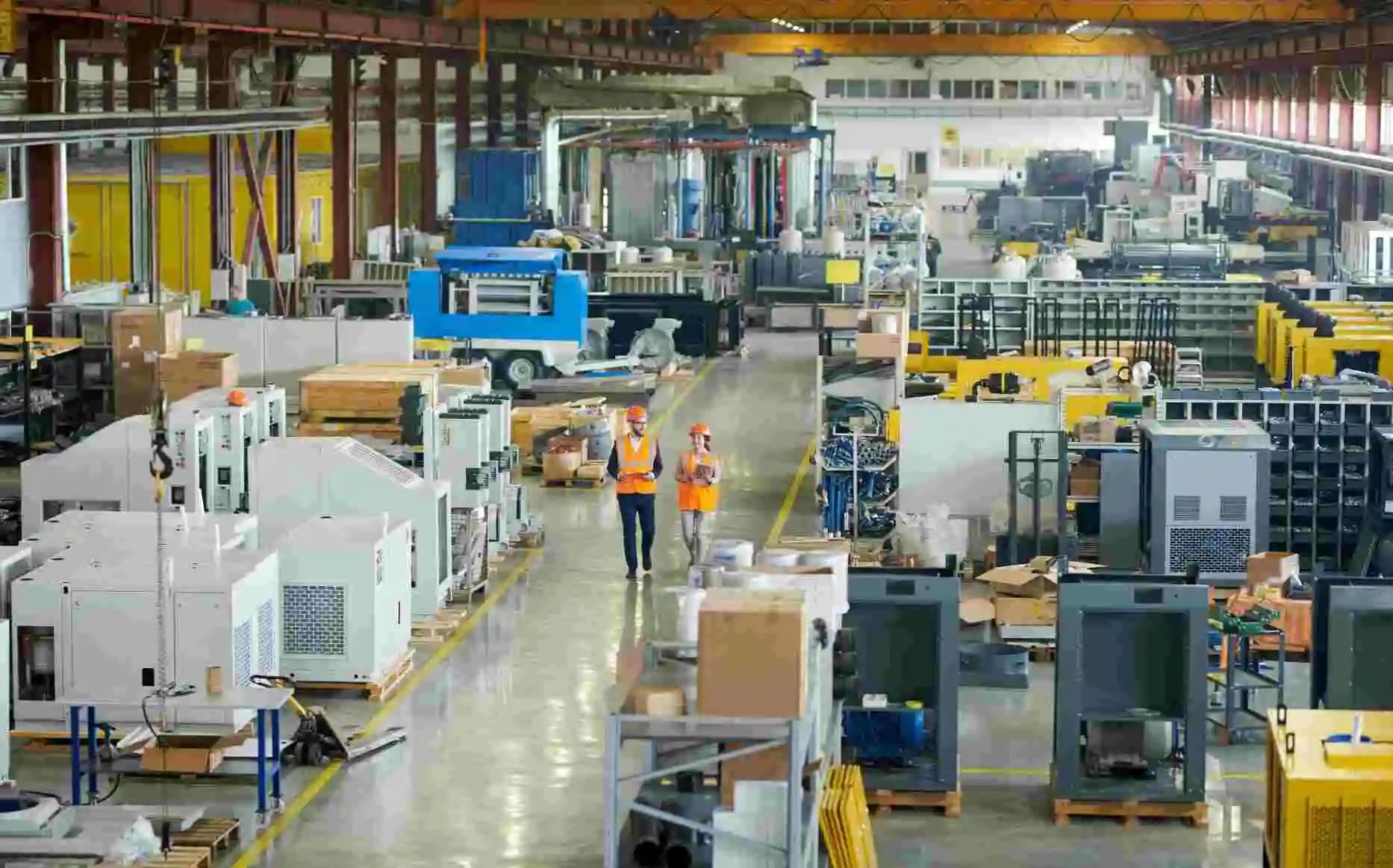
Manufacturing Execution System (MES) is software that links, tracks and manages manufacturing processes on the shop floor. It enables manufacturers to gain real-time visibility of the production process, ensure quality control and use operational data to gain insights.
Moreover, having this real-time visibility can be highly advantageous for Philippine manufacturers if they need to quickly adjust their output in response to demand fluctuations or logistical difficulties across the archipelago. This article will guide you to improve the manufacturing process using MES, to ensure business growth.
 Key Takeaways

A Manufacturing Execution System (MES) is software designed to track and control manufacturing processes from the time of the production order until the finished product is delivered. It is located between business-level systems (ERP) and the physical production floor.
An MES System retrieves data from machines, people, materials, production processes and converts the data into production information that’s useful for action. It can be employed by managers to track the production progress, identify bottlenecks, control quality, track materials and perform performance analysis.
MES offers a more centralized production activity view when compared to traditional spreadsheets or paper-based records. This can be especially helpful in situations where manufacturers have multiple production lines, factories or warehouses.

Yes, an MES is essential for driving manufacturing growth. It assists manufacturers move from a reactive production management system to a connected, data-driven manufacturing system. Supervisors have end-of-shift reporting but also have real-time visibility into production as it is taking place.
This is significant for Philippine manufacturers, specifically in making up their seasonal demand to meet market needs. Here are a few of the benefits of it:
MES software assists manufacturers in determining the areas where time, materials or manufacturing capacity are being lost. Businesses can identify bottlenecks and make necessary adjustments earlier using a monitoring of production activities.
If a production line has a cycle time that is always longer than the normal cycle time, managers can look into the reasons for the longer time and modify the process rather than finding the problem at the end of the production.
Real-time visibility is one of the key Manufacturing Execution System benefits. An MES can display data including production status, machine condition, work orders, quantity produced, production delays etc.
Hence, with this, managers or the operations team can have a better idea of what is going on on the shop floor without having to rely completely on manual updates and can perform quick evaluations to troubleshoot problems that may arise.
Manual production records can cause duplication of effort and the potential for data entry mistakes. Manufacturing Execution Software transforms work instructions and/or other operational documentation into a digital format. It enables employees to enter data directly into the system, and gives supervisors quicker access to production information.
MES Software can assist in quality management through the recording of inspection data, the identification of production deviations and the relation of quality information to the particular activity. This simplifies the process of investigating faults and faulting on the manufacturing process.
Manufacturers need to balance orders with available machines, materials, workers, and production capacity. Therefore, MES helps coordinate these resources with production schedules. If priorities change, then the manager can follow the updated production information to decide on the next priority job and where the available resources and tools should be allocated.
Manufacturers in regulated industries often need detailed production and quality records. An MES can help with compliance by keeping a record of production activities, materials, batches, inspections and procedures, which are traceable.
The Manufacturing Enterprise Solutions Association International (MESA) identified 11 base functions for manufacturing execution systems in 1997. While the model has changed, the following functions are still useful for thinking about the role of an MES in production operations. Key elements of the core are:
Note: Although MESA has ceased operations in June 30th 2026, its founding model and philosophies will remain in use for the foreseeable future; all of MESA’s educational assets and content will be maintained and developed under the Internal Society of Automation (ISA).
The basic principle of a Manufacturing Execution System (MES) is to connect high-level production planning with real-time activities. It continuously collects data during the manufacturing process, which usually progresses through the following stages:
The role of Manufacturing Execution System (MES) has become increasingly important as manufacturers adopt Industry 4.0 technologies such as connected machines, IoT, automation, AI, and real-time analytics.
As a result, MES can ease the integration of activities performed on the production floor with higher level business systems. Thus, it’s creating a more connected flow of manufacturing information.
The ISA-95 standard provides a useful framework for understanding how these technologies and systems work together. It breaks down manufacturing tasks into five levels:
Therefore, MES is one of the most important links between the production line and the business system. It can assist manufacturers in an Industry 4.0 setting to:
However, in this modern industry, it doesn’t mean manufacturers should begin using all of the latest technologies. Businesses can start by digitizing production processes and establishing reliable data through MES and gradually adopting other advanced technologies as the business grows.
MES and ERP are not competing systems. They manage different parts of the manufacturing process and work best when they are connected. ERP focuses on the broader business, while MES focuses on what is happening on the production floor.
An ERP system manages business-level activities such as sales, purchasing, inventory, accounting, production planning, and procurement. It helps answer questions such as what needs to be produced, how much is needed, when it is needed, and what resources the business should prepare.
Meanwhile, an MES focuses on the execution of that production plan. It helps production teams manage work orders, machines, materials, labor, production schedules, quality checks, and shop-floor activities.
In simple terms, ERP plans the business requirements, while MES helps make sure those plans are carried out properly. For example, imagine a Philippine food manufacturer receives a large order for 10,000 units of a product ahead of the holiday season.
The ERP system can identify the customer demand, check inventory, plan the required materials, and create the production requirements. The MES then takes those requirements to the production floor and helps determine how the order should be executed based on available machines, workers, materials, and production capacity.
During production, the MES can record the actual number of units produced, material consumption, machine downtime, and quality results. This information can then be shared with the ERP system. The relationship can be summarized simply:
ERP → Plans the business requirements
↓
MES → Organizes and executes production
↓
Production Floor → Machines, workers, materials, and processes
↓
MES → Captures actual production results
↓
ERP → Uses the results for inventory, costing, planning, and business decisions
Despite its advantages, implementing an MES requires more than purchasing Manufacturing Execution System software. Manufacturers should prepare for several operational and technical challenges to prevent disruptions in the future:
Moreover, for Philippine manufacturers, implementation planning should also consider operational realities such as inter-island supply chains, supplier lead times, infrastructure limitations, and disruptions during typhoon season.
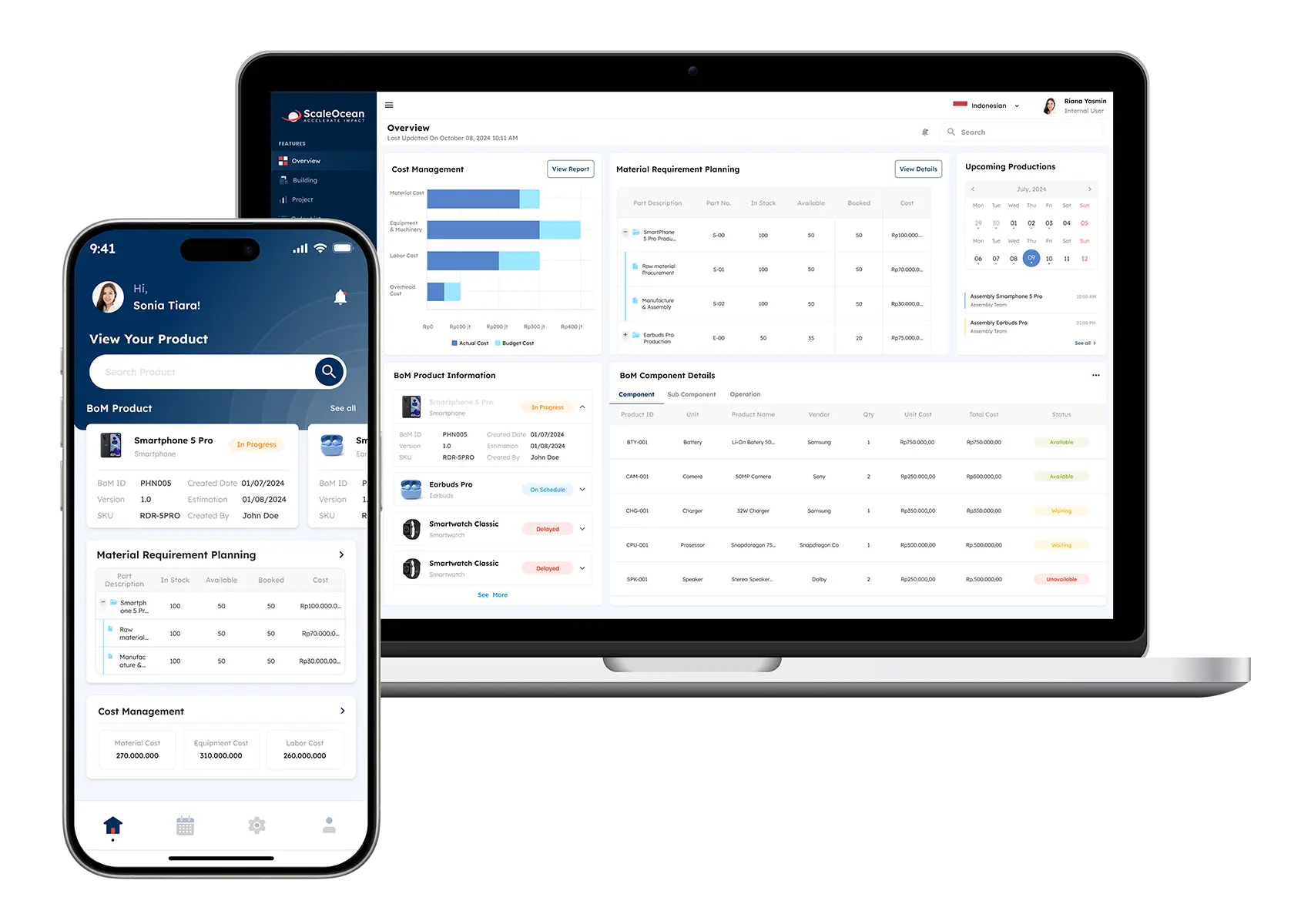
For manufacturers looking to strengthen the systems surrounding MES implementation, ScaleOcean Atlas provides an integrated manufacturing ERP environment that can connect production planning with other critical business operations.
Rather than treating manufacturing as an isolated function, ScaleOcean Atlas connects manufacturing with areas such as inventory, procurement, order management, supply chain, and cost management.
Moreover, ScaleOcean Atlas is equipped with ScaleMind, a special AI assistant that can guide businesses with intelligent suggestions based on the available business data to make smarter decisions on operations.
Schedule a consultation to help businesses identify potential material shortages and make more informed replenishment decisions. Here are some of the features of ScaleOcean Atlas that can enhance manufacturing processes:
A Manufacturing Execution System provides manufacturers with more visibility and control over activities in between production planning and finished goods. MES can make production more visible and responsive by capturing the information from the shop floor, enabling quality control and traceability.
The importance of this is growing as manufacturers shift to Industry 4.0, where factory operations are increasingly being influenced by connected equipment, automation, analytics, and digital processes.
In addition, ScaleOcean Atlas can serve as an integrated platform for smarter manufacturing management for manufacturing firms looking to have a more holistic solution for their manufacturing management, inventory, warehouse, procurement and cost management.
If you are planning to modernize your manufacturing operations, schedule a consultation with ScaleOcean to discuss your current processes, system requirements, and the most suitable approach for your business.
ERP manages broader business functions such as finance, sales, and HR, while MES focuses on executing, monitoring, and tracking production activities in real time on the factory floor.
SCADA monitors and controls machines and processes in real time, while MES manages production workflows, resources, quality, and performance across the manufacturing floor.
MES software helps manufacturers monitor, track, document, and manage production activities from work orders and materials to quality checks and finished goods.