




Design and build contract is one of the most used project delivery methods in the construction industry. Instead of hiring separate parties for design and construction, the project owner works with a single entity responsible for both activities.
This can help to coordinate projects more effectively, minimize miscommunication, and increase project efficiency. Project owners or stakeholders can be aided in decision-making by understanding the operation of a this contract.
 Key Takeaways
- A design-build contract is a project delivery method where a single contractor is responsible for both design and construction activities under one agreement.
- Key components of a design-build contract include project scope, design and construction responsibilities, pricing terms, project schedule, risk allocation, and quality standards.
- Design-build contracts can improve collaboration, accountability, cost control, and project delivery speed, but may reduce owner involvement in design decisions.
- ScaleOcean Construction ERP Software helps construction companies streamline contract management, budgeting, procurement, project coordination, and document control in one integrated platform.

1. What is Design and Build Contract?
A design and build contract is a construction contract that involves only a single contractor to design and build a project. Unlike other project delivery methods, the design-build method incorporates both the design and construction under one contract.
This system provides a choice to the project owner to have the project handled by one entity throughout its life-cycle. Which includes architectural design, engineering, procurement, construction activities and project coordination.
As part of the conversation around what a design and build contract is, it’s necessary to understand the intent of a this contract, which is to establish an integrated project delivery process.
In the Philippines, design-build procurement is recognized under Annex ‘G’ of the Revised IRR of Republic Act No. 9184. These guidelines enable a qualified contractor to perform both design and construction for eligible public infrastructure projects.
2. Components of Design Build Contract

To make sure that project managers are aware of the significant components of the design-build contract before signing, it is critical to understand the components Here are some components of the design-build contract:
- Project Scope: It establishes the goals, outcomes, requirements and features of the project. It is the starting point for all designs and constructions.
- Design Responsibilities: Contractor’s duties in design, approvals and conformance to applicable regulations.
- Construction Responsibilities: Responsibilities of labor, materials, equipment, site management, and the requirements for carrying out the construction are included.
- Project Schedule: Outlines important events, design submission deadlines, construction timelines, approval processes, and project completion dates.
- Pricing and Payment Terms: Defines the pricing structure for the contracts, the payment schedule, change order procedures and cost adjustment mechanisms.
- Risk Allocation: Outlines who is responsible for what regarding risks associated with the project such as design, unforeseen conditions and delays.
- Quality Standards: Establishes the quality standards, inspection process, testing protocol and acceptance criteria for the project deliverables.
3. Design and Build Contract Advantages and Disadvantages
Like any project delivery method, a design-build contract offers both benefits and challenges. Understanding these factors can help determine whether this approach is suitable for your project.
a. Advantages
The design-build approach is popular because it simplifies project delivery and encourages better collaboration between stakeholders. Below here are some of its advantages that enhance project efficiency:
- Single Point of Responsibility: The owner only needs to coordinate with one party throughout the project, simplifying communication, decision-making, and accountability.
- Faster Project Delivery: Design and construction activities can overlap, helping reduce the overall project duration compared to traditional delivery methods.
- Improved Collaboration: Since designers and builders work together under one contract, coordination tends to be more efficient and proactive.
- Reduced Administrative Burden: Managing a single contract is generally easier than overseeing separate agreements for design and construction services.
- Better Cost Control: Early contractor involvement can improve constructability reviews and cost planning, helping minimize unexpected expenses.
- Fewer Disputes: With one entity responsible for both design and construction, accountability becomes clearer and disputes between parties are less likely.
b. Disadvantages
Despite its benefits, a design-build contract may not be suitable for every project. Gaining knowledge about the disadvantages helps project managers avoid problems during project execution. The following are disadvantages before choosing this delivery method:
- Reduced Owner Design Control: Owners may have less direct influence over design decisions compared to traditional design-bid-build arrangements.
- Contractor Selection Complexity: Choosing the right design-build contractor requires careful evaluation because the selected firm will manage both design and construction responsibilities.
- Potential Design Limitations: Some contractors may prioritize construction efficiency over design flexibility, which could affect certain project goals.
- Scope Changes Can Be Challenging: Significant changes requested during construction may impact project schedules, costs, and overall coordination.
- Higher Reliance on Contractor Expertise: Project success depends heavily on the contractor’s ability to effectively manage both design and construction activities.
4. How to Make a Design Build Contract

To ensure the design build process is successful, it is important both parties plan for a well-structured design build agreement as construction bond stated. Knowing how to make a design-build contract will help manage the project. Here are some of the steps of writing design-build contract:
a. Define Your Project Scope
The first step to take is to begin by defining the goals, needs, performance, and outcomes of the project. A detailed scope can help to prevent misunderstandings in the course of project execution.
b. Set Performance Standards
Secondly, project managers should define quality standards and technical requirements, compliance requirements and conditions of project acceptance. The standards for projects in the Philippines should be consistent with the country’s regulations.
c. Risk Allocation
The third step is to identify project risks and assign the responsibility to the appropriate party. It also includes design mistakes, site malfunction, and price fluctuations. Moreover, proper risk allocation can avoid the disputes among all of the parties involved in the construction contract.
d. Include an Addendum Clause
The addendum is a clause that enables the contract’s terms to be changed should there be any changes in the project. This offers flexibility but also clarity to the contract. This clause lays out a process to document and approve change.
e. Choosing Pricing Models
The selection of the right pricing model in a design-build contract impacts the budgeting, risk allocation and cost control for a project. In addition, some projects may use a Guaranteed Maximum Price Contract that provides flexibility.
For projects that emphasize performance and measurable outcomes, an incentive construction contract can be utilized for projects that include emphasis on performance and measurable outcomes.

5. When Should You Use a Design and Build Contract?
A design and build contract is suitable for projects that need efficient streamlined coordination. Because of its efficiency, this approach can reduce communication gaps and accelerate project completion. Here some common situations of applying design build contract:
- Tight Project Schedule: Design and construction activities can overlap, helping reduce project duration.
- Need Higher Accountability: One contractor is responsible for both design and construction deliverables.
- Early Cost Certainty: Integrated planning can improve budgeting and reduce unexpected costs.
- Strong Collaboration: A unified team can identify issues earlier and improve decision-making.
- Project Complexity: Design-build can streamline coordination across multiple disciplines.
- Administrative Resources are Limited: Managing a single contract is often simpler than overseeing separate design and construction agreements.
In the Philippines, design-build procurement is frequently used for infrastructure projects, commercial developments, industrial facilities, and other large-scale developments where project timelines, coordination, and cost control are critical to project success.
 Also Read: Time and Material Contract: How It Works
6. Design and Build Contract Example
After understanding the benefits, disadvantages, and key components of a design-build contract, reviewing an example can help clarify how the agreement operates in practice. This example demonstrates the general concepts found:
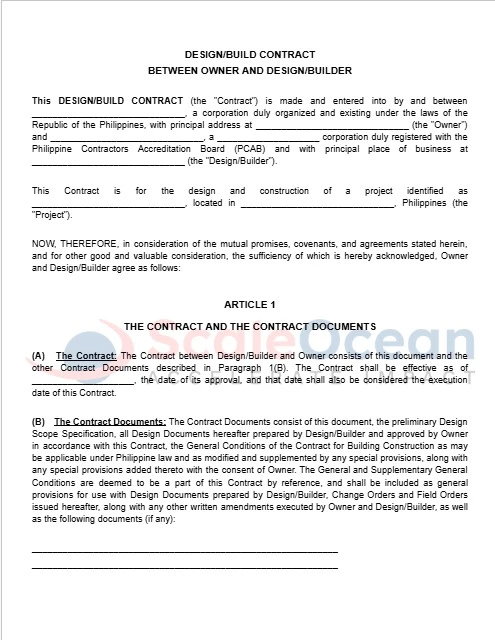
Moreover, many construction companies use construction document management software to centralize project documents, improve version control, and ensure stakeholders have access to the latest information.
7. In Conclusion
A Design and Build Contract combines design and construction responsibilities under a single agreement. This approach can improve collaboration, streamline project coordination, and accelerate project delivery.
Managing design-build projects effectively requires more than just a well-written contract. Teams must also coordinate documents, budgets, procurement, project schedules, and other critical contracts throughout the project lifecycle.
To help construction companies manage these processes more efficiently, ScaleOcean Construction ERP Software provides an integrated solution for project management, budgeting, procurement, and real-time reporting in one platform.
To see how ScaleOcean can help streamline project planning, contract management, budgeting, and document control, visit ScaleOcean Construction ERP Software and request a free demo today.
FAQ:
1. What is a D&B contract?
The D&B build contract is designed for construction projects where the contractor carries out both the design and the construction work. Design and build projects can vary in scale, but the design and build contract is generally suitable where detailed provisions are needed.
2. What is the difference between EPC and design and build contracts?
An EPC contract covers engineering, procurement, and construction, often with fixed costs and timelines. A design-build contract focuses on design and construction services, offering greater flexibility and collaboration for a wider range of construction projects.
3. What does D&B mean in construction?
D&B stands for Design and Build, a project delivery method where a single contractor is responsible for both designing and constructing the project. This approach creates one point of accountability and can help improve efficiency throughout the project lifecycle.
















.png)