




Construction foundation is the fundamental basis of a building. It supports the entire weight above and ensures the building remains stable. However, the foundation must be built in accordance with established guidelines and regulations to achieve optimal strength and durability.
Because of this, managing construction projects is essential to ensure compliance with local regulations and required documentation. Project managers must also stay updated with the latest guidelines so that the building’s foundation is constructed in accordance with established standards.
 Key Takeaways
- Construction foundation is the base of any building that supports the structure and transfers its load safely to the ground.
- There are two main types of foundation in building construction; shallow foundations and deep foundations, each chosen based on soil condition and building requirements.
- Choosing the right foundation depends on soil analysis, building load, site conditions, and climate, especially important in the Philippines due to varying terrain and weather.
- ScaleOcean Atlas for Construction ERP can help improve planning, budgeting, and overall project management for better construction outcomes.
1. What is Foundation in Construction?
A foundation is the lowest part of a building structure that transfers its load to the ground safely. It also serves as an element that keeps the building stable and prevents movement caused by natural causes, such as soil conditions.
In the Philippines, foundation work must follow regulations set by the Construction Industry Authority of the Philippines (CIAP) under Presidential Decree No. 1746. CIAP ensures that all foundations meet national standards for safety, quality, and durability.
This means foundation design, whether shallow or deep, must be done by licensed engineers using approved practices. Contractors must also be accredited by the Philippine Contractors Accreditation Board to guarantee they have the skills to deliver safe and reliable projects.
2. Types of Foundation in Building Construction
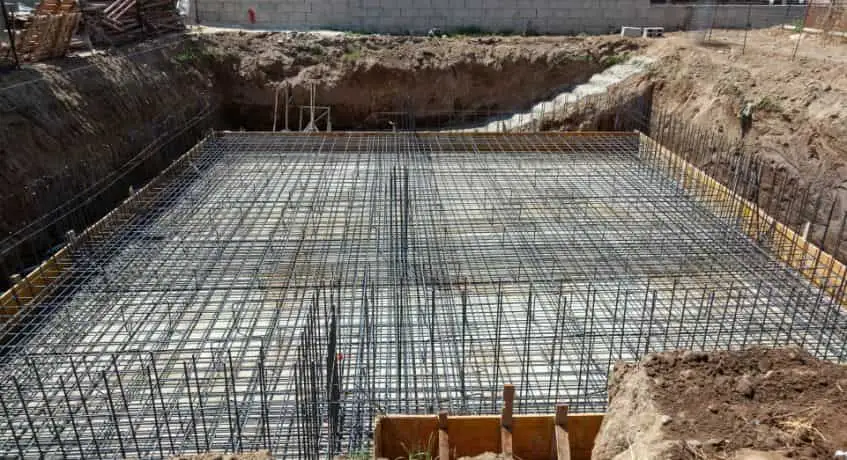
There are two main types of foundation in building construction. It is divided into shallow foundations and deep foundations. Each type is used depending on the soil condition, building load, and project requirements.
Usually, shallow foundations are used for smaller structures or when the soil near the surface is strong enough to hold a large building. Here are types of shallow foundations:
- Raft/Mat Foundations.
- Basement Foundations.
- Spread Footing.
- Strap Footing (Cantilever Footing).
- Strip Foundations.
- Concrete Slab Foundations.
On the other hand, deep foundations are used when the surface soil cannot support the load. It’s because deep foundations are purposely made to strengthen deeper support. Types of deep foundations are:
- Pile Foundation.
- Caisson Foundation.
3. Types of Shallow Foundations
As mentioned before, shallow foundations are used for construction that is built within a well-structured soil. This foundation is usually used for residential and low-rise buildings. It is popular because it is more cost-effective and faster to build.
a. Raft / Mat Foundations
Raft or mat foundations are large concrete slabs that cover the entire base of a building. It helps distribute the weight evenly across the ground. This type is often used when the soil has low bearing capacity.
b. Basement Foundations
Basement foundations create a usable space below ground level while supporting the structure above. This space can be used for storage, parking, or additional rooms. However, in the Philippines, they are less common due to flooding risks and high groundwater levels.
c. Spread Footing
Spread footing is one of the most widely used shallow foundations. It supports individual columns by spreading their load over a larger area. It is suitable for areas with stable soil and is often used in small to medium-sized buildings.
d. Strip Foundations
Strip foundations are continuous strips of concrete that support walls. They distribute the weight of the wall evenly along its length. This type is commonly used in residential houses where walls carry the structure’s load.
e. Concrete Slab Foundations
Concrete slab foundations are flat layers of concrete poured directly on the ground. They serve as both the foundation and the floor of the building. They serve as both the foundation and the floor of the building.
4. Types of Deep Foundations
Deep foundations are used when the top layer of soil is too weak to support a building. Instead of relying on surface, these foundations make the base more stable layers underground. This is ideal for heavy structures or areas with soft, loose, or waterlogged soil
a. Pile Foundations
Pile foundations use long columns (called piles) that are driven or drilled deep into the ground. This type of foundation is widely used in coastal areas or locations with soft soil. It is also suitable for high-rise buildings and bridges because it reduces the risk of settlement.
b. Caisson Foundations
Caisson foundations are hollow structures that are placed into the ground and then filled with concrete. These foundations are often used for bridges & large infrastructure projects. They are strong and stable, especially in wet conditions, but they require careful construction.
5. How to Choose the Best Foundations?
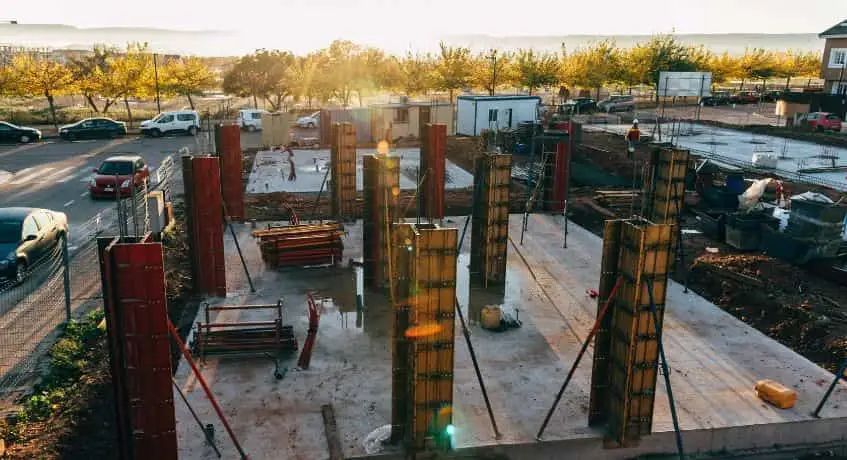
Choosing the right construction foundation depends on several important factors. A good choice helps prevent structural problems, reduces costs, and improves the building’s durability. Here are some factors to consider before selecting the best foundation:
a. Analyze Soil Type and Bearing
Understanding the soil conditions is one of the most important steps. Soil testing helps determine the soil’s strength and its ability to carry loads. If the soil is strong, shallow foundations may be enough.
b. Calculate Building Load
The total weight of the building must be carefully calculated. This includes estimating the building structure. It is because heavier buildings need stronger and deeper foundations to transfer the load to the ground.
c. Factor in Topography
The shape and slope of the land can affect how the foundation is designed. Flat land is easier to work, while sloped or uneven terrain may require special foundation. It’s because a special case of soil needs solutions to maintain stability and prevent shifting.
d. Climate Conditions
In the Philippines, climate plays a big role in foundation design. Heavy rainfall, flooding, and high humidity can weaken soil over time. That’s why proper drainage systems, waterproofing, and moisture protection are important to keep the foundation strong.
Therefore, the type of foundation plays a crucial role in building construction, so you need to manage the project carefully. You can maximize your construction project with construction management software, ScaleOcean Atlas for Construction ERP, to improve efficiency and project management.
6. In Conclusion
A construction foundation is important for keeping any building strong and stable. By understanding the type of foundations, you can build safer and more reliable structures, especially in the diverse environmental conditions like in the Philippines.
To manage your projects more efficiently, you can use ScaleOcean Atlas for Construction. It helps streamline project planning, budgeting, and resource management in one integrated system.
You can schedule a consultation to explore how the system supports your construction projects from start to finish, helping you plan, budget, and manage resources more effectively.
FAQ:
1. Which type of foundation is best for construction?
There is no single “best” foundation for all projects. The right type depends on soil condition, building size, and location. For weak or soft soil, deep foundations are often used because they provide stronger and more stable support.
2. What are the 7 types of foundation?
There are several foundation types used in construction, each designed for different needs. Common examples include spread footing, strip (continuous) footing, combined footing, mat foundations, pile foundations, caisson foundations, and grade beams.
3. What is the most commonly used foundation in building?
Spread footing (also called isolated footing) is one of the most commonly used foundations. It supports individual columns and spreads the load over a wider area, making it suitable for stable soil and small to medium-sized buildings.


















.png)