




Construction accounting is a type of financial method that helps contractors and companies to track project costs, revenues, and materials. Different from other accounting, it focuses on the financial activity of construction projects.
But, many construction firms still struggle with handling their accounts, so an organized system is needed to handle expenses. The systems usually help maintain financial expenses and profitability.
Therefore, this article will guide you to understand the fundamentals of construction accounting, including its meaning, differences from general accounting, accounting methods, and best practices.
 Key Takeaways
- Construction accounting is a financial management system that used to track project costs and profitability in construction businesses.
- Construction accounting differs from general accounting because it focuses on project-based operations and long-term contracts.
- Common construction accounting include cash basis, accrual basis, percentage of completion, and completed contract method.
- ScaleOcean Construction Accounting ERP Software helps Philippines companies streamline accounting and project management processes.

1. What is Construction Accounting?
Construction accounting is an accounting system used by contractors, builders, and construction companies to manage project finances. It focuses on costs, revenues, payroll, and project profitability for each project.
Proper management of this process can assist in organizing financial data per project. The proper account of project finance records consist of different budgets, timelines, as well as payment schedules.
Additionally, accounting systems in the Philippines are regulated under Philippine Financial Reporting Standards (PFRS). These regulations are to maintain accurate financial reporting and make sure compliance with local accounting standards.
2. How is Construction Accounting Different from General Accounting?

After understanding its meaning, it is important to see how construction accounting differs from general accounting. Unlike standard business operations, the construction industry relies on project-based activities, making the process more complex.
a. Project-Based Counting
The first reason is project complexity. It is because construction companies manage finances flow per project. Every project has different expenses, timelines, and revenue targets that require separate financial tracking.
In addition, this process frequently involves monitoring labor costs, materials, subcontractor payments, and equipment expenses. Therefore, proper job costing helps contractors identify profitable projects and avoid budget overruns.
b. Decentralized Production
The second reason is decentralized production. This construction accounting is applied because construction companies operate across multiple project sites. It is often making workers move to other locations, thus this method organizes financial records.
Because of this, expense tracking is more complicated and hard to do. However, companies must maintain accurate records for each construction site to maintain accuracy.
c. Long-term Contracts
Another reason is because construction projects often last several months or years. Therefore, companies use specific accounting methods to recognize revenue gradually during project completion.
In addition, businesses also need to monitor retainage. It refers to a portion of payment temporarily withheld until project completion to ensure contract compliance. Thus, this method effectively helps calculate project financial progress.
3. Components and Concepts of Construction Accounting
Construction accounting consists of several components to manage finances. These components support budgeting, reporting, and financial decision-making throughout the project lifecycle. Here are the components:
- Job costing.
- Payroll management.
- Equipment tracking.
- Material cost management.
- Revenue recognition.
- Tax management.
- Project budgeting.
- Financial reporting.
Another important concept is construction billing. It involves invoicing clients based on project progress, milestones, or completed work. It is used to maintain stable cash flow and reduce payment delays.
4. Common Methods in Construction Accounting
Construction companies use several accounting methods depending on project duration or reporting requirements. Further, choosing the right method helps companies maintain financial records and improve decision-making.
a. Cash Basis
The first method is cash basis. It is to record revenue and expenses when cash transactions occur. Hence, companies recognize income when payments are received and expenses when payments are made.
Therefore, this method is relatively simple and commonly used by small contractors or businesses handling short-term projects. However, it may not provide a complete financial picture for larger projects with long payment cycles.
b. Accrual Basis
Another common method used is accrual basis. This method records revenue and expenses when transactions occur, regardless of payment timing. Moreover, accrual basis provides a more accurate representation of company finances.
Many medium and large construction companies in the Philippines use accrual accounting because it improves financial forecasting and supports compliance with reporting standards.
c. Percentage of Completion (PCM)
The third method is percentage of completion. It is an accounting method used to recognize revenue gradually based on project progress. Further, it allows companies to report income throughout the project duration rather than waiting until completion.
This is commonly used for long-term infrastructure and commercial construction projects. It also helps businesses maintain more consistent financial reporting and better monitor project profitability.
d. Completed Contract Method (CCM)
The fourth method is commonly used for short-term projects or when project outcomes remain uncertain. The completed contract method recognizes all project revenue and expenses only after the project is fully completed.
Although this method is relatively simple, it may delay revenue recognition and affect financial reporting consistency. Therefore, construction companies must maintain accurate financial documentation or project records throughout the project lifecycle.
5. Construction Accounting Best Practices
When handling a lot of work, such as financial paperwork and documents, many people feel overwhelmed, which increases the risk of human error. Implementing proper accounting helps companies enhance financial management & minimize mistakes.
a. Accurate Job Costing
The first reason is construction accounting helps ensure accuracy. Precise job costing allows companies to track all project expenses. As a result, detailed cost tracking improves budgeting and prevents overspending.
b. Utilizing Cash Basis
Smaller contractors may find cash basis accounting useful because it makes financial management and cash flow tracking easier. Still, companies should check if this method fits their project needs and reporting requirements.
c. Reconcile Accounts Periodically
Secondly, construction accounting also organizes records. It is because regular account reconciliation helps businesses identify financial discrepancies early. It also ensures accurate records for taxes, payroll, and supplier payments.
d. Invoice Regularly
Next, it also helps with updating invoices. Consistent invoicing helps maintain healthy cash flow and reduces delayed payments from clients. Construction companies should establish clear billing schedules based on project milestones or contract agreements.
e. Review Reports
Additionally, one of the most important benefits of construction accounting is generating accurate financial reports. These reports provide insights into profitability and business performance, it is to help make finance decisions better.
f. Stay Updated on Regulations
Last but not least, an accountant needs to be up to date with regulations. It is because construction companies in the Philippines must comply with tax regulations or financial reporting standards.
6. How to do Accounting for Construction Business?
When keep the accounting records, it requires precision and detailed tracking. Therefore, construction companies need a clear accounting system to manage projects well and keep finances stable.
a. Define Your Project Scope
One of the main things to do when keeping account is defining project complexity. This step is to make sure companies’ financial activities align with components of financial elements such as budgets, and expected costs before project execution.
b. Set up a Chart of Accounts (CoA)
Additionally, a chart of accounts organizes financial transactions into categories such as labor costs, materials, equipment, taxes, and operational expenses. Well-structured accounts simplify financial reporting and project analysis.
c. Select an Construction Accounting Method
Not only set up a CoA, businesses also should choose an accounting method that suited their operational and project complexity. It usually includes options like cash basis, accrual basis, percentage of completion, and completed contract method.
d. Utilize a Construction Accounting Software
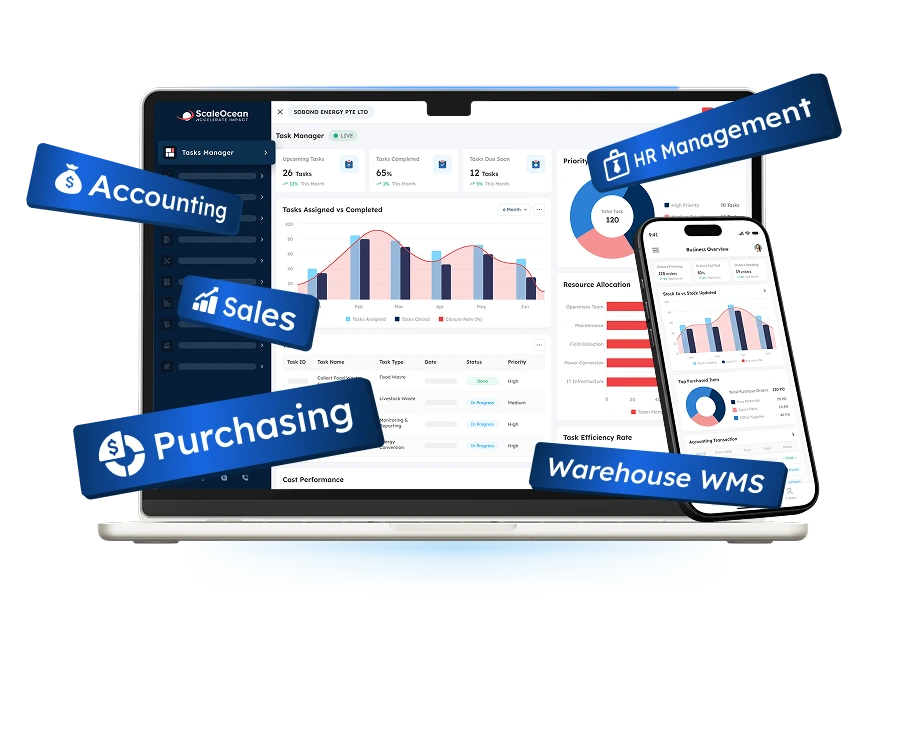
Another step to enhance a financial account is using accounting software. This tool helps companies automate construction accounting such as financial tracking, payroll management, and project reporting. The Integrated systems from accounting software also improve collaboration between teams.
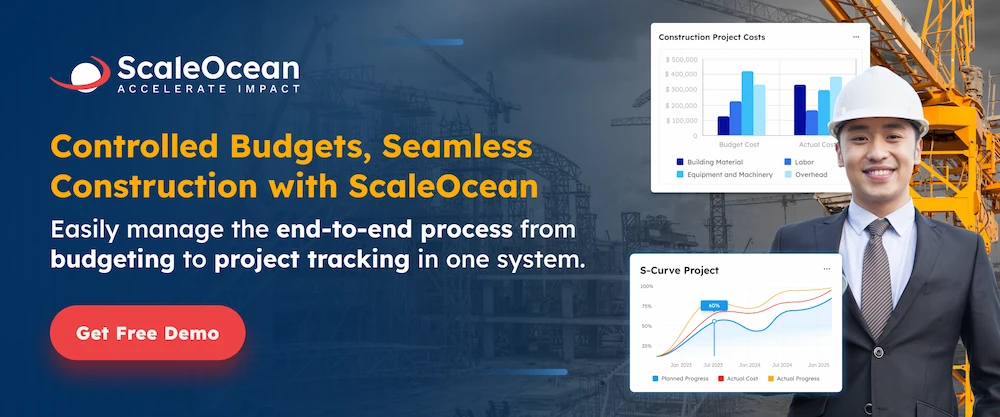
Moreover, in the Philippines, many contractors are adopting digital construction management solutions to improve efficiency. One of these solutions is ScaleOcean Accounting Construction ERP Software. It is to help track expenses & monitor budgets efficiently.
7. In Conclusion
Construction accounting helps contractors and companies manage project finances. Because financial flows are complex, businesses need a structured system to stay profitable. Accurate financial reports are also essential for proper job costing.
In other words, businesses need to maintain financial reports to get accurate job costing. Thus, in the Philippines, construction firms must follow proper accounting systems to improve financial visibility.
To make project management and finances easier, ScaleOcean Accounting Construction ERP Software provides an integrated solution for budgeting, accounting, reporting, and project monitoring.
You can also request a free demo to explore how the system can help optimize your construction business operations.
FAQ:
1. What type of accounting is used in construction?
Construction accounting is a specialized accounting system used to track project costs, budgets, payroll, cash flow, and revenues in construction projects while ensuring compliance with financial regulations.
2. How to record construction expenses?
Construction expenses are usually recorded through job costing, chart of accounts setup, transaction recording, account reconciliation, and financial reporting. Many companies also use accounting software to simplify tracking.
3. How to account for construction projects?
Construction projects are commonly managed using cash basis, percentage of completion, or completed contract methods, depending on project duration, payment structure, and business requirements.
















.png)