


Good financial management can determine the future of businesses and individuals alike, though many struggle with aspects of management, including budgets, unexpected expenses, and the investment process.
Managing financial elements from early can set businesses on a long path to financial success. Understanding what the most essential parts of financial management are would be a major element toward helping businesses establish their role within a modern, competitive environment.
Therefore, in this article, we will examine what the concept of financial management entails, its importance, and the best practices to be followed by businesses.
 Key Takeaways
- Financial management is a method of strategically planning, arranging, and monitoring financial activities and resources to fulfill organizational objectives.
- Financial management goals are focused on maximizing profit, enhancing shareholder value, ensuring liquidity, managing risks, and more.
- Types of financial management include capital structure & planning, capital budgeting, financial decision-making, and working capital management.
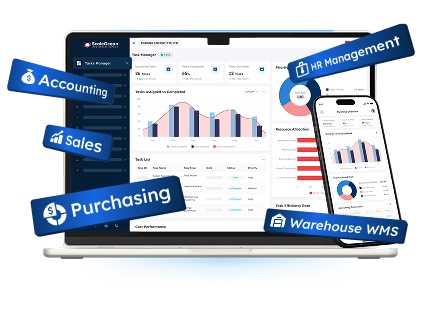
- ScaleOcean ERP helps businesses streamline financial processes, automate reporting, and provide real-time data, enhancing accuracy, decision-making, and operational efficiency.

What is Financial Management?
Financial management refers to the process of strategically arranging, monitoring, and planning a business’s financial operations and resources in order to achieve its objectives that will allow every department in a business to be in line with other departments.
The procedure can also be supported by and go hand in hand with corporate accounting. The most important aspects of financial management include cash flow and budgeting, used to estimate and meet future business demands.
This concept would involve the monitoring of financial planning activities and cash flow management of any business to enable operations to run without problems, while maintaining compliance and financial reporting for transparency.
It will allow businesses to make intelligent decisions about where to direct funds and assets in order to reach growth objectives and, ultimately, their long-term goals while respecting regulations such as GST and IRAS laws.
A balanced approach towards these elements will allow companies to overcome obstacles they face financially while remaining financially successful in the future.
Tactical vs. Strategic Financial Management
Tactical financial management takes a short-term outlook. It deals with immediate issues and daily operations.
Short-term issues in financial management relate to ensuring daily business operations go smoothly, resolving cash flow issues, and efficient resource utilization to support immediate needs of the company.
Strategic financial management deals with long-term vision and the overall business goals of the organization. It involves making financial decisions based on the company’s strategic goals and planning long-term investment projects and future growth of the business.
The Importance of Financial Management

A company can ensure that its daily operations continue to run as smoothly as possible if proper financial management principles are applied in businesses.
Resource allocation is also made possible by using these principles. Financial management also provides better decision-making power as well as ensuring regulatory compliance for any given business.
NPV can be implemented into these processes as it allows businesses to make strategic and sound investment decisions by evaluating project profitability, allowing firms to choose projects that are expected to deliver the greatest return, which in turn maximizes the potential for long-term success and viability within any business.
An understanding of financial management scope is what permits all these benefits to arise:
1. Strategic Planning
Financial management allows businesses to understand exactly which procedures should be applied to meet both short-term and long-term goals, and where businesses’ resources are directed to foster growth.
Through applying certain financial planning techniques, managers can guarantee that funds are wisely directed toward achieving targets.
Management must have adequate insight on business’ financial status to enable them to set reasonable business plans for future growth. Having a keen eye on the current financial position enables management to predict business problems and opportunities.
2. Economic Stability
Strategic financial metrics management is key to enabling the economic stability of a business, where business resources are efficiently utilized through managing finances to obtain desired outcomes.
Businesses can secure themselves from financial challenges and obtain consistent growth by monitoring various financial metrics as part of an economic strategy of resource management.
3. Informed Decision-Making
Accurate financial reporting, cash flow tracking, and budgeting forecasts help in making correct decisions about where to make investments, thus allowing a business to grow its profits sustainably by investing in smart strategies, which one may find from calculating profitability ratios.
4. Regulatory Compliance
Companies adhering to accounting standards and rules, and also local statutory needs, ensure that business operations remain legitimate by not being involved in any malpractices.
Using e-tax software is one good way to adhere to local statutory requirements, as it assists businesses to avoid tax penalties, meet obligations accurately, and maintain overall compliance with regulations.
5. Risk Management
By effectively using a financial management system, companies can monitor and deal with financial risks. Running a financial audit is one way to identify and reduce financial data inaccuracy.
This enables an organization to tackle economic downturns efficiently and survive its operations by being prepared for challenges with relevant information by identifying and minimizing threats by calculating potential assets and liabilities along with cash flow and revenue trends.
6. Financial Oversight
Strong financial control ensures that all divisions and sub-divisions of an organization operate with the aim of fulfilling an organization’s major goals.
Operating within budgets allows all departments to contribute to the greater vision of the organization, which is aimed at financial progress, by working efficiently without incurring excessive expenditure and losses.
7. Operational Procedures
The operational procedures that are set are an integral part of a financial management strategy.
Operational procedures are basically defined processes that guide each and every activity within the business that relates to financials. They ensure that processes are clear, concise, and always followed properly.
The Components of Financial Management
A systematic approach called Financial Management is designed to help the business achieve its goals, and it comprises the following crucial parts that work hand-in-hand:
1. Financial Planning
Creating an organization’s strategic blueprint to reach future goals is what Financial Planning entails. This includes setting objectives and budgeting/forecasting for a business, helping it to face long-term and short-term financial challenges head-on.
The function of the ERP for financial accounting helps to support this activity by using real-time data for improved budgeting and forecasting that enables businesses to have a precise view of their financial future.
2. Investment Decisions
Investment decisions revolve around determining which opportunities are most worth investing in to maximize future benefits. Businesses analyze the options available, the risks they entail, and then choose one that is in sync with their objectives of profitability and expansion.
A pro forma invoice can be a useful tool to determine future expenses when a large project requiring a big investment has been proposed.
3. Financing Decisions
Funding decisions involve finding the right mix between taking out loans and bringing in investment. It’s all about finding the balance between making sure the business has the money it needs to operate and invest without being financially unsound or overly expensive.
You can use something like accounts payable automation tools to make sure that you get the cash flow that you need. It will allow you to control cash outflow, make payments, and guarantee that payments to lenders and creditors are timely.
4. Dividend Decisions
Dividend decisions involve the correct balance between whether profits are given out to shareholders or they are reinvested for the company to invest in its own development.
Shareholders are very satisfied if the company gives them the profit share and also the returns they want out of the company.
At the same time, how much of the profit you choose to reinvest goes on to your ability to invest in your business to grow it. This may influence the growth of your business and the strategies that your company will take in the future.
The use of ScaleOcean ERP software in financial decisions will allow you to control the financing decisions, the investment decisions, the capital expenditure decisions, and the capital budgeting decisions in the business by providing the data you need.

Types of Financial Management
Financial management involves the process of implementing decisions and guidelines regarding your money that will affect the business in terms of your financial strength, your strategic direction, and long-term financial success. All types of financial management are covered below:
1. Capital Structure & Planning
The most effective capital structure and planning determine the right proportion of equity and debt used for business.
A proper capital structure helps the business minimize costs and risks and increase the financial strength of the business.
2. Capital Budgeting
Capital budgeting involves making investment decisions to make sure that the projects fit into the organization’s financial objectives. It also involves the evaluation of potential investments, weighing the risk, rewards, and costs to prioritize and choose opportunities.
An integral part of the capital budgeting decision involves having a clear picture of how you understand your inventory accounting to have a clearer perspective of your business’s financial situation and investment.
Successful capital expenditure (CAPEX) management ensures the business does not make decisions on long-term investments, which would lead to further growth for your business.
3. Financial Decision-Making
Financial decision-making refers to identifying funding sources and investment opportunities to maximize returns.
It helps ensure the efficient use of resources to achieve the organizational goals in terms of profitability and growth. This directly ties into overall business and enterprise financial goals.
4. Working Capital Management
Working capital management helps ensure that the business has adequate cash flow to meet its short-term obligations. It involves the management of cash flow, inventory, and accounts receivable so that day-to-day operations are efficient.
The regular bank reconciliation process is also important when working on cash flow to ensure accurate cash reporting, and you could also check out the cash flow statement format to get a clearer overview of how your cash flows.
Financial Management Goals
Financial management goals are objectives that help steer a business toward sustainable growth and financial strength. These objectives guide effective allocation of resources, risk reduction, and shareholder value maximization.
The use of financial figures like net sales will help businesses set financial management objectives around maximizing profits while controlling expenses, ensuring profitability over the long-term. The key goals of financial management are as follows:
1. Profit Maximization
Profit maximization involves focusing on increasing an organization’s overall profitability. This is achieved through strategic revenue streams and cost reduction, ensuring long-term financial sustainability and competitive advantage.
A primary driver for profit maximization is that the decisions made allow the business to focus on increasing profits and revenue throughout its operation.
Methods such as optimizing cash flow, investing in high-return projects, and avoiding non-essential expenditure are key strategies for improving profit margins and making smart financial choices.
2. Wealth Maximization
Wealth maximization is an objective of maximizing a company’s value to its shareholders. It focuses on making decisions that will ultimately increase stock price and dividends to benefit investors in the company, using various financial instruments to leverage such decisions.
In striving for wealth maximization, a company must consider long-term growth as its ultimate aim, always seeking to ensure steady growth of the company’s market value through effective strategies that allow shareholders to profit well by combining a healthy return with sensible reinvestment back into the business.
3. Liquidity Management
Liquidity management ensures a firm possesses enough cash flow to pay off its short-term liabilities, eliminating the risk of default or bankruptcy. It is crucial in that it ensures stable operations, creditors’ confidence, and investor support.
Effective management of cash flow requires continuous monitoring and proactivity, and according to the data we got from Irwin Insolvency in the Zippia report, 82% of companies go bankrupt due to their cash flow management not being effective.
By ensuring adequate cash reserves are available for the business, the business will be able to manage day-to-day operations with no concern.
4. Risk Management
Risk management involves the identification and assessment of potential financial risks and their subsequent mitigation in order to protect a company’s assets.
Risk management also helps ensure that a business operates in a safe and stable manner and is thus more competitive. Using the tools in accounting software helps a business stay compliant.
Risk management plays an essential role in maintaining a strong financial footing; careful examination and management of risks enable a business to withstand external shocks, minimizing any potential losses, and protecting its assets through the strategic application of tools like insurance and hedging.
5. Scenario Planning for Financial Forecasts
Scenario planning can play a pivotal role when it comes to forecasting your financial performance for your business, enabling you to consider different market environments and how the business will be able to function within them.
Preparing a few potential financial scenarios for the business will allow it to gauge the risks and potential opportunities, create robust financial forecasting, and prepare for these future environments.
6. Managing Investor and Board Relationships
Building and maintaining good relationships with investors and the board are crucial for financial performance. Trust is built through clear communication and frequent updates regarding the company’s finances, which also ensures the continuation of support and funding from these entities.
Addressing investors and board members’ concerns allows a business to integrate financial decisions to their needs while strengthening positive relationships.
Challenges in Financial Management for Singaporean Businesses
Singaporean businesses are faced with many financial management challenges, ranging from rising operating expenses and the complexity of regulations to the shortages in talent within the finance profession.
The management of these challenges is important in maintaining the competitiveness of the business in order to maximize business potential and future success, as elaborated in the sections below.
1. Rising Operational Expenses
One of the financial management challenges is the rising operating costs, which have a negative impact on profitability.
To combat rising costs, it can be managed by planning accordingly and having procedures for cost control, thus ensuring that expenses are distributed economically and quality and work are not compromised.
2. Navigating Regulatory Complexity
Stringent regulations regarding Singapore accounting standards, such as GST and PDPA, can be demanding.
The use of compliance software is essential as it ensures that all standards are complied with and it reduces the risk of incurring penalties as well as managing administrative procedures.
3. Talent Shortages in Finance
A deficiency in finance talent will hamper business growth. The use of government incentives such as SkillFuture will allow for the up-skilling of finance employees so that they can better manage the company’s finances.
4. Inefficient Manual Processes
The process of financial tasks that can lead to inefficient manual processing of tasks such as the use of a bookkeeping spreadsheet, is more prone to human error and hence can be tedious.
Through automation with technology, such as by utilizing the best invoicing software in Singapore, managing payroll and reporting processes can speed up the time taken to conduct processes and improve accuracy.
Streamline your Financial Management for Business with ScaleOcean

In the face of rapidly changing business environments, the need for organized and efficient processes has become critical. ScaleOcean accounting software helps to streamline processes, reduce complexity, and boost the overall productivity of businesses.
The ScaleOcean system takes care of operational processes and places you in charge of your business, giving you more time to invest in innovation and growth.
The use of a free demo will give you insight into how this solution can enhance and simplify your business with the features below.
- Automated financial reporting and compliance: Ensure accurate financial statements and compliance without manual effort.
- Real-time cash flow tracking and forecasting: Make informed decisions with up-to-date cash flow visibility and forecasts.
- User-friendly interface for seamless adoption: Simplified design ensures that teams can start using it with minimal training.
ScaleOcean ERP offers real-time accounting solutions with dedicated on-the-ground support in Singapore to reduce downtime due to operational lags. The business can also enjoy affordability, with government subsidies to allow businesses of all sizes to enjoy its accounting solution.
Beyond its features, ScaleOcean’s true benefit is revealed by how real-world businesses have utilized the system to succeed; as such, a retail business in Singapore managed to reduce its manual errors by 30 percent with its utilization of the ScaleOcean ERP system.
Conclusion
Achieving sound financial management is paramount to businesses aspiring to achieve long-term sustainability and success. The focus on budgeting, cash flow management, compliance, and risk management will assist businesses in increasing their profit levels and achieving financial stability.
Improving business financial management can contribute to profit enhancement of up to 25% and assist in better business decision-making and resilience.
In addition, the rise of digital solutions such as ScaleOcean’s top accounting software will ease business financial management processes to facilitate the control of your business’s financial position.
Find out how to enhance your business financial decision-making through ScaleOcean’s comprehensive financial tools, as businesses can grow their profits by up to 25% with effective financial management practices that are indispensable in the present competitive environment.
FAQ:
1. What are the 4 C’s of financial management?
The 4 C’s are key financial indicators that determine your financial health: cash flow, credit, customers, and collateral. Improving these areas helps you access better funding options. Cash flow is the most critical as it impacts your ability to keep the business running. Managing expenses and maintaining cash in the business is crucial.
2. What are the 7 principles of financial management?
1. Consistency in financial systems and policies over time
2. Accountability to explain how funds and resources are used to stakeholders
3. Transparency in work plans, activities, and financial reporting
4. Prudence in financial decisions
5. Sustainability to ensure long-term viability
6. Profitability by ensuring resources are utilized efficiently
7. Liquidity to meet short-term obligations and ensure operational continuity
3. What are the 4 R’s in finance?
The 4 Rs process involves Recognize, Reflect, Reframe, and Respond. The Reflect step is especially important as it helps you tap into your emotional intelligence. This approach allows you to better understand and manage your financial decisions for smarter action.
4. What are the four pillars of finance?
Many financial experts agree that financial health relies on four key pillars: Spend, Save, Borrow, and Plan. Actively working on improving each of these areas is essential. If you’re not satisfied with your financial health, here are some helpful tips to strengthen each pillar.























.png)