

Financial forecasting is the process of estimating a company’s future financial outcomes based on historical data, market trends, and strategic assumptions. It helps organizations anticipate revenue, expenses, and cash flow over a specific period with greater accuracy.
Financial forecasting is essential for businesses aiming to stay competitive, yet many struggle with unclear projections, inconsistent data, and reactive decision-making. Without accurate forecasts, companies risk poor budgeting, cash shortages, and missed growth opportunities in increasingly volatile markets.
Modern businesses need structured forecasting to stay ahead. By using reliable data and integrated systems, businesses can reduce uncertainty, improve planning accuracy, and respond faster to market changes or unexpected disruptions.
This article will therefore explore what financial forecasting is, why it matters, the key methods and steps involved, and how businesses can apply it effectively to improve planning, reduce risks, and drive sustainable growth.
 Key Takeaways
- Financial Forecasting requires that businesses be able to come up with reasonable guesses or estimates of their next financial movements using the information they have from the past.
- Financial Forecasting Methods include both qualitative and quantitative forecasting, which helps companies select the best method for the data they have.
- Challenges of Financial Forecasting include data inconsistencies, volatility in the market, and involve silo systems that can diminish forecasting accuracy
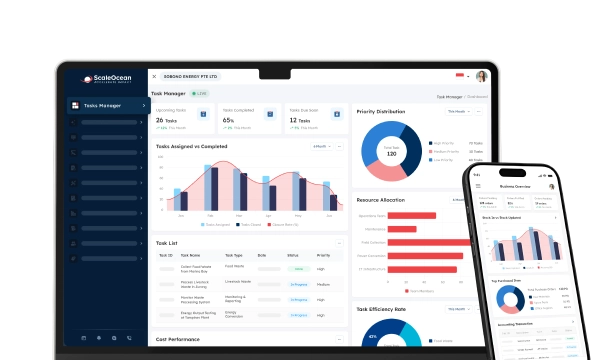
Forecasting with ScaleOcean Accounting Software is simple thanks to built-in forecasting tools, automation, and real-time data, visibility, and quicker decision-making regarding finances.
What is Financial Forecasting?
Financial Forecasting, also known as Forecasting Money Making, is the act of predicting the financial status of an enterprise using tendencies, marketplace details, and inferences. It assists the organizations to make a more accurate forecast of their cash flow and income/expenditure for a particular period.
It is a process designed to uncover patterns or identify risks and to model decision-making based on financial forecasting using data. A financial forecast is a crucial tool that a business can use to make sound, realistic financial goals for the business, invest, allocate resources, and plan for financial sustainability in various operations and departments.
 Also Read: Financial Management: Definition, Key Components, and Goals
Why is Financial Forecasting Important?
Financial forecasting can also assist companies to be more transparent about their forecasted financial results, and it may also be used to reduce monetary threats and uncertainties. This enables the leaders to plan for effective allocation of resources and to achieve an anticipated strategy to address financial issues rather than them affecting the systems.
Financial Forecasting has key importance, such as:
- Helps with optimum payroll, staffing, inventory, and production planning decisions.
- Supports and helps set up realistic business goals according to growth and money availability.
- Helps to establish budgets by forecasting revenues, expenses, and cash requirements
- Allows risk management, as it allows for a plan to be put in place to address downturns, crises, disruptions, ns etc.
- Attracts investors who have a clear idea of the value of the business, its profits, and its revenues. Evaluates and optimises numbers on a track-by-track basis
Businesses that don’t have financial forecasting usually have little visibility into finances and performance. This may lead to sub-optimal resource utilisation, missed targets, slow risk response, and a negative impact on the profitability of the business and sustainability.
The Four Building Blocks of Financial Forecasting
There are several factors that are interdependent in forecasting the finances, which give the grand picture of a business’s financial condition. These are all important factors to make sure that the projections are accurate, realistic, and goal achievement-oriented.
These predictive building blocks can be connected to create a comprehensive predictive forecasting tool that empowers businesses to make well-informed choices, manage their finances more accurately, and forecast future growth. It is very easy to include an element or two but forget to account for the rest, resulting in inadequate or incorrect financial data.
1. Sales Forecasting
Sales forecasting is the art of forecasting sales based on the history of sales, customer demand, and market conditions. It is also the basis for most financial forecasts since it affects almost all of the other financial metrics.
Accurate accountability of inventory will enable accurate planning of inventory accounting through accurate sales forecasting, which will help in managing accurate production and optimisation of resources. It also allows businesses to discover growth opportunities, alter their pricing structures, and react swiftly to any shifts in customer actions or market demand.
2. Income Forecasting
Forecasting income means estimating how much money a business will make and spend during a set period. When numbers point one way, profits might rise – another path could mean trouble ahead. What happens depends heavily on outside factors shifting beneath the surface. Clarity comes from watching where trends lead, not guessing outcomes.
Because of these predictions, firms get a clearer view of spending patterns while adjusting how they price items. With that insight, moves around funding or growing operations become less risky since outcomes feel more predictable. What looks like guesswork turns into steps based on what numbers suggest might happen next. Details about profit trends help shape choices even when conditions shift suddenly.
3. Cash flow forecasting
Starting, tracking money moving into a business matters just as much as watching what flows out. When funds aren’t balanced properly, staying operational gets tough. Without teamwork across departments, gaps appear fast because running short on cash hits hard, and sudden slowdowns happen.
Surprises pop up less when a business watches its incoming cash closely. Instead of guessing, matching bank reconciliation to bank statements keeps numbers honest. Payment schedules fall into place once money movements are clear.
When bills arrive, there is enough set aside because timing matters. Working capital stays steady, not by luck but through daily checks. Shortages happen fewer times when details are tracked ahead of time.
4. Balance Sheet Forecasting
Balance sheet forecasting estimates a company’s future financial position by projecting assets, liabilities, and equity. It provides a comprehensive view of financial stability and helps businesses understand how their resources are expected to evolve.
This forecasting method supports long-term planning by highlighting potential changes in financial structure. It enables businesses to maintain a healthy balance between assets and liabilities while ensuring sustainable growth and financial resilience.
Financial Forecasting Methods

Financial forecasting methods help businesses estimate future performance using structured approaches. Choosing the right method depends on data availability, business complexity, and forecasting goals, ensuring projections remain accurate, relevant, and aligned with real operational conditions.
In more advanced cases, businesses may also consider the impact of financial instruments, such as derivatives, loans, and investment portfolios, when building forecasts. Incorporating these factors provides a more comprehensive view of potential financial outcomes and risks, enabling better-informed decision-making and strategic planning.
These methods are generally divided into quantitative and qualitative approaches. Quantitative methods rely on historical data and mathematical financial forecasting models, while qualitative methods focus on expert judgment, market insights, and non-numerical information to support forecasting decisions.
In many cases, businesses combine these approaches with a financial forecast template to standardize and simplify the forecasting process.
Quantitative Forecasting
Quantitative forecasting uses historical data and statistical techniques to predict future financial outcomes. It is widely used because it provides measurable, objective results that can be tested, refined, and scaled across different business scenarios.
These methods are especially useful for businesses with consistent historical data. By identifying patterns and trends, companies can create reliable forecasts that support budgeting, planning, and strategic decision-making with greater confidence and accuracy.
1. Percent of Sales
The percent-of-sales method estimates future financial values based on a fixed percentage of projected sales. It assumes that certain expenses and assets will consistently scale in proportion to revenue growth over time.
This approach is simple and effective for short-term forecasting. However, it may lack accuracy in dynamic environments where costs do not increase proportionally with sales or when market conditions change significantly.
2. Straight Line
The straight line method assumes that financial metrics grow at a constant rate over time. It uses historical trends to project future values in a linear pattern without accounting for fluctuations or seasonal variations.
This method is easy to apply and useful for stable businesses. However, it may oversimplify complex financial patterns, making it less suitable for industries with unpredictable demand or rapid market changes.
3. Moving Average
The moving average method calculates forecasts by averaging financial data over a specific period. This helps smooth out short-term fluctuations and highlight underlying trends in revenue or expenses.
Businesses use this method to reduce volatility in forecasts and improve accuracy. However, it may lag behind real-time changes, especially in fast-moving industries where recent data is more relevant than older information.
4. Simple Linear Regression
Simple linear regression analyzes the relationship between one independent variable and one dependent variable. It helps businesses understand how changes in one factor, such as sales volume, impact financial outcomes.
This method provides more precision than basic trend analysis. However, it assumes a linear relationship, which may not always reflect real-world complexities in financial performance and market behavior.
5. Multiple Linear Regression
Multiple linear regression expands on simple regression by analyzing multiple independent variables simultaneously. This allows businesses to consider several factors, such as pricing, marketing spend, and demand, when forecasting financial outcomes.
It offers more accurate and comprehensive insights compared to simpler financial forecasting models. However, it requires high-quality data and careful analysis to avoid errors caused by incorrect assumptions or overfitting.
Qualitative forecasting
Qualitative forecasting relies on expert opinions, industry knowledge, and market insights rather than purely numerical data. It is particularly useful when historical data is limited or when forecasting new products, markets, or business strategies.
This approach helps businesses capture external factors such as consumer behavior, economic conditions, and competitive dynamics. While subjective, it provides valuable context that complements quantitative models and improves overall forecasting accuracy.
1. Delphi Method
The Delphi method gathers insights from a panel of experts through multiple rounds of questioning. Each round refines the responses, helping the group reach a consensus on future trends or financial outcomes.
This financial forecasting method reduces bias by anonymizing responses and encouraging independent thinking. It is useful for long-term forecasting but can be time-consuming and dependent on the quality of expert input.
2. Market Research
Market research involves collecting data directly from customers, competitors, and industry sources to support forecasting. This includes surveys, interviews, and analysis of market trends that influence financial performance.
Businesses use market research to understand demand, pricing expectations, and customer preferences. While insightful, it can be costly and may not always accurately predict future behavior if market conditions shift rapidly.
8 Steps: How to do Financial Forecasting
Financial forecasting should be carried out in a structured manner to be more likely to be accurate and consistent. Through a series of steps, companies can make more informed financial decisions, mitigate uncertainty, and enhance their planning, thereby positively affecting their growth and stability.
In addition, having a standardized procedure allows companies to enhance their predictions as they go. This enables businesses to respond quickly to market opportunities and threats that emerge, enabling them to make relevant, flexible,e and responsive projections.
While it is only a mock-up financial statement, it will provide some kind of structure that businesses can use to develop their financial statement for “real use”.
1. Define Purpose and Scope
Most importantly, you need to define what you want to accomplish in your financial forecast and come to a clear understanding of your plan. The forecast will be used to identify important objectives, financial parameters, and the business areas it will be used for to ensure the forecast is aligned with the business goals.
Besides, defining a scope aids in narrowing the process and streamlining it. Also, it assists in ensuring that stakeholders are aware of what to anticipate as it facilitates forecasting for planning, budgeting, and longer-term decision-making.
2. Gather and Clean Historical Data
Out of old records come the truest clues, revenue tallied, expenses logged, funds shifted, moment by moment. Only when each number holds steady across reports does real clarity begin to form behind what might happen next. Errors get stripped away first, duplicates vanish, wrong labels reshape themselves, and gaps close quietly. Without clean data humming beneath it all, even careful guesses soon drift into noise.
3. Choose a Time Frame for Your Forecast
Eventually, timing steps into the picture when setting deadlines for targets. Focusing on shorter timelines keeps daily operations moving, whereas aiming farther out influences major decisions and financial planning.
Later, hitting the right moment makes forecasts actually work. If strategies remain grounded, businesses respond more directly to financial needs, while quietly noticing future opportunities too. Being slightly early changes how you act, not only when.
4. Select a Financial Method
Then, select a financial forecasting method that will work for your company and the information you have. More accurate information can be obtained with quantitative models, qualitative information, or a combination of both.
An important point to consider is that the selected method should correspond with the actual business conditions. Otherwise, it risks having results that are misleading, and it will hamper financial planning.
5. Build Pro Forma Financial Statements
Then, create proforma financial statements that contain income statements, balance sheets,s and cash flow statements. These documents are used as a template to create a financial forecast and are a structured presentation of the financial forecast.
Additionally, they assist companies in gauging various strategies and comprehending expected results. It makes for an informed business investment, cost, and financial planning.
6. Apply Scenario & Sensitive Analysis
Afterward, apply scenario and sensitivity analysis to test different financial conditions. Businesses should create best-case, worst-case, and realistic scenarios to evaluate possible outcomes.
This step strengthens decision-making by preparing companies for uncertainty. In addition, it highlights key variables that influence performance, allowing businesses to adjust strategies proactively.
7. Document and Monitor Results
Then, document all assumptions, methods, and results used in the forecasting process. It ensures transparency and provides a clear reference for future analysis and improvements. It also supports transparency in internal reviews and external financial audit processes.
At the same time, regularly monitor actual performance against forecasts. This helps identify gaps, improve accuracy, and keep financial strategies aligned with real business outcomes.
8. Refine Regularly Based on the Previously Defined Time Frame
Finally, update and refine forecasts regularly in response to new data and market changes. Businesses should follow the defined time frame to maintain consistency and accuracy in projections.
Ultimately, continuous refinement keeps forecasts relevant and reliable. Therefore, companies can stay agile, respond quickly to changes, and maintain strong financial control over time.
Financial Forecasting Example
As a practical financial forecasting example, a retail company wants to forecast its financial performance over the next 12 months using corporate accounting. First, it analyzes historical sales data, seasonal trends, and market demand to estimate future revenue growth.
Next, the company projects expenses such as inventory, salaries, and operational costs. Then, it builds pro forma financial statements to understand expected profitability, cash flow, and overall financial position under normal business conditions.
After that, the business applies scenario analysis to test different outcomes. For instance, it evaluates how a drop in demand or rising costs could affect cash flow, allowing leaders to prepare contingency plans in advance.
Finally, the company compares actual performance with its forecast each month. As a result, it identifies gaps early, adjusts strategies quickly, and continuously improves forecast accuracy.
Who Uses Financial Forecasting

Financial forecasting supports decision-making across multiple roles within an organization. Each stakeholder relies on accurate projections to plan, allocate resources, and maintain financial control, ensuring alignment between daily operations and long-term strategic objectives.
- CFOs and Finance Teams: CFOs and finance teams use financial forecasting to manage budgets, control cash flow, and guide financial strategy, while also ensuring accurate reporting and maintaining overall financial stability across the organization.
- Business Unit Leaders: Business unit leaders rely on forecasts to plan operations, allocate resources, and set realistic targets, ensuring their departments contribute effectively to company growth while maintaining efficiency and cost control.
- HR and Workforce Planners: HR and workforce planners use forecasting to align hiring, compensation, and workforce planning with financial capacity, helping businesses maintain productivity while avoiding overstaffing or understaffing issues.
- Investors and Boards: Investors and board members use financial forecasts to assess performance, evaluate risks, and guide strategic decisions, ensuring the business remains attractive, sustainable, and aligned with long-term financial goals.
Forecast vs. Actuals
Forecast vs. actuals compares projected financial performance with real results. Businesses use this comparison to evaluate accuracy, identify gaps, and understand where performance deviates from expectations.
Moreover, this process helps companies adjust strategies quickly. By analyzing differences, businesses can improve forecasting accuracy, control costs, and respond more effectively to changing market conditions and operational challenges.
Financial Forecasting vs. Financial Modeling
Financial forecasting focuses on predicting future financial outcomes based on historical data and trends. It provides estimates of revenue, expenses, and cash flow to support planning and decision-making.
In contrast, financial modeling builds detailed mathematical representations of a business. While forecasting provides projections, modeling explores different scenarios, assumptions, and variables to analyze potential financial outcomes in greater depth.
Financial Forecasting vs. Budgeting
Financial forecasting estimates future financial performance based on trends and changing conditions. It remains flexible and updates regularly as new data becomes available, helping businesses stay responsive to market changes.
On the other hand, budgeting sets a fixed financial plan for a specific period. It defines spending limits and targets, while forecasting continuously adjusts projections to reflect actual performance and evolving business conditions.
Challenges of Financial Forecasting
Financial forecasting often becomes complex due to data limitations, market uncertainty, and internal misalignment. Without addressing these challenges below, businesses may struggle to produce accurate projections and make confident financial decisions.
- Inconsistent or incomplete data reduces forecast accuracy and leads to unreliable financial projections.
- Rapid market changes make it difficult to maintain relevant and up-to-date forecasts.
- Overreliance on assumptions can distort outcomes and misguide decision-making.
- Lack of integrated systems creates data silos and limits financial visibility.
- Limited expertise or tools can slow down forecasting and reduce effectiveness.
Therefore, businesses must actively address these challenges to improve the reliability of their forecasts. By strengthening data quality, adopting better tools, and aligning teams, companies can create more accurate and actionable financial forecasts.
Best Practice of Financial Forecasting
Starting strong means using methods that have already worked for others when predicting finances. Because these steps are tested, they let firms move quickly when things change around them. Staying steady isn’t luck – it comes from cutting down uncertainties ahead of time. When conditions shift fast, clear foresight keeps plans on track without surprise detours.
We found an insight stated by Medium, improving forecast accuracy by 10–20% can reduce inventory costs by around 5%, highlighting the direct impact of better forecasting on operational efficiency.
Out of nowhere, mixing clear steps with up-to-date tools shifts how forecasts turn out. Because of that shift, businesses start seeing numbers more clearly, work together with fewer hiccups, plus shape money choices at every corner.
Rolling Forecasts
Every few weeks, predictions get a refresh, so numbers stay close to what is actually happening. Staying in step with fresh information keeps the outlook useful beyond just one year.
Faster reactions to shifts come naturally this way. Because of that, plans shift smoothly when numbers change or markets move. Flexibility grows without extra effort and Adjustments happen while data flows, keeping steps aligned with what is happening now.
Scenario Planning
Picture drawing up several money forecasts, each built on its own set of guesses. Companies often sketch out rosy, grim, and middle-ground versions to weigh what might go wrong or right.
Built on shifting ground, this method sharpens choices when answers are unclear. When conditions shift, firms stay ready – foreseeing different paths keeps shocks small. Because change moves fast, acting early becomes possible.
AI Integration
AI integration enhances financial forecasting by automating data analysis and identifying patterns more accurately. Advanced algorithms process large datasets quickly, improving the precision and efficiency of forecasts.
In addition, AI reduces human error and manual workload. This enables finance teams to focus on strategic analysis while generating more reliable forecasts that adapt to real-time business conditions.
Cross-Functional Collaboration
Cross-functional collaboration ensures that financial forecasting includes insights from multiple departments. Teams such as finance, sales, and operations contribute data and perspectives to improve accuracy.
As a result, forecasts become more comprehensive and aligned with business realities. This collaboration helps companies break down silos, improve communication, and create more effective financial plans.
Track Integrated Financial Forecasts with ScaleOcean
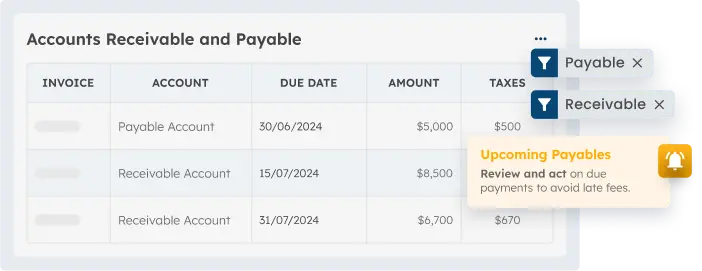
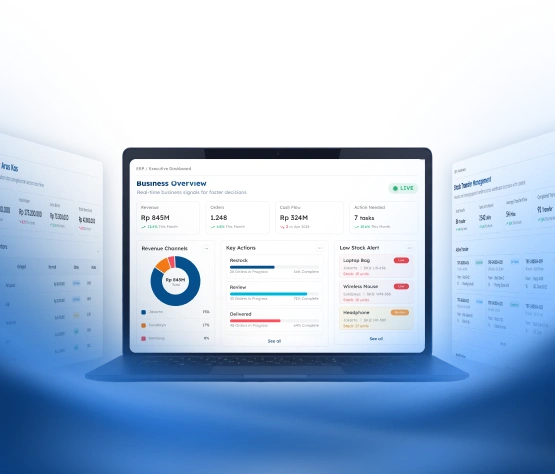
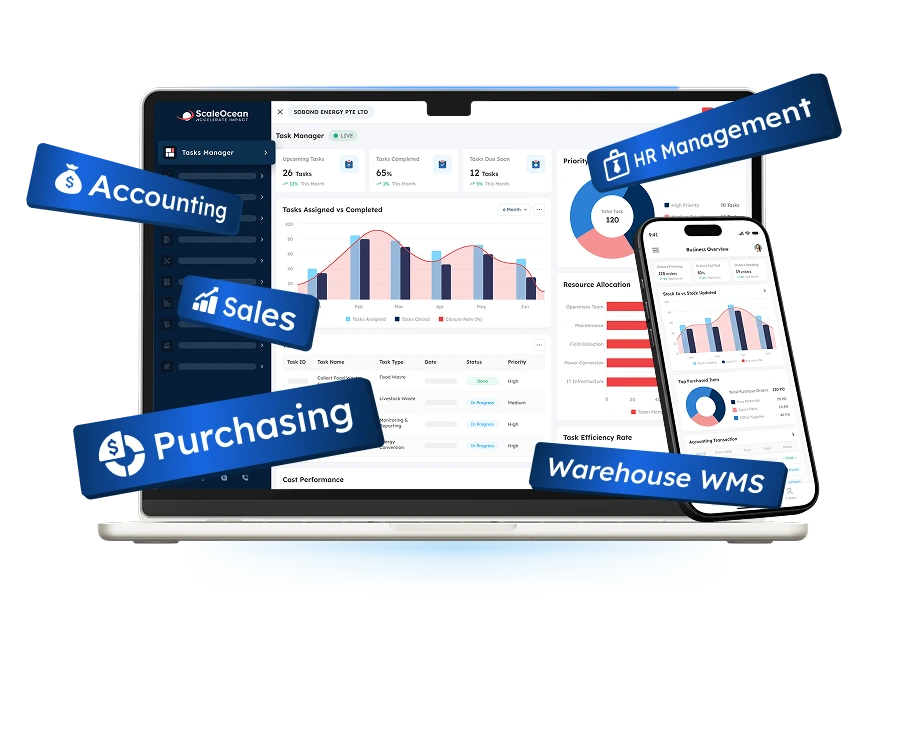
ScaleOcean Accounting Software provides an all-in-one solution with more than 200 integrated modules that businesses can customize based on their operational needs. As a result, companies can manage financial forecasting, reporting, and planning within a single, unified system.
Moreover, ScaleOcean offers flexible customization services that adapt to specific workflows. Businesses can also configure each module as a dynamic financial forecast template, tailored to their specific workflows and key financial metrics.
In addition, the system is designed to support industry-specific requirements and regulatory standards. It aligns with CTC requirements and automatically records grant disbursements into cash flow forecasts, helping businesses plan expansions and investments with greater confidence.
Key Features include:
- Tax Automation & IRAS Compliance (GST & Corporate Tax): ScaleOcean integrates directly with IRAS through seamless filing features. Therefore, businesses can automatically calculate tax provisions and include them in financial forecasts without manual intervention.
- Automated Bank Reconciliation: The system connects directly to major banks, including DBS, OCBC, and UOB. As a result, businesses always use up-to-date cash balances, improving the accuracy of financial forecasts and reducing reconciliation errors.
- Cash Flow Forecasting: ScaleOcean enables accurate cash flow projections by analyzing historical inflows and outflows. This helps businesses anticipate financial needs, maintain liquidity, and avoid unexpected cash shortages.
- Budget Planning: This module supports both short-term and long-term budgeting. It allows businesses to set spending limits, control costs, and compare planned budgets with actual expenses for better financial discipline.
- Financial Statements with Budget Comparison: Businesses can compare actual financial data against predefined budgets. Consequently, they can quickly identify discrepancies and make adjustments to stay aligned with financial targets.
- Forecast Budget: Using historical financial data, this feature predicts future budgets with greater accuracy. Therefore, companies can allocate resources efficiently and make strategic decisions with greater confidence.
Conclusion
Financial forecasting helps businesses plan, manage risks, and make informed decisions using data-driven insights. By applying the right financial forecasting methods, building accurate projections, and continuously refining forecasts, companies can improve financial control and support sustainable growth.
To streamline this process, software like ScaleOcean accounting ERP software offers an integrated platform that connects forecasting, budgeting, and financial reporting within a single system. With customizable modules, real-time data synchronization, and automation features, businesses can improve accuracy while reducing manual work.
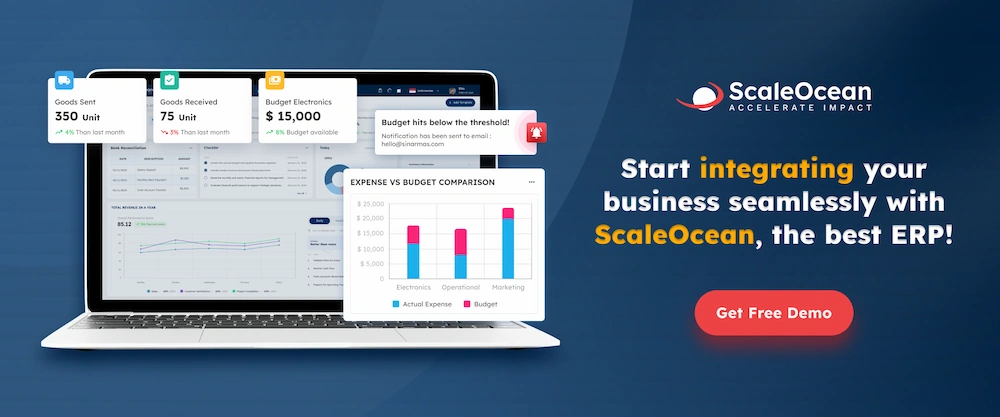
Therefore, if you want to enhance your financial forecasting and gain better visibility over your business performance, consider exploring ScaleOcean. Request a free demo today to see how it can support smarter, faster financial decisions.
FAQ:
1. How to build a specific forecast model (like a 13-week cash flow)
To build a 13-week cash flow forecast, develop a rolling 90-day model that tracks weekly cash flow rather than monthly accruals. This approach is considered the best practice for short-term financial insight, offering detailed visibility with enough lead time (about one fiscal quarter) to address potential cash shortages.
2. How to select software to automate financial forecasting?
Choose software that seamlessly integrates with your ERP to maintain data accuracy. Align the tool’s complexity with your team’s technical expertise. Use an Excel-based interface for ease, or a dedicated platform for more advanced forecasting, and ensure the implementation timeline aligns with your objectives.
3. What is the simplest forecasting method?
The simplest statistical forecasting method is the naïve approach, which simply extends past data into the future. It outperforms most machine learning methods for one-step-ahead forecasts in accuracy, while requiring much less computational effort.
4. What is the golden rule of forecasting?
The golden rule of forecasting is to remain conservative. A forecast should align with accumulated knowledge of current and past conditions to ensure reliability.





















.png)