A financial instrument is referred to as a tradable financial contract or document that grants a financial obligation or right. Investment, risk management, and capital allocation are made possible by them. Cash, debt, and equity, along with sophisticated derivatives, are the three primary asset types into which instruments are generally divided.
According to Great Eastern, an OCBC survey found that 68% of Singaporeans invest, averaging S$20,000. Younger people aged 25 to 44 typically invest 15-17% of their pay. This shows a significant rise in the use of financial instruments as essential tools for building wealth and managing risk.
Therefore, in this article, the depths of financial instruments will be explored, and what they are and how they can be used to maximize wealth will be clarified. Different types of financial instruments, such as cash, equity, and derivative-based instruments, will be discussed to help manage these financial assets efficiently.
Key Takeaways
Financial instruments are assets that can be converted into money (or an obligation of one party to the other).
A financial instrument is a contract or asset that has monetary value; it is basically an obligation of one party to another. Any financial aspect can be involved, such as a bank loan, buying shares, etc.
Simple examples, such as savings accounts, or complex, such as derivatives with multiple conditions. While the basic concept of a financial instrument is that it aids individuals or entities to manage their money, including in the sense of generating returns, it also assists in the transfer of capital to more effectively.
Financial instruments are vital for protecting and growing your business assets. They act as handy tools for investing, managing risk, and funding your plans. By knowing the different types, you can make smarter choices to reach your goals while keeping risks low. Here are the main categories of financial instruments:
Cash Instruments
Cash instruments are probably the most straightforward kind of financial asset out there. We’re talking about things like treasury bills, bank deposits, and loans, assets whose value is set directly by the market. Proper bank reconciliation ensures these transactions are accurately reflected in your accounts, maintaining consistency.
Since they’re usually easy to convert to cash, they tend to work well for short-term planning or quick liquidity needs. A lot of businesses lean on them just to manage daily operations or to stash extra funds without tying them up for too long.
Derivative Instruments
Derivative instruments are basically contracts that get their value from something else, like a stock, bond, or sometimes even a rate like interest. You’ll often hear about things like futures, options, or swaps being used in this space, and each one plays a different role depending on the situation.
They’re mostly used either to protect against risks or to take a bet on market movements, depending on what you’re aiming for. They can be complex to navigate, but when used right, they offer a practical way to manage uncertainty or lock in certain positions over time.
Foreign Exchange Instruments
When companies are dealing across borders, foreign exchange instruments tend to come up pretty quickly. They’re not just about trading currency. They’re more about helping manage all the ups and downs that come with shifting exchange rates.
Tools like forward contracts or currency swaps are often used so businesses can sort of “lock in” a rate ahead of time. This kind of predictability helps keep things steady, especially when margins are tight and you’re trying to avoid surprises.
Asset Classes of Financial Instruments
People who talk about financial instruments normally talk about them by asset class, kind of like the bucket. There are two massive ones that you will hear a great deal about, which are distinctly different: debt-based and equity-based.
None of them is wrong; they are just different, so it depends on your financial objectives. Some businesses prefer to borrow money to maintain their financial control, while others prefer equity financing, as it allows them to raise capital without incurring debt. Below, we examine further details about the classification of financial instruments:
Financial Instruments Based on Debts
Debt holdings are like bonds, loans, or even some type of notes, and they essentially permit a company to borrow money and then pay it back later, typically along with interest. An alternative to funding, which may be helpful if control issues are a concern.
Generally, they are perceived as being less risky compared to stock trades, primarily in view of the fact that there is a clearly stated repayment plan. However, there is pressure to repay, and so timing and cash flow are very significant when companies do this.
Financial Instruments Based on Equity
Equity shares can be stocks, which enable you to be an actual owner of a company. It’s betting on its returns or its price rising. Clever inventory accounting helps manage these assets, which directly impacts their overall value and how the stock performs.
Stocks are riskier than other types of financial instruments, but offer the possibility of higher returns. It is a typical path for companies that are not looking to borrow, so it makes sense for companies looking for long-term growth and/or low cash flow.
4 Main Characteristics of Financial Instruments
When you look at any financial instrument, whether it’s a bond, a stock, or something more niche, it usually boils down to a few key traits. The main ones people tend to focus on areliquidity, risk versus return, how long it lasts (maturity), and how easily it can be traded or sold.
Each of these plays a role in figuring out whether an instrument makes sense for a particular strategy. Understanding these characteristics can really shape how financial professionals approach their planning or day-to-day decisions. So, here are the main characteristics:
1. Liquidity
Liquidity is basically about how fast you can turn a financial instrument into cash, without taking a loss in the process. Cash and equivalents tend to sit at the top when it comes to this, which makes sense since they’re already cash or pretty close to it.
If you’re dealing with short-term costs or sudden shifts in the market, having something liquid on hand helps a lot and supports more reliable short-term financial forecasting. On the flip side, illiquid assets might grow in value over time, but they can also lock up your funds when you need them most.
2. Risk and Return Profile
When it comes to financial instruments, there’s always some level ofrisk and return involved. It’s like nothing’s ever completely without tradeoffs. Lower-risk options tend to be more stable, but naturally, they don’t usually deliver high returns, while the riskier ones can offer bigger gains, though not without a fair bit of unpredictability.
Getting a feel for this risk-return balance is key, especially when you’re trying to map out investments that support your broader financial goals for business. It’s a practical way to stay aligned with what the business actually needs at different stages of growth.
3. Maturity
Maturity basically refers to how long a financial instrument stays active before it reaches the end of its term. Some wrap up in just a few days, while others might stretch out over several years, or even decades in some cases.
Picking the right maturity really comes down to a mix of things like your cash flow timing, risk appetite, and when you actually need the return. It’s not a one-size-fits-all situation, so what works for one business might not make sense for another.
4. Marketability
Marketability basically comes down to how quickly or easily someone can sell or pass a financial instrument to another party. That can shift depending on things like how complex the instrument is, what the current market looks like, and whether there’s strong enough demand behind it.
When something’s highly marketable, it gives businesses more room to move, especially when the market starts acting up. Having that kind of flexibility makes a real difference for companies that need to stay responsive and avoid getting stuck with something they can’t shift.
Because of this, ScaleOcean ERP offers a range of features and modules that support the key characteristics of financial instruments mentioned above. It enhances marketability, providing businesses with the flexibility to adapt quickly in a changing market, ensuring they’re always prepared for new opportunities.
What Are Some Examples of Financial Instruments?
Some of the more familiar examples of financial instruments include stocks, ETFs, mutual funds, real estate investment trusts (REITs), bonds, checks, certificates of deposit (CDs), bank deposits, and loans. Companies commonly use these for various financial purposes, depending on their structure or growth stage.
In addition, more complex financial instruments like interest rate swaps and credit derivatives come into play for larger firms or industries that require sophisticated financial strategies.
However, according to CGS International in 2025, with Singaporean youth having a digital financial literacy score of just 56.7, there’s a clear gap in understanding such advanced tools.
Significance of Financial Instruments
Financial instruments serve several functions in the global economy. They are essential for raising funds, managing risk exposure, and optimizing resource allocation. These tools help businesses navigate financial markets, support investment strategies, and ensure smoother financial planning, all of which contribute to economic stability and growth.
And when they’re combined with systems like financial audit platforms, it becomes easier to stay aligned with regulations. This kind of integration helps build trust across teams, investors, and anyone else watching the numbers.
How to Manage Financial Instruments Easily with ScaleOcean?
The accounting software from ScaleOceanis easy to use in managing financial tools. With integration between asset and revenue management and accounting, every transaction in stock or bond is immediately applied to your general ledger.
It gives you a simplistic and clear picture of all your finances because ScaleOcean is a full-fledged service, growing in cost. The software can be fully customized, works best for the big player as well as a new start-up. This software ensures that the platform is tailored for your business, and not vice versa.
ScaleOcean will also give you the best possible free tools at your disposal with its grants for CTC up to 70% of funding. This will enable you to make your finances work even better, and you’ll grow even faster for a much lower spend to implement. Let’s look at all the exclusive ScaleOcean attributes:
IFRS Compliance: adheres to the most recent IFRS standards (including IFRS 9 or IFRS 109) to ensure compliance with Singapore’s regulatory requirements.
AI Cash Flow Forecasting: Utilizes machine learning to analyse historical data and market trends, then generates forecasts to prepare for potential cash flow positions and make informed decisions.
Automated Receivables/Payables: Payment processing is smart and efficient for businesses with the help of automated receivables/payables.
Asset and Instrument Valuation: In real-time, and with accuracy, it valuates assets and instruments to deliver precise balance sheet reporting.
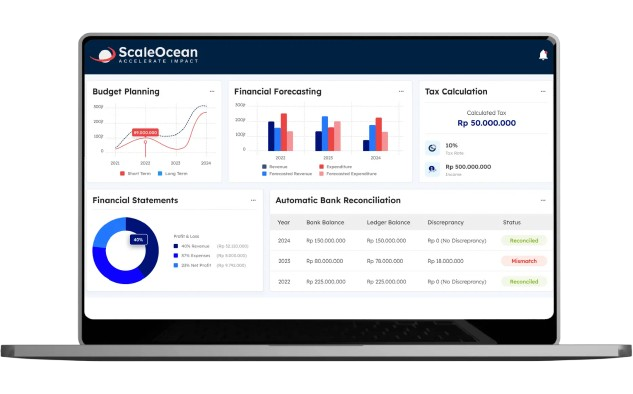
Smart Bank Reconciliation: Unmatched transactions are matched with high-level accuracy–even when they don’t match by description–and maintain the most accurate cash balance. Besides the above tools,
ScaleOcean also offers extra modules and other features specific to your industry. These are multi-tools that can help you to smooth out your work in all its aspects. So, why don’t you try ScaleOcean’s free demo and discover for yourself how beneficial ScaleOcean can be!
Conclusion
Financial instruments are important in various business finance transactions, including simple cash deposits and the working out of complex derivatives. They aid in risk management, financial support, and ensure your strategy is in line with the market. However, they also have hurdles to navigate, such as classification, tracking, and compliance, that can get very messy when it comes to tools and technology.
This is why the accounting software provided by ScaleOcean is the best choice to simplify accounting matters. It integrates easily, offers real-time data, and has AI for predictive analytics to give insights and control over finances. Furthermore, you can try their specialties with a free demo of ScaleOcean available.
FAQ:
1. What are basic financial instruments?
Basic financial instruments are contracts that generate financial assets for one party and financial liabilities or equity for another. Examples include cash, loans, receivables, bonds, and stocks, which arise from standard business transactions and simple agreements.
2. What is a financial instrument according to IFRS?
According to IFRS, a financial instrument is any agreement that creates a financial asset for one party and a financial liability or equity for another. This standard governs how financial instruments should be recognized and measured in financial reporting.
3. What financial instrument is best for beginners?
For beginners, simple financial instruments like stocks, bonds, and mutual funds are the best options. These instruments are easier to understand, track, and trade, making them ideal for those who are new to investing.
4. What are Level 1, 2, 3 financial instruments?
Levels 1, 2, and 3 are categories used in the fair value measurement hierarchy in financial reporting. On level 1, instruments have prices quoted in active markets (like listed stocks). Level 2 uses observable market data other than quoted prices. Level 3 involves unobservable inputs based on models or assumptions.













 Key Takeaways