

The lifeblood of every business is its revenue streams, which demonstrate how money comes into a business. Whether you’re selling goods or services, mastering these money-making channels is key to building a sustainable and profitable business.
Based on the data we found from Marketing Interactive, in Singapore, 84% of companies are doing digital marketing, but only 17% report direct revenue growth. This illustrates the importance of aligning your marketing strategy to a revenue plan to truly realise your business’s potential.
To address this, in this article, we’ll explore what the revenue stream means in business, including what revenue streams are, how these income sources operate, and how to manage them. By following this article, you’ll learn how to spread out your sources of income and manage growth over time.
 Key Takeaways
- Revenue streams are basically the different ways a business brings in money, whether that’s through services, products, subscriptions, or something else.
- The importance of revenue streams is that they help reduce risk, improve stability, and make your business more attractive to investors.
- Knowing how to analyze revenue streams helps identify profitable areas and uncover where improvement is needed.
- ScaleOcean’s revenue software helps you manage all streams in one platform, giving you clarity and control at every step.
What is a Revenue Stream?
Revenue streams are the methods by which a business makes money, like subscriptions, pay-per-transaction, service fees, or project-based fees. Common revenue streams synonym are include income stream, source of income, cash flow, and revenue source, so if you ever come across those words, it all means the same thing.
Having multiple streams can enhance financial security, allow for better predictions, and drive growth by providing different value propositions to customers, such as selling an asset, charging for use, or licensing.
Basically, it’s just about the revenue sources, how you make money. Revenue streams in a business plan in most companies either use a primary stream or a variety, depending on their business model. If you’re thinking, What on earth is a revenue stream, it’s not as fancy as it might sound. Put simply, it’s just how a business makes money.
What Is the Importance of Revenue Streams?
A source of revenue is key to your financial health. According to what we found in the Ministry of Finance, similarities exist between the $27.14 billion of the NIRC in the year 2025, in that income plays an important role when it comes to dealing with change and growth.
So, revenue streams are more than just keep the lights on, it’s also because they’re also the lifeblood of a sustainable business. By mixing up your sources of income, you can smooth out operations, lower your risks, and plan for future growth with confidence. Here’s why having multiple streams is so vital:
- Stability: Depending on a sole source of income may feel risky in the face of any changes that happen to that stream of income. Multiple sources provide insurance in case of unpredictable movements.
- Growth Planning: Knowing where your income streams are coming from helps you plan for future investments wisely and makes the whole process easier for your team. Having a clear direction of income is crucial.
- Risk Management: The market constantly changes and sometimes suddenly enough for one to be unprepared. The diversification of sources of income is associated with decreasing susceptibility to any sudden change.
- Investor Appeal: Besides the amount of profit you may earn, investors will consider the direction of the movement. Multiple sources usually indicate healthy management and may attract more investors than ever.
- Cash Flow Insight: You need to be aware of the sources generating stable cash flows. Understanding the seasonality of different revenue sources will allow you to monitor the burn rate better.
How Do Revenue Streams Work?

Revenue streams icon can be defined as the different methods a business uses to make money from its operations. Irrespective of whether a firm sells goods or offers subscriptions or licenses, it ultimately involves converting value to cash flows, in accordance with the Singapore financial accounting standard.
A revenue stream operates on a pattern of its own. There may be streams that follow a consistent pattern, and there will be those that vary according to seasonal changes or single purchases. Identifying the pattern assists in optimizing the profit potential as well as the management process.
For instance, a retail enterprise may depend upon a high volume of low-cost sales, while a software-as-a-service company depends on monthly/annual renewals. Ultimately, what the firm should do is find out what works best for its revenue streams business model canvas.
10 Types of Revenue Streams and Their Examples
Revenue streams are the real blood circulation of your business that earns you money from several sources. If you get familiar with the different types, it will help you design a complete strategy for your organization.
Let us examine some of the most popular revenue stream examples:
1. Subscription-Based Model (Recurring Revenue)
A subscription-based model can guarantee that the business gets its cash flows flowing because businesses are based on paying the same price consistently to their consumers for the goods or services supplied to them.
Subscription-Based Model (Recurring Revenue) Examples:
- Subscription-Based Model: Consumers can use the product or service by paying the stated fee regularly. Such as Netflix, Disney+, Hulu, and Spotify. Etc subscriptions.
- Membership Model: In this business model, consumers pay a flat fee for their membership and then get certain privileges due to their membership status. For example, this may include gyms or online groups where members can get exclusive offers.
- Subscription Box System: In this model, companies send their goods in subscription boxes, and the frequency of shipment depends on the consumer’s choice. Examples may include subscriptions for food or beauty goods like Birchbox or Blue Apron.
- Brokerage Model: In this revenue streams example, an intermediary organization takes its commission for each successful transaction between the buyer and seller. Examples of such websites are real estate platforms or eBay.
2. Transaction-Based Revenue (One-Time Sale)
Transaction-based revenue is when you make money on one stage of a sale. This may be your typical retailer or service provider that charges you once and never again for the service of buying something, like a new cell phone or a haircut. You’re paying for the service you received, not more, and this type is one of the best revenue stream examples for small businesses because it is easier to launch.
Here are the examples of Transaction-Based Revenue (One-Time Sale):
- One-Time Product Sales: These are simply one-time product sales. The customer purchases something, and that’s it. It could be a pair of shoes in the mall or a new computer on the Internet. You received your purchase, and you’re finished.
- Project Revenue: This is a one lump sum of money flowing in on the completion of a project according to a specific document/contract agreement. Imagine, for example, that you got a contractor to overhaul your office, or a Bhireda developer to build an application. They will ask for ‘X’ that is paid at the end of the contract, and they walk away.
3. Service-Oriented Revenue
The service-based revenue is created for providing services, including consulting, training, and technical support. Such kind of services can be charged either by time (by an hour, by a day, and so on) or through project costing, which can often obtain more revenue from unique clients over time.
Examples of Service-Oriented Revenue:
- Consulting Fees: The income from consulting fees is actually received when a person or business offers suggestions and comments to customers to fix their problem or increase their performance. These consulting fees are generally charged either on a fee-hour basis or a fee-project basis, such as management, technology consulting, etc.
- Transaction Fees: A company earns revenue from transaction fees when it imposes a fee for every time a transaction is made. This could be for every purchase, transfer, or payment the customer makes. For instance, a payment services company or e-commerce site that charges for every transaction.
- Audit Fees: This is income earned when a company or an audit firm renders a service and therefore provides an audit of the client’s financial statement. Normally, these audit fees are paid by organizations or the companies themselves, which need an independent view of their financial statements.
4. Licensing Revenue
Several companies generate licensing revenue from offering the product rights or business methods to other companies, for a fixed license fee or a royalty. Licensing revenue is common in the software, copyright, or trademark business.
Revenue streams examples of Licensing Revenue:
- Software License Fees: Arise when a company provides customers with the opportunity to use the software and charges a license fee. This fee could be one-time or recurring, and sometimes there is an additional fee for an upgrade or technical support. For example, the company can charge a licensing fee for some computer software like MS Office.
- Media Licenses Fees: A fee is produced when one company licenses the right to use its media content (e.g., music, pictures) to another company for a fee. This licensing fee allows the licensee company the distribution rights for the work, for instance, when a streaming company is paying for a movie to stream.
- Franchise License Fees: Cut of revenues deriving from the granting of a license to a third party to do business using a company’s name, products, operating system, etc. (e.g., fast food restaurant chain, branded retail outlets)
5. Ancillary Revenue
Ancillary revenue is generated by selling ancillary products or services that are in addition to the company’s main product. So, an airline, for instance, has the ability to make money via its baggage fees and food and beverage sales to passengers.
Here are the examples of Ancillary Revenue:
- Baggage Fees: An income stream created by charging passengers, in addition to a fee, for checked baggage. These fees are usually levied when the size or weight of the baggage brought exceeds a specific parameter set by the airline.
- In-Flight Service Fees: Money earned by the airlines for the sale of specific goods/services during a flight, for example, on-board meals/beverages, entertainment in-flight/on Wi-Fi access. These goods/services are often not covered by the base ticket price and form a separate revenue share.
- Real-Estate Revenue: Is the revenue earned from owning or possessing land, buildings, commercial space, etc. The example includes the income earned from property rental (retail, office, or residential property) owned by a company or an individual.
6. Freemium Model
The freemium model provides a basic service or offering free of charge, but charges for additional premium features. This revenue stream business model example is used by most software applications or games, where users can test the service before subscribing to the best version with all features.
Here are the examples of the Freemium Model:
- Free Ad-Based Model: Offers a free product or service to people, but earns income from its advertisements, which the user can access at no cost. The company makes money from the advertisements placed around the offers (e.g., in an app or a website)
- Limited Product Functionality: This means an offering with a “core” service for which the complete product or service is provided free, but some premium features or functionality are not delivered free, for example, paid software/web and apps.
7. Usage-Based Pricing Model (Metered Service)
In a usage-based pricing model, you charge for the frequency and extent to which a service is utilized. This model is commonly seen in utility-type services, e.g., electricity and mobile data plans, where a customer is charged according to how much electricity is consumed.
Here are the examples of the Usage-Based Pricing Model (Metered service):
- Usage-Based Pricing Model: Charge based on the frequency and amount of use of a service, for example, in this case, cloud service providers or mobile data providers, where the charge for data usage or storage is calculated on the usage level detected.
- Utilities: Utility charge services such as water, electricity, and gas are charged according to the amount of utility consumed by each customer, which is computed per unit used for electricity (e.g., kWh).
8. Retainer Agreement (Fixed Fee-Based System)
A retainer agreement is a situation in which a company receives a lump sum amount periodically for continuing service or support. It is used widely by Lawyers, consultants, or other service providers who will provide a stable income source.
Examples of retainer agreement (Fixed Fee Based System):
- Legal Services: In the legal services retainer model, customers pay a fee for accessing and using the services of a law firm/lawyer every month. It means that customers will pay for it each month instead of having to deal with per-session/meeting payments.
- Consulting Services: In the consulting services retainer model, customers will pay the consultancy a fixed fee for access over the long term of the agreement. Customers will receive access to the consultation with the consultant on a regular basis.
- Maintenance Contracts: In the maintenance contract, clients pay an amount for the equipment or building they acquire at a fixed rate. It is widely used by companies that provide the maintenance of machinery or equipment to avoid the trouble of maintenance and repair costs.
- IT Services and Equipment Maintenance: Companies use the retainer system, where the client pays a fixed sum of money each month for accessing IT services and equipment maintenance.
9. Advertising Revenue (Ad Model)
Advertising revenue is obtained when third-party advertisements are placed on the web pages or application space of any company or firm, and the companies obtain their revenue based on ad impressions or clicks obtained from the websites, digital media, or social networking sites.
Here is the example of advertising Revenue (Ad Model):
- Affiliate Partnership: Obtained when any firm or person markets or promotes some other person’s goods or services and earns commission from the sales obtained by their referrals, mostly used for generating revenue from affiliate links by bloggers, influencers, or price comparison websites.
10. Lending Agreement
Revenue from lending agreements is generated when a company provides loan funds to individuals or entities in exchange for interest or a commission on the amount borrowed.
This model is commonly used by banks, financial institutions, or companies that provide credit or financing.
Here are the examples of a Lending Agreement:
- Rental Agreement: In a rental agreement, a company or individual lends property or goods to another party for a specified period of time in exchange for periodic rental payments. Revenue is generated from rental fees, such as those found in the lease of property, vehicles, or equipment.
- Capital Lending Model: Involves lending money to individuals or companies for investment or business development purposes, in exchange for interest or commission payments. Examples include banks or financial institutions providing capital loans for business expansion or operational needs.
How to Analyze the Revenue Stream of a Business
It helps to break things down one by one, look at each revenue stream on its own, and figure out what’s driving it, who’s actually paying, and how frequently that money’s coming in. That way, you get a clearer sense of how each stream is performing, instead of lumping everything together for financial reporting.
From there, take a closer look at the profitability of each stream. You might notice some are quietly stalling while others are steadily growing. This kind of contrast can really help decide where it makes the most sense to double down or pull back.
Don’t skip the numbers that tell the real story for tracking things like churn, average revenue per customer, and gross margin. These core metrics paint a fuller picture than top-line revenue alone ever could.
9 Strategies for Developing New Revenue Streams

To keep on growing your business and maintain long-term success, you must find new revenue sources. Creating diversified sources of revenue will also keep your company’s financial management balanced and less vulnerable. These are nine ways you can unlock more revenue:
1. Implement Recurring Revenue Streams
These types of structures (such as subscriptions and retainer fees) can help provide a little stability. Having a better idea of what you can expect each month in terms of revenue makes it a little easier to plan.
And it’s nice that these setups can lead to longer-term relationships. And that can translate to a greater lifetime value, which is usually a win-win.
2. Explore New Markets and Channels
If you feel like you’ve plateaued with sales in your target market, you may need to look to other geographic areas or even other customer segments. Often, a slight tweak of your focus can reveal new opportunities for sales.
Or you could explore new channels of distribution, such as online marketplaces or even affiliate marketing. This variety of access points is often a good idea if you’re looking to reach customers that you may not already be connected with.
3. Expand Product/Service Lines
If you can offer something just a notch above your service (or just an add-on product), you can lift your average order value. It’s a strategy that gets more money out of your current customers without being too pushy.
Sometimes, you don’t need to create a whole new product. It’s often more about identifying what’s already there and just building on what’s there, rather than switching up the entire approach.
4. Monetize Your Expertise
If you’ve invested in learning some of the finer points of your business, chances are you can monetise that expertise somehow. It might be as simple as a workshop on a topic, an online course, or even speaking engagements.
This can work particularly well in a consulting or niche market where your insights are not easy to come by. There are people out there who are looking for that kind of expertise to help them save time, solve a problem, or just improve.
5. Leverage Existing Customer Relationship
It’s often much easier to sell a new product to an existing customer. If you have a good rapport, your current customers can be your best source of income without having to go cold-calling.
One of the ways this can work is by tailoring future offers to their past activity. Personalization not only increases the likelihood that they will accept. It also helps build a longer-lasting relationship.
6. Form a Strategic Partnership
Partnering with other companies can be a good way to get to new customers without having to create something new. You often see co-branded products very quickly lead to new streams of revenue when there’s something in it for both parties.
But it only works if there’s a fit, not just in theory, but also in practice and culture. When there is a fit, it usually goes more easily and without much friction, which can help avoid subsequent rework.
7. License and White-Label Products
If you have a hot product, it’s not uncommon for others to want to put their own brand on it. With licensing, you can allow them to do that without needing to handle all the marketing and distribution.
It’s a bit like white-label deals. Someone else does the marketing, and you get a piece of the pie, and this scale income model can be a way to generate passive income.
8. Digital and Technological Integration
It pays to use tools that handle the heavy lifting, from CRMs to basic automation. When hunting for the best revenue management system in Singapore, it’s not just about saving time but also about using tech to scale your business without making things feel more complicated.
Once the right systems are in place, you start noticing fewer slip-ups and a much clearer view of how things are actually performing. Data-backed decisions aren’t just a trend. They give you something real to work with when figuring out what’s working and what needs a rethink.
9. Upselling Strategies
Sometimes it’s not about attracting new customers, but assisting your existing ones with a bit more of what they want. An offer of an upgrade or add-on can help you increase your revenue without having to find new customers. For this to work, you need to make sure the offer is relevant to the customers’ needs.
And this is where the ScaleOcean Revenue Management Software helps because it assists in all of the strategies above, such as upselling, by giving us clear analysis, management of the client, and also providing additional functionality in order to offer relevant solutions that provide extra profit.

Choosing the Right Revenue Streams: Key Considerations
Picking the proper revenue stream means keeping the momentum of growth and financial stability in your business alive. With a few important factors in mind, it becomes possible to focus on the most profitable and relevant parts.
Key considerations while evaluating revenue streams include:
- Ideal Customer Profile: Knowing who you are targeting is crucial when building a product or service to sell. The clearer the customer’s needs and preferences are, the easier it becomes to make a product they’ll appreciate.
- Existing Customer Base: Looking at what the existing customers buy gives direction for how the products should evolve. Knowing what the target audience is interested in helps make the correct assumptions.
- Value Proposition: What benefit does your product provide that cannot be easily found somewhere else? Knowing your unique value proposition makes you stand out among competitors.
- Competition: While there is no need to spend much time analyzing your competitors, having an idea of who they are and their positions on the market can give insight into your price and strategy.
- Sales and Marketing Channels: It’s necessary to consider how effectively potential sales and marketing channels work before using them. Not all methods will prove effective for specific revenue streams.
- Existing Products and Services: There’s no need to develop an entirely new product if there are ways to expand existing products’ capabilities and bundle them into services that are even more attractive.
- Profit margin on product and service: Before scaling, you must ensure the effort is actually worth it. A healthy profit margin is a great sign that your business model is sustainable. It shows that investing more time and resources will likely lead to bigger returns and long-term success for your company.
Manage Revenue Streams Comprehensively with ScaleOcean
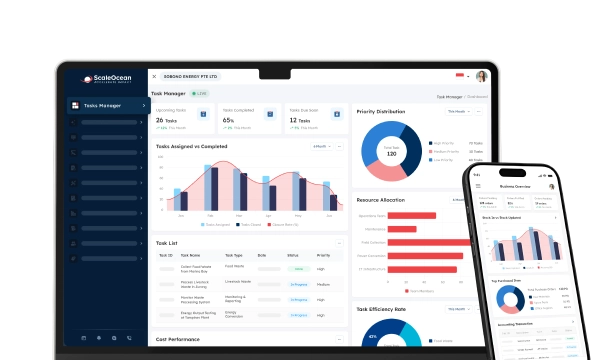
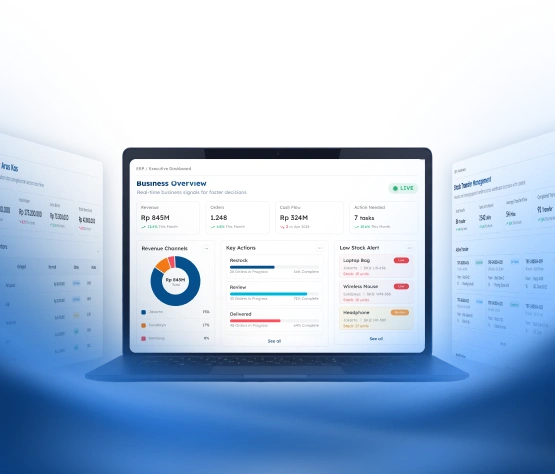
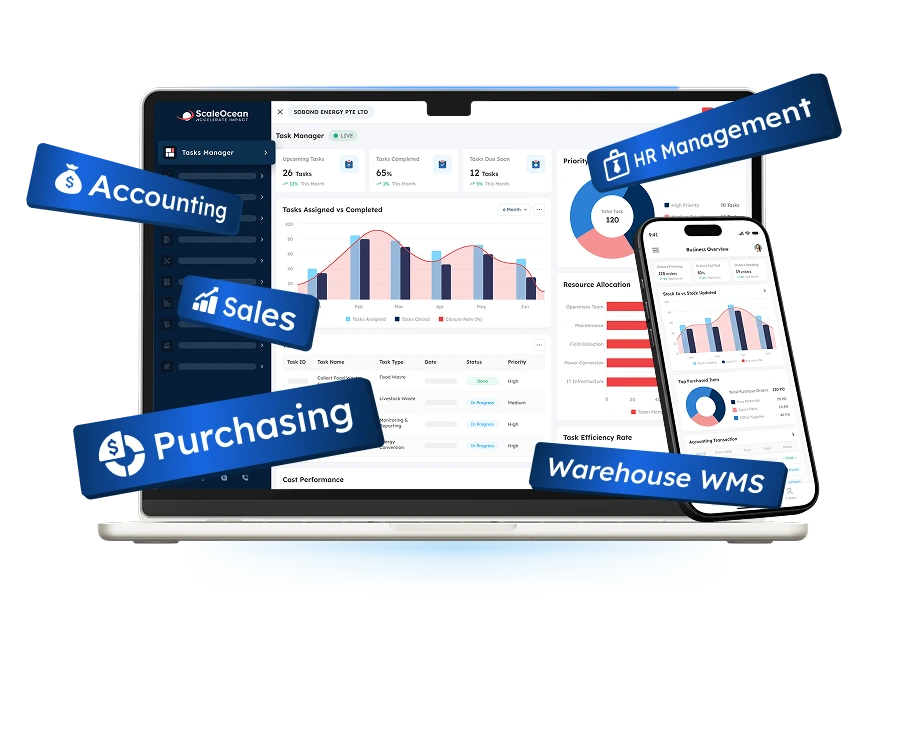
 ScaleOcean revenue management software brings your sales, accounting, and CRM together in one smart, AI-driven hub. By linking these tools, you can track your money in real-time, helping your team cut out errors and see exactly what’s happening across every department.
The software is built to fit your industry perfectly, letting you fine-tune your unique workflows. With AI automation, it spots trends and forecasts revenue, giving you the best strategies to grow while keeping your financial management smooth and easy.
ScaleOcean offers businesses a seamless way to access CTC grants, allowing you to leverage advanced tools without the financial burden. By using AI-driven features, ScaleOcean helps you sharpen your revenue strategy and smooth out financial tasks to boost growth, all while staying fully eligible for the CTC grant.
Here are the key features of the ScaleOcean software:
- Dynamic Pricing Automation: Optimizes revenue stream management by automating tariff and price adjustments based on real-time data.
- AI-Powered Sales and Market Trend Analysis uses artificial intelligence to identify trends and predict sales patterns, enhancing decision-making.
- Real-Time Revenue Tracking and Identification: Monitors actual revenue in real-time, enabling efficient up-selling and cross-selling strategies.
- Unlimited User Access with No Extra Fees: Provides unlimited user access to revenue reports and visibility, ensuring scalability without hidden costs.
- Automated Revenue Reporting: Generates automated revenue reports that can be accessed at any time, ensuring businesses stay on top of their financial performance.
On top of the unique features we’ve covered, ScaleOcean offers plenty of extra tools designed to help you manage your revenue streams. You can even grab a free demo to try these powerful features yourself and see how they can be customized to fit your specific business needs.
Conclusion
Ultimately, the key take-home message is that your revenue streams aren’t just rows and columns in a spreadsheet. Rather, they represent the pulse of your business and influence decision-making, provide direction, and uncover possibilities for growth.
If you’re thinking of expanding into new territories, refining your products and services, or simply learning about what drives your revenue streams, then you should have a clear understanding of every revenue stream that powers your company.
If you want to manage all of your revenue streams from a single source, then it’s worth considering how ScaleOcean revenue software can help. Centralizing all your revenue data will give you a clearer picture and improve strategic initiatives. Try out the free ScaleOcean’s free demo for yourself.
Revenue Streams FAQ:
1. What is another word for revenue stream?
A revenue stream, also known as an income source, earnings, or revenue flow, refers to how a company generates money from specific activities. These terms are often used interchangeably to describe the different channels through which a business earns its income.
2. How to create 7 streams of income?
1. Sell physical or digital products.
2. Provide services or consulting.
3. Create subscription-based income.
4. License intellectual property for royalties.
5. Monetize content through advertisements or sponsorships.
6. Invest to earn dividends or interest.
7. Rent or lease out assets.
3. How can I create new revenue streams?
1. Understand customer needs and challenges.
2. Explore untapped market niches.
3. Expand your product or service offerings.
4. Introduce subscription or recurring income models.
5. Form strategic partnerships.
6. Utilize technology for automation and scalability.
7. Share your expertise by offering consulting or online courses.
4. What generates 90% of business revenues?
In large corporations, approximately 90% of business revenues come from their extensive operations and diversified product offerings. These businesses have a broader market reach, unlike smaller businesses such as sole proprietorships or partnerships.





















.png)