




Construction bond plays a significant role in protecting construction projects from financial and contractual risks. They provide assurance that contractors will fulfill their obligations and complete projects according to agreed terms, helping project owners reduce potential losses.
In the Philippines, construction bonds are commonly required for government infrastructure projects and many private developments. Understanding what a construction bond is and how it works can help contractors improve compliance and strengthen credibility in projects.
 Key Takeaways
- A construction bond is a surety agreement that protects project owners by guaranteeing that contractors fulfill their contractual obligations.
- Construction bonds help reduce financial and performance-related risks by providing compensation or project support if a contractor defaults on the contract.
- Common types of construction bonds include bid bonds, performance bonds, payment bonds, maintenance bonds, and agreements to bond.
- ScaleOcean Construction ERP Software helps construction companies manage bidding processes, contract administration, and compliance requirements.

1. What is a Construction Bond?
A construction bond is a type of surety bond which ensures that a contractor performs under a contract. The bond can be used to compensate the owner if the contractor is unable to finish the project or does not meet the contract requirements.
It is essential to comprehend the meaning of construction bonds, as these bonds are utilized as a risk management mechanism for projects. They assist in the successful delivery of projects within scope and quality.
Construction bonds differ from investment bonds. While investment bonds are debt securities, construction bonds are surety agreements that protect against contractual risks. A typical construction bond involves three parties:
- Principal: The contractor purchasing the bond.
- Obligee: The project owner and person who needs the bond.
- Surety: The bonding company that issued the guarantee.
Construction bonds are widely used in the Philippines for government projects that involve the construction of infrastructure or private projects. There are also government procurement regulations that mandate certain types of bid and performance security for projects that qualify.
The Philippine Government Procurement Reform Act (RA 9184) may require winning bidders to submit performance security prior to signing of contracts to ensure that they fulfill their obligations. This is important to safeguard the project results and public funds.
2. How does a Construction Bond Work?
Understanding how a construction bond works becomes easier when looking at the process step by step. First, the project owner requires a contractor to obtain a construction bond before project commencement.
The contractor then applies for the bond through a surety company, which evaluates the contractor’s financial stability, project experience, and overall risk profile. Once approved, the surety issues the bond and guarantees the contractor’s performance.
If the contractor fulfills all obligations, the bond expires without any claim. However, if the contractor defaults on the contract, the project owner may file a claim against the bond. Depending on the bond terms, the surety company may:
- Compensate the project owner for losses.
- Arrange for project completion.
- Hire another contractor to finish the work.
- Cover eligible costs within the bond amount.
 Also Read: Top 9 Best Construction Document Management Software
3. Factors to Consider with Construction Bonds
Before submitting an application for a construction bond, contractors need to consider factors that can impact bond approval, bonding costs and project compliance. Here are some tips for contractors to consider in preparing for bonding requirements for several construction contract types:
- Financial Strength: First, check on a contractor’s financial condition before issuing bonds. Having good credit, stable cash flow and strong financial statements can help increase the likelihood of approval and could lead to a lower bond premium.
- Project Complexity: Secondly, more complex and larger projects will usually have a higher bond amount due to the higher financial and operational risk.
- Bond Cost: Construction bond premiums vary based on several factors, including contractor experience, credit history, financial stability, project value, and the type of bond required.
- Bond Requirements: Different project owners may require specific bond types and coverage amounts. Contractors should carefully review bidding documents and contract requirements before submitting proposals.
- Compliance with Philippine Regulations: For government projects, contractors must comply with applicable procurement laws and bonding requirements. The GPPB provides guidelines regarding bid and performance security requirements.
For further reference, contractors can review the official Philippine procurement regulations through the GPPB Revised IRR of RA 9184 and the Republic Act No. 9184 (Government Procurement Reform Act).
When selecting a contract structure, contractors should also consider how costs, risks, and project responsibilities are allocated. For example, a guaranteed maximum price arrangement can establish an upper limit on project costs, which may affect budgeting and financial planning.
4. Who Pays for a Construction Bond?
You can find a number of contractors that ask “who’s paying for a construction bond?”. In general, the contractor will secure and cover the bond. This is usually based on a percentage of the overall contract amount, and a premium is paid to the surety provider.
The cost of the bond is typically a cost included in the bidding process and project pricing and is paid for by the contractor in the beginning. Furthermore, the exact premium will depend on a number of factors including:
- Contractor creditworthiness.
- Company financial performance.
- Bond amount.
- Project risk level.
- Contractor experience.
The cost of the bond is typically less for contractors who have a solid financial history and reputation versus those with less experience or financial history. Moreover, project managers need to be mindful of this aspect so that they don’t face any disagreements in the future.
It is also important to note that sometimes it may be possible to negotiate the cost of the bond between the contractor and the surety provider depending on the scope of the project and the contractor’s status.
For projects where the final scope or labor requirements may change, a time and materials contract can provide greater flexibility by allowing payment based on the actual time spent and materials used.
5. Types of Construction Bonds in the Philippines

Contractors can benefit from knowing the various types of construction bonds in the Philippines and ensure that they are able to fulfil the requirements of the project and adhere to the procurement regulations in the country.
Understanding related contract arrangements, such as an incentive contracts or the others, can also help contractors better manage project obligations and expectations.
Because the required bond often depends on the contract structure (for example, a design and build contract that combines both responsibilities under one team). Here are some construction bonds type:
a. Bid Bond
A bid bond can be requested during the bidding process to verify that a contractor is serious in taking on a contract should they be awarded the job. This bond helps safeguard project owners against a bidder who declines to sign the contract.
Bid bonds are often requested for public works projects in the Philippines. Normally, the bid security required under RA 9184 is 2-5% of the Approved Budget for the Contract (ABC). A contractor who is bidding on a project may be required to provide a bid bond as a part of the bidding process.
b. Performance Bond
A performance bond is a guarantee that the contractor will perform in accordance with the contract, specifications and schedule. Should the contractor not perform, the surety can either pay damages to the owner of the project or complete the project.
In the case of a commercial building project in Metro Manila, a contractor might be a subcontractor for a number of other contractors and materials suppliers. A valid payment bond can offer financial protection if the contractor is experiencing financial difficulties.
c. Payment Bond
A payment Bond protects subcontractors, laborers, and suppliers by ensuring they receive payment for services and materials provided to the project. This bond helps prevent disputes arising from unpaid invoices and contributes to smoother project execution.
For example, a contractor working on a commercial building project in Metro Manila may hire several subcontractors and material suppliers. If the contractor experiences financial difficulties and fails to pay them, a valid payment bond can provide financial protection.
d. Maintenance Bond
A maintenance bond gives you peace of mind if you find some problems with the construction. Some project owners may call for this bond to safeguard against workmanship problems or defects that occur following the completion of the project.
In the Philippines, maintenance bonds are typically called for in the construction of infrastructures and buildings following final turnover. Moreover, if there are defects during the warranty period, the project owner can use it to ensure that corrective work is carried out.
e. Agreement to Bond
The agreement for the bonding is a pledge from a surety company that it will provide the bond if the contractor is awarded the project. It is a document that is often asked for in the bidding process, as it shows the contractor’s capability of getting the needed.
For cases in the Philippines construction industry, a contractor may include this document to assure the project owner that the required performance bond can be secured immediately upon contract award.

6. In Conclusion
Construction bonds play a critical role in protecting construction projects from financial and performance-related risks. By understanding what a construction bond is and the different bond types used in the Philippines, contractors can better prepare for construction opportunities.
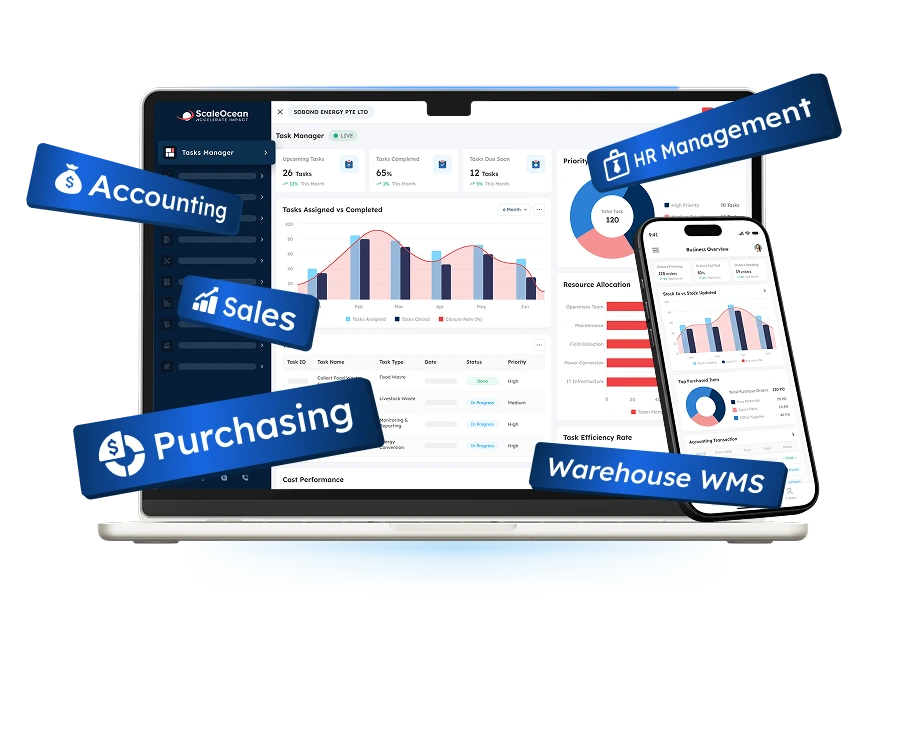
Managing bids, contracts, bond requirements, and financial records manually can become difficult as projects grow. To streamline operation, many construction companies adopt digital solutions such as ScaleOcean Construction ERP Software.
ScaleOcean helps construction companies manage bidding processes and contract administration through a one platform. If you want to improve project efficiency over construction operations, request a free demo today and discover how ScaleOcean can support your business growth.
FAQ:
1. What is the meaning of construction bond?
A construction bond is a financial guarantee that ensures a contractor fulfills contract obligations. It protects project owners from losses caused by incomplete work, poor performance, or unpaid subcontractors and suppliers.
2. Is a construction bond refundable?
It depends on the bond type. Cash construction bonds paid to an HOA or developer may be refundable if all project requirements are met. However, premiums paid for contractor surety bonds are generally non-refundable and simply expire after project completion.
3. How much is the construction bond in the Philippines?
Construction bond amounts vary depending on the project and bond type. For some residential developments, the required cash bond is often PHP 10,000 or 10% of the project cost, whichever is higher. Government projects may have different requirements.
















.png)