




Performance bond is a type of financial guarantee used in construction and infrastructure projects. It’s all about ensuring contractors meet their contractual terms and deliver work with the agreed specifications and quality.
It’s often requested for government procurement initiatives and a lot of private building contracts. With a better understanding of how performance bonds function, contractors can maximize their credibility and minimize risks on projects.
 Key Takeaways
- A performance bond is a type of surety bond that guarantees a contractor will complete a construction project according to the contract terms and specifications.
- Performance bonds work by involving a contractor, project owner, and surety company, with the surety providing financial protection.
- Under RA 9184, performance security is generally required for winning bidders in Philippine government procurement projects before contract signing.
- ScaleOcean Construction ERP Software helps construction companies streamline project management and contract administration within one integrated platform.

1. What is a Performance Bond?
A performance bond is a surety bond or insurance policy from a surety company or insurance company that guarantees a contractor will perform and complete a project as outlined in the contract.
Under this agreement, if the contractor fails to meet its contractual obligations, the project owner may file a claim against the bond. The surety company may then compensate the owner for losses depending on the bond terms.
Performance bonds are one of several types of construction bonds used across projects such as government infrastructure, commercial buildings, and industrial facilities. They offer a guarantee that the project owner is safe from possible operational risk.
2. How Do Performance Bonds Work?

Performance bonds function as a risk management tool that protects project owners against contractor default. Knowing what a performance bond is can benefit contractors and owners of projects by managing risk, below are the key details:
- Contractor Obtains a Bond: Contractor applies for a performance bond from a surety provider prior to the project starting. Before giving the contractor the bond, the surety assesses the contractor’s experience and competence to carry out the project.
- Bond is Submitted: After it is approved, the contractor deposits the bond with the project owner as a security and assurance that he will meet the contractual obligations.
- Project Execution: Contractor works on a project as per specification, schedule, budget and contractual terms.
- Contractor Default (If Applicable): If, for any reason, the contractor does not complete the project, or fails to meet contractual requirements, or withdraws from the project, the project owner may claim against the performance bond.
- Surety Response: Surety company investigates the claim and decides what to do. The surety has the option to pay for the completion of the project, provide an alternate contractor, or pay the project owner up to the amount of the bond.
3. Performance Bonds and RA 9184
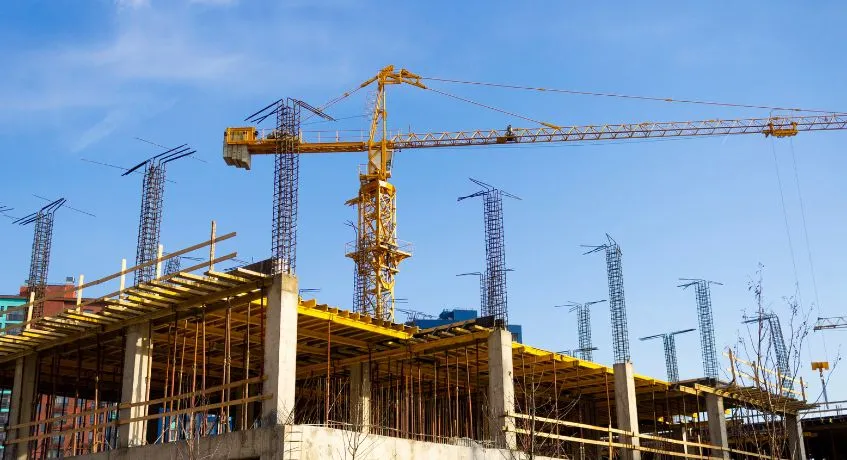
In the Philippines, performance bonds are commonly used in government procurement projects. While many contractors still refer to RA 9184, the procurement framework has been updated under Republic Act No. 12009, also known as the New Government Procurement Act (NGPA).
Similar to the previous requirements under RA 9184, RA 12009 generally requires winning bidders to provide performance security before contract signing. This serves as a guarantee that contractual obligations will be fulfilled.
The Implementing Rules and Regulations (IRR) of RA 12009 recognize several forms of performance security, including cash, bank guarantees, irrevocable letters of credit, and surety bonds issued by accredited providers.
In certain cases, eligible contractors may submit a Performance Securing Declaration (PSD) instead of a traditional performance security, subject to the applicable procurement rules and conditions.
Failure to provide the required performance security may prevent the contractor from proceeding with the contract. Contractors should review the latest provisions of RA 12009 and its IRR to ensure compliance with current regulations.
 Also Read: Bid Bond: What It Means and How It Works in Construction
4. Advantages and Disadvantages of Performance Bonds
Project owners and other stakeholders benefit from the use of performance bonds. But contractors should also take into account the possible expense and obligations involved in acquiring and keeping these bonds.
a. Advantages
Performance bonds offer a number of advantages to a construction project, listed below are some positive attributes of performance bonds protecting an owner from any disputes during the project execution.
| Advantages | Description |
|---|---|
| Financial protection | Project owners may receive compensation if the contractor defaults to fulfill contractual obligations. |
| Increased Credibility | Contractors with approved performance bonds demonstrate reliability, and commitment to project completion. |
| Improved Project Security | Performance bonds help reduce the risks of project delays, abandonment, and contract breaches. |
| Better Contract Compliance | The bond encourages contractors to meet project requirements, quality standards, and contractual obligations. |
Additionally, a performance bond is often used in conjunction with a construction payment bond, which is designed to safeguard subcontractors and laborers by ensuring that they are paid what they are owed as per the contract.
b. Disadvantages
While the advantages of performance bonds are significant, there are also some drawbacks and expenses to keep in mind for contractors. Knowing these restrictions can avoid conflicts and prevent risk in the future.
| Disadvantage | Description |
|---|---|
| Additional Costs | Contractors must pay bond premiums, which increase overall project expenses. |
| Lengthy Approval Process | Surety providers typically conduct detailed financial and operational assessments before issuing a bond. |
| Potential Claims Disputes | Bond claims may require extensive documentation and can take time to investigate and resolve. |
| Financial Qualification Requirement | Smaller contractors or newer businesses may face challenges meeting the surety company’s underwriting standards. |
While there are drawbacks to performance bonds, they are still a valuable risk management tool that can help build trust, accountability, and financial protection for construction projects.

5. Performance Bonds vs. Surety Bonds
It’s crucial to understand that a performance bond is a type of surety bond. Surety bonds may include a number of obligations, but performance bonds ensure that a contractor completes a project.
| Feature | Performance Bond | Surety Bond |
|---|---|---|
| Purpose | Guarantees project performance | General guarantee of obligations |
| Scope | Construction and contract completion | Various industries and legal obligations |
| Parties Involved | Principal, Oblige, Surety | Principal, Oblige, Surety |
| Construction Use | Very common | Includes performance, bid, and payment bonds |
| Coverage | Contract completion risk | Depends on bond type |
That is, a surety bond may be a performance bond, but a performance bond is not a surety bond. Some of the other surety bonds that are commonly used in construction are bid bond, payment bond, maintenance bond, license and permit bond.
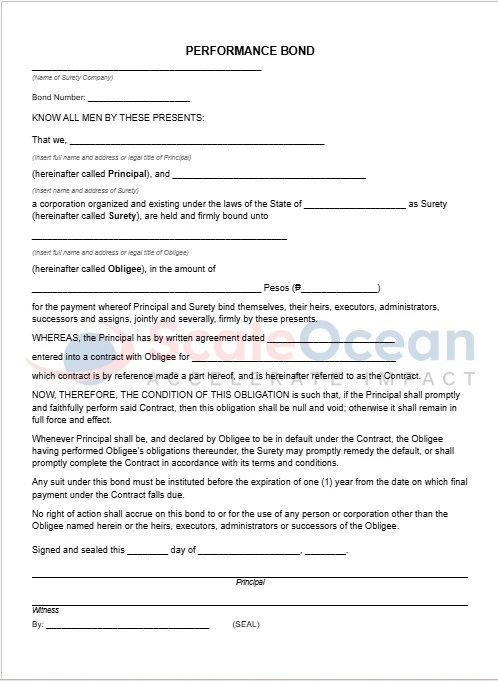
6. Performance Bond Example
Understanding the concept of a performance bond is easier when viewed in a real project scenario. The following example illustrates how a performance bond works in practice:
7. In Conclusion
A construction performance bond is a crucial financial security that supports construction initiatives that are finished in line with the contractual requirements. Thus, it protects project owners from contractor default and enhances trust and accountability.
Moreover, performance bonds are very important in both Government procurement projects and private construction projects in the Philippines. The knowledge of the workings of a performance bond will enable them to win bigger business.
As construction projects continue to expand, the management of contracts & documents can get complicated. Construction ERP Software, ScaleOcean Construction ERP Software, can help to streamline construction project management more efficiently.
If you want to improve project visibility and manage construction operations more efficiently, request a free demo today with ScaleOcean Construction ERP Software.
FAQ:
1. What is a 10% performance bond?
A 10% performance bond is a financial guarantee equal to 10% of the contract value. It protects the project owner by ensuring the contractor fulfills the contract and compensates for losses if the contractor fails to perform.
2. How many percent is the performance bond in the Philippines?
In the Philippines, the required performance bond amount varies depending on the project and type of security used. For government projects, performance security typically ranges from 5% to 30% of the total contract price.
3. Who benefits from a performance bond?
The primary beneficiary of a performance bond is the project owner. It provides financial protection if the contractor fails to complete the project or does not meet the agreed contract requirements.
















.png)