Make-to-Order (MTO), often called Build-to-order or Made-to-order, is a manufacturing method initiated only when the customer order is received and customized extensively.
In the market where customization becomes essential, this method works efficiently due to uncertainties in demand, higher customization in manufacturing, product specifications, and limited resources.
Moreover, with consumer expectations in Singapore trending towards increased personalization, organizations should prepare for future challenges in this regard. We found in a data statement by the KPMG Report that personalization is the leading driver of brand advocacy and loyalty in Singapore.
Nonetheless, when an organization does not have its Make-to-Order process optimized and managed correctly, they are subject to slow lead times, rising operating costs, and unpredictable changes in workloads.
Consequently, customers’ trust will be lost, and inefficiencies will result in financial losses. Hence, a good knowledge of MTO management is a deliberate decision and a must-have tool in the dynamic industrial environment.
So, in this article, wewill discuss the concept of make-to-order (MTO) in depth, explaining its meaning, advantages, disadvantages, and how make-to-order differs from make-to-stock. Read more here.
Key Takeaways
Make-to-Order (MTO) is a manufacturing approach that begins only after a customer order is confirmed, allowing for extensive customization.
The advantage of MTO is allows companies to produce goods only after receiving confirmed customer demand, which significantly reduces excess inventory and storage costs.
MTO works by analyzing customer demand, redesigning production workflow, strengthening supplier coordination, setting clear lead time and policies, and implementing supporting technology
ScaleOcean can be the one solution that offers advanced features to optimize MTO strategies by integrating the entire production process from customer orders to finished products in one centralized platform.
Make-to-Order (MTO) is a strategy where goodsareonly produced after a customer places a firm order. This follows a demand-pull process, and products aren’t manufactured ahead of time for stock.
Here, the process has more space for customization, less chance for overproduction, lower costs for storage, and this process will work for customized products like custom-made furniture, vehicles, computers, and medical equipment.
However, these Make-to-Order or made-to-order manufacturing processes do have a downside. These production times will increase as they can’t determine the production efficiency of the process until they confirm the order.
Advantages and Disadvantages of Make to Order (MTO)
MTO has a balanced mixture of flexibility and control by producing based on customer demand. Some of its key advantages include a high level of customization and reduced inventory risk. Disadvantages are a higher lead time, etc.
Companies should consider each of the features mentioned in the Make-to-Order system so that it satisfies their needs and requirements. Below is the full explanation of the Make-to-Order process:
Advantages of Make-to-Order (MTO)
MTO system helps the firms to reduce inventory levels, reduce storage costs, as it allows companies to produce goods only after an order confirmation from the customers, and increase customer satisfaction through highly customized products to meet each individual’s needs.
Also, the make-to-order process minimizes wastage and obsolescence and improves cash flow by ensuring production starts after receiving the order.
Disadvantages of Make-to-Order (MTO)
MTO often leads to longer lead times as production can only begin after receiving an order, which might frustrate the customers when they order those takt time-sensitive items.
The procedure demands precision and coordination while ordering from suppliers and also during production. A spike in demand can lead to higher production capacity strain, unit costs may rise due to smaller lot sizes, and the absence of any significant economies of scale.
Pros and Cons of MTO
MTO gives unique flexibility and control by having production exactly according to the customer’s requirements. The plus points are high customization and lower inventory risk, while the downside is longer lead time and a complex manufacturing process planning.
The pros and cons should be analyzed thoroughly so that companies are able to determine that they can satisfy their customers as well as achieve their operational goals with the Make-to-Order approach, and this explanation has detailed all the pros and cons of the system.
Pros
Cons
High level of product customization
Longer customer lead times
Reduced inventory and storage costs
More complex production planning
Lowe risk of unsolf or obsolete stock
Higher unit costs in small volumes
Better alignment with actual customer demand
Limited ability to respond to sudden demand spikes
improved cash flow management
Dependence on reliable suppliers and schedulin
How the Make-to-Order Process Works
MTO is a method of production that starts after customers give their order to the companies, enabling the companies to produce customized products for them. Another such process, also known as made-to-order, can help ease your inventory.
In a make-to-order system, cycle time is an important metric for measuring how quickly a company completes an order from the moment it is received until the product is ready for delivery.
The Make to Order process is described in the points given below, which need to be fulfilled:
Analyze Customer Demand
Understand patterns of orders, desired customizations, and lead times that customers can accept.
Clear demand analysis helps the companies find the suitability of the MTO process and create feasible delivery estimates without overburdening the production capacity with random orders.
Redesign Production Workflow
Adapt the production process so that it is more flexible and can produce goods as per the orders.
This includes having modular production systems and also the scheduling systems, which can produce goods at short notice.
Strengthen Supplier Coordination
Establish close relations with the best suppliers so that they do not fail to deliver orders and are always readily available with the required materials.
Short lead times, strong communication links, and backup suppliers are critical for successful production once an order is confirmed in order to make certain that there are no compromises with good manufacturing practices.
Set Clear Lead Times and Policies
Realistic lead times for both production and delivery should be established and clearly communicated to the customers in order to keep the latter informed and have managed expectations set correctly without causing disappointment.
Implement Supporting Technology
Utilize manufacturing ERP software and production planning tools for controlling the order, inventory, and production scheduling of goods, and this can help the companies automate tasks, reduce mistakes, improve visibility, and have a smoother functioning across departments.
The Scaleocean is considered to be one of the best manufacturing ERP systems solutions as it offers tailored solutions that allow for effective Make-to-Order manufacturing processes, linking all the aspects together within a single system, starting from order entry to the final finished product.
The scale ocean system also helps in tailoring its solutions according to your needs as well as your business sector. Request a free demo to see what solution would work for your business today.
What Industries Commonly Use Make-to-Order Strategies?
Make-to-Order is widely used by many sectors of the market that rely heavily on precision, variable demand, or customization.
By manufacturing items only after customers give their firm order, it greatly helps companies in avoiding inventory risk, as well as producing customized goods per the customer’s requests. Here is a list of the typical industries that use Make-to-Order:
Furniture and Interior Design
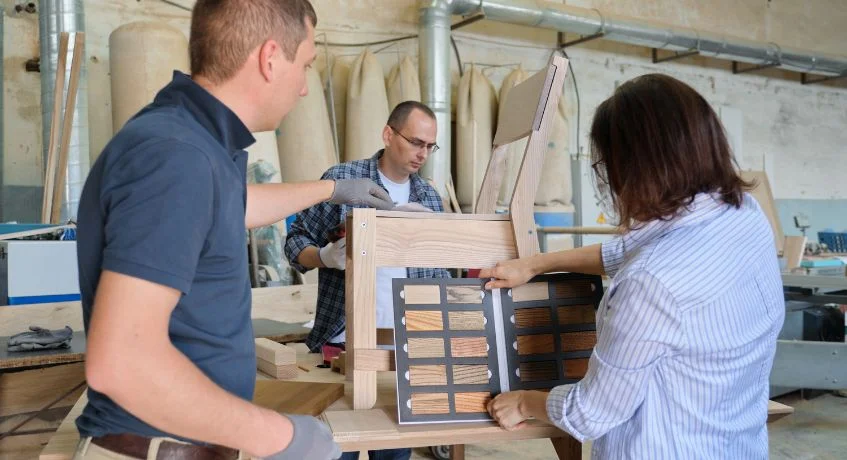
This industry is the best example where the MTO process is applied, as the customization for furniture varies in dimensions, designs, materials, etc.
The production process starts with this understanding of requirements, so that they know the materials required with material requirement planning, so that they do not fall short on the material supply. This would greatly minimize redundant inventory while producing highly customized products.
Automotive and Transportation
Companies like car makers can benefit by using the MTO production system when the cars are made as per the specifications, like engine specifications, interiors, and other advanced technologies.
Once the car order is made, it helps the company save on having excessive surplus on very expensive parts of the car.
Manufacturing and Industrial Equipment
Machines that are used to operate within factories and other industrial operations need specific designs, hence they use the MTO process since they are extremely costly and the production takes a long time.
The manufactured goods have to meet particular technical requirements. Hence, strict controls are kept on the work in progress so that it does not increase inventory on unused goods.
Electronics and Technology
This industry makes use of the MTO process for configuring products, like personal computers and networking devices, for the client.
After the client configures the product, it is manufactured after being ordered. This is effective because it reduces the chances of having obsolescence as well as increases the efficiency of the organization.
Healthcare and Medical Devices
The medical device industry also makes use of MTO production because medical equipment can sometimes be made with a particular patient’s or physician’s needs in mind. This ensures that companies are only producing goods that exactly meet particular clinical needs.
This type of production also helps with compliance issues and minimizes waste in production by only manufacturing according to verified specifications.
We found data from Yahoo Finance, which says the market for medical devices in Singapore is expected to reach a value of $7.11 billion by 2033.
Example of Make-to-Order (MTO) Process
A custom furniture business in Singapore, such as a workshop based in Aljunied or Woodlands, takes orders from customers who want made-to-measure furniture like a dining table or a sofa set for their HDB flat, condo, or landed home.
The customer visits the showroom or contacts the business via WhatsApp to discuss their requirements. All design preferences, dimensions, materials such as solid teak or fabric type, and finishing details are listed in a bill of materials (BOM). A 50% deposit is collected upfront via PayNow or bank transfer before work begins.
Once the BOM is finalised and the order is confirmed, the workshop sources raw materials, solid wood, upholstery fabric, and metal hardware from local suppliers in Jurong Industrial Estate or imports them from Johor Bahru. Materials are checked upon arrival at the workshop.
Production then begins with activities such as CNC cutting, hand joinery, assembly, staining, and upholstery. Every piece is built strictly to the customer’s specifications; no off-the-shelf stock is used.
Before the furniture leaves the workshop, a full quality check (QC) is carried out against the original BOM. Dimensions, finish, and structural integrity are verified. Photos are sent to the customer via WhatsApp for preview and approval.
Once approved, the furniture is wrapped and loaded onto a lorry for delivery to the customer’s home anywhere in Singapore, from Tampines to Jurong West. The crew installs the furniture on-site, and the remaining balance is collected via PayNow upon completion.
Make-to-Order vs. Make-to-Stock vs. Assembly-to-Order
When deciding what production model to implement, it’s important to ensure that the process efficiency, inventory control, and customer service are all maximized according to your individual needs and the requirements of your industry, since cost efficiency, inventory control, and customer service are highly dependent on what model you implement.
Below is the comparison between MTO, MTS, and ATO in a table:
Category
Make to Order
Make to Stock
Assembly to Order
Production Trigger
By customer orders
By forecasted demand or historical data
By customer order for assembly after stock is produced
Inventory Requirements
Low inventory (raw materials are often ordered after receiving orders)
High inventory (finished goods are stocked in advance based on forecasts)
Moderate inventory (components are stocked, but final product assembly happens upon orders
Delivery Lead Time
Longer lead time as production starts after receiving the order
Shorter lead time since products are already manufactured and in stock
Moderate lead time, depens on stock availability and assembly time
Customization Flexibility
High flexibility in product customization based on customer needs
Low flexibility. Products are made to standard spesification
Moderate flexibility. Products can be customized during assembly
Risk of Overproductions/Stockouts
Low risk of verproduction but potential risk of stockouts due to lead time
High risk of overproduction leading to excess stock or wastage
Lower risk of overproduction. However, stockouts can occur if components are unvailable
Cost Implications
Higher production costs per unit due to customization and low production volume
Lower production costs per unit due to economics of scale in bulk production
Moderate costs. it's more efficient than full production but requires inventory for components
Demand Planning and Forecasting
Less reliant on forecasting as production as production is based on actual orders
Heavy reliance on accurate forecasting to ensure demand matches supply
Requires forecasting for components, but final product demand is based on actual customer orders
With the information shown on the table above about how the models are compared, they will always know which one is best for them to use. However, if they want a more detailed comparison, see below:
Make to Order (MTO)
Make to Order (MTO) or Made to Order is a production plan in which products are produced upon a specific order.
The benefit from this process is that it can save costs of inventory, but it takes a longer lead time. It’s used for the products that are custom-made or have unpredictable demand.
By this system, you will save the costs of delivering goods very fast, but you will over- or understock. Used for a product with a fixed demand.
Assembly to Order (ATO)
ATO is a process where components are produced before the order has arrived and then assembled upon order in a similar process to mass production.
Customization may be produced in this process, but it is much faster than MTO because the components of the product are produced beforehand. It is used for products with multiple varieties when there is sufficient known demand.
Optimize the Make-to-Order Process with ScaleOcean’s Software
ScaleOcean’s manufacturing software supports all areas of the MTO process with improved efficiency and better resource allocation. Its automation of key processes and visibility into the production workflow can help to reduce lead times and costs.
By automating key processes and giving real-time information about the production processes, ScaleOcean’s manufacturing software will help manufacturers to avoid over- or understock and cut unnecessary costs.
In this way, your business is better able to adapt quickly to the market. One of the important aspects of the ScaleOcean is that it uses AI to predict the demand of the products and manages it accordingly to save wastage and reduce overstock of the product.
This real-time information makes the information of that decision easy and clear to the consumers. ScaleOcean offers a free demo in which you will be able to see all the benefits of this powerful software to enhance your MTO process and improve your business profits.
Above all, ScaleOcean will provide you with special features to enhance the MTO process, and they are as follows:
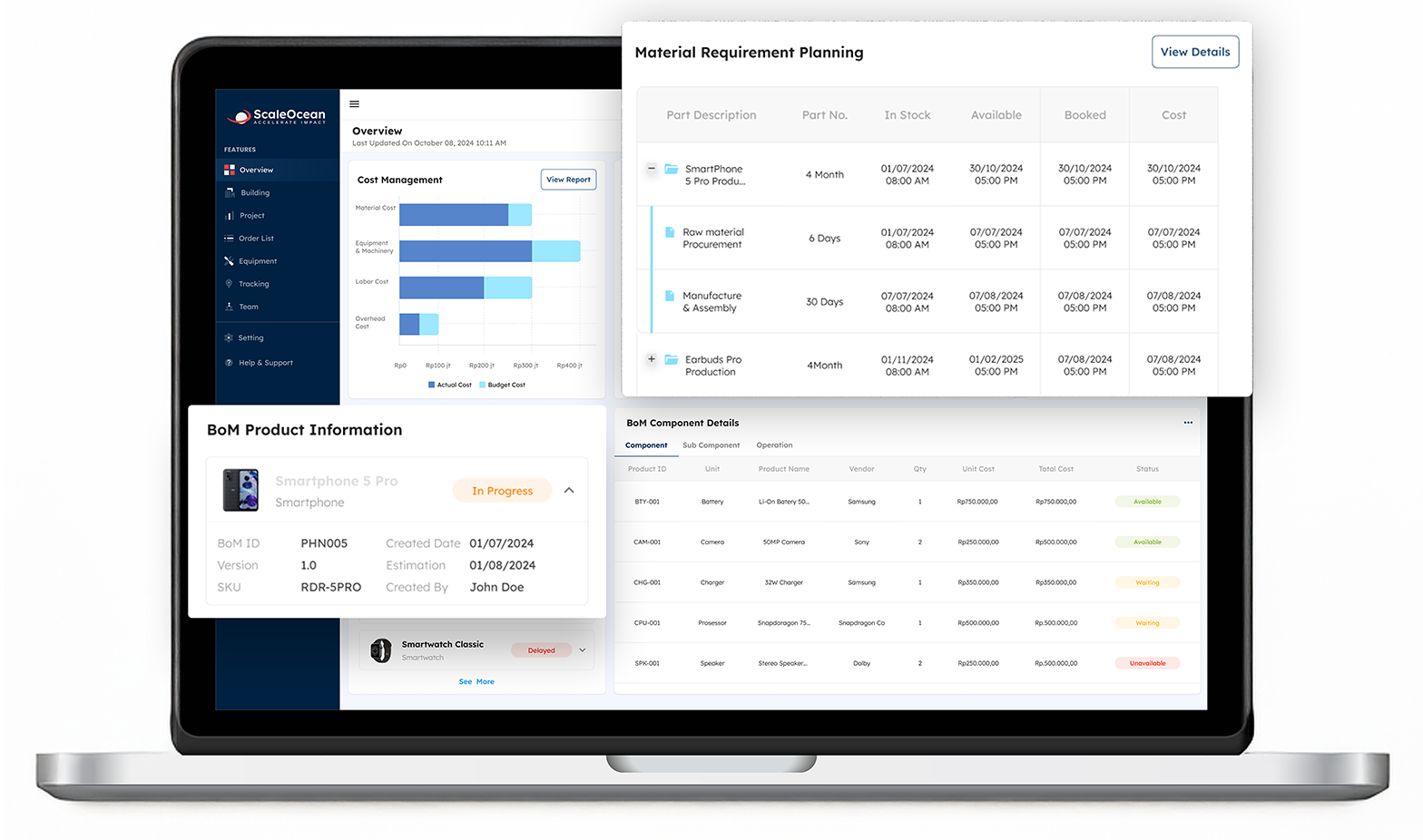
Order management automation: From receiving and processing customer orders, the platform handles everything directly, ensuring it records the unique specifications of each MTO order accurately and processes them into production without manual delays.
Smart MRP: Automatic calculation of raw materials based on production schedules and lead times, as well as timely ordering in accurate quantities.
BOM Management: Real-time tracking of customer order status, efficient work schedules, and machine utilization.
Cost Management: Automatically calculates detailed COGS for each unique MTO order.
Integrated quality control: Monitors every stage of production to ensure the quality of the final output meets order specifications.
With all these special features and capabilities, it can make ScaleOcean the best solution for your MTO production to achieve better performance and have more satisfied customers. Try the free demo now!
Conclusion
Make to Order (MTO) is a process that can lead to greater inventory accuracy by matching output directly with customer orders. The process is characterized by its reduced risk of holding excess inventory and highly personalized products.
It may require significant planning, supplier coordination, and good communication about the production lead time, but it is highly effective and flexible when customized products are requested by a business in the long run.
The right tools are important to control the process, and Scaleocean can be used for managing the order, scheduling, coordinate in order to have an efficient and easy running MTO process. Try the free demo to improve your MTO process now.
FAQ:
1. What is the difference between MTO and ATO?
Make to Order (MTO) involves manufacturing the complete product only after a customer places an order, offering maximum customization but typically resulting in longer delivery times. In contrast, Assemble to Order (ATO) combines forecasting and flexibility by pre-producing standard components and stocking them. Once the customer places an order, the system completes the final assembly.
2. What is the opposite of make-to-order?
The opposite of Make to Order is Make to Stock, where businesses fulfill customer orders from existing inventory or produce and purchase items only after confirming demand.
3. How to prepare MTO?
The document describes a set of steps for setting up a system, such as determining the file path for storing exported data and defining component categories. It also highlights the need to establish a clear hierarchy and create related records to ensure proper configuration.
4. What kind of products use MTO?
Industries that frequently apply MTO include aerospace, automotive, particularly luxury vehicles, custom furniture, industrial machinery, specialized medical equipment, construction, and bespoke fashion. In general, sectors that produce highly customized, high-value, or complex products suit MTO the best.












 Key Takeaways