Production Planning and Control (PPC) is a vital manufacturing process that helps businesses address a common challenge by meeting changing customer demand without wasting resources or causing delays. Poor coordination of materials, workflows, and resources can result in higher costs, lost sales, and dissatisfied customers.
At its core, PPC involves forecasting and carefully planning what products to make, when to produce them, and how much is needed. This process helps businesses anticipate demand accurately and align production schedules with their goals and customer expectations.
After planning, PPC ensures the smooth control of production stages. This includes routing materials through the appropriate processes, scheduling tasks to maintain an efficient workflow, and continuously monitoring progress.
Effective management of these activities enables companies to boost productivity, lower costs, and maintain a competitive edge in a dynamic market. So, this article will explore the key aspects of PPC, its importance in modern manufacturing, and how it helps businesses stay competitive by streamlining their production processes.
Key Takeaways
Production Planning and Control (PPC): This systematic approach coordinates planning and execution to ensure that resources, schedules, and materials work together smoothly to meet changing customer demand.
Benefits of Production Planning and Control: It enables businesses to maximize resources, improve overall efficiency, reduce operational costs, ensure timely delivery, and maintain high product quality standards.
Steps in Production Planning and Control: The sequence involves structured stages from initial planning and routing to scheduling, loading, dispatching, expediting, inspection, and taking necessary corrective actions for success.
ScaleOcean Manufacturing ERP provides an AI-powered platform that unifies all PPC stages into one system to optimize your production efficiency and accuracy.
A standard Production Planning and Control definition is that it is a systematic approach used by manufacturing and operations teams to ensure that products are made efficiently, at the right time, at the right cost, and with consistent quality. It coordinates planning and execution so that resources, schedules, materials, and labour work together smoothly.
PPC contributes to meeting customer demand reliably while minimising waste and delays. A good PPC system also improves visibility across the production process steps and supports data-driven decisions that enhance overall performance.
What is Production Planning?
Production planning is the first phase of PPC. It involves mapping out what should be produced, how much should be made, and when production should occur to meet demand. During this stage, production managers organise raw materials, machines, manpower, and work schedules so that the factory can run without unexpected stops.
It also covers decisions about inventory levels, capacity planning, and production methods. With good planning, companies can avoid costly disruptions and keep production aligned with market demand.
What is Production Control?
Production control comes after planning. It monitors and manages the day-to-day activities of the production floor to ensure that work follows the plan. If anything goes off schedule or falls behind, control activities detect these issues early and prompt corrective actions.
Production control checks output quality, tracks progress against the production schedule, and resolves bottlenecks. In essence, planning sets the direction, and control makes sure that direction is followed accurately throughout production vs manufacturing.
What are the Objectives of Production Planning and Control?
Production planning and control have several clear objectives that drive the manufacturing process. These objectives help companies align demand with capacity, organise resources efficiently, and maintain consistent production output. By setting clear targets, manufacturers can control costs, meet deadlines, and ensure product traceability and quality.
Efficient use of resources: Production planning and control ensure that materials, machinery, labour, and time are used effectively to reduce waste and maximise output.
Timely delivery of products: Ensuring that production schedules are met and products are ready for customers as promised enhances reliability and satisfaction.
Cost reduction: Careful planning and control help minimise excess inventory, lower production costs, and reduce downtime.
Quality assurance: PPC integrates checks and standards throughout the production process so that final products meet quality expectations.
Smooth workflow: PPC helps prevent bottlenecks and interruptions by coordinating tasks and anticipating resource needs.
What are the Benefits of Production Planning and Control?
Production Planning and Control (PPC) offers major advantages that help businesses run more smoothly and compete more effectively. By aligning resources, schedules, and quality standards, PPC enables operations to be more predictable, efficient, and profitable.
A Deloitte survey on smart factory initiatives underscores this impact, showing that respondents saw, on average, a 10% to 20% improvement in production output, a 7% to 20% improvement in employee productivity, and 10% to 15% in unlocked capacity after implementation. Below are the specific ways these gains are achieved:
Resource Maximization: By planning resource requirements and managing them effectively, PPC reduces idle time and avoids resource shortages. This leads to better utilisation of labour, equipment, and materials.
Improved Efficiency: PPC optimises the sequence of production activities and reduces interruptions. This smoother flow results in improved productivity, fewer delays, and less waste, and it also supports lean manufacturing.
Cost Reduction: Effective planning avoids over-production and excess inventory. It also minimises downtime and helps reduce overall production costs without sacrificing quality.
Timely Delivery: Meeting delivery deadlines consistently builds trust with customers. PPC ensures that schedules align with demand forecasts, reducing late deliveries or rushed work.
Quality Assurance: Regular monitoring and control at each stage of production help ensure products meet quality standards. This reduces defects, increases customer satisfaction, and enhances brand reputation.
What Is The Role Of Production Planning And Control In Manufacturing?
PPC production planning control play a key role in manufacturing by ensuring that production runs smoothly, efficiently, and according to plan. It helps translate business goals into detailed schedules that guide factory operations.
PPC ensures that materials, machines, and labour are available when required. By incorporating poka yoke, businesses can prevent production errors while meeting quality, time, and cost expectations.
By coordinating planning with shop-floor execution, PPC reduces disruptions, supports on-time delivery, and allows managers to respond to changes quickly. In essence, PPC ensures that manufacturing flow matches customer demand while keeping waste and delays to a minimum.
What are the Steps in Production Planning and Control?
Production Planning and Control involves a sequence of structured steps that guide the manufacture of products from the initial plan to the final inspection. These steps help ensure plans are not only created but executed, monitored, and corrected when needed.
Common stages include planning, routing, scheduling, loading, dispatching, expediting, inspection, and corrective action. Each step has a specific purpose toward making sure production goals are met with the right resources and timing.
1. Planning
Planning is the first step, where production requirements are defined based on whether the business follows a make-to-order or make-to-stock approach. It determines what and how much to produce, the resources required, and the completion timeline. This early planning stage sets the foundation for all subsequent production processes.
2. Routing
Routing determines the exact path that raw materials and components take through the manufacturing process. It outlines the sequence of operations, the machines to be used, and the best sequence to follow. This step creates route sheets that guide workers through each step of production.
3. Scheduling
Scheduling assigns specific start and end times to each task. It ensures that operations are carried out in the correct order and within the planned timeframes. Good scheduling helps balance workloads and prevents bottlenecks on the shop floor.
4. Loading
Loading allocates work to machines, work centres, or employees based on their available capacity. This step ensures that the workload is distributed optimally so that no equipment or labour is idle or overburdened.
5. Dispatching
Dispatching is the point at which plans become action. Orders are released, workers begin production, materials are issued, and tools are distributed. It sets productive activities in motion according to the established route and schedule.
6. Expediting
Expediting, also known as follow-up, monitors ongoing production to ensure alignment with the plan. Within manufacturing operations management, it helps identify delays or bottlenecks and resolve them quickly to keep production moving smoothly.
7. Inspection
Inspection ensures that products meet quality standards at different stages of production. By checking materials and outputs, manufacturers can catch defects early and maintain consistent quality.
8. Corrective Action
Corrective action is takenwhen production deviates from the plan or quality standards. It may involve rescheduling, rerouting work, fixing machinery, or retraining workers. This step brings processes back into alignment and improves future performance.
Managing these complex stages manually often leads to operational bottlenecks and data silos. ScaleOcean provides a unified ERP platform that synchronizes every stage of manufacturing in real time. It ensures total visibility and maximum shop floor efficiency for your operations.
Production Planning and Control Processes
Production planning and control processes adapt to different manufacturing needs. These processes vary by production volume, complexity, and product type. Below are common models used in industry.
Job Production
Job production involves making individual products or custom orders. Each product is completed before the next one begins. This process is ideal for specialised items or small volumes where customisation and quality are priorities.
Batch Production
Batch production produces groups of similar products at one time. A batch moves through each stage before the next batch begins. This method offers a balance between flexibility and efficiency, making it common in food, pharmaceuticals, and consumer goods manufacturing.
Mass Production
Mass production involves manufacturing large volumes of identical products. It uses highly standardised processes and often automated equipment. This approach excels in cost efficiency and consistent quality for products with stable demand.
However, modern manufacturers in Singapore are increasingly adopting High-Mix Low-Volume (HMLV) models. This requires PPC systems to be far more agile, managing higher complexity and more frequent changeovers than traditional mass production lines.
4 Types of Production Planning
Production planning takes many forms, each designed to manage specific aspects of manufacturing. These types help managers allocate resources, forecast needs, and organise work so that products are made efficiently and reliably.
By choosing the right planning type, businesses can reduce waste, improve delivery times, and maintain quality across operations.
Master Production Schedule (MPS)
A Master Production Schedule (MPS) determines what products to make, in what quantities, and when to produce them. It turns sales forecasts into specific production goals. Managers use the MPS to plan production runs and set deadlines. It provides a clear timeline that aligns demand forecasts with manufacturing output.
Reflecting the global importance of this process, data from Grand View Research indicates the global demand planning solutions market was valued at USD 4.81 billion in 2024 and is expected to grow to USD 11.71 billion by 2033, with a compound annual growth rate (CAGR) of 10.4% between 2025 and 2033.
Materials Requirement Planning (MRP)
Materials Requirement Planning (MRP) ensures that raw materials are available when production needs them. It calculates material needs based on the MPS and existing inventory. MRP reduces shortages and prevents excess stock by scheduling material orders at the right time. This keeps production flowing without costly delays.
Capacity Planning
Capacity planning assesses whether a factory has the people, machines, and work hours needed to meet production goals. It compares planned demand with actual capacity. When gaps appear, managers adjust schedules, add shifts, or upgrade equipment. Capacity planning prevents bottlenecks and keeps production on track.
Workflow Planning
Workflow planning maps out the sequence of tasks that workers and machines must follow. It defines step-by-step processes required for assembly manufacturing to turn raw materials into finished goods. Clear workflows reduce confusion on the shop floor, speed up operations, and help teams maintain consistent quality.
Production Planning Tools
Today’s production planners rely on a mix of software and digital systems to manage schedules, resources, and tasks. The right tools help teams automate manual work, visualise data, and respond quickly to changes. Here are some common categories of production planning tools.
Manufacturing Software
Manufacturing software centralises production data, schedules, and inventory in one system. It often integrates with ERP or quality systems to give planners real-time visibility into operations. These platforms let teams track work orders, view machine status, and adjust plans instantly based on changing conditions.
Advanced Planning and Scheduling (APS)
Advanced Planning and Scheduling (APS) tools take planning further by using algorithms to optimise production sequences and allocate resources. They help companies balance workloads, reduce idle time, and improve throughput. APS systems analyse real-time constraints and offer better scheduling decisions than manual methods.
No-Code & Customizable Solutions
No-code and customizable tools let businesses tailor planning systems without technical skills. Planners can build dashboards, workflows, and reports that match their specific processes. This flexibility helps companies adapt quickly as requirements evolve without relying on IT development.
Free & Low-Cost Entry Tools
For smaller teams or early adopters, free or low-cost entry tools provide basic planning capabilities. Simple spreadsheets, free scheduling apps, and low-cost project tools help teams organise tasks and timelines. These tools allow businesses to begin structured planning without heavy investment.
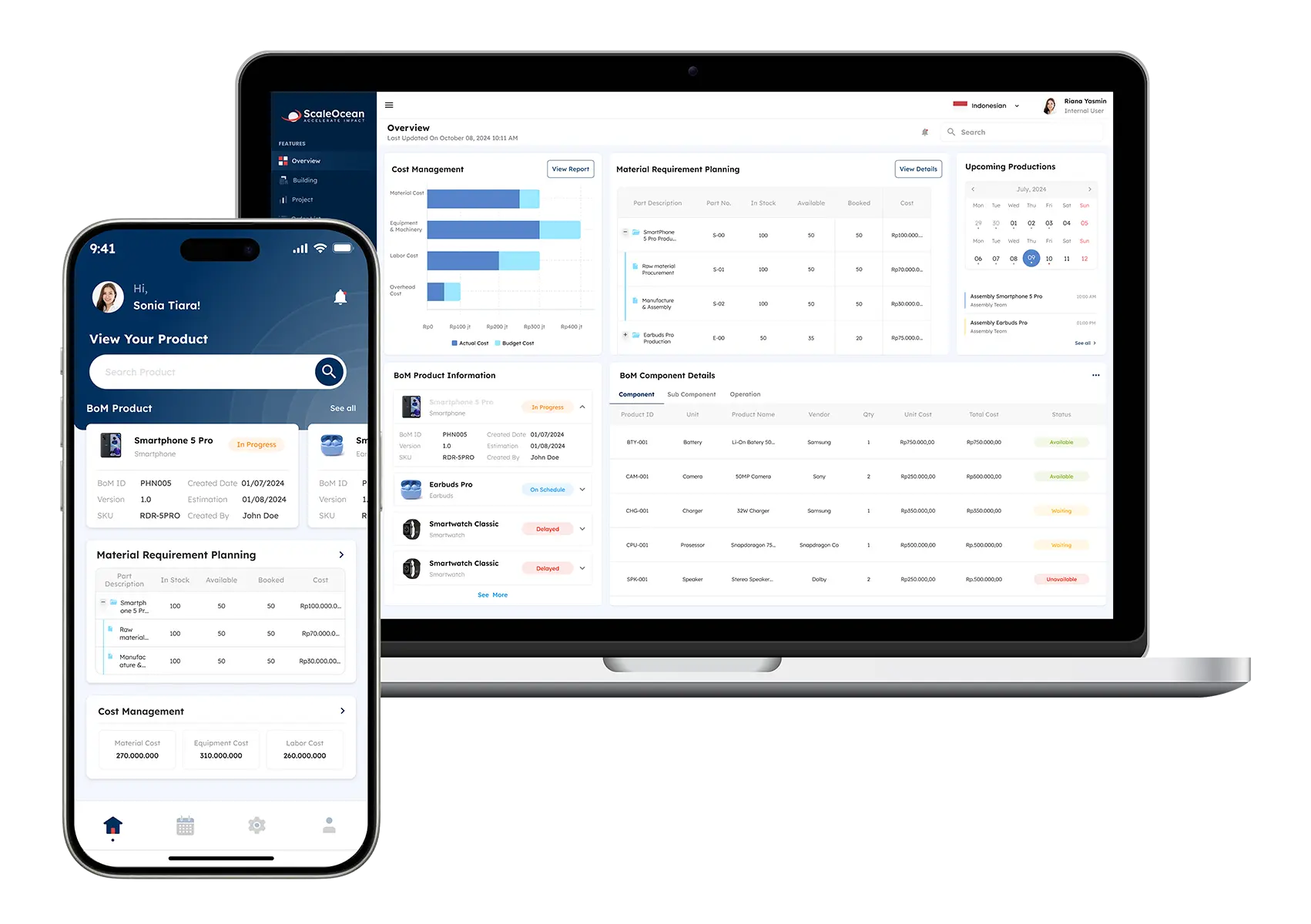
ScaleOcean offers ERP-based manufacturing software that brings all of your production planning and control tools together in one platform. It integrates seamlessly with existing systems and tools companies already use, whether for scheduling, materials planning, or workflow tracking.
By unifying data across departments, ScaleOcean helps teams optimise PPC with real-time visibility and automation. This reduces errors, speeds up adjustments, and improves coordination between planning and execution. Request a free demo to see how it can support your production goals.
Integrate Production Planning and Control Steps Easily with ScaleOcean
ScaleOcean’s manufacturing ERP software offers an AI-powered ERP that helps businesses optimise production planning and control. It speeds up decision-making, improves planning accuracy, and streamlines the entire production process.
With a unified system, teams can make faster adjustments, reduce errors, and maintain consistent outputs across every stage of manufacturing.
This all-in-one solution provides more than 200 integrated modules covering inventory, procurement, HR, accounting, CRM, and e-commerce. It offers high customisation, supports unlimited users, and integrates across departments with ease.
ScaleOcean suits a wide range of manufacturing industries, including specialised operations in Singapore. It can also be customised to support various types of manufacturing production and specific workflows, and aligns with CTC grant requirements for local digital transformation initiatives.
ScaleOcean enhances traditional PPC production planning and control workflows with targeted features that make production planning easier and more reliable:
Manufacturing Production Scheduling: Plans production timelines using historical demand data to optimise scheduling and reduce downtime.
Manufacturing Requisition Planning: Forecasts and plans raw material and resource needs to ensure availability when production begins.
Finished Goods Production Simulation: Simulates production output based on materials in the Bill of Materials (BoM) to confirm whether inventory meets production targets.
Manufacturing Schedule Management: Uses AI to allocate resources, set timelines, and monitor progress in real time with configurable dashboards.
Predictive Maintenance: Leverages AI analysis of machine data to anticipate maintenance needs before equipment issues arise.
Real-Time Quality Control: Ensures products meet quality standards and detects production bottlenecks early using sensor and IoT data.
With these integrated PPC tools, ScaleOcean helps manufacturers improve planning efficiency, reduce disruptions, and maintain consistent production quality across operations.
Conclusion
Production planning and control are essential for any manufacturing operation that wants to improve efficiency, reduce costs, and deliver quality products on time. By coordinating resources, scheduling work intelligently, and monitoring execution, businesses can respond faster to market changes and avoid costly disruptions.
ScaleOcean strengthens this process with an integrated AI-powered ERP platform that connects every step of production. With real-time visibility, advanced planning tools, and seamless cross-department integration, it helps manufacturers streamline planning and make smarter decisions with confidence.
If you want to transform production performance and bring clarity to complex operations, explore how ScaleOcean can help. Request a free demo today to see the benefits in action and understand how this solution can support your business goals.
FAQ:
1. What is the role of a PPC engineer?
The role of a PPC engineer is to efficiently plan, schedule, and monitor production activities to ensure timely delivery. They optimize the use of resources and coordinate cross-functional operations within the engineering manufacturing environment to maintain smooth and effective workflows.
2. What does PPC stand for in production?
PPC stands for Production Planning and Control. It is a system that, much like an ERP, focuses on managing production processes, material procurement, inventory management, and just-in-time manufacturing to enhance productivity.
3. Why do we need production planning and control?
Production planning and control are essential to ensure that all necessary resources are available. Such as materials, equipment, and labor. This coordination helps optimize production efficiency and is a crucial function in any manufacturing business.
4. How to improve production planning and control?
1. Evaluate and optimize workflows.
2. Develop a clear material ordering strategy.
3. Identify and address potential bottlenecks.
4. Provide ongoing staff training.
5. Enhance production efficiency through automation.
6. Ensure your company’s data remains secure and well-managed.













 Key Takeaways