

A production process is the structured sequence of activities businesses use to transform raw materials into finished goods ready for customers. Many companies struggle with delays, material shortages, rising costs, and inconsistent quality because their production process is not clearly defined or properly managed.
Singapore’s manufacturing production surged 16.6% year-on-year in January 2026, accelerating from an upwardly revised 10.9% gain and exceeding market expectations of 11%. This sharp growth highlights the increasing importance of efficient production processes.
So, what is production process management really about? It is about building a system that controls every stage of production, from planning to distribution, so resources are used efficiently and output meets demand. Each stage, from planning and material preparation to manufacturing and distribution, plays a direct role in overall performance.
Therefore, in this article, we will break down what the production process is, explain its objectives, explore its different types, and outline the key steps companies must manage to stay competitive.
 Key Takeaways
- Production Process refers to how businesses transform raw materials into finished goods through structured stages that ensure efficiency, cost control, and consistent product quality.
- The objectives of the production process focus on delivering the right products, in the right quantity and time, while minimizing operational waste and cost.
- Common production process types help businesses structure workflows based on operational structure, transformation methods, and production duration.
- ScaleOcean manufacturing ERP software automates and integrates the entire production process, improving visibility, accuracy, and efficiency across planning, execution, and performance monitoring.
What are Production Processes?
Production Processes are the methods businesses employ to convert inputs like raw materials, labor, and machinery into final products or services. These approaches include mass production, batching, and job-based manufacturing.
If you are wondering what is production process in practical terms, it refers to the step-by-step framework that ensures goods are produced efficiently, consistently, and at scale. It aims to enhance efficiency, maintain quality, and fulfill customer demand. Essential steps include planning, routing, scheduling, dispatching, and follow-up.
A production process example can be seen in a furniture manufacturer. The company sources wood, designs the product, cuts and shapes materials, assembles components, applies finishing, inspects quality, and then ships the product. Each stage follows a defined order to reduce waste and improve consistency.
 Also Read: What is Manufacturing: Understanding Definitions & Types
The Objectives of the Production Process
The main goals of the production process are to efficiently transform raw materials into high-quality finished products while reducing costs and maximizing customer satisfaction. The goals include production efficiency, strict adherence to quality standards, timely delivery, and maintaining flexibility to respond to market changes.
Core Objectives of the Production Process:
- Quality Assurance: Delivering products that meet or surpass customer expectations and standards.
- Cost Reduction (Efficiency): Lowering unit costs through efficient use of labor, materials, and time, minimizing waste, and utilizing lean manufacturing.
- Timely Delivery (Speed): Producing and delivering products on schedule to satisfy customer needs.
- Optimal Resource Utilization: Maximizing the efficiency of equipment (OEE), labor, and materials.
- Flexibility: Adapting to changes in product design, production volume, or market demand.
- Customer Satisfaction: Meeting demand with the right quality and quantity.
- Continuous Improvement: Consistently enhancing processes to improve quality and efficiency.
A well-managed process strengthens forecasting accuracy, supports better production planning, and improves coordination across departments. Applying poka yoke also helps prevent errors and maintain more consistent workflows.
8 Steps of the Production Process
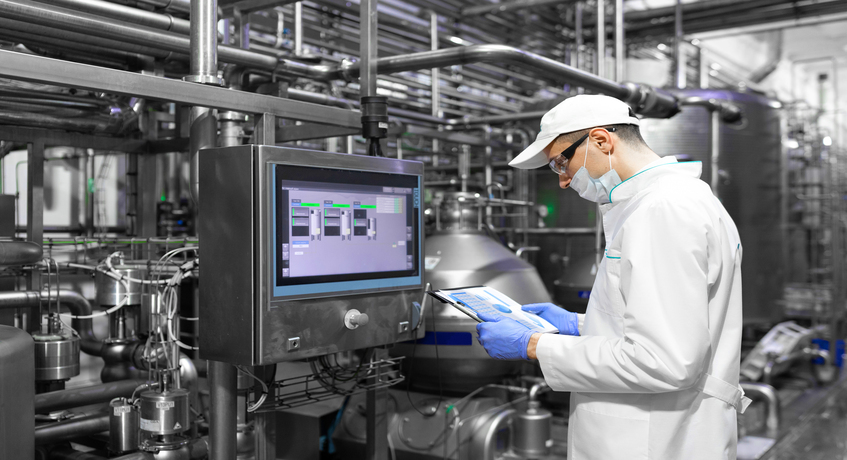
The 8 steps of the production process are planning, routing, scheduling, procurement, manufacturing, dispatching, quality control, and distribution. Although industries differ, these production process steps form the backbone of most operational systems.
1. Planning
Planning is the stage where businesses determine what to produce, how much to produce, and when to begin production. This step includes demand forecasting, resource estimation, budgeting, and capacity planning.
This stage forms the foundation of effective Production Planning and Control (PPC), ensuring that demand forecasts, resource allocation, and production timelines remain aligned. Without proper planning, companies risk overproduction or material shortages, both of which increase costs.
2. Routing
Routing is the process of defining the exact sequence of operations and the path materials will follow during production. It specifies the machines, work centers, and tasks required at each stage. Clear routing minimizes bottlenecks and improves workflow efficiency.
3. Scheduling
Scheduling is the process of assigning specific timeframes to each production activity. It determines when tasks start and finish to ensure balanced workloads and on-time delivery. Poor scheduling often leads to idle machines, overtime costs, and delayed shipments.
4. Procurement
Procurement is the process of acquiring the raw materials, components, and equipment required for production. It involves supplier selection, purchase order management, and inventory control. If procurement fails, the entire process can stall.
5. Production/Manufacturing
Production or manufacturing is the stage where raw materials are transformed into finished goods. Workers operate machinery, assemble components, and follow standardized procedures to ensure output meets specifications.
The efficiency of this stage depends heavily on how well earlier process steps were executed. A clear production vs manufacturing difference at this stage is shown when an electronics company manufactures individual circuit components and later assembles them into complete circuit boards.
6. Dispatching
Dispatching is the act of releasing production orders and instructions to begin manufacturing activities. It ensures materials are issued, work orders are distributed, and machines are prepared for operation. This step connects planning with actual execution.
7. Quality Control
Quality control is the process of inspecting and testing products to ensure they meet predefined standards. It includes defect detection, performance evaluation, and compliance checks. Strong quality control protects brand reputation and reduces costly returns.
8. Distribution
Distribution is the final stage where finished products are delivered to customers or retailers. It involves packaging, storage, shipping coordination, and logistics management. Efficient distribution ensures that the output of the process reaches the market on time and in good condition.
With a clear understanding of what production processes are and how each stage functions, businesses can identify inefficiencies early and build a more controlled, scalable operation.
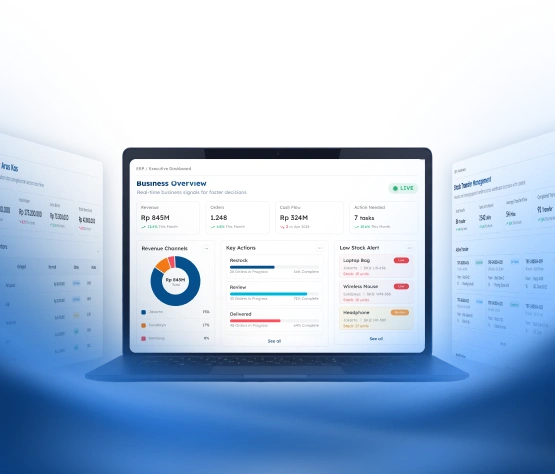
Managing all eight steps efficiently requires more than manual coordination and spreadsheets. So ScaleOcean’s manufacturing ERP software integrates and automates those production processes within one centralized platform, from smart material planning and scheduling to real-time costing and quality tracking.
With full visibility, customizable workflows, and seamless integration across departments, businesses can improve efficiency, reduce errors, and maintain complete operational control. Ready to streamline your production process? Request a free demo of ScaleOcean today and discover how it can transform your operations.
Types of Production Processes
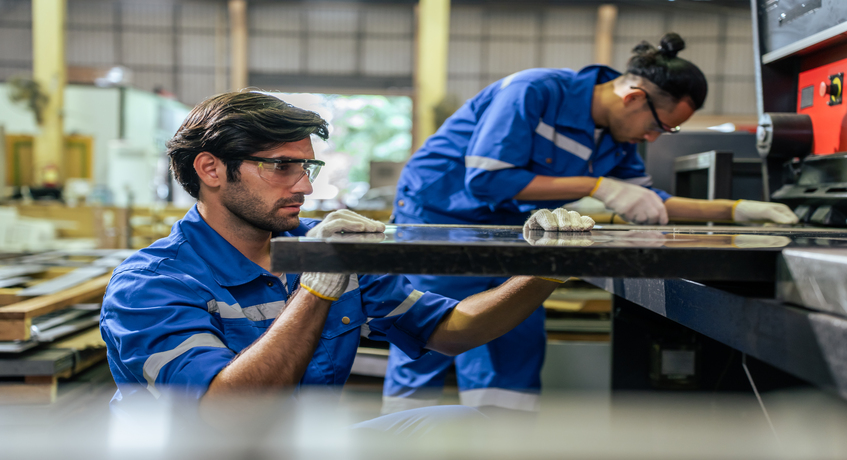
Businesses use different types of production processes depending on product variety, demand volume, and operational complexity. Each type directly affects cost structure, flexibility, production capacity, and overall production efficiency.
Therefore, choosing the right model is a strategic decision, not just an operational one. Below are the six most common types of production processes, along with their advantages and disadvantages.
1. Mass Production
Mass production is a process that manufactures large volumes of standardized products using repetitive and continuous operations. Companies typically rely on assembly lines and automated systems to maintain speed and consistency.
| Pros | Cons |
|---|---|
|
|
Mass production works best when demand is stable and predictable. However, it requires strong Production Planning and Control (PPC) to prevent excess inventory or bottlenecks.
2. Craft Production
Craft production is a process that creates products individually using skilled labor and minimal automation. This model focuses on customization, detail, and craftsmanship rather than speed or scale. Businesses often use it for luxury goods, handmade items, or artistic products.
| Pros | Cons |
|---|---|
|
|
Although craft production limits output volume, it allows businesses to charge premium prices and build niche markets.
3. Batch Production
Batch production is a process that manufactures products in groups or batches before switching to another batch. Manufacturers commonly use this model when they produce moderate volumes with some product variation. Another production process example, a bakery might produce 500 loaves of one flavor before switching to another.
| Pros | Cons |
|---|---|
|
|
To manage batch production effectively, companies must prepare a clear Bill of Materials (BOM) for each product variation. This ensures material accuracy and prevents shortages during batch transitions.
4. Job Production
Job production is a process that manufactures one product at a time based on specific customer requirements. Each project follows unique specifications. Construction projects, custom furniture, and specialized machinery manufacturing often use this model.
| Pros | Cons |
|---|---|
|
|
Because each job differs, managers must carefully monitor the process steps and coordinate resources precisely to avoid delays.
5. Service Production
Service production is a process that delivers intangible outputs such as consulting, healthcare, logistics, or hospitality services. Unlike manufacturing, service production focuses on customer experience, speed, and service quality rather than physical goods.
| Pros | Cons |
|---|---|
|
|
Even though services are intangible, businesses still apply structured production planning principles to manage workforce scheduling and maintain service consistency.
6. Mass Customization
Mass customization is a process that combines high-volume efficiency with product personalization. Companies use flexible systems and digital technologies to offer customized options while maintaining near mass production speed.
| Pros | Cons |
|---|---|
|
|
This model relies heavily on accurate demand forecasting, real-time data, and integrated systems. When executed correctly, it balances flexibility with optimized production capacity.
Each type of process offers distinct advantages and trade-offs. Thus, businesses must align their chosen model with market demand, operational resources, and long-term growth strategy.
However, managing different production models manually can become complex as operations grow. Therefore, you can use systems like ScaleOcean manufacturing ERP software to automate planning and maintain visibility across the process. Request a free demo of ScaleOcean today to automate your production
Common Production Process Types
Businesses classify the process in several ways to better understand how operations function, how materials move, and how output is generated. This classification helps managers design clearer workflows, allocate resources more accurately, and reduce operational risk.
Instead of treating production as a single activity, companies break it down into structured categories to improve control and performance. Below are the most common process types based on three different perspectives.
Based on the Process
This classification focuses on whether production activities directly create finished goods or support the production system indirectly.
- Direct Production – A process that directly transforms raw materials into finished goods ready for sale. It involves visible input-to-output conversion, where materials are physically changed into tangible products that generate revenue.
- Indirect Production – A process that supports core manufacturing activities without directly producing saleable goods. It includes functions such as maintenance, internal logistics, and quality support, which help maintain operational stability and prevent downtime.
Based on Characteristics of the Production Process
This classification examines how materials are treated or transformed during the production process.
- Extractive Process – A process that removes natural resources from the earth, such as mining minerals, drilling oil, or harvesting timber, before further processing takes place.
- Analytical Process – A process that separates one raw material into multiple distinct products, requiring precise monitoring to control output proportions and maintain quality.
- Fabrication Process – A process that reshapes materials physically without altering chemical properties, often supporting structured assembly manufacturing workflows.
- Synthetic Process – A process that combines multiple raw materials to create a new product, frequently involving chemical reactions and strict quality control procedures.
Based on the Production Period
This classification groups production systems according to how long and how consistently operations run.
- Continuous Production – A process that operates without interruption to produce goods in large volumes, typically used when demand remains stable and predictable.
- Intermittent Production – A process that runs in intervals or batches, allowing companies to adjust output based on product variation or customer demand and enable product traceability.
- Short-Term Production – A process designed to meet temporary, seasonal, or event-driven demand, often requiring flexible resource allocation.
- Long-Term Production – A process structured for sustained output over extended periods, supporting stable planning and predictable resource use.
- Intermediate Production – A process that produces semi-finished goods used as inputs by other manufacturers within the supply chain.
By understanding these classifications, businesses can better align their processes with operational needs, market demand, and long-term strategy.
How ScaleOcean Manages the Production Process Automatically?
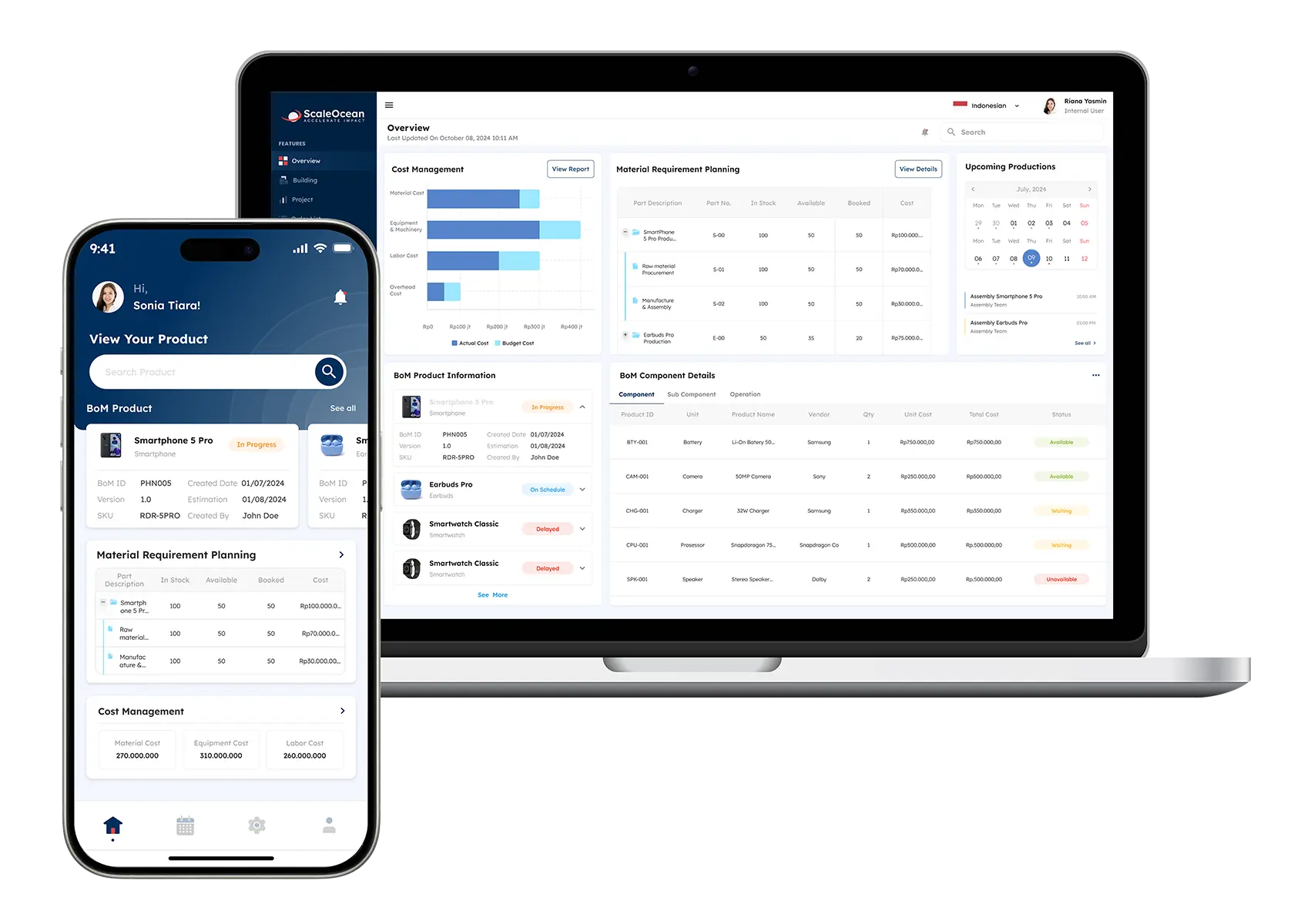
ScaleOcean’s manufacturing ERP software delivers an industry–solution–based system designed for medium to large enterprises, managing the entire production process end to end. From raw material planning to final distribution, the system connects every operational stage within a single integrated platform.
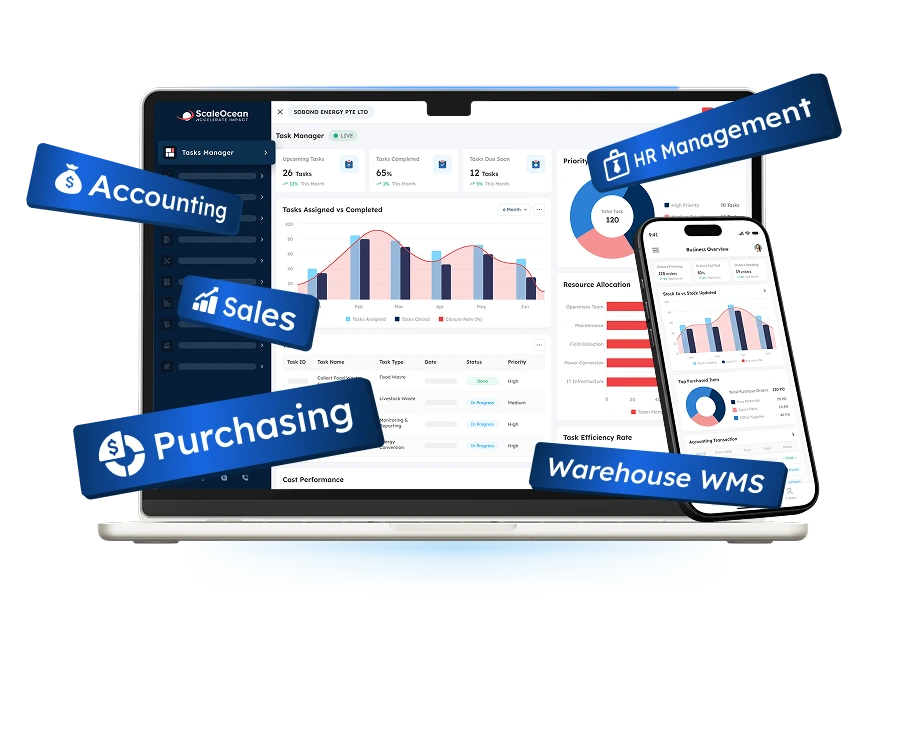
ScaleOcean integrates seamlessly with core business modules, including inventory, warehouse, and supply chain management. As a result, companies no longer need to rely on disconnected systems or manual coordination between departments. Instead, teams can access synchronized data across procurement, production, and distribution in real time.
Moreover, businesses can fully customize the system to match their internal operations. Companies can configure modules, production types, production workflows, approval flows, reporting formats, and system integrations according to their operational needs.
The user interface remains easy to use despite its flexibility, and the system supports unlimited users without additional complexity. ScaleOcean also holds TÜV SÜD Certified Consultant credentials and meets the requirements for the CTC grant, providing additional assurance for companies seeking reliable and compliant digital transformation solutions.
Below are the key features that enable ScaleOcean to manage the production process automatically and efficiently:
- Smart MRP (Material Requirement Planning)
This feature automatically plans and calculates raw material requirements based on production schedules. It ensures materials are available in the right quantity and at the right time, reducing shortages and preventing overstocking. - BOM (Bill of Materials) Management
The system manages structured lists of raw materials, components, and subcomponents required for each product. With automation, businesses can create and update BOMs faster, reduce manual errors, and maintain better production accuracy. - Master Production Schedule (MPS)
ScaleOcean balances market demand with available production capacity. By aligning sales forecasts with operational resources, the system helps companies avoid overloading machines or underutilizing production lines. - Automated Reorder Points
The system automatically generates purchase requests when inventory reaches predefined minimum levels. This feature prevents material shortages and keeps the production process running without interruption. - Quality Control & Regulatory Compliance
ScaleOcean digitalizes and tracks quality inspections at every production stage. It simplifies compliance with ISO and IRAS standards, while also supporting industry-specific certifications such as GMP and HACCP. This ensures consistent quality and regulatory readiness. - Real-Time Machine Monitoring & Predictive Maintenance
Companies can connect production machines directly to ScaleOcean using IoT sensors. The system tracks Overall Equipment Effectiveness (OEE) in real time and predicts potential machine failures before they occur. This reduces downtime and extends equipment lifespan. - Real-Time Costing & Variance Analysis
The software automatically calculates labor, material, and overhead costs for every production order. It also compares estimated costs with actual expenses through variance analysis, allowing managers to quickly identify inefficiencies and improve profitability.
With these integrated and automated capabilities, ScaleOcean enables companies to control their production process more accurately, reduce manual errors, and improve operational visibility from planning to execution.
Conclusion
The production process is a structured system that transforms raw materials into finished goods through defined stages and controlled workflows. When businesses understand their objectives, steps, and types, they can reduce inefficiencies, control costs, and maintain consistent output quality.
As operations expand, managing the production process manually becomes more complex and risky. Therefore, ScaleOcean manufacturing ERP software integrates planning, inventory, production, and quality control into one automated platform, giving companies full visibility and operational control.
With real-time monitoring, smart material planning, and accurate costing, ScaleOcean helps businesses improve efficiency and scale with confidence. Ready to optimize your production process? Request a free demo of ScaleOcean today and discover how an integrated manufacturing ERP system can transform your operations.
FAQ:
1. What are the three main production processes?
Production methods fall into three main types, namely:
1. Job Production: Unique products made per order.
2. Batch Production: Goods made in set quantities through sequential steps.
3. Mass Production: Continuous large-scale process with fast, automatic operations.
2. What is an example of a production process?
An example of a production process is the complete set of activities required to produce a finished or semi-finished product. These activities include production planning, resource planning, supply management, order management, and other related operational tasks.
3. What are the three key elements of the production process?
The three key elements of a production system are input, production process, and output. These components work together as inputs, such as manpower, materials, and machines, which are transformed through the production process into finished products that are then delivered to customers.
4. What is the basic production process?
The basic production process involves converting resources such as raw materials, labor, capital, and equipment into finished goods or services for consumers. Its goal is not only to produce outputs, but to do so efficiently, ensuring that products or services are delivered to customers as quickly as possible.




















.png)