Maintenance Management is the structured process of planning, monitoring, and controlling maintenance activities to ensure equipment operates reliably, efficiently, and safely throughout its lifecycle across industrial and operational environments.
According to the data that our team found from Grand View Research, the global industrial maintenance services market was valued at USD 141.55 billion in 2024 and is projected to reach USD 199.45 billion by 2033. This steady growth reflects rising industry focus on equipment reliability, operational efficiency, and reduced downtime.
However, many companies still react to breakdowns instead of preventing them, which leads to operational bottlenecks caused by unexpected machine failures that interrupt production flow and reduce overall operational efficiency significantly.
As downtime increases, production teams rush to meet quotas, and consequently, they often compromise quality procedures to meet tight deadlines, creating long-term risks that damage brand reputation and increase operational costs.
Therefore, businesses increasingly recognize that structured maintenance strategies not only prevent equipment failure but also stabilize production output, protect product quality, and support long-term operational sustainability in highly competitive manufacturing environments.
To build reliable maintenance operations, businesses must understand the principles, strategies, and tools that support consistent equipment performance. Therefore, in this article, we will explore maintenance management concepts, processes, and best practices used across modern industrial environments.
Key Takeaways
Maintenance management is the systematic coordination of maintenance tasks, resources, schedules, and performance tracking.
7 key strategies for maintenance managementinclude preventive, predictive, and reliability-focused methods that reduce equipment failure risks and improve long-term operational stability.
Maintenance management matters because it improves workforce productivity, reduces operational costs, extends equipment lifespan, and strengthens safety standards.
Maintenance management metrics and KPIs measure downtime, repair duration, equipment reliability, maintenance costs, and operational efficiency across maintenance processes.
Maintenance management is the systematic coordination of maintenance tasks, resources, schedules, and performance tracking to ensure machinery, equipment, and infrastructure operate consistently without causing unexpected interruptions across production environments.
In practice, maintenance management integrates planning, execution, monitoring, and documentation into a single workflow, allowing maintenance teams to detect potential issues early while ensuring that maintenance activities align with production schedules and operational priorities.
Moreover, effective maintenance management enables businesses to shift from reactive repairs to preventive and predictive strategies, reducing emergency maintenance costs while extending asset lifespans and improving overall operational reliability.
As a result, companies that adopt structured maintenance management frameworks gain better control over asset performance, reduce the risk of unplanned downtime, and maintain consistent product quality across multiple production cycles.
7 Key Strategies for Effective Maintenance Management
Effective maintenance management requires more than routine repairs. Companies must apply structured strategies that balance operational demands, equipment reliability, and long-term asset performance in increasingly complex production environments.
Therefore, businesses adopt multiple maintenance approaches to address varying equipment conditions, failure risks, and operational priorities, ensuring maintenance remains proactive rather than reactive when unexpected failures threaten production continuity.
Moreover, each strategy supports specific operational goals, such as preventing breakdowns, predicting failures, improving asset reliability, or standardizing maintenance workflows, which collectively strengthen maintenance performance and reduce costly disruptions across departments.
As a result, businesses that implement the following 7 maintenance strategies create a structured maintenance ecosystem that improves equipment uptime, enhances workforce efficiency, and maintains consistent production output without compromising product quality standards.
1. Preventive Maintenance
Preventive maintenance involves performing scheduled inspections, servicing, and part replacements at predetermined intervals to prevent equipment failures before they occur, ensuring machines operate under optimal conditions across production environments.
Furthermore, firms that implement preventive maintenance schedules significantly reduce unexpected breakdowns, improve machine reliability, and maintain consistent production quality using the best quality management software in Singapore by addressing wear-and-tear issues before they escalate into costly operational failures.
2. Predictive Maintenance
Predictive maintenance uses historical performance data, sensor readings, and analytical tools to forecast equipment failures before they occur, allowing maintenance teams to schedule repairs precisely when machines show signs of performance decline.
Additionally, predictive maintenance helps companies reduce unexpected downtime by identifying hidden faults early, enabling teams to perform targeted interventions while avoiding unnecessary maintenance tasks that waste time, labor, and operational resources.
3. Condition-Based Maintenance
Condition-based maintenance monitors equipment conditions in real time using sensors and performance indicators, enabling maintenance teams to initiate maintenance activities only when equipment shows measurable signs of deterioration or unusual behavior.
Consequently, businesses benefit from improved maintenance efficiency. They avoid unnecessary servicing while still preventing sudden failures, ensuring machines operate reliably without interrupting production schedules or compromising output consistency.
4. Reliability-Centered Maintenance (RCM)
Reliability-centered maintenance focuses on identifying critical assets and analyzing their failure modes to determine the most appropriate maintenance strategies that protect operational reliability while minimizing unnecessary maintenance activities across production systems.
Moreover, RCM encourages maintenance teams to prioritize resources effectively, ensuring that high-risk equipment receives focused attention while lower-risk assets follow simplified maintenance routines that maintain overall operational balance and efficiency.
5. Total Productive Maintenance (TPM)
Total productive maintenance promotes collaboration between maintenance teams and production operators, encouraging shared responsibility for equipment health through routine inspections, cleaning, and minor maintenance tasks performed directly on the production floor.
As a result, TPM improves equipment availability and reduces minor stoppages because operators detect abnormalities earlier, allowing maintenance teams to intervene quickly before small issues escalate into major mechanical failures or operational disruptions.
6. Root Cause Analysis (RCA)
Root cause analysis identifies the underlying causes of recurring equipment failures by systematically investigating incidents, analyzing failure patterns, and implementing corrective actions that prevent the same issues from recurring across maintenance cycles.
Additionally, companies that apply RCA consistently improve maintenance effectiveness. It eliminates repetitive problems at their source, reducing long-term maintenance costs while improving equipment reliability and operational predictability.
7. Computerized Maintenance Management Systems (CMMS)
Computerized maintenance management systems centralize maintenance data, schedules, asset records, and work orders into a unified digital platform, enabling maintenance teams to manage activities efficiently while maintaining accurate historical documentation.
Furthermore, CMMS solutions improve maintenance visibility by providing real-time insights into asset conditions. By integrating field service management system, teams can plan maintenance tasks strategically while ensuring compliance with operational standards and audit requirements.
Maintenance Management Tools
Maintenance teams rely on structured tools to organize tasks, monitor asset conditions, and track maintenance performance efficiently. The right tools create consistency and help teams maintain clear visibility across daily maintenance activities.
Companies often combine traditional tracking methods with digital technologies to manage maintenance workflows more effectively. This combination improves coordination between departments and reduces delays caused by scattered or incomplete maintenance records.
Each maintenance tool supports different operational needs, from simple task tracking to advanced performance monitoring systems. Selecting suitable tools allows firms to strengthen reliability while maintaining control over maintenance schedules and resource allocation.
Work Orders
Work orders provide clear instructions that guide technicians during inspections, repairs, and scheduled maintenance activities. They define tasks, responsibilities, and timelines, which help teams execute maintenance consistently across different operational environments.
Digital work orders improve accuracy by recording timestamps, repair actions, and technician notes in a structured format. These records help companies track maintenance history and identify recurring equipment issues that require long-term solutions.
Spreadsheets
Spreadsheets offer a basic method for tracking maintenance schedules, asset lists, and spare part usage across smaller maintenance operations. Many firms adopt spreadsheets initially because they are flexible, accessible, and simple to customize.
However, spreadsheets become difficult to manage as asset numbers grow and maintenance complexity increases over time. Manual updates create higher risks of data duplication and delayed reporting that reduce maintenance accuracy across expanding operations.
Dashboards
Dashboards display maintenance data through visual elements such as charts, indicators, and performance summaries. These visual tools allow managers to monitor asset conditions quickly without reviewing lengthy maintenance reports manually.
Interactive dashboards also highlight trends such as downtime frequency and repair durations across different equipment categories. This visibility helps companies prioritize maintenance tasks while improving response times during unexpected equipment failures.
IoT & AI
IoT sensors collect real-time data from machines, including vibration levels, temperature changes, and operational patterns. This continuous monitoring helps maintenance teams detect unusual behavior before equipment performance begins to decline in environments such as a smart factory.
Artificial intelligence analyzes collected data to identify patterns that signal early signs of equipment wear or malfunction. These insights help maintenance teams schedule precise interventions that prevent unexpected downtime and reduce maintenance costs.
Maintenance Management Software
Maintenance management software centralizes scheduling, reporting, inventory tracking, and asset records into one digital system. This centralized approach improves coordination and reduces manual errors across maintenance workflows.
Integrated software platforms also support automated notifications and performance tracking across maintenance cycles. These features help firms maintain consistent maintenance standards while improving equipment reliability across multiple operational environments.
What are the Types of Maintenance Management?
Maintenance management includes several maintenance types designed to address different equipment conditions and operational requirements. Each type supports a specific maintenance objective that helps companies maintain equipment reliability over time.
Companies rarely rely on a single maintenance type because equipment conditions vary across production systems. Combining multiple approaches allows teams to respond effectively to both predictable wear and unexpected equipment failures.
Understanding these maintenance types helps maintenance teams decide when to inspect, repair, or replace equipment components. This structured approach also answers what maintenance management is, showing how clear decisions reduce downtime risks and improve long-term equipment performance.
Planned Maintenance
Planned maintenance involves scheduling maintenance activities in advance based on equipment usage or manufacturer recommendations. This approach ensures technicians perform required maintenance before problems interrupt daily production operations.
Planning maintenance tasks ahead also improves coordination between technicians, spare parts availability, and production schedules. These preparations reduce delays and help firms maintain steady operational performance across routine maintenance cycles.
Reactive Maintenance
Reactive maintenance occurs when technicians repair equipment only after a failure disrupts normal operations. This approach focuses on restoring equipment quickly so production activities can resume without extended delays.
However, frequent reactive maintenance increases operational risk because unexpected failures interrupt production flow repeatedly. These disruptions often result in higher repair costs and reduced equipment lifespan across long-term operations.
Condition-Based Maintenance
Condition-based maintenance relies on monitoring equipment performance indicators to determine when maintenance actions are necessary. Teams respond only when machines show measurable signs of wear or unnatural operation.
This method prevents unnecessary maintenance while ensuring technicians address developing problems before equipment failure occurs. Businesses benefit from improved efficiency and reduced maintenance waste across daily operational cycles.
Predictive Maintenance
Predictive maintenance uses historical equipment data and performance trends to forecast potential failures before they occur. Maintenance teams rely on these forecasts to schedule repairs at the most appropriate time.
This data-driven approach reduces unexpected breakdowns that disrupt production schedules and increase emergency repair costs. Businesses maintain higher reliability levels by addressing equipment problems before performance declines significantly.
Reliability-Centered Maintenance
Reliability-centered maintenance focuses on analyzing equipment functions and identifying possible failure modes across operational systems. Teams design maintenance strategies that protect critical equipment from performance loss or unexpected breakdowns.
This method prioritizes high-risk assets that directly affect production continuity and product quality standards. Organizations improve maintenance efficiency by allocating resources to equipment that requires the most attention.
Reactive (Run-to-Failure) Maintenance
Reactive run-to-failure maintenance allows equipment to operate until it fails before performing repair or replacement actions. Organizations typically apply this strategy to assets that do not affect critical production processes.
Using this method carefully helps reduce unnecessary maintenance costs for low-risk equipment components. However, applying it to critical assets increases downtime risks and disrupts overall operational stability.
Preventive Maintenance
Preventive maintenance involves performing routine inspections, lubrication, and component replacements at scheduled intervals. These scheduled tasks help technicians address minor wear before it develops into major mechanical failures.
Regular preventive maintenance also supports equipment longevity by maintaining stable operating conditions over time. Organizations benefit from improved equipment availability and reduced emergency maintenance events across production environments.
Total Productive Maintenance (TPM)
Total productive maintenance encourages operators and technicians to share responsibility for maintaining equipment health daily. Operators perform simple inspections and cleaning tasks that support early problem detection on the production floor.
This shared responsibility builds stronger equipment awareness among production staff across daily operations. Organizations experience fewer minor stoppages and improved equipment performance through consistent maintenance involvement.
CMMS-Driven Maintenance Management
CMMS-driven maintenance management uses computerized systems to organize maintenance schedules and track equipment performance automatically. These systems store maintenance records that support long-term equipment management strategies.
Centralized CMMS platforms improve data accessibility across maintenance teams and operational departments. Organizations maintain better maintenance coordination and reduce manual tracking errors across large equipment inventories.
Why Maintenance Management Matters?
Maintenance management plays a critical role in maintaining operational stability across industries that depend on machinery and infrastructure. Without structured maintenance practices, equipment failures quickly disrupt workflows and reduce overall operational performance.
Organizations that manage maintenance effectively protect both equipment and workforce productivity in daily operations. Consistent maintenance routines reduce uncertainty and allow production teams to focus on delivering consistent output without frequent interruptions.
Improved Employee and Asset Productivity
Effective maintenance management keeps equipment operating smoothly, which allows employees to complete tasks without unnecessary delays. Reliable machines reduce interruptions and help workers maintain consistent productivity across routine operational activities.
Well-maintained assets also reduce repetitive repair tasks that drain technician time and effort unnecessarily. Maintenance teams can focus on planned activities instead of emergency repairs, which improves overall workforce efficiency across departments.
Reduced Asset Maintenance Cost
Structured maintenance planning helps businesses control maintenance expenses by preventing costly emergency repairs and unplanned component replacements. Early intervention reduces the severity of damage and lowers the overall cost of restoring equipment performance.
Predictable maintenance schedules also allow organizations to budget resources more accurately across operational cycles. This cost visibility helps management allocate funds effectively while avoiding sudden financial pressure caused by unexpected breakdowns.
Improved Asset Lifecycles & Uptime
Consistent maintenance practices extend equipment lifespan by addressing wear and tear before components fail. Regular servicing protects mechanical integrity and ensures machines operate within safe performance limits over time.
Higher uptime levels also support uninterrupted production schedules across daily operations. Reliable equipment availability reduces idle time and allows production teams to meet output targets without frequent operational delays.
Better Safety & Compliance
Proper maintenance management reduces workplace risks by ensuring equipment operates safely and according to established safety standards. Regular inspections help identify hazardous conditions before they lead to accidents or safety violations.
Maintenance documentation also supports compliance with regulatory requirements and industry standards across operational environments. Accurate records demonstrate accountability and help organizations pass audits without unnecessary complications or penalties.
Data-Driven Decisions
Maintenance systems generate valuable performance data that supports informed operational decisions across maintenance and production teams. These insights reveal patterns that help identify inefficiencies and recurring equipment issues early.
Access to reliable maintenance data allows managers to prioritize resources based on actual equipment conditions. This data-driven approach strengthens planning accuracy and improves long-term equipment reliability across operational environments.
What are the Key Objectives of Maintenance Management?
Maintenance management focuses on achieving specific objectives that ensure equipment reliability and operational continuity across industrial environments. These objectives guide maintenance teams in maintaining consistent performance while minimizing operational disruptions.
Clear maintenance objectives help organizations align maintenance tasks with production targets and resource availability. Teams perform maintenance activities more efficiently when they understand how each task contributes to operational stability.
Organizations that define what is maintenance management and its objectives clearly create structured workflows that improve accountability across departments. These objectives also support long-term performance improvements by encouraging consistent monitoring and evaluation of maintenance outcomes.
Maximizing Asset Reliability
Maximizing asset reliability ensures equipment operates consistently without unexpected performance failures across production cycles. Reliable assets reduce operational uncertainty and support predictable production output across daily manufacturing activities.
Maintenance teams achieve reliability through routine inspections, scheduled servicing, and timely component replacements. These actions maintain stable operating conditions and prevent sudden equipment breakdowns that interrupt workflow continuity.
Cost and Budget Optimization
Cost optimization focuses on balancing maintenance quality with financial efficiency across operational planning activities. Organizations control expenses by scheduling maintenance activities strategically instead of relying on costly emergency repairs.
Accurate budgeting also supports long-term maintenance planning across multiple asset lifecycles. Financial control helps organizations maintain equipment performance without exceeding operational budgets unnecessarily.
Lifecycle Extension
Lifecycle extension aims to maximize the usable life of equipment through consistent maintenance and timely servicing activities. Maintaining components properly reduces excessive wear and delays the need for expensive equipment replacements.
Longer equipment lifespans protect capital investments and reduce the frequency of purchasing new machinery. Businesses benefit from improved financial stability while maintaining reliable operational performance across extended periods.
Efficiency Improvement
Efficiency improvement focuses on optimizing maintenance workflows to reduce wasted time and unnecessary effort across operational tasks. Streamlined processes help technicians complete maintenance activities quickly without compromising quality standards.
Improved efficiency also supports faster response times during maintenance requests and scheduled servicing tasks. Organizations maintain consistent workflow performance by eliminating delays caused by inefficient maintenance procedures.
Safety and Compliance
Safety objectives ensure maintenance teams follow procedures that protect workers and equipment during maintenance operations. Safe maintenance practices reduce accident risks and create a secure working environment across production facilities.
Compliance objectives also require organizations to follow regulatory standards related to equipment performance and maintenance documentation. Meeting these standards helps organizations avoid legal penalties and maintain operational credibility.
Minimizing Downtime and Productivity Loss
Minimizing downtime focuses on maintaining equipment readiness so production activities continue without unexpected interruptions. Reliable maintenance scheduling helps prevent breakdowns that disrupt daily workflow performance across operational environments.
Reduced downtime also protects productivity levels by ensuring machines remain available when production demand increases. Organizations maintain stable output by preventing delays caused by equipment failure or repair activities.
Work Scheduling and Resource Allocation
Effective work scheduling ensures maintenance tasks occur at the right time without interfering with production operations. Proper scheduling helps technicians balance workloads while maintaining consistent maintenance coverage across equipment assets.
Resource allocation also involves assigning tools, spare parts, and personnelefficiently across maintenance activities. Organizations reduce delays by ensuring required resources remain available before maintenance tasks begin.
Training and Skill Development
Training ensures maintenance personnel understand equipment operation, repair procedures, and safety standards clearly. Skilled technicians perform maintenance tasks accurately, which reduces the risk of repeated equipment failures.
Continuous skill development also prepares technicians to handle new technologies and evolving maintenance methods. Organizations maintain strong technical capabilities by investing in workforce knowledge and practical maintenance expertise.
Continuous Improvement Through Data and Insights
Continuous improvement focuses on using maintenance data to identify inefficiencies and improve performance over time. Regular performance reviews help teams refine maintenance strategies based on real operational results.
Maintenance insights also support innovation by revealing opportunities to improve equipment performance and workflow efficiency. Organizations strengthen long-term reliability by adapting maintenance practices using accurate operational data.
How is the Maintenance Management Process?
The maintenance management process follows a structured sequence of activities that ensures equipment remains reliable throughout daily operations. A clear process helps teams move from identifying issues to improving long-term equipment performance systematically.
Organizations rely on defined maintenance steps to coordinate technicians, tools, and schedules across different operational requirements. Structured processes reduce confusion and ensure maintenance tasks align closely with production timelines and operational priorities.
A consistent maintenance management process also supports accountability because teams document every action and outcome during maintenance cycles. These records help organizations evaluate effectiveness and refine maintenance strategies for better reliability and operational stability.
Determining Maintenance Needs
Determining maintenance needs begins with evaluating equipment conditions, performance history, and manufacturer recommendations. Teams identify assets that require attention based on usage patterns and signs of wear or performance decline.
Accurate assessment helps organizations prioritize maintenance tasks according to equipment criticality and operational importance. This early evaluation prevents overlooked issues that could later result in unexpected equipment failures or costly repairs.
Organizing Maintenance Plans
Organizing maintenance plans involves defining maintenance objectives, assigning responsibilities, and selecting appropriate maintenance methods. Teams structure maintenance activities to ensure each task supports equipment reliability and operational continuity.
Well-organized plans also outline required tools, spare parts, and safety procedures before maintenance begins. Clear planning reduces uncertainty and allows technicians to complete maintenance tasks efficiently without unnecessary interruptions.
Arranging Schedules and Allocating Resources
Arranging schedules ensures maintenance tasks occur at the right time without disrupting production activities. Teams coordinate maintenance windows carefully to balance operational demands with equipment servicing requirements.
Resource allocation involves assigning technicians, tools, and spare parts based on maintenance priorities and workload demands. Proper allocation prevents delays and ensures maintenance teams complete tasks without shortages or scheduling conflicts.
Executing Maintenance Tasks
Executing maintenance tasks involves carrying out inspections, repairs, replacements, and testing according to defined maintenance plans. Technicians follow established procedures to ensure consistent maintenance quality across all equipment assets.
Careful execution ensures maintenance activities restore equipment performance without introducing additional operational risks. Proper task completion also confirms that equipment functions safely before returning to regular production activities.
Tracking Performance and Monitoring Progress
Tracking performance requires collecting maintenance data such as repair duration, downtime frequency, and equipment performance results. These records help teams evaluate how well maintenance activities support operational goals.
Monitoring progress also allows supervisors to identify delays or unexpected issues during maintenance cycles. Real-time tracking improves transparency and helps teams respond quickly to emerging maintenance challenges.
Reviewing and Analyzing Results
Reviewing maintenance results involves evaluating completed tasks and comparing outcomes against expected performance targets. Teams analyze whether maintenance actions successfully resolved identified equipment issues.
Analyzing performance data also reveals recurring problems that may require deeper investigation or alternative maintenance approaches. These insights help organizations refine maintenance strategies for improved equipment reliability.
Continuous Improvement and Optimization
Continuous improvement focuses on refining maintenance workflows based on performance feedback and operational experience. Teams update maintenance procedures to eliminate inefficiencies and strengthen overall maintenance performance.
Optimization also includes adopting new tools, technologies, and methods that enhance maintenance accuracy and speed. Organizations benefit from improved reliability and reduced downtime through consistent maintenance innovation.
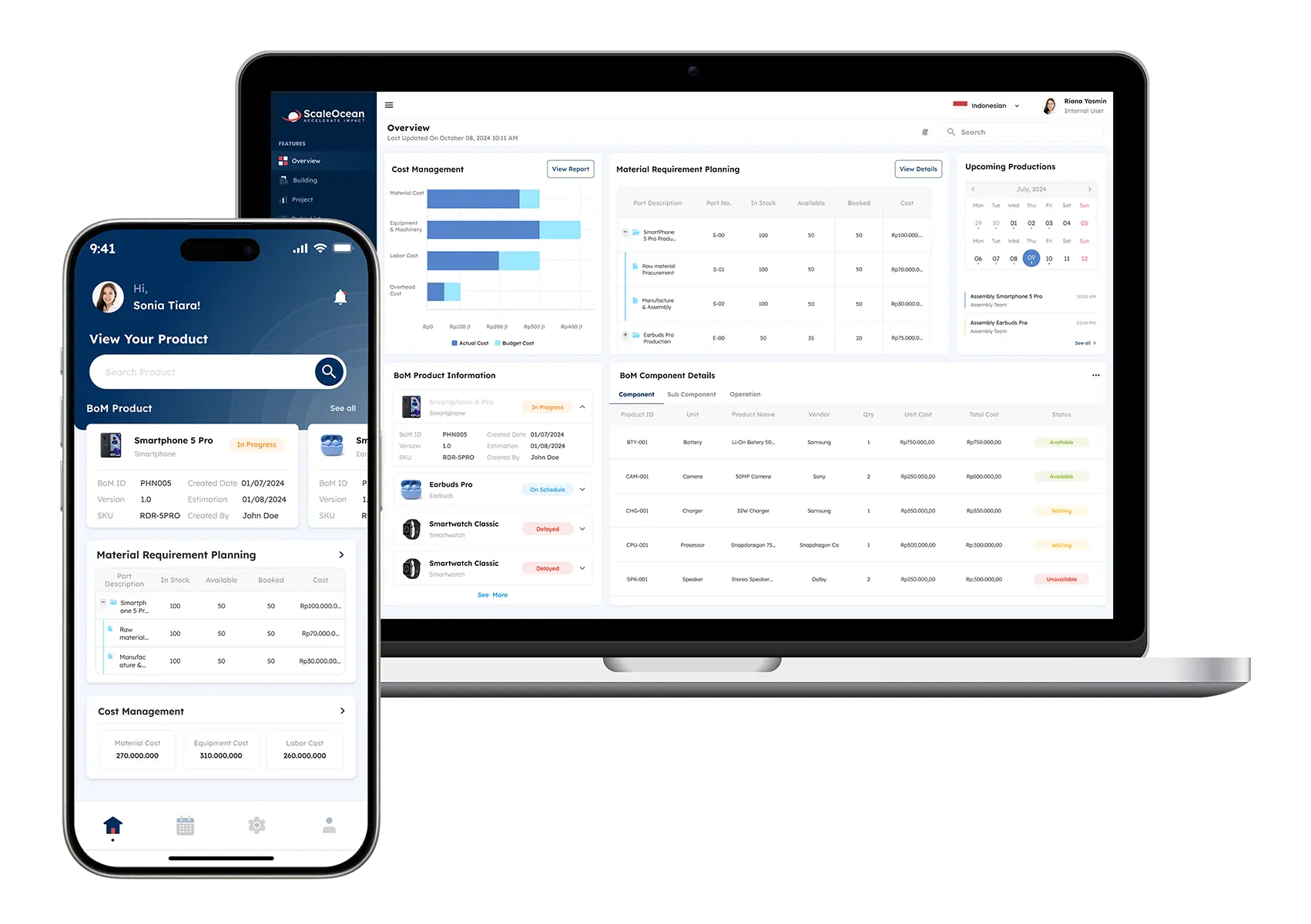
To streamline these processes, maintenance management software will help companies organize, repair workflows, and improve coordination across maintenance teams. Solutions like ScaleOcean Quality Management Software will help you centralize asset records and maintenance activities into one structured platform.
The system automates work orders, synchronizes spare parts inventory, and tracks maintenance activities in real time across operational workflows. Request a free demo to explore how ScaleOcean improves maintenance coordination and supports reliable equipment performance across daily operations.
What are the Challenges in Maintenance Management?
Maintenance management involves multiple moving parts that must work together consistently across equipment, personnel, and operational schedules. Even well-structured maintenance programs encounter challenges that affect reliability, efficiency, and long-term operational performance.
Many organizations struggle to balance limited resources with increasing maintenance demands across expanding equipment inventories. These pressures create operational risks when teams cannot respond quickly enough to maintenance issues or unexpected equipment failures.
Understanding what maintenance management is and its common challenges helps organizations prepare preventive strategies and strengthen operational readiness across maintenance activities. Clear awareness of these challenges allows teams to respond proactively instead of reacting only after operational disruptions occur.
Budget and Cost Limitations
Budget constraints often limit the ability to perform regular maintenance or invest in new maintenance technologies. Organizations must prioritize essential repairs while delaying improvements that could enhance long-term equipment performance.
Restricted budgets also create pressure to reduce maintenancespending without compromising operational reliability. This balance becomes difficult when unexpected equipment failures require urgent and costly repair actions.
Balancing Preventive vs Reactive Work
Maintenance teams often struggle to balance scheduled preventive maintenance with urgent reactive repairs during equipment failures. Reactive work disrupts planned schedules and forces teams to shift focus away from preventive activities.
Frequent reactive repairs reduce the effectiveness of preventive programs and increase operational risks over time. Organizations must manage workload distribution carefully to maintain stable maintenance routines across equipment assets.
Spare Parts and Inventory Control
Managing spare parts inventory becomes challenging when organizations maintain large numbers of equipment components across facilities. Missing or delayed spare parts often extend repair times and increase equipment downtime unnecessarily.
Excess inventory also creates financial strain by tying up capital in unused components stored in warehouses. Organizations must maintain accurate inventory records to balance availability with cost efficiency.
Aging Assets and Systems
Aging equipment presents maintenance challenges because older components experience higher wear rates and frequent performance failures. Maintenance teams must perform repairs more often to keep legacy systems functioning properly.
Older systems may also lack compatibility with modern monitoring technologies and maintenance tools. This limitation makes it harder to collect performance data and predict future equipment failures accurately.
Complex Planning and Scheduling
Maintenance planning becomes complex when organizations manage multiple assets with different servicing requirements. Teams must coordinate maintenance timing carefully to avoid interfering with production schedules.
Scheduling conflicts often occur when several critical assets require maintenance during the same operational period. Organizations must balance priorities to ensure essential equipment remains available for production activities.
Regulatory and Compliance Demands
Maintenance operations must follow strict regulatory standards that govern equipment safety and operational practices. Organizations must maintain accurate documentation to demonstrate compliance during inspections and regulatory audits.
Failure to meet compliance requirements can result in penalties, legal risks, or forced operational shutdowns. Maintenance teams must consistently follow approved procedures to protect both equipment and organizational credibility.
Limited Skilled Workforce
Maintenance activities require skilled technicians who understand equipment operation, repair procedures, and safety requirements. Many organizations struggle to recruit and retain experienced personnel capable of managing complex maintenance tasks.
Skill shortages also increase the workload for existing technicians and reduce response time during equipment failures. Organizations must invest in training programs to maintain consistent maintenance performance.
Low Data Visibility and Silos
Maintenance data often remains scattered across different systems, departments, or manual records within organizations. This fragmentation limits visibility and prevents teams from accessing complete maintenance information quickly.
Data silos also create communication gaps between departments responsible for equipment performance and maintenance activities. Organizations struggle to make accurate decisions without centralized access to reliable maintenance records.
Cross-Team Coordination Issues
Maintenance activities often require coordination between production teams, warehouse staff, and maintenance personnel across departments. Communication breakdowns can delay repairs and create confusion regarding maintenance responsibilities.
Poor coordination also increases the risk of duplicated work or missed maintenance tasks during busy operational periods. Organizations must establish clear communication channels to support efficient teamwork.
Unplanned Downtime and Repairs
Unexpected equipment failures remain one of the most disruptive challenges in maintenance management environments. Sudden breakdowns interrupt production schedules and force teams to perform emergency repairs under time pressure.
Unplanned downtime also increases repair costs because technicians must act quickly without adequate preparation. Organizations lose productivity and revenue when equipment remains unavailable during critical production periods.
Adopting New Technologies
Introducing new maintenance technologies requires training, investment, and careful integration into existing workflows. Organizations may hesitate to adopt new systems due to uncertainty about implementation complexity or operational risks.
Resistance to change also slows technology adoption among maintenance personnel who prefer familiar working methods. Organizations must provide guidance and support to ensure successful technology transitions.
Multi-Site Maintenance Management
Managing maintenance across multiple facilities increases operational complexity and communication challenges significantly. Teams must coordinate schedules, spare parts, and technician assignments across geographically separated locations.
Differences in equipment conditions and operational priorities further complicate maintenance planning across sites. Organizations require standardized processes to maintain consistent performance across all operational locations.
What are Maintenance Management Best Practices?
Maintenance management best practices help organizations maintain consistent equipment performance while reducing unexpected failures across operational environments. Clear practices guide maintenance teams in completing tasks efficiently without compromising equipment reliability or safety standards.
Organizations that follow structured maintenance practices build stronger workflows that support long-term operational stability. Consistent execution also improves accountability because teams follow standardized procedures instead of relying on unplanned or inconsistent maintenance actions.
Adopting proven best practices helps maintenance teams respond effectively to equipment demands while maintaining operational balance. These practices also support long-term planning by ensuring maintenance activities remain predictable and aligned with production requirements.
Set Clear Goals
Setting clear maintenance goals helps teams understand expected outcomes and performance targets across maintenance activities. Defined goals create direction and ensure every maintenance task supports equipment reliability and operational continuity.
Clear objectives also allow organizations to measure maintenance performance accurately over time. Teams track progress more effectively when goals remain specific, measurable, and aligned with overall operational priorities.
Perform Asset and Maintenance Audits
Regular asset audits help organizations identify equipment conditions, usage patterns, and maintenance requirements across operational systems. These evaluations ensure maintenance teams understand which assets require immediate attention or long-term monitoring.
Maintenance audits also reveal inefficiencies or gaps within existing maintenanceworkflows and procedures. Organizations improve reliability by correcting weaknesses before they lead to equipment failure or operational disruption.
Apply the Right Maintenance Strategy
Selecting the correct maintenance strategy ensures equipment receives appropriate care based on condition and operational importance. Different assets require specific maintenance approaches to maintain stable performance across varied operating environments.
Applying the right strategy also prevents wasted effort caused by unnecessary maintenance activities. Organizations improve efficiency when teams match maintenance methods to actual equipment requirements.
Standardize Asset Tagging
Standardized asset tagging helps maintenance teams identify equipment quickly across facilities and maintenance records. Clear labeling reduces confusion when technicians locate machines or review maintenance history documentation.
Consistent tagging also supports accurate recordkeeping across maintenance systems and operational databases. Organizations maintain better visibility when every asset follows a uniform identification method.
Optimize Resource Allocation
Optimizing resource allocation ensures technicians, spare parts, and tools remain available when maintenance tasks begin. Proper planning prevents delays caused by missing materials or insufficient maintenance personnel.
Balanced resource distribution also reduces workload pressure across maintenance teams during busy operational periods. Organizations maintain consistent productivity when resources match maintenance demands effectively.
Use CMMS or Maintenance Software
Using computerized maintenance systems helps organizations manage maintenance schedules and asset records more efficiently. Digital tools simplify tracking activities and reduce manual errors across the maintenance management process.
Maintenance software also improves communication between teams responsible for asset performance and servicing activities. Centralized data access strengthens coordination and supports better maintenance planning across departments.
Maintain Preventive Schedules
Maintaining preventive schedules ensures technicians perform routine inspections and servicing at consistent intervals. Scheduled maintenance reduces wear-related damage and protects equipment from sudden performance failures.
Reliable preventive routines also support steady equipment availability across operational cycles. Organizations maintain stable productivity when machines receive timely maintenance before issues develop into major problems.
Train and Upskill Teams
Training programs ensure maintenance personnel understand equipment operation, repair techniques, and safety requirements clearly. Skilled technicians complete maintenance tasks accurately while reducing the risk of repeated failures.
Continuous upskilling also prepares teams to handle new technologies introduced into maintenance operations. Organizations maintain strong technical capabilities when personnel adapt to evolving equipment requirements.
Ensure Safety and Compliance
Safety practices protect workers from hazards during maintenance procedures across operational environments. Proper safety measures reduce accidents and maintain safe working conditions throughout maintenance activities.
Compliance with industry regulations also protects businesses from penalties and operational interruptions. Maintenance teams must follow approved standards to maintain legal and operational credibility.
Track KPIs and Performance
Tracking maintenance key performance indicators helps organizations measure equipment reliability and maintenance effectiveness over time. These indicators provide measurable insights into repair duration, downtime levels, and maintenance efficiency.
Performance monitoring also supports better planning by highlighting areas that require operational improvement. Companies adjust maintenance strategies based on measurable results rather than assumptions.
Focus on Continuous Improvement
Continuous improvement encourages maintenance teams to refine workflows based on operational feedback and performance results. Regular evaluation helps identify inefficiencies that slow maintenance processes unnecessarily.
Improved workflows strengthen reliability and reduce maintenancedelays across production environments. Organizations benefit from gradual performance gains when teams adopt a consistent improvement mindset.
Keep Complete Documentation
Complete documentation records maintenance actions, inspection results, and equipment history across operational cycles. These records provide valuable references when diagnosing recurring equipment problems or planning future maintenance activities.
Well-maintained documentation also supports regulatory audits and operational transparency across departments. Organizations maintain accountability when maintenance records remain accurate and consistently updated.
Maintenance Management Metrics and KPIs
Maintenance management metrics and KPIs help organizations measure how effectively maintenance activities support equipment reliability and operational performance. Clear metrics provide measurable evidence that maintenance strategies deliver consistent results across production environments.
Tracking maintenance performance through defined indicators helps teams identify inefficiencies and recurring operational issues early. Reliable data also supports informed decision-making by showing where maintenance improvements will deliver the greatest operational value.
Companies that monitor key maintenance KPIs can further understand what is maintenance management and maintain better control over costs, downtime, and equipment performance levels. Regular measurement strengthens accountability and ensures maintenance efforts remain aligned with operational and production objectives.
Mean Time to Repair (MTTR)
Mean Time to Repair measures the average time required to restore equipment after a failure occurs. This metric reflects how quickly maintenance teams respond and resolve mechanical or operational problems.
Lower MTTR values indicate efficient troubleshooting and faster restoration of equipment performance across maintenance cycles. Organizations improve productivity when equipment returns to operation without prolonged downtime interruptions.
Mean Time Between Failures (MTBF)
Mean Time Between Failures measures the average time equipment operates before experiencing a failure event. This metric helps organizations evaluate equipment reliability across extended operational periods.
Higher MTBF values indicate stable equipment performance and effective maintenance practices over time. Organizations rely on this metric to determine whether maintenance strategies support long-term reliability goals.
Preventive Maintenance Compliance (PMC)
Preventive Maintenance Compliance measures the percentage of scheduled maintenance tasks completed within the planned timeframe. This KPI reflects how consistently teams follow preventive maintenance schedules.
High PMC levels indicate strong discipline in maintaining equipment according to defined maintenance plans. Companies benefit from reduced failure risks when preventive tasks occur as scheduled.
Maintenance Backlog
Maintenance backlog measures the volume of pending maintenance tasks that remain incomplete within a defined period. This KPI helps organizations evaluate workload balance across maintenance teams.
Large backlogs often indicate insufficient staffing, poor scheduling, or unexpected maintenance demands. Organizations reduce operational risks by controlling backlog levels through improved planning and resource management.
Unplanned Machine Downtime
Unplanned machine downtime measures the total time equipment remains unavailable due to unexpected failures or breakdowns. This KPI directly reflects how maintenance issues affect production continuity.
High downtime levels disrupt workflow stability and reduce output efficiency across operational environments. Organizations aim to minimize this metric through preventive and predictive maintenance strategies.
Maintenance Cost as a Percentage of Replacement Value (MC/ERV)
MC/ERV measures maintenance expenses compared to the total replacement value of equipment assets. This KPI helps organizations evaluate whether maintenance costs remain financially sustainable.
High MC/ERV values may indicate aging equipment that requires frequent repairs or inefficient maintenance practices. Organizations monitor this ratio to decide when equipment replacement becomes more economical than repair.
Cost to Repair vs. Cost to Replace
This KPI compares the financial cost of repairing equipment against the cost of purchasing new assets. The comparison helps organizations make informed decisions regarding equipment lifecycle management.
When repair costs approach replacement costs, companies consider upgrading equipment instead of continuing maintenance. This evaluation prevents excessive spending on assets that no longer provide operational value.
Overall Equipment Effectiveness (OEE)
Overall Equipment Effectiveness measures how efficiently equipment operates based on availability, performance, and product quality output. This KPI provides a comprehensive view of operational effectiveness.
Higher OEE scoresindicate stable equipment performance and efficient maintenance support across production processes. Organizations rely on this metric to identify operational losses and performance improvement opportunities.
Scheduled Maintenance Critical Percent (SMCP)
Scheduled Maintenance Critical Percent measures the proportion of maintenance work that occurs as scheduled rather than as emergency repairs. This KPI evaluates how well organizations maintain planned maintenance discipline.
Higher SMCP values indicate strong preventive maintenance performance and reduced dependency on urgent repairs. Organizations maintain stable workflows when scheduled maintenance dominates maintenance workloads.
Asset Utilization Rate
Asset utilization rate measures how effectively equipment operates compared to its total available operating time. This KPI indicates whether assets remain productive throughout scheduled production periods.
Low utilization levels suggest underused equipment or inefficient production scheduling practices. Organizations improve utilization by aligning maintenance timing with operational demands and production planning.
Safety Incidents Rate
Safety incident rate measures the frequency of accidents or unsafe eventsoccurring during maintenance operations. This KPI evaluates how well maintenance teams follow safety procedures.
Lower incident rates indicatestrong safety awareness and adherence to protective standards across maintenance tasks. Organizations protect both personnel and equipment by maintaining strict safety practices.
Maintenance Cost per Unit
Maintenance cost per unit measures the maintenance expense associated with producing a single unit of output. This KPI connects maintenance spending directly to production performance.
Lower costs per unit indicate efficient maintenance operations that support stable production output. Companies monitor this metric to maintain profitability while preserving equipment reliability.
Distribution by Types of Maintenance Performed
This KPI measures the percentage distribution of maintenance activities across preventive, predictive, and reactive maintenance types. The distribution reflects how balanced maintenance strategies remain across equipment assets.
Higher preventive and predictive percentages usually indicate proactive maintenance performance across operations. Companies use this metric to shift focus away from reactive maintenance activities.
Work Order Cycle Time
Work order cycle time measures the duration required to complete maintenance tasks from initiation to closure. This KPI reflects the efficiency of maintenance workflows.
Shorter cycle times indicate effective coordination between technicians, tools, and spare parts availability. Companies improve maintenance responsiveness by reducing delays throughout work order execution stages.
Inventory Turnover Ratio (MRO Inventory)
The inventory turnover ratio measures how frequently maintenance, repair, and operations inventory cycles through usage within a given period. This KPI evaluates how efficiently organizations manage spare parts stock.
Low turnover ratios indicate excess inventory that occupies storage space and ties up capital unnecessarily. Businesses improve cost control by maintaining balanced inventory turnover rates.
Overtime
Overtime measures the amount of extra working hours required beyond regular maintenance schedules. This KPI reflects workload pressure and staffing efficiency across maintenance operations.
Excessive overtime indicates insufficient staffing levels or poor maintenance scheduling practices. Businesses reduce overtime by improving planning accuracy and balancing technician workloads effectively.
Using maintenance management software allows companies to monitor equipment performance and track key indicators without relying on manual data collection methods. ScaleOcean Maintenance Management Software provides centralized dashboards that display real-time maintenance metrics for faster evaluation and operational visibility.
These dashboards track downtime trends, repair durations, and asset reliability across maintenance cycles with consistent accuracy. Schedule a free demo to see how ScaleOcean supports data-driven maintenance planning and improves long-term operational stability.
Real World Examples of Maintenance Management in Industry
Maintenance management plays a practical role across industries like manufacturing, construction, and healthcare facilities that depend heavily on equipment, infrastructure, and operational reliability. Real-world applications demonstrate how structured maintenance improves efficiency and prevents costly operational disruptions.
Different industries apply maintenance management methods based on equipment complexity, safety requirements, and operational demands. These differences highlight how maintenance strategies adapt to specific working environments and performance expectations.
Studying industry-specific examples helps companies understand how maintenance practices translate into measurable operational improvements. Practical implementation examples also provide insights that guide maintenance planning across similar operational settings.
Manufacturing
Manufacturing facilities depend on maintenance management to keep production machinery operating without unexpected interruptions. Scheduled inspections and preventive servicing ensure equipment supports consistent production output across daily manufacturing cycles.
Manufacturers also rely on predictive maintenance tools to monitor machine performance and detect irregular behavior early. This proactive approach reduces unplanned downtime and supports stable product quality across large production volumes.
Construction
Construction companies use maintenance management to maintain heavy equipment such as cranes, loaders, and excavation machinery. Regular servicing ensures equipment remains operational across demanding job site conditions and extended working hours.
Maintenance planning also helps construction firms prevent project delays caused by unexpected equipment breakdowns. Reliable equipment availability supports project timelines and reduces financial risks linked to equipment failure.
Commercial & Office Buildings
Commercial buildings apply maintenance management to maintain electrical systems, elevators, lighting, and climate control equipment. Routine inspections ensure facilities operate safely while maintaining comfort levels for occupants and visitors.
Facility managers also track maintenance schedules to prevent disruptions that affect daily business operations. Well-maintained infrastructure improves tenant satisfaction and protects long-term building value.
Healthcare Facilities
Healthcare facilities rely heavily on maintenance management to ensure medical equipment operates accurately and reliably. Regular maintenance protects patient safety and supports uninterrupted healthcare delivery across critical service areas.
Maintenance teams also monitor life-support systems and diagnostic equipment to maintain strict operational standards. Reliable equipment performance ensures healthcare providers deliver consistent care without risking equipment-related treatment delays.
Maintenance Management Tools & Technologies
Maintenance management tools and technologies support maintenance teams in planning, executing, and monitoring maintenance activities across complex operational environments. These solutions improve accuracy, reduce manual workload, and strengthen equipment reliability through better coordination.
Companies would adopt a mix of traditional and advanced technologies to handle increasing equipment complexity and maintenance demands. Using the right combination of tools helps teams maintain visibility, improve response time, and ensure consistent maintenance execution.
Modern maintenance technologies also enable organizations to shift from reactive repairs toward preventive and predictive maintenance strategies. These solutions provide actionable insights that support long-term equipment performance and operational stability.
Computerized Maintenance Management Systems (CMMS): CMMS platforms centralize work orders, asset records, maintenance schedules, and spare parts tracking into a unified system that improves visibility and ensures consistent maintenance execution across operational environments.
Enterprise Asset Management (EAM) Systems: EAM systems manage the full lifecycle of equipment assets, from acquisition to disposal, helping organizations monitor asset health while optimizing maintenance planning and long-term asset investment decisions.
IoT Sensors and Smart Devices: IoT-enabled sensors collect real-time equipment data such as temperature, vibration, and pressure levels, allowing maintenance teams to detect abnormalities early and prevent sudden equipment failure events.
Predictive Maintenance Analytics Tools: Predictive analytics platforms analyze historical and real-time data to forecast equipment failures, helping organizations schedule maintenance activities based on performance trends rather than fixed time intervals.
Mobile Maintenance Applications: Mobile maintenance tools allow technicians to access work orders, update task status, and record maintenance data directly from mobile devices while working on-site across operational facilities.
Asset Tracking Systems: Asset tracking technologies use barcodes, QR codes, or RFID tags to identify equipment quickly, enabling maintenance teams to locate assets efficiently and maintain accurate equipment records.
3 Case Study of Maintenance Management
Maintenance management case studies demonstrate how structured maintenance practices deliver measurable operational improvements across industries. Real-world examples provide practical insights into how organizations reduce downtime, improve reliability, and control maintenance-related costs effectively.
Studying real companies’ case studies helps businesses understand how maintenance strategies function beyond theory. These examples also highlight measurable outcomes such as improved response time, reduced downtime, and stronger asset reliability across operational environments.
1. Simmons Feed Ingredients
Simmons Feed Ingredients improved maintenance performance by adopting structured preventive maintenance and centralized asset tracking across production lines. Their maintenance teams gained better visibility into equipment conditions, which reduced unexpected failures during high-demand production cycles.
The company alsoimproved spare parts coordination and standardized maintenance documentation across facilities. These improvements helped technicians complete maintenance tasks faster while reducing reactive repairs and strengthening overall equipment reliability.
2. McDonald’s
McDonald’s restaurants rely heavily on maintenance management definition to ensure kitchen equipment operates reliably throughout long operating hours. Equipment such as fryers, refrigeration units, and HVAC systems requires consistent preventive maintenance to avoid service interruptions.
Restaurants that implemented integrated maintenance systems reduced response time to equipment issues significantly. Faster repairs improved customer satisfaction and reduced service disruptions caused by equipment malfunction across busy operational periods.
3. Marriott Hotels
Marriott Hotels adopted computerized maintenance management systems to manage engineering operations across large hospitality facilities. Maintenance teams used centralized work order tracking to monitor equipment performance and organize maintenance requests efficiently.
Maintenance data collected over twelve months helped engineers analyze workload patterns across building systems. The findings showed that electrical and room-related maintenance activities dominated service requests across hotel operations.
What is Maintenance Management Software?
Maintenance management software is a digital solution designed to plan, track, and control maintenance activities across equipment and operational facilities. It centralizes maintenance data so teams manage assets, schedules, and repair histories efficiently.
Businesses that understand the maintenance management definition can replace manual tracking methods that often cause delays and data inconsistencies. Digital systems improve visibility across maintenance workflows and allow teams to respond quickly to equipment-related issues.
Modern maintenance software also supports preventive and predictive maintenance strategies that reduce unexpected failures and downtime. With structured automation, organizations maintain better coordination between maintenance teams, inventory management, and production operations.
How Does ScaleOcean Maintenance Management Software Work?
ScaleOcean’s Quality Management Software supports maintenance operations through flexible customization and integrated automation across business workflows. Its all-in-one modular structure connects maintenance management with quality processes, ensuring consistent operational control across departments.
ScaleOcean is designed to meet diverse industry requirements, allowing organizations to adapt workflows based on operational complexity and regulatory standards. Its flexible configuration supports manufacturing, construction, healthcare, and facility operations with different maintenance needs.
The system centralizes asset records, maintenance histories, and inspection logs into a unified digital database. Maintenance teams access accurate information quickly, reducing manual errors and improving coordination across daily maintenance activities.
Automated scheduling features organize preventive maintenance tasks based on equipment usage, runtime hours, or predefined service intervals. These automated workflows help technicians maintain consistent maintenance routines without relying on manual tracking or outdated calendars.
ScaleOcean also integrates maintenance processes with inventory and quality management modules within the same platform. This integration ensures that spare parts remain available when needed and helps maintain quality standards during equipment servicing and repair.
Flexible reporting dashboards also present maintenance performance metrics, asset conditions, and operational trends in clear visual formats. Managers review performance data quickly and use insights to improve maintenance planning and reduce unexpected equipment downtime.
ScaleOcean also supports eligibility for CTC grant requirements, offering opportunities for funding support with grants of up to 70%. This support helps businesses to adopt maintenance management technology while managing investment costs more efficiently.
Key Features of ScaleOcean Maintenance Management Software:
Automated Work Order Management: This feature standardizes digital work instructions for technicians, ensuring each maintenance task follows approved procedures and reduces the risk of inconsistent repairs across different operational teams.
Real-Time Performance Tracking (KPI Monitoring): The system tracks critical maintenance indicators such as equipment performance trends, allowing supervisors to evaluate maintenance effectiveness and detect early warning signs before equipment performance declines.
Digital Audit Trail and Documentation: Maintenance records are stored automatically with timestamps, creating traceable histories that simplify compliance checks and reduce the risk of missing documentation during inspections or internal quality reviews.
Integration with Inventory (MRO): This feature connects maintenance workflows directly with spare parts inventory systems, ensuring technicians have access to accurate stock availability and preventing delays caused by unavailable replacement components.
IoT and Sensor Integration: The platform supports direct integration with equipment sensors, enabling continuous monitoring of machine conditions such as vibration or temperature to identify abnormal patterns during active operations.
Conclusion
Maintenance management strengthens operational reliability by ensuring equipment performs consistently across daily activities. Businesses that apply structured maintenance strategies reduce downtime risks, control maintenance costs, and maintain stable productivity across long-term operational cycles.
Solutions like ScaleOcean Maintenance Management Software help organizations simplify complex maintenance workflows through integrated automation, centralized asset tracking, and flexible system customization. This unified platform supports preventive scheduling, performance visibility, and seamless coordination across workflows.
Businesses seeking reliable maintenance performance can explore how ScaleOcean supports digital transformation across maintenance operations. Request a free demo today to evaluate features directly and identify how the system improves equipment reliability and operational efficiency.
FAQ:
1. What are the 4 P’s of maintenance?
The 4 P’s of maintenance are people, processes, parts, and performance. Together, they work to improve maintenance results and reduce equipment failures, creating a stronger and more reliable maintenance program.
2. What are the 7 steps of planned maintenance?
The 7 steps include identifying assets and failure points, planning and scheduling tasks, performing maintenance (cleaning, inspecting, servicing), analyzing data, improving processes, and supporting autonomous teams to prevent breakdowns and optimize equipment.
3. How do you manage maintenance?
Here are key strategies to manage maintenance effectively:
1. Define roles and responsibilities.
2. Implement a preventive maintenance plan.
3. Use maintenance management software.
4. Establish key performance indicators (KPIs) to track progress.
4. How to prepare a maintenance checklist?
A good preventive maintenance checklist should cover visual inspections for damage and leaks, functional checks, safety system tests, cleaning and lubrication, measurement of key parameters, and clear documentation.












 Key Takeaways