Lead time refers to the total time required to complete a process from request to final delivery. Reliable timing is crucial for many businesses, but delays can swiftly disrupt workflows and erode customer trust. Managing lead time effectively is crucial for maintaining operational efficiency and customer satisfaction.
However, many organizations struggle with delayed shipping information from suppliers or warehouses. As a result, teams react late to shortages, while operations teams rush to fix problems that better visibility could have prevented.
Consequently, stock levels often fall unexpectedly, leading to stockouts that disrupt production or customer fulfillment. At the same time, excess inventory may accumulate elsewhere, increasing storage costs and reducing overall financial efficiency across departments.
Therefore, understanding and managing it becomes essential for modern businesses across industries. When companies measure and improve timing accuracy, they strengthen planning reliability, reduce risks, and maintain consistent performance in competitive markets.
In the following sections, this article explains the meaning of lead time, how to calculate it across different business models, and the key factors that influence performance. Additionally, it outlines practical strategies businesses can apply to reduce delays, improve coordination, and maintain consistent operational efficiency across workflows.
Key Takeaways
Lead Time is the total duration from request to delivery and highlights how delays affect planning accuracy and operational performance.
Calculating Lead Time allows organizations to analyze preparation, processing, and delivery stages for better planning accuracy.
Types of Lead Time help organizations measure procurement, production, and delivery performance more precisely across various operational workflows.
Lead Time Examples demonstrate how identifying root causes and improving communication visibility help organizations reduce delays and maintain workflow consistency.
ScaleOcean Manufacturing ERP Software helps reduce lead times by integrating planning, inventory, and production workflows into a single, integrated system for faster delivery.
Lead time is the total duration from the moment a request is formally initiated until the requested order is delivered or completed. This duration covers preparation, processing, quality checks, and packaging, especially in make-to-order settings, where production begins only after customer orders are confirmed.
In practice, understanding what is lead time helps businesses recognize how timing varies across industries with workflow complexity. For example, retailers measure supplier delivery timing, while service companies carefully measure request resolution time and project completion intervals.
Moreover, businesses often divide lead time into smaller components to analyze performance more clearly. By reviewing each stage separately, teams consistently identify delays, remove bottlenecks, and improve overall operational speed.
Additionally, accurate lead time measurement supports better forecasting and resource allocation decisions. When leaders rely on dependable timing data, they plan inventory, workforce schedules, and customer commitments with greater confidence and operational control.
How to Calculate Lead Time for Different Business Models?
Businesses calculate lead time by measuring the total duration required to complete activities from initial preparation until final delivery. Therefore, organizations must divide workflows into clear stages to measure timing more accurately.
Lead time generally consists of three major components that represent operational phases. These phases include preparation before processing, the active processing stage, and final delivery activities that complete the customer or internal request cycle.
General Lead Time Formula:
Lead Time = Order Delivery Date – Order Request Date
This formula helps businesses understand the lead time meaning more clearly by evaluating each stage separately to identify where delays occur most frequently. Consequently, teams improve workflow accuracy and reduce bottlenecks that extend total completion time across departments or operational units.
After understanding the general formula, organizations can apply more specific lead time calculations based on their operational models. Each industry uses slightly different components depending on procurement activities, production requirements, and delivery responsibilities.
Manufacturing businesses calculate lead time by combining raw material sourcing, production, and delivery activities. Therefore, companies measure procurement duration, processing time, and transportation performance to maintain steady production and reliable distribution timelines.
Lead Time Manufacturing = Procurement Time + Manufacturing Time + Shipping Time
Retail companies calculate lead time differently because they do not manufacture products directly. Instead, they measure the duration required to source finished goods from suppliers and deliver them to customers or store locations.
Lead Time Retail = Procurement Time + Shipping Time
Overall, businesses that apply the correct lead time formula based on their operational model gain more accurate performance insights. As a result, teams make better planning decisions, reduce delays, and maintain consistent delivery performance across different business functions.
Why Short Lead Times Matter for Businesses?
Short lead times strengthen operational reliability andreduce uncertainty across departments. When processes move faster and more predictably, teams coordinate resources better and maintain smoother workflows without sudden disruptions or emergency adjustments.
Businesses that clearly understand what is lead time respond faster to customer demands and market changes, enabling quick strategy adjustments and maintaining service quality. Many use takt time to align production with real demand, ensuring consistent delivery speed and preventing fulfillment delays.
Customer Satisfaction
Short lead times improve customer satisfaction by delivering products or services faster than expected timelines. When businesses consistently meet promised deadlines, customers gain confidence and develop stronger trust in the organization’s reliability.
Additionally, timely delivery reduces customer complaints and prevents frustration caused by uncertainty. As communication becomes clearer and expectations remain consistent, customers feel valued, which encourages repeat purchases and the development of long-term relationships.
Inventory Costs
Short lead times minimize excessive inventory storage by enabling quicker replenishment. This helps businesses keep lean stock levels, reduce holding costs, and improve profitability. Monitoring work in progress also prevents excess unfinished items, lowering storage costs and shortening production times.
Moreover, accurate lead times improve demand forecasting and purchasing decisions. Therefore, procurement teams avoid overordering materials, minimize waste risks, and maintain better financial control across supply chain operations.
Competitive Advantages
Short lead times provide a strong competitive advantage in industries where speed influences customer decisions. Businesses that deliver faster service attract more customers and clearly differentiate themselves from slower competitors in crowded markets.
Furthermore, faster fulfillment supports innovation and market responsiveness. Companies can launch new products more quickly, respond to trends efficiently, and maintain relevance as customer expectations continue evolving across industries.
Keeps Operations Flexible
Short lead times increase operational flexibility by allowing businesses to adjust production or service schedules quickly. When timelines remain short, teams respond faster to unexpected changes without disrupting overall workflow continuity.
Additionally, flexible operations help organizations manage seasonal demand fluctuations more effectively. As workloads shift throughout the year, shorter lead times ensure resources adapt efficiently while maintaining productivity and service consistency.
How to Minimize Lead Time in Business Processes
Reducing lead time requires structured evaluation andcontinuous improvement across workflows. Businesses must analyze every operational stage carefully, because small inefficiencies accumulate quickly and significantly delay overall completion timelines.
Furthermore, organizations that apply consistent improvement strategies achieve measurable gains in delivery reliability and cost control. By combining process improvements, supplier coordination, and technology adoption, companies create more predictable and efficient operational cycles.
1. Identify and Solve Existing Delay Factors
Businesses should begin by mapping each operational step to locate delays that extend total lead time. By reviewing workflow data regularly, teams detect bottlenecks, eliminate redundant activities, and streamline transitions between departments effectively.
Additionally, root cause analysis helps teams prevent recurring issues that disrupt timelines. When managers address problems systematically, they reduce uncertainty, improve scheduling accuracy, and ensure smoother coordination between suppliers, production units, and distribution channels.
2. Partner with Reliable Suppliers for Quicker Delivery
Reliable suppliers play a critical role in maintaining consistent lead duration performance. Businesses should evaluate vendor reliability based on delivery accuracy, communication responsiveness, and consistency in meeting agreed schedules across multiple transactions.
Moreover, maintaining strong relationships with trusted suppliers improves collaboration during unexpected disruptions. When suppliers communicate changes early, organizations can adjust procurement plans more quickly and prevent delays that could disrupt operations or customer fulfillment timelines.
3. Simplify Internal Processes for Maximum Output
Complex internal workflows often create unnecessary delays that increase lead duration. Businesses should simplify approval stages, reduce redundant documentation, and automate repetitive tasks to improve workflow continuity across departments.
Additionally, simplifying processes improves productivity by allowing employees to focus on value-added activities. As teams spend less time managing administrative tasks, organizations accelerate output while maintaining accuracy and operational consistency.
4. Optimize Inventory to Prevent Stock-Outs and Overstock
Balanced inventory management plays a major role in maintaining short lead times. Businesses should monitor stock levels continuously to ensure materials remain available without creating excessive storage burdens across facilities.
Furthermore, demand forecasting supports smarter purchasing decisions and prevents unexpected shortages. When inventory levels align with production schedules and customer demand patterns, organizations maintain steady workflows and avoid costly disruptions caused by missing materials.
5. Invest in Smart Tech that Connects Work to KPIs
Modern technology helps businesses monitor lead duration performance through centralized data visibility. By integrating operational data across departments, organizations track delays in real time and adjust workflows before small issues become major disruptions.
Additionally, connecting operational systems to key performance indicators supports better decision-making. Managers use accurate performance insights to optimize schedules, improve accountability, and ensure teams maintain productivity targets aligned with organizational goals.
6. Train Your Team and Keep Stakeholders in the Loop
Employee training strengthens operational efficiency and reduces errors that increase lead time. Businesses should provide ongoing learning opportunities so teams understand updated procedures, tools, and responsibilities as workflows evolve.
Moreover, consistent communication among stakeholders improves coordination across departments and external partners. When everyone shares accurate updates regularly, organizations prevent misunderstandings, align expectations, and maintain reliable delivery schedules across projects.
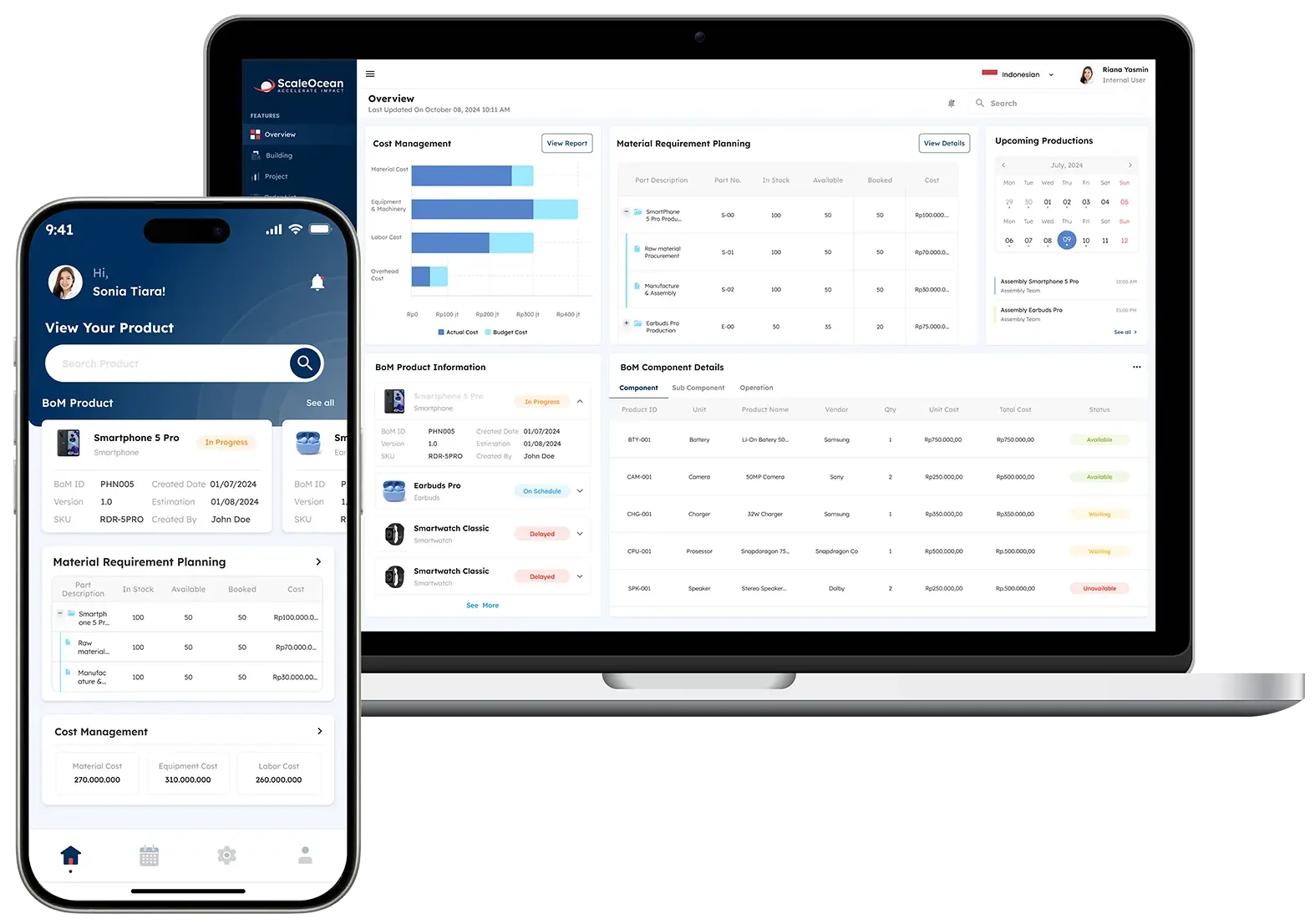
However, maintaining improvements may need a manufacturing software that unifies procurement, inventory, and production. Like ScaleOcean Manufacturing ERP Software, which helps businesses integrate procurement, inventory, and production workflows to reduce delays and improve timing accuracy.
Moreover, real-time data visibility allows teams to monitor stock levels, schedules, and supplier updates within one system. Request a free demo today to explore how ScaleOcean helps maintain faster, more reliable lead duration performance.
What are the Different 5 Types of Lead Time
Lead time varies depending on where delays occur in the workflow. Businesses categorize lead time types to measure performance more precisely and identify opportunities for improvement across operational stages.
Understanding these different types helps organizations select the right metrics for evaluation. When teams track specific lead duration categories separately, they gain clearer insights into process efficiency and identify targeted solutions more effectively.
1. Customer Lead Time
Customer lead time measures the time from receiving a customer order to delivering the final product or service. This metric reflects the overall customer experience and directly influences satisfaction levels and the potential for repeat business.
Additionally, businesses use customer lead time to evaluate service responsiveness and fulfillment accuracy. When organizations consistently shorten this timeframe, they strengthen trust, improve brand perception, and maintain strong customer relationships.
2. Material Lead Time
Material lead time refers to the time required to obtain raw materials or components from suppliers. This period begins when a purchase order is issued and ends when materials arrive and become ready for use.
Furthermore, material requirement planning lead time helps procurement teams plan production schedules more accurately. When materials arrive consistently on time, businesses reduce idle production time and maintain continuous workflow progress across operations.
3. Production (Manufacturing) Lead Time
Production lead time measures the time required to transform raw materials into finished goods. This duration includes preparation, processing, quality inspections, and packaging stages necessary to produce completed items ready for distribution.
Additionally, production lead duration highlights internal operational efficiency and capacity utilization. When organizations optimize equipment scheduling and workforce coordination, they shorten processing times while maintaining consistent product quality standards.
4. Cumulative Lead Time
Cumulative lead time represents the total time required to complete all processes from material procurement to final delivery. This measurement combines the supplier, production, and distribution stages into a single comprehensive timeline.
Moreover, cumulative lead time provides leaders with a holistic view of operational performance. When organizations analyze this metric regularly, they identify systemic inefficiencies and implement improvements that enhance overall business responsiveness.
5. Delivery Lead Time
Delivery lead time measures the time from the completion of finished goods dispatch to their successful delivery to customers or distribution centers. Transportation distance, logistics coordination, and route planning significantly influence this timeframe.
Additionally, improving delivery lead duration enhances customer satisfaction and reduces fulfillment uncertainties. When businesses optimize transportation schedules and closely monitor logistics performance, they maintain consistent delivery reliability across geographic locations.
What are the Key Factors That Affect Lead Time?
Several operational factors influence how quickly businesses complete requests and deliver results. These factors vary across industries, yet procurement efficiency, production readiness, and logistics coordination consistently determine overall lead duration performance.
Moreover, understanding these factors clarifies the lead time meaning by helping organizations identify where delays most often occur. When teams analyze these areas regularly, they implement targeted improvements that reduce bottlenecks and strengthen workflow reliability across departments.
Procurement Lead Time Factors
Supplier reliability significantly affects procurement timelines across industries. When suppliers delay responses or shipments, organizations experience material shortages that disrupt operations and unexpectedly extend production or service completion schedules.
Additionally, purchase order accuracy and approval speed influence procurement lead time. When procurement teams use standardized documentation and faster approval workflows, they reduce administrative delays and ensure materials arrive on schedule.
Manufacturing Lead Time Factors
Production capacity strongly influences manufacturing lead duration across facilities. When equipment availability is limited or maintenance schedules overlap with production demands, delays occur, extending completion timelines and significantly reducing operational efficiency.
Furthermore, workforce readiness and the accuracy of production planning affect workflow continuity. When employees receive clear instructions and schedules align with resource availability, production stages progress smoothly without interruptions that could extend delivery commitments.
Shipping Lead Time Factors
Transportation distance and route planning directly affect shipping lead duration performance. When businesses choose inefficient routes or unreliable carriers, delivery timelines lengthen, and meeting customer expectations consistently becomes harder.
Additionally, customs clearance procedures and regulatory compliance influence international shipments. When documentation is incomplete or inaccurate, goods are delayed at checkpoints, increasing delivery uncertainty and disrupting supply chain continuity across regions.
Example of Lead Time
Many organizations experience recurring lead-time delays due to fragmented communication and limited visibility across operations. For example, a mid-sized electronics distributor experienced frequent shipment delays that significantly reduced customer satisfaction and increased operational costs.
Initially, the company struggled because procurement teams relied on manual updates from suppliers. As a result, inaccurate delivery information led to production rescheduling, while warehouse teams often discovered shortages only after production had already begun.
Furthermore, the root cause analysis revealed that supplier communication occurred through emails without standardized reporting formats. Consequently, teams received inconsistent delivery data, which prevented managers from predicting delays and planning alternative sourcing strategies effectively.
To resolve these issues, the company implemented centralized tracking dashboards that synchronized procurement, warehouse, and logistics data. By improving communication visibility, teams monitored supplier performance in real time and adjusted production schedules proactively before disruptions occurred.
This approach reflects practices highlighted in industry case studies found by our team that’s published by McKinsey & Company, which reported that integrated data visibility significantly reduces operational delays and improves supply chain responsiveness across industries.
As a result, the distributor reduced average lead duration by improving supplier coordination and scheduling accuracy. Consequently, customer fulfillment became faster, inventory shortages declined, and operational teams maintained consistent workflow reliability across business cycles.
Lead Time vs. Cycle Time. What’s the Difference?
Businesses often confuse lead time and cycle time because both measure process duration. However, understanding what is lead time and cycle time is that these metrics focus on different operational stages and serve distinct purposes in evaluating workflow performance.
While lead time meaning measures the total duration from request to completion, cycle time focuses specifically on the active processing period required to complete a task. Understanding this distinction helps organizations analyze efficiency more accurately.
Aspects
Lead Time
Cycle Time
Definition
Measures the total duration from the moment a request begins until final delivery occurs.
Measures the time required to complete the active working portion of a process.
Scope
Includes waiting time, processing time, transportation, and delays across workflows.
Focuses only on the time spent actively performing work tasks.
Purpose
Helps businesses evaluate overall process efficiency and the speed of customer fulfillment.
Helps teams analyze operational productivity and identify inefficiencies within production stages.
Use Case
Commonly used in supply chain, procurement, customer service, and project management workflows.
Often used in manufacturing, service execution, and production line performance evaluation.
Key Benefit
Provides a complete view of end-to-end performance across departments.
Provides detailed insight into how efficiently work activities are executed.
Understanding these differences allows organizations to measure performance accurately and improve both responsiveness and productivity. When businesses track both metrics together, they gain clearer insights into workflow performance and opportunities for operational optimization.
How to Reduce Lead Time with ScaleOcean?
Businesses reduce lead time faster when they replace manual coordination with connected digital systems. Therefore, ScaleOcean’s Manufacturing ERP Software helps organizations streamline workflows, reduce processing delays, and maintain consistent operational timelines across procurement, inventory, and fulfillment activities.
Furthermore, ScaleOcean automates repetitive administrative tasks such as purchase orders, approvals, and reporting processes. By reducing manual data entry, teams significantly shorten processing time and ensure that each workflow stage proceeds without unnecessary delays.
Moreover, customizable workflows and instant analytics dashboards help managers quickly detect bottlenecks and streamline approval steps. As a result, organizations improve decision-making speed and maintain predictable lead-time performance even under fluctuating demand conditions.
Importantly, ScaleOcean solutions align with CTC grant requirements, enabling eligible businesses to receive up to 70% in funding support. Therefore, companies adopt modern technology at a lower cost while improving operational efficiency and maintaining shorter, more reliable lead times.
Key ScaleOcean Features to Reduce Lead Time:
Advanced Inventory Management & MRP: This feature ensures raw materials remain available through automated replenishment planning. Consequently, businesses prevent stock shortages, maintain production readiness, and avoid costly downtime caused by missing materials or delayed procurement cycles.
Automated Production Planning: This capability schedules production tasks automatically based on available resources and demand forecasts. As a result, businesses reduce scheduling conflicts, prevent idle machine time, and maintain consistent output aligned with delivery commitments.
AI ERP & IIoT Integration: This feature enables real-time monitoring of machine performance and production progress. Therefore, businesses detect delays earlier, respond to equipment slowdowns quickly, and maintain steady workflow continuity across production environments.
Centralized Database & Real-Time Tracking: This capability instantly synchronizes operational data across departments. Consequently, businesses eliminate waiting time between teams, accelerate order processing, and ensure each workflow stage progresses without communication-related delays.
Multi-Warehouse & Branch Management: This feature improves coordination across multiple storage locations and facilities. As a result, businesses transfer inventory faster between sites, reduce fulfillment delays, and maintain consistent delivery timelines across distributed operations.
Conclusion
Lead time determines how efficiently businesses complete requests from start to delivery. By understanding calculation methods, key factors, and improvement strategies, businesses can reduce delays, maintain steady workflows, and improve overall service reliability across operations.
ScaleOcean’s Manufacturing ERP Software helps businesses shorten lead time through connected planning, inventory control, and real-time operational visibility. With integrated workflows and automated processes, teams reduce bottlenecks and maintain consistent production and delivery timelines.
Ready to improve operational speed and delivery performance? Request a free demo of ScaleOcean today and discover how integrated ERP solutions help your business achieve faster, more reliable lead duration results.
FAQ:
1. How is lead time calculated?
Lead time is calculated by subtracting the order date from the delivery date. It’s usually measured in days, providing a clear and easy way for manufacturers and customers to track and communicate timelines.
2. What is a short lead time?
A short lead time means a process is completed quickly, often due to optimized workflows, efficient supply chains, and readily available materials.
3. How to reduce lead time?
Key strategies to reduce lead time include:
1. Ensuring clear communication with suppliers.
2. Integrating your systems.
3. Optimizing inventory management.
4. Coordinating logistics effectively.
5. Using automation in order fulfillment.
4. Is a shorter lead time better?
Yes, shorter lead times improve inventory control and supply chain performance. Faster lead times enable quicker sales and help increase company profits.













 Key Takeaways