




Raft foundation is one of the types of construction foundations. It is a large reinforced concrete slab that supports the entire building. Within this foundation, the load is spread over a wide area which provides strong stability even on uneven soil.
Additionally, raft foundation is widely used in the Philippines due to different soil conditions and frequent heavy rainfall. It helps reduce issues and ensures long-term structural durability.
 Key Takeaways
- Raft foundation is a large concrete slab that supports an entire structure by distributing loads evenly across the ground.
- Raft and mat foundation are often used interchangeably, though minor technical differences may exist.
- This foundation offers benefits such as cost efficiency, simple construction, and strong load distribution.
- ScaleOcean Construction ERP Software helps manage construction projects more efficiently.
1. What is Raft Foundation?
A raft foundation, also known as a mat foundation, is a thick concrete slab that covers the entire footprint of a building. It supports columns and walls while distributing the load evenly across the ground.
This type of construction foundation is useful in areas with low soil bearing capacity. Unlike a concrete slab foundation or slab-on-grade foundation, a raft foundation distributes structural loads across a much larger area, making it suitable for weaker soil conditions.
Instead of using individual footings such as a spread footing, the structure “floats” on a single slab, reducing the risk of uneven settlement. It is commonly used in areas with loose soil, such as in the Philippines.
2. Difference Between Raft and Mat Foundation
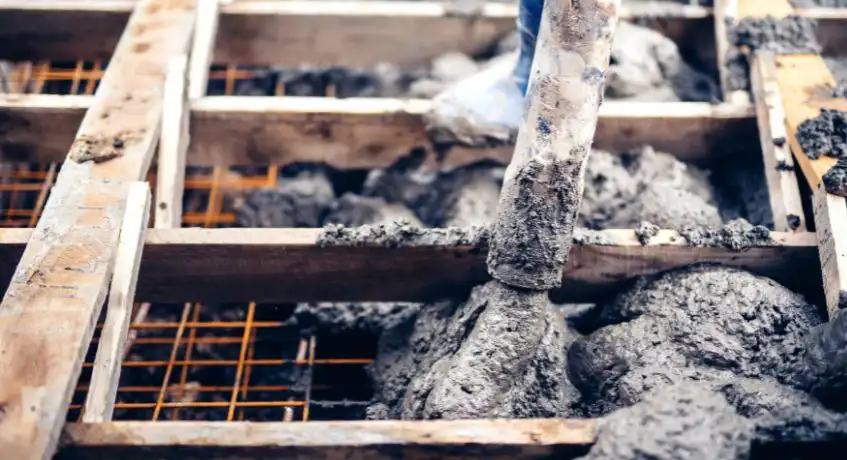
Raft foundation and mat foundation are often considered the same in construction terminology. Both refer to a large slab that supports multiple columns and spreads loads over a wide area.
However, in some technical contexts, “mat foundation” may refer to a more heavily reinforced or complex system; used for larger structures like high-rise buildings. Meanwhile, “raft foundation” is commonly used for residential or low-rise projects.
3. Why Use Raft Foundation?
Raft foundation is popular because it offers several advantages. It is a practical solution for ensuring stability while keeping construction efficient. Especially when soil conditions don’t support construction. Raft foundation can help maximize the strength of a building.
a. Cost Effective
The first reason why to use a raft foundation is because it’s affordable. Raft foundation can reduce costs because it eliminates the need for multiple individual footings. This means less excavation and fewer materials.
b. Even Load Distribution
Secondly, one of the main benefits is its ability to distribute loads evenly. Unlike a pile foundation, which transfers loads to deeper soil layers, a raft foundation spreads the load across a wider surface area.
This reduces pressure on the soil and minimizes the risk of cracks, which is especially important for strengthening areas with weak ground conditions.
c. Easy Construction Process
Compared to other foundation types, raft foundation is relatively simple to construct. Once the site is prepared, the concrete can be poured in a single operation. It means the construction foundation can easily be done within months.
d. Versatility
The fourth reason is that the raft foundation can be used for different types of buildings. For example, residential houses and commercial structures can use mat for its foundation, while some larger developments may require a basement foundation depending on site conditions and building design.
4. Raft Foundation Construction Process
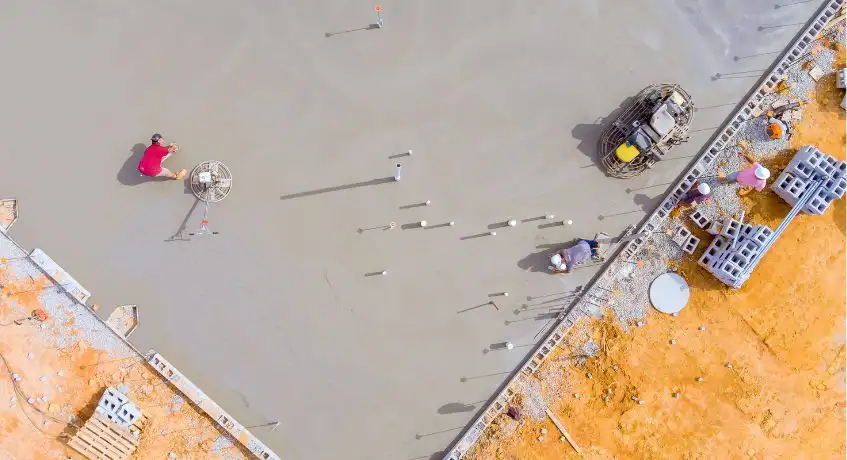
Understanding the construction process helps ensure the foundation is built correctly. Each step must follow proper engineering standards to avoid issues such as cracks or uneven settlement. These are the process of building raft foundation:
a. Site Excavation
The first step is excavating the site to the required depth based on the structural design. In some cases, excavation may go deeper if the soil is too soft. Proper measurements and leveling are important to avoid uneven surfaces.
b. Soil Preparation
After the excavation, the soil is compacted using heavy equipment. This is supposed to make the soil dense and stable. Compaction helps prevent cracks in the building. After that, a layer of sand or gravel is usually added on top of the soil to improve drainage.
c. Waterproofing
Third, waterproofing is applied to protect the foundation from moisture. This may include coatings applied to the prepared surface before the concrete is poured. This step is essential for preventing heavy rains and flooding from weakening the foundation.
d. Placing Reinforcements
Steel reinforcement bars (rebar) are arranged in a grid pattern within the slab area. These bars provide structural strength and help resist tension forces. Spacers are used to ensure the rebar remains properly positioned and to prevent construction errors.
e. Concrete Pouring
After that, concrete is poured evenly across the entire prepared area. The pouring process must be continuous to avoid weak joints or gaps in the structure. Workers also remove air bubbles through vibration to ensure the concrete is dense and strong.
To make the process of building a raft foundation more efficient, you can use ScaleOcean Construction ERP Software to manage projects with better accuracy, real‑time monitoring, and compliance with standard regulations.
f. Curing
The last step is curing. It is the process of keeping the concrete moist for several days after pouring. This allows the concrete to gain strength and prevents it from drying too quickly. In hot or dry weather, the surface may be covered or watered regularly to maintain moisture.
5. Types of Raft Foundations
There are several types of raft foundations used depending on project requirements. Each type is designed to provide the right level of support while maintaining stability and cost efficiency.
Under PD No. 1096 (National Building Code of the Philippines), foundation designs must comply with specific safety and engineering standards. The following raft foundation types are commonly used to meet these requirements:
- Flat plate raft.
- Thickened slabs.
- Two-way beam and slab raft.
- Piled raft.
- Rigid frame mat.
6. When to Use Raft Foundations?
A raft foundation is the best choice when the ground is too weak to support a building and traditional strip foundations may not provide proper support. This design allows the building to “float” on the soil. It prevents the structure from sinking due to uneven pressure on soft soil.
This method is especially useful in areas with high water levels or soft soil, where alternatives such as a caisson foundation may also be considered depending on the project’s structural requirements.
In the Philippines, raft foundations are used for buildings near coast areas. Because these locations are often prone to flooding, this provides a stable base that keeps the entire building level.
7. In Conclusion
Overall, raft foundation is a reliable construction foundation that provides strong support by distributing loads evenly. It is especially useful in the Philippines, where soil conditions and climate can affect building stability.
By understanding its types, benefits, and construction process, you can choose the right foundation for your project. However, managing construction projects efficiently also requires proper planning, budgeting, and coordination.
To simplify these processes, using tools like ScaleOcean Construction ERP Software can help streamline operations, improve accuracy, and reduce delays.
If you want to optimize your construction projects, you can request a free demo today and experience a more efficient way to manage your project.
FAQ:
1. What are the disadvantages of raft foundations?
Raft foundations are not suitable for all soil types. For example, clay soil expands and shrinks with moisture changes, which can cause the foundation to move and develop cracks over time.
2. Is raft foundation earthquake proof?
Raft foundations can help improve earthquake resistance, but they are not completely earthquake-proof. Their large surface area helps spread seismic forces and absorb vibrations, reducing direct impact on the building.
3. What is the minimum depth of a raft foundation?
The depth of a raft foundation typically ranges from 500 mm to 2500 mm. Its thickness is usually between 300 mm and 1000 mm. It also depends on the building load and soil condition.


















.png)