

A Bill of Materials (BOM) is a detailed and organized listing that includes all components, parts, materials, or sub-assemblies needed to produce a product and the quantity of each needed. It is used as a contract that spells out the process of production, assists in keeping an inventory, and is used for cost control and procurement purposes. This is the part names, part description, quantity, and units of measure.
One of the most important documents for describing all the raw materials, components, and sub-assemblies required to produce a finished product is the Bill of Materials (BOM).
As an all-in-one plan, BOM helps manufacturers speed up the procurement process, fine-tune inventory control, and optimize production planning, a process that helps minimize operational expenses and boost efficiency.
 Key Takeaways
- Bill of materials is a key document listing all materials and components needed for production, ensuring smooth workflows and cost efficiency.
- Types of BOM include engineering, manufacturing, sales, and service BOMs, each serving different roles in design, production, sales, and maintenance.
- Creating a good BOM requires identifying product requirements, using BOM software, collaborating with teams, and reviewing regularly for accuracy.
- ScaleOcean manufacturing software streamlines BOM management, integrating real-time inventory and improving production efficiency for manufacturers.

What is a Bill of Materials (BOM)?
A Bill of Materials (BOM) is a detailed, organized document that defines and catalogs all the materials, components, subassemblies, and parts needed to produce or assemble a product.
It is obvious from a typical production process example that the backbone of the production process is what enables a production to have everything that it needs available when it needs it.
A BOM can describe materials and quantities, or give a general description of materials (such as a recipe for production), or give a description of the relationship of the materials in the final product. This facilitates manufacturers to retain accuracy, prevent delay in production, and boost the efficiency of inventory management.
No matter the manufacturing process, whether it involves making consumer electronics, complicated devices, or pharmaceuticals, the well-organized BOM helps to streamline the manufacturing process, reduce the cost, and eliminate material waste.
Importance of BOM in Manufacturing
Efficiency and accuracy need to be the key parts. A Bill of Materials (BOM) listing displays all of the materials and parts in a structured and arranged fashion, and is extremely important for making sure you have efficient production operations.
In the absence of an accurate bill of materials, companies could experience delays, stock outages, and suboptimal costs. In addition, if a faulty BOM occurs, it can lead to calculations and/or planning mistakes during the manufacturing process, resulting in unnecessary costs and loss of profit.
The effective development and maintenance of BOMs can help companies optimize and streamline their production processes, enabling businesses to ensure efficient inventory control and deliver precise cost estimates, which ultimately boosts operational efficiency and profitability. Here’s how BOM plays a crucial role:
Production Planning
A well-completed BOM can serve as a production guide; it may help to show what materials will be required for a production run, and how the materials and resources can be made use of efficiently in other production runs.
By incorporating takt time and demand planning, we can ensure that the production lines don’t have to wait for missing parts at startup time, helping ensure downtime is minimised and workflow optimised.
Inventory Management
Proper inventory balance is crucial when it comes to economic manufacturing. BOM is a good control of the stock as it avoids over-purchasing of materials, and it also prevents the loss of material by over-storing, and allows tracking of the materials purchased in the manufacturing of the product.
When integrated with BOM, inventory management systems can help businesses manage inventory more effectively, which helps to lower unnecessary storage costs and decrease lost sales. This will also help in optimize product capacity of the existing product and will encourage efficient use of resources, and in planning production better.
Cost Estimation
One element of the cost analysis system is a Bill of Materials (BOM) that takes into consideration the pricing of materials so that the producers can be properly prepared for the cost of production before any production process is initiated. It helps an organisation as it is useful when considering all materials, component & subassembly through the view of the whole cost.
A well-calculated BOM will also assist businesses in having effective pricing methods and exploring cost-reduction strategies. In doing so, procurement departments can ensure that they can extract the highest efficiency from their suppliers, reduce costs, and maximise profit by ramping up spend to affect the bottom line.
Main Types of BOM

The manufacturing process becomes more complex the more the products are sold, and different Bills of Materials (BOM) are needed to ensure a smooth manufacturing and sales process. A Bill of Materials (BOM) is not a universal document, but rather tailored to certain company business areas like product design, manufacturing, sales, after-sales service, and more.
For businesses, it is possible to improve productivity and halt mistakes, improve departmental communication, and identify the differences in BOM. There are four types of BOMs used in the manufacturing and related activities most often:
- Engineering BOM (EBOM): This is done when the product is designed, and the specification and subassemblies are the same as those in the CAD drawings. For mark-making teams, it records prototype changes and components before final production approval.
- Manufacturing BOM (MBOM): This version contains a list of all parts and raw materials which have been required to make the final product. Capable of converting engineering concepts into practical processes and designs according to the specifications of Good Manufacturing Practice (GMP) standards for quality and consistency.
- Sales BOM: This is used for products to be sold by kits, bundles, and serves to include all the products in one sales order. It will help collate the stock and pricing information for a product, such as a bundle of electronic devices, for the sales and customer service teams.
- Service BOM: It is a Maintenance BOM that lists spares required for After-Sales Service and Maintenance. It supports work in progress during maintenance, minimises downtime, and allows technicians to have the right parts for the extended life of a product.
The Difference Between Explosion and Implosion in BOM Displays
In a BOM display, explosion refers to breaking down a product into all of its parts. This method lists every material and sub-assembly needed, making it clear what each part contributes to the final product. For example, an exploded view of a car would list parts like the engine, wheels, and seats.
Implosion, on the other hand, focuses on the final product and its relationship to the components. It shows how a finished item is related to its parts, aggregating the components together. For instance, in a furniture BOM, implosion would show the complete chair and list the parts like screws, legs, and upholstery.
Using both methods ensures a comprehensive understanding of production needs. Explosion is helpful for purchasing and inventory planning, while implosion is ideal for assembly and final product management. By combining both, manufacturers optimize resource allocation and streamline production.
To help you get a better understanding, here’s a table outlining the differences between Explosion and Implosion in Bill of Materials (BOM) displays:
| Aspect | Explosion | Implosion |
|---|---|---|
| Purpose | Provides a detailed view of all materials required for manufacturing. | Simplifies the view by consolidating parts and focusing on the end product. |
| Usage | Typically used in manufacturing, assembly, and production planning. | Used in procurement and inventory management for higher-level tracking. |
| Level of detail | Shows all components, assemblies, and subassemblies with all associated parts. | Focuses on the higher-level assemblies, ignoring the details of individual parts. |
| Complexity | High, as it involves breaking down each part into its constituent materials. | Lower, since it aggregates multiple components into fewer items. |
| Data usage | Data is used to track exact quantities of each material and part. | Data is used for tracking product availability and simplifying inventory management. |
Structures of a BOM
A Bill of Materials (BOM) structure defines how materials, components, and subassemblies are organized within a product. A well-structured BOM, along with an effective requirement material plan, ensures clarity in manufacturing, procurement, and inventory management, preventing inefficiencies.
The structure of a BOM follows a logical hierarchy, detailing the relationships between different components and how they contribute to the final product. Depending on the complexity of the product, BOMs can be organized in a single-level or multilevel format. Here are the detailed explanation of the types of BOM structures:
Single-Level BOM
A single-level BOM includes only the direct components needed to assemble a finished product, without any subassemblies or lower-level parts. It’s simple to manage, making it suitable for products with straightforward assembly processes, where no complex parts are involved.
This structure allows manufacturers to quickly identify the parts required for assembly. However, it might not be sufficient for complex products, as it lacks the necessary detail to account for intermediate components and subassemblies that may be involved in production.
Multi-Level BOM
A multi-level BOM offers a detailed breakdown of all components, including subassemblies, intermediate materials, and raw materials. This format is essential for products that require multiple assembly stages, such as electronics or machinery, ensuring all parts are accounted for.
By organizing materials hierarchically, multi-level BOMs help manufacturers trace the relationships between parts and manage dependencies. This structured approach enhances production efficiency, optimizes procurement, and ensures smoother workflows for complex manufacturing projects.
A well-structured BOM, whether single-level or multi-level, is key to efficient production, procurement, and inventory management. With ScaleOcean manufacturing software, you can streamline BOM creation and management, enhancing transparency, reducing errors, and optimizing workflows.

Components of a BOM
An advanced Bill of Materials (BOM) should include a BOM level to describe its hierarchy, phase tracking for product lifecycle phases, and alternate parts to avoid supply chain interruption. These features help producers stay efficient and on schedule, transforming the BOM into a strategic tool. Here are the main components of a BOM:
- Part Number: Each component is allocated a unique identification number to distinguish between materials. This numbering method prevents confusion between variations and facilitates faster ordering, tracking, and inventory management.
- Part Name: This provides a descriptive name for each component, making it easier for various departments to identify elements. Consistent naming ensures the correct parts are chosen and helps categorize inventory for easier sorting.
- Quantity: This specifies the exact number of units needed for each component to create the finished product. Accurate quantities help procurement avoid production delays from shortages or high costs from excess inventory.
- Unit of Measure: The BOM provides the unit of measurement (UOM), such as pieces, kilos, or liters, for every item. Standardizing these units ensures consistency in material calculations and streamlines the procurement process.
- Supplier Information: This section includes vendor names, part sources, and lead times to simplify purchasing. Having this data ready allows producers to replenish goods quickly, compare prices, and assess supplier performance.
Key Benefits of BOM
A Bill of Materials (BOM) is essential in manufacturing as it brings clarity, organization, and transparency to the production process. It helps track materials, manage costs, and streamline workflows, which results in greater efficiency across the board. Here are the key benefits of using a BOM:
Facilitate Widespread Visualization
BOM makes it easy for manufacturers to see how all components fit together in the production process. It shows the relationships between materials and helps teams identify dependencies and potential issues, making it easier to manage workflows effectively.
This clear visualization allows different departments, from procurement to assembly, to work from the same data. Everyone stays on the same page, reducing mistakes and improving coordination, leading to a smoother production process overall.
Reduce Development Expenses
BOM helps cut down on development costs by streamlining how materials are sourced and reducing waste. With accurate material listings, businesses can avoid overordering, ensure timely procurement, and keep inventory at optimal levels, which saves money.
Additionally, using manufacturing process planning tools alongside BOM ensures a smoother planning process, allowing for better resource allocation and further cost savings throughout production.
It also helps manufacturers find more cost-effective material alternatives. With the right data at hand, companies can negotiate better deals with suppliers and make smarter decisions about how resources are allocated during production, helping to keep costs in check.
Accelerate Time to Market
BOM speeds up time to market by ensuring that materials are available when needed. With everything planned, procurement and assembly go smoothly, which reduces delays and shortens the overall production timeline, allowing businesses to meet demand faster.
For make-to-order production, BOM ensures that the right materials are ready at the right time, helping companies respond to specific customer orders quickly.
By improving coordination and reducing inefficiencies, BOM helps manufacturers move through production more quickly. This allows businesses to get products to market sooner, keeping up with customer demand and staying competitive in the market.
Gain a Competitive Advantage
A well-organized BOM gives companies an edge by improving how efficiently they produce products. With streamlined manufacturing processes, companies can offer high-quality products at lower costs, helping them stand out from competitors in the market.
Having clear visibility into production through a BOM means manufacturers can adjust quickly to changes in the market. This agility helps businesses meet customer needs faster and stay ahead of the competition, giving them a strong position in their industry.
Ensure Effective Change Management and Traceability
BOM makes managing changes easy by keeping track of any updates to materials, designs, or components. This helps manufacturers quickly identify where changes occurred, ensuring that any adjustments are handled smoothly and consistently across production.
With proper traceability, manufacturers can easily follow every change made to parts or assemblies, ensuring compliance with industry standards. This also helps reduce errors, improve product quality, and maintain efficiency throughout the production process.
How to Create a Good Bill of Materials
A Bill of Materials (BOM) forms the foundation of an effective manufacturing process, ensuring accurate documentation and control of all necessary components. A badly organized BOM can result in material shortages, manufacturing delays, and cost inefficiencies.
To avoid these challenges, organizations must take a systematic approach to building and maintaining their BOM. The following are critical steps for creating an effective BOM:
1. Identifying Product Requirements
The first step in establishing a BOM is identifying all components, raw materials, and subassemblies needed for the product.
This includes part numbers, quantities, and units of measurement. Additionally, calculating cycle time helps optimize production, avoiding delays and ensuring smooth manufacturing.
2. Using BOM Software
Manually managing a BOM increases the likelihood of errors, version mismatches, and inefficiency. Using BOM software automates the creation, updating, and tracking of materials, assuring data correctness.
Integrated ERP or inventory management systems can boost productivity by connecting BOM details to procurement, costing, and stock levels.
3. Involving All Stakeholders
Engineering, manufacturing, procurement, and inventory management teams should collaborate to create a BOM, ensuring alignment across departments.
Collaboration reduces confusion, guarantees material availability, and optimizes costs. When all stakeholders agree on the BOM structure, manufacturing processes become more efficient and predictable.
4. Conducting Regular Reviews
Manufacturers must regularly update a Bill of Materials (BOM) to reflect design changes, material substitutions, and supplier updates.
Periodic reviews help to maintain correctness, avoid outdated requirements, and assure manufacturing uniformity. Keeping the BOM up to date reduces costly errors and promotes efficient decision-making in the long run.
Examples of BOM Application in Singapore’s Industry
In Singapore’s diversified manufacturing industry, the Bill of Materials (BOM) is critical to maintaining efficiency, accuracy, and compliance across industries. Firms across industries, including electronics, pharmaceuticals, and logistics, use BOMs to simplify manufacturing, manage inventory, and comply with regulations.
Below are key examples of BOM applications in different sectors:
Electronics Companies
Singaporean electronics manufacturers, especially in IoT and semiconductors, use Bill of Materials (BOMs) to manage complex components and ensure precise assembly.
A well-structured BOM helps track microchips, circuit boards, and sensors, ensuring compliance with design and industry standards. Furthermore, BOMs allow manufacturers to purchase materials from multiple sources while ensuring quality and uniformity.
Pharmaceutical Companies
Pharmaceutical manufacturers must adhere to stringent regulatory criteria, including the Indonesian Food and Drug Administration (BPOM) and international GMP (Good Manufacturing Practice) standards.
A BOM assures that every ingredient, chemical compound, and packaging material used in drug manufacture is properly documented and traceable. This degree of detail is useful for quality control, regulatory audits, and preserving batch uniformity in drug production.
Logistics Companies
BOMs play a crucial role in logistics and supply chain management by tracking spare parts and maintenance inventory for fleets and warehouse equipment.
By listing essential components like engine parts, tires, and sensors, logistics firms can prevent stockouts, streamline procurement, and minimize equipment downtime. This assures continuous operations and reduces disruptions in the delivery and distribution processes.
ScaleOcean’s Manufacturing Software Solution for Easier BOM Management
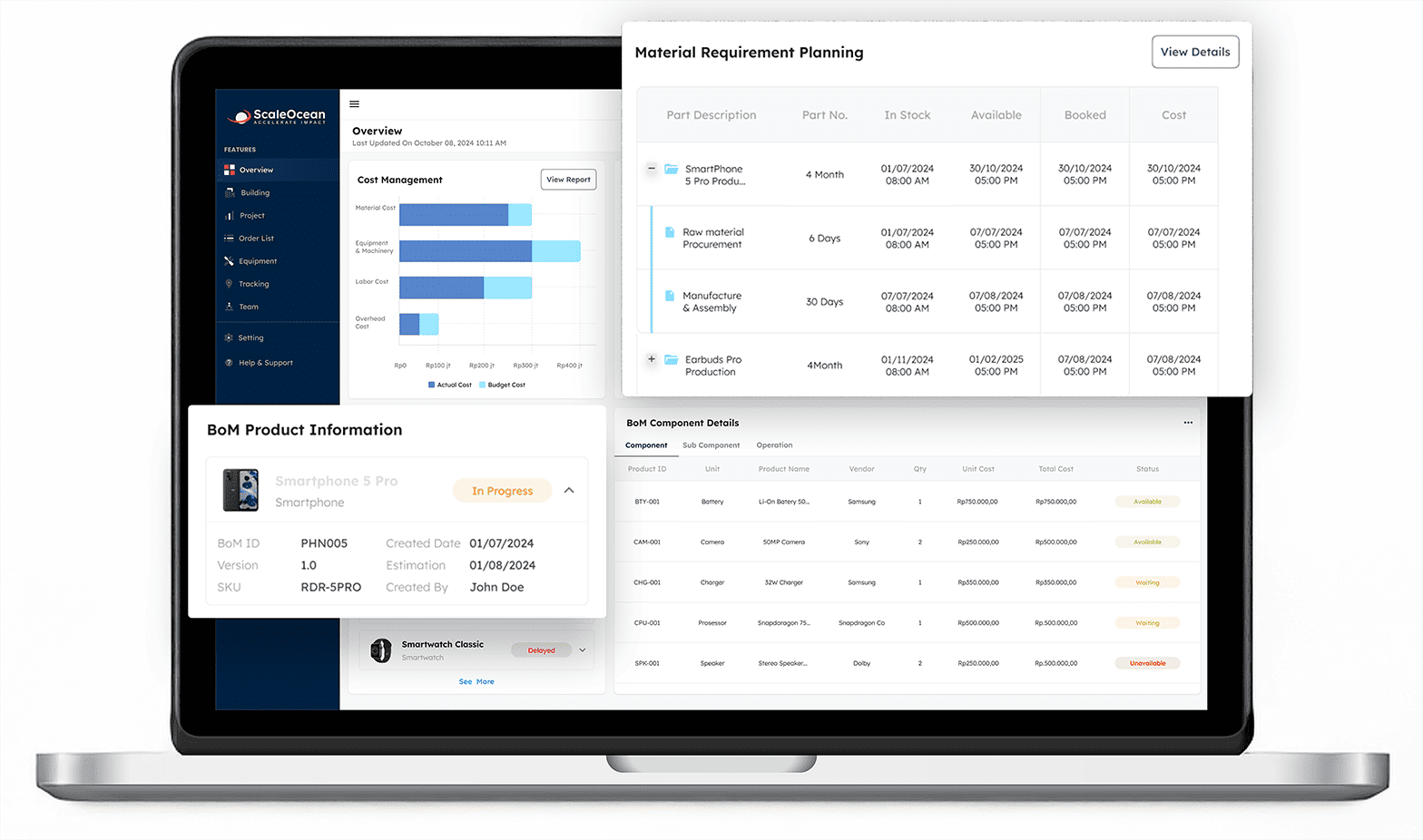
Managing a Bill of Materials (BOM) can be a difficult and time-consuming operation, particularly for manufacturers dealing with multi-level assemblies, changing product designs, and supply chain dependencies. Businesses that do not have an effective system run the danger of errors, delays, and departmental miscommunication.
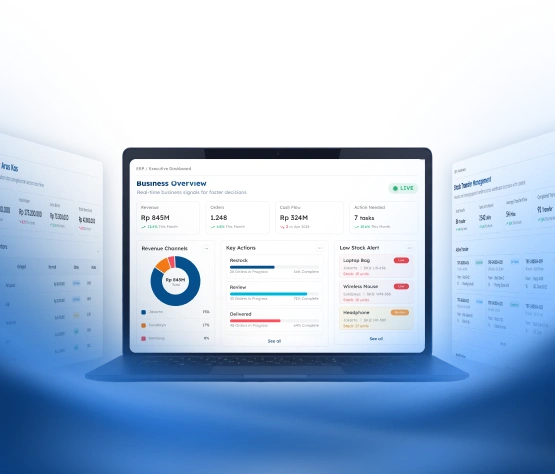
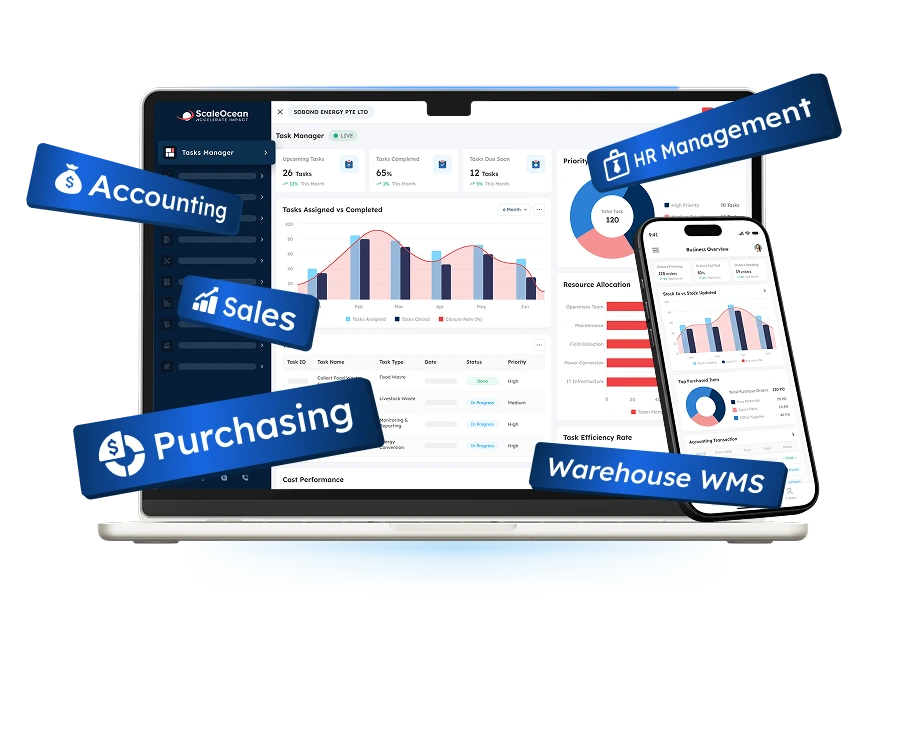
ScaleOcean provides a comprehensive manufacturing ERP solution that streamlines BOM management, ensuring accuracy, productivity, and seamless integration throughout operations.
With a free demo, manufacturers can explore how the system automates BOM procedures, optimizes inventory control, and improves communication. By offering user-friendly tools and advanced automation, ScaleOcean simplifies BOM management, helping organizations eliminate production errors, save time, and enhance overall efficiency.
Here are the unique features of ScaleOcean manufacturing software:
- Automated BOM Creation and Management: ScaleOcean simplifies BOM creation, eliminating manual data entry. The system ensures accuracy by automatically updating material lists, reducing errors, and saving valuable production time.
- Inventory and Procurement System Integration: With real-time integration, businesses can sync BOMs with inventory and procurement modules, ensuring materials are always available when needed.
- Support for Multi-Level BOMs for Complex Products: For manufacturers dealing with intricate product structures, ScaleOcean’s multi-level BOM feature provides a detailed breakdown of components and subassemblies.
- Singapore-Based Support Team: ScaleOcean’s dedicated local support team ensures fast response times, personalized assistance, and an in-depth understanding of Singapore’s business landscape.
- Competitive Pricing with Government Subsidies: ScaleOcean offers affordable pricing, making advanced BOM management accessible to businesses of all sizes.
Conclusion
A well-structured Bill of Materials (BOM) is vital for precise production planning, efficient inventory management, and cost savings. An effective BOM helps manufacturers eliminate errors, enhance collaboration, and streamline processes, thereby improving efficiency and profitability.
To reap the full benefits, producers require a sophisticated and automated BOM management solution. ScaleOcean streamlines BOM development, interacts smoothly with inventory and procurement, and maintains accuracy throughout the production process.
Begin using ScaleOcean today and discover a more effective method to manage BOMs! Request a free demo today to see how automation can transform your production process.
FAQ:
1. How do I calculate BOM?
1. Start by gathering data on each component.
2. Calculate the direct material costs involved.
3. Factor in the labor costs needed for production.
4. Include any overhead, shipping, and handling costs.
5. Adjust for currency changes and inflation.
6. Finally, add the desired profit margin.
2. Does BOM include packaging?
Yes, a manufacturing BOM is used during production. It not only identifies the parts and assemblies needed to create a shippable product but also includes packaging. It accounts for waste and other items consumed throughout the production process.
3. What is a 150% BOM?
A 150% BOM refers to an expanded version of a standard Bill of Materials. It includes extra components, parts, and features that go beyond the basic product requirements to accommodate different customization options and meet diverse customer needs.
4. What is the difference between BOM and BOQ?
BOM and BOQ serve different purposes. For BOM is key for inventory management, procurement, and production, while BOQ helps with project bidding, budgeting, and cost control. BOM is typically prepared later in the project during detailed design, whereas BOQ is created early, in the pre-construction phase.





















.png)