


Poka yoke refers to a strategic mistake-proofing method widely used in manufacturing to achieve zero defects and maximize profits. The idea of incorporating simple mechanisms into human activity ensures 100% quality by making errors either impractical to commit or readily visible.
Process variations in the manual system can lead to output variability and increase the risk of costly product recalls in Singapore’s competitive manufacturing environment. This method addresses these challenges by leveraging built-in sensors and automated safety devices to ensure production remains stable and to help eliminate the dangers of human fatigue.
According to data gathered by our team from the Singapore Economic Development Board, manufacturing production climbed 10.1% year-on-year in March 2026, marking the strongest growth since late 2025. This acceleration was fueled by a 30% surge in electronics output, alongside significant rebounds in precision engineering and general manufacturing.
With quarterly output up 7.9%, integrating advanced manufacturing software becomes essential for businesses to maintain this momentum, as digital tools provide the automated controls needed to manage high-volume production while ensuring zero-defect quality.
In addition, batches often have poor quality due to manual inspection errors and incorrect machine calibration. Real-time inspection and interlock signals make sure that machines are operating within the appropriate parameters.
In this article, we will attempt to demystify poka yoke, review the different forms, and highlight some of the advantages it brings, so that the user may see how mistake-proofing may be used to achieve excellence.
 Key Takeaways
- Poka yoke is a proactive strategy that designs processes to make it impossible for human errors to result in product defects.
- The benefits of implementing poka yoke include eliminating defects, reducing inspection costs, improving safety, and lowering overall production costs for better efficiency.
- There are seven systematic steps to follow for poka yoke implementation, moving from the detection of error-prone areas to the monitoring and enhancement of results.
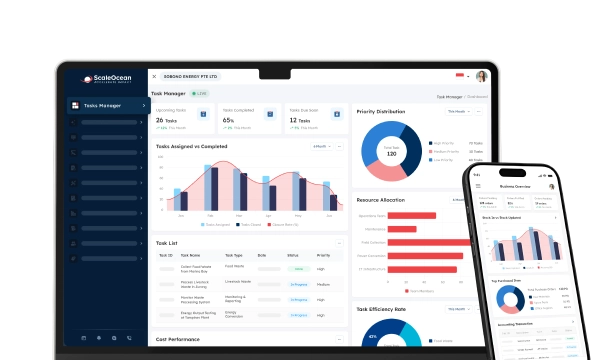
- Manufacturing software ScaleOcean helps manage and enhance your mistake-proofing strategy by using data to identify, implement, and track poka yoke solutions effectively.

What is Poka Yoke or Mistake-Proofing?
Poka yoke, or mistake-proofing, is a Japanese methodology focused on preventing accidental errors before they occur. Developed at Toyota in the 1960s by Shigeo Shingo, the core philosophy of poka yoke acknowledges that human error is inevitable.
Instead of blaming individuals, this system implements simple, reliable mechanisms that make it physically impossible to commit a mistake or ensure that errors are detected and corrected immediately. By integrating these safeguards directly into the process, businesses can achieve 100% quality and eliminate the costs associated with rework and defects.
Poka yoke means being preventative, in that it does not allow the errors to happen, but instead it identifies the errors that might occur and stops them from happening before the actual defect occurs, during quality checks.
By providing a device that does not allow for the completion of a task unless certain parameters are set, a company can create a flawless operation with no time wasted on rework, scrap, or excessive quality checks during the production process.
 Also Read: What is Manufacturing: Understanding Definitions & Types
When and Where to Use Poka Yoke
Poka yoke is especially valuable in production environments where human errors by the operator may result in a defect or safety problem, or costly rework. It helps to use it whenever there might be a problem, like when doing the same thing over and over, or when doing something that needs a lot of focus.
Finding these points where controls are needed helps businesses to put in place simple and cheap fixes. This can stop problems from happening later on.
Ideal Situations for Implementation
Any of the following situations is a prime candidate for mistake-proofing the process:
- Process Hand-offs: Transfer of product between operators, work centers, or departments can be error-prone.
- High-Risk Early Steps: Any errors at the beginning of a process may result in serious consequences later on.
- Recurring Issues: A persistent high defect rate in an area or a frequently recurring issue may signal an opportunity for poka yoke.
- Decision Points: These areas may include placing the correct component, adjusting a machine, or choosing the correct step.
Common Errors Solved by Poka Yoke
Poka yoke can prevent various operational failures, including:
- Processing Errors: Missed operations, incorrect procedures.
- Setup Errors: Using the wrong tooling, incorrect machine setup.
- Missing or Improper Parts: Failure to put in the correct component, or incorrect component used.
- Operations Errors: The wrong operation was performed due to outdated/wrong procedures.
- Measurement Errors: Incorrect dimensions on parts from the supplier, incorrect process measurement, and incorrect machine setup dimensions.
Types of Poka Yoke
Poka yoke methods are error-proofing techniques designed to either prevent mistakes before they occur (prevention) or detect them as soon as they arise (detection). Poka yoke can be of several types: Contact, Fixed-Value, and Motion-Step.
These methods are all designed to create 100% quality by preventing any errors from being generated in the manufacturing process in the first place, thereby ensuring rapid and efficient manufacturing processes.
| Types | Definition | Examples |
|---|---|---|
| Shutdown | Prevents the process from continuing if an error is detected, halting operations immediately. | A press machine stops if the safety guard is open, preventing a faulty operation. |
| Warning | Provides a signal or alert when an error occurs, without stopping the process. | A flashing light alerts the operator if the torque wrench isn’t set correctly. |
| Contact Method | Uses physical characteristics of parts (shape, size, etc.) to ensure correct placement. | Guide pins or sensors prevent incorrect assembly by ensuring parts fit in only one way. |
| Constant Number Method | Ensures a specific number of items or actions are completed, preventing missing components. | A tray with pre-counted bolts that flags an error if a part is missing. |
| Sequencing Method | Ensures tasks or steps are completed in the correct order to avoid skipping or performing them incorrectly. | A machine won’t activate the next step until the previous one is properly completed, such as confirming parts are clamped before welding. |
| Shutout Type | Makes an error physically impossible by design, ensuring only correct assembly. | A USB plug that only fits in one way, preventing incorrect insertion. |
| Attention Type | Uses visual cues to direct attention to potential issues, helping operators catch errors early. | Color-coded bins or parts to ensure the right components are selected. |
| Description examples | include a press that stops if the safety guard is open, a light that flashes when torque settings are wrong, and guide pins that ensure precise part alignment. | Showcase the versatility and effectiveness of poka-yoke in maintaining quality. |
Several Types of Poka Yoke:
Shutdown
One of the most effective aspects of this method is the shutdown. If an error is found, this system ceases the process altogether, and no defective products are made. If the operation is stopped, it will prevent defective products from moving down the assembly line.
It is particularly effective in mass production scenarios, where even minor mistakes can lead to substantial losses. The shutdown type will normally require immediate attention and correction, thus eliminating waste and helping to prevent defects, particularly in mass production.
Warning
Unlike the shutdown type, the warning method offers warnings without stopping the process. These alerts are like warnings for operators. They tell the operators if something is not right, so the operators can fix the problem before it becomes an issue. The operators will see things like flashing lights.
This kind of poka yoke does not stop production from happening. It is really good at finding mistakes early on. The poka yoke system helps the operators catch errors before they cause any trouble. It is an easy and affordable solution to processes where the operation cannot be stopped.
Contact Method
The contact method is based on the physical properties of parts to identify the assembly manufacturing with incorrect parts. Uses guide pins, sensors, or fixtures that physically interact with parts. If a part is not placed correctly, it won’t fit or will trigger a signal to alert the operator.
This process is extensively applied in the manufacturing environment where precision is critical, such as in assembly lines. The contact method works without complex technology and prevents errors since parts are only inserted in the correct orientation or position.
Constant Number Method
The constant number method guarantees a certain number of parts or steps. It is, for instance, used in an assembly process where a specific number of parts need to be assembled. If the correct count is not met, an error will be flagged by the system, thereby ensuring the completeness and accuracy of the count.
This is a very useful poka yoke technique in assembly operations where the lack of parts can result in grave defects. It ensures the proper product has all the necessary parts, which keeps product quality high and helps companies avoid potential operational delays from a product that is not complete.
Sequencing Method
The sequencing method allows operations to run in proper order by creating dependencies between operations. This poka yoke type prevents operators from skipping steps in the wrong sequence, which could lead to errors or safety problems.
This helps to make the process easier. It also helps to reduce defects and improve efficiency. The sequencing method guarantees that every step is carried out in order. This approach is helpful for a manufacturing process. It simplifies the process by ensuring that each step is performed properly and helps to minimize defects and enhance efficiency in the process.
Shutout Type
The shutout method is based on the principle of smart design to prevent errors. There is a single correct way to use or assemble parts or tools. This simple yet effective method helps avoid any design mistakes at the design level.
For instance, a USB plug is only able to fit into the socket in one direction. This type of poka yoke is extremely effective in avoiding error without requiring state-of-the-art technology and provides a simple and reliable means of ensuring proper assembly every time.
Attention Type
The attention type is a way to prevent mistakes. It uses labels and other visual reminders to show where problems might happen. It helps the operator see where errors could occur so they can fix the issue before it becomes a defect.
This type of poka yoke is useful when combined with other methods, creating a more robust error-proofing system. While it depends on the operator’s attention, clear visual cues can significantly reduce the chances of human error, especially in busy production environments.
Description Examples
Poka yoke examples in the real world are a press stop (shutdown type), a flashing light when torque is set improperly (warning type), and a guide pin for precise alignment of the part (contact type).
While physical safeguards are essential, modern facilities use advanced manufacturing software to achieve total production control. By adopting manufacturing software management, you will automate the entire workflow with real-time tracking and alerts, creating an error-resistant environment that guarantees 100% quality and operational excellence.
Benefits of Poka Yoke
This method is helpful when used with other methods. It creates a system to prevent mistakes. The operator still needs to pay attention. Clear visual reminders can greatly reduce errors, especially in busy production areas, where attention to detail is key, to prevent errors with the attention type and ensure the attention type is used effectively.
Eliminates Product Defects
The obvious advantage of poka yoke application is that product defects are greatly reduced. Manufacturers can avoid creating a faulty product through the design of systems that prevent errors at the source. This preventative method will be much more effective than relying on downstream quality checks.
Manufacturers get a first-pass yield, so they make more products right on the first try. This makes the company more reliable to people, and it also helps to make the overall quality of the company better, which is something that the zero-defect mindset is really going for.
Reduce Inspection Time and Cost
Poka yoke significantly reduces the amount of detailed quality checks required. The main idea of poka yoke is to focus on prevention rather than detection, which reduces the number of defects that reach inspection stations.
This can help create shorter production lead times and allow more time for value-added activities, which can be good for the bottom line and the production planning and control operation.
Improves Safety and Operational Efficiency
Many poka yoke devices can simultaneously enhance safety and efficiency. For instance, machines cannot be operated when safety guards are open, which not only prevents quality problems but also protects the operators.
This dedication to process integrity minimizes unplanned shutdowns, accidents, and quality problems, resulting in more streamlined and efficient manufacturing. This stability allows for more effective planning and smooth, reliable business operations.
Encourages Continuous Improvement (Kaizen)
Many poka yoke devices can help make work safer and more efficient at the same time. For example, machines won’t work if safety guards are open, which helps prevent mistakes and keeps workers safe.
This focus on doing things right helps avoid shutdowns, accidents, and quality problems. As a result, manufacturing becomes smoother and more efficient. This stability makes it easier to plan and have business operations.
Reduces Defective Products and Rework
Using poka yoke methods in manufacturing is key to creating a culture of improvement. This helps staff think about their work.
When staff work together to solve problems, they create a culture of innovation and improvement. This helps teamwork, collaboration, and doing things well, which boosts performance.
Improves Product Quality and Consistency
Poka yoke mechanisms result in a significant improvement in the consistency of product output. Products are consistent, and quality is consistent across production batches due to minimizing the variability caused by human error.
As manufacturers track the changing cost of operations. The Ministry of Trade and Industry says the unit business cost index rose 0.2% in 2024. That’s a drop from the 5.8% increase in 2023. Labor, royalty, and subcontracting costs made up for other costs.
By implementing poka yoke, companies can adapt to these changes and minimize waste and maintain the quality required for long-term success. Manufacturers can use poka yoke to reduce waste and mistakes and control variable costs.
Maximizes Production Efficiency and Throughput
Less rework and fewer defects lead to higher production efficiency, as do faster inspection times. This streamlines the production process, preventing delays and bottlenecks to ensure high-quality production at greater volume.
Businesses can create more with the same resources if they are efficient. This enables businesses to cater to their customer’s needs, whilst optimizing their profit margins and ensuring that their operations are successful.
Lowers Production Costs
The total benefit of lowered defect and rework, reduced inspection time leads to lower production costs. Poka yoke is a worthwhile investment because, over time, the savings in these areas will outweigh the cost.
Such savings may be put back into the business to further improve it or shared with customers in the form of competitive pricing. Such constant evolution and cost-saving boosts the financial health and sustainability of a business.
How to Implement the Procedure of Poka Yoke in Your Process (Step-by-Step)?

To make poka yoke in manufacturing more effective, the prevention of errors from the beginning is a must, and it is this that poka yoke (mistake-proofing) does in manufacturing. The analysis of cause and effect is achieved by finding repeating problems, finding the root causes of problems (5 Whys, etc), and the installation of physical or warning devices (USB ports, safety sensors, etc) to prevent problems.
1. Detect Error-Prone Areas
The first step in poka yoke is to be able to know where errors are likely to occur and where they will have the most impact. To make things better, we need to look at quality reports, process maps, or standard operating procedures.
We have to pay attention to complex operations that need to be done very accurately, are done over and over, or rely heavily on human memory and judgment. Making a list of problem areas will help us decide what to improve first.
2. Analyze the Error Type
It is very important to find out what caused the error. One good way to do this is to use the “5 Whys” method, which helps us ask a series of “why” questions to find the root cause of the problem.
By doing this, we can find out if the error is happening because of training, bad equipment, unclear instructions, or something else. We need to know what the error is and what is causing it within the context of production vs. manufacturing.
3. Select the Appropriate Poka Yoke Type
After analyzing, the next step is to select the most appropriate poka yoke in the situation. When full prevention is impossible or impractical, the next best thing is to provide a system that can detect the error as soon as possible, for example, a “warning type”.
Some factors to consider when choosing this method are the severity of the error, how often it is used, the cost of the solution, and its level of complexity. The purpose is to determine the most direct and effective solution that would solve the problem and reduce risk in the future.
4. Choose the Right Method for Implementation
The next step is to choose which type to implement. This may be of a physical nature, such as guide pins for a contact method, a procedural change, like a checklist for sequencing, or even a sensor-based system.
Simple and inexpensive solutions can be the most effective ones. We do not always need to use high-tech sensors or automation systems. Trying out approaches and testing them will help us see what works best.
5. Conduct Testing and Adjust
Before we put this solution in place, we have to test it thoroughly. Then make sure the solution works well to prevent the error we are trying to fix and does not cause errors.
We have to be ready to make changes and adjustments to the solution based on the feedback and results of the tests. We might need to make some small changes to make it more reliable, easy to use, or efficient.
6. Provide Team Training
Poka yoke in manufacturing is essential to the successful implementation of the system. The team needs to know why we are making a change. They need to understand how the new system will work and what they need to do to make it successful.
We can use training to remind everyone that we always try to improve. Support staff to stay active and continually seek out opportunities for further process improvements.
7. Monitor and Enhance Results
The people operating the system will give us feedback on how it’s working, and this will help us see how the system will work in real situations.
Sometimes we need to update the poka yoke systems when things change or when we make products. We will make sure the poka yoke system is working well and helps us keep improving all the time.
Examples of Poka Yoke
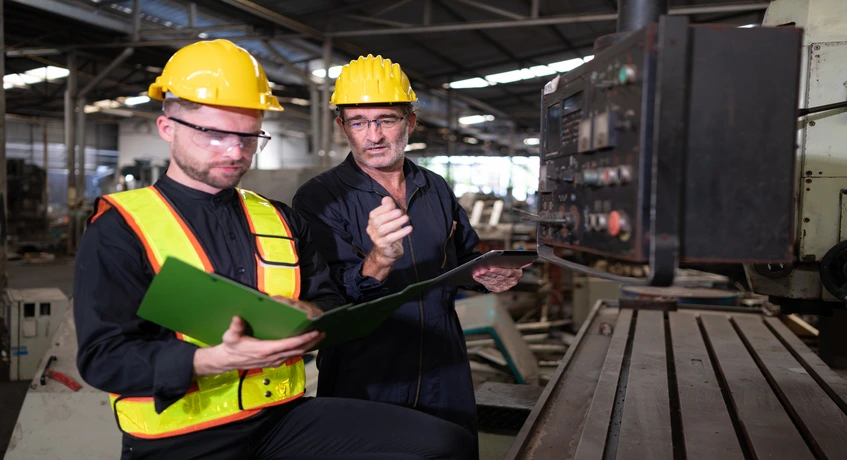
Poka yoke is a very powerful technique that is applied in several industries as a way of eliminating errors at their source. We can make things better by using devices like sensors and special equipment to keep people safe and make sure things are done right.
In the end, making sure mistakes do not happen is a part of doing things perfectly because it helps get rid of errors, reduces the money spent on fixing things, and makes customers happy.
Examples of Poka Yoke in Manufacturing
Poka Yoke examples are really important in manufacturing to make sure things are precise and to prevent people from making mistakes when they are putting things together or using machines.
Examples of Poka-Yoke in Manufacturing:
Orientation Fixtures
Orientation fixtures, also known as jigs, are used with both contact and shutout methods. These specially designed machines can be used to firmly keep components in place and in alignment.
This simple solution eliminates the risk of misalignment, providing an accurate operation without the need for continuous manual checks. It is an effective and economical method of removing imperfections associated with part orientation.
Limit Switches
A limit switch is a sensor that senses the presence of an object and activates a response. In manufacturing, the limit switch is like a gatekeeper. It makes sure a part is in place before the next step happens.
For example, a machine can be programmed not to start until the limit switch says the workpiece is in the position.
Sensor-Based Part Detection
On automated assembly lines, components are verified with modern sensors. In case of a missing component or a wrong location, the sensor stops the line or activates an alarm to warn the person operating the equipment.
This is a non-contact detection method that is essential in an environment where manual inspection is not possible because of high speed. Sensor-based detection reduces the chances of delivering an incomplete by giving a reliable check for completeness.
Color-Coded Components
Color coding is a good type of this method, as it provides a visual cue for operators. The colored components allow the operator to locate the right one for the job fast by being matched with the corresponding slot.
These pictorial aids decrease the mental effort needed to understand the task, and errors will be obvious. Color coding significantly decreases the chance of part mix-ups and increases the efficiency of the assembly process.
Alignment Pins
The alignment pins are devices that come into contact and are a critical component in providing a precise fit between two parts. These pins mate with parts in holes that align and assure correct assembly without special skill or manual measurements.
When handling intricate or tight-tolerance parts, this mechanical design ensures they remain aligned, preventing potential misalignment issues. The alignment ensures consistency and high quality in thousands of production cycles.
Torque Limiters on Tools
Torque Limiting Wrenches and Screwdrivers are special wrenches and screwdrivers designed to achieve the correct torque on fasteners. These tools are used to click when a certain amount of torque is reached.
These fasteners must all be the same in industries like aerospace, automotive, and medical. Safety is an important thing in these industries. If something is not aligned correctly, it can be very dangerous.
Barcode or RFID Scanning
The scanning of a barcode or RFID allows for a secure digital verification in the assembly process. The code is checked before it is put into a product to make sure it works with the work order or bill of materials.
If the wrong part is found, the system can stop the machine. Warn the operator that something is wrong. This process makes sure the right parts are used at each stage, which is necessary for keeping track of inventory and making sure everything is of good quality.
Mechanical Interlocks
Mechanical interlocks are physical barriers that prevent a machine from taking an unsafe action. For instance, a safety guard on a heavy-duty press could be made so that the press will not start if the safety guard is not completely closed and locked.
With these devices, safety is built into the production process. Mechanical interlocks automatically keep the equipment in safe operating conditions, which helps to prevent workers from being injured and operating risks from workplace accidents.
Error-Proof Connectors
Error-proof connectors, also known as keyed connectors, are made up of different shapes that allow for only one way to be connected. It is also standard practice in the electrical wiring of electronic devices and automotive components.
Integrating the solution into the product design means that the manufacturer can simplify assembly and greatly minimize electrical testing and troubleshooting.
Counting Sensors for Parts
Counting sensors are used in packaging to automate the counting of small parts. These optical or weight-based sensors are used to make sure that the right number of components is added to a box or kit before the process is considered “done”.
The constant number method is adopted, which can avoid human error in manual counting. It helps to ensure that customers always receive full orders, thus improving customer satisfaction and minimizing the expense of shipping incomplete orders.
Go/No-Go Gauges
We use go/no-go gauges to check if a workpiece is the right size. One side of the tool fits if the part is the size; this is the “go” side. The other side of the tool does not fit if the part is not the size; this is the “no-go” side.
This way of checking things makes it easier for the quality control team to make decisions. These gauges give us quick. No answers, which helps us make sure everything is good, in large production runs. It also makes sure that each limit switch and each part is of quality.
Proximity Sensors
The proximity sensors are the sensors that can sense the presence of objects without physical contact with them, suitable for high-speed or delicate applications within the production process.
These sensors are very versatile and can be used in nearly any automated system. They offer a valuable form of monitoring for today’s technologically advanced manufacturing processes that is non-intrusive to the manufacturing line.
Safety Light Curtains
A safety light curtain is a system that controls hazardous machines by forming an invisible barrier around them using infrared beams. When another object comes between those beams, the system stops all operations in an emergency to avoid injury.
It is a type of shutdown poka yoke, which is more effective than the traditional physical guard for the locations where frequent access is needed. It offers maximum protection without compromising the operator’s speed and efficiency.
Automatic Shutoff Systems
When there are abnormal conditions, such as overheating or low pressure, automatic shutoff systems cut off power. These systems are intended to stop the damage of goods or machines in the event of a problem by stopping the production process.
The shutdown poka yoke systems are important fail-safe systems that continually check critical parameters. They take action quickly when problems are found, keeping operations running smoothly and equipment safe, and maintaining product quality.
Positioning Templates
Positioning templates (overlays) is a visual representation that indicates the location of components. These templates decrease manual measurements and help to ensure that parts are mounted appropriately each time, thereby saving time.
This is a type of poka yoke that decreases the likelihood of the part being misplaced by clearly marking the correct positions. It is a straightforward yet powerful tool that improves accuracy, particularly during complex assembly tasks, and is economical and efficient.
Examples of Poka Yoke in Everyday Life
Poka yoke principles are not limited to industrial settings. USB plugs that fit only one way to safety sensors in vehicles that prevent mistakes before they occur. User-centric design can guide our actions and reduce errors through engineering.
The principles of Poka yoke can be applied in many other contexts, such as a USB plug that can only be inserted into one connector. This issue and many others are recognized in daily life and demonstrate the power of intuitive, user-centric design to minimize mistakes and waste through engineering and lean manufacturing.
Below are some common examples of Poka yoke in everyday life:
Car safety features
There are lots of poka yoke examples in modern cars that will prevent dangerous errors. For example, automatic transmissions will not move from “Park” until the brake pedal is applied.
These features help avoid potentially expensive or dangerous mistakes through sequencing and warning systems. Embedding error-proof designs directly into vehicle systems, car manufacturers make the experience of driving much safer and more reliable for all those on the road.
Treadmills
There is a critical safety key on treadmills, which has to be inserted into the console to activate the machine. This key is then hung on a cord clipped to the wearer’s clothing.
This shutdown poka yoke is an effective way to ensure that the machine is only run when under safe conditions. A basic but highly effective design that increases users’ safety and offers them comfort in doing their exercises.
Microwaves, washing machines, dishwashers, and other household appliances
There are features built into common household appliances, such as washing machines and microwaves, that prevent unsafe operations.
These are great examples of a “shutdown-type” poka yoke, making the appliance unable to operate under unsafe conditions. These features not only make daily tasks safer and more reliable but also help to ensure user safety from potential hazards in the home.
Elevators & garage doors
Eleven sensors are used in modern elevators and automatic garage doors that keep people and objects safe from getting caught. Elevator edges are also pressure sensitive, which automatically stop and open the doors if they detect a blockage while closing the doors.
In the same way, there is an advanced light at the base of the track that will monitor the door of the garage. These sensors are textbook examples of shutdown-type poka yoke.
Leak-proof water bottles & travel mugs
New mugs and water bottles will have locks and special caps that don’t allow any water to run. Most lids are in the form of a locking switch that must be activated by the user, and some use valves that open when the user presses down to drink.
These are great examples of shutout types of poka yoke, which will not allow a spill if it’s not the proper operation or if there is a mistake. The simple features prevent users from making messes and make this product more reliable.
Power outlets and USB plugs
Electrical plugs and plug holders are well designed so that they are inserted the right way up. Likewise, standard USB connectors are not symmetrical and won’t be pushed in the wrong way.
These are examples of poka yokes of the shutout variety, which help eliminate the possibility of electrical shorting. These features include physical design elements that are incorporated into the design of everyday technology, ensuring that it is safe and functional.
Overflow outlets in sinks
Overflow outlets are outlets that are built into baths and bathtub sinks to make sure that water doesn’t overflow if the main drain is clogged. This tiny opening is near the top that forces excess water back into the plumbing system before it can flood the floor.
A simple passive poka yoke error-prevention device to avoid a common household incident. It prevents water from being left to run by itself and ensures it can be safely diverted, demonstrating a smart and proactive design solution for homes.
Lawnmower safety bars
Modern lawnmowers have a safety bar, also known as a dead man’s switch, that has to be pressed into the handle in order to make the engine and blade operate.
A direct shut-off type poka yoke to ensure a safety function when the user is not in control, trips, or lets go of the mower.
Wheelchair wheels
Some manual wheelchairs have large rear wheels that can be easily detached and replaced for convenient transportation or storage.
The audible click function, when the wheel is safely locked in place, is a warning-type poka yoke, which gives immediate feedback to the user that the wheel is safe.
Examples of Poka Yoke in Service
The Poka yoke principles are really useful in services. This is because services are like products, such as experiences or transactions that people have.
When a service is well planned and uses technology, it helps businesses show their employees and customers what to do. The Poka yoke principles help people make choices. This means that the service and the experience that customers have will be better and more enjoyable. The Poka yoke principles make things run smoothly. People are happier with the service they get.
Unique Gas Outlets
Medical gases are provided in a hospital with dedicated wall outlets. The outlets and equipment connectors are different and colour-coded so that the wrong gas is never given to patients; this is an important safety feature.
This “shut out” type poka yoke is a combination of contact and visual cues; it is physically impossible to attach the wrong gas to a patient. It is an essential safeguard for patients and helps to avoid potentially life-threatening errors in healthcare settings.
Wristband Barcodes
In healthcare, the wristbands have unique barcodes, and upon scanning, they are used to verify the patient’s identity and match the medication prescribed for them. This helps to prevent medication errors, using the right drug, dose, and time.
This sequencing and verification poka yoke method greatly enhances patient safety. It can cross-reference the patient’s wrist tag with the medication, reducing the risk of error and providing the right treatment.
Dispensing Cabinets
The medication cabinets in hospitals are really helpful because they make sure nurses do what they are supposed to do. They have to log in and select the patient before they can get the medication.
This is like a safety system that only lets the right thing happen. It is called a shutout type, which means the nurse can only get the medication for the patient. This makes things easier. Reduces the chance of making a bad mistake.
Electronic Waiter Pads
When restaurant staff use tablets to take orders, they send the orders straight to the kitchen. This gets rid of the problems that happen when someone’s handwriting is hard to read.
This way of doing things makes sure that all the necessary information is collected before the order is sent to the kitchen. Restaurants can save time. Make customers happier by reducing mistakes when orders are placed.
Visual Guest Identifiers
Quick service restaurants and cafes sometimes employ numbers, names, or electronic buzzers to help identify customers and their orders. This approach helps ensure that the right information gets to the right person, avoiding the confusion that can happen during hectic hand-off times.
This easy yet effective poka yoke technique helps avoid errors at the end of the service delivery. When businesses are able to make a clear connection between a customer and the transaction.
ATM Card Alerts
A lot of ATMs have a feature that will alert the user to pull their card out after a withdrawal by continuing to beep for a period of time.
The alarm acts as a proactive warning to avoid the hassle of lost and captured cards. This simple component can make banking transactions more convenient and less susceptible to distracting and hasty mistakes.
Self-Checkout Weight Sensors
Self-checkout machines are equipped with a sensitive weighing scale in the bagging section to make sure all items scanned are weighed properly.
This kind of poka yoke makes sure that each item is scanned and put in a bag correctly before you pay for it. It helps stop problems like when an item is not scanned, or something is done wrong by mistake, and it makes the experience of shopping easier and more accurate, for both the store and the customer, and it uses poka yoke to do this.
Confirmation Prompts
When you do something on a computer, like deleting a file or submitting a form, you get a message that asks you to check again before you do it. This is like a safety check; it is called a poka yoke. It helps make sure you do not do something you cannot undo by mistake.
This safety check gives you a chance to think about what you’re doing, and it really helps reduce the chance of making a mistake by accident. It is a part of designing how people interact with computers, and it makes using a computer a better experience because it protects you from doing something you did not mean to do.
ScaleOcean Manufacturing Software for Managing Poka Yoke in Business
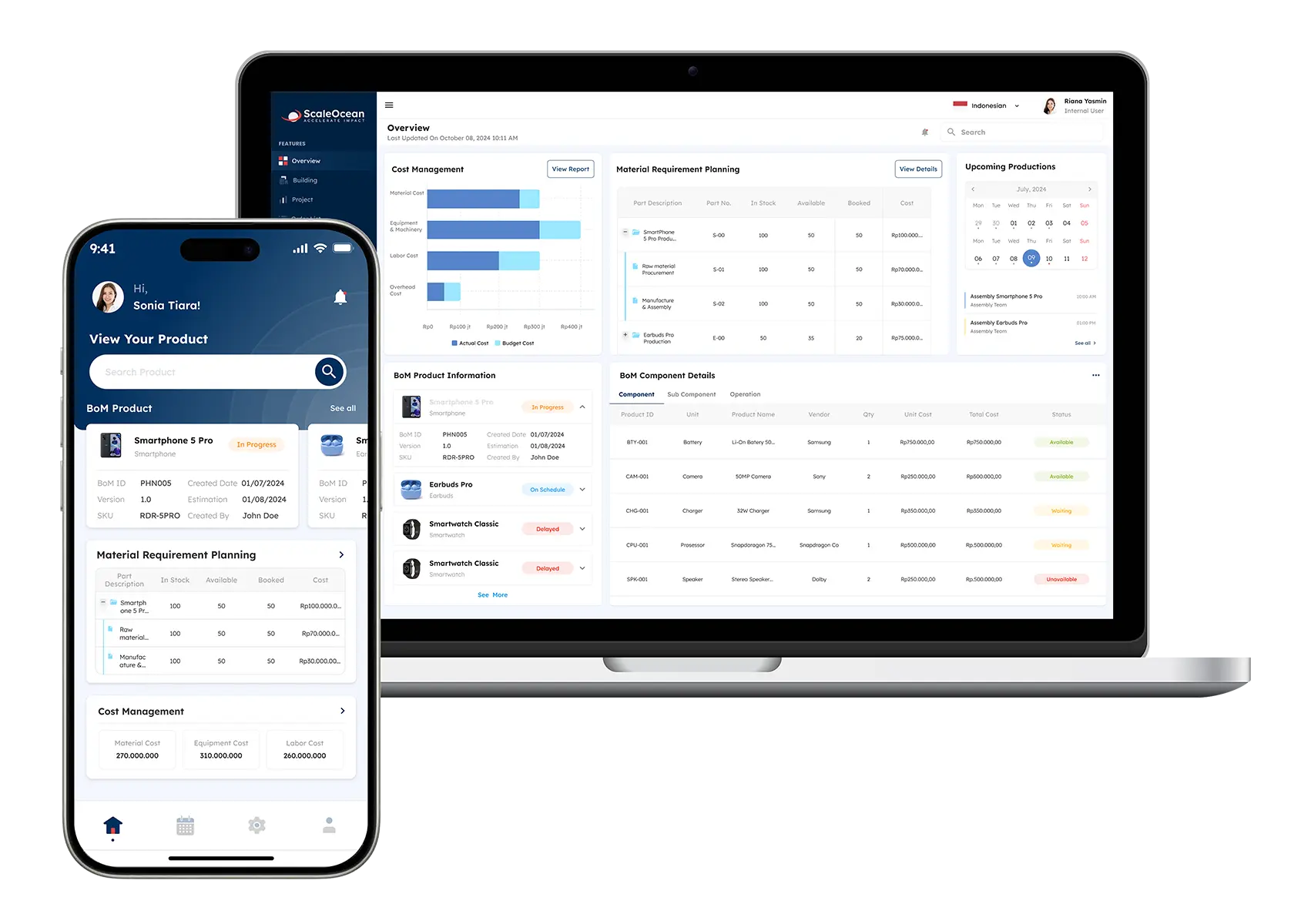
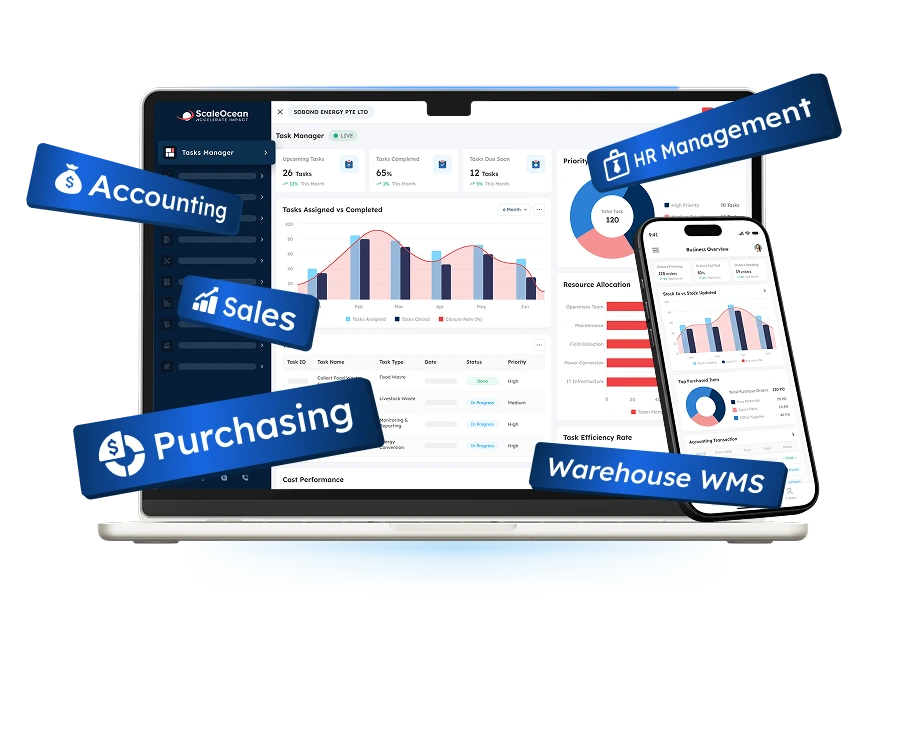
Companies often have problems with planning what they make, keeping track of what they have in stock, and making sure their products are of quality. Manufacturing software management ScaleOcean integrates all the parts of a business in one place, making things run smoothly and fixing these problems.
ScaleOcean has several unique features that will allow unlimited users without additional cost. This means businesses can add as many people as they need to use the software without having to pay more money, which is great for companies that are growing fast and want to make their operations bigger without spending too much money.
Also, ScaleOcean is eligible for a CTC grant, which can pay for up to 70% of the cost for businesses that are switching to a system. This makes it cheaper for companies to get an ERP system that can help them make things better while also making sure they follow the rules and keep their data safe.
ScaleOcean has a lot of features that help people, including:
- Smart MRP (Material Requirements Planning): Production, material procurement, and work orders that aligned with demand, optimizing resource usage and reducing waste.
- Quality Management: Improves product quality by integrating planned QA/QC procedures and inspection controls throughout the production process, minimizing defects.
- Inventory Management: Tracks stock levels of raw materials and finished goods in real-time, helping businesses avoid stock-outs and overstocking issues, while enhancing MRP accuracy.
- Maintenance Management: Enables the scheduling of preventive maintenance, tracking machine reliability, and minimizing downtime, ensuring smooth production flow.
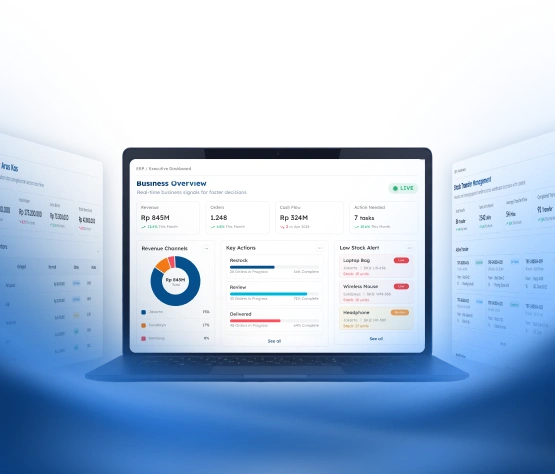
- Reporting & Analytics: Generates real-time reports and insights into production operations, helping managers make informed decisions quickly, boosting operational performance.
By using this platform, companies are investing in a system that is designed to make their whole manufacturing process better. Companies can sign up for a demo today to see how ScaleOcean can help improve their operations and make sure they are successful in the long term.
Conclusion
Poka yoke means a strategic mistake-proofing method widely used in manufacturing to achieve zero defects and maximize profits. This is a strategy that changes the way things are made by focusing on how things are done instead of blaming people for mistakes. It helps create a workplace where people are always trying to improve and make things, where Poka yoke and lean manufacturing work together to achieve 100% quality.
High recall risks, inconsistent output from overlooked production steps, and inaccurate manual inspections can complicate manufacturing operations. By adopting ScaleOcean manufacturing software addresses these problems can be addressed by providing a single platform for managing mistake-proofing strategies alongside production planning and real-time analytics. See how this platform can improve your manufacturing processes with a free demo from our team.
FAQ:
1. What is poka yoke, and examples?
Poka yoke refers to a Japanese continuous improvement strategy centered on the principle of mistake-proofing. This approach focuses on proactive measures that detect and remove errors at the source, effectively eliminating the root causes of production variability and product defects in manufacturing environments.
2. Is poka-yoke lean or Six Sigma?
Poka yoke is a fundamental tool of Lean Six Sigma that refers to strategies for preventing mistakes in a process. Poka yoke strategies eliminate human error from your processes so that defects never get to customers, meaning that your processes are more productive and profitable.
3. What’s the difference between poka-yoke and kaizen?
Poka-Yoke aims to eliminate defects by preventing human errors through mechanisms that prevent mistakes. Kaizen refers to continuous improvement and focuses on simplifying processes. Example: Rearranging tools on a workstation for easier access. Regularly gathering employee suggestions to improve workflows.





















.png)