

Production vs manufacturing often confuses businesses trying to optimize operations and reduce costs. Many struggle to understand the production vs manufacturing difference, leading to inefficient workflows, unclear strategies, and missed opportunities to scale effectively.
According to EDB Singapore, Singapore’s manufacturing sector experienced substantial growth in January 2026, with output increasing by 16.6%. This significant rise underscores the sector’s rapid expansion and highlights the country’s improving competitiveness in the global market.
Moreover, companies frequently apply the wrong approach when planning operations. As a result, they either overcomplicate simple processes or underutilize structured systems, which directly affects productivity, cost control, and overall business performance in the long run.
Therefore, understanding the difference becomes essential for making better operational decisions. By clearly defining both concepts, businesses can align strategies, improve resource allocation, and build systems that support sustainable growth and operational efficiency.
 Key Takeaways
- Production involves transforming inputs into goods or services across industries, offering flexibility and adaptability in creating value through both tangible and intangible outputs.
- Manufacturing involves producing physical goods through structured, scalable processes, ensuring consistency, efficiency, and quality control in high-volume production environments.
- The Difference Between Production and Manufacturing is that production covers the creation of goods or services, while manufacturing specifically produces finished goods from raw materials.
- The Importance of Both Processes lies in balancing flexibility and scalability, enabling businesses to innovate while maintaining consistent output and operational efficiency.
- ScaleOcean Manufacturing ERP Software integrates production and manufacturing processes to enhance efficiency, visibility, and scalability with a flexible, all-in-one system.
What is Production?
Production refers to the broad process of creating goods or services by transforming inputs into outputs. It includes everything from raw material handling to final delivery, following a structured production process that transforms inputs into valuable outputs.
In addition, production covers multiple industries, including agriculture, services, and digital products. For example, growing crops, providing consulting services, or developing software all fall under production because they involve converting resources into value.
Moreover, production does not always require machinery or standardized processes. Instead, it focuses on achieving results using available resources, making it more flexible and adaptable to different business models and operational needs.
Therefore, businesses that prioritize production aim to maximize output efficiently. They focus on resource utilization, time management, and overall process effectiveness to ensure consistent results while meeting demand and maintaining quality standards.
 Also Read: What is Manufacturing: Understanding Definitions & Types
What is Manufacturing?
Manufacturing is a specific type of production that focuses on creating physical goods through structured processes. It involves converting raw materials into finished products using machinery, tools, and standardized methods in a controlled environment.
Unlike general production, manufacturing emphasizes consistency and scalability. In many cases, businesses adopt mass production methods to produce identical products efficiently while maintaining strict quality standards.
Additionally, manufacturing often requires significant investment in equipment, technology, and skilled labor. Because of this, companies must carefully plan workflows, maintain machinery, and optimize production lines to avoid delays and unnecessary operational costs.
Therefore, manufacturing plays a crucial role in industries like automotive, electronics, and consumer goods. It enables businesses to produce at scale while maintaining precision, consistency, and efficiency in delivering physical products to the market.
Key Differences Between Production vs. Manufacturing
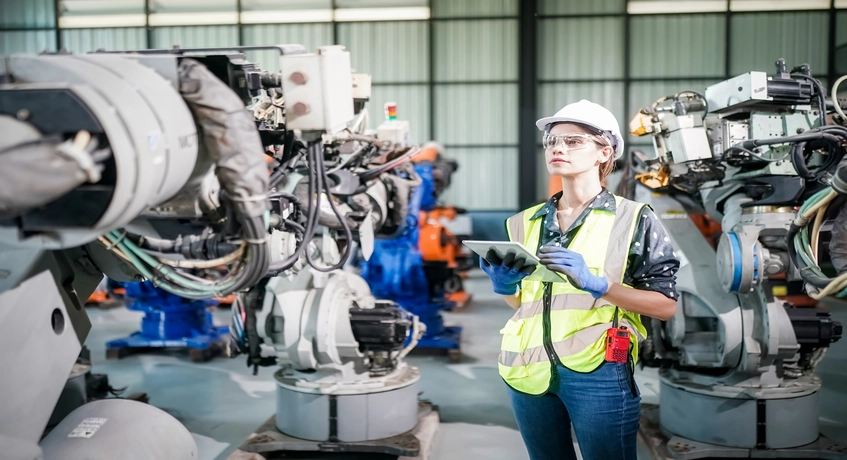
Understanding the production vs manufacturing difference helps businesses choose the right operational approach. While both aim to create value, they differ in structure, scope, and execution, which can directly impact efficiency, cost control, and scalability.
Many businesses use these terms interchangeably, which can lead to confusion when designing workflows or selecting systems. Production covers a broader process that transforms inputs into outputs, while manufacturing focuses specifically on creating tangible goods through defined methods and machinery.
Moreover, choosing the wrong approach can result in inefficiencies, misaligned resources, and operational delays. Therefore, understanding these differences allows businesses to align their processes with their goals, ensuring better planning, execution, and overall performance.
The table below clearly highlights the key differences between production and manufacturing, helping businesses identify which approach best fits their operational needs and long-term strategy.
| Aspects | Production | Manufacturing |
|---|---|---|
| Purpose | To create goods or services that meet customer needs across various industries. | To produce physical products by transforming raw materials into finished goods. |
| Scope | Broad, including ideation, design, distribution, and even services. | Narrower, focusing only on the creation of tangible goods. |
| Input | Uses ideas, labor, technology, raw materials, time, and capital. | Primarily uses raw materials, machinery, energy, and skilled labor. |
| Resources | Relies on human resources, technology, information, and flexible systems. | Depends on machinery, tools, facilities, and structured production lines. |
| Creation | Can involve manual, digital, or service-based processes. | Involves physical or chemical transformation processes. |
| Output | Can be tangible products or intangible services. | Always produces tangible, physical goods. |
| Results | Focuses on fulfilling demand and delivering overall value. | Focuses on consistency, quality control, and scalable output. |
| Costs/Financial Analysis | Includes a wide range of direct and indirect operational costs. | Focuses on production costs like materials, labor, and overhead. |
These differences show that production offers flexibility across outputs, while manufacturing ensures consistency through structured processes. Choosing the right approach depends on business goals, industry needs, and required scalability.
Purpose
Production focuses on delivering value by meeting customer needs through goods or services. Therefore, businesses prioritize flexibility and adaptability, ensuring they can respond quickly to changing market demands and evolving consumer expectations across different industries.
In contrast, manufacturing aims to produce standardized physical products efficiently. As a result, companies emphasize precision, consistency, and repeatability to maintain quality while scaling operations and meeting production targets within structured environments.
Scope
Production spans a wide range of operations, including planning, design, distribution, and even after-sales services. Consequently, it supports various industries, making it more comprehensive and adaptable to both product-based and service-based business models.
Meanwhile, manufacturing has a narrower scope focused strictly on transforming raw materials into finished goods. Therefore, it concentrates on production lines, process optimization, and quality assurance within controlled and highly structured operational systems.
Input
Production uses diverse inputs, including ideas, human skills, time, capital, and raw materials. By applying poka yoke, businesses can adjust these inputs while reducing errors across different production processes.
On the other hand, manufacturing relies heavily on physical inputs like raw materials, machinery, and energy. Additionally, skilled labor is essential to operate equipment efficiently and maintain consistent production standards throughout the process.
Resources
Production depends on a combination of human resources, digital tools, and information systems. As a result, businesses can operate with greater flexibility, adapting resources based on changing needs and operational strategies.
Conversely, manufacturing requires specialized resources such as machinery, production facilities, and logistics systems. Therefore, companies must invest significantly in infrastructure and maintenance to ensure smooth and uninterrupted operations.
Creation
Production involves various methods of creation, including manual work, automation, and service delivery. Consequently, it allows businesses to innovate and customize processes depending on the nature of their products or services.
In contrast, manufacturing focuses on structured processes of creation involving physical or chemical transformations. Thus, companies follow standardized procedures to ensure consistency, efficiency, and product uniformity across large-scale production.
Output
Production generates both tangible goods and intangible services. Because of this, it applies to industries ranging from manufacturing and agriculture to consulting and digital services, making it more broadly applicable.
Meanwhile, manufacturing strictly produces tangible goods. Therefore, every output is a physical product that can be stored, transported, and sold within supply chain systems.
Results
Production aims to satisfy customer demand while maximizing value creation. As a result, businesses measure success by efficiency, customer satisfaction, and adaptability to market changes.
Manufacturing, however, focuses on delivering consistent and high-quality products at scale. Consequently, success is measured by production efficiency, defect rates, and the ability to meet output targets reliably.
Costs/Financial Analysis
Production involves a wide range of costs, including direct, indirect, administrative, and distribution expenses. Therefore, financial analysis must consider the entire operational ecosystem, not just the creation process.
In comparison, manufacturing costs are more focused on production-related expenses such as raw materials, labor, and overhead. As a result, companies closely monitor cost efficiency within production lines to maintain profitability.
Example of Production vs. Manufacturing
To better understand the difference, reviewing production vs manufacturing examples helps clarify how businesses apply both concepts in real-world situations. For instance, a software company develops applications through planning, coding, and testing, which clearly falls under production rather than manufacturing.
Similarly, a consulting firm delivers services based on expertise and knowledge. Because there is no physical product involved, the entire process represents production, focusing on creating value through intangible outputs and client-focused solutions.
In contrast, a car factory transforms raw materials into finished vehicles using machines and assembly lines. Many of these operations rely on assembly manufacturing, in which components are systematically combined to produce consistent, scalable outputs.
Likewise, a food processing company produces packaged snacks using standardized recipes and machinery. Therefore, it operates under manufacturing, ensuring uniform quality, efficiency, and large-scale production of tangible goods for the market.
The Importance of Both Processes
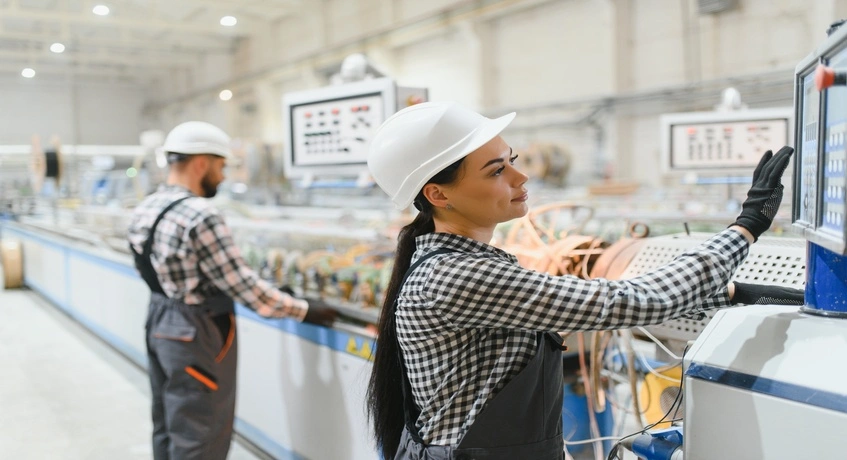
Both production and manufacturing play essential roles in supporting business growth and operational success. While they differ in execution, companies rely on both to create value, meet demand, and remain competitive in increasingly dynamic markets.
Moreover, production provides flexibility, allowing businesses to innovate and adapt quickly. As a result, companies can respond to changing customer needs, explore new opportunities, and expand into different industries or service areas.
At the same time, manufacturing ensures consistency and scalability in the delivery of physical products. Therefore, businesses can maintain quality standards, reduce costs through efficiency, and meet high-volume demand without compromising reliability.
Ultimately, combining both approaches enables businesses to operate more effectively. By aligning production flexibility with manufacturing efficiency, companies can build strong operational systems that support long-term growth and sustainable performance.
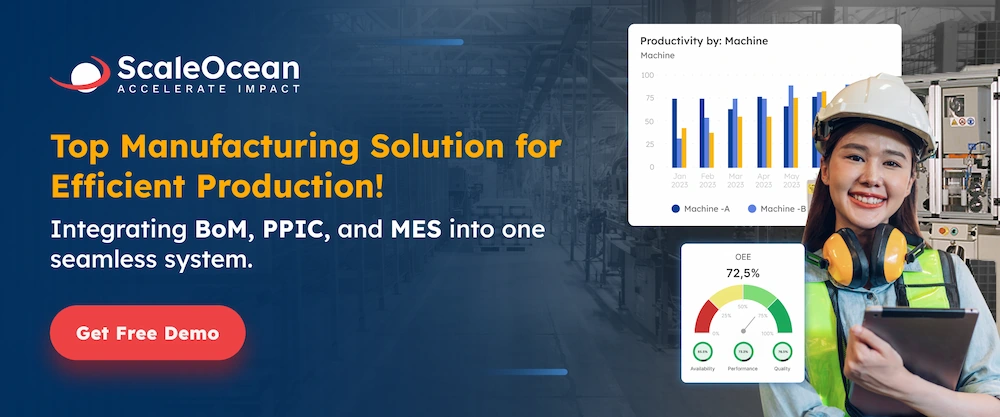
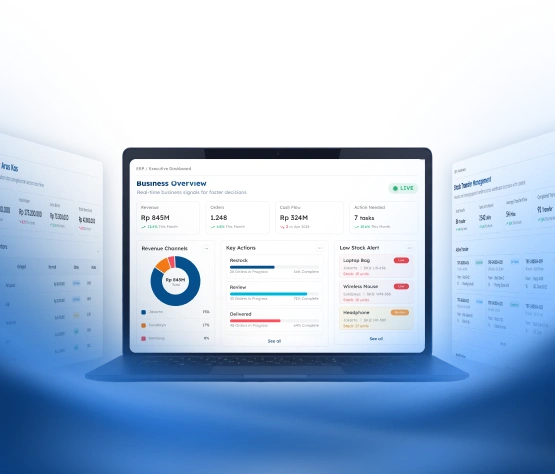
Managing both flexibility and efficiency from the two processes will require the right system to ensure their alignment and consistency. Luckily, ScaleOcean manufacturing ERP software helps bridge this gap by streamlining operations, improving visibility, and enhancing coordination across all stages.
Moreover, ScaleOcean WMS supports scalable growth with flexible features, real-time data insights, and full operational control. As a result, businesses can reduce inefficiencies, maintain consistency, and adapt quickly to changing production and manufacturing demands. Request a free demo today to see how ScaleOcean can streamline your operations.
The Relationship Between Production and Manufacturing
Production and manufacturing are closely connected, even though they serve different purposes. While production provides a broad framework for creating value, manufacturing operates within it as a specialized process focused on physical goods.
Good production vs manufacturing examples, such as effective production planning and control, ensure that resources, schedules, and workflows are aligned, creating a seamless connection between strategy and manufacturing execution.
Moreover, businesses rarely rely on only one approach. Instead, they integrate both to ensure efficiency, scalability, and adaptability. As a result, understanding their relationship helps companies design better workflows and improve overall operational performance.
Therefore, aligning production and manufacturing allows businesses to optimize resources and reduce inefficiencies that often accompany lean manufacturing. By connecting flexible strategies with structured execution, organizations can achieve consistent results while remaining responsive to market demands and industry changes.
Structured Hierarchy
Production serves as the overarching system encompassing all value-creation activities. Within this structure, manufacturing functions as a specific subset focused on transforming raw materials into physical products through controlled and repeatable processes.
Because of this hierarchy, businesses can organize operations more effectively. They define high-level production strategies first, then align manufacturing processes to support those goals, ensuring consistency between planning, execution, and final output delivery.
Complementary Roles
Production and manufacturing complement each other by balancing flexibility and structure. While production encourages adaptability and innovation, manufacturing ensures stability through standardized processes and consistent product quality across operations.
As a result, businesses benefit from both approaches simultaneously. They can innovate and respond to changes while maintaining reliable production systems that deliver consistent outputs, helping them stay competitive in both dynamic and stable market conditions.
Integrated Processes
Modern businesses integrate production and manufacturing into unified workflows. For example, planning, design, and resource allocation directly influence manufacturing execution, creating a seamless connection between strategy and operational activities.
Therefore, integration reduces delays and miscommunication between departments. It ensures that production plans align with manufacturing capabilities, leading to improved efficiency, better coordination, and smoother overall business operations.
Contribution to Value Creation
Production focuses on delivering overall value by meeting customer needs through goods or services. Meanwhile, manufacturing ensures that physical products meet quality standards and are produced efficiently at scale.
Together, they enhance value creation across the entire business process. As a result, companies can deliver better products, improve customer satisfaction, and strengthen their position in competitive markets.
Interconnected Supply Chain
Production and manufacturing are both essential parts of the supply chain. Production manages upstream and downstream activities, while manufacturing focuses on the core transformation process within the supply chain system.
Because of this connection, disruptions in one area can affect the entire operation. Therefore, businesses must coordinate both processes carefully to maintain smooth workflows, timely delivery, and efficient inventory management.
Impact on Industry and Economy
Production and manufacturing significantly influence industrial growth and economic development. Production drives innovation and diversification, while manufacturing supports large-scale output, job creation, and global trade expansion.
As industries evolve, both processes become even more important. Businesses that effectively manage production and manufacturing can contribute to economic stability while improving productivity and competitiveness on a larger scale.
Synergy in Technology and Innovation
Technology plays a key role in connecting production and manufacturing. Digital tools, automation, and data analytics help businesses streamline processes, improve accuracy, and enhance decision-making across both areas.
Consequently, innovation creates synergy between flexibility and efficiency. Companies can design smarter production strategies while optimizing manufacturing systems, resulting in faster operations, reduced costs, and improved overall performance.
Optimize Production and Manufacturing with ScaleOcean
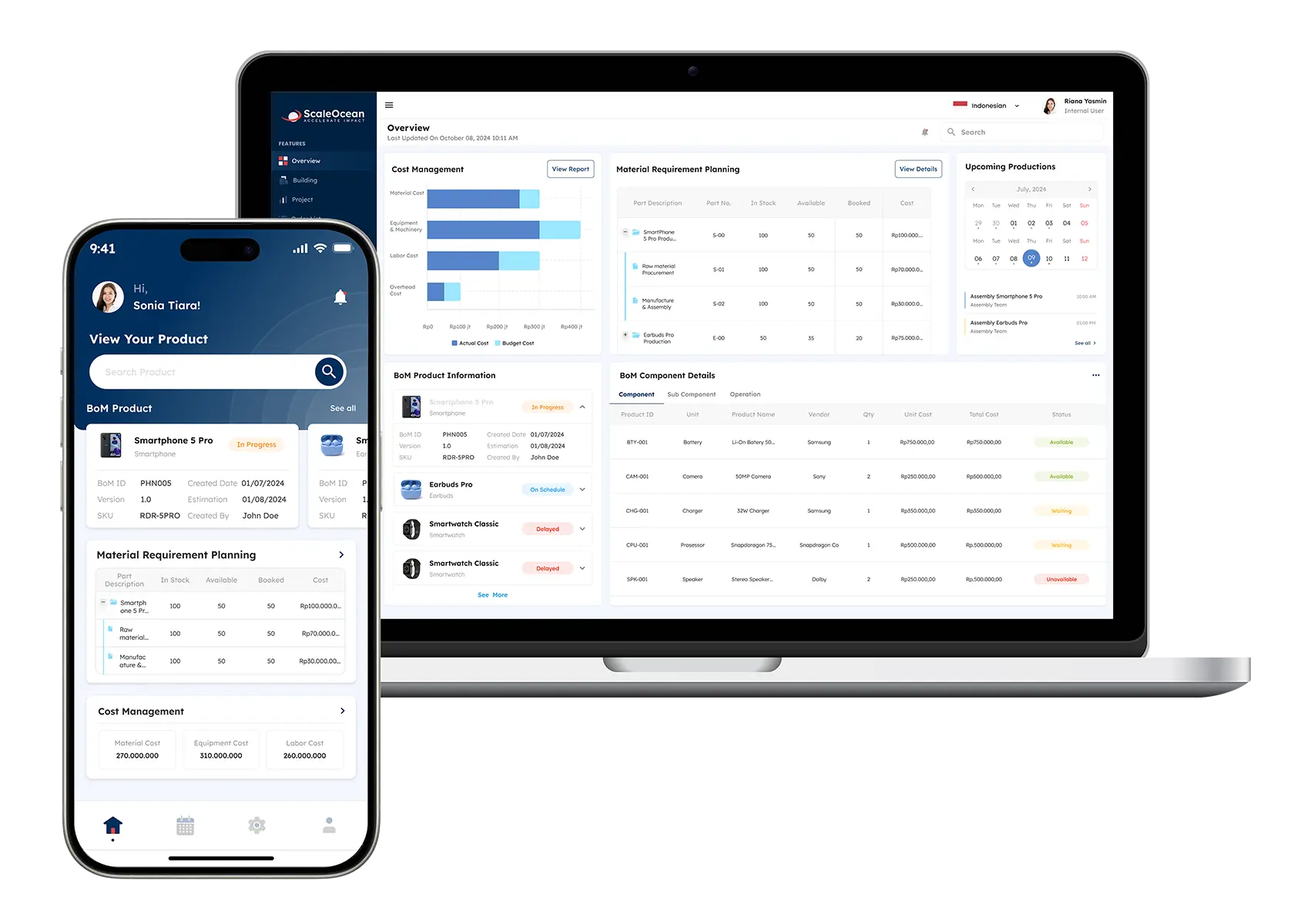
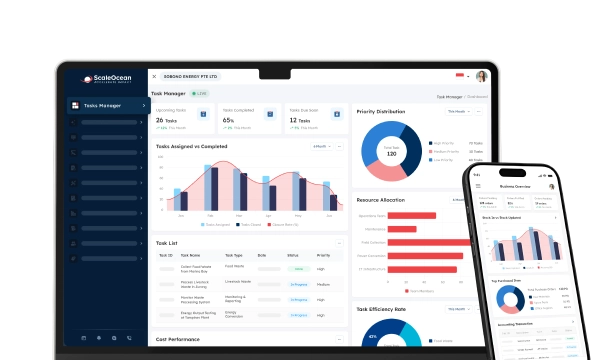
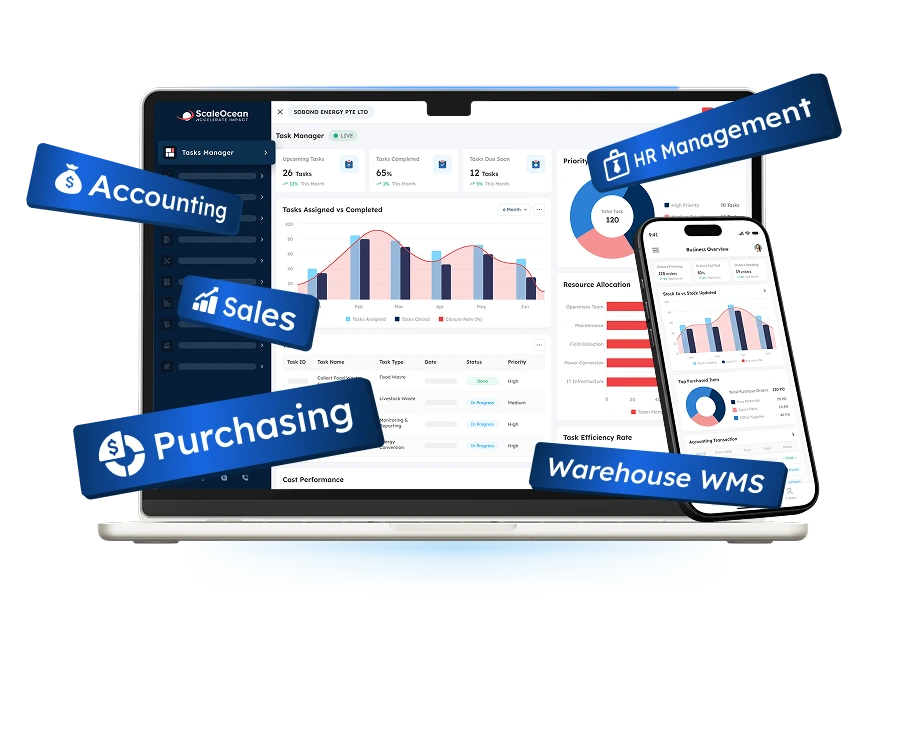
ScaleOcean’s Manufacturing ERP Software is designed to be flexible across the entire manufacturing process, not just specific production activities. Since production is part of manufacturing, the system supports end-to-end operations, ensuring alignment between planning, execution, and delivery.
Moreover, ScaleOcean follows established manufacturing operational standards while remaining highly customizable. Therefore, it fits various industries, such as textiles, automotive, and oil and gas, that require structured yet adaptable production systems.
In addition, ScaleOcean offers an all-in-one integrated platform that connects every stage of the manufacturing production process. As a result, businesses gain full visibility, improved coordination, and better control from raw material planning to final product delivery.
Furthermore, the system supports businesses at various stages of scaling. With flat pricing and unlimited users, companies can provide operators, supervisors, and management with access without additional costs, while also meeting CTC grant requirements with up to 70% support.
Key Features of ScaleOcean Manufacturing ERP Software:
- Smart MRP: Automatically calculates raw material requirements based on production schedules and lead times. As a result, businesses can prevent overstock and understock while maintaining optimal inventory levels across operations.
- Resource Utilization Optimization: Automatically schedules machines and workforce shifts to maximize efficiency. Therefore, companies can reduce downtime, eliminate bottlenecks, and ensure smoother production flow across all operational stages.
- Cost Management: Tracks production costs and automatically calculates cost of goods sold. Consequently, businesses gain full visibility into manufacturing expenses, allowing better budgeting, forecasting, and financial decision-making.
- Integrated Quality Control: Monitors quality at every production stage while tracking defects and corrective actions. As a result, businesses can maintain consistent product standards and reduce errors across manufacturing processes.
- AI-Driven Data: Provides real-time AI-powered dashboards with an intuitive, customizable interface. Therefore, companies can monitor production status, machine performance, and order progress more effectively and accurately.
Overall, ScaleOcean manufacturing ERP software delivers a flexible, integrated solution that enhances visibility, optimizes operations, and controls costs. It empowers manufacturers to maintain quality and scale efficiently, making it a smart choice for growing businesses.
Conclusion
Production vs manufacturing highlights how businesses create value through different yet interconnected approaches, making the production vs manufacturing difference essential for strategic decision-making. While production offers flexibility, manufacturing ensures consistent, scalable physical products.
To fully optimize both processes, businesses need a system that connects strategy with execution. Software like ScaleOcean Manufacturing ERP software provides an integrated solution that enhances visibility, improves efficiency, and supports scalable growth across all manufacturing operations.
If you want to streamline production and manufacturing on a single platform, ScaleOcean offers the flexibility and control needed to stay competitive. Request a free demo today to see how it can transform your operational performance.
FAQ:
1. Is it production or manufacturing?
Manufacturing refers to turning specific raw materials into finished products by adding utility. Production involves a wider range of activities that prepare the raw materials for manufacturing and other processes.
2. Is manufacturing the same as producing?
Manufacturing is a single step within the broader production process. It focuses on converting materials into products through physical or chemical means, while production also includes design, sourcing, testing, logistics, marketing, and customer service.
3. What is another word for production or manufacturing?
Some synonyms for production include creation, manufacturing, fabrication, assembly, development, formation, construction, making, and output. Each word carries a slightly different meaning related to the act of producing something.
4. Does production fall under manufacturing?
Production is the overall process of creating and delivering goods or services. Manufacturing is a subset of production that specifically involves making tangible products from raw materials.





















.png)