

Manufacturing cost estimating software is a powerful tool that transforms how factories calculate production expenses. By automating complex math for labor and materials, it delivers the precise quotes needed to secure profitable deals.
The value of this precision becomes clear when looking at the numbers from a report we found at Cost It Right, which says that companies using this software can reduce production costs by 30% versus traditional methods.
Relying on manual math is a major risk, as even small errors can lead to underquoting and heavy financial losses.
Because of these high stakes, this software is vital for businesses to survive such risks and maintain a healthy margin. It ensures that every quote is backed by real-time data, helping firms stay competitive while avoiding the pitfalls of inaccurate budgeting.
To help you navigate these choices, this article explores these solutions further, covering everything from basic definitions to key benefits. We will also highlight top manufacturing cost estimating software in Singapore, such as ScaleOcean, Costimator, and Sage, to help you find the best fit.
 Key Takeaways
- Manufacturing cost estimating software is a specialized tool that automates the calculation of expenses like materials, labor, and overhead.
- Key features of manufacturing cost estimating software include production planning, real-time cost tracking, BOM management, integrated reporting tools, and more.
- The importance of a manufacturing cost estimating system is that it can improve cost and profitability analysis, optimize pricing, and streamline inventory management.
- Discover the best manufacturing cost estimating tools such as ScaleOcean, Costimator, Sage Estimating, Controlata, EasyKost, CostPerform, and Proest.
- ScaleOcean’s Manufacturing Cost Estimating Software offers tailored manufacturing industry-specific solutions, including real-time cost management and resource planning, to support operational performance.
What is Manufacturing Cost Estimating Software?
Manufacturing cost estimating software is a specialized tool that automates the calculation of expenses like materials, labor, and overhead. These systems are vital for creating fast and accurate quotes that reflect true production costs.
Beyond just simple calculations, these digital solutions use methods like the absorption cost method to factor in both fixed and variable costs. This helps businesses ensure that every bid remains profitable and accounts for all production costs.
This constant vigilance makes such tools essential for maintaining a healthy bottom line in a competitive market. By integrating all financial factors into one system, they provide the clarity needed to manage budgets and improve overall efficiency.
Key Features of Manufacturing Cost Estimating Software
The manufacturing cost estimate system is designed to streamline the process of calculating and tracking the various costs involved in production. Automating critical functions helps manufacturers improve accuracy, save time, and make more informed decisions.
Below are some of the key features of these systems that enhance operational efficiency.
1. Automated Cost Calculation
This feature automates the process of calculating costs based on the bill of materials, labor rates, and overhead expenses. Removing manual inputs reduces the chances of human errors and speeds up the estimation process, ensuring a more reliable and consistent cost estimate for every project or product.
2. Real-time Material Pricing
A manufacturing cost estimate system integrates with suppliers to provide real-time material pricing, especially during the stages of the product lifecycle. This ensures cost estimates reflect market fluctuations, helping manufacturers avoid surprises and maintain profit margins.
3. Labor Cost Tracking
Accurate labor cost tracking is achieved through detailed time tracking and rate management. It helps businesses calculate labor costs at each stage of production by monitoring employee hours, overtime, and wages, ensuring labor expenses are reflected in the cost estimate in real time and with precision.
4. Overhead Allocation
Overhead costs, such as utilities, rent, and administrative expenses, can be allocated across multiple products using different allocation methods. To effectively manage this process, it’s essential to understand overhead costs and choose the right allocation methods for your business.
The software automatically distributes these costs based on predefined rules, helps manufacturers assign accurate overhead to each product, and improves overall cost visibility and financial analysis.
5. Historical Cost Analysis
Manufacturing cost estimate software enables businesses to access historical cost data, providing insights into past production costs. This feature helps identify cost trends over time, allowing manufacturers to refine their estimating processes, optimize resource allocation, and improve the accuracy of future cost projections.
6. Profit Margin Analysis
With built-in profit margin analysis tools, the software instantly calculates profit margins based on estimated costs and target prices. It ensures that manufacturers can assess the financial viability of a project or product early in the process, enabling better decision-making on pricing and production strategies.
7. Customization
Many manufacturing cost estimate system programs offer customization options to meet the specific needs of a company.
Customization in Singapore manufacturing ERP systems includes adjusting for unique production processes, adding specific costing models, or integrating with existing ERP or supply chain systems, providing flexibility and tailored solutions for different business types.
8. Integration with 3D CAD
Manufacturing cost estimating software works smoothly with 3D CAD systems to gather product design data directly. This connection simplifies calculations by automatically pulling in material and labor costs based on the product’s exact design.
It also keeps the cost estimates in sync with any design changes. As your design evolves, the estimates stay up-to-date, helping to prevent any costly miscalculations when production begins and ensuring accuracy at every step.
9. Integration with ERP/MRP Systems
When manufacturing cost estimating software integrates with ERP and MRP systems, it pulls valuable data from multiple departments, such as inventory and production planning. This ensures all critical business information is considered when making cost estimates.
This integration enhances the precision of estimates by factoring in up-to-date inventory levels, production capacity, and lead times. It also streamlines resource management, leading to more accurate budgets and better control over costs throughout the project.
Why Manufacturers Need Cost Estimating Software

Manufacturing cost estimating software plays an important role in the production process by providing precise cost calculations. This accuracy is essential for determining competitive pricing strategies, ensuring budgets are allocated efficiently, and maintaining consistent profitability.
As businesses adapt to manufacturing trends, implementing a manufacturing cost estimate system can also ensure that companies stay competitive and responsive to market changes.
By automating cost analysis, the top manufacturing execution system in Singapore helps businesses minimize errors, optimize resource allocation, and improve decision-making, ultimately strengthening their competitive edge.
This enables businesses to enhance efficiency and maintain a strong competitive advantage in the market while minimizing costly errors and improving overall financial performance.
Benefits of Manufacturing Cost Estimating Software
A manufacturing cost estimating system enhances cost management by automating complex calculations, tracking real-time data, and offering insights from historical trends. It also keeps manufacturers aligned with the latest manufacturing industry trends for more informed decision-making.
Here are the key benefits of implementing manufacturing cost estimating software, including:
1. Improve Cost and Profitability Analysis
Accurate cost tracking helps manufacturers determine profit margins and avoid financial inefficiencies. A manufacturing costing software provides real-time insights into direct costs, manufacturing overhead, and other expenses, ensuring transparent financial reporting.
With better cost analysis, businesses can optimize resource allocation and improve overall profitability.
2. Optimize Pricing and Quoting Processes
Setting competitive selling prices requires precise cost calculations. By integrating a manufacturing accounting system, companies can automatically factor in labor, materials, and manufacturing overhead when generating quotes.
This ensures pricing accuracy, reduces financial miscalculations, and enhances customer trust with faster, more reliable quotations.
3. Streamline Inventory and Order Management
Managing stock and production schedules efficiently is crucial to meeting customer demand. Material requirement planning (MRP) ensures that the right materials are available at the right time, preventing production delays.
With automated inventory tracking and real-time purchase order management, businesses can reduce excess stock and minimize supply chain disruptions.
So, Smart factory examples show how advanced automation and real-time data integration can further optimize inventory and order management, improving efficiency and reducing waste.
4. Enhance Financial Planning and Forecasting
Having real-time visibility into COGM, COGS, and cash flow enables better financial decision-making. The manufacturing cost estimation software helps businesses predict cash shortages and plan budgets more effectively, reducing financial risks.
With accurate forecasting, companies can optimize cost allocation and maintain financial stability. Understanding the importance of Cost of Goods Sold (COGS) is crucial in this process, as it directly impacts profitability and helps refine budgeting for better financial management.
5. Ensure Timely Follow-Ups and Order Tracking
Tracking customer orders from quotation to delivery ensures smoother operations and a better customer experience. Automated follow-ups help businesses stay on top of pending quotations, increasing sales opportunities.
With a clear production and delivery pipeline, companies can improve on-time delivery rates and maintain high customer satisfaction.
Challenges of Implementing Manufacturing Cost Estimating System
While a manufacturing execution system has many advantages, it also has several challenges that companies must overcome in order to make the best use of it. Below are the common challenges and their implications.
1. Data Accuracy
The manufacturing costing software relies on accurate data inputs. Incorrect or outdated information can lead to flawed estimates, affecting pricing and profitability. By understanding methods of manufacturing, businesses can implement better data management practices to ensure reliable results and avoid costly errors.
2. Integration
Integrating the software with existing systems, such as ERP or CRM platforms, can require technical expertise and resources. Compatibility issues may arise, leading to delays or additional costs. Proper manufacturing process planning and professional support are essential to ensure seamless integration and system efficiency.
3. User Training
Effective use of the manufacturing cost estimation software requires training for employees. Without proper knowledge, staff may struggle to utilize the tool’s features, limiting its potential benefits. Businesses should invest in comprehensive training programs to provide their employees with the skills required for effective software use.
Comparison Table of Top 7 Manufacturing Cost Estimating Software
When choosing the right manufacturing cost estimating software, it’s crucial to compare features, pricing, and capabilities to find the best fit for your needs. Here’s a comparison of the top 7 software solutions available to streamline cost estimation in your manufacturing process:
| Software | Best For | Key Features |
|---|---|---|
| ScaleOcean Software | Ideal for medium to large enterprises with customizable solutions. | Real-time inventory, automated procurement, BOM management, SCM integration, smart MRP, and forecasting. |
| Costimator | Best for manufacturers in CNC machining, sheet metal fabrication, or job shops. | Automated cost calculations, cycle time/shop rate calculators, and ERP integration. |
| Sage Estimating | Suited for businesses using Sage ecosystems, focused on estimating. | Digital takeoff tools, trade-specific cost databases, and scenario planning for bids. |
| Controlata | Best for small to mid-sized manufacturers needing real-time cost tracking. | Real-time pricing updates, cost allocation, and overhead tracking. |
| EasyKost | Ideal for product development teams needing fast costing and AI-powered analysis. | Fast cost proposals, cloud-based, benchmarking, and reverse engineering tools. |
| CostPerform | Best for project-based manufacturing or contracting firms. | Activity-based costing, multi-method modeling, profitability analysis, and scenario simulations. |
| ProEst | Best for companies needing advanced costing and project tracking. | Digital takeoffs, historical data, and cost estimate reporting. |
Top 7 Manufacturing Cost Estimating Software and Tools
When seeking the best manufacturing cost‑estimating software, it is essential to compare solutions based on their definition, core functions, standout features, and the practical advantages and limitations each offers.
These vendors can help business owners identify tools aligned with operational needs, ensuring accurate cost estimation, stronger pricing strategies, and improved profitability. Below are detailed profiles of six prominent software options. Learn more here!
1. ScaleOcean Cost Estimation Software
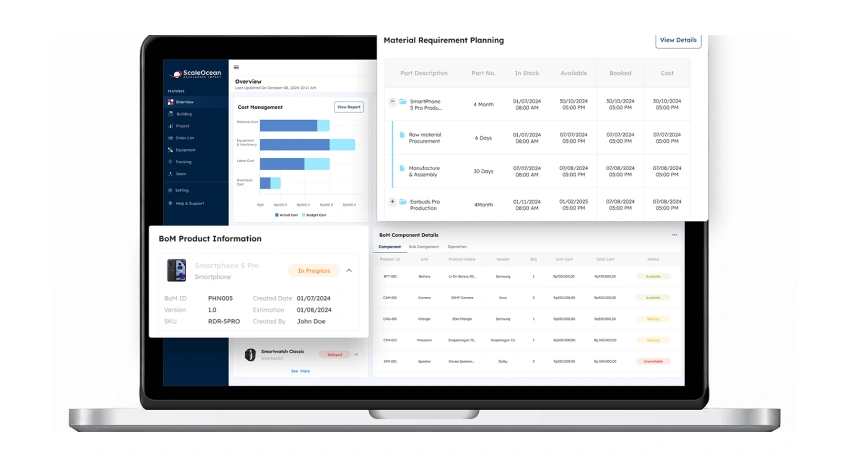
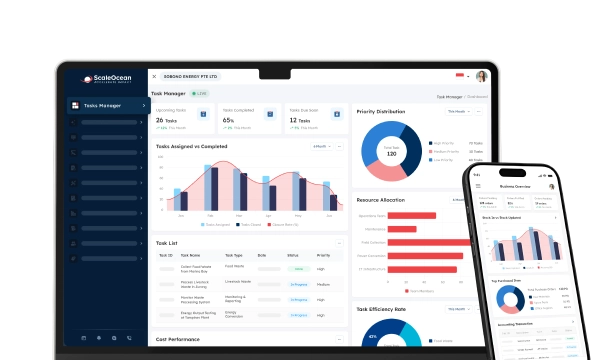
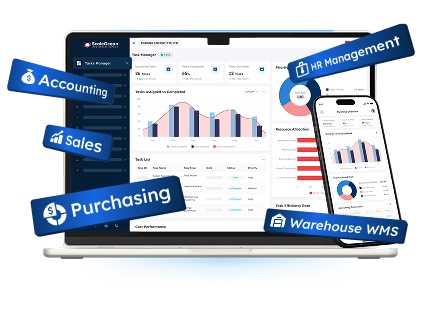
ScaleOcean ERP is a solution designed to increase manufacturing efficiency, lower costs, and streamline operations. With real-time data integration and intuitive tools, it helps businesses make more informed decisions while easily aligning with existing processes.
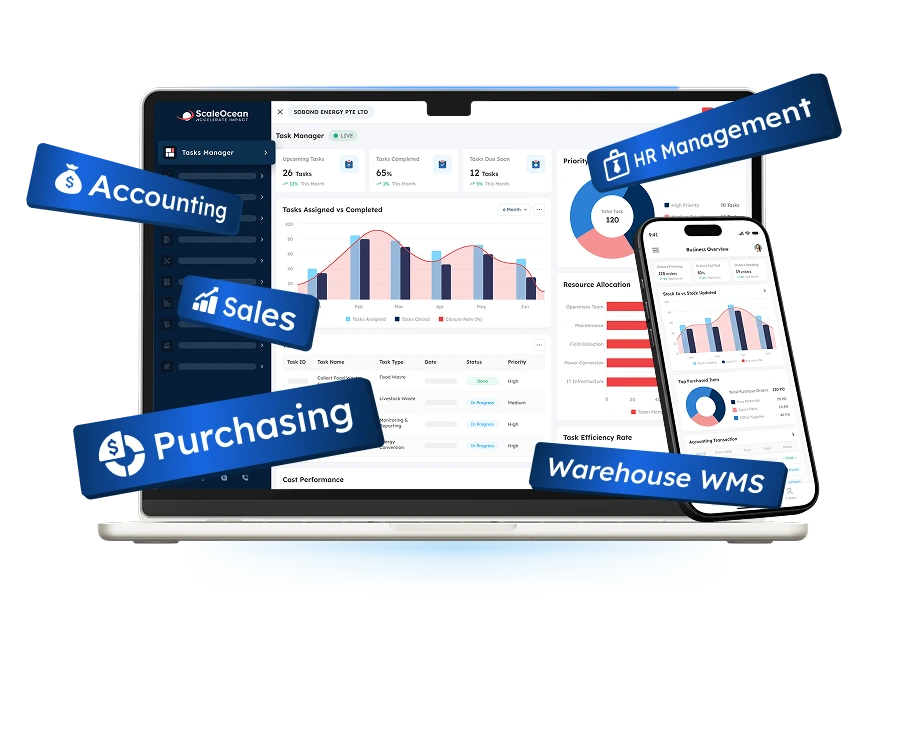
ScaleOcean offers an all-in-one solution with comprehensive modules that can be tailored to business needs. It allows companies to select and integrate various manufacturing functions and processes, from financial management, logistics, and distribution to HR, into one centralized system.
Scaling up or streamlining workflows often requires tools that can adapt to evolving business needs. ScaleOcean Manufacturing Costing Software also provides real-time insights through its complete transparency and control (CTC) features, allowing businesses to make informed decisions at every stage.
To better understand how this system fits your operations, consider scheduling a free demo to explore its benefits in action.
Key Features:
- Cost Management: Automated cost of goods manufactured calculations and highly accurate production cost monitoring.
- Smart MRP: Automated calculation of required raw materials based on production schedules and lead times.
- BOM Management: Automatically generates lists of raw materials, components, and subcomponents required for production.
- Order Management: Automated receipt and ordering, allowing for real-time production cost calculations.
- SCM Integration: Management of the entire manufacturing process in a single, centralized platform, allowing cost information to be directly linked to ongoing production data.
ScaleOcean has been successfully implemented in many companies with various specific industries, one of which is the Sobono Group, established in 2007 and based in Singapore, which is a privately-owned regional provider of clean energy solutions.
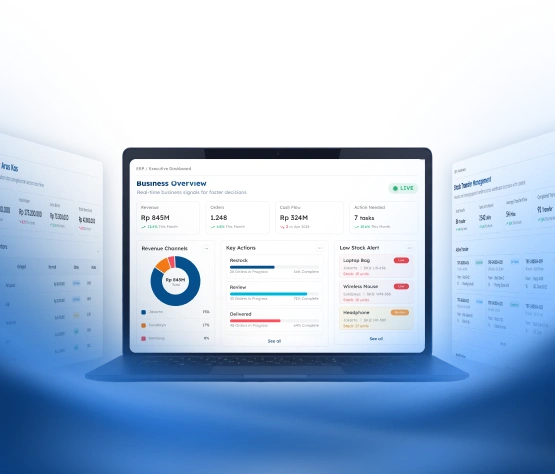
The company specializes in renewable energy, with a focus on waste-to-energy (biomass/biogas manufacturing), engineering (EPC), and circular economy initiatives. Sobono uses ScaleOcean’s integrated solution, which allows them to more easily monitor all operational aspects, such as inventory, projects, and budgets, in real time.
Furthermore, centralized data visibility allows the Sobono Group team to automatically compare planned costs with actual costs, identify variances, and reduce the risk of waste and unexpected costs. To learn more about the full case study, watch the following video:

| Pros | Cons |
|---|---|
|
|
Best For: ScaleOcean is a system with industry-specific solutions for medium to large enterprises, ideal for any type of manufacturing process, offering a comprehensive, flexible, and cost-effective solution for managing operations. You can customize the system to best suit your specific business needs.
2. Costimator
Costimator is cost‑estimating and quoting software tailored for manufacturing. It enables companies to model production costs (machining, fabrication, sheet‑metal, etc.) by using pre‑loaded cost models or custom calibrations to generate reliable cost estimates and quotes.
Key Features
- Automated cost calculation from bills of materials.
- Cycle time and shop rate calculators.
- Integration with ERP systems.
| Pros | Cons |
|---|---|
|
|
Best For: Manufacturers operating CNC machining, sheet metal fabrication, or job shops seeking high accuracy and detailed quoting models specific to discrete production
3. Sage Estimating
Sage Estimating is a manufacturing cost estimating tool that can automate the estimation process, focusing on construction but adaptable for manufacturing. It integrates cost databases and provides quick and accurate cost estimates with automated takeoffs.
Key Features
- Digital takeoff tools for cost quantity extraction.
- Integrated trade‑specific cost databases.
- Scenario planning and bid‑day analysis.
| Pros | Cons |
|---|---|
|
|
Best For: Companies in mixed or heavy‑industry contexts already using Sage ecosystems, looking for structured estimating workflows and cost databases (though less manufacturing‑tailored).
4. Controlata
Controlata specializes in accurate cost estimation for manufacturing by integrating material costs, labor, and overhead. It provides visibility into production costs and helps optimize profit margins.
Key Features
- Real‑time material pricing updates.
- Cost allocation for multi‑level production.
- Overhead cost tracking.
- In-depth cost reporting and analytics.
| Pros | Cons |
|---|---|
|
|
Best For: Small to mid‑sized manufacturers needing real‑time cost tracking (materials, labour, overhead) and multi‑level BOM cost visibility across production.
5. EasyKost
EasyKost is the next manufacturing cost estimating tool that is designed to leverage AI to provide quick and accurate product cost estimates. It’s ideal for manufacturers looking for fast turnarounds and AI-powered analysis for pricing and budgeting.
Key Features
- Instant generation of cost proposals.
- Cloud-based with scalable options.
- Benchmarking tools for cost comparisons.
- Reverse engineering of cost structures.
| Pros | Cons |
|---|---|
|
|
Best For: product development and R&D teams requiring rapid costing, benchmarking, and modeling for new products or services.
6. CostPerform
CostPerform is an enterprise-level cost management software that helps manufacturing companies optimize their cost structures and improve profitability through detailed cost analysis and scenario modeling.
Key Features
- Activity-based costing (ABC) methods.
- Multi‑method cost modeling.
- Advanced profitability analysis.
- Scenario simulation for cost planning.
| Pros | Cons |
|---|---|
|
|
Best For: Companies that operate project‑based manufacturing or contracting where bid preparation, take‑offs, and cloud‑based collaboration matter more than discrete machine‑shop costing.
7. ProEst
ProEst is a cloud-based cost estimation tool primarily for construction firms but adaptable for manufacturing. It provides automated cost calculations, digital takeoffs, and project tracking features for improved estimating.
Key Features
- Integrated digital takeoff functionality.
- Historical data for past project cost insights.
- Reporting and analytics for estimate accuracy.
| Pros | Cons |
|---|---|
|
|
Best For: Companies that need advanced costing, profitability & capacity modelling across products, services or business units, with strong transparency.
Choosing the right manufacturing cost estimation software can significantly improve efficiency and accuracy across your operations.
Whether you’re looking for specialized tools or all-in-one solutions, ScaleOcean manufacturing software stands out as a comprehensive option for streamlining processes and enhancing decision-making.
Six of the Cost Estimating Software Categories
Selecting the right cost estimating software depends on your project scale and industry requirements. These categories offer diverse ways to manage budgets, from simple calculations to complex enterprise-wide integrations.
The following categories outline the various types of cost estimating software available to help you find the best fit for your business:
Spreadsheet-Driven Estimating
Spreadsheet-based estimating is popular due to its simplicity and accessibility. Users can easily create customized cost models by applying formulas, allowing for quick and adaptable estimates. It’s a great choice for smaller projects or initial assessments.
However, when handling large data sets, spreadsheets can become prone to errors. The manual inputs can be time-consuming and inefficient, especially for more complex projects where real-time updates are needed for better accuracy.
Parametric Estimating Solutions
Parametric estimating software offers a powerful approach by predicting costs based on past data and variables that are commonly associated with a project. This software is ideal for projects that have repeatable tasks or standard procedures, such as construction.
By leveraging historical data and statistical models, it reduces the chance of underestimating costs. However, it requires a solid foundation of reliable data to ensure the estimates are as accurate as possible.
Software for Manufacturing Estimating & Quoting
Manufacturing estimating and quoting software helps businesses quickly calculate production costs, making it easier to generate accurate quotes for clients. It simplifies pricing by considering factors like materials, labor, and overhead.
With real-time data integration into other systems like inventory management, it improves the speed and accuracy of bids. It helps manufacturers remain competitive by ensuring estimates are on point, without unnecessary delays in the quoting process.
CAD-Based Cost Analysis Tools
CAD-based cost analysis tools combine design software with cost estimation, making it easier to calculate project expenses from 3D models. When connected to a shop floor management system, this approach helps industries such as construction align design decisions with material, labour, and production costs.
By integrating cost estimates with design updates, these tools provide real-time adjustments as changes are made. While they provide high accuracy, they can be more complex and may require expertise in both design and cost management.
Enterprise-Level Cost Management Solutions
Enterprise-level cost management solutions give businesses an overall view of their costs across various departments. They allow real-time tracking and analysis of costs, helping business leaders make more informed decisions.
These systems are integrated with other enterprise systems like ERP and CRM, ensuring seamless communication between departments. While powerful, implementing these solutions can take time and require a significant investment to fully leverage their capabilities.
Process-Oriented/First Principles Estimating
Process-oriented estimating takes a detailed approach by breaking down a project into individual components to calculate costs from the ground up. It’s perfect for custom or complex projects where traditional methods may fall short.
This method gives highly accurate estimates by considering the unique characteristics of each project. However, it can be more time-consuming and requires a deep understanding of the processes involved, making it best suited for one-off or complex work.
Trends and Technologies in Manufacturing Cost Estimating
Technology trends in manufacturing cost estimation software have experienced significant development. By adopting the latest innovations, industries can improve efficiency and accuracy in calculating production costs.
Here are some trends increasingly being applied in manufacturing cost estimation:
AI with Machine Learning and Predictive Analytics
AI technology combined with machine learning and predictive analytics enables cost estimation software to learn production patterns and provide more accurate predictions. This helps reduce the risk of unexpected costs and improve long-term budget planning.
Simulation-Driven
Software-based simulations enable testing of various production scenarios without the need for physical processes. This technology supports more informed planning, allowing companies to quickly and efficiently assess potential cost changes before implementation.
Digital Twins
Digital twins create digital copies of physical processes or equipment in a virtual world. With this modeling, companies can analyze operational performance and costs in real time, and make continuous improvements, optimizing production without direct intervention in the real world.
Real-Time Data Integration
Real-time data integration enables cost estimation software to directly access and process current data from machines or other systems. This improves the accuracy of cost estimates, accelerates decision-making, and enables rapid response to production changes.
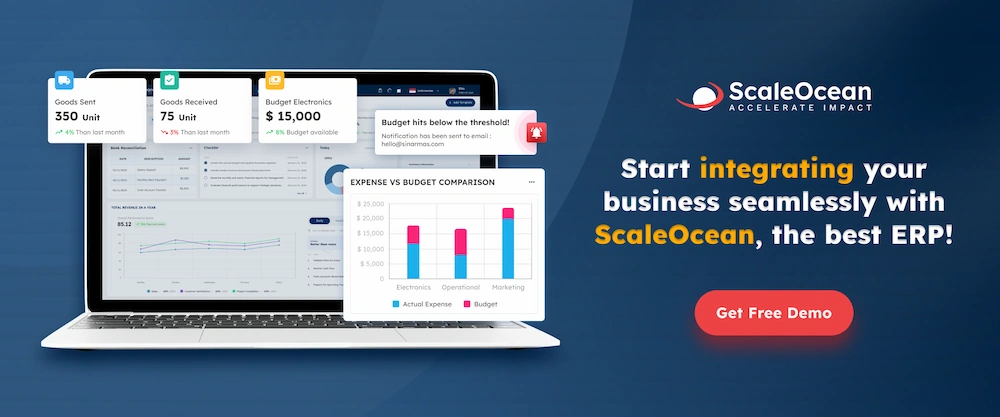
You can use recommended manufacturing cost estimating tools that seamlessly cover all these trends and technologies, such as Scaleocean. You can request a free demo to discover solutions tailored to your specific business.
Conclusion
Manufacturing cost estimating tools are an important tool for improving accuracy, streamlining processes, and maintaining profitability. By providing insights into materials, labor, and overhead costs, it helps businesses optimize pricing, allocate resources & takt time, and stay competitive.
Despite challenges like data accuracy and integration, its benefits make it indispensable for modern manufacturers. ScaleOcean’s Manufacturing ERP provides a tailored solution designed to simplify and optimize manufacturing operations, from cost management to resource planning.
Its adaptable features ensure a seamless fit for businesses of any size. If you’re curious to see how ScaleOcean can support your business goals, exploring a demo could be a great next step.
Manufacturing Cost Estimating Software FAQ:
1. How to estimate manufacturing costs?
In simple terms, the total manufacturing cost represents the total amount of money needed to produce a product. It is determined by adding up all expenses incurred during production, including the cost of direct materials, labor expenses, and other overhead manufacturing costs.
2. How to track manufacturing costs?
1. Determine the cost of direct materials by using the direct material inputs.
2. Calculate direct labor costs by using the direct labor inputs.
3. Compute manufacturing overhead by considering the overhead costs.
4. Assess the total manufacturing cost (TMC) by adding the three cost components.
3. How does CNC machining affect the cost estimation process?
CNC machining impacts cost estimation by factoring in material usage, machine time, labor costs, and tool wear. The complexity of the part and setup time also affect the total cost, making it crucial to analyze each step for accurate estimates.
4. What factors should be considered when estimating costs for injection molding?
1. Material costs: Type of plastic or material used.
2. Machine setup: Time and resources for mold preparation.
3. Labor costs: Operators’ time for overseeing the process.
4. Mold wear: Cost of maintaining and replacing molds.
5. Production volume: The number of units to be produced.




















.png)