

Lean manufacturing is a production approach that optimizes processes, maximizes customer value, and eliminates all forms of waste. With competition becoming more fierce, the lean manufacturing system is widely used by many organizations.
The growing adoption of lean practices is reflected in market trends worldwide. In fact, according to data our team found from Spherical Insights, the global digital lean manufacturing market was valued at USD 26.43 billion in 2023 and is projected to grow at a CAGR of 12.39% between 2023 and 2033.
However, most manufacturers still have excess inventory, tying up working capital and limiting cash-flow flexibility. This results in high storage costs, slow inventory turnover, and less nimbleness.
Additionally, unmanageable work processes often cause delays and bottlenecks that raise production lead time and result in late deliveries. Consequently, enterprises should consistently optimize workflows.
A lean manufacturing system offers clear guidelines on eliminating waste and minimizing resource use. Therefore, this article discusses how lean manufacturing works, its key principles, common challenges, and practical methods for implementing it to improve operational efficiency.
 Key Takeaways
- Lean manufacturing is a systematic approach that effectively maximizes customer value while reducing waste throughout manufacturing operations.
- Lean manufacturing works by eliminating non-value-added activities and creating efficient workflows that improve overall productivity.
- The 9 principles of lean manufacturing provide a foundation for continuous improvement, waste elimination, and value creation.
- Lean manufacturing tools and techniques help businesses implement process improvements while maintaining efficiency and quality standards.
- ScaleOcean Manufacturing ERP Software supports lean manufacturing through real-time visibility, process automation, and integrated operational management.

What Is Lean Manufacturing?
Lean manufacturing is a systematic approach to minimizing waste in a manufacturing system without sacrificing productivity, enabling enterprises to deliver high-quality customer value at the lowest possible cost. In addition, it’s an ongoing effort to reduce waste through continuous improvement across all related activities.
In a lean manufacturing system, attention is given not to the volume of output but to the quality, efficiency, and customer satisfaction. As a result, the company may optimize the workflows for products and processes regardless of the uniform quality.
This method helps companies eliminate waste, improve resource use, and enable better collaboration between departments. Moreover, companies gain clearer insight into their processes, which improves decision-making and problem-solving. Furthermore, these principles are widely applied in assembly manufacturing.
The lean approach is used today by manufacturers across all industries to streamline costs and enable quick responses to market needs. As a result, the concept of lean manufacturing remains among the most widely adopted methods of operational improvement.
 Also Read: What is Manufacturing: Understanding Definitions & Types
History of Lean Manufacturing
The roots of lean manufacturing can be traced to the Japanese car industry after World War II, when manufacturers sought ways to make the most of their scarce resources and increase productivity.
The idea was popularized through the Toyota Production System, which focused on both cost minimization and the elimination of waste through continuous improvement. Consequently, Toyota created a mass production model that had an impact on industries worldwide.
For many years afterwards, scholars and managers in industrial companies examined the Toyota approach and the use of “lean manufacturing” unconsciously. Soon thereafter, organizations across various industries began to tailor these philosophies to their specific operational conditions.
Today, lean manufacturing is no longer confined to car making but is practiced in industries all around the world and is gaining new applications every day. Likewise, companies are increasingly seeking new ways to adapt to customer needs and technological progress by improving their lean production.
How Does Lean Manufacturing Work?
According to lean manufacturing, all activities that do not add customer value should be eliminated. By implementing, they will not only enhance performance but also reduce operational costs.
A detailed approach encourages groups to analyze processes and flows, identify waste, and implement measures to optimize performance. But employees are also engaged in identifying opportunities for improvement and performance gains.
Lean systems create standardized processes that support consistency and quality across all activities. This enables companies to minimize variation while aligning with their reliable business results and consumers’ expectations.
Continual monitoring of changes ensures that these improvements remain robust and sustainable over time. This results in a built-in culture of continuous innovation and excellence.
Why Is Lean Manufacturing Important and How Can It Help?
Lean manufacturing enables companies to increase productivity without proportionate increases in resource utilization or capital investments. Hence, a company can increase efficiency without increasing costs.
By removing unnecessary activities or steps, the process both reduces production costs and increases overall profitability for the organization. Reduced step time allows team members to dedicate more time to adding value.
Product quality is also enhanced by implementing lean practices, such as standardizing work processes. The products thus have fewer defects and rework, and also better customer satisfaction.
Furthermore, lean manufacturing enhances organizational flexibility in responding to fluctuating market requirements and customer needs, enabling organizations to remain competitive in an increasingly volatile business climate.
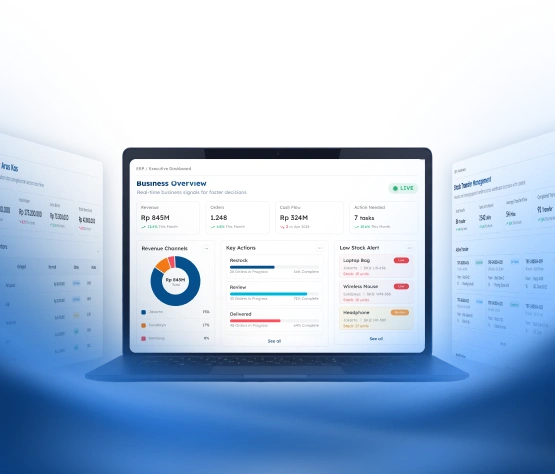
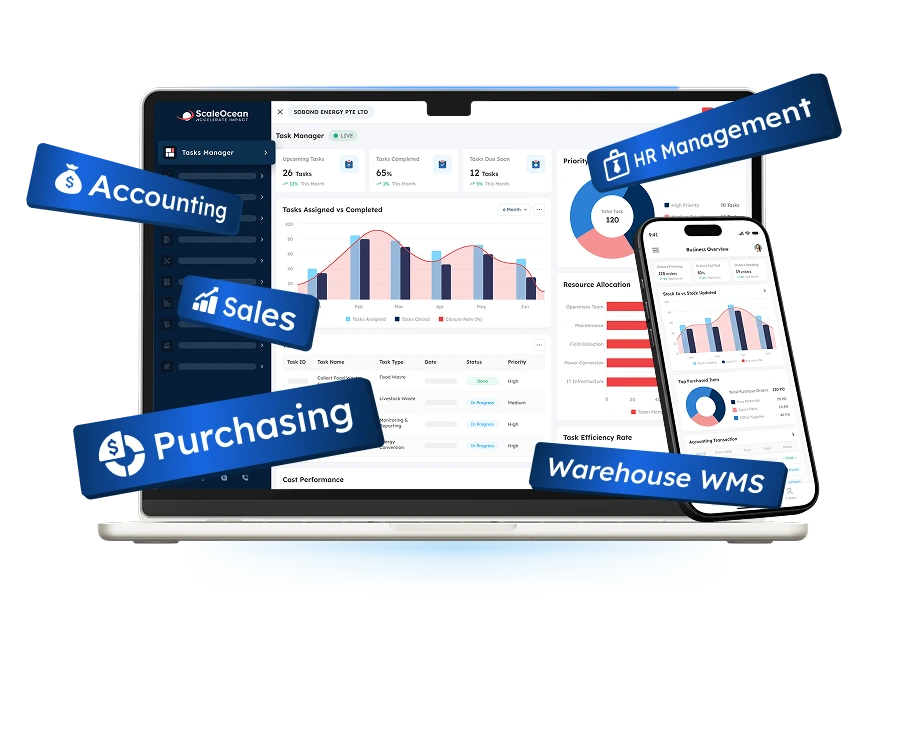
Businesses pursuing lean manufacturing often need accurate production visibility and integrated operational data with manufacturing software. ScaleOcean Manufacturing ERP Software provides real-time monitoring across production, inventory, purchasing, and quality management processes within a centralized platform.
Furthermore, the system delivers AI-powered analytics and customizable dashboards that support faster decision-making and continuous improvement initiatives. Explore ScaleOcean today with a free demo and learn how the system can strengthen your overall manufacturing performance.
When and Who Invented Lean Manufacturing?
Lean manufacturing originated in the early to mid-twentieth century with the creation of the Toyota Production System in Japan. At that time, the manufacturers began to look for more efficient techniques to compete outside.
Two of the founders associated with its creation as part of a production system are Taiichi Ohno and Eiji Toyoda. They banded together to develop operational principles based on efficiency, quality, and minimization of waste.
According to Towards Automotive, after World War II, Toyota struggled with limited resources, fluctuating customer demand, and inefficiencies associated with traditional mass production systems. Therefore, the company needed a manufacturing approach that could maximize productivity while minimizing operational waste.
Through the Toyota Production System, Toyota implemented waste reduction, Just-In-Time production, and continuous improvement practices throughout operations. Consequently, the company improved efficiency, reduced inventory costs, increased product quality, and became a global benchmark for lean manufacturing.
Schematically, the manufacturing system was based on a just-in-time notion, but with the flexibility of an evolving process. The system looked like a flexible and evolving line. This led to increased production flexibility, thanks to a flexible workforce that responded directly to customer demands.
These practices, initially developed and marketed by researchers, were later referred to as lean manufacturing and were acclaimed worldwide across various industries. In this way, the methodology became a widely adopted set of guidelines for operational excellence.
9 Principles of Lean Manufacturing

The following principles are at the heart of lean manufacturing. Taken individually, they express different philosophies, but they are closely interconnected so that when communicated together, they encapsulate a comprehensive philosophy for achieving business excellence.
All the principles have different focuses, such as further identifying customer needs and keeping the process in order. As a result, firms could develop a sustainable system and thus thrive in the long term.
When applied effectively, organizations can use these basic business principles not only to reduce costs and improve quality but also to increase customer satisfaction. Additionally, these principles promote a team-oriented environment where problems are solved collectively.
1. Identify and Create Customer Value
Customer value is the starting point for all lean endeavors. Businesses need to identify what customers value and then design the manufacturing process around those features, specifications, and services.
A customer-driven concept means that customers’ needs will be fulfilled. It also prevents organizations from spending time and energy on activities that are not required for product success. Thus, organizations become more effective while providing products and services that enhance customer satisfaction and retention.
2. Value Stream Mapping
Value stream mapping is a visual representation of the flow of information and materials required to deliver a product or service. It will also uncover waste, bottlenecks, and non-value-adding activities.
Using in-depth process analysis, teams discover possibilities for improvement and can prioritize action plans to identify the most effective improvements for their business. Consequently, companies develop smoother processes and better business operations.
3. Identify and Eliminate Waste (Muda)
Elimination of waste is one of the most significant goals of lean manufacturing. For this reason, companies are always seeking processes and areas where they can eliminate activities that consume resources without delivering value to the Customer.
Along with all the advantages, reducing unnecessary activities such as movement, inventory, waiting, and defects also greatly improves efficiency. This, in turn, reduces costs without affecting either a business’s productivity or its customers’ satisfaction.
4. Create Flow
Flow is established as materials, information, and work pass smoothly from operation to operation. Thus, organizations lessen breaks, delays, and constraints that stop work performance.
Streamlining process flow results in quicker business cycles and smoother operations. In addition, the business increases its responsiveness without compromising quality parameters.
5. Pull System
A pull system triggers new production only in response to current customer orders, not forecasts, leading to lower excess stock levels and reduced financial losses from overproduction.
Hence, the demand-pull model is primarily responsible for improving the utilization of production resources and effectively managing inventories throughout the entire process. This provides the requisite flexibility for an enterprise to cater to shifting customer preferences.
6. Continuous Improvement (Kaizen)
It also calls for everyone in the company to push for employee improvements, and they should be encouraged to seek small, incremental improvements often. In addition, the organization can create a culture of continuous improvement, in which teams take the initiative to improve productivity and effectiveness.
Minor enhancements, when accumulated over the long run, tend to produce a variety of strong business effects and sustainable development. As a result, enterprises remain competitive while adapting well to a changing market.
7. Automation with a Human Touch (Jidoka)
Jidoka integrates machinery and human involvement, ensuring quality at every step. As such, machines sense variables and defects, and halt production.
This principle of fastest problem diagnosis and most effective implementation of corrective actions contributes to overall improvements in product quality and the minimization of waste from rework and defects.
8. Level Production (Heijunka)
Heijunka aims to level production schedules and minimize WIP between processes. In doing so, the company can operate more consistently and efficiently by levelling out the workload.
Achieving a balance in production schedules helps optimize resource use and ease the burden on people and equipment. Moreover, it helps firms improve efficiency without experiencing fluctuations in production, lean manufacturing, or customer service quality.
9. Kanban Card Template
To efficiently manage production scheduling and inventory flow in daily manufacturing operations, the Kanban system uses visual signals. Firms closely monitor operational flows and consistently ensure that materials and products are delivered in line with actual production lean manufacturing needs.
In addition, operational transparency improves production efficiency by enabling teams to examine workflow conditions and inventory status promptly. Many manufacturers using the Kanban system also achieve better coordination, control excess inventory accumulation, and obtain significantly higher workflow.
The 11 Types of Waste in Lean Manufacturing
There are apparently a few types of waste in lean manufacturing that reduce efficiency and, if not recognized in advance, typically lead to unwanted additional costs by limiting the customer value delivered.
Toyota initially differentiated among types of waste that impact the company’s workflow and resources. As such, organizations utilize those identified to identify opportunities for improvement and foster continuous excellence.
Some wastes affect materials and production lean manufacturing activities, and others affect people, flow, and company performance. A business must understand how to eliminate waste and develop more flexible manufacturing. Understanding the distinction between production vs. manufacturing also helps organizations apply lean principles more effectively.
1. Defects
Defects are products that do not meet the quality criteria and must be corrected, replaced, or disposed of. Consequently, organizations incur additional costs, and operational efficiency and customer satisfaction decline considerably.
Then, problems with scrap, production delays, and rework are caused by defective products during production processes. Thus, a company adopts quality controls and other precautions to reduce errors and increase the overall quality.
2. Overproduction
Overproduction occurs when goods are manufactured in excess of customer requirements. As a result, the business’s investment is idle in unsold stock, and storage expenses soar in vain.
In addition, excess production often conceals inefficiencies in the task, which have a high potential for hidden losses and are usually invisible for a long time. Thus, these constraints encourage the implementation of demand-based parts flow.
3. Waiting
Waiting waste occurs when employees, materials, equipment, or information are kept waiting during operations. This increases the production lead time. The overall productivity of the resources drops significantly.
Besides, bottlenecks, machinery breakdowns, and low integration can also lead to excessive waiting times. As a result, the organizations should facilitate flows to ensure the smooth execution of these activities.
4. Non or Under-Utilized Talent
This waste results from not fully utilizing employees’ knowledge, skills, and experience. As a result, the business not only loses a source of innovation but also loses the chance to make improvements across the board.
An organization is more productive when its employees have the right tools. Extra knowledge is a great added value for a lean organization. Consequently, lean organizations often encourage their employees to participate in continuous improvement activities.
5. Transportation
Transport waste (Material and product handling) is the unnecessary transportation of materials, products, or equipment from one place to another. This leads to increased handling costs and, as a consequence, damage and delays.
In addition, excessive transportation adds no value to the customer in the production process. As a result, companies are arranging their process layouts and material flows to eliminate such unnecessary movement.
6. Inventory
Inventory wastages refer to the storage of excess raw materials, work in progress (WIP), and finished goods beyond the business’s requirements. This leads to higher storage costs. It results in wastage due to obsolescence.
An overstock of inventory impairs understanding of what lean manufacturing is, operational issues, and process wastes as well. Consequently, the lean manufacturing process advocates for keeping inventory to the minimum necessary.
7. Motion
Motion waste occurs when the operator makes unnecessary movements while carrying out the job. As a result, employees expend additional effort without contributing meaningful value to production outcomes.
Poor workstation design and bad layouts often lead to unnecessary employee movement. That’s why companies optimize their workplace design. Therefore, organizations improve workplace organization to enhance productivity and reduce employee fatigue.
8. Excess Processing
Excess processing occurs when a business activity is performed beyond what is required. Therefore, businesses use extra resources, but this does not add value for the customer.
This may refer to the need for unnecessary approval, inspections, or tedious production steps. In this aspect, the lean manufacturing process aims to eliminate waste and use simpler procedures while preserving quality requirements.
Alternatively, waste can be divided into three additional broad categories, each of which impacts operational performance differently. Unlike the wastes identified above, which emphasize particular activities, these broad categories reflect generic inefficiencies present in the manufacturing system.
By implementing such tools, Toyota aimed to identify the root causes of failure. Many manufacturers use similar concepts to formulate more effective solutions to address identified issues.
9. Mura
Mura is the variation or inconsistency in workloads, production schedules, and operations. Consequently, variations that lower productivity and cause avoidable disruptions occur.
Fluctuations in demand may place undue stress and strain on resources and facilities during peak hours. Hence, firms adopt production leveling methods to maintain smoother production.
10. Muri
Muri refers to any overload on the operator, material-handling equipment, or the process itself that exceeds the normal limit. This can lead to increased errors, failures, and employee safety issues.
Work overload-excessive work can lead to a decrease in production and long-term operational performance. As a result, lean manufacturing aims to maintain resource equilibrium by optimizing long-term operations.
11. Muda
Muda refers to activities that consume resources but do not generate value for the customer. This leads to the business incurring unnecessary costs and/or a reduction in process efficiency and effectiveness.
Much of the waste mentioned above falls under the category of muda in the lean manufacturing process. As a result, companies seek to identify and eliminate these wastes to optimize value and performance.
Techniques and Tools in Lean Manufacturing

Lean manufacturing encompasses a range of approaches and methods that help organizations implement lean principles in their daily operations. Because of this, companies use these techniques to enhance efficiency, minimize waste, and maintain steady process performance.
All techniques confront particular operational problems, such as reporting workflow status, maintaining equipment, directing quality improvement initiatives, or enhancing employee skills. Organizations can therefore answer the question of what lean manufacturing is. and choose suitable methods based on their goals and desired areas for improvement.
In the hands of a skilled practitioner, these instruments form a continuous system that integrates, harmonizes, and cuts waste to help reduce variability and optimize value stream performance. All these offer to the enterprise is a stabilized lean platform.
1. Kanban Boards
Kanban boards offer a visual way to control workflow, allowing team members to track work through the steps of the production process. Thus, teams have greater clarity on task status and can detect bottlenecks sooner.
Canban reduces work in progress and helps the organization smooth out the workflows and increase productivity. Hence, it enables quicker response to dynamic priorities with fewer delays and operational wastages.
2. Gemba
Gemba is the place where the work gets done and where the workforce adds value. As a result, managers visit Gemba to check processes and problem areas directly at the source.
It will impact issues that directly affect leaders’ behavior. Solution-focused walking offers direct observation of behaviors and data that lead to positive change. This tangible data enables organizations to make objective decisions rather than relying solely on guesswork.
3. Andon
Andon is a signaling system that enables employees to detect abnormalities in production operations. This helps the team immediately rectify the issue and prevent it from worsening.
Often, the system includes lights, displays, or signals that provide users with information regarding operational conditions. As a result, this enhances quality assurance with less production standstill time.
4. Hoshin Kanri
Hoshin Kanri planning is used to set directions and goals and coordinate the efforts to achieve them. As a result, firms ensure that the improvement process is aligned with the company’s priorities and long-term plans.
Facilitates communication and collaboration among teams within and across organizational levels and departments. Consequently, teams focus on common goals and demonstrate enhanced responsibility and performance measurement.
5. SMED (Single-Minute Exchange of Die) System
SMED aims to drastically reduce the time required for tool and/or equipment setup and changeover during production. With this methodology, companies gain in flexibility and eliminate the idle time from the beginning to the end of production runs.
More rapid changeovers allow manufacturers to run smaller lot sizes while maintaining production efficiencies. This allows the company to adapt more quickly to its customers’ desires and to changes in the marketplace.
6. 5S
The 5S method means sorting, arranging, cleaning, standardizing, and sustaining the workplace. As a result, companies improve working conditions and make them more effective.
A properly arranged workstation minimizes unnecessary movement and increases staff productivity throughout the process. As a result, it is done more efficiently by the team with a higher quality and safety.
7. Poka-Yoke
Poka-Yoke is used to eliminate errors in the intake process, control errors, and ensure the right condition at the right time. So organizations can minimize error rates and improve product quality.
These mistake-proofing mechanisms enable employees to complete certain tasks without having to watch their every move. Thus, companies improve the quality control process while reducing costly rework and corrections.
8. 5 Whys
In the 5 Whys approach, teams determine the root cause of the problem by asking why it happened 5 or more times. Consequently, organizations move beyond symptoms and address underlying operational issues.
This structured process thus facilitates not only problem-solving but also ongoing improvement efforts. Consequently, the company adopts more sustainable solutions to prevent similar problems from recurring.
9. Training Within Industry
Training within the industry is dedicated to providing systematic, practical training for employees. This leads organizations to develop employee skills and work consistency.
The system increases knowledge sharing and shortens learning curves for newcomers. This leads to increased productivity and the ability to uphold quality standards throughout production.
10. Standardized Work
Standardized work documents determine the best way to perform a task. In other words, companies standardize processes and eliminate variation. It would serve as the basis of training, quality control, and improvement programs. Therefore, clients got consistency in their results while organizational processes were improved.
11. Kata Training
Kata training instills patterns of thinking and behavior that enhance employees’ systematic problem-solving and kaizen skills. Consequently, organizations create learning organizations.
By applying just-in-time Kaizen regularly, teams become very efficient at identifying problems and testing solutions. As a result, a business establishes a pattern of sustainable improvement.
12. TPM (Total Productive Maintenance)
The concept of Total Productive Maintenance is to maximize Equipment Effectiveness by using proactive maintenance practices and employee involvement to eliminate defects and improve production. Thus, organizations that focus on TPM significantly prevent equipment failure.
This strategy encourages operators to participate in the maintenance and preservation of work-area equipment and tools. Thus, the company maximizes the assets’ longevity without the breakdowns and maintenance costs.
13. Control Chart
Control charts are useful for monitoring process performance and visually identifying process variances over time. In this way, teams become aware of any anomalies before they mature into real operating issues.
Ensuring the continuous availability of performance data allows businesses to control and continuously improve the quality and stability of their processes. Therefore, leads to data-driven decision-making activities in a firm.
14. Multi-Process Handling
Multi-process handling allows employees to work and, when applicable, to supervise as a multi-process manager. These employees are empowered to manage multiple processes simultaneously. Hence, organizations are more productive and well-utilized.
This technique facilitates the dynamic utilization of the workforce in response to operational demands. It eliminates unnecessary waiting and idle time as the organization accelerates, resulting in a more efficient manufacturing process.
15. Single-Point Scheduling
Single-point scheduling, in which production scheduling decisions are made at a single control point within the production process, greatly enhances coordination and reduces the complexity of workflow management. It also supports effective production planning and control across manufacturing environments.
This approach simplifies planning and coordination of activities that logically occur at different stages of production. An improved operational flow is achieved. At the same time, the company gains the ability to adapt to fluctuations in demand.
16. Rank Order Clustering
Rank Order Clustering is used within the manufacturing system to identify interrelated machines and products. As a result, the manufacturing system can optimize the layout and reduce unnecessary material movement.
It facilitates cellular manufacturing by dividing processes into new logical work groups based on operational needs. As a consequence, companies improve flow efficiency with minimum transportation and movement waste.
Implementing lean tools such as Kanban, TPM, and standardized work becomes more effective when supported by an integrated manufacturing ERP platform. With ScaleOcean Manufacturing ERP Software, you can centralize production planning, maintenance schedules, inventory control, and workflow management within a unified system.
Additionally, organizations implementing Manufacturing ERP software gain stronger coordination between operational departments and production teams. Request a free demo today to see how ScaleOcean increases your resource utilization and maintains greater visibility across manufacturing activities and performance metrics.
Lean Manufacturing vs. Six Sigma
Two popular ways to improve operational performance and efficiency are Lean Manufacturing and Six Sigma. There are two common strategies for managing a business, but they serve very different purposes and offer distinct approaches to implementing corrective actions.
The focus of lean manufacturing is on eliminating waste and improving process flow, while Six Sigma focuses on reducing process variation and improving quality.
| Aspect | Lean Manufacturing | Six Sigma |
|---|---|---|
| Primary Goal | Eliminate waste and improve flow | Reduce defects and process variation |
| Focus Area | Speed, efficiency, and value creation | Quality, consistency, and accuracy |
| Main Approach | Continuous improvement and waste reduction | Statistical analysis and problem-solving |
| Key Measurement | Process efficiency and lead time | Defect rates and process capability |
| Tools Used | Kanban, 5S, Kaizen, Value Stream Mapping | DMAIC, Control Charts, Statistical Analysis |
| Implementation Speed | Generally faster to implement | Often requires longer implementation periods |
| Best For | Improving workflow efficiency | Improving product and process quality |
While firms typically adopt these two approaches independently, several organizations integrate them into Lean Six Sigma initiatives. As a result, companies can simultaneously enhance the quality and productivity of their processes and benefit from superior operational performance.
Lean Manufacturing vs. Just-In-Time Manufacturing
The main aims of Lean Manufacturing and Just-In-Time Manufacturing are comparable. Both methods aim to minimize waste and manage stock. Just-In-Time Manufacturing, in particular, is a specific mode of production, while lean manufacturing can be implemented as a general operational philosophy.
Within lean manufacturing, several principles, tools, and improvement approaches are applied throughout the organization. But under Just-In-Time, the focus is on producing and delivering products only when customer orders exist.
| Aspect | Lean Manufacturing | Just-In-Time Manufacturing |
|---|---|---|
| Definition | Comprehensive operational improvement methodology | Inventory and production management strategy |
| Main Objective | Eliminate waste and maximize customer value | Produce only when demand exists |
| Scope | Organization-wide processes | Production and inventory activities |
| Inventory Approach | Minimize unnecessary inventory | Maintain only required inventory levels |
| Focus Area | Continuous improvement across operations | Demand-driven production |
| Key Tools | Kaizen, Kanban, 5S, Jidoka | Kanban, Pull System, Production Scheduling |
| Business Impact | Improves efficiency, quality, and flexibility | Reduces inventory costs and overproduction |
In general, organizations employ Just-In-Time as a small part of a wider Lean manufacturing initiative. Consequently, the two approaches work together and support each other’s effectiveness.
Lean Manufacturing Challenges
While implementing lean manufacturing certainly has its advantages, the process can also pose numerous challenges at the organizational and operational levels. As a result, organizations should plan to successfully introduce lean manufacturing to improve the chances of achieving sustainability.
Plenty of resistance to innovation is of a much more human nature and rooted in organizational culture, leadership, and employee engagement than in technical issues. As a result, organizations need to manage change not only by facilitating process innovation but also by supporting employees.
Gaining insight into common barriers enables organizations to proactively design appropriate countermeasures and ensure the smooth implementation of Lean initiatives. As a consequence, organizations are more likely to achieve significant, sustainable lean transformation results.
1. Resistance to Change
Workers can be reluctant to support such a ‘lean onslaught’ because they may be unsure about the roles and procedures that they will be required to take on. As a result, the implementation may face delays, limited involvement, and sluggish progress.
Effective communication and employee involvement in decision-making are likely to reduce opposition to change. In the case of market-driven changes, one has to be very vocal about benefits and actively involve everyone from the outset.
2. Lack of Empowerment
In addition to management, employee involvement in the manufacturing process is critical in a lean environment. While lean practice touches all employees and encourages ongoing improvements, decision-making authority is often limited.
If employee empowerment is lacking, it reduces improvement efforts. Hence, an organization should motivate ownership by giving increasing freedom to solve problems.
3. Superficial Tool Adoption
Certain organizations adopt lean tools without fully understanding what lean manufacturing is or the reasons behind their implementation. Such false improvement would never result in tangible benefits to the operation.
Significant change should be brought to the corporate culture rather than relying solely on tools. Consequently, firms should consider how to shift their mindsets when applying new process-improvement tools.
4. Weak Commitment
The change to lean requires support from the leadership and management team during implementation. When support is poor, it can hinder improvement and undermine the organization’s reputation.
Employees tend to emulate leadership behavior regarding priorities and initiatives within the organization. Therefore, visible managerial support is important for long-term success.
5. Measuring Wrong Metrics
Organizations might be measuring performance with indicators that don’t deliver value to customers or drive true process improvements. This may cause teams to do non-value-added activities.
When choosing performance measures, the goal should be to identify indicators worth tracking to support process and business improvements. Measurable indicators should align with the needs of both customers and the business.
How to Implement Lean Manufacturing
For lean manufacturing to be successfully implemented, there should be a systematic approach that considers plant process improvement, employees, and leadership commitment. Consequently, organizations should implement change gradually rather than redesign everything from the beginning.
Companies that can define a rational implementation roadmap can expect to deliver more sustainable benefits. As a result, businesses can reduce risks while fostering an environment of continuous improvement.
The following steps offer an effective way to apply lean manufacturing principles in practice. Co-operating to follow through on such steps will inevitably result in substantial benefits for organizations, such as increased efficiency, eradication of wastes, and improved overall performance.
1. Map the Value Streams
First, organizations need to understand how value flows through their current processes. Afterwards, teams can identify delays, activity waste, and delays outside the value stream.
Through value stream mapping, they create transparency into process wastes and improvement opportunities across all departments. As a result, businesses have a clearer basis for prioritizing lean projects and assigning resources.
2. Establish a Pull System
A pull system means that production is based on actual customer demand and not forecasted demand. Consequently, a company commits less to excess production and keeps leaner inventories.
By increasing the leverage of existing processing time, this method enhances resource utilization and increases flexibility in production operations as demand varies. As a result, better customer responsiveness is enabled.
3. Identify Waste in Manufacturing Facility
The organization would need to review production activities to identify waste in factory operations. It could help teams identify waste activities that would drive up costs and reduce operational performance.
Some typical examples of wastes are overproduction, transportation, waiting time, and defects. As a result, companies can implement targeted improvement projects for operational gains.
4. Provide Total Production Maintenance Training
Training in Total Productive Maintenance equips employees with the skills needed to maintain equipment proactively. As a result, organizations have achieved greater reliability and dramatically reduced unplanned machine failures.
Competent employees help ensure predictable equipment operation, safe working conditions, and uninterrupted manufacturing. As a result, enterprises enhance their overall efficiency while maintaining the longevity of key manufacturing infrastructure.
However, a successful lean manufacturing implementation requires manufacturing software that supports process standardization and continuous monitoring. ScaleOcean Manufacturing ERP Software automates critical workflows while providing end-to-end visibility across production, procurement, warehousing, and financial operations.
Moreover, implementing a Manufacturing ERP system enables organizations to align lean initiatives with broader digital transformation objectives more effectively. Request a free demo today to discover how ScaleOcean Manufacturing ERP Software helps manufacturers streamline operations and achieve sustainable business growth.
Conclusion
Lean manufacturing helps organizations maximize customer value by systematically eliminating waste and improving operational efficiency. Consequently, businesses can enhance productivity, reduce costs, improve quality, and maintain competitiveness in evolving manufacturing environments.
To support lean manufacturing initiatives effectively, businesses need a manufacturing ERP software. You can consider ScaleOcean Manufacturing ERP Software, which helps manufacturers streamline operations, reduce waste, automate workflows, and support continuous improvement through real-time data and analytics.
With comprehensive manufacturing features, AI-powered capabilities, and end-to-end operational control, ScaleOcean enables organizations to implement lean principles more effectively. Request a free demo today to discover how ScaleOcean Manufacturing ERP Software can accelerate your digital transformation journey.
FAQ:
1. What are the 5 C’s of Lean?
The 5 C’s of Lean, which are Clear Out, Configure, Clean and Check, Conformity, and Custom and Practice, provide a structured way to improve workplace organization and operational efficiency. Using these helps teams reduce waste, increase safety, and maintain consistent quality.
2. Is Lean better than Six Sigma?
If your organization wants a simple and continuous approach to drive innovation and improvement, Lean may be the best fit. If you need to reduce variability and risk in a more complex environment, Six Sigma might be a better choice.
3. What is Six Sigma vs Kaizen vs Lean?
Six Sigma focuses on solving complex, data-intensive problems to reduce defects significantly. Lean works by eliminating waste and improving efficiency. Kaizen Events bring quick, small improvements through focused teamwork.
4. What are the 4 pillars of Lean manufacturing?
The 4 pillars of Lean manufacturing are flow, pull, quality at the source, and continuous improvement. These pillars act as the foundation that keeps Lean systems stable and effective. When manufacturing leaders apply these pillars in real operations, performance improves dramatically.





















.png)