

Last-mile delivery has become a crucial part of the logistics process, affecting everything from customer satisfaction to how smoothly businesses operate. With rising expectations for fast and reliable deliveries, optimizing this final stretch of transportation is essential for any business aiming to stay competitive.
In fact, according to Mordor Intelligence, standard delivery services held onto 52.34% of Singapore’s last-mile delivery market share in 2025. This shows the importance of cost-conscious habits and well-planned 1-to-3-day networks. These insights emphasize the need to focus on streamlining last-mile delivery for success.
So, in this article, we’ll unpack what Singapore last-mile delivery really means, why it matters more than ever, and what solutions can help CEOs and operations teams tackle it head-on.
Whether you’re running a growing e-commerce platform or managing supply chain efficiency, understanding last-mile delivery service can be a serious game-changer.
 Key Takeaways
- Last-mile delivery is basically the last leg of the journey for the supply chain, which is when a product leaves the warehouse or hub and heads toward the customer’s actual address.
- The delivery process includes order intake, sorting, dispatching, route planning, and proof of delivery, all of which must work seamlessly to avoid delays.
- Optimizing delivery requires real-time data, smart routing, flexible options, and a focus on cost-efficiency throughout the process.
- ScaleOcean’s software helps overcome last-mile delivery issues by automating route planning, improving tracking, and enhancing delivery performance at scale.
What is Last Mile Delivery?
Last-mile delivery is basically the last leg of the journey for the supply chain, which is when a product leaves the warehouse or hub and heads toward the customer’s actual address. It might sound simple, but this final stretch of delivery is often where most of the pressure builds, especially when timelines are tight or areas are harder to reach.
When we define last-mile delivery, it’s not only about how far the package has to go. What really matters here is how fast and accurately it gets there, and whether the cost of doing so makes sense, particularly in busy city centers or more out-of-the-way places.
Why is Last Mile Delivery Important?
This is the part of the process that customers actually see. So if something goes wrong here, it sticks. Even if everything before that point ran smoothly, a late or failed delivery can quickly undo all that effort.
And from the business side, it’s not exactly cheap. In many cases, last-mile delivery ends up being the most expensive leg of the journey, often taking up more than half the total delivery cost, which is why companies spend serious time trying to get it right.
How Does the Last Mile Delivery Process Work?
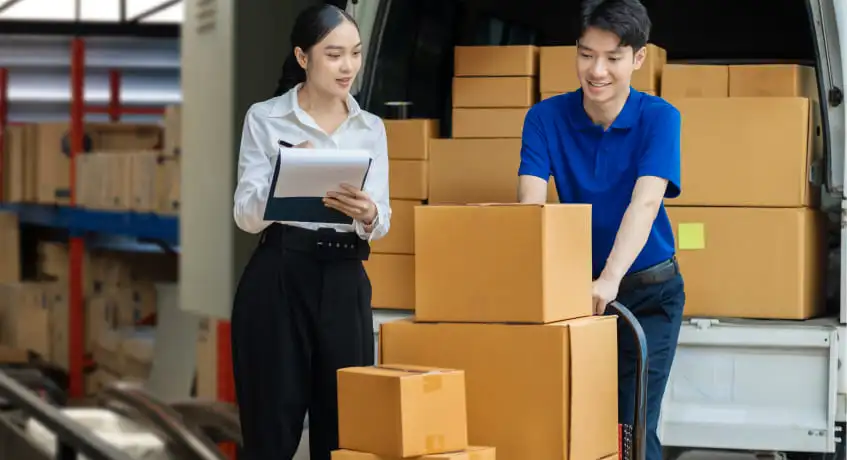
The last-mile delivery process is the final leg of a product’s journey to the customer. This phase includes several steps, like sorting packages at local hubs and making sure everything is delivered on time. Since this step is key to customer satisfaction, optimizing it can significantly improve the overall delivery experience.
Let’s take a closer look at how the last-mile delivery process works:
Step 1: Order Entry & Arrival at the Local Hub
Customer places an order on Shopee, Lazada, or a brand’s own website. The order is instantly routed to the nearest fulfilment hub, typically located in Jurong, Tampines, or Tuas, which are Singapore’s main logistics clusters.
Once the parcel arrives at the hub, it is scanned, logged into the Warehouse Management System (WMS), and tagged for the next leg of delivery. Given Singapore’s small land size, most parcels reach the local hub within the same day. Accuracy at this stage is critical; a misrouted parcel in a dense HDB estate can cause significant delays downstream.
Step 2: Strategic Sorting & Assignment
Parcels are sorted by postal district, delivery urgency (same-day vs standard), and service type (bulky item, refrigerated, fragile). Singapore’s six-digit postal code system makes district-level sorting highly precise; drivers can be assigned tight clusters of stops within a single HDB town like Bedok or Woodlands.
After sorting, deliveries are matched to available drivers or third-party fleet partners such as Ninja Van, J&T Express, or in-house riders. Smart assignment reduces wasted trips across the island and keeps delivery slots on schedule.
Step 3: Route Optimization & Dispatch
Route planning software factors in real-time ERP traffic data, ERP gantry zones, peak-hour restrictions, and carpark access for HDB blocks and condominiums. In Singapore, route optimisation is especially important during morning and evening peak hours on the PIE, CTE, and AYE.
Drivers receive their dispatch instructions via mobile apps; platforms like Ninja Van and Lalamove push routes directly to the driver’s phone. Optimised routes not only save time but also help manage fuel costs, which are significantly higher in Singapore than in neighbouring countries.
Step 4: Loading & Out for Delivery
Drivers load their vans or motorcycles in reverse delivery order: the last stop goes in first, and the first stop sits at the back. For bulky furniture or appliances delivered to high-rise HDB flats or condos, lift access and unit floor must also be factored into the loading sequence.
Once loaded, the delivery run begins. A well-loaded vehicle reduces the time spent rummaging for parcels at each stop, an important factor when a driver has 80 to 120 stops across multiple HDB blocks in a single shift.
Step 5: Final Drop-Off & Proof of Delivery (POD)
The driver arrives at the customer’s HDB flat, condo unit, or landed property and attempts the handoff. If the customer is not home, a common situation in Singapore’s dual-income households, the driver follows a standard protocol: leave at the letterbox for small parcels, arrange a re-delivery slot, or drop at a nearby Pickpoint or Parcel Santa locker, or a 7-Eleven collection point.
Proof of delivery is captured digitally: a photo of the parcel at the door, a recipient signature on the driver’s mobile device, or a geotag confirming the drop location. This POD record is immediately synced to the customer’s tracking page and the merchant’s dashboard, closing the loop on the entire last-mile journey.
What are the Common Challenges of Last Mile Delivery?
Last-mile delivery plays a crucial role in the logistics process, but it comes with several challenges. From high costs to the pressure of meeting customer expectations for real-time tracking, this final leg of the journey can be tricky.
Here are some of the key challenges of last-mile delivery:
High Delivery Costs
When it comes to last-mile delivery, the costs can add up quickly, including fuel, driver wages, and vehicle maintenance. With routes often having fewer delivery points, each stop can be more expensive than expected. These added costs can strain businesses trying to keep operations running smoothly.
Without proper planning or automation, costs can quickly spiral out of control. Customers now expect faster and more flexible delivery options, making it even harder for businesses to balance affordability with the need for efficiency.
Solutions:
- Optimize Route Planning: Implement route optimization software to reduce unnecessary mileage. This helps to save on fuel costs and improve delivery efficiency by selecting the shortest and least congested routes.
- Use Automation for Scheduling: Automating the scheduling and dispatch process reduces labor costs and ensures more efficient use of vehicles, allowing businesses to handle more deliveries with fewer resources.
Lack of Real-Time Tracking Visibility
Today’s customers want to know exactly where their package is and not just get a vague “out for delivery” notice. Without real-time tracking updates, businesses lose sight of where things stand, making it harder to fix problems as they arise.
This lack of visibility can lead to dissatisfaction, especially when handling sensitive shipments that rely on cold chain logistics services to maintain product quality throughout the delivery process.
On the business side, real-time tracking helps managers keep an eye on schedules and spot delays early. This gives them the chance to address any issues before they grow, improving the process and ensuring smoother delivery for everyone involved.
Solutions:
- Implement Real-Time Tracking Systems: Use GPS and tracking software that provides live updates to customers and internal teams. This ensures visibility throughout the delivery process, helping both parties stay informed.
- Integrate with Customer Communication Tools: Combine real-time tracking with automated notifications via apps or SMS to keep customers updated on delivery status, reducing anxiety and improving satisfaction.
Optimizing Routes Amidst Congestion
City deliveries are often challenging, with traffic jams, road closures, and unexpected delays being common obstacles. If your routing system isn’t flexible enough, drivers can easily end up wasting time, which leads to inefficiency, unnecessary delays, and worst of all, cargo theft.
Real-time route optimization tools that adjust to traffic conditions make a big difference. This is especially true in places like Singapore, where congestion is a daily reality. With the right tools in place, businesses can reduce delays and ensure deliveries stay on schedule.
Solutions:
- Use Dynamic Traffic Data: Integrate real-time traffic data into your routing system to account for traffic jams, accidents, or road closures. This allows for dynamic rerouting to avoid congestion and improve delivery times.
- Plan Delivery Windows: Schedule deliveries during off-peak hours or in time blocks when traffic is lighter. This helps to minimize delays caused by congestion and ensures faster service.
Accommodating Custom Customer Requirements
Not all deliveries are simple drop-offs. Some customers request specific delivery times or need fragile items handled with extra care. Missing these important details can quickly result in a negative experience for customers and may affect the business’s reputation.
Being able to adapt to these special requests is key, especially when handling high-value items or serving business clients. Offering flexible delivery options helps businesses build stronger relationships with customers and keeps them coming back.
Solutions:
- Offer Flexible Delivery Options: Provide customers with a range of delivery windows, such as same-day, time slots, or specific dates, ensuring they can choose what works best for them.
- Implement Special Handling Instructions: Create a system where customers can easily specify special delivery needs, such as fragile item handling or specific delivery times, ensuring these requests are met without error.
Late Delivery
There are many reasons why deliveries can be delayed, whether it’s traffic, incorrect addresses, or warehouse delays, but every late delivery risks losing customer trust. Customers who expect quick service can easily become frustrated when delays happen, and that can damage a company’s reputation.
Late deliveries also put extra pressure on support teams who need to handle complaints and resolve issues. This creates more complexity and drives up operational costs, making it crucial for businesses to focus on meeting delivery deadlines to keep customers satisfied.
Solutions:
- Establish Backup Plans: Set up contingency plans for late deliveries, such as alternative routes or additional drivers, to avoid further delays. This helps to quickly adapt to unforeseen circumstances.
- Improve Communication with Customers: Notify customers promptly if there are delays and provide a clear timeframe for the delivery. Transparency reduces frustration and helps maintain customer trust.
Handling Reverse Logistics and Missed Drop-offs
Returns and missed deliveries are just part of the process, but they add an extra layer of complexity to the system. A missed drop-off can cause a ripple effect that disrupts the entire schedule. Businesses need to be prepared for these situations to avoid falling behind.
If businesses don’t have a solid system to handle returns or missed deliveries, they risk losing money and wasting valuable time. A smooth process for reverse logistics is crucial for maintaining efficiency and preventing bottlenecks in the supply chain.
Solutions:
- Create a Reverse Logistics System: Implement a streamlined process for returns, such as prepaid return labels or designated return points, making it easier and quicker to handle product returns.
- Reschedule Missed Deliveries Quickly: Automate rescheduling for missed deliveries, ensuring customers can quickly choose another delivery time without hassle, reducing frustration and improving satisfaction.
The Logistics of Low-Density Remote Deliveries
Some areas are just tough to reach, whether it’s long drives, poor roads, or only one package to deliver. These types of deliveries are often inefficient, consuming more time and resources than they’re worth. Remote deliveries can easily impact profitability and stretch budgets thin.
Margins are particularly affected when businesses lack effective strategies to consolidate deliveries or manage the costs of long, remote routes. Establishing an efficient delivery plan, including coordination through a transshipment port, helps minimize expenses while ensuring customer expectations are met.
Solutions:
- Group Deliveries for Remote Areas: Consolidate deliveries in remote areas to maximize delivery efficiency and reduce costs. Grouping multiple orders into one trip helps minimize fuel costs and time spent on the road.
- Use Local Hubs or Pickup Points: Set up local hubs or designated pickup points in remote areas to reduce the cost and complexity of delivering to sparsely populated locations. This allows customers to pick up packages at their convenience.
How to Optimize Last Mile Delivery
Optimizing last-mile delivery is essential to improving efficiency and keeping customers happy. It involves more than just getting packages from point A to point B. It’s about using smart systems, real-time updates, and customer-centric approaches to make each delivery as smooth as possible.
Here are the key strategies to optimize last-mile delivery:
Use the Best Logistics Software
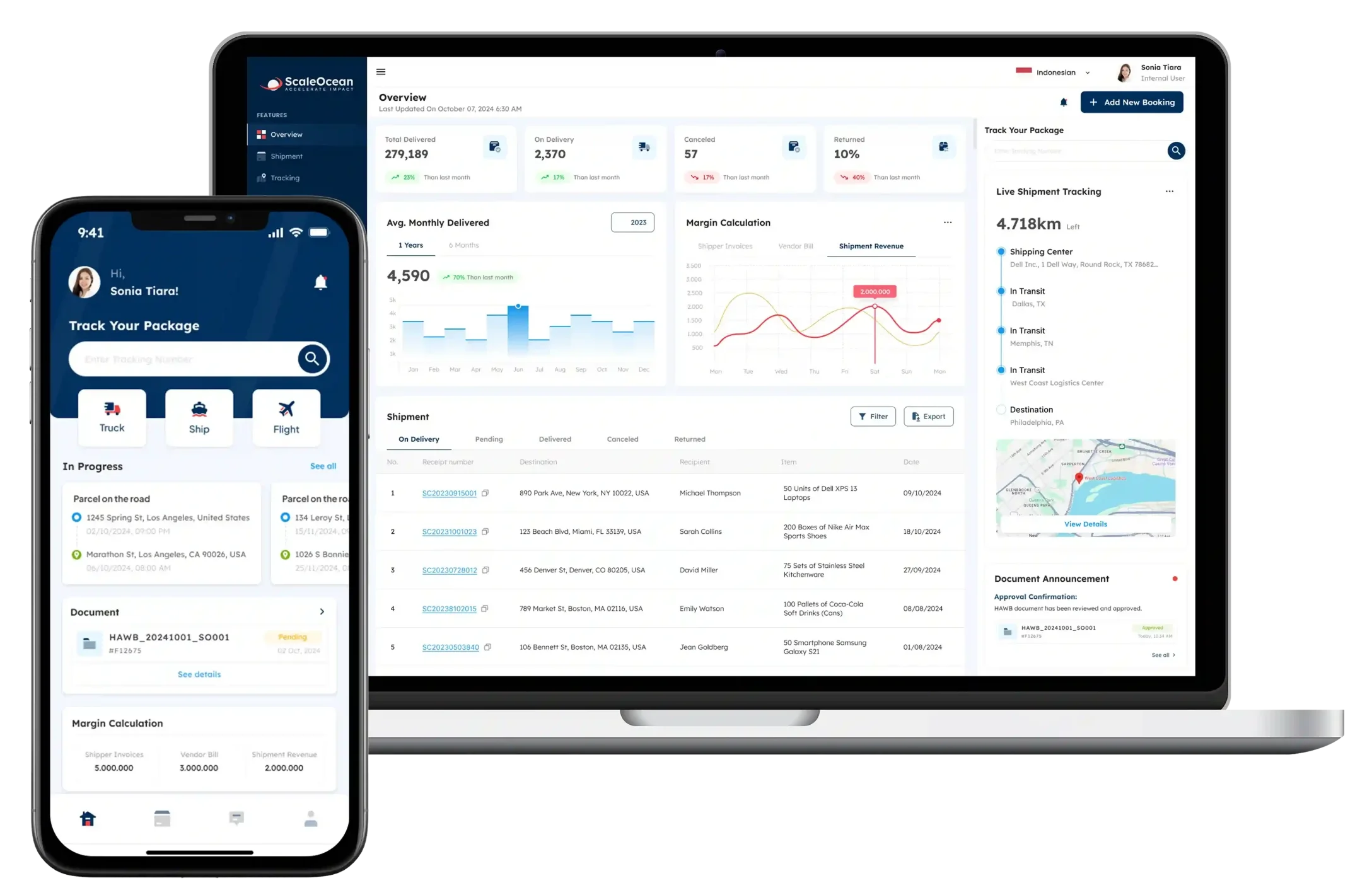
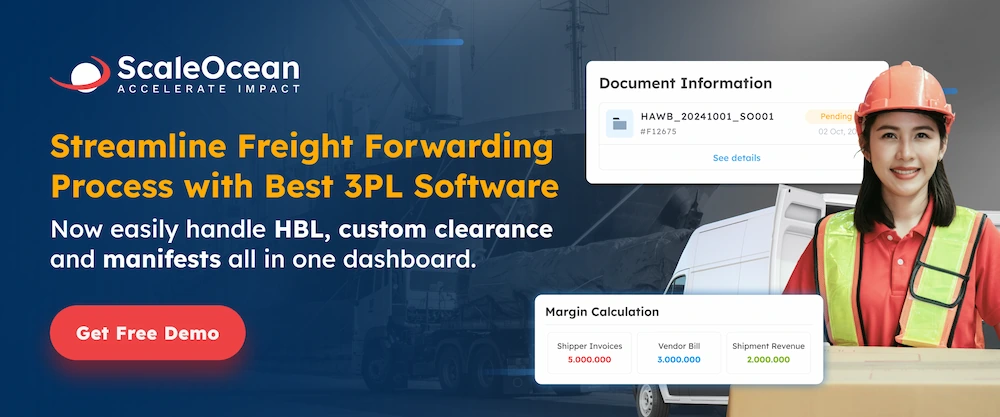
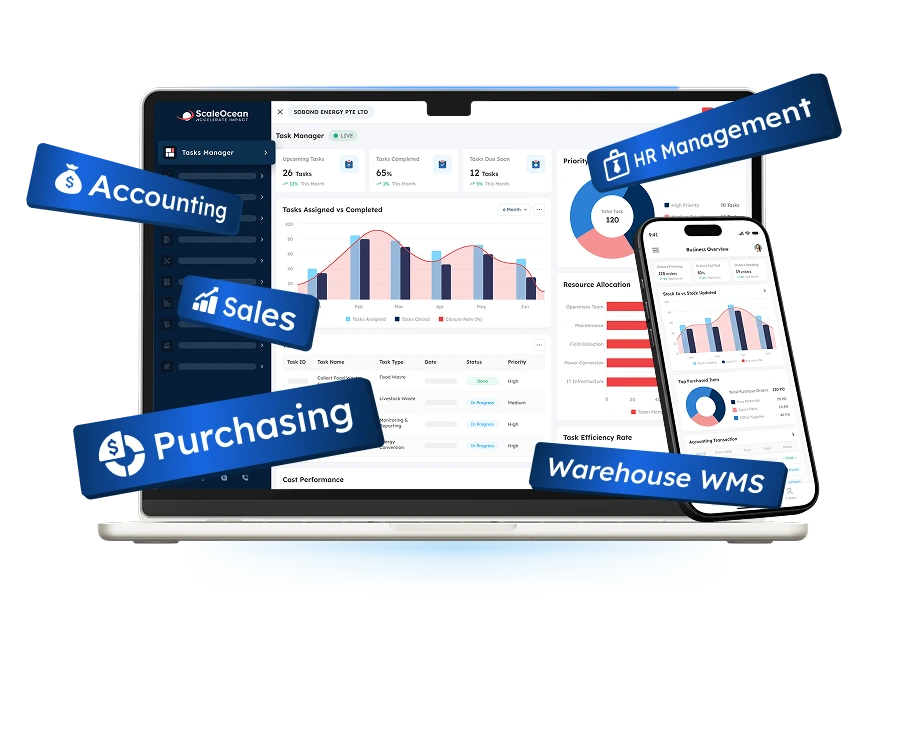
Logistics software from ScaleOcean’s logistics software comes in handy. It empowers logistics teams to route more efficiently, out-of-the-way-to-doorstep tracking, and simplifies that daunting jump from the hub to the door.
ScaleOcean software is also recognised for the CTC grant, so its an excellent worth business people can’t ignore in case they’re looking to streamline. The companies are able to get the maximum of the cost up to 70% under the CTC grant. Moreover, ScaleOcean provides a free demo so you can get a feel for the benefits first-hand.
Keep Track of Systems and Online Updates
It’s so important to be able to provide customers with an exact address for their package. It can often significantly reduce non-essential support calls and reduce the inevitable missed deliveries.
There is no need to guess with real-time updates, as dispatchers are able to react quickly, be it by changing a driver’s route or by informing a customer that there is an issue before it arises.
Cost Management Techniques
Bundling orders together and smart pricing are helpful to ensure cost control. Forecasting also helps to ensure a smoother operation by being able to anticipate demand in advance.
The next way that will go well is checking historical data, which aids you in making improved choices with regard to fleet employment and future deliveries.
Customize Delivery Experience
Offering customers an option to choose specific time slots and leave ‘notes’ for the delivery team can result in improved customer satisfaction. It can also help you prevent making the same mistakes twice, a factor that consumes time and fuel.
Much of the customization may sound like extra work, but it is an efficient process that means that there is a minimal amount of “off balance” when it comes to first-time drop-offs.
Offer Flexible Pick-Up and Delivery Options
Select Click and Collect points, smart lockers, or even partners’ shops nearby. They come in handy in urban areas with heavy traffic, they empower individuals to take greater control over the issuing of their orders and their reception.
Having more delivery options usually means fewer have to fail, and helps create a smoother customer experience, especially in situations such as an apartment complex or a delivery zone.
Here are some strategies to consider when optimizing the last-mile delivery process.s: Besides, ScaleOcean’s logistics software plays an important role in these as well, by simplifying tracking, optimizing delivery routes, and managing expenses so your business can effectively move forward and satisfy the customer’s expectations.
Trends of Last Mile Delivery in Singapore
The final mile delivery in Singapore is undergoing a fast transformation to satisfy end-user require faster, more streamlined services. When customers’ needs evolve, new behaviors and breakthrough technologies are being introduced in order to remain competitive.
These trends seek to cut delivery times, to make things more convenient, and to explore sustainability. Let’s take a closer look at the trends of last-mile delivery in Singapore:
Multi-Warehousing for Localized Distribution
For acceleration, numerous companies are now creating smaller warehouses closer to the customers. This is an easy change, but it can reduce travel time and facilitate addressing local needs.
In the case of Singapore, this is a more decentralised delivery system that is at the forefront of the last-mile delivery initiatives given the increase in persons expecting same-day delivery.
Crowdshipping Delivery Models
Increased penetration of crowdshipping is being seen in businesses. In essence, delivery guys use Joe and Jinsan to bring packages to their homes. It is a plug-and-play option when quick deliveries are required, and a large fleet is not practical.
However, crowdshipping is only effective and efficient if there is great technology in place to help with routing, payment handling, and tracking in real-time.
Green Logistics and Sustainability
As EV adoption, reusables, and carbon-neutral delivery were once “nice to have” items increasingly becoming a “must”. Logistics planning advances sustainability – it is no longer just a marketing box to check.
The last-mile delivery market in Singapore has grown from an estimated $1,211.0 million in 2022 to an estimated $2,639.6 million by 2032, clearly signaling the strong demand for sustainable solutions in the market, according to Apollo Reports. With pressure rising from policy and consumers, sustainable delivery can no longer be an option for companies.
Micro-Fulfillment Centers
They’re tiny warehouses stored within cities that hold everyday goods, not all the food, but what various companies need to contain on a short commute. The concept is to ensure the products that customers want are within easy reach.
The reduction in distance covered enables things such as one-hour deliveries in busy areas, etc., to be achieved in crowded locations, for example.
Alternative Delivery Points
However, instead of delivering right to the door, a greater number of companies are providing lockers, convenience stores, or retail counters where customers can pick up. It empowers the client with more regard to the timing and method of the delivery of their goods.
What is also great with alternative delivery points is that it will prevent failed deliveries, especially during peak shopping seasons.
e-Pod or Electronic Proof of Delivery
Rising trends for digital features such as timestamps, signatures, and geo tags help to validate a delivery. This is particularly useful when there are problems with a customer or when a customer raises a question.
Furthermore, ePOD provides data that can be used in reporting and by logistics teams to identify any delays or inefficiencies.
Automation and AI in Route Planning
Unlike humans, AI can now re-route deliveries based on actual traffic, weather, and even customer patterns. Not quite the best, but it gets more and more wonderful as you give it more and more data.
Late deliveries and excess fuel usage can be reduced by incorporating AI automation into routing, all of which can accumulate to be a high cost.
24/7 Access to Parcels
Smart lockers and pick-up boxes are becoming increasingly common in train stations, condos, and malls. One of the largest ones is that there are no people home when it’s being delivered, and that’s one of the things that is happening.
Making access 24/7 ensures that no running costs will be incurred for redelivery and also provides customers with increased flexibility.
Delivery by Driverless Vehicles
Robotic deliveries are still in experimental mode, which involves mini robots or vans on the sidewalks. However, the initial progress is encouraging, particularly in learning settings such as campuses.
Right now, driverless delivery is being tested in selected zones in Singapore, and it could be a major cost-saving shift down the road.
AI/Bot Assisted Planning
Businesses are finding that machine learning usefully explains why products go missing, why returns skyrocket, or when sales surge. No more educated estimates; it’s all about data-driven planning.
Using AI-assisted planning gives teams a clearer view of what’s working, what’s not, and how to keep things moving more smoothly.
Conclusion
Last-mile delivery isn’t just a step in logistics. It’s where your brand meets the customer face-to-face, sometimes literally. It’s also the messiest, most expensive, and most emotionally charged part of the entire delivery experience. When it goes well, nobody notices. But when it doesn’t, everyone hears about it.
That’s why optimization matters, because it’s from software tools to route logic, and so the details make a difference.
With platforms like ScaleOcean logistics software, logistics teams can simplify complex processes, cut delivery costs, and elevate performance across the board. So for that reason, ScaleOcean also offers a free demo so that you can try it firsthand.
FAQ:
1. Do Singapore businesses need different shipping solutions for domestic and international deliveries?
Yes. Domestic shipping within Singapore usually focuses on speed, same-day delivery, and cost efficiency. International shipping requires customs clearance, documentation, tracking, and reliable courier partners to ensure parcels reach overseas customers smoothly.
2. What are the top 5 logistics service providers?
The leading logistics companies include DHL, FedEx, Japan Post Holdings, SF Express, and Kuehne + Nagel, known for their vast networks and reliability. ScaleOcean, however, offers similar flexibility and robust features, providing an integrated and customizable solution for last-mile and logistics operations.
3. How does monthly package volume affect shipping costs in Singapore?
Monthly package volume can influence the shipping rates a business receives. Companies with higher parcel volumes may qualify for bulk discounts, better courier terms, and more flexible delivery options, while smaller businesses may prefer pay-per-shipment plans.
4. Should Singapore businesses choose budget delivery or premium express delivery?
It depends on customer expectations, product type, and delivery urgency. Budget delivery is suitable for non-urgent orders, while premium express delivery works better for time-sensitive, high-value, or urgent shipments that require faster fulfilment.




















.png)