




The cost of debt shapes how much a company actually spends when borrowing money through loans or bonds. Running on outside cash means covering those charges just to keep things moving. Growth often leans more on lending than losing control to investors.
Yet borrowing capital isn’t free; it pulls resources elsewhere. When companies stretch their credit too far or overlook rising interest charges, profits begin shrinking slowly while cash pressure builds up. That detail, how much debt actually costs, is what shapes smart choices down the line.
Back in 2025, companies around the world sold $13.7 trillion worth of new debt. That number? It’s a record high, says the OECD Global Debt Report 2026. Borrowing isn’t slowing – outstanding amounts now sit at $59.5 trillion. Corporate bonds make up part of that sum. Loans pulled together by banks form another chunk.
When borrowing reaches such levels, tiny shifts in interest rates start to weigh heavily on business finances. To see how much they pay for loans lets firms compare funding paths, handle what they owe each month, and keep their money mix steady through shifting conditions.
In this article, we will understand the key components of the cost of debt, how to calculate it, why it matters, and practical strategies businesses can use to reduce borrowing costs. So that businesses can make smarter financing choices, control interest expenses, and maintain a healthier financial structure over time.
 Key Takeaways
- The Cost of Debt is the interest rate companies pay on borrowed funds, making it a critical metric for evaluating financing decisions and maintaining a sustainable capital structure.
- With the correct calculation, planning around finances becomes less of a guesswork. It’s how firms stay on top of their obligations without surprises down the road.
- Debt costs shape how firms manage money, steering choices on spending or saving. When borrowing gets expensive, plans shift – projects slow down, budgets tighten.
- ScaleOcean Expense Management Software helps watch numbers as they change happen right away here, the system connects each part so nothing slips through.
What Is the Cost of Debt?
Cost of debt is the total interest expense a company pays on borrowed funds, expressed as a percentage of the total debt. It represents the effective rate a business must pay lenders to access capital.
Companies commonly incur this cost when they use loans, bonds, credit lines, or other financing instruments to support operations, purchase assets, or expand their business.
This metric is important because it directly affects a company’s profitability and financial stability. Higher borrowing costs increase operating expenses, while lower costs allow businesses to finance growth more efficiently.
As a result, understanding debt cost helps companies evaluate financing options, manage their capital structure more strategically, and learn how to find cost of debt when reviewing borrowing decisions.
What Are the Components of the Cost of Debt?
Several factors determine debt cost, including interest payments, fees, credit risk, and broader market conditions. Together, these elements influence how expensive borrowing becomes for a company.
Understanding these components helps businesses calculate their real borrowing costs and identify opportunities to reduce them. By monitoring these factors, companies can make better financing decisions and manage debt more efficiently.
- Fees and Charges: In addition to interest, lenders often impose various fees such as origination fees, processing charges, or administrative costs. These additional expenses increase the overall cost of borrowing and must be included when calculating the true debt cost.
- Interest Payments: Interest payments are the primary component of debt cost. They represent the periodic payments made to lenders for the use of borrowed funds and are usually determined by the loan agreement and prevailing interest rates.
- Tax Deduction: In many tax systems, interest payments on debt are tax-deductible. This reduces the effective cost of borrowing because companies can subtract interest expenses from taxable income, lowering their overall tax burden.
- Loan Tenure: The duration of a loan also affects the debt cost. Longer loan tenures may result in higher total interest payments over time, even if the annual interest rate appears relatively low.
- Credit Rating: A company’s credit rating reflects its financial reliability and ability to repay debt. Businesses with stronger credit ratings generally receive lower interest rates, while those with weaker ratings often face higher borrowing costs.
- Creditworthiness: Closely related to credit rating, creditworthiness evaluates a company’s financial health, repayment history, and risk profile. Lenders assess these factors before determining the interest rate or loan terms.
- Market Conditions: Economic factors such as inflation, central bank policies, and overall credit market conditions influence borrowing rates. When interest rates rise in the broader economy, the debt cost typically increases as well.
- Weighted Average Cost of Capital (WACC): The cost of debt also plays a role in calculating a company’s overall financing cost through the Weighted Average Cost of Capital (WACC). WACC combines the cost of debt and equity to determine the average rate a company must pay to finance its assets.
How the Cost of Debt Works
The cost of debt reflects how much a company must pay to borrow money from lenders. When a business takes a loan, issues bonds, or uses other debt financing, it agrees to repay the borrowed amount along with interest over a specific period.
The interest rate charged by lenders becomes the primary factor that determines the company’s debt cost. In practice, lenders evaluate several factors before setting borrowing rates.
These include the company’s financial stability, credit rating, repayment history, and the overall economic environment. Businesses with strong financial performance typically receive lower interest rates, while companies with higher risk profiles often face higher borrowing costs.
Understanding how it works also helps businesses learn how to find cost of debt based on their interest expenses, loan terms, and overall borrowing structure. By comparing interest rates, loan terms, and financing options, businesses can select funding sources that minimize long-term expenses and support sustainable growth.
Formula and Calculation of Cost of Debt

The debt cost can be calculated using a straightforward cost of debt formula based on the interest expenses a company pays on its borrowings. Businesses often measure this cost to understand how much their financing structure affects profitability and overall financial performance.
Businesses also often calculate it to evaluate financing decisions and determine whether borrowing is financially viable. This analysis also supports long-term planning processes such as capital budgeting, where companies compare financing costs with expected investment returns.
The general cost of debt formula for calculating it is:
Pre-Tax Cost of Debt = Total Interest Expense / Total Debt
This cost of debt formula shows the average interest rate a company pays across all its debt obligations. However, financial analysis typically distinguishes between before-tax and after-tax debt cost because interest payments may provide tax benefits.
After-Tax Cost of Debt
The after-tax debt cost shows how to calculate the cost of debt after accounting for tax deductions on interest expenses. Since many tax systems allow businesses to deduct interest payments from taxable income, the effective debt cost becomes lower than the stated interest rate.
The formula for calculating the after-tax cost of debt is:
After-Tax Cost of Debt = Interest Rate × (1 − Tax Rate)
Many commonly use this debt cost formula as it takes into account tax savings to calculate the actual cost of borrowing.
Before-Tax Cost of Debt
The interest rate that companies pay on their debt before tax deductions is the before-tax cost of debt. It merely mirrors the lending rates set by the lenders or the yield for the bonds issued.
The formula for calculating Before-Tax Cost of Debt is straightforward:
Before-Tax Cost of Debt = Total Interest Expense / Total Debt
If it comes to that, the ratio to calculate Before-Tax Cost of Debt is Total Interest Expense/Total Debt.
This calculation of the cost of debt is the actual cost of borrowing; however, when a company considers capital structure decisions, they typically use the after-tax cost of debt due to the fact that it better reflects the true cost of financing.
Example of Cost of Debt
To understand how to calculate the cost of debt, consider a simple example. Suppose a company borrows $1,000,000 from a bank with an annual interest rate of 6%. This means the company must pay $60,000 in interest each year.
Using the cost of debt formula: Pre-Tax Cost of Debt = $60,000 / $1,000,000 = 6%. If the company’s corporate tax rate is 25%, the after-tax cost of debt becomes:
After-Tax Cost of Debt = 6% × (1 − 25%) = 4.5%
This example also demonstrates how to find the cost of debt in practice and how tax deductions reduce the effective borrowing cost compared with the stated interest rate.
Why Cost of Debt Matters?
The cost of debt plays an important role in financial management because it directly affects profitability, investment decisions, and long-term stability. When businesses understand how to calculate the cost of debt, they can make more informed financing decisions and avoid unnecessary financial risk.
As a result, monitoring debt costs helps companies maintain a healthier financial structure. Below are the more detailed explanation.
- Evaluating Financial Health: It helps businesses evaluate their financial health. When interest expenses become too high relative to revenue, it signals that the company may rely too heavily on borrowing. Financial indicators such as the expense ratio can help businesses understand how financing expenses affect profitability.
- Capital Structure Optimization: In addition, companies use it to optimize their capital structure. Businesses usually finance operations through a mix of debt and equity. When managers understand the borrowing cost, they can balance these funding sources more effectively and minimize overall financing expenses.
- Investment Decision: It also influences investment decisions. Before starting a new project, companies compare the expected return on investment with the cost of borrowing. If the potential return exceeds the debt cost, the investment may generate value for the business.
- Benchmarking: Businesses also use the debt cost as a benchmarking tool. By comparing borrowing costs with industry averages or competitors, companies can evaluate whether they secure financing under favorable conditions.
- Risk Assessment: It helps businesses assess financial risk. Rising borrowing costs often indicate higher perceived risk from lenders. When this happens, companies may need to adjust their financing strategy or strengthen their financial position.
Impact of Taxes on Cost of Debt
Taxes can reduce the effective cost of borrowing because interest payments are often tax-deductible. When a company records interest as a business expense, it lowers its taxable income. As a result, the company pays less tax, which effectively reduces the real cost of the debt.
Consider a simple example. A company issues $100,000 in bonds with a 5% interest rate, meaning it must pay $5,000 in interest each year. Without considering taxes, the company’s debt cost would simply be 5%.
However, because the interest payment can be deducted as a business expense, the company reduces its taxable income by $5,000. If the company’s effective tax rate is 30%, this deduction produces $1,500 in tax savings.
After accounting for this tax benefit, the company effectively pays $3,500 instead of $5,000 in interest. This means the real borrowing cost becomes 3.5% rather than the original 5%. This example shows how tax deductions can lower the true cost and make borrowing more financially efficient for businesses.
What Makes the Cost of Debt Increase?
Several factors can increase the debt cost, mainly depending on the level of risk perceived by lenders. For example, a longer loan tenure often leads to higher borrowing costs because lenders must account for the time value of money and the uncertainty over a longer repayment period.
In addition, borrowers with weaker financial stability or lower credit ratings typically face higher interest rates because lenders see a greater risk of default.
The economic conditions also come into play. Lenders like to charge higher interest rates on new loans if the market interest rates rise or if the inflation rate rises. Consequently, even if businesses’ finances do not improve, they could end up paying more for loans.
How to Reduce the Cost of Debt
By smartly managing one’s borrowing and banking one’s finances well, one can cut one’s debt cost to the business. Businesses have several options with regard to their loans that can help them manage the high interest rates better and make it easier to repay the loan.
By proactively managing debt, businesses can reduce their interest expenses and enhance the stability of their cash flows. That means they can invest more in their operations, investments, and long-term growth and less in financing costs.
1. Negotiating Rates
Businesses should first try to renegotiate with the lender for the lowest rate possible. Those with consistent income, solid loan finances, and consistent loan repayments may be able to get better loan terms.
With a small drop in the interest amount, the overall cost of borrowing can be considerably lower in the long-term. Hence, businesses should periodically audit loan agreements and seek permissions for possible adjustments from the lender.
2. Strategic Refinancing
Another option is that of refinancing their loans if the interest rate levels drop due to the market. Refinancing is the process of taking out a new loan for a more favorable interest rate and/or conditions than an existing loan.
But before companies do it, they should examine the expenses involved in refinancing. Rather than blindly signing up for refinancing, comparing rates and savings can help companies determine if it will really be cost-effective.
3. Consolidate Loans
Loan consolidation allows businesses to combine multiple debts into a single loan. This approach simplifies financial management and creates a more predictable repayment schedule.
In addition, consolidation may lower the average interest rate if the new loan offers better terms. As a result, companies can reduce administrative complexity while lowering borrowing costs.
4. Credit Profile Optimization
Improving a company’s credit profile can significantly reduce borrowing costs. Lenders often offer lower interest rates to businesses with strong financial stability and a reliable repayment history.
Companies can strengthen their credit profile by maintaining consistent cash flow, reducing liabilities, and paying debts on time. Over time, these actions increase lender confidence and improve financing opportunities.
5. Increase Payment
Increasing loan payments can help businesses reduce the total interest paid over time. By allocating extra funds toward the principal balance, companies can shorten the repayment period.
As the outstanding balance decreases, the interest charged also becomes smaller. Consequently, businesses can lower the overall cost while becoming debt-free faster.
6. Operational Cash Flow Management
Effective cash flow management reduces a company’s reliance on external borrowing. By improving revenue collection and maintaining strong cost control, companies can generate more internal funding and reduce the need for additional borrowing.
With stronger internal cash flow, companies can reduce the need for additional loans. Over time, this approach helps lower overall borrowing costs and strengthens financial stability.
7. Use Integrated Software
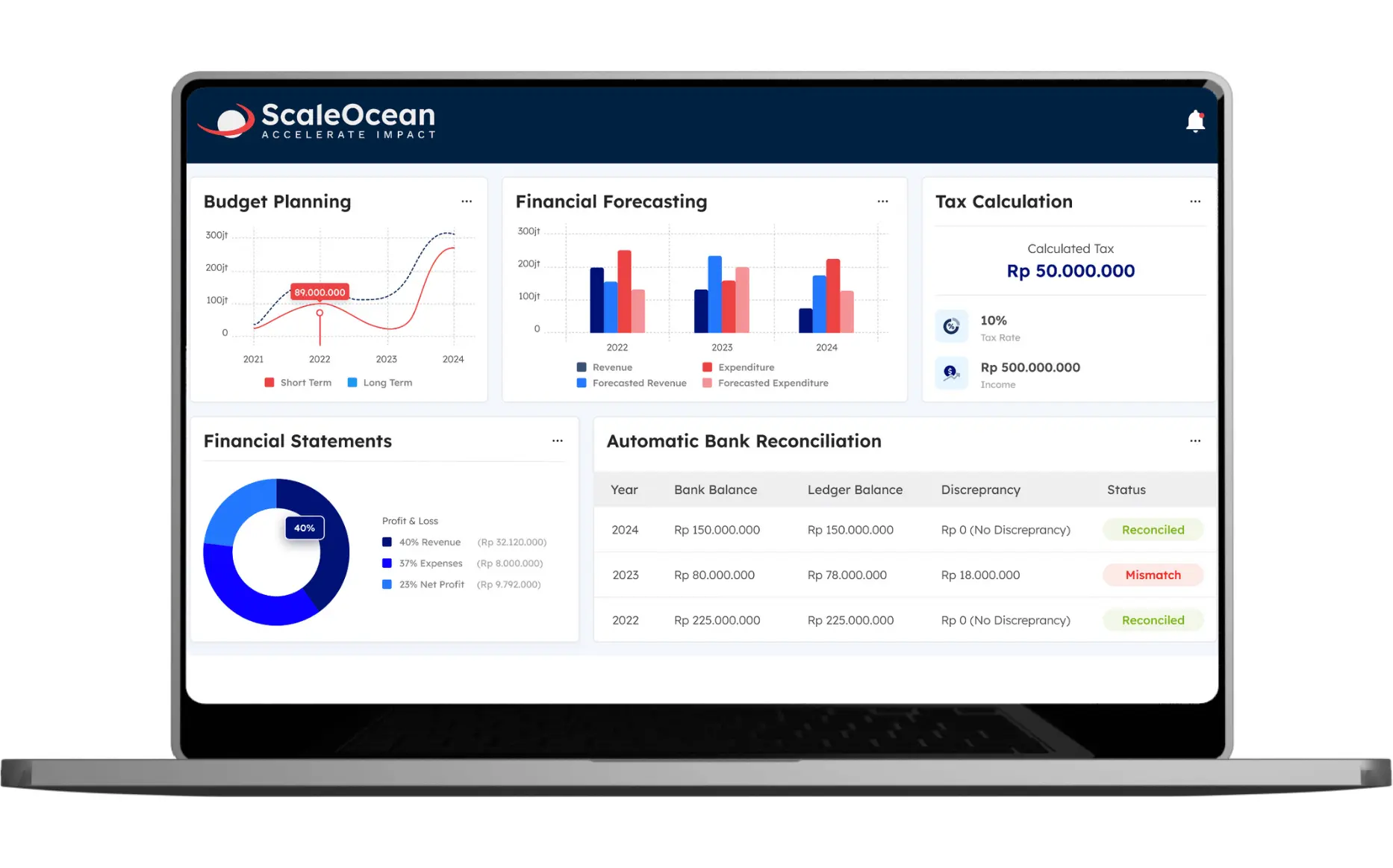
Effective debt cost management requires a comprehensive view of financial activities across the business. Integrated financial software that combines expense tracking, budgeting, accounting, and operations into one platform can simplify this process by enabling real-time monitoring and informed decision-making.
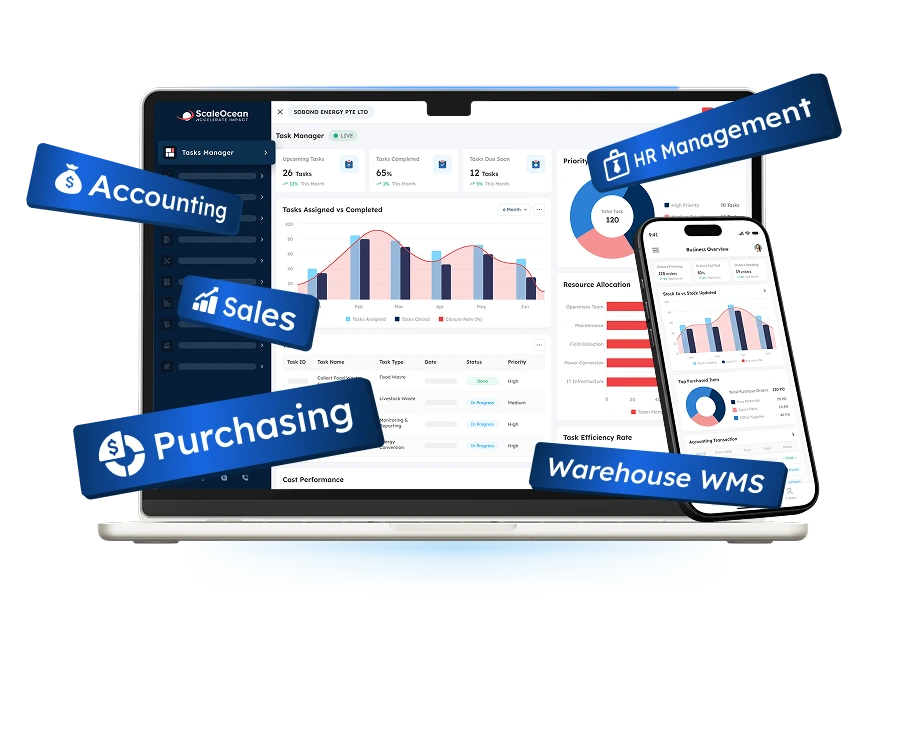
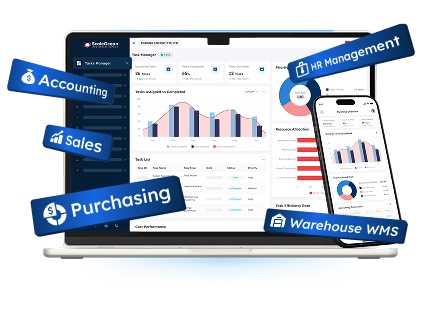
ScaleOcean’s expense management software delivers this integration by connecting key business and financial modules such as accounting, budget management, procurement software, tax compliance, and operations, providing unified control over debt costs and improved visibility across departments.
The platform also provides tools that support debt cost management within a single system. Businesses can record and track expenses, receive debt payment alerts, analyze financial reports in real time, plan budgets, and develop more effective debt management strategies.
In addition, ScaleOcean offers customizable modules that adapt to different industries and business structures. Companies can also configure financial approval workflows to align with their internal processes, creating a more efficient and controlled financial management system.
If your business wants better financial visibility and stronger control over debt costs, consider exploring ScaleOcean to support smarter financial decisions and request a free demo today.
Why Does Debt Have a Cost?
Debt has a cost because lenders require compensation for providing capital. When banks, investors, or financial institutions lend money to a business, they take on the risk that the borrower may not fully repay the loan.
Interest payments, therefore, act as a reward for accepting that risk and for allowing the borrower to use the lender’s money for a certain period. In addition, lenders consider several economic factors when determining borrowing costs.
Inflation can reduce the future value of money, so lenders charge interest to protect their purchasing power. They also consider opportunity cost, since the funds could have been invested elsewhere. Because of these risks and economic considerations, borrowing capital always comes with a cost.
Advantages of the Cost of Debt
While paying interest to the lender is a cost of borrowing, debt financing has several strategically valuable benefits for business. Many companies choose debt financing over equity financing because it provides them with the necessary capital they need without the loss of control of their business.
In addition, with fixed-rate loans, the cost of the loan can be predicted easily. This predictability will help businesses to make better financial planning and match the financial forecasts with the way they calculate their business internally, such as standard costing.
Key advantages include:
- Debt does not dilute ownership: Business owners can get the capital without relinquishing their ownership or decision-making
- Tax benefits: Interest is usually tax-deductible. The interest rate, however, on the loan after tax deduction is decreased.
- Fixed Repayment: Most loans have a specified repayment date. Because of this predictability, companies have more accurate ways of forecasting cash flow.
- Access to Capital: Companies can get access to capital more quickly than through equity issues, which can enable them to finance projects or meet operational needs more rapidly.
Debt financing can be predictable, advantageous for tax purposes, and requires strong financial management. It’s provided by ScaleOcean Expense Management Software, which tracks expenses in real time, automates the tracking process, and automates budget monitoring and financial reporting.
Experience the smarter financial management with ScaleOcean Expense Management Software, and try it for free to get a better understanding of the operational expenses and to maintain better financial controls.

Limitations of the Cost of Debt
While having a business loan has its pros, it also comes with the added financial responsibility. High levels of debt can impact profitability and financial risk if companies build up too much debt.
These are a few typical restrictions:
- Mandatory Repayment: No matter the profits or losses of a business, it is obligated to repay the loans, including interest, with the principal amount. They can put a strain on the cash flow during a low-revenue period.
- High leverage: Higher debt levels result in high leverage, which means that the risk of financial trouble will be high if the company is unable to pay back debts.
- Collateral Requirements: Financial Covenants may be used as Credit Restrictions. This can limit the flexibility of the operations.
- Sensitivity to Interest Rates: Rising interest rates in the markets will increase the cost of borrowing for the company, and consequently, increase the cost of finance.
Cost of Debt vs Cost of Equity
The cost of debt and the cost of equity are two key components of a company’s overall financing strategy. Both represent the cost a business must pay to access capital, but they differ in structure and financial impact.
Cost of debt refers to the interest rate a company pays on borrowed funds such as loans, bonds, or credit facilities. These payments are fixed and must be made according to the loan agreement.
Cost of equity, on the other hand, represents the return investors expect in exchange for owning shares in the company. Instead of interest payments, investors earn returns through dividends and capital appreciation.
Key differences between Cost of Debt and Cost of Equity include:
| Aspects | Cost of Debt | Cost of Equity |
|---|---|---|
| Definition | The return that an investor anticipates from their investment through buying shares in a company. | The money a company pays on money that it has borrowed, such as money from a loan or bond. |
| Ownership Impact | Does not cause dilution of ownership, but regular interest payments must be made and the principal repaid. | Spreads the ownership out by issuing shares of the company |
| Tax Treatment | Interest payments are typically tax-deductible, effectively reducing the cost of borrowing. | Dividends are not tax-deductible. |
| Risk Level | Lower risk for lenders, as debt holders will be repaid before shareholders in a company’s liquidation. | Riskier for investors as the return depends on the company’s performance and is paid after the debt holders. |
Most businesses are financed with a mixture of debt and equity capital in practice. Companies can manage financing costs while remaining financially flexible with this balance of these two sources of capital.
Cost of Debt for Public vs. Private Companies
How companies make debt computations can vary based on their nature, whether public or private. Capital for both types of companies is borrowed; however, financial information is not available to all.
Public companies usually issue bonds or other market-traded debt instruments. Because these securities trade in financial markets, analysts can estimate the debt cost using bond yields and market interest rates. This market transparency makes the calculation relatively straightforward.
Private companies, however, rely more heavily on bank loans, private lenders, or credit facilities. Since their debt instruments are not publicly traded, businesses typically estimate the debt cost based on loan agreements and interest expenses recorded in financial statements.
Below are the key differences between public and private companies’ debt cost:
| Aspects | Public Company | Private Company |
|---|---|---|
| Debt Source | Often raises debt by issuing bonds or other publicly traded debt instruments | Typically relies on bank loans, credit facilities, or private lenders |
| Cost Measurement | The debt cost can often be estimated using bond yields or market interest rates | The debt cost is usually determined from loan agreements and interest expenses |
| Data Availability | Market data and financial disclosures make borrowing costs easier to observe and analyze | Financial information is more limited because companies are not required to disclose detailed financial data publicly |
| Transparency | Regulatory reporting requirements provide higher financial transparency | Financial reporting is more private and mainly shared with lenders or stakeholders |
Although both public and private companies use debt to finance their operations, the way they measure borrowing costs can differ. Public companies benefit from market transparency, while private companies often rely on internal financial data and lender agreements to determine their cost.
Benchmarks for Cost of Debt in 2026

Businesses can use market benchmarks to assess if the cost of borrowing is healthy, given the industry standards, and also get a clearer picture of how they will get a lower cost of borrowing when compared to market averages.
The debt cost can vary depending on company risk, industry conditions, and overall interest rate trends. However, several general benchmarks provide a useful reference for businesses in 2026.
- Average Applied Cost: According to a capital cost study by KPMG, the average debt cost used by companies across sectors is approximately 4.3%, with borrowing costs generally ranging between 3.4% and 5.5% depending on company risk and financing structure.
- Industry Variance: Borrowing costs vary significantly across industries. For example, the healthcare sector averages around 4.9%, while sectors such as energy, natural resources, and real estate average closer to 3.6%, reflecting differences in business risk, capital requirements, and revenue stability.
- Current Trends: In recent years, borrowing costs have stabilized around the 4% range after rising from the extremely low interest rates seen earlier in the decade. This reflects higher global interest rates and changing monetary policies, which influence how lenders price credit risk.
These benchmarks help businesses assess whether their financing costs align with market conditions. By comparing their debt cost with industry averages, companies can decide whether to refinance loans, renegotiate lending terms, or adjust their capital structure to reduce borrowing costs.
Conclusion
Cost of debt represents the interest a company pays on borrowed capital and plays an important role in financial planning and capital structure decisions. Understanding how it works, how to calculate it, and what factors influence it helps businesses evaluate financing options, manage borrowing risks, and maintain healthier cash flow.
Managing borrowing costs becomes easier when companies use integrated financial systems such as ScaleOcean. As an ERP-based expense management solution, it connects financial modules like accounting, budgeting, and operational finance into one platform.
This integration allows businesses to track expenses, monitor debt obligations, analyze financial reports in real time, and plan budgets more effectively. With customizable modules and configurable approval workflows, ScaleOcean helps companies manage financial operations according to their specific business processes.
If your business wants better control over expenses and borrowing costs, request a free demo of ScaleOcean today to streamline your company’s financial management and support smarter financial decisions.
FAQ:
1. What is the cost of debt generally?
The cost of debt is the actual interest rate a company pays on borrowed money. This includes payments on loans, bonds, credit lines, or other forms of debt. It is usually expressed as an annual percentage rate.
2. What does a high cost of debt mean?
A high debt cost means the expense of borrowing exceeds the returns you can reasonably expect to generate from your investments.
3. Why is the cost of debt cheaper?
Debt tends to be less expensive than equity because the interest on debt is tax-deductible, and lenders generally require lower returns compared to equity investors (shareholders).
4. Can the cost of debt exceed the cost of equity?
Typically, the cost of equity is higher than the cost of debt because equity carries greater risk than debt. For dividend-paying companies, the cost of equity (Ke) can be calculated as: Ke = (Dividend Per Share / Market Price per Share) + Growth Rate of Dividend.





















.png)