The Accounting and Corporate Regulatory Authority is Singapore’s primary regulatory agency that supervises companies, accountants, and corporate service providers, making it a central authority that businesses rely on to operate legally and transparently.
According to the data our team found from ACRA’s registry statistics, more than 625,437 business entities were registered, showing how many organizations depend on accurate compliance and timely filings to maintain legal operations.
Nevertheless, with the growth of businesses across subsidiaries, filing slipups can soon put businesses in jeopardy of fines and legal actions.
Therefore, the regulatory clarity can help businesses stay consistent in terms of compliance, especially when they have multiple entities or regions to deal with, due to the clarity of the regulations, which reduces uncertainty in operations and improves corporate governance across departments and other stakeholders.
In addition, businesses that adopt structured regulatory management practices can respond faster to filing obligations, maintain accurate records, and avoid administrative bottlenecks that disrupt operations and negatively affect financial transparency and stakeholder confidence.
So, this article will explain what ACRA is, its functions, filing requirements, compliance checklist, and registration steps that businesses must understand to operate legally and efficiently.
Key Takeaways
ACRA is Singapore’s national corporate regulator, responsible for registering businesses, enforcing compliance, and maintaining transparent financial reporting standards across industries.
The ACRA company registration process is a digital incorporation workflow, guiding applicants through approvals, submissions, payments, and official business establishment steps.
Common ACRA compliance mistakes are preventable reporting errors, such as missed deadlines, incomplete documentation, and failure to update corporate information promptly.
ScaleOcean Accounting Software is a financial management system, helping businesses automate reporting, maintain accurate records, and simplify ongoing ACRA compliance requirements
The national regulatory body in Singapore, which is in charge of registration of businesses, adherence to the corporate and financial reporting regulations, in Singapore, is the Accounting and Corporate Regulatory Authority (ACRA).
In addition, the ACRA would allow Singapore to remain as a viable global business hub due to its ability to support effective corporate data systems, transparency, and impose consistent governance frameworks, which can aid in boosting investor confidence, as well as allow businesses to grow sustainably across all industries.
History of ACRA
ACRA was established in 2004 following the merger of the Registry of Companies and Businesses and the Public Accountants Board, creating a unified authority that streamlined regulatory oversight and improved administrative efficiency for Singapore’s evolving corporate environment.
Since then, ACRA has continuously modernized its digital infrastructure and regulatory processes, enabling faster company registration, automated compliance monitoring, and secure information storage that supports Singapore’s long-term vision of becoming a digitally advanced business ecosystem.
How Does ACRA Work Today?
Today, ACRA operates through integrated digital systems that enable businesses to submit filings, update corporate data, and manage statutory obligations electronically using centralized compliance workflows across departments and regulated entities.
Moreover, companies rely on platforms such as BizFile to handle incorporation, record updates, and annual filings efficiently, as digital submission processes reduce manual errors and improve accuracy in regulatory reporting across multiple entities and business structures.
In addition, recent legislative updates identified by our team from ACRA’s announcement have continued to reshape compliance practices. As selected provisions under the Corporate and Accounting Laws (Amendment) Act 2025 will commence on 6 May 2026, introducing stricter penalties of up to SGD 20,000 and expanded director disqualification criteria.
Furthermore, ACRA introduced simplified Business Profiles starting 27 March 2026, allowing users to receive free profiles directly in their BizFile inbox within 15 minutes of successful filing, significantly improving access speed and administrative efficiency.
Core Functions of ACRA
ACRA performs several essential regulatory functions that support corporate transparency, legal compliance, and reliable financial reporting. It allows businesses to operate within clearly defined regulatory frameworks while maintaining strong governance and operational accountability standards.
These functions collectively help organizations manage regulatory requirements efficiently by reducing duplication, simplifying reporting responsibilities, and ensuring businesses maintain accurate corporate records that support long-term operational sustainability and regulatory readiness.
Business Registration: ACRA manages company incorporation and registration procedures, ensuring businesses submit verified information, establish legal identities, and receive official approval before commencing operations within Singapore’s regulated commercial environment.
Regulatory Oversight: ACRA monitors company compliance with statutory obligations, including filing requirements and corporate governance rules, helping organizations maintain legal standing while preventing regulatory violations that may disrupt business continuity and credibility.
Unique Entity Number (UEN) Provision: ACRA assigns a Unique Entity Number to registered businesses, enabling consistent identification across government agencies, financial institutions, and regulatory systems that rely on standardized entity verification processes.
Data Collection: ACRA gathers corporate and financial data submitted by businesses, creating structured datasets that support regulatory review, statistical analysis, and policy development while ensuring information accuracy and accountability across reporting cycles.
Standards Setting: ACRA establishes reporting standards and governance frameworks that guide companies in maintaining consistent accounting practices, ensuring financial disclosures remain transparent, comparable, and aligned with regulatory expectations across industries.
Information Repository: ACRA maintains a centralized corporate information database that allows stakeholders to access verified business details, supporting due diligence activities, investment decisions, and regulatory monitoring through reliable and updated corporate records.
What is BizFile & BizFile+?
BizFile and BizFile+ are ACRA’s digital platforms designed to facilitate online company registration, statutory filings, and corporate record management, enabling businesses to complete regulatory processes efficiently without relying on traditional paper-based administrative workflows.
BizFile+ represents the upgraded version of the original BizFile system, offering enhanced usability, automation capabilities, and integration features. It improves filing accuracy while reducing processing time for businesses handling multiple compliance requirements simultaneously.
Moreover, these platforms support real-time submission tracking and automated notifications, allowing organizations to monitor filing progress and respond promptly to regulatory requests, which significantly reduces the likelihood of missed deadlines and compliance violations.
Who Needs to Register with ACRA
Organizations operating within Singapore must register with ACRA before conducting commercial activities. Legal recognition ensures businesses can enter into contracts, open corporate bank accounts, and participate in regulated financial transactions securely.
Additionally, registration requirements vary depending on business structure, but all entities benefit from formal recognition. It strengthens operational credibility, supports regulatory compliance, and improves access to financial services and investment opportunities.
Company: Companies operating as separate legal entities must register with ACRA to establish shareholder structures, define corporate responsibilities, and comply with governance regulations that protect stakeholders and support long-term organizational stability.
Sole Proprietorships: Individuals operating businesses independently must register their sole proprietorships with ACRA to obtain legal recognition, enabling them to conduct transactions transparently while maintaining accountability for financial and operational activities.
Partnerships: Partnerships involving multiple individuals or entities must register with ACRA to formalize ownership arrangements, define shared responsibilities, and ensure regulatory compliance across all partners participating in commercial operations.
What ACRA Does for Companies & Business Owners?
Accounting and Corporate Regulatory Authority performs multiple responsibilities that directly support businesses and owners in maintaining legal status, operational transparency, and regulatory compliance across Singapore’s structured corporate environment.
These responsibilities form the foundation of reliable business operations because companies depend on consistent regulatory processes to manage filings, reporting, and governance requirements effectively.
Moreover, ACRA’s role extends beyond basic registration because it continuously monitors compliance, strengthens reporting standards, and supports industry development across sectors. As a result, businesses gain access to structured regulatory support that improves accountability and reduces administrative risks over time.
1. Registers New Businesses
ACRA registers new businesses by verifying submitted information and approving company structures before operations officially begin. This process ensures organizations establish legal identities that allow them to sign contracts, hire employees, and conduct financial transactions securely.
Additionally, the registration process assigns essential business details such as entity classification and official ownership records. Therefore, businesses gain legal recognition that supports transparency and protects stakeholders from disputes or operational uncertainties.
2. Manages Company Filings via Bizfile
ACRA manages company filings through digital platforms such as BizFile, allowing businesses to submit annual returns, update records, and complete statutory requirements electronically. This centralized filing system reduces paperwork while improving submission accuracy and overall regulatory efficiency.
Furthermore, automated notifications within BizFile help businesses track deadlines and confirm successful submissions in real time. Consequently, organizations reduce the risk of missed filings that often result in penalties or compliance complications.
3. Enforces Compliance with Company Laws
ACRA enforces compliance by monitoring whether companies meet statutory requirements under Singapore’s corporate laws and governance regulations. This oversight ensures businesses maintain accurate records and follow procedures that protect shareholders and other stakeholders.
In addition, enforcement actions include issuing warnings, penalties, or legal consequences when organizations fail to meet obligations. Therefore, companies remain accountable for maintaining consistent compliance across all operational activities.
4. Regulates Public Accountants
ACRA regulates public accountants to ensure they maintain professional qualifications and follow ethical standards in financial reporting activities. This regulatory function strengthens the reliability of audited financial statements used by investors and regulators.
Moreover, ACRA monitors professional conduct through licensing controls and disciplinary measures when violations occur. As a result, businesses benefit from trustworthy financial services that support accurate and transparent reporting practices.
5. Sets and Oversees Accounting Standards
ACRA supports the development and enforcement of accounting standards that guide how companies prepare and present financial statements. These standards promote consistency across industries, allowing stakeholders to compare financial performance reliably.
Furthermore, oversight activities ensure businesses apply accounting principles aligned with Singapore financial accounting standards during financial reporting cycles. Consequently, organizations maintain credibility with investors, regulators, and financial institutions that rely on standardized reporting formats.
6. Develops Singapore’s Accountancy Sector
ACRA actively develops Singapore’s accountancy sector by promoting professional growth, training programs, and industry innovation initiatives. These development efforts strengthen the nation’s financial ecosystem and support long-term economic competitiveness.
Additionally, collaboration with educational institutions and professional organizations helps improve workforce capabilities across the accounting profession. Therefore, businesses gain access to skilled professionals who contribute to accurate reporting and effective financial management.
7. Provides Public Access to Business Information
ACRA provides public access to verified business information through searchable corporate records and official company profiles. This accessibility supports transparency by allowing investors, partners, and customers to review company details before making decisions.
Moreover, public data availability improves trust within the business environment because stakeholders rely on accurate corporate information during due diligence activities. As a result, companies that know what ACRA Singapore is and its benefits from stronger credibility and reduced uncertainty during commercial transactions.
What are the ACRA Filing Requirements?
Businesses registered with the Accounting and Corporate Regulatory Authority must submit required filings regularly to maintain legal standing. These filings help authorities maintain accurate records and monitor ongoing corporate activities effectively.
Moreover, timely submissions help companies avoid administrative delays, financial penalties, and reputational risks from incomplete filings. Therefore, understanding truly what ACRA is and its structured filing obligations helps organizations maintain readiness and consistent compliance across reporting cycles.
Documents Needed for Filing with ACRA
Businesses must prepare essential documents before submitting filings because complete records support verification accuracy during processing. These prepared materials help authorities review submissions efficiently without requesting repeated clarifications or corrections later.
Furthermore, organizing documentation early improves internal coordination between departments responsible for regulatory reporting tasks. As a result, companies maintain structured filing histories that support audits and long-term compliance readiness.
Financial Statements: Companies must prepare financial statements summarizing income, expenses, assets, and liabilities using standardized accounting formats. These records help regulators evaluate performance and confirm adherence to required financial reporting obligations.
Company Information: Businesses must provide updated company details, such as registered addresses, shareholder structures, and director information, during filings. This information ensures authorities maintain accurate records reflecting current operational and ownership arrangements consistently.
Personal Information: Directors and authorized officers must submit verified personal details, including identification and residential address information. These records support accountability and allow regulators to confirm responsible leadership within registered business entities.
ACRA Compliance Requirements
Companies operating in Singapore must comply with established rules to maintain legal recognition and avoid enforcement actions. These structured obligations ensure organizations maintain transparency and meet governance responsibilities across reporting periods consistently.
Additionally, consistent compliance strengthens trust among regulators, investors, and business partners involved in corporate operations. Therefore, organizations that understand what is ACRA and its compliance standards can respond proactively and maintain uninterrupted regulatory performance over time.
Company Registration: Businesses must complete registration procedures before starting operations to establish legal identity within regulatory systems. This process records company structure details and confirms official recognition within Singapore’s corporate registry.
Annual Return Filing: Companies must submit annual returns summarizing shareholder information, corporate structure, and operational status regularly. These filings update official records and help regulators monitor company continuity and compliance performance.
Disclosure Requirements: Businesses must disclose corporate changes, such as director appointments or share ownership adjustments, within deadlines. This requirement ensures regulators receive timely updates regarding governance and structural company developments.
Financial Reporting: Organizations must submit financial reports prepared according to approved accounting standards during reporting periods. These reports promote transparency and often rely on tools similar to the best financial ERP software that supports accurate financial preparation across reporting cycles.
Personal Information Protection: Companies must protect personal information collected during submissions to comply with privacy regulations securely. This responsibility ensures businesses handle confidential data responsibly and maintain stakeholder trust consistently.
ACRA Fees and Penalties
Businesses submitting filings must pay applicable fees depending on the type of regulatory service requested. These fees support digital platform maintenance and enable reliable delivery of standardized corporate administrative services.
However, missing deadlines or submitting incorrect information may result in penalties imposed by authorities. Therefore, companies that track schedules carefully can reduce risks and avoid escalating compliance consequences.
Fees: Filing fees apply to services such as company incorporation, annual returns, and corporate record updates. These charges support system operations and ensure the continued availability of structured administrative regulatory services.
Penalties: Late submissions or incorrect filings may result in financial penalties increasing over unresolved compliance periods. These enforcement measures encourage businesses to maintain accuracy and meet statutory obligations consistently.
Moreover, reliable accounting software is essential because managing financial records manually often increases errors during the preparation of statutory reports and regulatory submissions. Luckily, ScaleOcean Accounting Software automates financial tracking, report generation, and reconciliation to support accurate compliance reporting.
Therefore, businesses seeking reliable financial compliance should adopt systems that simplify reporting and reduce repetitive manual work. Request a free demo today to explore how ScaleOcean Accounting Software helps your team maintain accurate submissions consistently.
What is the ACRA Compliance Checklist for 2026?
Businesses registered with ACRA in Singapore must follow structured compliance steps to maintain legal standing. These checklist items help organizations monitor deadlines and ensure regulatory obligations are consistently fulfilled across reporting cycles.
Moreover, updated compliance expectations require companies to maintain stronger governance practices and accurate documentation across departments handling statutory responsibilities. Therefore, reviewing a structured compliance checklist helps organizations prevent missed obligations and reduce administrative risks significantly.
Category
What You Need to Do
Annual ACRA Filing Requirements
File annual returns within 7 months after FYE and submit required financial statements in the correct format.
Hold an AGM (Annual General Meeting)
Hold AGM within 6 months after FYE unless your company qualifies for exemption.
Report Company Info Changes
Report company changes such as directors, address, or shareholders within 14 days.
Maintain Statutory Registers
Maintain updated registers of directors, shareholders, and controllers within the company records.
Ultimate Beneficial Owners (UBOs)
Identify owners with more than 25% control and update ownership records within 14 days.
Financial Record-Keeping and Audit
Keep financial records for at least 5 years and conduct audits when required.
XBR Filing Requirements
Submit financial statements in XBRL format when required by regulatory guidelines.
Directors’ Duties
Ensure that directors consistently monitor deadlines and maintain accurate company records.
Understand the CCFP Report
Review compliance reports regularly to identify risks and improve filing accuracy.
Use Corporate Service and Providers
Consider using corporate service providers to manage compliance tasks efficiently.
Each checklist category above represents a key responsibility that businesses must manage throughout their compliance cycle. The following sections will explain each requirement in detail to help companies understand how to complete them correctly.
1. Annual ACRA Filing Requirements
Companies must submit annual filings that update regulatory records with accurate corporate and financial information each reporting cycle. These submissions ensure that authorities maintain reliable data that effectively reflect company operations and governance structures.
Furthermore, timely filing supports compliance continuity and prevents late submission penalties that disrupt financial planning activities. As a result, businesses maintain organized reporting schedules that strengthen accountability and operational transparency across departments.
2. Hold an AGM (Annual General Meeting)
Companies must conduct an Annual General Meeting to present financial statements and discuss key business decisions with shareholders. This meeting ensures transparency and allows stakeholders to review company performance and governance outcomes regularly.
Additionally, holding meetings within required timelines helps businesses comply with statutory obligations under corporate governance regulations. Therefore, companies maintain structured communication channels that support shareholder confidence and decision-making processes.
3. Report Company Info Changes
Businesses must report updates such as address changes, director appointments, or shareholder modifications within specified deadlines. These disclosures ensure regulatory records reflect current operational structures and ownership arrangements accurately.
Moreover, timely reporting reduces risks associated with outdated company information stored within official records. As a result, organizations maintain accurate regulatory data that supports transparency and reliable corporate governance practices.
4. Maintain Statutory Registers
Companies must maintain statutory registers that record shareholder details, director information, and corporate ownership structures accurately. These registers provide official references that regulators review during compliance inspections and reporting activities.
Furthermore, regularly updating statutory registers helps organizations track internal changes across governance roles effectively. Therefore, businesses maintain organized documentation that supports transparency and long-term compliance readiness across reporting periods.
5. Ultimate Beneficial Owners (UBOs)
Companies must identify and record Ultimate Beneficial Owners who exercise significant control over business operations or ownership interests. This requirement strengthens transparency and helps authorities monitor hidden ownership risks across corporate structures.
Additionally, maintaining updated UBO records ensures organizations meet disclosure expectations established under corporate governance regulations. As a result, businesses reduce regulatory risks and improve accountability across shareholder and ownership arrangements.
6. Financial Record-Keeping and Audit
Companies must maintain accurate financial records documenting transactions, expenses, revenues, and operational activities throughout reporting periods. These records support audit preparation and allow authorities to verify compliance with financial reporting obligations.
Moreover, conducting audits when required strengthens financial accountability and improves reporting accuracy across departments handling accounting tasks. Therefore, businesses maintain consistent documentation practices that support reliable operational oversight and financial transparency.
7. XBRL Filing Requirements
Companies required to submit financial statements in XBRL format must prepare structured data aligned with IFRS (International Financial Reporting Standards) according to approved templates. These standardized formats improve consistency and allow regulators to review financial reports using automated validation systems.
Furthermore, preparing XBRL submissions accurately reduces the likelihood of errors during digital filing processes. As a result, businesses maintain reliable financial records that support efficient compliance and reporting activities.
8. Directors’ Duties
Directors must fulfill legal responsibilities that include acting responsibly and ensuring company decisions comply with governance standards. These duties protect stakeholder interests and support ethical leadership across corporate operations.
Additionally, directors must monitor compliance obligations and maintain oversight of financial reporting responsibilities consistently. Therefore, organizations benefit from responsible governance that strengthens accountability and regulatory trust across business activities.
9. Understand the CCFP Report
Companies must understand the Compliance and Corporate Filing Performance (CCFP) report issued through regulatory monitoring systems. This report evaluates filing behavior and identifies potential compliance risks affecting corporate governance outcomes.
Moreover, reviewing CCFP results helps organizations identify repeated filing issues and strengthen internal compliance strategies effectively. As a result, businesses maintain improved performance and reduce risks associated with recurring regulatory violations.
10. Use Corporate Service and Providers
Businesses often engage professional corporate service providers to manage filings, documentation, and compliance monitoring tasks. These providers support administrative efficiency and ensure companies meet statutory deadlines accurately.
Furthermore, outsourcing compliance responsibilities allows internal teams to focus on operational priorities and strategic growth initiatives. Therefore, organizations maintain reliable regulatory performance while improving overall administrative productivity.
How the Company Registration Process with ACRA Works
Registering a company with ACRA in Singapore involves structured digital steps completed through official filing platforms. These steps guide applicants through submission requirements while ensuring company details meet regulatory approval standards.
Moreover, following each step carefully helps businesses avoid application rejection or processing delays during registration periods. Therefore, understanding what is ACRA and its full registration sequence allows companies to complete incorporation efficiently and begin operations without administrative complications.
Step 1: Log in to BizFile+
Applicants must log in to BizFile+ using Singpass or authorized credentials before starting company registration procedures. This login grants secure access to official services required for submitting incorporation requests electronically.
Additionally, verified login credentials ensure only authorized individuals submit or modify sensitive company information during registration. Therefore, businesses maintain secure access controls that protect confidential data throughout the incorporation process.
Step 2: Apply for Company Name (If Not Done)
Applicants must apply for company name approval before proceeding with entity registration through official filing systems. This step ensures the proposed name meets regulatory guidelines and avoids duplication with existing registered entities.
Moreover, approved names remain reserved for a limited period while applicants complete registration requirements afterward. As a result, businesses secure brand identity early and prevent naming conflicts during incorporation activities.
Step 3: Register a New Entity
Applicants must select the appropriate business structure before initiating entity registration within the digital system. This selection determines regulatory obligations, tax responsibilities, and ownership arrangements associated with the new organization.
Furthermore, choosing the correct entity type ensures the registration process aligns with operational and legal expectations. Therefore, businesses establish structured foundations that support compliance and sustainable growth throughout future operations.
Step 4: Provide Company Details
Applicants must provide company details such as registered address, business activities, and shareholding information accurately. These details help regulators verify operational intent and record official company information within corporate databases.
Additionally, accurate submissions reduce the likelihood of rejection caused by incomplete or inconsistent company records. As a result, businesses maintain efficient registration progress without unnecessary administrative corrections or delays.
Step 5: Add Key Personnel Details
Applicants must submit information about directors, shareholders, and company secretaries during the personnel registration stages. These records confirm that responsible individuals are managing corporate governance and operational decision-making responsibilities.
Moreover, verified personnel details help regulators ensure companies assign qualified individuals to leadership roles appropriately. Therefore, organizations maintain structured governance frameworks that support accountability and regulatory compliance throughout operations.
Step 6: Review and Endorse
Applicants must review all submitted information carefully before endorsing the final registration application electronically. This review ensures all entries remain accurate and consistent with supporting documentation requirements.
Furthermore, endorsement confirms agreement with regulatory declarations submitted through official systems during registration completion stages. As a result, businesses finalize documentation confidently and reduce risks associated with submission inaccuracies.
Step 7: Make Payment
Applicants must complete payment for registration fees using approved electronic payment methods provided through filing platforms. This payment confirms submission acceptance and allows authorities to process incorporation requests officially.
Additionally, completing payment promptly ensures the application moves forward without unnecessary processing interruptions or delays. Therefore, businesses maintain efficient workflow progress that supports timely registration completion and approval issuance.
Step 8: Receive Confirmation
After successful processing, applicants receive official confirmation indicating that company registration has been approved by the authorities. This confirmation serves as proof that the business now exists as a recognized legal entity.
Moreover, approved registration enables companies to begin operations, open corporate bank accounts, and enter formal agreements. As a result, businesses transition smoothly into active operations supported by verified corporate recognition.
Why ACRA Compliance Matters for Business in Singapore?
Compliance with the ACRA in Singapore requirements plays a criticalrole inmaintaining business continuity across Singapore’s regulated corporate environment. These compliance efforts help organizations operate legally while protecting stakeholders from governance and reporting risks.
Moreover, consistent compliance supports long-term operational stability and aligns with broader Environmental Social Governance (ESG) expectations that emphasize transparency and responsible reporting.
Therefore, businesses that prioritize regulatory discipline maintain structured workflows and avoid disruptions caused by unresolved statutory issues.
If The Company Stays Compliant
Companies that maintain compliance benefit from improved operational stability and reduced administrative risks across reporting cycles. These advantages strengthen governance performance and allow businesses to maintain consistent legal standing within regulatory systems.
Furthermore, maintaining compliance supports transparency across internal and external corporate activities involving stakeholders. As a result, businesses improve credibility and maintain strong relationships with regulators and financial institutions consistently.
Keeps Business in Good Standing: Maintaining compliance ensures companies remain legally recognized and authorized to conduct regulated commercial activities without interruption. This status supports operational continuity and protects organizations from risks associated with administrative suspension actions.
Avoid Penalties: Meeting filing deadlines helps companies prevent financial penalties that arise from delayed or incomplete submissions regularly. These preventive measures reduce operational costs and protect financial resources allocated for core business functions.
Build Credibility with Investors, Banks, and Partners: Consistent compliance improves transparency across financial reporting and governance activities performed by organizations regularly. This transparency builds trust among investors, banks, and partners evaluating the company’s reliability and performance history.
If the Company Doesn’t Comply
Companies that fail to meet compliance requirements face escalating risks that disrupt operations and increase administrative costs significantly. These consequences often affect financial stability and weaken trust among stakeholders involved in corporate activities.
Additionally, repeated non-compliance signals weak governance practices that regulators monitor closely across reporting periods. Therefore, organizations that neglect obligations risk severe enforcement outcomes that damage long-term business sustainability.
Late Filing Penalties: Missing deadlines results in monetary penalties imposed on companies responsible for delayed submissions regularly. These fines accumulate over time and increase financial pressure across already-strained operational budgets.
Potential Enforcement Actions Against Directors: Directors may face enforcement actions if companies repeatedly fail to meet statutory compliance obligations consistently. These actions affect professional credibility and create legal exposure that impacts future leadership opportunities.
Risk of the Company Being Struck Off: Persistent non-compliance may result in the company’s removal from official regulatory registers maintained by authorities. This removal prevents further operations and forces organizations to resolve reinstatement procedures before resuming activities.
Common ACRA Compliance Mistakes
Many businesses encounter compliance challenges because internal teams overlook routine administrative responsibilities during busy operational periods. These mistakes often appear minor initially but gradually lead to larger regulatory consequences if unresolved.
Moreover, recognizing common compliance mistakes helps organizations strengthen preventive controls and improve monitoring procedures consistently. Therefore, companies that understand what is ACRA Singapore and its recurring risks maintain stronger governance performance and avoid avoidable statutory complications.
1. Missing Annual Return Deadlines
Companies often miss annual return deadlines due to poor calendar tracking or unclear responsibility assignments within departments. These missed deadlines result in penalties and weaken regulatory performance records over time.
Furthermore, failing to monitor submission schedules creates confusion across teams responsible for preparing statutory reports regularly. As a result, businesses experience repeated delays that increase compliance costs and administrative workload pressures.
2. Delayed Corporate Secretary Appointment
Companies sometimes delay appointing corporate secretaries despite regulatory requirements that mandate timely assignment after incorporation. These delays create governance gaps that affect communication between regulatory authorities and company leadership structures.
Additionally, missing appointment deadlines prevents organizations from managing compliance documentation responsibilities effectively across reporting periods. Therefore, businesses risk penalties and administrative complications caused by incomplete governance arrangements.
3. Inadequate Record-Keeping
Companies may maintain incomplete records because teams fail to document transactions or update corporate information consistently. These missing records create difficulties during audits and increase the risk of reporting inconsistencies across financial submissions.
Moreover, weak recordkeeping practices reduce visibility into historical transactions required during regulatory verification procedures. As a result, organizations experience delays in resolving discrepancies that affect compliance timelines and reporting accuracy.
4. Failing to Update Company Info
Businesses sometimes neglect to update company details, such as addresses or director information, after internal changes occur. These outdated records create inconsistencies that weaken transparency across official regulatory databases maintained by authorities.
Furthermore, failure to report updates within deadlines may trigger penalties and additional administrative review processes. Therefore, organizations must establish clear reporting responsibilities that ensure timely updates across governance and operational structures.
5. Believing “Dormant” Means “No Compliance.”
Some companies mistakenly believe that dormant status eliminates compliance obligations associated with statutory reporting requirements entirely. This misunderstanding leads to missed filings that create penalties despite reduced operational activities within organizations.
Additionally, dormant companies still require periodic updates to confirm inactive status within official regulatory systems. As a result, organizations must maintain minimum reporting responsibilities to avoid enforcement actions and compliance violations.
How Does ScaleOcean Help Companies Stay Compliant with ACRA?
Businesses managing compliance with the ACRA often require flexible systems that adapt to changing reporting requirements. Luckily, ScaleOcean Accounting Software provides configurable workflows that align financial reporting with regulatory expectations across Singapore operations.
Moreover, integrated automation helps finance teams prepare reports, update records, and monitor deadlines with minimal manual effort. These automated workflows reduce reporting errors and support consistent submission accuracy across multiple compliance activities.
In addition, ScaleOcean provides integrated modules for accounting, tax reporting, and financial management within one centralized platform. This unified environment allows businesses to manage statutory documentation efficiently without switching between separate systems repeatedly.
Furthermore, flexible user access allows multiple departments to collaborate on compliance tasks without increasing operational software costs significantly. This approach supports cross-team coordination and ensures compliance responsibilities remain clearly distributed across internal functions.
Additionally, transparent flat pricing supports predictable budgeting because companies avoid hidden charges that disrupt financial planning cycles. This cost clarity helps organizations maintain long-term compliance operations without unexpected administrative expenses affecting operational stability.
Finally, ScaleOcean solutions support eligibility for Enterprise Singapore CTC grants that provide funding support of up to 70%. This support helps companies adopt compliant systems while reducing upfront technology investment costs significantly.
Key Features of ScaleOcean Accounting Software for ACRA:
Real-Time Financial Visibility: The system provides real-time financial dashboards that display updated balances, transactions, and reporting status instantly. This visibility helps finance teams monitor readiness before submitting financial reports to regulatory authorities.
Automated Tax Calculations: The platform automatically calculates applicable taxes based on configured regulatory rules and financial transaction data. This automation reduces manual calculation errors and supports accurate reporting aligned with compliance requirements.
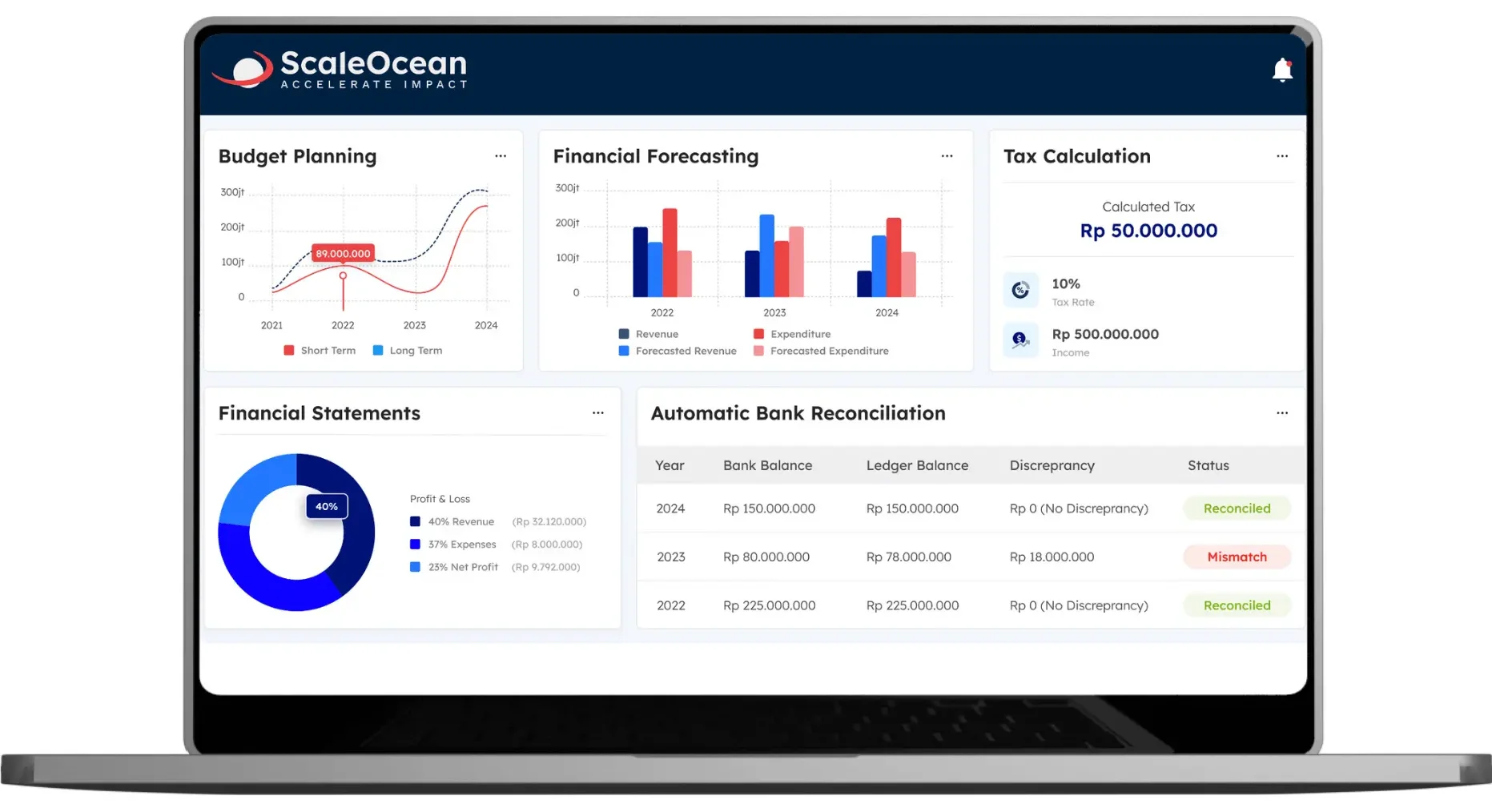
Automatic Bank Reconciliation: The system automatically matches financial transactions with bank statements to confirm data accuracy continuously. This reconciliation process reduces discrepancies and supports reliable financial records required during regulatory reporting cycles.
Automated Asset Depreciation: The platform calculates asset depreciation automatically using configured accounting methods aligned with regulatory standards. This feature ensures asset values remain accurate and properly recorded across financial reporting periods.
Accurate Financial Reporting: The system generates standardized financial reports aligned with the required accounting frameworks used in Singapore compliance reporting. These reports help organizations submit accurate financial data that supports timely regulatory filings.
Conclusion
The compliance with accounting and Corporate Regulatory Authority is also applicable to the business operating in Singapore as it is likely to help sustain the legal continuity and systematic reporting practices. Being aware of what ACRA is and how to fill it, what the deadlines and requirements are, helps companies retain discipline in their operations and stably minimize regulatory risks.
Moreover, growing companies often struggle to manage compliance tasks across departments, handling financial reporting and documentation activities. Solutions like ScaleOcean Accounting Software centralize workflows and automate reporting preparation to maintain consistent data accuracy across regulatory submissions.
Companies that consider having proper compliance management should, therefore, have integrated systems that will streamline reporting processes and the administrative burdens. Today, request a free demo to watch how ScaleOcean can assist your group to keep proper compliance performance, without resource wastage.
FAQ:
1. What is the purpose of ACRA?
ACRA oversees legislation related to businesses, public accountants, and corporate service providers. It advises the government on the registration and regulation of these entities.
2. What is the difference between BizFile and ACRA?
BizFile is ACRA’s online system for filing and information retrieval, helping businesses manage compliance and regulatory requirements easily.
3. What does ACRA Singapore do?
ACRA regulates business registration, financial reporting, public accountants, and corporate service providers, while also developing the accountancy sector and setting accounting standards for various organizations in Singapore.
4. How long does ACRA approval take?
Most registrations are approved shortly after payment. Name reviews take up to three working days, while applications requiring referral authority review can take up to 15 working days.













 Key Takeaways