

SAP is an enterprise resource planning (ERP) software that integrates finance, procurement, inventory, manufacturing, sales, and HR into one centralized platform. Consequently, many Singapore businesses consider SAP when modernizing operations and improving visibility.
However, selecting an ERP goes beyond comparing features, as implementation complexity directly affects business performance. Therefore, companies should evaluate usability, deployment flexibility, customization, and long-term ownership costs before making a significant investment.
Many organizations also struggle because ERP systems become overly complex for practical business requirements. As a result, employees require longer training, workflows slow down, and companies fail to maximize system adoption after implementation.
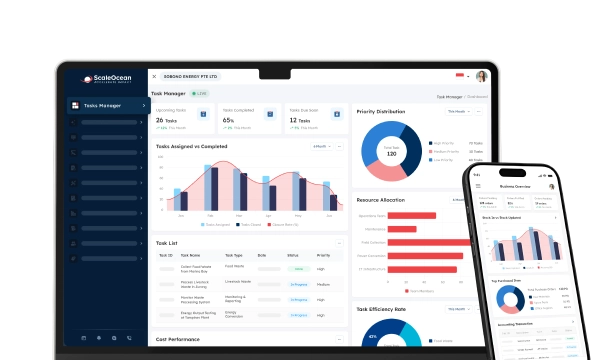
This SAP review explores its features, advantages, disadvantages, pricing considerations, and suitability for implementation. Furthermore, we compare SAP with modern alternatives like ScaleOcean, which offers flexible deployment, transparent flat-rate pricing with unlimited users, and highly customizable workflows.
This article will ultimately help Singapore businesses choose ERP software that matches their operational needs rather than unnecessary complexity.
 Key Takeaways
- SAP is an enterprise resource planning (ERP) software that centralizes essential business processes into one integrated platform.
- SAP capabilities combine integrated ERP capabilities with automation, analytics, and industry-specific solutions that support operational efficiency across diverse business sectors.
- Evaluating SAP’s strengths and weaknesses helps businesses determine whether it meets their operational requirements.
- SAP’s features cover financial management, supply chain operations, analytics, and automation, enabling businesses to streamline processes and improve decision-making.
- ScaleOcean ERP stands out as an alternative that offers flexible deployment, customizable workflows, and integrated business management, making digital transformation easier.
What is SAP?
SAP is an enterprise resource planning (ERP) software that centralizes essential business processes into one integrated platform. It connects finance, procurement, inventory, manufacturing, sales, human resources, customer service, and analytics, allowing organizations to manage operations through a single source of truth.
Today, SAP offers multiple ERP consolidation solutions, including SAP S/4HANA Cloud, SAP Business One, and SAP Business ByDesign, each designed to support businesses with different operational requirements and growth stages.
Unlike standalone business applications, SAP enables data to flow seamlessly across departments without requiring repeated manual input or disconnected spreadsheets. Consequently, organizations gain greater visibility into company-wide performance, improve collaboration between teams, and make faster decisions based on real-time operational data.
Furthermore, SAP supports organizations operating across multiple entities, currencies, and countries by providing standardized business processes and regulatory compliance capabilities. Businesses can extend the platform via integrations with SAP products and third-party apps, creating a connected digital ecosystem that scales with growth.
However, implementing SAP often requires significant planning because of its extensive functionality and enterprise-grade architecture. Therefore, Businesses should evaluate whether they need SAP’s comprehensive features or a flexible ERP that fits their operational complexity, timeline, and budget when choosing the best ERP software Singapore.
Reviews & Capabilities of SAP
Based on G2 user reviews, with a 4.4-star rating, SAP S/4HANA Cloud is widely recognized as an integrated ERP platform that combines finance, procurement, inventory, manufacturing, sales, and supply chain management in a unified environment.
Users frequently mention that consolidating these core functions improves operational visibility and reduces data silos that typically slow reporting and decision-making across departments.
One capability consistently praised by users is SAP’s real-time data processing powered by its in-memory architecture. Instead of waiting for batch processing or manually consolidating reports, businesses can use analytics and dashboards to monitor financial performance, inventory, procurement, and operational metrics, enabling faster decision-making.
In addition, reviewers appreciate SAP’s automation features, which streamline repetitive workflows and reduce manual effort across business operations. Automated approvals, standard processes, and AI tools help organizations boost accuracy, productivity, and consistency in finance and supply chain activities.
Another frequently highlighted capability is SAP’s scalability for growing organizations and multinational enterprises. The cloud platform supports multi-company, multi-currency, and multi-country operations while integrating with various SAP products and third-party applications, enabling businesses to expand without replacing their core ERP infrastructure.
Nevertheless, G2 reviews also indicate that SAP’s powerful capabilities come with implementation challenges. Many users say that initial deployment, data migration, onboarding, and setup require extensive planning, technical expertise, and organizational effort before companies can fully realize the platform’s long-term benefits.
Strengths & Weaknesses of SAP
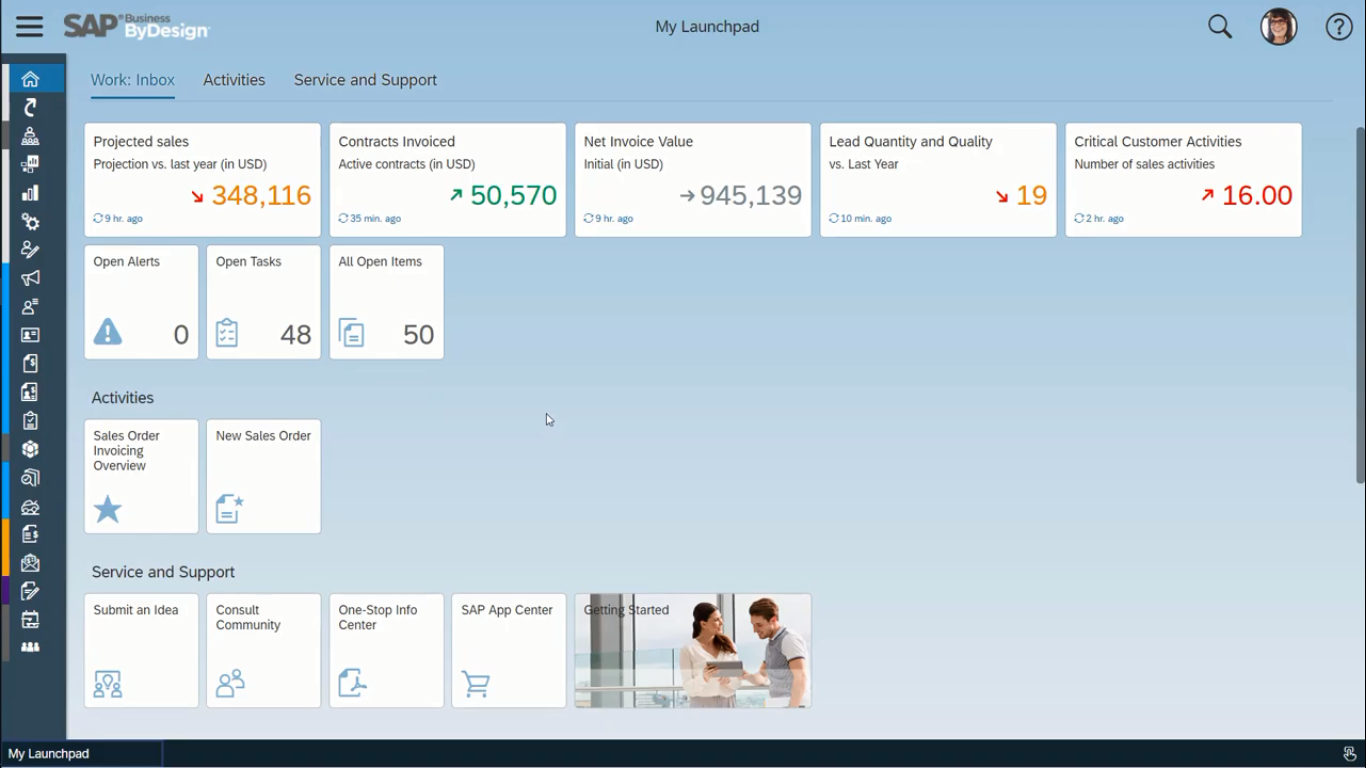
SAP delivers comprehensive ERP capabilities that support complex business operations across multiple departments and regions. However, its enterprise-grade functionality also introduces implementation challenges, making it essential to evaluate both advantages and limitations before investing.
The comparison below summarizes SAP’s key strengths and weaknesses based on user experiences and industry analyses from G2. This balanced overview helps businesses determine whether SAP aligns with their operational requirements.
| Strengths | Weaknesses |
|---|---|
| Comprehensive ERP modules | Complex implementation |
| Strong real-time analytics | Steep learning curve |
| Highly scalable | High implementation cost |
| Excellent integration across business functions | Customization can be restrictive in cloud deployment |
| Suitable for global and multi-entity organizations | Legacy system migration requires significant effort |
Strengths of SAP
SAP offers powerful enterprise capabilities that improve operational efficiency, data visibility, and business scalability across organizations. The following strengths reflect recurring benefits highlighted by users and independent ERP analysts.
- Comprehensive ERP suite: SAP provides modules for finance, procurement, inventory, manufacturing, HR, sales, and supply chain on a single integrated platform.
- Real-time visibility: Businesses gain immediate operational insights through embedded analytics and centralized reporting.
- Enterprise scalability: SAP supports growing organizations with multi-company, multi-country, and multi-currency operations.
- Strong ecosystem: SAP integrates well with many SAP and third-party business applications.
- Process automation: AI-powered features and workflow automation reduce repetitive manual tasks while improving operational efficiency.
Weaknesses of SAP
Despite its extensive capabilities, SAP presents several challenges that businesses should carefully consider before implementation. The following drawbacks commonly appear in user reviews and independent ERP evaluations.
- Implementation complexity: Deployments often require extensive planning, consulting, and alignment of business processes.
- Long learning curve: New users typically require extensive training before becoming fully productive, to avoid ERP system failures.
- High ownership cost: Beyond licensing, businesses should budget for implementation, customization, maintenance, and consulting.
- Limited cloud customization: SAP S/4HANA Cloud emphasizes standardization, making highly customized workflows more difficult.
- Migration challenges: Organizations migrating from legacy ERP systems may encounter lengthy data migration and integration projects.
These sources provide balanced evidence from user experiences rather than subjective opinions, making them appropriate references for an objective review article.
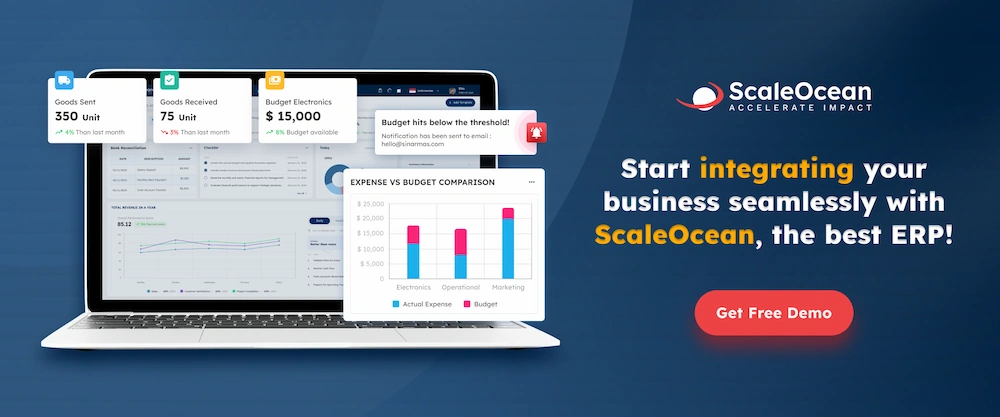
Understanding an ERP’s strengths and limitations helps businesses choose a solution that matches their operational priorities. For companies seeking comprehensive functionality with greater deployment flexibility, ScaleOcean offers configurable workflows, transparent pricing, and implementation tailored to business readiness.
You can request a free demo so your team can evaluate ScaleOcean’s capabilities and determine how the platform can streamline your daily operations while supporting future growth.
What Real Users Say About SAP

Based on verified reviews on G2, SAP Cloud ERP (SAP S/4HANA Cloud) receives positive feedback for its integrated business processes, real-time analytics, and cloud scalability. Many users appreciate how the platform consolidates finance, procurement, inventory, and operations into a single environment, while improving organizational visibility.
Reviewers also highlight SAP’s in-memory architecture, which enables faster reporting and real-time decision-making. Businesses value embedded analytics, automated workflows, and continuous cloud updates that help increase operational efficiency without requiring major system upgrades.
However, users consistently mention that SAP requires considerable implementation planning and organizational commitment. Initial configuration, legacy data migration, and user training often demand significant time and resources before businesses can fully benefit from the platform’s capabilities.
Another recurring concern involves customization flexibility within the cloud version. Unlike the broader adaptability discussed in Odoo ERP review, SAP emphasizes standardized best practices, which may make highly specific workflows harder to configure without additional development or workarounds through SAP’s extension framework.
Another recurring theme is SAP’s seamless integration with existing business systems. Users report that the platform fits naturally into established workflows while delivering consistent performance, transparent licensing experiences, and responsive customer support, contributing to a positive long-term return on investment.
However, reviews also indicate that SAP’s extensive functionality comes with a learning curve, particularly during implementation and initial configuration. While users acknowledge the platform’s capabilities, many emphasize that organizations need ample time for deployment, training, and change management to maximize value.
Reference: Reviews of SAP Cloud ERP (SAP S/4HANA Cloud) on G2
What are the ERP Features that SAP Covers
SAP provides a comprehensive ERP suite that integrates core business functions into one centralized platform. Rather than relying on disconnected applications, organizations can manage financial operations, supply chains, analytics, procurement, manufacturing, and automation through a unified system that synchronizes data in real time.
The following ERP capabilities are among SAP’s most widely used modules. Together, they help businesses improve operational efficiency, increase visibility across departments, and support informed decision-making through integrated workflows and intelligent automation.
Financial Management and Reporting
SAP enables organizations to manage accounting, accounts payable, accounts receivable, budgeting, cash flow, fixed assets, and financial consolidation from a centralized platform. Consequently, finance teams can maintain accurate records while reducing manual reconciliation across multiple business entities.
Additionally, the platform includes financial statements, custom reporting, budgeting, forecasting, audit trails, and real-time dashboards that provide immediate insights into business performance. These capabilities help decision-makers monitor financial health while supporting regulatory compliance and strategic planning.
Supply Chain and Inventory Visibility
SAP streamlines procurement, inventory management, warehouse operations, purchasing, and order fulfillment through integrated supply chain workflows. As a result, businesses can monitor inventory levels, supplier activities, and purchasing transactions from a single source of truth.
Furthermore, real-time inventory reporting, purchase order management, inventory costing, and multi-entity support improve supply chain visibility across locations. Organizations can optimize stock availability, reduce operational bottlenecks, and respond more quickly to changing customer demand.
Analytics and Automation
SAP combines embedded analytics with automation tools to help organizations transform operational data into actionable business insights. Interactive dashboards, KPI monitoring, forecasting, and custom reporting allow managers to evaluate performance without relying on separate business intelligence solutions.
Moreover, workflow automation reduces repetitive tasks across finance, procurement, and operational processes through automated approvals, payment processing, reconciliations, and standardized workflows. This improves productivity, minimizes manual errors, and enables employees to focus on higher-value activities.
While SAP offers extensive ERP capabilities, its implementation complexity, higher ownership costs, and standardized cloud customization may not suit every business. In contrast, ScaleOcean offers flexible workflow customization, transparent flat-rate pricing for unlimited users, and implementation tailored to your existing processes instead of requiring major operational changes.
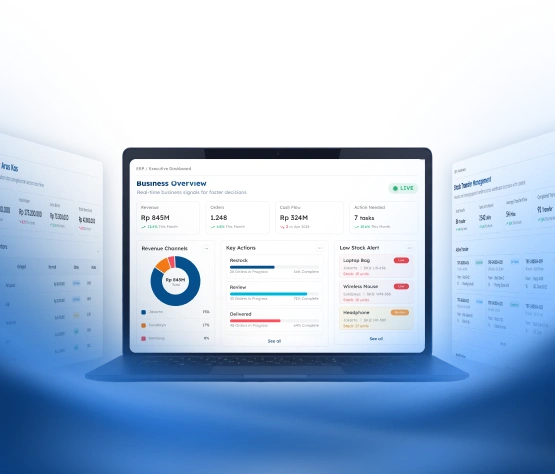
Beyond automating routine tasks, ScaleOcean’s AI ERP serves as an intelligent business assistant that retrieves accurate operational data, generates comprehensive reports, answers business queries, and provides actionable recommendations in real time. Book a free demo to see how ScaleOcean streamlines enterprise management and helps your team make faster, data-driven decisions.

Which Industries Does SAP Cover?
SAP supports organizations across a wide range of industries by combining industry-specific best practices with a unified ERP platform. Beyond managing core business processes, it provides capabilities that address sector-specific operational challenges, helping businesses improve efficiency while maintaining regulatory compliance.
Among the many industries SAP serves, professional services, manufacturing, and pharmaceuticals are some of its strongest verticals. Each industry benefits from dedicated workflows, analytics, and automation designed to optimize daily operations and support long-term business growth.
Professional Services
SAP helps professional service firms manage the entire project lifecycle, from resource planning and contract management to billing and financial reporting. Consequently, consulting firms, IT service providers, and engineering companies gain greater visibility into project profitability and resource utilization.
Furthermore, integrated analytics allow managers to monitor project progress, employee allocation, and operational costs in real time. This centralized approach improves collaboration across teams while supporting timely project delivery and informed business decisions.
Manufacturing
SAP provides manufacturers with integrated tools for production planning, procurement, inventory management, quality control, and shop floor operations. As a result, businesses can coordinate manufacturing activities more efficiently while reducing production delays and inventory shortages.
Additionally, real-time production data and supply chain visibility enable manufacturers to respond quickly to changing customer demand and operational disruptions. These capabilities help improve production efficiency, optimize material usage, and strengthen end-to-end manufacturing performance.
Pharmaceuticals
SAP supports pharmaceutical companies by integrating research, manufacturing, quality management, procurement, inventory, and financial operations into one platform. Therefore, organizations can maintain better product traceability while complying with strict industry regulations throughout the product lifecycle.
Moreover, the platform helps pharmaceutical manufacturers monitor batch production, inventory movements, and quality processes through centralized data and automated workflows. These capabilities improve operational transparency while supporting regulatory compliance, product safety, and efficient supply chain management.
While SAP serves numerous industries, businesses should also consider how easily an ERP adapts to their unique operational requirements. ScaleOcean provides industry-specific, configurable workflows for sectors like manufacturing, distribution, retail, healthcare, professional services, F&B, logistics, and more, enabling ERP without redesigning processes.
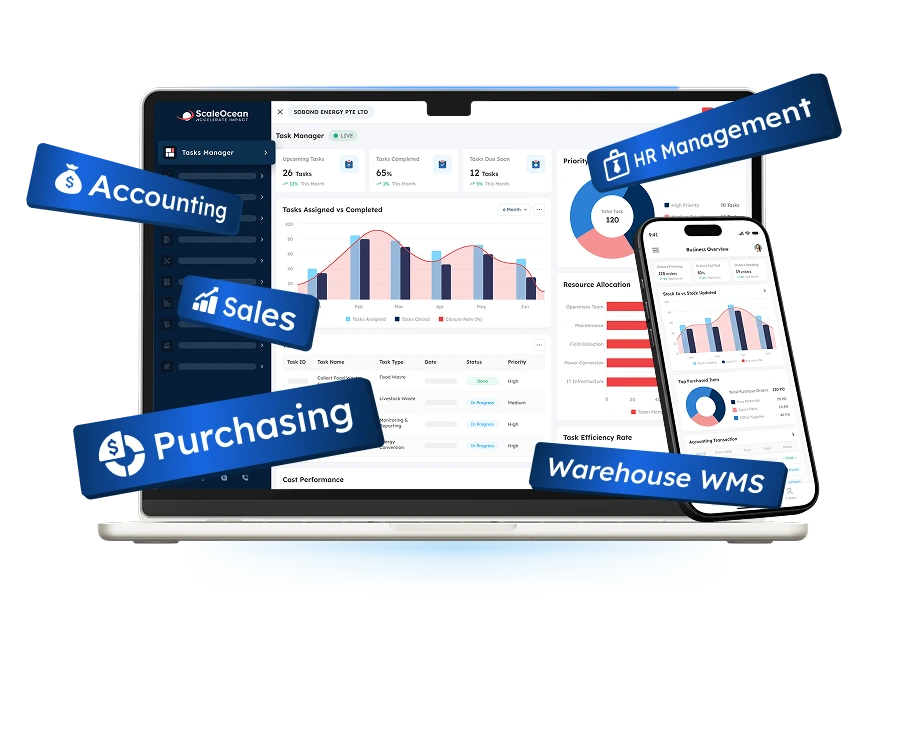
Moreover, ScaleOcean combines over 200 integrated modules with AI-powered automation, enabling businesses to manage industry-specific operations through one centralized platform. Backed by unlimited-user licensing, flexible cloud or on-premise deployment, and dedicated support, ScaleOcean offers a scalable ERP solution that grows with businesses across various industries.
ScaleOcean as an SAP Alternative for Flexible ERP in Singapore
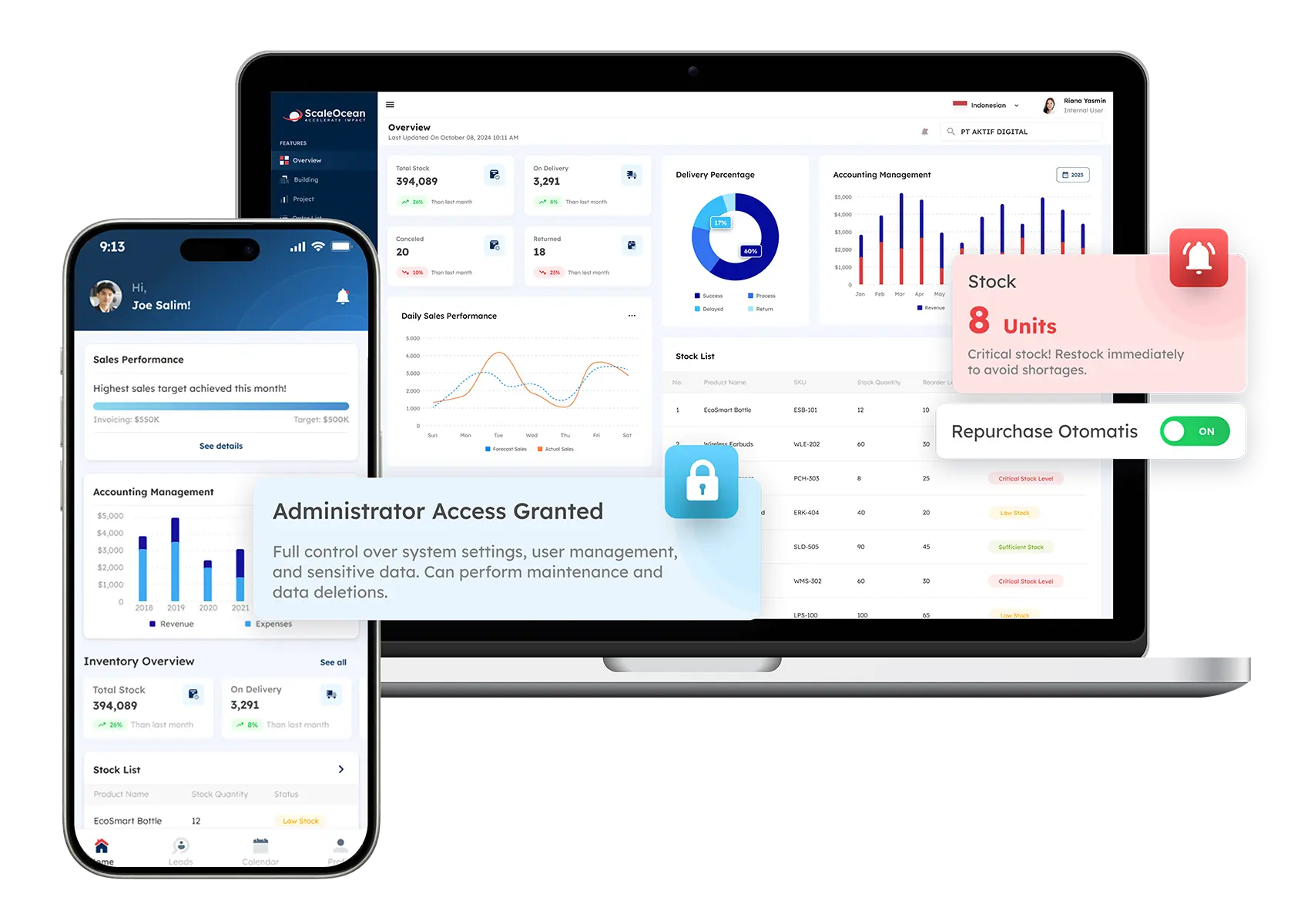
Businesses that require comprehensive ERP capabilities without unnecessary complexity may find ScaleOcean a practical alternative to SAP. Unlike enterprise platforms with lengthy implementations, ScaleOcean emphasizes deployment flexibility, offering unlimited users, transparent pricing, and workflows that fit current processes rather than requiring major operational changes.
Moreover, ScaleOcean provides industry-specific ERP solutions with configurable workflows for manufacturing, construction, retail, logistics, healthcare, and professional services. With unlimited-user licensing and AI-powered assistance, businesses can optimize operations without incurring additional per-user fees.
If you’re evaluating ERP solutions for your business, ScaleOcean offers a free demo to help you assess your operational requirements. This allows your team to explore the platform’s capabilities, discuss implementation strategies, and determine whether the solution aligns with your business objectives before investing.
Key Features of ScaleOcean ERP:
- 200+ Modules and 1,000+ Business Features: Supports diverse operational needs across multiple industries and departments within one integrated ERP platform.
- Highly Customizable Workflows: Configure approvals, reports, user roles, forms, and business processes according to your company’s operational requirements.
- Cloud and On-Premise Deployment: Choose the deployment model that best matches your security, infrastructure, compliance, and scalability requirements.
- Singapore-based ERP Provider: Designed to support local business practices, regulatory requirements, and operational expectations within Singapore, with support for IRAS tax and GST reporting, and PDPA-compliant data management, helping businesses simplify regulatory compliance while streamlining daily operations.
- All-in-one Integrated System: Connect finance, procurement, inventory, warehouse, HR, manufacturing, CRM, sales, and project management through a centralized database.
- AI-assisted Automation and Reporting: Leverage AI-powered dashboards, forecasting, operational recommendations, automated approvals, and intelligent reporting for faster business insights.
Conclusion
SAP remains a leading ERP solution for enterprises seeking integrated business management, real-time analytics, and extensive industry capabilities. However, businesses should also consider implementation complexity, scalability, flexibility, and long-term costs before selecting the right ERP platform.
For companies seeking a more flexible ERP solution in Singapore, ScaleOcean offers comprehensive modules, adaptable workflows, and transparent deployment options. Book a free demo today to explore how ScaleOcean can support your business goals with greater efficiency and ease.
What makes ScaleOcean a good alternative to SAP?
ScaleOcean offers comprehensive ERP capabilities with flexible workflow customization, unlimited-user licensing, and transparent pricing. Businesses can also leverage AI-powered assistance and industry-specific solutions while avoiding the complexity often associated with enterprise ERP implementations.
Can ScaleOcean support businesses across different industries?
Yes. ScaleOcean provides configurable ERP solutions for manufacturing, construction, retail, healthcare, logistics, F&B, professional services, and other industries. Its industry-specific workflows help businesses streamline operations while adapting the system to their existing processes rather than changing them.
FAQ:
1. What is SAP Cloud used for?
SAP Cloud helps businesses develop, deploy, and manage enterprise applications in the cloud. It also extends both SAP and third-party systems, enabling organizations to integrate business processes and support scalable, flexible operations.
2. What makes ScaleOcean a good alternative to SAP?
ScaleOcean offers comprehensive ERP capabilities with flexible workflow customization, unlimited-user licensing, and transparent pricing. Businesses can also leverage AI-powered assistance and industry-specific solutions while avoiding the complexity often associated with enterprise ERP implementations.
3. Can ScaleOcean support businesses across different industries?
Yes. ScaleOcean provides configurable ERP solutions for manufacturing, construction, retail, healthcare, logistics, F&B, professional services, and other industries. Its industry-specific workflows help businesses streamline operations while adapting the system to their existing processes rather than changing them.
4. Is SAP ERP hard to learn?
Learning SAP depends largely on your training and experience. Although its extensive features can seem overwhelming at first, structured learning and hands-on practice help most beginners become comfortable using the platform over time.



















.png)