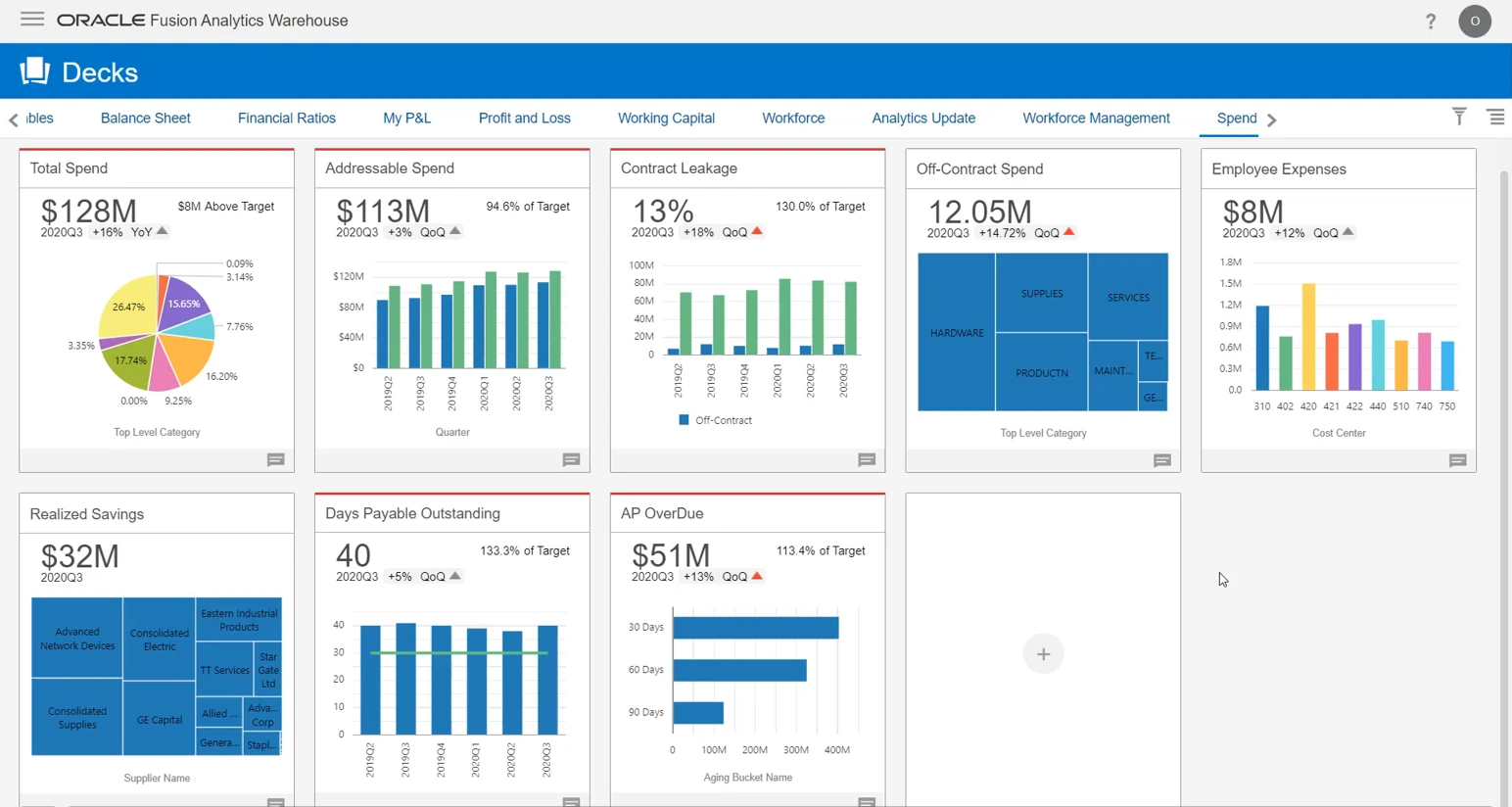
Oracle Fusion Cloud ERP is Enterprise Resource Planning (ERP) software that combines critical business processes, such as financial management, project management, supply chain, and risk management, into one cloud-based application. It’s designed for large, complex businesses, allowing IT departments to consolidate operations and gain better visibility across the entire business.
Choosing an ERP system to run an enterprise isn’t as simple as comparing available ERPs or subscription rates. There are many considerations to consider when deciding on a solution, such as ease of deployment, level of customization, integration compatibility, compliance readiness, user adoption, and ownership costs.
Even big companies in Singapore are having difficulties in setting up large ERP systems, particularly if they are not part of the business structure. An overly complicated solution can take longer to learn, establish a workflow, require more maintenance, and be less easy to maximize investment in an ERP solution for teams.
Let’s take a look at the features, customer reviews, pros, cons, industry options, and implementation considerations of Oracle Fusion Cloud ERP in this Review. Apart from the configurable workflows, it also explores how it differs from other options like the industry specific modules, embedded AI attributes, and deployment flexibility that address business needs in addition to Oracle ERP.
Ultimately, this article helps Singapore businesses evaluate whether Oracle Fusion Cloud ERP matches their operational needs, technical readiness, compliance requirements, and long-term growth strategy while exploring alternative ERP approaches that may provide greater flexibility.
Key Takeaways
Oracle Fusion Cloud ERP is an enterprise ERP platform that integrates finance, procurement, supply chain, projects, reporting, and other critical business processes within one connected ecosystem.
Oracle ERP’s features support financial management, procurement, supply chain operations, project management, analytics, compliance, and workflow automation for complex organizations.
ScaleOcean provides a flexible Oracle ERP alternative with configurable workflows, industry-specific solutions, unlimited users, integrated business modules, and embedded ScaleMind AI capabilities for Singapore enterprises.
Oracle ERP Overview: What Is It and How Does It Work?
Oracle Fusion Cloud ERP is a cloud-based Enterprise Resource Planning (ERP) solution developed for enterprises to run their main business functions cohesively. It brings together financial management, procurement, project management, supply chain, risk management, and analytics at an enterprise level in a single place.
Oracle Fusion Cloud ERP differs from traditional ERP systems, which heavily depend on separate applications, by being more integrated and using shared data and standardized workflows between departments. This makes it easier for finance teams, operations teams, procurement teams, and even the management team to have a set of information to report, plan, and make decisions.
Overall, the idea is to allow businesses to create the workflow they require and to store business data on the Oracle cloud infrastructure. Minimizing repetitive activities, accurate reporting, and the potential to respond more quickly to business changes can be achieved with automation of repetitive tasks, analysis of data, and integration of applications.
For companies comparing enterprise ERP solutions, reviewing different platforms can help identify which system best matches operational requirements, implementation readiness, and long-term business objectives. Businesses can also explore an Odoo ERP review to compare another ERP approach in terms of modular functionality, customization flexibility, and deployment options.
Some users are willing to use Oracle Fusion Cloud ERP as part of their ERP Suite, while some others might not be as confident; larger companies with more complex financial, operational, and reporting requirements may opt for the full-service ERP. It is renowned for its far-reaching capabilities, including financial management, workflow integration, scaling, and enterprise support across entities and localities.
According to user feedback from platforms such as Software Advice, Oracle Fusion Cloud ERP is often valued for its ability to centralize business processes, improve financial visibility, and support enterprise-level operations. Users commonly highlight its broad functionality, automation capabilities, and integration options as key advantages when managing complex organizational requirements.
Based on the insights our team got from Software Advice Oracle Fusion Cloud ERP reviews, users appreciate the platform’s financial management capabilities, integrated workflows, and automation features that help streamline business processes. However, some reviewers also mention challenges related to the learning curve, navigation, implementation complexity, and overall cost.
These reviews indicate that Oracle Fusion Cloud ERP’s success depends heavily on business readiness, implementation strategy, and the complexity of workflows being managed. While organizations with dedicated resources may benefit from its enterprise-level depth, companies looking for faster deployment or more flexible ownership models may need to evaluate alternative ERP solutions.
In conclusion, Oracle Fusion Cloud ERP could be a good choice for organizations that have simpler ERP requirements and standardized business processes. While the features are important, there are several other aspects businesses need to take into consideration when choosing an ERP platform, such as implementation, user adoption, support, and investment.
Key Pros and Cons of Oracle Fusion Cloud ERP Software
Oracle Fusion Cloud ERP is widely recognized as an enterprise-grade ERP platform with extensive capabilities for financial management, reporting, supply chain, procurement, and operational management. However, like other large-scale ERP solutions, its suitability depends on business size, implementation readiness, and the complexity of existing workflows.
According to the data our team got from The CFO Club, the platform is recognized for its scalability, advanced data management, analytics capabilities, and ability to support large enterprises with complex operational requirements. However, the review also highlights considerations such as interface complexity and the need for proper planning and training to maximize system adoption.
Understanding these strengths and limitations can help businesses evaluate whether Oracle Fusion Cloud ERP aligns with their operational requirements, technical capabilities, and long-term growth strategy before making an ERP investment decision.
Strengths
Weaknesses
Provides comprehensive enterprise financial management capabilities that support complex accounting, reporting, and compliance requirements.
Requires significant investment in licensing, implementation, customization, and ongoing support.
Offers strong reporting and analytics capabilities to help organizations gain deeper operational and financial insights.
The extensive functionality may create a learning curve for new users who require additional training.
Supports complex enterprise structures with integrated modules across finance, procurement, projects, and supply chain.
Complex workflows may require additional configuration and specialized technical expertise.
Provides regular cloud updates that allow organizations to access new capabilities without managing traditional upgrade processes.
Organizations with highly customized environments may need careful planning to maintain performance and usability.
Pros and Strengths of Oracle ERP Software
1. Financial Depth
Oracle Fusion Cloud ERP offers a wide range of financial management features, suitable for businesses with complex accounting operations, multiple entities, and international transactions.
It can accommodate key financial functions like general ledger, accounts payable, accounts receivable, budgeting, financial reporting, and compliance management. These features make Oracle appropriate for businesses that need to have centralized financial visibility and standard processes throughout their various business units.
2. Strong Reporting
Oracle ERP offers rich reporting features to enable organizations to leverage financial and operational data with central reporting dashboards and analytics.
Integration of information across departments allows businesses to have visibility into performance indicators, track operational trends, and make decisions with the right enterprise information.
3. Pre-Built Analytics
Oracle Fusion Cloud ERP has analytics features that enable organizations to gain insights into trends, assess performance, and refine operational planning.
These capabilities enable businesses to leverage connected business data without being overwhelmed with individual applications for reporting, thereby enabling better business decisions.
4. Automatic Updates
Oracle Fusion Cloud ERP is a cloud ERP platform that offers regular updates with new features, security upgrades, and product improvements.
This enables organizations to keep their ERP environment up-to-date, but without having to deal with the hassle of regular internal upgrades.
Major Cons and Weaknesses of Oracle ERP Software
1. High Costs
Oracle Fusion Cloud ERP is considered an enterprise solution, and the total investment could cover licensing, implementation services, integration, customization, training, and support.
These functions can be beneficial for large organizations, but businesses need to consider the total ownership costs to see if it’s a worthwhile investment for them.
2. Steep Learning Curve
With its rich functionality, Oracle Fusion Cloud ERP could need structured training and change management to ensure that employees are aware of the workflows and features that are available.
If your organization has little or no experience with ERP, you might need additional training so that users can get the most out of the ERP platform.
3. Complex Maintenance
It’s possible to reduce infrastructure management responsibilities with cloud deployment; however, some ERP configurations may be complicated and require technical skills.
For highly customized businesses, planning for the deployment, integration, and future changes is an appropriate consideration.
4. Performance Considerations
Some users have reported challenges related to system navigation, onboarding, and usability when managing complex enterprise workflows.
These considerations highlight the importance of proper configuration, user training, and implementation support to ensure the platform performs effectively within business operations.
What Features Does Oracle ERP Offer?
Oracle Fusion Cloud ERP offers a complete set of enterprise functionality that enables financial, operational, and strategic business processes to be linked together in a single integrated platform. It integrates data and processes in one system and standardizes processes for organizations to manage critical business functions, like finance, supply chain, risk management, and performance planning.
Oracle ERP can integrate various business functions within a single ecosystem, providing enterprises with the ability to eliminate siloed processes, increase data consistency, and offer visibility across business departments. The platform integrates automation, analytics, and intelligent features to simplify repetitive tasks with more accurate information regarding their operations to shape their decisions.
Key Modules and Features:
Financial Management
Oracle’s financial management features can be used to handle accounting, reporting, budgeting, expense, cash management, and compliance tasks. The module helps finance teams to access all financial data from one location, automate repetitive tasks, and gain a better view of business performance.
These features enable smoother financial processes for companies that have operations in various entities or regions by integrating transactions, reporting obligations, and approval procedures into a single application.
Procurement Management
Oracle procurement enables companies to control purchasing processes, supplier relationships, sourcing management, and approval workflows. The functionality will help enhance procurement visibility by connecting supplier data, purchasing activities, contracts, and financial processes.
The automated procurement workflows can help streamline the process of purchasing, ensure consistency, track supplier performance, and enhance control over business expenditures.
Supply Chain Management
Oracle Supply Chain Management (SCM) can be used in businesses to manage all processes related to inventory, logistics, manufacturing, order management, and supply chain planning. It allows enterprises to link up the activities in the supply chain between areas of operation to enhance visibility and responsiveness.
For companies with intricate supply chains, these features enhance the accuracy of the planning process, optimize inventory management choices, and streamline the execution of the supply chain.
Project Management
Oracle project management helps project-driven organizations plan, execute, and monitor projects by connecting project activities with financial and operational data.
The module supports project planning, resource allocation, budgeting, cost tracking, billing, and performance monitoring. By linking project information with enterprise processes, businesses can gain clearer visibility into project progress, profitability, and resource utilization.
Enterprise Performance Management (EPM)
Oracle enterprise performance management consolidates all aspects of business performance to enable enhanced planning, forecasting, and budgeting, and strategic decision-making.
This feature enables management teams to leverage a centralized data source to inform financial and operational trends, assess business scenarios, and make better-informed business strategy decisions.
Risk Management and Compliance
Oracle risk management and compliance assists organizations in increasing governance capabilities by keeping track of controls, implementing risk management, and enhancing audit readiness.
These features help companies that are subject to stringent regulations, offering more transparency when it comes to transactions, access controls, compliance measures, and any other potential operational issues.
Analytics and Intelligent Business Insights
Connecting business data and integrating analytics and intelligent capabilities, Oracle enables organizations to draw deeper insights from connected data. The analytics allow users to go beyond simple reporting and gain insights into trends, performance metrics, and things to watch.
These features enable businesses to make better decisions with contextual information in their operational workflows, making it easier for teams to react quickly to business changes.
Which Industries Use Oracle ERP?
Businesses in sectors like manufacturing, banking and financial services, and healthcare, as well as professional services, can easily leverage Oracle Fusion Cloud ERP for their complex operations. Its enterprise features enable you to seamlessly integrate finance, procurement, supply chain, projects, compliance, and reporting in a single platform.
But there are various factors that make the choice of Oracle ERP suitable for various industries, such as complexity of operations and the workflow requirements. Oracle ERP is a suitable choice for enterprises with complex reporting requirements, multiple business units, and large-scale operations, as it offers increased visibility across departments and standardizes and streamlines business processes.
1. Professional and Project-Based Services
Professional and project-based service companies undertake complex projects that require complex resources, contracts, and financial transactions, with a requirement for connected systems for budgeting, billing, and performance monitoring. Oracle Fusion Cloud ERP meets these requirements with its built-in project management, financials, procurement, and reporting features.
For businesses such as engineering companies, construction services, consulting companies, and other project-based businesses, the ERP capabilities that tie projects and project performance to financial results can be helpful.
2. Manufacturing
Manufacturing companies are complex operations where they have to deal with production planning, procurement, inventory, supply chain, and cost control. Oracle Fusion Cloud ERP supports these operations, already built into the ERP solution, by providing supply chain, inventory, procurement, planning, and analytics capabilities, all to improve visibility and decision-making.
For large manufacturers with multiple facilities, suppliers, or global operations, Oracle ERP can help standardize processes across locations while supporting more structured reporting and governance. Businesses comparing enterprise ERP solutions can also explore a Sage ERP review to understand how different platforms approach manufacturing workflows, scalability, and operational management.
3. Healthcare and Pharmaceuticals
Healthcare and pharmaceutical organizations require strong data accuracy, compliance, supply chain visibility, and financial control. Oracle Fusion Cloud ERP supports these needs through integrated financial management, procurement, supply chain, and compliance workflows within one platform.
For pharmaceutical businesses managing regulated products, multiple suppliers, and complex distribution networks, ERP capabilities can help improve traceability, reporting accuracy, and operational efficiency.
For organizations seeking an ERP tailored to specific industry workflows, ScaleOcean Atlas ERP provides configurable solutions that connect finance, inventory, sales, purchasing, HR, manufacturing, and other business processes within one integrated ecosystem. Its modular approach allows businesses to adapt workflows as operations grow.
ScaleOcean Atlas also supports Singapore requirements through PDPA-aligned data governance, GST, and IRAS-related financial reporting standards. The platform can also support grant initiatives such as EDG and CTC, subject to eligibility and qualifying requirements.
ScaleOcean: A More Flexible Oracle ERP Alternative in Singapore
For companies that need comprehensive ERP capabilities but want more flexibility in implementation and customization, ScaleOcean Atlas ERP provides an alternative approach to traditional enterprise ERP platforms such as Oracle Fusion Cloud ERP. The platform focuses on configurable workflows, transparent pricing, unlimited users, and industry-specific solutions that adapt to existing business processes.
ScaleOcean Atlas supports businesses across industries such as manufacturing, distribution, logistics, healthcare, F&B, and professional services through an integrated ERP ecosystem. With connected modules covering finance, supply chain, inventory, sales, HR, projects, and asset management, businesses can manage operational data through one centralized platform while improving visibility across departments.
With ScaleMind embedded as an AI Business Assistant, teams can access operational insights, automate repetitive activities, identify potential risks, and support faster decision-making directly within business workflows.
This AI capability is built into the ERP ecosystem, allowing organizations to enhance productivity without managing separate AI solutions or additional user-based licensing costs. The system is also optimized to support Singapore business requirements through PDPA-aligned data governance and local financial reporting standards, including GST, and IRAS-related compliance processes.
Additionally, ScaleOcean can support digital transformation initiatives related to grant claims such as EDG and CTC, subject to company eligibility and qualifying project requirements. To understand how ScaleOcean fits their operational requirements, businesses can schedule a consultation to discuss relevant modules, implementation scope, integration needs, and deployment options.
Key Features of ScaleOcean Atlas ERP:
200+ Integrated Modules and Business Features: Finance, procurement, inventory, warehouse, manufacturing, CRM, HR, projects, assets, and industry-specific processes in one connected ERP ecosystem.
Highly Configurable Workflows: Users can tailor their approval workflows, dashboards, reports, forms, access permissions, and operational processes to meet their organization’s needs.
Unlimited Users and Flexible Pricing: Allows businesses to scale access to ERP to teams, branches, and entities, without unlocking extra per-user licenses.
Cloud and On-Premise Deployment Options: Offers flexibility for businesses to choose deployment options considering security, compliance, infrastructure, and scalability requirements.
Singapore-Ready ERP Capabilities: Supports PDPA-aligned data governance, GST and IRAS-related financial reporting requirements, audit trails, and multi-currency business operations.
Integrated Business Operations: Links finance, purchasing, inventory, warehouse, sales, CRM, HR, manufacturing, project management, and asset management, eliminating disjointed information between departments.
AI-Assisted Insights and Automation: Leverages ScaleMind AI features to enhance reporting, forecasting, workflow support, operational recommendations, and expedite business insights.
Consultative Implementation Support: Provides process analysis, system configuration, data migration, integration, user training, testing, deployment, and support services to ensure that ERP meets the business requirements.
Conclusion
Oracle Fusion Cloud ERP is a comprehensive enterprise platform designed to help organizations manage finance, procurement, supply chain, projects, reporting, and other critical business processes within one integrated ecosystem. Its strong enterprise capabilities, scalability, and advanced analytics make it suitable for large organizations with complex operational structures and global requirements.
However, selecting an ERP system requires more than evaluating features alone. Businesses should also consider implementation complexity, customization needs, total ownership costs, and how well the platform aligns with existing workflows. For Singapore enterprises, local compliance readiness, operational flexibility, and long-term scalability are also important factors when choosing an ERP solution.
For companies seeking a more flexible ERP approach, ScaleOcean Atlas ERP provides an alternative with configurable workflows, unlimited-user options, industry-specific solutions, and integrated business functions across finance, inventory, sales, procurement, HR, manufacturing, projects, and more. Schedule a consultation with ScaleOcean to explore how a flexible ERP solution can support your business requirements, compliance needs, and future growth plans.
FAQ:
1. Is Oracle Fusion Cloud ERP the same as Oracle ERP Cloud?
Yes, Oracle Fusion Cloud ERP is the modern cloud-based ERP solution within the Oracle ERP Cloud portfolio. It provides integrated capabilities for finance, procurement, project management, supply chain, reporting, and enterprise operations through Oracle’s cloud platform.
2. How much does Oracle Fusion Cloud ERP cost in Singapore?
Oracle Fusion Cloud ERP pricing in Singapore varies depending on factors such as the number of users, selected modules, implementation scope, integrations, customization requirements, and support services. Since enterprise ERP investments are usually customized, businesses typically need a consultation to estimate the total cost based on their operational needs.
3. Is ScaleOcean a suitable alternative to Oracle Fusion Cloud ERP?
Yes, ScaleOcean Atlas ERP can be considered a flexible alternative for businesses seeking configurable workflows, industry-specific modules, unlimited users, and integrated business operations. The platform is designed to support medium to large enterprises that require ERP flexibility while maintaining connected processes across departments.
4. Why should Singapore enterprises consider ScaleOcean over Oracle ERP?
Singapore enterprises may consider ScaleOcean when they require a more adaptable ERP approach with flexible implementation, transparent pricing, unlimited-user access, and workflows tailored to their business processes.














 Key Takeaways