


ERP Change Management in Singapore is a systematic process of preparing and educating the workforce on how to adapt to the new and unified digital environment with the existing operation. It is the job of its primary one to ensure that a typical application deployment becomes a strategic accomplishment, by helping employees adopt and productively use the new application.
Despite these advantages, we conducted one study in the Asian Academy of Management Journal that revealed user resistance to be one of the biggest challenges in the successful implementation of ERP. The study emphasised that user resistance and actions taken by management are key areas for ERP failure, especially if the users feel that the ERP would be disruptive or that it is not required.
To make organisations agile, it takes more than mere technical implementation; it’s about a proactive approach that prioritises ongoing training and tangible leadership involvement. This article will help you understand these intricacies and establish a path forward to maximise your ERP system’s benefits on the local level.
 Key Takeaways
- Change management is a structured approach used by organisations to plan, implement, and sustain changes in processes, systems, or behaviours.
- Government initiatives such as Smart Nation Singapore continue to push companies toward adopting digital systems, including ERP.
- To make sure that ERP is implemented in the company system successfully, the company needs to be aware of the factors that might affect the implementation process
- Implementing an ERP system is an important decision that can reshape the way your business operates.
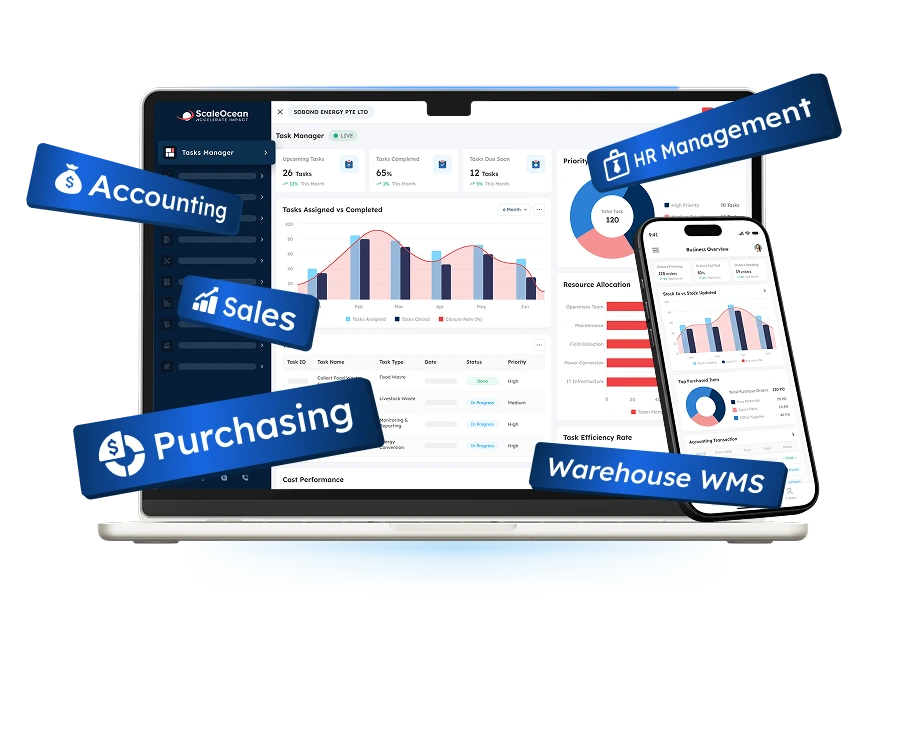
- ScaleOcean ERP Software offers an integrated and all-in-one solution that connects all business modules, so any change in one process is automatically synchronised across other modules.
What Is Change Management?
Change management is a structured approach used by organisations to plan, implement, and sustain changes in processes, systems, or behaviours. It ensures that employees understand, adopt, and effectively use new ways of working, minimising disruption while maximising business outcomes.
When it comes to ERP, handling change matters a lot more. That is simply because the system brings more than just new tools. Instead, it reshapes the way groups work together, share information, and maybe even how they think through choices from one area to another.
People used to doing things by hand must now follow automated steps when an ERP goes live. When shifts like this happen without support, pushback pops up. Some start using the software halfway. Others skip parts entirely. Value slips away fast, no matter how good the system looks on paper.
Why Businesses Need ERP Change Management
Government initiatives such as Smart Nation Singapore continue to push companies toward adopting digital systems, including ERP. The ERP Security can help companies secure their confidential data. However, implementing ERP without proper change management often leads to low adoption, operational disruption, and missed ROI.
ERP involves changes in data entry processes, collaboration between various departments, and dependence on a real-time dashboard instead of a spreadsheet. Where there is no structured change management, there are usually disruptions due to resistance and data inconsistency, and a poor decision-making process.
As it was discussed, in a competitive environment such as the Singapore market, change management for ERP is very important because this way organisations will be able to fully take advantage of these technologies. Otherwise, ERP will become a burden to them.
 Also Read: 6 Key Phases of ERP Implementation Plan for Businesses
Key Elements of ERP Change Management
To ensure that ERP is successfully implemented in the company’s system, the company needs to be aware of factors that might affect the implementation process. Below are the key elements that businesses need to prioritise for a smooth transition:
1. Stakeholder Engagement
Engaging key stakeholders from the outset is essential to ensure alignment with the ERP project’s goals. Stakeholders, including executives, department heads, and end-users, need to be actively involved in the decision-making process and kept informed throughout the project. Their input ensures the ERP system is suited to the business’s needs and supports across all levels.
2. Communication
Clear, transparent, and ongoing communication is the backbone of any successful change management strategy. From introducing the ERP implementation to explaining the benefits and addressing concerns, consistent messaging helps manage expectations and builds trust. Regular updates and feedback loops also allow businesses to address concerns before they escalate, minimising possible disruptions during the transition.
3. Training and Education
Providing comprehensive training is one of the most important elements of ERP change management. Employees need to be equipped with the knowledge and skills before the ERP migration process to use the new system effectively. Training programs should be role-based to ensure that users are confident in their ability to navigate the ERP system from day one and so on.
4. Addressing Resistance
Change is a natural phenomenon, and so resistance to change is natural and must be accepted by management, not resisted. Can be addressed by proactive actions andaddressing thee root causes of resistance. Strategies to minimise push-back and foster adoption include having open discussions with employees, reassuring them, and ensuring they are consistently supported.
5. Monitoring and Evaluation
Change management with ERP is not a post-go-live process. Continuous monitoring and evaluation should be carried out to identify the adoption degree of the system and to see if it is achieving the business’s objectives. In order to find areas of improvement, key performance indicators (KPIs), user feedback and system usage reports should be reviewed periodically.
8 Tips for ERP Change Management

Deciding to implement an ERP system is a big decision that’ll completely change your business. Vital to achieve a smooth and effective transition is to have effective change management. These are eight key tips to help tame the ERP change management process:
1. Plan it From the Beginning
Getting ERP right begins by mapping out how changes will be handled across the team. Clear targets come first, followed by spotting what could go wrong and laying out doable deadlines for every phase. ERP testing early shapes the path forward when each move ties back to the company’s aims, leaving fewer moments of shock later on.
2. Get stakeholder Buy-In and Engagement
Start by bringing leaders into the conversation before plans are set. When managers and team members join at the beginning, they’re more likely to stand behind what happens next. Backing from those who feel included often means smoother shifts later on. Big moves work better when people who matter have had a say.
3. Clearly Explain the Impact of the ERP Change Management
Truth builds trust. When people see what happens next, they relax. Show each team exactly how the new ERP shifts their tasks. Instead of guessing, workers hear straight talk about gains, like faster workflows and clearer reports. Help employees understand the risks and benefits of the ERP system, such as improved efficiency and better data visibility, and how the changes will affect their day-to-day work.
4. Communicate Early and Often
Keep employees informed from the outset and provide regular updates throughout the process. By communicating early and often, you can help mitigate uncertainty and ensure everyone is on the same page regarding the ERP implementation.
5. Build a Comprehensive Training and Support Strategy
The ability of the employees to become accustomed to the new system is crucial for the success of ERP system implementation. Providing training, having documentation and providing easy access to help will help users feel confident in their ability to use the system to achieve success.
6. Embed Change Within the Company
For the ERP system to run smoothly, change needs to be implemented in the company’s culture. This involves incorporating new processes into regular procedures, prioritising wider involvement in the ERP system across all functional areas and fostering knowledge and understanding about the value of ERP for the company’s future.
7. Periodically Refresh Employees
ERPs change, and so do your workers’ know-how. Keep training up to date and provide support as needed to keep employees’ skills up to date. This helps keep employees using it efficiently and keeps them informed of new features and/or updates to the system as it expands and evolves.
8. Expect and accept resistance
Resistance to change is a natural part of any transformation. Acknowledge that employees may have concerns or be hesitant to adopt the new system. Address resistance proactively by offering support, listening to feedback, and providing reassurance.
Successfully implementing an ERP system requires careful planning, a clear strategy, and seamless execution. Try our free demo now to see how ScaleOcean ERP can help businesses streamline their operations by integrating key functions like accounting, sales, inventory, and more into one unified platform.

9 ERP Change Management Mistakes to Avoid
As with all project management endeavours, there’s a potential for errors in ERP change management. But don’t worry, all these can be easily avoided and prevented by implementing an ERP change management strategy.
1. Not Consulting with a Consultant or ERP Vendor
Many companies are going the DIY route without external help or even the ERP vendor’s input and can end up making costly mistakes in the process. When dealing with an expert ERPP vendor or ERP practitioner with an ERP software demo, you can be sure that the software is set up properly to serve your business requirements.
2. Not Considering How the ERP System Will Impact Operations
ERP has a profound impact on all aspects of your business. Consideration of the operational impacts can be a source of disruption to workflow, productivity and efficiency. Analysing the answers to the questions “How will it impact each department and process?” is important before switching so that decisions can be made accordingly.
3. Lack Information and Communication
It’s important to communicate the necessary information and updates to employees to avoid creating confusion and resistance. Be sure to inform your team of the timeframe, modifications, ERP maintenance types and key benefits of ERP maintenance and the essentials of the brand new ERP program. Provide frequent updates and communication to ensure everyone is up to date on any changes or problems.
4. Siloed Work Efforts
ERP systems bring together multiple business functions, making it possible for employees to work siloed.ERP can offer an integrated solution, and silo-working can prove inefficient and confusing. Make sure that cross-functional teams work together and share information so that a unified rollout of the packages is achieved.
5. Unmanaged Employee Resistance to Change
Despite the advantages of implementing ERP, one of the primary reasons for its failure is often resistance from employees. Failure to account for and resist by resistance can lead to significant delays and resistance to system adoption. The changing management strategies must be planned to address and minimise resistance in the subsequent stages of implementation.
6. Communication Problems and Lack of Transparency
Lack of communication and understanding among employees can lead to mistrust and discontent regarding the ERP system’s implementation. Improve transparency by communicating clear goals, progress, and any obstacles noticed; encourage dialogue for feedback and concerns.
7. Unclear Roles and Responsibilities
Make sure all team members are aware of their individual duties and how those fit in with the overall team. This will help to maintain the project timetable and will guarantee that all aspects of implementation are addressed.
8. Inadequate Training and Support
If not properly trained, staff may not be able to utilise the system to the best of its ability, which decreases productivity and limits the value of the system. Provide extended, role-specific training courses and provide continuous training to help employees get comfortable with the ERP system.
9. No Support for Ongoing Implementation
Long-term success is dependent on providing ongoing support. As employees become more familiar with the system, they might need further training, and of course, some problems or bugs may occur that need to be addressed. Put in place a process to sustain and refine the system once fully in place.
ERP Change Management Case Study
From the perspective of real-life ERP deployments, human aspects have proven to be the winning formula many times, more often than hardware and software demands. The dynamics are illustrated below in the case example:
Challenge
Implementing the ERP system came with its share of difficulties for XYZ Manufacturing, a top manufacturer in Singapore. The problem at hand when they decided that they should integrate ERP was how to deal with the transition.
The major hurdle to face them while they were in the process of implementing an ERP system was how to manage the transition. Resistance to new software and the reluctance of leadership to align employees to the need for the new system challenged the software implementation.
Change Management Action
XYZ Manufacturing’s ERP integration faced resistance, so they adopted a structured approach to ERP change management. Initially, they bought into the process by including key players from the outset, so that department heads and team leaders were made aware of the value and objectives of the new ERP system.
A meaningful communication approach was established to ensure that employees are kept updated and to communicate/challenge issues ahead of time. Long training sessions were conducted, with the emphasis on role-based learning, so that everyone was at ease with the system.
Result
XYZ Manufacturing was able to successfully migrate to the new ERP after six months. Adoption rates hit the roof, and manual steps were hugely minimised, resulting in less time required for decision-making, data accuracy, and a 20% cut in operational expenses. Staff morale was also found to be significantly improved because they were able to feel extra sure when working with the system and were made aware of how it would assist them in their everyday tasks.
ScaleOcean ERP provides a seamless solution to ERP change management because of similar problems that companies faced in different industries. ScaleOcean’s advanced but easy-to-use ERP system can be easily tailored to suit the specific requirements of any manufacturer. The dedicated customer service, regular system updates, and custom training are just some of the tools ScaleOcean provides to help with ERP change management.
With a partnership with ScaleOcean, manufacturers are able to reduce the “warmup period” against change and maximise the benefits of their ERP system for operational efficiency and long-term growth. Optimising ERP change management is not about adding just a module; it’s about building a flexible, automated, and integrated ERP system that operates smoothly within the entire business ecosystem.
Avoid Common ERP Change Management Mistakes with ScaleOcean ERP
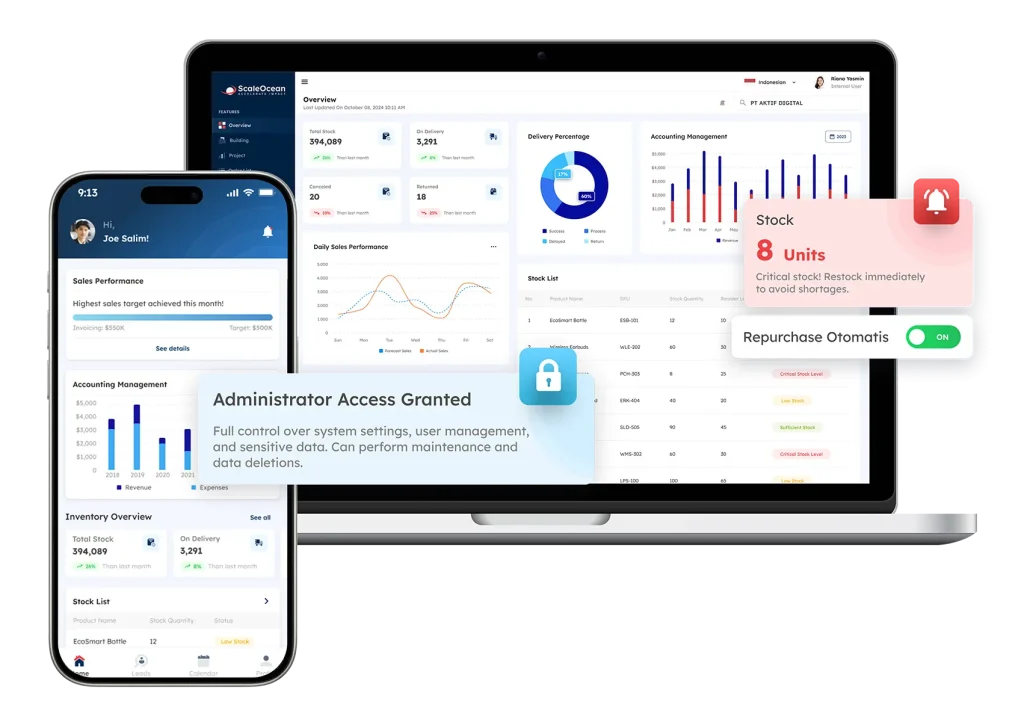
With ScaleOcean ERP Software, enterprises can get an all-in-one solution to ensure that the transition happens without a great deal of disruptions. All business modules communicate with each other; any change made to one process is updated in other processes without silos or inconsistencies.
Powerfully flexible, our solution is tailored to your own company’s workflow, and processes can be customised to suit each division’s workflow and specific business processes without jeopardising your core system configuration. It is beneficial to multi-branch companies because it allows changes to be made all in one day, with new standards immediately coming into effect in each of the companies, which helps to streamline the process.
Our after-sales support & client handling team ensures direct support during and post-implementation processes, as well as if changes occur. We also offer scalability, so it’s simple to expand and enhance the system as your business requirements increase and grow over time. You can implement system flexibility, automation and support with integration to ensure the best of both worlds with ScaleOcean ERP Software.
ScaleOcean is responsible for the growth of your organisation’s ERP solution. Also, we have no hidden charges at all and offer unlimited user access as a percentage match-up of grants funded by CTC, allowing you to scale without the need for any additional costs.
Conclusion
ERP change management is a critical element in ensuring the success of an ERP implementation. Without a proper ERP change management plan, communication, and support, even the best ERP systems can face resistance and underutilization.
By addressing employee concerns, providing comprehensive training, and fostering a culture of continuous improvement, businesses can ensure a smoother transition and maximise the value of their ERP system.
ScaleOcean is uniquely positioned to help companies navigate these challenges. Our user-friendly, customizable ERP solution is designed to integrate seamlessly into your business processes, enhancing efficiency, decision-making, and collaboration.
Ready to experience the difference? Try a free demo of ScaleOcean ERP today and take the first step towards optimising your business operations.
FAQ:
1. What is ERP in change management?
ERP change management is a systematic approach that enables staff members to adopt new systems and process modifications more quickly and effectively. As a result, individuals, organisations, and groups transition from the existing state to the intended future state and then utilise the upgraded ERP systems in their day-to-day operations.
2. What are the 5 C’s of change management?
The Five C’s of change management are Clarity, Communication, Collaboration, Culture, and Commitment.
3. What are the 4 types of change management?
With this in mind, let’s dive into 4 types of change management: continuous change, proposed change, directed change, and organised change. In this article, we’ll identify the distinctive characteristics of each of these changes and their roles in business transformation.
4. Why is change management important in ERP?
Efficient change management guarantees that the ERP deployment is in alignment with the strategic objectives of the company. Change management helps avoid deviations that result in scope creep or project delays by concentrating on the intended results and benefits.





















.png)