
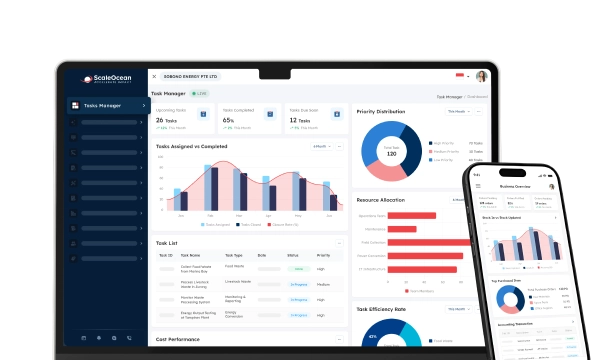

Enterprise Resource Planning systems are what power business today by bringing the integration of workflows and data into one common platform. The systems have much to offer, with benefits such as visibility and overall efficiency.
By taking into account the figures we discovered from TechsiResearch, the ERP market in Singapore is expected to reach $910.77 million by 2029 from $481.29 million in 2023.
Risks such as high implementation costs and silos of data can cause havoc without a proper strategy during an ERP transition.
Therefore, implementing an ERP system can be critical in achieving competitive advantages. Businesses can prevent human errors by integrating their workflows into one system, as well as ensure scalability within a business in the long term and eliminate the risks associated with potential threats.
This article will therefore provide comprehensive information on the major risks and benefits of ERP in a business as well as the pros and cons of ERP system usage. Read on to find out more!
 Key Takeaways
- The main benefits of ERP Systems help integrate finance, HR, and operations, enabling businesses to streamline workflows, enhance efficiency, and gain enhanced team collaboration.
- The risks and challenges of ERP include high costs, complex processes, and data migration issues. Understanding this helps companies prepare better and minimize disruptions.
- Choosing the right ERP system involves assessing system requirements, ensuring business alignment, prioritizing user-friendliness, and selecting secure, scalable solutions with reliable support.
- ScaleOcean ERP offers an integrated solution that connects multiple business functions, delivering real-time data accuracy and helping enterprises in Singapore drive sustainable growth.
Main Benefits of ERP
Understanding what ERP is and its importance changes how businesses view their operations, especially when implementing a robust system that transforms fragmented workflows into a single powerhouse.
How businesses see their operations can be shifted through understanding what is erp and its importance when implementing the correct ERP system that brings all these isolated workflows into a powerhouse of a business, and that is the integration of operations.
Through this, it also aids a business in growing and seeing all parts of the organization aligned with the common goal, with ERP enhancing efficiency and streamlining.
Based on data we found from Medium, an ERP can increase a business’s efficiency by between 20 and 30 percent. A higher efficiency means that businesses can better scale operations and stand out from the crowd.
Here are some other advantages of using ERP technology:
- Operational efficiency and productivity: Streamlined business workflows through the automation of repetitive and manual tasks result in a boost in productivity across the entire team. This means fewer errors are made, and output can increase.
- Data accuracy and reporting: Integrating various sources of data into one database eliminates redundant entries and errors in the system. It also maintains ERP accuracy across all reports generated by the system, making them reliable for business analysis.
- Real-time data and visibility: Gives management instantaneous access to real-time business metrics, allowing them to make quicker decisions that help adapt quickly to market shifts or internal organizational needs.
- Cost savings: Effective management of inventory and a more streamlined business workflow helps to improve financial management by maximizing business resources. A successfully implemented ERP migration also contributes to overall cost savings during system implementation.
- Improved customer service: Centralization of customer data means that customer interaction becomes faster and more personalized, enhancing satisfaction and loyalty for long-term relationships.
- Scalability and flexibility: Businesses are future-proofed through systems designed to grow and adapt with their operations. This means accommodating an increasing workforce, new departments, or even an expansion into international markets.
- Enhanced data protection: Advanced security measures and regular backups mean your confidential corporate data remains secure and protected from unauthorized access or malicious threats.
- Unified data structure: With data unified under a single system and departmental boundaries removed, it guarantees that all teams have access to the same ‘single source of truth’.
- Regulatory compliance support: Features integrated into an ERP system help Singapore firms easily navigate local laws like the PDPA (Personal Data Protection Act) and Do Not Call (DNC) Registry, streamlining audits and improving compliance efforts.
- Precise demand forecasting: Future trends and customer demand are better predicted with advanced analytics in an ERP, helping to optimize stock levels and reduce risk of shortages.
- Operational transparency: All processes within the business have clear visibility, enabling leaders to monitor their operations and identify and rectify bottlenecks that hinder performance.
- Remote accessibility: Cloud-based systems allow staff to access important data no matter where they are located, enabling flexible work arrangements and the collaboration of a global workforce.
- Streamlined processes: Instead of disparate systems, all your workflows can be unified into one cohesive process, speeding up product/service delivery.
- Instant analytics and reporting: Sophisticated dashboard capabilities that present information in an understandable format allow for real-time decision-making that impacts a business positively.
- Enhanced team collaboration: Access to real-time project data means teams can collaborate seamlessly and collectively achieve company goals.
Major Challenges and Risks of ERP

Though the system does indeed offer business benefits, ERP implementation itself may pose quite a bit of difficulty if there is no adequate ERP testing, planning, and alignment between businesses and the vendor.
It involves an assessment of resources, risks, and whether the organization is well-prepared to enjoy its full potential and avoid any possible business disruption. Here are some of the many risks associated with it:
- High Implementation Costs: Significant sums are required to purchase the software, implement it, acquire the hardware, and pay for consultant fees; this can easily exceed a business’s budget.
- Complex Implementation Process: To integrate several departments into one common system requires considerable time and planning, and technical effort in terms of overall workflow. An effective ERP implementation process is very critical.
- Resistance to Change: Employees may have trouble adapting to new routines, which results in low utilization and low employee morale if not managed properly. However, a clear ERP change management strategy will surely make transitions smoother and employees more enthusiastic.
- Data Migration Challenges: Transferring large quantities of data from legacy systems into the ERP platform may result in data loss or damage if not done with a clear transition process.
- Security Vulnerabilities: Since the system consolidates sensitive data, it creates a very attractive target for hackers to invade systems. Thus, ERP security protocols are extremely critical.
- Excessive Customization: Extreme modification of the system may make it prone to updates and other changes, which would result in excessive spending and impact the entire system’s performance.
- Dependence on Vendor: Businesses tend to be reliant on only one software vendor to provide updates and support. However, this would pose a problem when they face changes in service and cost.
While ERP systems do offer many advantages, they do come with some challenges to navigate through.
By making an astute choice for your ERP (such as opting for an ERP that can deliver smoothly on the integration and that can aid in avoiding common implementation mistakes), such as ScaleOcean ERP, a business can guarantee ease of integration, ensure system scalability, and alleviate all potential risks of system implementation and future use of the system.

How to Determine If It’s Time to Implement ERP Software?
Implementing the right infrastructure for your business at the right time is key to keeping you competitive. The right time to upgrade to an integrated system would not see the collapse of operations but enable growth.
Look out for the critical signs listed below if your organization is suffering from any one of them:
- In a growing enterprise: as a business expands, it’s necessary to maintain efficiency with robust system integration to support high data volume and complex operations.
- Challenges in business operations: when business operations involve many manually completed tasks, often resulting in a higher probability of human errors, departmental boundaries would then prevent data sharing that leads to discrepancies.
- In a situation where you’re merging/acquiring a business: Integrating business cultures as well as datasets across different organizations becomes simple with a unified system.
- Legacy Systems: The use of dated, slow, and fractured software limits a company’s ability to compete.
- Strategic Long-Term Planning: The integration of scalable technology would position a company for success with its future strategies in play for years.
What are the common causes of ERP implementation failure?
Despite having access to the most advanced software, it’s possible to undermine a system deployment with internal and external factors. Identifying the potential risks at an early stage helps businesses to plan stronger strategies to achieve a successful transition.
Common factors contributing to system failures:
- Data Migration Issues: The transfer of inaccurate/corrupt data is a factor for a corrupt system and unreliable business data.
- Integration Problems: When new systems cannot communicate effectively with old systems, they can compromise vital daily operations.
- Human Element: The lack of leadership commitment as well as employee resistance are often stumbling blocks that will slow progress down to a crawl, reducing adoption rates significantly.
- Insufficient Training: end users are not likely to use the system when they are not fully acquainted with its usage and functionalities, leading them to fall back on old workarounds.
- Poor project planning: goals and timelines can often be unrealistic, resulting in higher-than-expected costs.
Choosing the Right ERP Systems
The selection of the best and right ERP vendor is the first step towards a successful deployment.
A competent vendor would help you evaluate the advantages and disadvantages of ERP system implementation to suit your specific work processes, and guarantee a perfect fit that will achieve your goals, offer scalability, and ensure security for your business.
Key factors to consider when choosing an ERP vendor:
- Evaluate System Requirements: Understand the key technical requirements and functionalities of the system in relation to your specific operational issues.
- Match business requirements: Look for an ERP system that is suited to your industry workflow and business needs.
- Ease of Use: Ensure the system is user-friendly and can easily integrate into daily work without employee resentment.
- Security measures: The system can help protect company data and easily support the CyberEssentials and CyberTrust Marks standards to block threats for companies in Singapore.
- Research your chosen vendor: Investigate the credentials of a provider to confirm the business is reliable, skilled, and has proven experience in the field.
- Review the price: A comprehensive evaluation of licensing fees and any additional charges must be compared against what is feasible within the scope of your long-term budget.
- Confirm Support and Training programs are provided: Efficient vendor support is paramount for a smooth deployment and optimal system functionality in the long run. You could also request an ERP product demo for your specific business needs.
- Plan for Scalability: The system should have the flexibility to support business growth as and when required.
The Benefits of Using ScaleOcean’s ERP Software
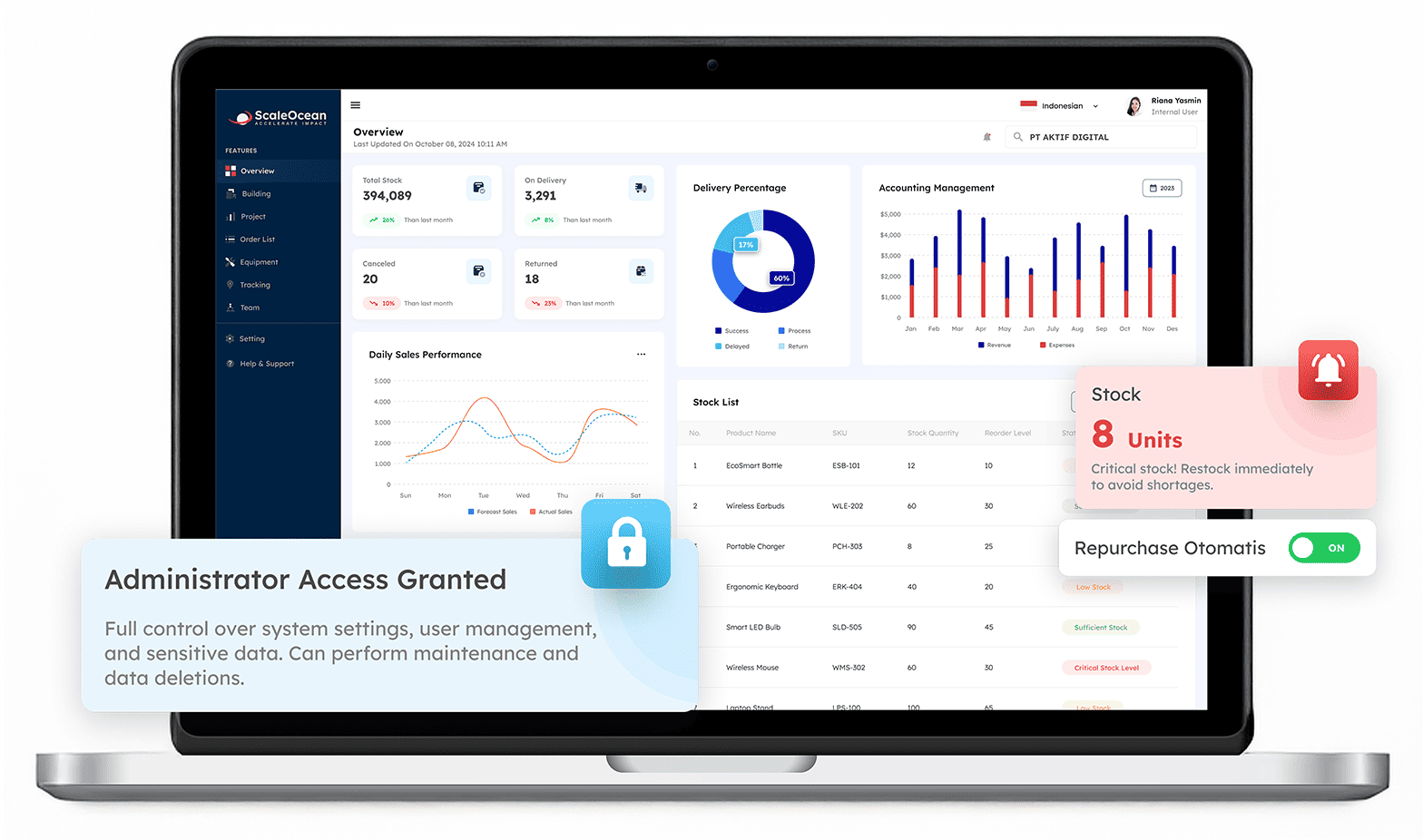
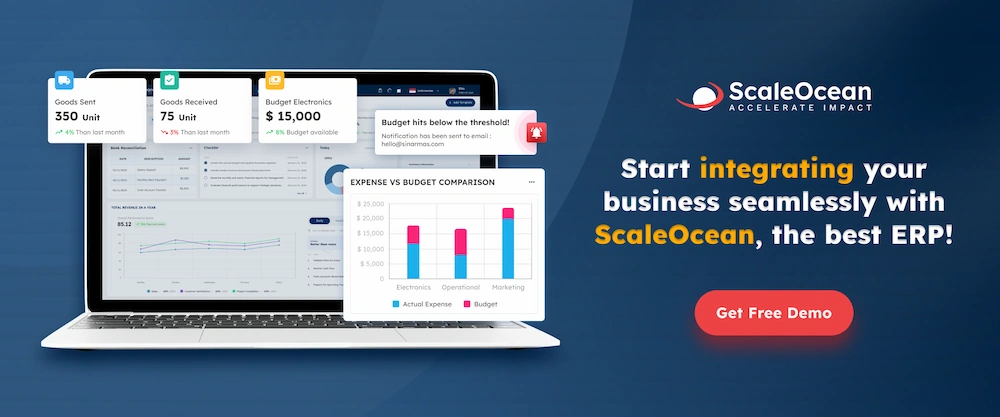
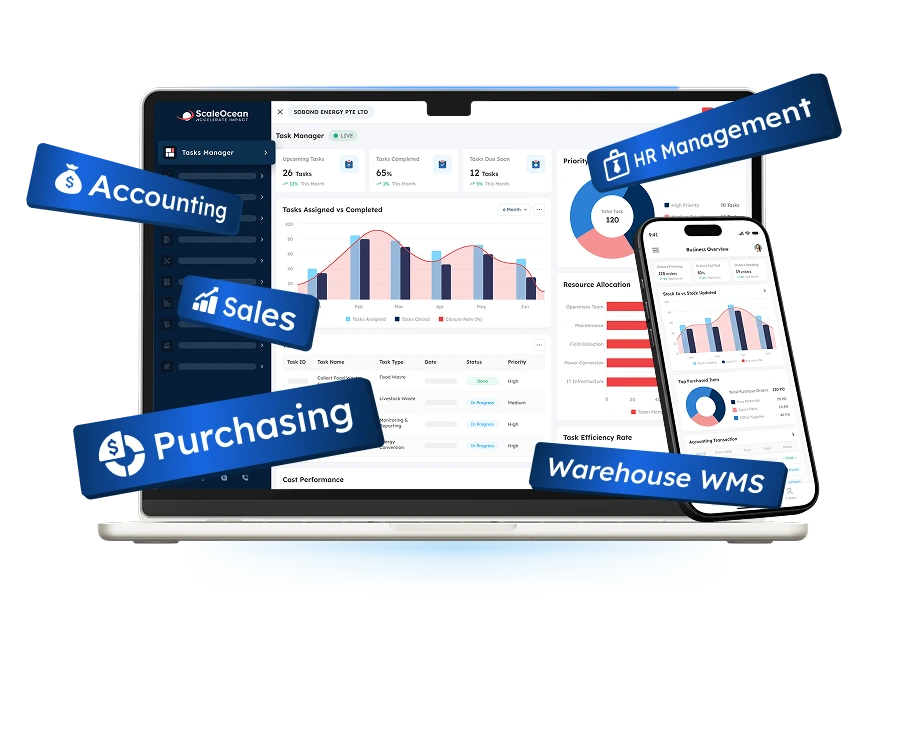
ScaleOcean ERP provides the specialized solutions needed by Singaporean businesses looking for a reliable and scalable ERP system. With flexible features, the ERP connects easily between industries, catering to every business requirement with efficiency and accuracy.
ScaleOcean’s solutions adapt to Singapore’s dynamic market trends and offer a strategic balance of ERP adoption pros and cons for companies while also supporting the CTC grant for Singapore businesses in adapting to the shifting trends to continue to grow.
ScaleOcean ERP has positioned itself as a trustworthy partner for businesses looking to improve efficiency and achieve sustainable business success. Request your free demo today and see how it could boost your operations and enable you to survive in the Singapore market.
The top features of using ScaleOcean ERP software for your business flow are:
- Customizable to Business Needs: ScaleOcean’s ERP is tailored to specific industries. Specialized modules ensure the system aligns perfectly with unique operations.
- Streamlined Operations: By unifying finance, supply chain, and HR, bottlenecks are removed. This leads to smoother workflows and higher productivity.
- Enhanced Data Accuracy and Insights: Centralized data offers real-time, precise insights. Powerful analytics help make informed decisions that drive strategic growth.
- Scalability for Growth: The architecture expands as the business grows. Easily add new users or modules without facing any system interruptions.
- Improved Security and Compliance: Advanced encryption and regular audits keep data safe. The system ensures full adherence to local and international regulations.
- Cost-Effective Implementation: Flexible pricing and CTC grant eligibility make this ERP economical, lowering initial costs and maximizing ROI.
- Continuous Vendor Support: Dedicated training and support are provided. A specialized team ensures smooth implementation and peak system performance.
Conclusion
ERP system integration, by consolidating your core business functions, would serve as a valuable business asset, enabling greater efficiency and data accuracy, empowering companies to overcome their limitations, and achieving sustainable success.
Choosing the right partner like ScaleOcean is an integral part of your ERP strategy, with flexible, reliable ERP solutions and modules tailored for your specific business needs. Experience the benefits of their advanced software firsthand with a free demo today.
FAQ:
1. What specific pain points can ERP help resolve in your business?
1. Disjointed processes across departments
2. Manual data entry and errors
3. Delayed reporting and poor visibility
4. Inventory mismanagement
5. Inefficient resource allocation
6. Compliance and audit challenges
2. How do the risks differ between Cloud SaaS and On-Premise ERP deployments?
Cloud SaaS risks include data security and internet dependency, while On-Premise risks involve higher upfront costs, maintenance burden, and slower updates, requiring strong IT support.
3. Can ERP implementation address current operational pain points efficiently?
Yes, ERP integrates workflows, automates repetitive tasks, and centralizes data, allowing businesses to resolve inefficiencies, reduce errors, and improve decision-making quickly and reliably.
4. What benefits arise when selecting Cloud SaaS over On-Premise solutions?
1. Lower upfront costs
2. Automatic software updates and maintenance
3. Scalability with minimal IT overhead
4. Easier remote access and collaboration
5. Faster deployment and integration



















.png)