



Imagine being able to take out a loan that will fund growth that will ultimately make you make much more money than the interest costs. That’s what financial leverage is: strategically taking on debt to amplify your earnings potential and opportunities.
According to the statement we found from MoneySense, Daily Leverage Certificates, or DLCs, offer traders 3x to 7x amplification of the underlying’s daily returns.
Leverage, though beneficial in magnifying gains, also significantly increases the possibility of larger losses.
This method is a powerful tool for expansion but is not risk-free. Let’s delve into the definition of financial leverage, how it operates, how to determine the formula, and effective management strategies.
 Key Takeaways
- Financial leverage relies on taking on debt for asset purchases with the expectation that the returns from those assets will be greater than the interest payments on the debt.
- The main benefits of financial leverage (magnified profits and tax deductions) are accompanied by two significant drawbacks (increased financial risk and the risk of bankruptcy).
- Analysing financial leverage includes thoroughly examining the business’s financial statements to determine if debt levels are affordable and support the business’s strategic objectives.
- ScaleOcean’s accounting software allows you to better manage financial leverage by providing real-time financial data and sophisticated analytics that help you make faster, better business decisions.
- ScaleOcean’s accounting software makes managing financial leverage easier by giving you real-time data and insightful analytics, so you can make smarter, faster decisions for your business.

What Is Financial Leverage?
Financial leverage involves the use of debt financing to increase the potential return on equity. While it can boost shareholders’ gains, it also amplifies risk and earnings volatility, as minor changes in operations can lead to more significant swings in earnings per share.
Understanding leverage is fundamental to capital structure and investment decisions. Managing leverage efficiently depends heavily on accurate financial reporting. Double-entry accounting methods balance assets, liabilities, and risks to achieve the optimal outcome.
How Financial Leverage Works
Financial leverage refers to the difference between the return earned on an asset and the interest rate paid on the debt used to finance that asset.
Earning a 10% return on an asset and taking out a loan at a 5% interest rate would boost the return on equity and contribute to more rapid growth and potential expansion.
Accurate bookkeeping practices and accrual accounting methods are essential for tracking profitability effectively. Here’s how it operates:
1. Amplified Returns
When operating profit is high, the benefits for shareholders become more evident. Since the interest paid on debt is a fixed expense, profits earned in excess of this fixed cost go directly to the shareholders and lead to a magnified return on equity. This is why financial leverage is attractive.
Even a 10% increase in operating income could easily translate to a 20% or 30% jump in earnings per share when leverage is applied.
It’s actually the primary incentive behind the initial decision to acquire debt in the first place, as the possibility of an enormous return on shareholder investment is appealing.
2. Amplified Losses
It’s important to be aware that leverage is not without its downsides. In the event that operating income falls, the fixed costs associated with the debt will remain unchanged, which can cause profits to be significantly reduced or entirely wiped out.
This is where the associated risks come into play. If the company’s earnings are not sufficient to cover the interest payments on its debt obligations, it may experience liquidity problems.
A 10% dip in operating profit, for instance, can erase all earnings, demonstrating the perils of heavy leverage.
3. Tax Shield
A benefit often overlooked is the tax shield effect when taking on debt financing. Because the interest paid on the debt is tax-deductible, it reduces the company’s taxable income. This lowers the real cost of the debt financing, a substantial benefit for any company.
The tax deduction for interest payments makes debt financing often more advantageous and less costly than equity financing.
Dividends paid to shareholders are not deductible and thus do not offer the same tax benefit. The tax shield gives a direct financial incentive to include a certain portion of debt in the overall capital structure.
Key Ratio and How to Calculate Financial Leverage

It is crucial to track key financial indicators like the financial leverage ratio to manage it effectively. These ratios clearly define how much debt the business has relative to its assets and its capacity to repay that debt.
Monitoring these ratios, which can be found in the income statement and balance sheets, leads to wise financial decisions. Below are some key financial leverage ratios:
1. Debt-to-Equity (D/E) Ratio
One of the basic indicators of financial leverage is the Debt-to-Equity ratio. This ratio is found by dividing total liabilities by owner’s equity.
It defines how much funding the business uses that comes from borrowing relative to the owner’s investment and normally implies increased risk if it’s high.
Investors and creditors use this ratio as an indicator of a company’s exposure to risk. While industry norms vary, a D/E ratio considerably higher than that of the competition is usually viewed as a sign of high risk.
2. Debt-to-Assets Ratio
By dividing total debt by total assets, we get the Debt-to-Assets Ratio. It defines the proportion of a business’s assets that have been financed by debt, and if the number is higher than 1, it means the business is more indebted than it is in terms of assets.
As is the case with the D/E ratio, what’s an acceptable number is industry-dependent. As a rule of thumb, it’s preferred for this ratio to be low, indicating that the business is not heavily indebted and is safer to invest in, and it shows you the true extent to which the assets are leveraged.
3. Interest Coverage Ratio
The Interest Coverage Ratio shows a company’s ability to meet its interest payments through the division of Earnings Before Interest and Taxes (EBIT) by its interest expenses.
It’s better if this ratio is high, indicating that the company is in a strong position to meet its debt obligations comfortably and reliably.
In the event that this ratio is low, it indicates that the company is struggling financially with interest expenses and can end up in deep water should income drop.
Lenders want to see an interest coverage ratio of 1.5 to 2.0. It is a critical measurement used in the evaluation of a company’s short-term financial security.
4. Degree of Financial Leverage (DFL)
The DFL measures the sensitivity of a company’s EPS to changes in operating income. The calculation of this ratio is done by dividing the percent change in EPS by the percent change in EBIT and measures the extent of amplification.
For example, a DFL of 2.0 will mean that a 10% change in EBIT can result in a 20% rise in EPS. A high DFL suggests exceptional gains during favorable economic circumstances, but it also poses risks in times of recession, hence the dilemma between rewards and risks.
5. Debt-to-EBITDA Ratio
The Debt to EBITDA ratio, calculated as Total Debt divided by EBITDA, indicates a firm’s capacity to repay its debts, and a ratio below 3.0 is often deemed to be good, though industry-specific comparisons should be considered.
Important components are obtained from the profit and loss statement. The metric is used extensively by lenders as part of loan covenants to ensure that borrowers do not get themselves too much in debt.
They also tend to prefer EBITDA as an indicator for cash available to repay debt since it provides a strong indicator of debt repayment capacity.
6. Equity Multiplier
The Equity Multiplier is yet another way of viewing financial leverage, and it is calculated by simply taking the firm’s total assets and dividing them by the total shareholders’ equity.
A higher value for the equity multiplier indicates higher financial leverage, as it directly shows the amount of assets for every $1 of equity owned by the shareholders, which demonstrates to us the extent to which the firm’s assets are financed by the debt of others, a truly revealing figure as to the structure of the financial architecture of the firm.
The equity multiplier also represents an important variable in the DuPont formula, where a firm’s Return on Equity is broken down into its profitability component, asset turnover component, and, of course, financial leverage component.
It demonstrates clearly just to what extent the firms’ assets are leveraged with respect to the shareholders’ equity in the firms’ capital structure.
Advantages and Disadvantages of Financial Leverage
Financial leverage can indeed be used for substantial value creation, but excessive or misguided use can result in severe distress.
Business leaders are to carefully balance the advantages against disadvantages depending on their industry, the business cycle, and the organization’s risk tolerance profile, of which we will analyze the most significant advantages and disadvantages:
1. Advantages
Financial leverage means an opportunity for tremendous gain through increased use of debt to boost returns.
If employed properly, this can allow a business to finance more assets than it could otherwise through the company’s own capital resources, thus increasing the profit potential as well as the shareholder wealth.
By employing debt, companies will be able to take advantage of lower interest rates as well as attractive tax shields, strengthening the company’s financial situation.
The result will be an improvement in allocation of assets, increased return on equity (ROE), as well as higher potential for scaling operations. Below are the benefits:
- Magnified Profits: The high increase in return on equity (ROE) gained through the use of financial leverage appeals to a company and its owners. When an investment generates higher returns than what is paid in interest, it will be reflected in increased shareholder wealth, which is essentially what financial leverage is all about.
- Access to Larger Investment: Leverage allows for investment in areas that would not otherwise be possible due to a lack of financial capital to fund them. The benefits can range from acquiring an established company, building new plants, to investing more heavily into research & development, thus extending a company’s opportunities to invest in growth areas.
- Increased Buying Power: As debt finances larger portions of a company’s activities, the buying power is increased with higher purchasing capabilities in the market, enabling more purchasing of assets, thus greater profits are able to be generated from buying these larger volumes.
- Higher Potential Returns: Using financial leverage means less of your own money will be needed to control a larger set of assets. A higher percentage of income is gained relative to that initial stake when all investment revenue exceeds loan interest, thus maximizing potential return and providing high leverage on your investment.
- Tax Benefits: Interest paid on borrowed money is tax-deductible and thus reduces the liability of a company. This means that every pound spent on borrowing actually costs less than that pound through tax savings, thus making debt cheaper than equity and giving investors reason to utilize leverage.
2. Disadvantages
Although the benefits are huge, leverage has large risks that increase volatility in a firm.
When debts are financed, they can magnify profits from an increase in investment, but they can also magnify a business’s losses if the company does not make good use of the investment, providing an interesting tightrope.
In fact, it inherently gives the company higher volatility against any negative circumstances, such as economic or business recession.
Should the business suffer from poor performance, debt payments, especially interest, may become unsustainable, leading to significant increases in financial risk and the likelihood of an even worse outcome. Below are the downsides:
- Magnified Losses: If there are gains through higher debt financing, then if the business struggles, it will also have magnified losses. If a company has a hard time with the high fixed costs that are part of debt finance will accelerate it towards failure and ruin, especially during any sort of rough period the company may experience.
- Increased Financial Risk: Higher leverage results in higher financial risk due to the need for a company to repay its debt at all costs, regardless of its profitability at the time of payment. This puts pressure on its cash flow.
- Potential for Bankruptcy: When the company can no longer meet its debt obligations, it risks the possibility of having to declare bankruptcy, which has catastrophic results for all investors. This is seen as one of the worst possible outcomes that higher borrowing rates create.
- Reduced Financial Flexibility: High levels of debt will restrict a company from being able to act as desired due to a requirement to meet all payments for any borrowings, which may in turn mean that opportunities to gain market share or pursue profitable investment have to be ignored, and other avenues to increase profits and shareholders’ wealth are passed over.

What are the Risks of Financial Leverage?
The key risk of using financial leverage is higher financial distress, leading to difficulty in meeting loan obligations. In situations of low cash flow, fixed interest and principal payments may pose a significant problem, forcing a sale of business assets or emergency borrowing.
It should be noted that financial leverage also has a tendency to reduce the operational flexibility since loans are generally accompanied by restrictive loan covenants that control major decision areas of the company, such as those related to capital expenditure and dividend policy.
Diligent management of cash flow statements and leverage ratios is required, particularly in economic downturns.
Type of Financial Leverage and What is the Difference
Financial Leverage goes way beyond only what corporations utilize in their business operations and relates to any form of investing activity, whether personal or professional.
The premise of it essentially lies in committing oneself to fixed costs in order to obtain positive leverage, which may or may not be the result that is expected. The main types of Financial Leverage are:
1. Operating Leverage
This financial tool concerns the measurement of the sensitivity of operating profits to sales. A business that places many of its production costs in fixed costs (such as rent) will have a highly speculative profit situation.
A small rise in sales will result in a higher percentage in operating profits, although if sales decrease, a similar situation will have occurred as before, where profits fall dramatically.
Unlike Financial Leverage, which discusses costs as related to borrowing, operating leverage refers to costs as it relates to business operations.
2. Combined Leverage
This type of financial leverage analyzes the complete risk picture by considering both Operating Leverage and Financial Leverage of a company, and shows how much of a percentage fluctuation there will be from the sales revenue of the company, right down to earnings per share (EPS).
Companies with both Operating and Financial leverage, i.e., those with both business and financing risk, will have very high levels of volatility from earnings fluctuations, something that companies would try and control.
A firm that is in a more risky market would try to use lower levels of financial leverage to help offset business risk.
3. Leveraged Investing
This refers to borrowing capital to purchase securities, typically shares on margin in the stock market. It enables the user to make potentially larger returns than if purchasing shares with his/her own money if they generate higher returns than the loan costs.
We also found a statement from InvestmentTrade stating that leverage has remained a popular choice for 41% of traders on eToro. But that just implies higher percentage profits and losses, and when you make a loss, you can’t stop paying loan repayment obligations, which are fixed.
This is particularly a high-risk game for private individuals who need to consider their financial leverage ratio carefully.
4. Leverage for Personal Finances
Leverage is very common in every aspect of people’s financial lives, even though they do not necessarily call it this. Mortgages, for instance, or even loans that a person may take out for a vehicle or a student loan, are examples of leverage used in private finance.
Since you are borrowing the money you need, you pay it back with the future revenue you earn or generate.
The main aim is wealth creation, but it is prone to many of the same disadvantages that financial leverage in business can be prone to, although less severe due to personal finances vs that of corporate finances.
5. Leverage in Professional Trading
Within the business of professional trading, leverage is utilized extensively in futures, options, and foreign exchange contracts, where relatively small amounts of capital are required to obtain and control large sums of money.
If the underlying asset has its value increase, it can potentially make a high percentage return, and likewise, if it decreases, there can be massive losses very rapidly.
Financial Leverage, as pertains to trading, typically results in much higher percentages than any other form and may only be utilized by extremely proficient traders.
It is not to be compared with the levels of financial leverage present in the corporate world, due to orders of magnitude of difference from what would be seen within those circumstances.
Example of Financial Leverage
To grasp financial leverage, consider a firm buying $100,000 in equipment with a projected 15% return ($15,000). We examine two options: 100% equity financing versus borrowing $80,000 at 5% interest, highlighting how debt financing impacts final returns and how these transactions are recorded in the general ledger reporting.
In the equity-only scenario, Option A (investing $20k) yields a 75% return. However, in Option B (leveraged), the $15,000 profit is reduced by $4,000 interest, leaving $11,000. This results in a 55% return on the same equity, demonstrating leverage’s ability to amplify shareholder returns.
What is a Good Financial Leverage Ratio?
There’s no universally “good” financial leverage ratio. What’s optimal depends on the industry, cash flow stability, and company stage. Capital-intensive sectors, such as utilities, often sustain higher leverage than service or tech firms. Benchmarking against industry peers is key to determining the right level.
It is important for companies to understand the difference between bookkeeping and accounting also helps ensure leverage-related data is recorded and interpreted correctly. Benchmarking against industry peers is key to determining the right level.
Generally, a Debt-to-Equity ratio below 1.0 is considered safe, while a ratio above 2.0 may signal risk. The critical factor is a company’s ability to service its debt, often demonstrated by a strong interest coverage ratio. Adhering to IFRS (International Financial Reporting Standards) ensures consistency in all ratio calculations.
How to Analyze Financial Leverage
Financial leverage analysis is about examining a company’s strategic financial reporting and financial health, not merely calculating its ratio value.
Start by performing a trend analysis of these ratios to evaluate whether leverage is decreasing or growing over time, which can also be a measure of changing risk.
Next, a peer group analysis is conducted to compare the leverage ratios with competitors. This serves to contextualize a company’s capital structure relative to the industry standard.
Lastly, it is also prudent to run a scenario or stress test analysis on a firm to simulate how it would manage its debts in different economic circumstances.
Financial Leverage vs. Margin: Key Differences
While both involve borrowing, the meanings behind financial leverage and margin are quite different. Leverage is a general concept within corporate finance.
It refers to the process of firms utilizing debt financing to finance its asset-and consequently influence overall capital structure and strategic long-term objectives.
Margin, on the other hand, refers to a specific terminology within financial trading, where an investor borrows from his/her brokerage firm for security purchases. Individual investors will utilize portfolio value as a means to satisfy the requirements for these loans.
While the fundamental objective behind these is the same (magnifying returns), the nature in which they differ is whether they influence the entire company’s balance sheet (leverage) or individual investors (margin).
Manage Financial Leverage Integrated with Scaleocean Accounting Software
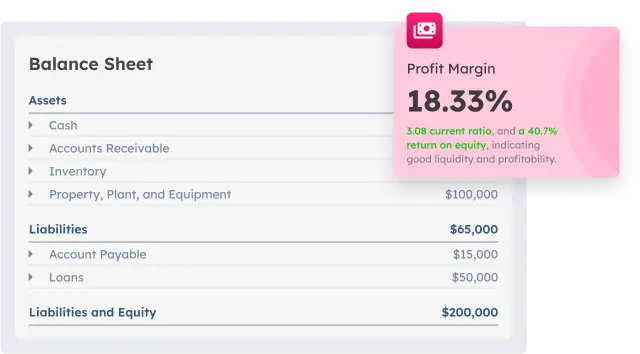
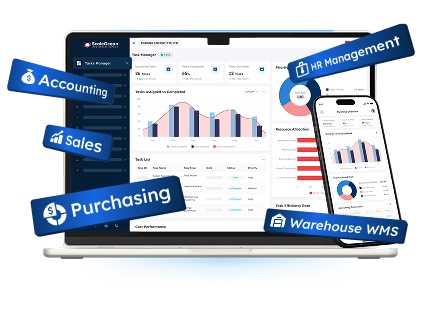
With unlimited users, no hidden fees, and scalable, industry-specific solutions, ScaleOcean’s accounting software simplifies financial leverage analysis through real-time tracking of key leverage ratios (Debt-to-Equity, for example).
Monitor debt covenants and cash flows seamlessly and avoid unwelcome surprises. ScaleOcean’s tool also streamlines financial leverage management using robust scenario analysis, so you can model what happens to new debt and interest rates under various conditions.
With Scale Ocean’s compliance with the CTC grant, your business can take full advantage of this essential digital tool. The key features of ScaleOcean software include:
- Comprehensive Accounts Payable Management: Track short- and long-term liabilities in real-time, ensuring accurate monitoring of debts through the General Ledger.
- Automatic Financial Leverage Ratio Calculation: Automatically generate financial reports, calculating leverage ratios like Debt-to-Equity in real-time.
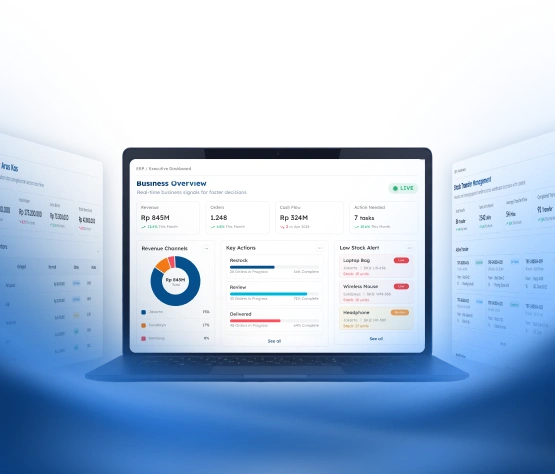
- Real-Time Financial Reporting Integration: Changes in purchasing, sales, and assets are instantly reflected, providing accurate real-time financial risk insights.
- Scenario Analysis for Debt Management: Model the impact of new debt or rate changes to assess effects on financial leverage and risk.
- Integrated Cash Flow Monitoring: Seamlessly monitor cash flow alongside liabilities, enabling better management of financial leverage and liquidity.
Conclusion
The effective utilization of financial leverage can be an important element in the creation of shareholder value.
However, companies must remember to always weigh the pros and cons and never overuse their leverage, because this way, a firm will continue to earn higher returns on the marginal capital cost-effectively.
Achieving effective financial leverage is not as difficult with the appropriate strategy and tools, such as an integrated accounting software from Scale Ocean.
Third-party solutions such as Scale Ocean can help keep track of important ratios through real-time monitoring and scenario analysis, and even guide you through the process of finding what your ideal capital structure is.
Why not request a free demo from Scale Ocean so you can see the software’s functionality and potential impact on your company?
FAQ:
1. What is a good example of leverage?
An example of leverage is borrowing money to fund business growth. For example, a company may take out a loan to invest in new technology or acquire assets, enabling expansion without depleting its own capital, thus maximizing potential returns.
2. What if financial leverage is high?
A high level of financial leverage increases a company’s exposure to risk. While it can enhance returns, it also magnifies losses if business performance falters. Heavy reliance on debt means the company is more vulnerable to financial difficulties if income falls short.
3. What are the 5 financial ratios?
1. Debt-to-Equity Ratio
2. Liquidity Ratio
3. Acid-Test Ratio
4. Asset Return (ROA)
5. Equity Return (ROE)
4. What is leverage ratio analysis?
Leverage ratio analysis is used to evaluate a company’s risk by comparing its debt level to its equity or assets. This ratio shows how much debt the company uses to finance its operations, helping to determine if the company is at risk of insolvency.





















.png)