Managing human resources has become more important each day. A well-structured absence management approach helps businesses in Singapore maintain operational continuity, comply with local employment regulations, and foster a healthier, more accountable workforce.
Based on our team’s research, we found a study by PMC in the US that showed individualised support and short counselling-based programs significantly reduce sickness absence days, showing that proactive absence management methods directly improve workforce availability and productivity.
The ability to manage employee absences proactively can significantly contribute to sustaining performance and long-term growth. Continue reading this article, as we will deep-dive into the importance of absence management and how it could impact your business’s productivity.
 Key Takeaways
- Absence management refers to the structured process businesses use to track, manage, and control employee timesheets to track employee time away from work.
- Absence management is important because unplanned absences can quickly disrupt business operations, staffing, customer service, and project timelines
- Businesses in Singapore that implement effective absence management processes often reduce administrative errors and improve workforce planning.
- Without clear absence management policies and tracking, even small absences may lead to larger business disruptions.
- ScaleOcean’s absence management software helps companies with automatic and real-time attendance data collection to reduce human errors such as “buddy punching” and incorrect data entry.
What Is Absence Management?
Absence management refers to the structured process businesses use to track, manage, and control employee timesheets to track employee time away from work, whether planned or unplanned. This includes annual leave, sick leave, childcare leave, hospitalisation leave, unpaid leave, and emergency absences.
In Singapore, effective absence management includes policy formulation, tracking and monitoring, supportive measures, and reducing the impact to help organisations reduce costs and improve overall workplace productivity.
Absence management’s primary goal is aimed at minimising operational disruptions, ensuring regulatory compliance, and supporting employee well-being through structured and transparent leave processes.
Why Is Absence Management Important?
Absence management is especially important because unplanned absences can quickly disrupt business operations, staffing, customer service, and project timelines. Here are several reasons why absence management is important for your business:
- Financial Savings: By tracking absence trends and addressing recurring issues early, companies can lower unnecessary spending and protect profitability.
- Compliance: In Singapore, this is particularly important for aligning with the Ministry of Manpower (MOM) requirements on annual leave. Proper compliance reduces legal risk and strengthens governance.
- Productivity Maintenance: When absences are tracked and planned effectively, managers can reallocate tasks, arrange backups, and maintain service levels to make sure teams stay productive even when employees are away unexpectedly.
- Preventing Presenteeism: Clear and transparent leave policies encourage employees to rest and recover properly, which supports long-term performance.
- Health and Wellness Program Integration: By identifying absence patterns linked to burnout or health issues, organisations can introduce targeted wellness measures that reduce future leave rates.
- Employee Engagement: Transparent and fair absence policies help employees feel supported and respected, which could improve the overall employee well-being.
- Improved Morale: A structured absence management approach helps distribute workloads fairly, which results in stronger collaboration and a healthier workplace culture.
8 Key Components of Effective Absence Management
Businesses in Singapore that implement effective absence management processes often reduce administrative errors and improve workforce planning. There are 8 key components of effective absence management that you should know:
1. Absence Policies
Clear policies should explain eligibility, approval workflows, documentation requirements, and return-to-work procedures so employees understand what is expected. These policies define the rules for annual leave, sick leave, emergency leave, unpaid leave, and attendance expectations.
2. Absence Tracking and Reporting
Automated absence reporting improves visibility, reduces manual errors, and supports data-driven workforce planning. HR and managers can keep an eye on frequent absences, leave balances, and attendance trends with the help of accurate tracking tools.
3. Supportive Intervention
When frequent or unusual absences are identified, managers should intervene early with a supportive approach to address the root cause before it escalates. This component may include one-on-one discussions, wellness referrals, flexible scheduling, or workload adjustments.
4. Return-to-Work Process
This component can include return interviews, support discussions, and temporary work adjustments. A structured return-to-work process ensures employees are smoothly reintegrated after illness or extended leave.
5. Compliance
In Singapore, human resource management must align with employment laws, statutory leave entitlements, and company HR policies. This includes compliance with Ministry of Manpower (MOM) requirements for sick leave, hospitalisation leave, childcare leave, and documentation.
6. Disciplinary Procedures
Where absence abuse or repeated unauthorised leave occurs, organisations need fair and documented disciplinary procedures. Well-written steps help maintain accountability while ensuring employees are treated consistently.
7. Leave request
Digital approval workflows improve transparency, reduce delays, and help managers plan team coverage. A smooth leave request process helps employees submit annual leave, medical leave, and emergency leave efficiently.
8. Notification
Employees should know exactly how and when to notify their manager or HR when they are absent. Prompt communication helps managers respond quickly, arrange replacements, and minimise disruption to operations.
A strong system that fills all these key components can automate all absence management processes easily. The use of strong software like ScaleOcean can help companies reduce manual errors while eliminating spreadsheet-based tracking.
Try our free demo now to see how a strong solution can ensure your every request follows company policy consistently.

Challenges Faced Due to the Lack of Absence Management
Without clear absence management policies and tracking, even small absences may lead to larger business disruptions. Businesses that lack a structured absence management system can quickly create operational, financial, and legal problems.
Suboptimal Use of Time and Resources
Without proper absence planning, managers often spend excessive time dealing with last-minute staffing gaps, rescheduling shifts, and redistributing workloads.
This reactive approach leads to inefficient use of human resources, unnecessary overtime, delayed projects, and poor manpower allocation. Teams may also spend more time covering absent colleagues instead of focusing on strategic work.
Legal Compliance
The absence of a formal leave management process increases the risk of non-compliance with employment laws and statutory leave entitlements.
In Singapore, employers must comply with the Ministry of Manpower (MOM) requirements on paid sick leave, hospitalisation leave, childcare leave, and valid medical certificate recognition. Poor recordkeeping or inconsistent leave approvals can result in disputes, wrongful dismissal claims, or penalties. Using the best HRIS system in Singapore can help your company to ensure alignment and compliance with local regulations.
Time Theft
A lack of tracking systems can create opportunities for time theft, where employees misuse working hours, report inaccurate attendance, extend breaks, or take unauthorised leave without proper documentation.
Over time, this reduces productivity, affects payroll accuracy, and creates fairness concerns among team members who follow and obey the rules.
What are the Best Practices of Absence Management? 12 Methods

The most effective absence management strategies combine clear policies, manager accountability, employee support, and technology. By applying the following best practices, organisations can reduce absenteeism, protect productivity, and improve workforce well-being.
1. Return-to-Work Interview
Conduct short return-to-work interviews after an employee comes back from leave. These conversations help confirm the reason for absence, identify ongoing support needs, and discourage unnecessary absence.
2. Flexible Working Options
Offer flexible schedules, remote work, hybrid arrangements, or adjusted hours where possible. This flexibility helps employees to balance personal responsibilities and reduces avoidable absences.
3. Training Managers
Managers and leaders in teams should be trained to handle absences consistently, fairly, and empathetically. This includes recognising early warning signs, managing conversations, and applying company policies correctly.
4. Documented Procedures
All absence processes should be formally documented, including reporting steps, approval workflows, escalation procedures, and return-to-work requirements. Well-written documentation reduces confusion and ensures consistency.
5. Clear Attendance Policies
To make sure employees follow the existing rules, they need clear and transparent rules to improve accountability on punctuality, absence reporting timelines, sick leave documentation, and unauthorised leave consequences.
6. Track and Review Absences
Regularly monitor absence trends, frequency, duration, and department-level patterns. Well-documented and accessible data reviews help HR identify recurring issues and implement preventive actions early.
7. Line Manager Responsibilities
Line managers play a frontline role in absence management. They’re responsible for monitoring employee attendance using the best attendance tracking system, approving leave fairly, maintaining team coverage, and escalating concerns when needed.
8. Workplace Health Support
A healthy workplace must provide access to mental health resources, employee assistance programs, medical support, ergonomic assessments, and burnout prevention initiatives to address health-related absences proactively.
9. Explore Alternatives
Before approving long absences, HR should consider alternatives such as temporary flexible hours, task redistribution, remote work, or reduced workloads. These options provided by HR can maintain productivity while supporting employees.
10. Disciplinary Measures
Where absence abuse or repeated policy violations occur, companies must apply fair and documented disciplinary actions. This action could prevent future repeated policy violations by reinforcing accountability and protecting team fairness.
11. Flextime and Wellness Programs
HR should design healthy and relaxing wellness programs. Combining flextime with wellness programs could help employees manage stress, family obligations, and health issues more effectively, reducing both absenteeism and presenteeism.
12. Using Absence Management Software
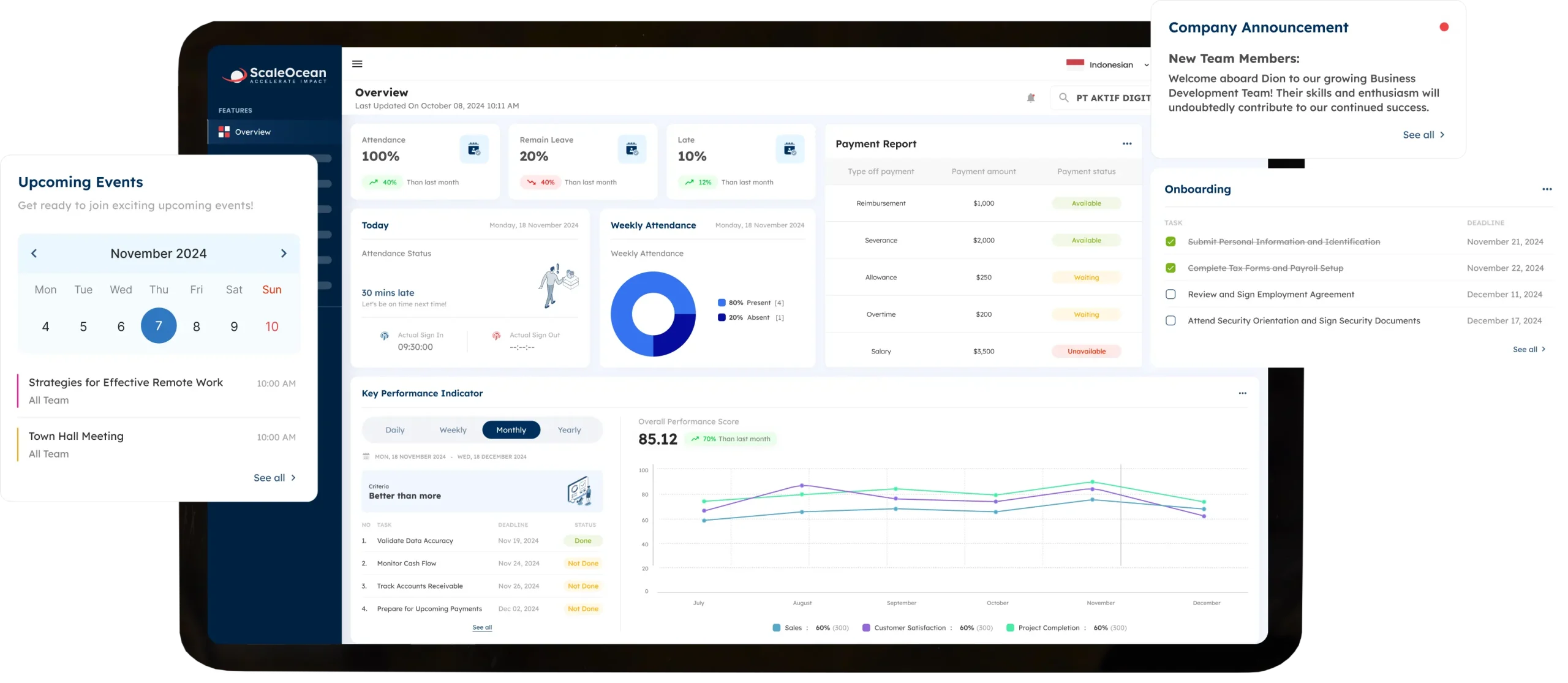
Digital absence management systems automate leave requests, approvals, notifications, reporting, and compliance tracking. This improves accuracy, visibility, and workforce planning to make sure your business keeps up with the highly competitive business environment.
Luckily for you, ScaleOcean is one of the best options available for your business. Its system is an all-in-one integrated ERP software with cross-department automation to help businesses reduce errors and improve productivity.
With ScaleOcean’s attendance software, you can eliminate manual processes with a digital system (e-attendance), starting from automatic and real-time attendance data collection, reducing human errors such as “buddy punching” and incorrect data entry, while enabling HR and management to update records instantly.
ScaleOcean provides a free demo and flat pricing without hidden fees, so you don’t need to worry about unexpected expenses. Below are the key features of ScaleOcean’s absence management software to optimise your employee attendance management, including:
- Attendance System: Help HR to automatically track employee attendance through a digital system, improving the accuracy of absence data and enabling seamless integration with the payroll system.
- Timesheet Management: This feature provides full transparency, allowing HR to instantly access employee timesheets within a single platform. It also enables lateness monitoring while ensuring the data can be accessed anytime to support decision-making.
- Employee Portal: Provide employees with access to view personal information, payslips, work schedules, submit leave requests, and download important documents from a centralised platform, thereby improving accessibility and transparency.
- Unlimited Users: 100% unlimited users with no additional user fees, giving you the freedom to scale your business without any restrictions on the number of users and worry about extra expenses.
- Leave Management: Simplifies the absence management with features that allow employees to select the leave type, dates, and reason. Managers can approve or reject leave requests with just one click, making the process more efficient.
With ScaleOcean’s absence management system, businesses can move away from manual spreadsheets and transform into a single digital platform that simplifies absence management. ScaleOcean is also eligible for the Capability Transfer and Development (CTC) grant requirements up to 70%, which can help companies enhance their digital capabilities.
Conclusion
Effective absence management is a critical business strategy that directly influences productivity, compliance, employee well-being, and overall operational stability. By implementing clear policies, accurate tracking systems, supportive interventions, and digital tools, organisations can reduce disruption, control costs, and create a more transparent workplace culture.
Businesses in Singapore that invest in effective absence management are better positioned to maintain continuity, improve morale, and drive long-term growth through a more accountable and supported workforce. ScaleOcean’s Absence Management Software helps businesses move away from manual spreadsheets and fragmented approval processes into a single digital platform that automates attendance, leave, and shift management.
For companies looking to modernise HR operations, ScaleOcean offers a practical way to build a more efficient and transparent workforce management process. Request a free demo now to experience firsthand a system that simplifies your company’s attendance and leave management.
FAQ:
1. What is an absence management process?
An absence management process is the step-by-step workflow an organisation follows to manage employee time away from work, from the moment an employee reports an absence until they return to work.
2. What is the role of HR in absence management?
By establishing clear standards, monitoring employee absences, and guaranteeing compliance to legal requirements, HR can play a critical role in absence management.
3. What are the signs of absent management?
These are the warning signs that an organisation’s absence management process is not working effectively:
1. Frequent Unplanned Absences
2. Repeated Patterns of Absenteeism
3. Lack of Clear Attendance Policies
4. Manual Errors and Inaccurate Records
5. Lack of Return-to-Work Follow-Up
4. How to improve absence management?
Improving absence management requires a balance of clear policies, employee support, manager accountability, and digital systems. The goal is not only to reduce absenteeism, but also to maintain productivity, improve compliance, and create a healthier workplace environment.


.webp)
.webp)

.webp)
.webp)



.webp)
.webp)




.webp)
.webp)
.webp)
.webp)


















.png)