Quality control is the process of ensuring products consistently meet defined standards by identifying defects before delivery. In manufacturing, even small quality issues can quickly escalate into customer complaints, product recalls, and financial losses, disrupting operations and damaging brand credibility.
As production scales, maintaining consistent product quality becomes more challenging. Moreover, manual inspections often fail to detect hidden defects early enough. According to Allied Market Research, the smart manufacturing quality control market is projected to reach $622.9 billion by 2032, growing at a 14% CAGR.
Many businesses also struggle to maintain clear documentation across inspection stages. Consequently, teams may rely on incomplete records or inconsistent evaluation methods. These gaps reduce visibility into production performance and make it difficult to identify recurring problems that impact long-term operational efficiency.
Therefore, implementing reliable quality control practices becomes essential for maintaining product consistency and protecting customer satisfaction. In this article, we will explain what quality control is, how it works, key methods used in manufacturing, and why it remains critical for operational success.
Key Takeaways
Quality Control is a structured process that monitors production activities to ensure products consistently meet predefined standards.
Quality Control Works by defining steps such as setting standards, testing materials, correcting defects, and using data to guide production decisions.
Quality Control in Different Industries adapts inspection methods to address safety risks, regulatory demands, and varying production complexity across sectors.
Quality Control is Important because it enhances customer satisfaction, reduces operational costs, supports compliance, and significantly improves overall manufacturing efficiency.
ScaleOcean Quality Management System improves quality tracking through integrated workflows, automation, and real-time monitoring, thereby strengthening accuracy and operational efficiency.
Quality control (QC) is the systematic process of monitoring production activities to ensure that products meet predefined standards. Manufacturers apply QC to detect defects, maintain consistency, and verify that finished goods match customer expectations and regulatory requirements.
Quality control meaning focuses on inspecting and testing products and comparing results against specifications. Unlike quality assurance’s process improvements, it helps teams identify defects early, preventing nonconforming products from reaching customers or distribution channels.
Manufacturers typically integrate QC into multiple stages of production. For example, they inspect raw materials before use and evaluate finished goods before shipment. By placing checkpoints throughout production, businesses reduce the likelihood of defective products entering the market.
Furthermore, effective QC improves operational efficiency over time. When teams consistently monitor results, they gain insights into recurring issues. With the help of CMMS software, manufacturers can refine production methods, minimize waste, and maintain steady product performance across large-scale manufacturing environments.
How the Quality Control Works
Quality control works through structured steps that guide inspections, testing, and corrective actions throughout production. Instead of relying on random checks, manufacturers implement planned procedures to maintain consistent product quality from raw material intake to final product release.
Each stage of production typically includes defined checkpoints where teams evaluate materials and processes. Moreover, these checkpoints ensure that deviations are detected early. Early detection reduces the cost of fixing defects and prevents large batches of faulty products from moving forward.
QC also relies heavily on accurate documentation and reporting. By recording test results and inspection outcomes, teams build a clear record of product performance. This documentation supports audits, compliance, and ongoing process improvements, reinforcing the quality control meaning in manufacturing.
Ultimately, QC becomes more effective when supported by standardized workflows and reliable monitoring tools. When manufacturers maintain structured procedures and data-driven evaluations, they strengthen consistency while ensuring every product meets required quality benchmarks before reaching customers.
Set Testing Standards
Manufacturers begin quality control by establishing clear testing standards that define acceptable product conditions. These standards outline measurable criteria such as dimensions, material strength, and safety thresholds. Without clear benchmarks, inspection teams may interpret results inconsistently across different production batches.
Additionally, standardized testing procedures ensure that all inspectors follow the same evaluation methods. This consistency reinforces what is quality control by improving reliability across testing stages and ensuring consistent evaluation outcomes throughout production.
Test Raw Materials and Various Stages
Quality control teams test raw materials before production begins to confirm their suitability. By verifying material quality early, manufacturers prevent defects caused by substandard inputs. This early validation reflects what is quality control by reducing waste and ensuring production processes begin with reliable materials.
Moreover, inspections continue throughout multiple production stages, not just at the beginning or end. Teams examine intermediate components during assembly to detect faults promptly. Consequently, early detection minimizes rework costs and prevents defective parts from progressing further into the production process.
Correct Problems
When inspectors identify defects, teams must take corrective actions immediately to prevent further issues. These actions may involve adjusting machinery settings, replacing faulty materials, or retraining operators. Rapid response limits the spread of defects and maintains consistent production quality across batches.
Documenting corrective actions ensures accountability and continuous improvement. By analyzing defects and implementing preventive measures, teams demonstrate quality control meaning. They reduce recurring problems and strengthen production reliability across the manufacturing cycle.
Collect Data and Make Decisions
Quality control processes generate valuable performance data from inspections and testing activities. Teams collect this information systematically to identify patterns, defect trends, and operational weaknesses. Reliable data provides a factual basis for evaluating product quality and improving manufacturing efficiency.
After collecting data, managers analyze results to make informed production decisions. For instance, they may modify workflows or update testing methods based on findings. Consequently, data-driven decisions strengthen product consistency and support continuous improvement across complex manufacturing environments.
How Quality Control is Implemented in Industry
Different industries implement QC based on their operational complexity, safety risks, and regulatory requirements. Although the core principles remain consistent, manufacturers customize inspection methods to address production challenges that directly affect product safety and reliability.
Moreover, industry-specific QC ensures consistent production outcomes while meeting strict compliance standards. By tailoring procedures to operational requirements, manufacturers reduce production errors and maintain stable performance across facilities that require precise control and dependable results across production cycles.
Additionally, integrating quality control into daily workflows helps teams identify defects before products move to later stages. As a result, businesses reduce recall risks, protect brand reputation, and maintain predictable manufacturing outcomes, even at high production volumes.
Food and Beverage Manufacturing: Focuses on hygiene, safety, and consistent flavor outcomes. Inspectors test raw ingredients, monitor storage temperatures, and check packaging conditions to prevent contamination while maintaining compliance with strict food safety regulations.
Automobile Manufacturing: Focuses on precision and safety performance throughout production stages. Teams inspect engine components, braking systems, and structural alignment to ensure vehicles meet safety standards and remain durable under varied driving conditions.
Electronic Manufacturing: Focuses on functional accuracy and component reliability. Inspectors check circuit boards, test voltage stability, and simulate operating conditions to identify defects early, ensuring devices work properly before reaching customers.
Aircraft Manufacturing: Requires highly detailed inspections due to strict safety demands. Engineers test structural components, verify material strength, and perform repeated validation checks to ensure aircraft systems operate reliably while meeting international aviation safety certification standards.
Quality Control vs. Quality Assurance
Quality control and quality assurance serve different but closely connected roles within manufacturing systems. QC focuses on detecting product defects through inspections, while QA emphasizes improving workflows and procedures to prevent errors before they affect production results.
Moreover, manufacturers often apply both approaches together to maintain consistent production outcomes. Quality assurance strengthens processes to reduce variation, while quality control verifies finished products, ensuring businesses meet defined standards, maintain compliance, and consistently deliver reliable products to customers.
Manufacturers commonly use both quality control and quality assurance to balance operations. Quality assurance enhances production reliability, while quality control ensures products meet specifications, supporting consistent performance.
Understanding the difference helps organizations assign tasks clearly. By separating preventive and corrective roles, manufacturers boost product reliability, lower risks, and maintain consistent quality in large-scale production.
Aspects
Quality Control
Quality Assurance
Definition
QC focuses on inspecting products to identify defects and ensure finished goods meet defined specifications.
QA focuses on improving processes to prevent defects and ensure production systems consistently produce quality results.
Primary Focus
QC focuses on detecting defects in products during or after production.
QA focuses on preventing defects by improving workflows, standards, and operational procedures.
Main Objective
The main objective of QC is to verify that products meet required quality standards before delivery.
The main objective of QA is to build reliable processes that reduce the risk of production errors.
Approach
QC uses reactive methods by identifying problems after they appear in products.
QA uses proactive methods by designing systems that prevent problems from occurring.
Key Activities
QC activities include inspections, product testing, measurement checks, and defect identification.
QA activities include process design, standard development, employee training, and workflow documentation.
Timing in Production
QC occurs during and after production to verify product quality at defined checkpoints.
QA occurs before and throughout production to maintain consistent operational quality standards.
Tools Used
QC tools include inspection checklists, testing equipment, and measurement devices used to evaluate product quality.
QA tools include process flowcharts, quality manuals, audits, and standard operating procedures used to guide production.
Outcome
QC ensures defective products are identified and corrected before reaching customers.
QA ensures production processes operate consistently to minimize the chance of defects.
Common QC Techniques & Methods
Manufacturers apply various quality control techniques to monitor product consistency and detect defects across production stages. Each method supports structured inspections, helping teams evaluate materials, processes, and outputs using measurable quality standards that guide consistent production performance.
Moreover, selecting suitable techniques depends on production scale, product complexity, and acceptable risk levels. Some methods reflect the quality control meaning through direct inspection, while others rely on statistical analysis to detect variation patterns that indicate emerging quality concerns.
Additionally, combining multiple QC techniques strengthens the reliability of inspections across manufacturing operations. When teams use complementary methods, they improve detection accuracy, reduce operational risks, and maintain consistent product quality in demanding, high-volume production environments.
100% Inspection Method
The 100% inspection method requires teams to examine every product unit produced during manufacturing operations. This method ensures inspectors detect defects before shipment, making it suitable for industries that require strict safety compliance and reliable product validation.
However, performing a full inspection demands significant labor time and operational resources to maintain consistent review coverage. Therefore, manufacturers typically apply this method to critical components, limited production batches, or products where defects could result in serious operational risks.
Control Charts
Control charts help manufacturers monitor production stability by tracking variations in process outputs over time. Teams plot measurement values against defined limits, allowing them to identify unusual patterns that indicate potential quality problems requiring corrective action.
Furthermore, control charts support continuous monitoring instead of isolated inspection points. By identifying trends early, manufacturers maintain process consistency, reduce unexpected variation, and ensure outputs remain within acceptable tolerance ranges during long production cycles.
Acceptance Sampling
Acceptance sampling allows manufacturers to evaluate product quality by testing a selected portion of a production batch. Instead of inspecting every item, teams review representative samples to determine whether the overall batch meets defined acceptance standards.
Additionally, this method helps reduce inspection time and operational costs compared to full inspection processes. When applied correctly, this method supports what is quality control by balancing inspection efficiency and quality reliability across large-scale standardized manufacturing operations.
Taguchi Method
The Taguchi method focuses on improving product quality by designing processes that reduce variation during manufacturing operations. Engineers conduct structured experiments to determine optimal production conditions that maintain stable performance under varying operational and environmental influences.
Moreover, this method emphasizes prevention by identifying early factors that influence product variability. Manufacturers benefit from improved reliability, fewer defects, and consistent performance in production environments that require precise process control and stable operational conditions.
Statistical Sampling
Statistical sampling enables manufacturers to evaluate product quality using representative samples instead of inspecting every unit. Teams apply probability-based selection methods that estimate overall product performance while maintaining dependable quality assessments across large-scale production operations.
Furthermore, this method improves inspection efficiency by reducing testing time without sacrificing reliable outcomes. Manufacturers benefit from lower operational costs while maintaining accurate quality monitoring across facilities producing large product volumes under consistent manufacturing conditions.
X-bar Chart
An X-bar chart is a statistical tool used to monitor the average measurement values of production samples over time. Teams record sample averages, helping them detect performance shifts that may indicate early signs of process instability.
Additionally, X-bar charts often work alongside range charts to improve monitoring accuracy. Together, these tools allow manufacturers to observe variability patterns, maintain stable operations, and ensure that production measurements remain within acceptable tolerance limits throughout ongoing production.
Six Sigma
Six Sigma is a structured quality improvement method that focuses on reducing defects through data-driven analysis techniques. Teams use statistical tools to identify root causes of variation and improve process reliability in manufacturing operations that require consistent performance outcomes.
Moreover, Six Sigma fosters continuous improvement through systematic evaluation and structured decision-making. Manufacturers using this approach reduce waste, enhance workflow efficiency, and ensure consistent product quality in competitive, high-standard production settings.
Types of Quality Control
Manufacturers employ various quality control methods to monitor production processes and maintain product reliability across operations. Each type focuses on specific inspection areas, helping teams detect defects, maintain consistency, and ensure outputs meet defined quality expectations consistently.
Moreover, selecting suitable QC types helps manufacturers address production risks more effectively. By applying targeted inspection strategies, companies improve visibility into manufacturing processes while ensuring materials, workflows, and finished goods maintain consistent performance throughout production stages.
Additionally, combining multiple QC methods enhances overall monitoring accuracy in manufacturing environments. When businesses understand what is quality control, they integrate multiple control approaches to improve defect detection and maintain dependable standards across complex production systems.
Statistical Quality Control (SQC): uses mathematical techniques to monitor production performance and detect patterns of variation. Teams analyze measurement data to identify deviations, enabling manufacturers to maintain consistent outputs and prevent defects from spreading across production batches.
Process Quality Control: focuses on monitoring workflows and equipment performance during manufacturing operations. Inspectors evaluate machine settings, production parameters, and workflow conditions to ensure processes operate consistently while minimizing variation that could affect final product quality.
Product Quality Control: involves inspecting finished goods to confirm they meet defined specifications before distribution. Tests assess dimensions, functionality, and appearance to ensure products meet customer expectations and reduce the likelihood of defective items reaching the market.
External Quality Control: involves independent inspections performed by outside organizations or regulatory bodies. These evaluations provide unbiased assessments of product quality, helping manufacturers verify compliance with industry regulations and maintain trust with customers and certification authorities.
Internal Quality Control: refers to inspection activities conducted by in-house teams during production stages. These internal checks help manufacturers quickly detect defects, improve process visibility, and maintain consistent production standards across daily manufacturing operations and internal quality workflows.
Why Is Quality Control Important?
Quality control plays a crucial role in maintaining consistent product performance throughout manufacturing operations. By detecting defects early, companies protect customer trust, reduce operational risks, and uphold reliable production standards that support long-term growth and market competitiveness.
Moreover, strong QC practices help sustain stable production outcomes while minimizing waste and inefficiencies. Consistent quality monitoring enhances operational reliability and ensures finished products meet customer expectations across diverse production conditions and market demands.
In addition, QC drives long-term operational improvement by identifying recurring production issues. Regular analysis of quality data highlights the quality control meaning by enabling better planning, optimized workflows, and more dependable manufacturing performance amid evolving production requirements.
Enhanced Customer Satisfaction: Improves customer satisfaction by ensuring products consistently meet expectations for performance and reliability. When customers receive dependable products, they develop trust in the brand, leading to stronger loyalty and increased repeat purchasing behavior over time.
Lowered Costs: Reduces operational costs by identifying defects before products move to later production stages. Early detection minimizes rework, reduces material waste, and prevents expensive product recalls that could negatively affect profitability and long-term financial stability.
Regulatory Compliance: Helps manufacturers comply with industry regulations and safety requirements throughout production operations. By maintaining accurate inspection records and following established standards, organizations reduce legal risks while ensuring products meet mandatory certification and compliance expectations.
Improved Efficiency: Enhances production efficiency by identifying workflow issues that slow manufacturing. When teams address inefficiencies quickly, they maintain steady production flow, reduce downtime, and ensure resources are used effectively across daily manufacturing operations.
To consistently maintain these benefits, manufacturers need systems that connect inspection workflows to daily operations. ScaleOcean Quality Management System integrates quality control with production, procurement, and inventory processes, helping teams track defects, standardize inspections, and maintain accurate records across departments.
With flexible customization, integrated modules, and transparent flat pricing with unlimited users, ScaleOcean supports scalable quality management without hidden costs. Businesses can request a free demo to explore how the system improves visibility, reduces manual errors, and strengthens compliance readiness.
Examples of Quality Control
Manufacturers apply quality control differently depending on industry requirements and product complexity. For example, in beverage manufacturing, teams test water quality, measure ingredient ratios, and inspect packaging seals to ensure products remain safe, consistent, and compliant with strict health regulations.
Additionally, inspectors monitor filling machines to verify accurate volume levels during bottling operations. When machines detect irregular measurements, operators adjust calibration immediately, preventing product waste and ensuring each bottle meets defined standards before distribution to retailers.
Moreover, quality control teams perform visual inspections to identify labeling errors, packaging damage, or contamination risks. These inspections help maintain product presentation quality and prevent defective items from reaching customers, protecting brand reputation and maintaining consumer confidence.
Therefore, applying structured QC steps across production stages helps beverage manufacturers maintain consistent taste, safe packaging, and reliable distribution outcomes. This approach ensures companies meet regulatory requirements while consistently delivering dependable products that satisfy customer expectations.
When Does Quality Control Go Wrong?
Quality control can fail when manufacturers rely on inconsistent inspection methods or outdated testing procedures. Without clear standards, teams may overlook defects, allowing faulty products to move forward and increasing the likelihood of customer complaints or costly product recalls.
Moreover, insufficient staff training often leads to quality-control breakdowns in daily operations. When inspectors misunderstand testing procedures or equipment usage, they may record inaccurate results, leading to incorrect decisions that compromise product reliability and operational safety across manufacturing processes.
Additionally, poor communication between production and inspection teams undermines the effectiveness of quality control. When departments fail to share accurate information, unresolved defects may continue recurring, increasing operational inefficiencies and making it difficult to identify the root causes of production problems.
Quality Control Careers in Singapore
Quality control careers in Singapore offer opportunities across manufacturing sectors such as electronics, pharmaceuticals, and food production. Companies require trained professionals to monitor production quality, maintain compliance, and ensure products meet strict international safety and performance standards.
Moreover, Singapore’s strong manufacturing infrastructure creates continuous demand for skilled QC professionals. As industries expand automation and adopt advanced inspection technologies, organizations seek individuals capable of effectively managing both manual inspections and digital quality monitoring systems.
Additionally, quality control roles support long-term career development through specialized certifications and technical training programs. Professionals who develop expertise in inspection procedures and quality standards gain a competitive advantage when pursuing advancement opportunities in modern manufacturing environments.
Requirements
Most QC positions require technical knowledge related to manufacturing processes and inspection methods. Employers typically expect candidates to understand measurement tools, testing procedures, and quality documentation standards used to maintain consistent production outcomes across regulated industrial environments.
Additionally, many employers prefer candidates with diplomas or degrees in engineering, manufacturing technology, or quality management systems. Strong attention to detail, problem-solving skills, and communication help professionals perform inspections accurately and report findings effectively to production teams.
Career Path
Quality control careers typically begin with entry-level roles such as quality inspectors or laboratory assistants. In these roles, you’ll learn inspection procedures, testing methods, and reporting practices that provide a foundation for managing product quality in manufacturing operations.
With experience, professionals may advance to roles such as quality supervisors, quality engineers, or quality managers. These positions involve overseeing inspection teams, analyzing quality data, and implementing improvement strategies to enhance operational efficiency in complex manufacturing environments.
Quality Control Salaries in Singapore
Quality control salaries in Singapore vary depending on experience level, industry specialization, and technical expertise. Entry-level inspectors typically earn moderate starting wages, while experienced professionals in regulated sectors often receive higher compensation due to specialized responsibilities and compliance requirements.
According to recent data that our team collected from Jobstreet Singapore, there are about 2,534 quality control job opportunities, with a typical monthly salary of around $2,700, reflecting steady demand across manufacturing and regulated production industries.
Additionally, the profession shows strong career potential, with job growth reaching 33.2% in the past year. Professionals with certifications and technical expertise often secure higher compensation as they advance into supervisory or specialized quality management roles.
Furthermore, professionals with advanced certifications or leadership responsibilities often earn higher salaries than entry-level staff. Companies value individuals capable of managing quality systems, conducting audits, and implementing improvements that enhance production reliability and long-term operational performance.
What Does a Quality Control Inspector Do?
QC inspectors examine materials, components, and finished products to verify compliance with defined standards. They perform visual inspections, measure product dimensions, and conduct functional testing to ensure items meet required specifications before progressing to the next production stage.
Additionally, inspectors document inspection results and report any detected defects to production teams. Accurate reporting reinforces what is quality control by supporting timely corrective actions and helping manufacturers maintain consistent product standards across daily operations.
Moreover, quality control inspectors also monitor production processes to ensure equipment operates within acceptable limits. By identifying unusual patterns or irregular outputs early, inspectors help prevent defects from spreading across large production batches and maintain stable manufacturing performance.
Therefore, quality control inspectors play a critical role in maintaining product reliability and customer satisfaction. Their work ensures manufacturers deliver consistent outputs, meet regulatory requirements, and maintain strong reputations within competitive industrial markets that demand dependable product quality.
How to Track Quality Control with ScaleOcean?
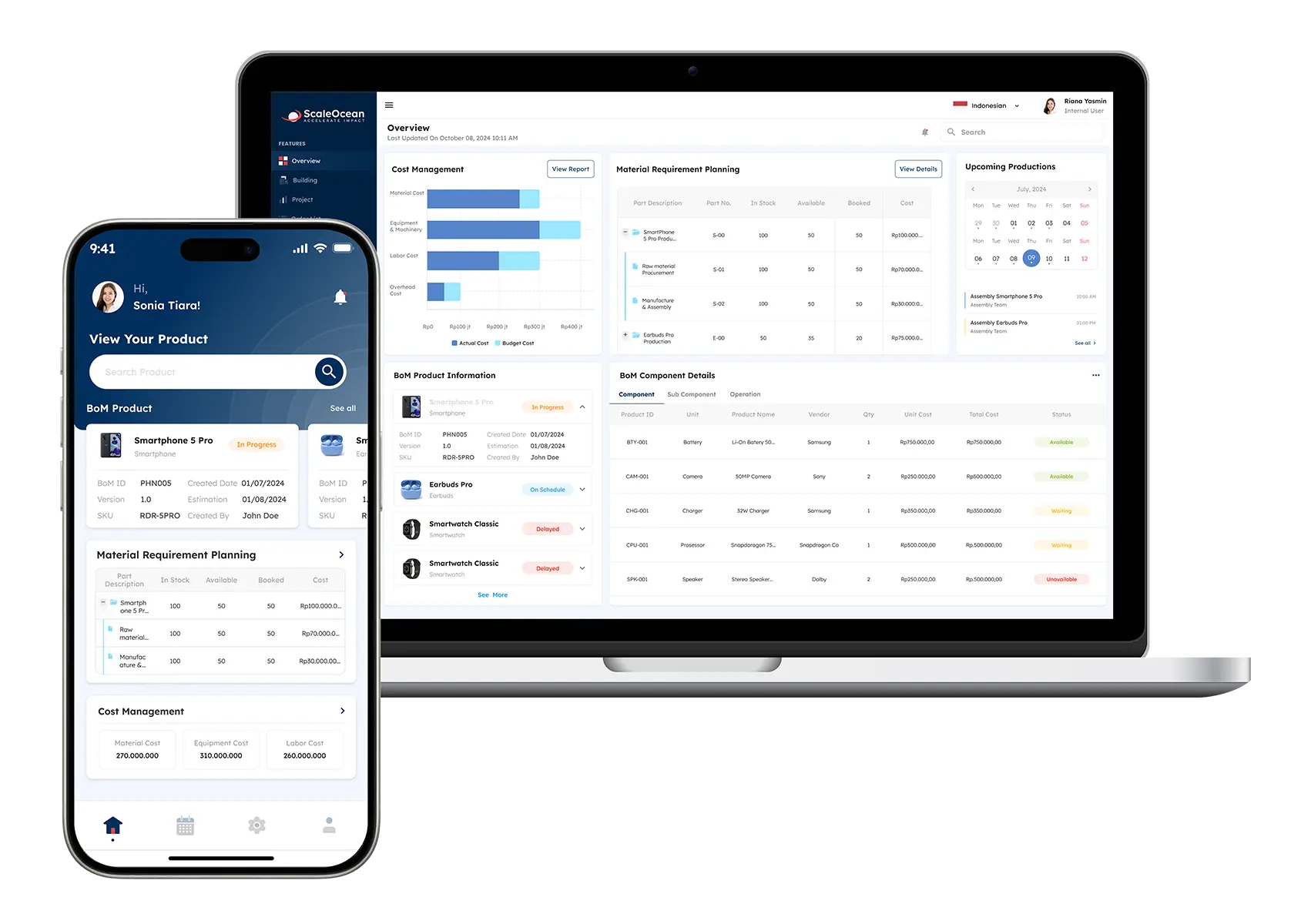
Tracking quality control is more effective when manufacturers use connected systems that integrate inspection data with operational workflows. ScaleOcean’s Quality Management Systemsupports centralized quality monitoring by linking inspection activities with production, procurement, and inventory processes across departments.
ScaleOcean also enables cross-departmental automation, connecting quality control tasks with daily production and material management. This integration helps teams detect issues earlier, respond faster, and maintain clear communication across units managing critical workflows.
Additionally, ScaleOcean offers flexible customization, allowing manufacturers to tailor quality control modules to specific industry workflows and regulatory requirements. Businesses can adjust inspection criteria, approval steps, and reporting formats to fit their quality standards.
Furthermore, ScaleOcean provides a comprehensive solution that integrates production, inventory, procurement, and logistics into a single system. With quick implementation, flat pricing, unlimited users, and eligibility for a 70% match of the CTC grant, it offers scalable quality management without hidden fees.
Key Features of ScaleOcean’s Quality Management System:
Inbound Inspection: This feature supports raw material inspection upon supplier delivery using defined sampling percentages and quality parameters. The system records inspection results and applies automatic quarantine controls that block rejected materials from entering production workflows or inventory systems.
In-Process Quality Control (QC): This feature enables continuous monitoring during production through predefined operational checkpoints. Digital worksheets guide inspectors through required tests, ensuring consistent inspection procedures while allowing teams to detect defects early before products reach final production stages.
Non-Conformance Management: This feature helps teams manage defective products using structured workflows, including Return Merchandise Authorization processes. The system also supports disposition decisions, allowing manufacturers to classify items for rework, disposal, or secondary-grade resale based on inspection outcomes.
Lot and Serial Number Tracking: This feature enables full product genealogy tracking by recording batch components and serial data across production stages. Barcode and QR code integration accelerates inspection recording, improves traceability accuracy, and reduces manual-entry errors in quality documentation processes.
Statistical Process Control (SPC): This feature provides visual dashboards that display quality trends and process variation patterns over time. Automated alerts notify teams when measurements approach tolerance limits, enabling manufacturers to take preventive action before conditions exceed acceptable thresholds.
Conclusion
Quality control helps manufacturers maintain consistent standards, prevent defects, and ensure reliable production outcomes. By applying structured inspections and monitoring processes, businesses reduce operational risks, improve product reliability, and maintain customer trust across competitive manufacturing environments.
To manage quality efficiently, manufacturers need systems that connect inspection data with production and inventory workflows. ScaleOcean Quality Management System enables integrated quality control through customizable modules, helping teams automate inspections, track defects, and maintain accurate quality records across departments.
Moreover, ScaleOcean offers rapid implementation, transparent flat pricing, and unlimited users without hidden costs. Request a free demo today to see how ScaleOcean simplifies quality control management and helps your business maintain consistent manufacturing performance.
FAQ:
1. What are the 4 pillars of quality control?
The four main pillars of quality management are Planning, Assurance, Control, and Improvement.
2. What are the 7 qualities of quality control?
According to the ISO 9000 family, the seven quality management principles essential for an effective quality system are customer focus, leadership, people engagement, process approach, continuous improvement, evidence-based decision making, and relationship management.
3. What are the 7 quality control principles?
The seven key quality principles include Customer Focus, Leadership, People Motivation, Process Awareness, Improvement, Evidence-Based Decisions, and Relationship Management.
4. What are the 12 essentials of quality control?
The 12 essentials of quality control cover organization, personnel, equipment, purchasing and inventory, process control, information management, documentation, occurrence management, assessment, process improvement, customer service, and facilities and safety.













 Key Takeaways