

The definition of supply chain management is the management of all the activities that are required to make the product or the service available to the customer. The process is complex and includes sourcing, designing, manufacturing, storing, shipping, and distribution, all to ensure smooth processes.
Supply chain management is just about the enhancement of efficiency, quality, productivity, and the satisfaction of customers. Businesses in Singapore can create a robust and flexible supply chain by controlling these interrelated processes to meet evolving customer needs and ensure a competitive edge.
In Asia, Singapore boasts a highly developed logistics infrastructure, an efficient and minimalist customs process, and a dynamic hub connectivity, which all contribute to its position as today’s top logistics hub and successive victories in the World Bank’s Logistics Performance Index (LPI).
 Key Takeaways
- Supply Chain Management (SCM) is the ongoing process businesses use to optimize and streamline their supply chains for peak efficiency and cost-effectiveness.
- Key phases of SCM cover planning, sourcing, production, distribution, returns, inventory, IT, and risk management to optimize efficiency and resilience.
- SCM benefits enhance collaboration, agility, profitability, risk management, and sustainability, driving efficiency, cost savings, and long-term growth.
- ScaleOcean SCM software optimizes the supply chain with integrated modules, improving visibility, coordination, and responsiveness to market demands.

1. What is Meant by Supply Chain Management?
Supply Chain Management (SCM) is the ongoing process businesses use to optimize and streamline their supply chains for peak efficiency and cost-effectiveness. It strategically oversees the flow of goods, services, information, and finances, from raw materials through delivery.
SCM’s core goal is to streamline processes, reduce operational costs, and boost productivity across the entire chain. By integrating functions like production and distribution, it enables businesses to meet customer demands effectively while maintaining profitability.
2. What is the Importance of Supply Chain Management?

Smooth supply chains let efficiency settle into routine tasks, and when workflows sharpen, outcomes shift in a better direction. Waste slips away, profit stretches beyond old limits. Streamlined steps push operating costs downward slowly. Most big-picture thinking ties back to getting products where they need to go.
When companies manage shipping well, it quietly steers their future moves. Hitting deadlines keeps results close to what was planned. Performance becomes clear through a steady pace and fewer surprises. The following are the primary reasons why SCM is essential:
a. Enhancing Efficiency
Understanding the value chain through SCM can significantly improve coordination between these processes. Smooth operations come from cutting waste and avoiding holdups; that is what smart handling of supplies helps achieve. Running things well means keeping just enough stock, never too much, never too little, while using every resource fully.
Tightly linked actions across the whole supply path make everything work better without extra effort. When steps are clearer, teamwork grows stronger across suppliers, makers, and those who deliver goods. Faster reactions follow, people get what they need on time, and satisfaction goes up.
b. Cost Optimization
Getting things cheaper starts with smarter buys, moves into leaner making, then smooth shipping. Tools that track where money goes help spot patterns, while systems linking up with vendors cut delays. Buying more at once lowers prices, moving goods smartly cuts time, and fixing flaws before they grow saves materials.
c. Boosting Customer Satisfaction
Stock gaps shrink when systems work smoothly, allowing orders to move faster through each stage. Effective warehouse distribution management helps maintain clearer inventory records, optimize goods movement, and build customer trust through more consistent service delivery.
d. Supporting Scalability
Working with the right supplier helps companies move forward smoothly. When needs get bigger, systems that stretch along keep performance steady without slowing things down. Staying sharp and ready comes naturally when movement feels effortless.
3. Components and Phases of SCM
Supply chain management is made up of interconnected components and phases that ensure effective and smooth operations. These components form a systematic framework for managing resources, processes, and activities throughout the supply chain.
Each phase is critical for synchronizing operating objectives, optimizing efficiency, and addressing difficulties in order to maintain a resilient and adaptable supply chain. The following are the main components and phases:
a. Planning
Planning involves forecasting demand and strategically allocating resources to guide purchasing and production. Accurate market prediction helps organizations avoid inventory issues and enhance responsiveness to market shifts while aligning actions with core corporate goals.
Effective planning prepares businesses for shifts in consumer demand, preventing costly overstocking or stockouts. It ensures that the supply chain strategy robustly supports long-term goals, cultivating seamless operations and driving sustainable growth for the company.
b. Sourcing
Sourcing involves strategically finding and selecting suppliers for materials and services. To ensure consistency, businesses evaluate partners based on reliability, cost, and quality, fostering long-term relationships that secure a dependable supply chain.
Optimizing sourcing practices helps businesses lower procurement costs, guarantee timely deliveries, and increase supply chain flexibility. A strategic sourcing approach strengthens supplier relationship management, delivering mutual benefits and greater efficiency.
c. Production
Production efficiently transforms raw materials into finished goods using advanced technology and lean methods. Strict quality control ensures products meet all customer and industry standards, effectively minimizing operational waste and costly delays.
Streamlined production increases output while upholding high product quality. By enhancing operational efficiency, businesses can meet customer demands promptly and reduce costs, directly improving overall profitability and customer satisfaction levels.
d. Distribution
Distribution, or logistics, centers on the efficient delivery of products to customers. This core function involves managing transportation, warehousing, and inventory to ensure goods reach their final destination on time and in optimal, ready-to-use condition.
An efficient distribution network minimizes operational costs while significantly boosting customer satisfaction. Well-managed logistics enables businesses to quickly adapt to market demands, improving service delivery and solidifying long-term customer loyalty.
e. Return Process
The return process manages product returns due to defects or dissatisfaction. This phase is crucial for preserving customer trust and satisfaction by ensuring returns are handled efficiently, thereby minimizing any negative impact on the business.
An organized return process ensures swift handling of returned products for restocking, repair, or disposal. By defining clear policies and efficient logistics, businesses can significantly reduce costs and enhance the overall customer experience.
f. Inventory Management
Inventory management involves tracking optimal stock levels to reliably meet demand without excess. Optimizing this crucial process minimizes waste, reduces holding costs, and improves cash flow, while ensuring customers always have timely access to products.
Efficient inventory control is vital to prevent costly overstocking or stockouts, leading to smoother operations and significantly enhanced customer satisfaction. Integrating systems like warehouse execution software and Supply Chain Execution (SCE) solutions further strengthens control by improving inventory visibility, coordinating warehouse activities, and streamlining order fulfillment efficiency.
g. Information Technology (IT) Systems
IT systems are pivotal for modern supply chain management, offering crucial real-time data visibility. Technologies like ERP, IoT, and AI enhance resource allocation, improve demand forecasting, and sharpen decision-making across all supply chain activities.
Integrating advanced IT systems connects departments and stakeholders, ensuring accurate information sharing. This technological foundation enhances overall efficiency, minimizes errors, and allows quicker market adaptation, ultimately driving superior business outcomes.
h. Risk Management
Risk management centers on identifying and addressing potential threats like supply chain disruptions, economic volatility, and transport issues. By proactively tackling these challenges, businesses can effectively safeguard their core operations and ensure the continuity of service delivery.
Implementing mitigation strategies, such as alternative sourcing and robust contingency planning, significantly enhances resilience. This ensures supply chains remain functional during disruptions. A solid risk management approach minimizes financial exposure and protects the company’s vital reputation.
4. What Are the Benefits of Supply Chain Management?
Supply chain management provides numerous benefits that promote business growth and sustainability. Businesses may increase efficiency, save costs, and improve customer satisfaction by optimizing each stage of the supply chain.
According to Indeed, professionals in supply chain management, such as supply chain managers, earn an average salary of $86,594 per year in the United States, making it a lucrative career path. These benefits, taken together, create a competitive advantage in today’s dynamic marketplace. Here are the main benefits:
a. Improved Collaboration
SCM improves communication and coordination among stakeholders, suppliers, and customers. This collaboration promotes openness throughout the supply chain, resulting in faster decision-making and problem resolution. Furthermore, enhanced communication lowers misconceptions and builds trust, resulting in a more resilient and adaptable supply chain network.
b. Enhanced Agility
An efficient supply chain enables organizations to react rapidly to market developments and consumer expectations. It enables firms to change production levels, improve inventories, and streamline logistics to meet changing priorities. Furthermore, by evaluating real-time data, organizations may predict trends and align their strategy with client expectations.
c. Increased Profitability
Profit margins increase as processes are optimized and costs are reduced. Businesses can increase returns by streamlining procedures and avoiding unnecessary expenses. Furthermore, implementing efficient production procedures and utilizing economies of scale helps to sustain profitability in the long run.
d. Better Risk Management
SCM detects and manages potential risks, providing operational continuity. This includes examining supply chain vulnerabilities such as supplier reliability, geopolitical risks, and transportation interruptions. Businesses can prevent disruptions and maintain consistent operations even when faced with unexpected problems by employing preemptive steps such as alternate sourcing and contingency planning.
e. Sustainability
Integrating eco-friendly techniques into SCM encourages environmental stewardship and long-term growth. This strategy entails lowering carbon emissions, implementing renewable energy sources, and optimizing transportation routes to minimize environmental impact. It also promotes sustainable procurement and waste reduction activities, which help businesses connect with global environmental goals.
5. Types of Supply Chain Models
Some businesses pick a supply chain setup based on what they sell, who buys it, and what they aim to achieve. A good fit helps them work more smoothly, spend less, yet deliver better results for customers. Below are the approaches used most often:
a. Continuous Flow Model
Most of the time, output stays steady with this setup, making it fit for items people want often while needing little change. Because workflows become predictable, breaks between tasks shrink when supplies arrive on schedule, and steps stay identical. Industries depending heavily on consistent results tend to gain the most, since buyers expect things to work the same every single time.
b. Agile Model
Change comes fast, so plans must bend without breaking. When shoppers shift or supplies stall, room to pivot keeps things moving. Staying sharp in shaky markets means building for twist after twist, bouncing with the moment, beats sticking rigid when the ground moves, unplanned chances often arise where rules are loose enough to follow them.
c. Fast Model
Out there, getting things done fast matters most when time presses hard. Where seconds count, this way of building stuff shines brightest, especially in industries like clothing lines or gadgets with short product lifecycles. Moving swiftly from idea to shelf helps businesses stay ahead of shifting market demands, while effective supply chain network design ensures operations remain agile until buyer interest changes.
d. Flexible Model
This can be done by companies that have changes in their demand or even have seasonal demand, and can be scaled up in accordance with the changes of the firm. It’s particularly helpful in businesses such as retailing and farming, where demand fluctuates with the season or market trends. This way, during peak seasons, the company can allocate resources and plan production effectively, and during lean periods, it can produce at a lower cost.
e. Efficient Model
This paradigm is cost-saving and maximizes the use of resources without waste. It does that through lean manufacturing processes and leading analytics, which they use to identify and eliminate inefficiencies, and also stresses how resources are allocated and ensures that all the elements of the supply chain are working at their best.
f. Custom Model
It applies to specific business requirements and has special working conditions. It enables companies to develop their activities at the level of SCM procedures so that they overcome the specific problems that they may have, such as specific market needs or specific product needs. Tailored workflows can enhance the productivity of businesses and ensure they stay competitive in the market.
6. Example of Supply Chain Management (SCM)
A retail company using SCM would source resources globally, manufacture products locally, and distribute them through regional hubs to ensure timely delivery. Each element, from procurement to delivery, is meticulously planned and supported by product traceability to maximize efficiency and reduce costs.
By employing technology and solid supplier relationships, the organization ensures consistency in quality and delivery schedules, effectively fulfilling changing consumer expectations.
7. Trends and the Future of Supply Chain Management Technology
The future of supply chain management is being defined by new technology and changing business requirements. As global supply chains become more complicated, firms are turning to innovative solutions to boost efficiency and responsiveness. The following are major trends:
a. The Value of ERP and SCM Integration
Integrating enterprise resource planning (ERP) systems with SCM enhances data sharing, streamlining operations, contract management, and decision-making. This interface provides real-time visibility into supply chain processes, resulting in more precise forecasting and resource allocation. It also helps to unify diverse systems, which improves collaboration and overall operational efficiency.
b. SCM and the Cloud
Cloud-based supply chain optimization software enables real-time data access, scalability, and collaboration for worldwide operations. By providing seamless integration of systems and data, these solutions enable businesses to make educated decisions rapidly. Furthermore, cloud technology enables remote access, which ensures continuity and flexibility in managing global supply chains.
c. The Impact of AI in Supply Chain Management
Artificial intelligence allows predictive analytics, process automation, and improved supply chain decision-making. By analyzing massive amounts of data, AI can find patterns and trends that assist proactive initiatives for reducing disruption. Furthermore, AI-powered automation boosts efficiency by reducing repetitive tasks and optimizing workflows across a variety of supply chain operations, including pharmaceutical distribution automation software.
d. SCM and Industry 4.0
The fourth industrial revolution introduces IoT, robotics, and smart technologies into SCM, increasing efficiency and innovation. IoT offers real-time tracking and monitoring of commodities, improving visibility throughout the supply chain. Robotics automates repetitive operations, lowering errors and boosting efficiency, whilst smart technologies use data analytics to improve decision-making and operational accuracy.
8. Manage All Supply Chain Processes with ScaleOcean SCM Software
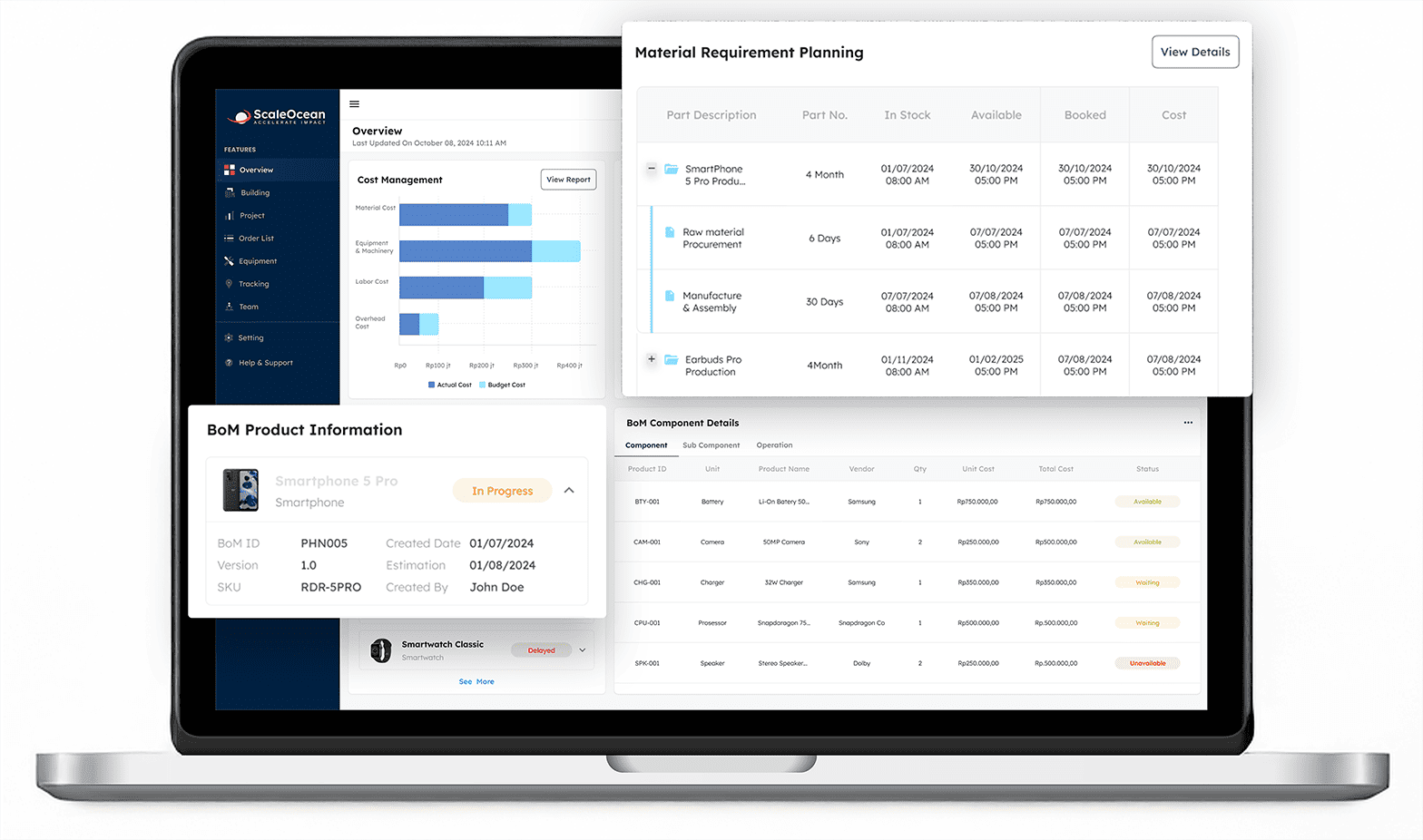
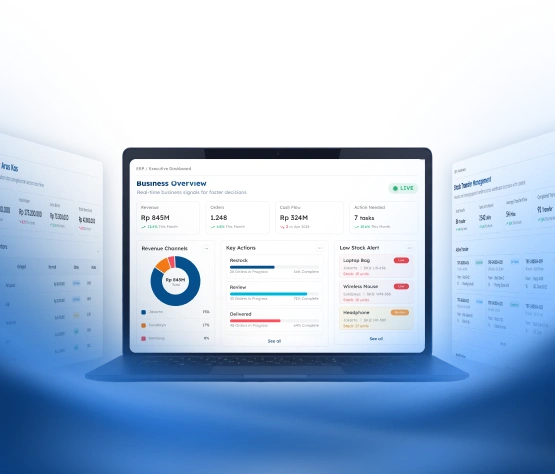
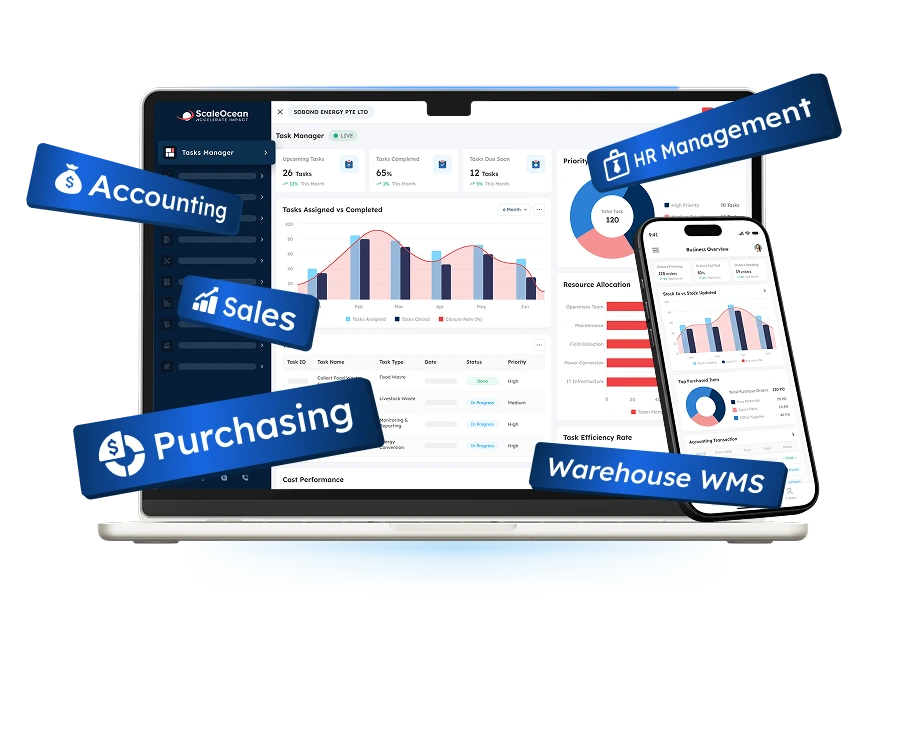
ScaleOcean ERP offers integrated SCM software to optimize end-to-end supply chain operations. Its connected modules enhance visibility, improve coordination between procurement, warehousing, and distribution, and help businesses respond quickly to changing market demands.
ScaleOcean focuses on data-driven decision-making, unifying procurement, logistics, and inventory in a single platform. In Singapore, it helps companies use the CTC Grant to turn process improvements and workforce upskilling into measurable supply chain gains over time. The following are the key advantages of ScaleOcean SCM software:
- Enhanced Collaboration: Facilitates seamless communication and coordination between suppliers, manufacturers, and distributors, ensuring transparency and improved decision-making.
- Real-Time Visibility: Offers real-time information on inventory status, supply chain activities, and bottlenecks to enable faster corrective actions.
- Cost Reduction: Identifies inefficiencies, minimises wasted resources, and optimises resource allocation to provide substantial cost savings and margin enhancements.
- Scalability: Can be expanded to meet changes in the business and market requirements.
- Automation: Automates repetitive tasks with accuracy, saving time and resources for strategic tasks and innovation.
- Sustainability: Encourages environmentally-friendly practices by optimizing routes, minimizing waste, and implementing renewable energy solutions, while achieving overall long-term environmental and sustainable benefits for businesses.
9. Conclusion
For businesses aiming at optimizing operations, boosting efficiencies, and meeting customer expectations, supply chain management (SCM) stands out as an essential function. Companies will gain promoted growth and sustainability by knowing the phases, benefits, and technical advancements of supply chain management.
Innovative technologies like ScaleOcean SCM Software are essential for businesses to be competitive. Connect all elements of your supply chain with innovative features and an intuitive UI with ScaleOcean. Experience the ScaleOcean for a free demo today, and discover how to optimize business operations, boost productivity, and make informed decisions.
FAQ:
1. What does supply chain work do?
At its core, supply chain management (SCM) oversees the movement of goods, information, and finances related to a product or service. This process spans from sourcing raw materials to delivering the finished product to its final destination.
2. What is MBA in supply chain management?
An MBA in supply chain management is a graduate program that focuses on the strategic oversight of supply chains. It provides professionals with expertise in areas such as logistics, procurement, operations, and analytics, preparing them for leadership positions to enhance supply chain performance.
3. What are the 5 main functions of supply chain management?
The primary functions of supply chain management include procurement, operations, logistics, resource management, and the flow of information, each contributing to streamlined and effective operations.
4. What are the 7 C’s of supply chain management?
The 7 C’s are Connect, Create, Customize, Coordinate, Consolidate, Collaborate, and Contribute. These serve as a guiding framework to enhance supply chain reliability, efficiency, and sustainability, especially as technology advances and global challenges arise.





















.png)