

AI data analytics is a technology-based solution that involves analyzing large amounts of business data, looking for patterns, finding anomalies, making predictions, and facilitating a better decision-making process. It integrates AI functionalities with data processing and analytics, ensuring a faster way for businesses to gain valuable insights compared to manual methods.
In Singapore, business issues are not just about data scarcity, but extend to data silos. Businesses already gather data from sales, finance, procurement, inventory, and operations, but data may be scattered in various systems. This can lead to delayed reporting being delayed, visibility is limited and it is hard to make business decisions from dashboards.
However, with businesses becoming increasingly reliant on AI-powered operations, they cannot rely on just any analytics tools. A unified solution that brings together business data, workflows, and operations can help businesses gain more meaningful insights and make decisions based on accurate and consistent information.
According to the data our team gathered from MTI Singapore, 88% of Singapore businesses reported that digitalisation is important for their business growth, highlighting the continued need for companies to strengthen their digital capabilities and use technology to improve business operations.
Learn more about the role of AI data analytics, its core technologies, the business value, practical applications, implementation considerations, and how enterprises can leverage AI data analytics insights to enhance decision-making.
 Key Takeaways
- AI data analytics is the use of artificial intelligence technologies to gather, process, analyse, and interpret business data, enabling organisations to uncover insights, identify patterns, and support more informed decision-making.
- AI data analytics is powered by technologies such as machine learning, generative AI, natural language processing, predictive analytics, AI agents, automated machine learning, and natural language querying.
- AI data analytics provides key business benefits such as faster analysis of large data volumes, more accurate forecasting, automated reporting, earlier risk detection, improved accessibility, and faster decision-making through data-driven insights.
- ScaleOcean provides ScaleMind AI-assisted analytics that will help businesses analyze operational data and generate insights from connected workflows.
What Is AI Data Analytics?
AI data analytics is the use of AI technologies to gather, analyze, process, and interpret business data. AI data analytics can detect patterns, forecast potential outcomes, and suggest solutions based on available data, whereas traditional analytics typically involves analyzing past data and reporting on it.
AI data analytics can be leveraged by businesses to process data from various sources such as financial records, customer interactions, supply chain operations, inventory tracking, manufacturing processes, and employee information. When combined, these datasets can provide organizations with valuable insights into their current performance and opportunities or risks for improvement.
For enterprises, the value of AI data analytics comes from transforming raw data into meaningful insights. Instead of relying only on manual reports or predefined dashboards, teams can use AI-assisted analysis to discover trends, detect unusual activities, and support decisions across different business functions.
 Also Read: What Is Artificial Intelligence (AI) and How It Works
AI Data Analytics vs Traditional Data Analytics
Traditional data analytics typically relies on structured reporting, predefined queries, and manual analysis processes. While it remains useful for understanding historical performance, businesses may require additional effort to identify complex patterns or predict future outcomes.
AI data analytics enhances this process by introducing automation, machine learning models, and intelligent analysis capabilities. It can process larger datasets, identify hidden relationships, and provide faster insights to support business decisions.
| Aspect | AI Data Analytics | Traditional Data Analytics |
|---|---|---|
| Main Approach | Uses AI technologies to analyse data, identify patterns, and generate insights automatically. | Uses structured reporting, predefined queries, and manual analysis to interpret data. |
| Data Processing | Can process large and complex datasets from multiple sources with AI-assisted capabilities. | Typically relies on structured datasets that require preparation before analysis. |
| Analysis Capability | Identifies hidden patterns, anomalies, relationships, and potential future outcomes. | Primarily analyses historical data to understand past and current performance. |
| Automation Level | Automates data analysis, insight generation, and predictive processes. | Requires more manual involvement for data preparation and interpretation. |
| Decision Support | Provides AI-assisted recommendations to support faster decision-making. | Provides reports and information that require further human interpretation. |
AI Data Analytics vs Business Intelligence vs Machine Learning
AI data analytics, business intelligence (BI), and machine learning (ML) are related technologies but serve different purposes. Business intelligence focuses on organising and visualising business information, while machine learning enables systems to identify patterns. AI data analytics combines these capabilities to help businesses analyse data and generate actionable insights.
| Aspect | AI Data Analytics | Business Intelligence (BI) | Machine Learning (ML) |
|---|---|---|---|
| Main Purpose | Uses AI to analyse data, generate insights, and support business decisions. | Organises and visualises business information through reports and dashboards. | Learns from data patterns to improve predictions and automate decisions. |
| Primary Focus | Combines data analysis, prediction, automation, and AI-assisted recommendations. | Focuses on monitoring performance and understanding business trends. | Focuses on building models that recognise patterns and predict outcomes. |
| Data Usage | Analyses structured and complex data from different business sources. | Usually relies on structured data prepared for reporting purposes. | Uses historical datasets to train models and improve predictions. |
| Business Application | Supports forecasting, anomaly detection, operational insights, and decision-making. | Supports KPI tracking, reporting, and performance monitoring. | Supports prediction, classification, optimisation, and automation. |
| User Interaction | Can support natural language queries and AI-assisted exploration. | Users typically interact through dashboards and predefined reports. | Often requires technical expertise to build and maintain models. |
How Does AI Data Analytics Work?
AI data analytics works by using machine learning models, natural language processing, and automated algorithms to ingest, clean, analyze, and visualize data across the entire analytics lifecycle.
AI systems automate heavy lifting and allow users to interact with data using plain, conversational language.
1. Data Collection and Integration
The initial phase of AI data analytics is the gathering of data from various business sources and the ability to place it in a single location. The data may be obtained from ERP systems, CRM platforms, financial applications, operational systems, IoT devices, or other sources.
A connected data environment enables AI systems to process data from various business functions instead of just one data set. This enables a business to have a more comprehensive view of the overall performance of its operations and the interactions among the various operations.
2. Data Cleaning and Preparation
Before AI models can analyse data, information needs to be cleaned and prepared to ensure accuracy and consistency. This process includes removing duplicate records, correcting errors, standardising formats, and resolving incomplete information.
High-quality data is important because inaccurate or inconsistent information can affect the reliability of AI-generated insights. Businesses should establish proper data management practices to ensure analytics outputs are based on trusted information.
3. Pattern and Anomaly Detection
AI analytical capabilities can help uncover trends and correlations, as well as unusual behavior, in massive amounts of data that might be hard to find by manual analysis. Machine learning models can be used to look at present data and make comparisons with past data, identifying changes or unusual behavior.
AI can, for instance, discover unparalleled purchasing patterns, unanticipated inventory changes, sales variances, or operational problems that could warrant more investigation.
4. Predictive and Prescriptive Analysis
After identifying patterns, AI data analytics can use predictive models to estimate possible future outcomes. Businesses can apply these insights to areas such as demand forecasting, sales planning, inventory management, and financial projections.
Beyond predicting what may happen, prescriptive analytics can recommend possible actions based on available data. This helps businesses evaluate options and make more informed decisions.
5. Natural Language Queries
Natural language querying allows users to interact with analytics systems using everyday language instead of complex database queries. Users can ask questions about business performance and receive AI-generated responses.
This capability makes analytics more accessible to non-technical users, allowing managers and business teams to explore information without depending entirely on data specialists.
6. Data Visualisation and Insight Generation
AI data analytics can transform complex datasets into dashboards, reports, charts, and visual insights that are easier to understand. These visualisations help businesses monitor key performance indicators and identify important trends.
By presenting information in a clearer format, decision-makers can quickly understand operational conditions and focus on areas that require attention.
7. Continuous Learning and Monitoring
AI analytics systems can continuously monitor new data and improve insights as additional information becomes available. Machine learning models can adapt based on updated datasets, helping businesses maintain more relevant analysis over time.
Continuous monitoring also allows companies to detect changes earlier, evaluate whether strategies are producing expected outcomes, and adjust decisions based on evolving business conditions.
What Technologies Power AI Data Analytics?

Artificial intelligence (AI) data analytics is powered by a combination of machine learning algorithms, natural language processing, vector indexing, and scalable cloud infrastructure.
1. Machine Learning
Over time, patterns can be recognized from historical data using machine learning, which allows systems to continually improve the way they analyze data. Machine learning models can be used in businesses for forecasting, classification, anomaly detection, and optimization.
One such example is using machine learning to identify patterns in sales, forecast customer demand, identify unusual transactions, or estimate future operational needs.
2. Generative AI
With generative AI, systems can generate new content, summaries, explanations, and insights from analyzed data. Generative AI can provide natural language explanations of complex information, which can be useful in analytics environments.
Generative AI can help businesses summarize reports, provide explanations for performance differences, create draft analysis, and assist in decision-making.
3. Natural Language Processing
Natural Language Processing (NLP) allows AI systems to process and comprehend human language. In the field of analytics, NLP enables people to ask questions about business data in their natural conversation.
This technology decreases the need for technical enquiries and allows users to explore data more easily, whether they are a manager or a business user.
4. Predictive Analytics
Predictive analytics uses past and present data to forecast future events. Predictive analytics can be used by businesses to forecast demand, plan revenues, assess risks, and assign resources.
Knowing what might happen in the future allows businesses to plan before things happen and helps to minimize risk when making decisions.
5. AI Agents
AI agents are systems that are designed to execute tasks, process information, and make decisions based on specific goals or business rules. Within analytics environments, AI agents can monitor data, identify important changes, and provide recommendations.
An AI agent can track sales performance and identify any unusual decreases that need management attention.
6. Automated Machine Learning
Automated machine learning (AutoML) makes machine learning development and management easier and quicker. It can assist in automating tasks like model selection, data preparation, and performance assessment.
This enables companies that are not as technically equipped to use machine learning functions more effectively.
7. Natural Language Querying
Natural language queries allow users to get insights by using natural language. Users can submit queries for information like sales performance trends, inventory changes, or financial comparisons, rather than technical questions.
This makes it easier to access and gives additional staff members the ability to employ analytics in their daily decision-making.
What Are the Main Types of AI Analytics?
The analytical tools can be segmented according to the question that businesses are looking for answers to. Each type has a particular focus on a stage of the decision-making process, from analysing historical performance to forecasting future performance and suggesting potential future action.
Different types of analytics can be integrated to provide a more comprehensive picture of a business. This way, teams can get to know what happened, why it happened, what could happen next, and what action they should take.
1. Descriptive Analytics – What Happened?
Descriptive analytics is about looking at past and present data to inform business performance. It offers visibility of completed activities, trends, and key metrics through reports, dashboards, and summaries.
For businesses, descriptive analytics is typically employed to track sales performance, financial results, inventory movements, production output, and operational metrics. It provides teams with a snapshot view of the situation to be used as a basis for further analysis.
2. Diagnostic Analytics – Why Did It Happen?
Diagnostic analytics involves finding out why something has happened or why it is changing in terms of business performance. It examines relationships between various data points and discovers possible causes.
For instance, if a business is experiencing a drop in sales, rising operational expenses, stock discrepancies, or production slowdowns, diagnostic analytics can help them delve deeper into the reasons. This lets teams transcend the point of identifying issues and gain insight into what generates issues.
3. Predictive Analytics – What Is Likely to Happen?
Predictive analytics relies on past data, patterns, and AI models to forecast what will likely happen. It assists companies in foreseeing trends and making strategies ahead of changes.
Predictive analytics can be used by companies to forecast demand, plan revenue, analyze customer behavior, assess potential supply chain risks, and plan staffing.
4. Prescriptive Analytics – What Should the Business Do Next?
Prescriptive analytics is more than forecasting; it also suggests possible actions based on the data. It analyses various scenarios and assists businesses in deciding on an appropriate response.
For instance, prescriptive analytics can suggest modifications to inventory, resource allocation, pricing, and operational policies based on the business goals and conditions at the time.
5. Generative Analytics – What Insights Can AI Explain or Create?
Generative analytics extracts information from business data to generate summaries, explanations, reports, and insights through the power of generative AI capabilities. It can be used for more than just displaying the numbers; it can aid the user in understanding what the numbers mean.
This enables business users to engage with analytics more naturally. For instance, if there are several reports to check, managers can ask questions about performance changes and get AI-generated explanations.
Key Benefits of AI Data Analytics for Businesses

AI data analytics simplifies quick and data-driven business decisions, identifies patterns, and automates repetitive tasks.
1. Faster Analysis of Large Data Volumes
Organizations and businesses collect tons of data throughout their daily operations, such as transactions, customer actions, inventory transfers, and financial data. Manually analysing this information can be time-consuming and resource-intensive.
According to the data our team gathered from Business Insider, 88% of organizations reported using AI in at least one business function, indicating increasing adoption of AI to improve productivity and decision-making. Business Insider
AI data analytics is able to analyze large datasets more quickly by automating the process and uncovering vital information that could be hard to identify in a manual process. This will free up time and resources to spend on the analysis, interpretation, and operational decisions.
2. More Accurate Forecasting
By examining patterns and trends in past data, AI can help predict future fluctuations more accurately. These insights can be utilized by businesses to forecast demand, estimate sales, make financial predictions, and plan operations.
Forecasting is more useful in preparing companies for greater resource efficiency and less uncertainty in business decisions.
3. Automated Data Preparation and Reporting
Preparing data for analysis often requires manual work, such as cleaning records, combining information, and creating reports. AI analytics can automate many of these processes to reduce repetitive tasks.
This allows teams to spend less time preparing reports and more time analyzing insights and developing business strategies.
4. Earlier Detection of Risks and Anomalies
AI analytics can continuously analyze business data to identify unusual patterns or potential risks. This helps businesses detect problems earlier before they create larger operational impacts.
Examples include identifying unusual spending patterns, supplier performance changes, inventory issues, or unexpected sales fluctuations.
5. More Accessible Analytics for Non-Technical Users
Traditional analytics often requires technical knowledge to create queries or interpret complex datasets. AI-powered analytics makes information more accessible through natural language queries and automated insights.
Managers and business users can explore data more easily without relying entirely on technical teams. By leveraging generative AI, businesses can interact with data through natural-language queries, enabling users to generate insights, summaries, and analyses without requiring advanced technical knowledge.
6. Faster and More Informed Decision-Making
AI data analytics helps decision-makers access relevant insights faster by reducing the time required to collect, process, and interpret information.
With clearer visibility into business conditions, leaders can make decisions based on updated information rather than relying only on assumptions or delayed reports.
7. Real-Time Operational Visibility
AI analytics can provide continuous monitoring of business activities across different functions. This enables teams to understand operational changes as they happen.
Real-time visibility is particularly useful for enterprises managing complex operations, multiple locations, large transaction volumes, or interconnected business processes. It allows teams to respond faster when conditions change.
AI Data Analytics Use Cases Across Business Functions
AI data analytics fuses AI and data processing to automatically derive insights, forecast future trends, and facilitate business functions with conversational queries.
1. Finance and Financial Planning
By leveraging AI data analytics, finance teams can gain insights into financial performance, predict cash flow, identify expenditure trends, and flag suspicious transactions. It can be used to enhance budgeting, financial planning, and risk assessment using a more detailed analysis of past and present financial information.
With AI-driven data analysis, businesses can gain insights into cost trends, assess profitability, and make well-informed financial decisions.
2. Sales and Revenue Forecasting
AI analytics can be applied to the sales team to understand customer behavior, sales trends, conversion rates, and revenue patterns. Predictive models can prove beneficial in forecasting sales performance and opportunities for enhancement.
AI analytics can also aid in pipeline analysis by pinpointing risks, predicting revenue results, and aiding sales staff with opportunity prioritization.
3. Inventory and Demand Planning
AI analytics can improve inventory management by analysing demand patterns, purchasing behaviour, seasonal trends, and stock movements. This helps businesses determine appropriate inventory levels and reduce risks such as overstocking or stock shortages.
By improving demand forecasting, businesses can align inventory availability with customer requirements more effectively. An AI chatbot can further support inventory teams by providing quick access to stock information, demand insights, and operational data, helping users make faster decisions without manually searching through multiple systems.
4. Procurement and Supplier Analytics
Procurement teams can use AI analytics to evaluate supplier performance, purchasing patterns, costs, and delivery reliability. This provides better visibility into supplier risks and opportunities for optimisation.
AI-driven insights can help businesses identify supplier trends, compare vendor performance, and improve procurement decisions.
5. Manufacturing and Production Analytics
AI data analytics helps manufacturing companies monitor production performance, identify efficiency issues, and optimise resource utilisation. By analysing production data, machine information, quality records, and operational trends, businesses can identify factors affecting productivity.
Manufacturers can use AI analytics for production forecasting, predictive maintenance, quality monitoring, and process optimisation. These insights allow teams to reduce downtime, improve production planning, and make faster operational adjustments.
6. Supply Chain and Logistics Analytics
AI data analytics can enhance the visibility of the supply chain, including opportunities for suppliers, inventory levels, transportation, and delivery. By analysing data from the supply chain, AI can help identify potential disruptions, optimise inventory levels, and enhance demand forecasting.
AI analytics can aid logistics operations in route planning, tracking shipments, forecasting deliveries, and analysing operational performance. This enables businesses to react more quickly to changes in the supply chain and enhance overall business resilience.
7. Customer Behaviour Analytics
By leveraging AI analytics, businesses can gain insights into customer preferences, purchasing trends, engagement behaviour, and evolving market dynamics. Companies can use customer data to determine how to enhance customer experiences and personalise interactions.
AI solutions can be used in businesses to gain insights into customer segmentation, product recommendations, marketing optimisation, and customer retention. This enables companies to base their decisions on real customer behaviour, not assumptions.
8. Workforce and HR Analytics
AI data analysis tools can help HR teams gain insights into workforce trends, employee performance, recruitment needs, and workforce planning requirements. Data from employees can be used to uncover trends that help inform appropriate human resource management choices.
AI analytics can help with workforce forecasting, employee engagement analysis, recruitment planning, and productivity insights while maintaining appropriate data governance and privacy controls.
Examples of AI Data Analytics in Different Industries
In an age of big data, AI data analytics is revolutionizing industries by converting complex data into quick and proactive decisions.
1. Manufacturing
AI data analytics can help manufacturing companies track production performance, anticipate equipment problems, streamline inventory, and boost quality assurance.
AI can analyse machine data to detect unusual patterns or performance changes that may indicate potential equipment issues. This enables maintenance teams to proactively address problems before unexpected downtime affects production schedules.
2. Retail
AI analytics can be used to gain insights into customer behavior, predict demand, adjust pricing, and manage inventory for retail businesses. Retailers can gain deeper insights into product availability and customer engagement by analysing purchasing patterns and market trends.
AI-based insights can also aid in making customised suggestions and optimising marketing efforts by analysing preferences.
3. Logistics and Supply Chain
AI analytics can enhance route optimization, tracking of shipments, demand forecasting, and supplier management for logistics firms. AI can process traffic information, stock, and market trends to predict potential road closures or operational hazards.
This helps logistics businesses improve delivery performance and respond more effectively to supply chain disruptions. By leveraging AI agents, businesses can continuously monitor logistics data, identify potential issues, and support faster responses through automated recommendations and operational actions.
4. Financial Services
Financial institutions can use AI data analytics for fraud detection, risk assessment, customer analysis, and financial forecasting. AI models can analyse transaction patterns to identify unusual activities and support more accurate risk evaluation.
AI analytics also helps financial organisations improve customer services by understanding customer needs and providing more personalised solutions.
5. Construction
Construction companies can use AI analytics to monitor project performance, analyse costs, forecast resource requirements, and identify potential project risks.
By connecting project data, financial information, procurement activities, and resource utilisation, AI analytics can help project managers make better decisions regarding schedules, budgets, and resource allocation.
6. Healthcare
Healthcare organisations can apply AI analytics to analyse patient information, improve operational efficiency, and support healthcare planning. AI can help identify patterns in medical data, optimize resource allocation, and improve administrative processes.
When implemented with proper governance, AI analytics can support healthcare organisations while maintaining responsible handling of sensitive information.
7. Professional Services
Professional service companies can use AI analytics to monitor project performance, resource utilisation, customer trends, and financial performance. AI insights can help firms improve planning, manage workloads, and identify opportunities for operational improvement.
AI analytics can also offer improved profitability, capacity, and business performance visibility for organizations that work with several clients and projects.
Can AI Replace Data Analysts?
Yes, AI can automate many data analysis activities, such as identifying patterns, generating reports, detecting anomalies, and creating forecasts. However, AI does not completely replace data analysts because human expertise remains important for interpreting results, understanding business context, and validating recommendations.
Data analysts remain crucial in shaping business inquiries, ensuring data quality, assessing AI-generated insights, and converting analytics outputs into meaningful business actions.
The most effective approach is often a combination of AI capabilities and human expertise. AI can reduce repetitive analytical tasks, while analysts focus on higher-value activities such as strategy, decision support, and business improvement.
Challenges and Risks of AI Data Analytics
The primary challenges and risks of AI data analytics include algorithmic bias, data privacy violations, and a lack of model transparency.
1. Poor Data Quality
The quality of data has a significant impact on AI analytics. Inaccurate, outdated, inconsistent, and incomplete data can impact analysis outcomes and result in inaccurate insights.
To ensure AI models are effective and functioning with data that is accurate and relevant, businesses must adopt appropriate data management practices. ScaleOcean Atlas does this by integrating business data and providing audit trails, access levels, and workflows, which can be tailored according to the specific needs of the business to ensure data consistency.
2. Data Silos
Data stored across disconnected systems can limit the effectiveness of AI analytics. When finance, sales, inventory, and operational data are isolated, businesses may struggle to create a complete view of performance.
Integrating data sources is important to ensure AI systems can analyse information across business functions. By connecting data from areas such as finance, sales, inventory, and operations, businesses can provide AI models with more complete information and generate insights that better reflect overall business conditions.
3. AI Hallucinations and Incorrect Insights
When context or reliable data sources are missing, generative AI systems can also deliver inaccurate results or insights.
To ensure accuracy, companies would be wise to verify AI-generated content and have review procedures in place before relying on AI-generated insights for critical business decisions.
4. Bias in Data and Models
AI models can produce biased results when trained on incomplete or unbalanced datasets. This may affect recommendations, predictions, and decision-making outcomes.
AI models should be tested from time to time, and data should accurately reflect the business scenario intended. Reviewing the performance of the models, the accuracy of the data, and the results of the analysis will help businesses ensure that the AI system provides accurate information and that the suggestions it offers are relevant to their actual needs.
5. Lack of Explainability
With complex decision-making processes, some AI models can be hard to understand. This may create difficulties in the interpretation of recommendations or predictions.
Transparent AI practices and proper governance can help improve trust in AI-generated insights. By maintaining clear data processes, monitoring AI outputs, and establishing accountability through governance frameworks, businesses can ensure AI recommendations remain understandable, reliable, and aligned with business objectives.
6. Data Privacy and Security
The process of AI analytics requires a significant amount of business data, including sensitive operational, customer, or financial data. As a result, businesses should ensure that they have the necessary security measures in place, access management, and governance practices to safeguard data and provide confidence in the compliance of the insights generated by AI.
Security, access controls, and governance procedures must be in place to safeguard data throughout the analytics process.
7. Integration With Legacy Systems
Existing business systems may not readily integrate with today’s modern AI analytics solutions. This can make it problematic if businesses try to merge data from various sources.
A structured integration approach helps businesses connect existing systems while improving their analytics capabilities. By creating a connected data environment across different platforms, businesses can reduce data silos, improve information accuracy, and enable AI systems to generate more relevant insights.
8. Skills and AI Literacy Gaps
Successful AI adoption requires employees who understand how to use AI tools effectively and interpret generated insights correctly.
Businesses may need to invest in training and change management to help teams adopt AI analytics as part of daily decision-making. By improving AI literacy and providing proper guidance, employees can better understand AI-generated insights and use them effectively to support business processes.
AI Data Governance and Privacy in Singapore
As businesses adopt AI data analytics, managing data responsibly becomes an important consideration. AI systems often analyse large volumes of business information, including financial records, customer data, operational information, and employee-related data. Without proper governance, businesses may face risks related to data privacy, security, and inaccurate insights.
For companies implementing AI-based analytics in Singapore, it is crucial to take compliance into account, particularly in relation to the Personal Data Protection Act (PDPA). Organisations must adopt suitable data collection, storage, access, and processing protocols and have in place appropriate policies for the handling of personal information.
Good AI data governance requires setting rules about who owns the data, who can access it, keeping track of who accesses it, and transparency about the use of insights created with AI. These practices enable businesses to establish trust and enhance confidence in analytics results.
How to Ensure AI Analytics Produces Reliable Insights
While AI analytics can bring much value and insight to businesses, the quality of the insight gained is dependent on the accuracy, consistency, and governance of the data that is captured. AI should align with business goals and have defined processes for ensuring outputs are reliable.
1. Maintain a Single Source of Truth
A single source of truth helps businesses ensure that different departments use consistent and updated information. When sales, finance, procurement, inventory, and operational data are stored separately, AI systems may generate insights based on incomplete or conflicting information.
This will enable businesses to better integrate critical business information into one environment, thus reducing the chances of data errors and building a more robust base for AI analytics.
2. Standardise Data Across Departments
Different departments may use different formats, naming conventions, or processes when managing information. These inconsistencies can affect the accuracy of AI-generated insights.
Businesses should standardise master data, reporting structures, and data management practices across departments to ensure analytics systems can process information consistently.
3. Validate AI-Generated Insights
AI-generated insights should be reviewed and validated before being used for important business decisions. While AI can identify patterns and provide recommendations, human review remains important for understanding context and potential limitations.
Validation processes help businesses confirm that insights are accurate, relevant, and aligned with business requirements.
4. Keep Humans in Critical Decisions
AI should support decision-making rather than completely replace human judgement. Business leaders and domain experts remain responsible for evaluating recommendations and considering factors that may not be captured within available data.
A balanced approach between AI capabilities and human expertise helps businesses make more practical decisions. ScaleOcean Atlas supports this approach by combining ScaleMind-powered insights with configurable business workflows, allowing teams to use AI recommendations while maintaining human oversight throughout critical decision-making processes.
5. Monitor Data and Model Quality
AI models should be continuously monitored to ensure they continue producing reliable insights as business conditions change. Changes in customer behaviour, market conditions, or operational processes may affect model accuracy.
Regular reviews of data quality and model performance help businesses maintain effective AI analytics over time. By continuously evaluating data accuracy, model outputs, and changing business conditions, companies can ensure AI-generated insights remain relevant, reliable, and aligned with operational needs.
6. Maintain Audit Trails
Audit trails provide visibility into data changes, user activities, and analytical processes. They help businesses understand how information is accessed and how decisions are supported by data.
For enterprises managing sensitive operational or financial information, auditability also supports stronger governance and accountability.
How to Implement AI Data Analytics in Your Business
To leverage AI data analytics in your business, you need to bring your data together, align your key performance indicators (KPIs), and add user-friendly AI tools.
1. Define the Business Problem
The first step is to identify the particular challenge of the business that AI analytics should tackle. This might be to enhance the accuracy of forecasts or lower operational inefficiencies, discover dangers, or boost customer insights.
A clear objective can guide businesses in choosing appropriate analytics strategies and assess the effectiveness of their analytics efforts in achieving meaningful outcomes.
2. Identify the Required Data
Businesses need to know what information is required to help meet the analytics goal. This can range from financial information, customer details, sales records, inventory details, supplier details, production information, or workforce information.
It is beneficial to understand the data requirements early to prevent problems with implementation because of insufficient or irrelevant data.
3. Consolidate Data Sources
The more data that can be linked from various business systems, the more effective the AI analytics will be. It is important that businesses find out where key pieces of information are kept, and that they develop ways of incorporating them into the business.
A connected data environment enables AI systems to leverage the relationships between business functions by integrating data. This increased visibility of data allows AI to create more precise insights by recognizing the potential influence of changes in one area on overall business performance.
4. Improve Data Quality
Businesses need to assess the accuracy and completeness of their data before using AI analytics. Removing duplicate data, fixing inconsistencies, and normalizing information can help ensure the accuracy of AI-generated content.
Better data leads to better predictive analysis and automation suggestions. Businesses can help AI systems provide more accurate and complete insights, contributing to better decision-making in various operational processes by ensuring that the data is accurate, complete, and consistent.
5. Choose the Right Analytics Architecture
The analytics architecture should be tailored to the specific needs of the business, including its complexity and size. This can involve cloud-based platforms, ERP (enterprise resource planning) integration solutions, analytics tools, or AI-powered business applications.
The right architecture should support data integration, security, governance, and future business growth. By choosing a scalable analytics foundation, businesses can connect multiple data sources, maintain proper access controls, and expand AI capabilities as operational requirements become more complex.
6. Start With High-Impact Use Cases
Companies can start by implementing a set of use cases that deliver measurable value. This can be anything from sales forecasting to inventory optimization, financial analysis, supplier monitoring, or tracking operational performance.
The focused applications give businesses a chance to test the results and then move on to other applications of AI analytics.
7. Validate AI-Generated Insights
Teams need to verify that insights are accurate and relevant before implementing AI suggestions in business decisions. The validation process guarantees that the output created by the AI aligns with the real-world business environment and operational needs.
Validation guarantees that the results of AI have a solid foundation in trustworthy data and relevant business context. Ensuring that businesses review AI recommendations before implementation can minimize the risk of potential inaccuracies and enable them to make more informed decisions.
8. Scale Analytics Across Departments
Once implemented in some areas, AI analytics can be rolled out to other departments. Adding more data sources can give greater visibility and impact on better decision-making.
For instance, finance, sales, stock, and operational data can be integrated to help management view business performance from several angles.
9. Monitor Performance and Governance
Regularly review AI analytics to verify performance is meeting business goals. Key factors for businesses to track include data quality, model accuracy, security measures, and user adoption.
Regular governance reviews help organisations maintain reliable analytics while adapting to changing business requirements. ScaleOcean Atlas supports this through configurable workflows, role-based access controls, and audit trails, allowing businesses to maintain better governance and ensure analytics processes remain aligned with operational needs.
Comparing Top 8 AI Data Analytics Tools
There are a variety of AI data analytics tools available, each with its own set of features and capabilities, along with its audience and integration options. Some platforms specialise in conversational analytics, others offer high-end business intelligence, data visualisation, or enterprise analytics.
| Platform | Best For | Key Capabilities | Pricing |
|---|---|---|---|
| ScaleMind in ScaleOcean | Enterprise businesses requiring integrated AI insights | AI-assisted business analysis, ERP-connected workflows, operational insights | Based on business requirements |
| Julius AI | Data exploration and analysis | AI-assisted data analysis, visualisation, reporting, and data interpretation | Subscription-based |
| Claude | AI-assisted analysis and document-based insights | Natural language analysis, document processing, and information summarisation | Subscription-based |
| Quadratic | Spreadsheet-based AI analytics | AI-powered spreadsheet analysis, automation, and data exploration | Subscription-based |
| ThoughtSpot | Enterprise search-driven analytics | AI-powered search analytics, dashboards, and business intelligence | Enterprise pricing |
| Microsoft Copilot in Power BI | Businesses using Microsoft analytics ecosystems | AI-assisted reporting, data exploration, dashboard insights, and analytics support | Subscription-based |
| AnalyzeData | Automated data analysis processes | Data processing, analytics assistance, and insight generation | Based on usage |
| Tableau AI | Data visualisation and analytics teams | AI-assisted visual analytics, dashboards, and business intelligence | Subscription-based |
Top 8 AI for Data Analytics Tools in Singapore
Businesses in Singapore have different analytics requirements depending on their operational complexity, data environment, and decision-making needs. Some organisations require AI tools for data exploration and reporting, while others need integrated analytics capabilities that connect directly with their business workflows.
When selecting AI data analytics tools, businesses should consider factors such as data integration capabilities, ease of use, AI functionality, governance requirements, scalability, and alignment with existing systems.
1. ScaleMind in ScaleOcean
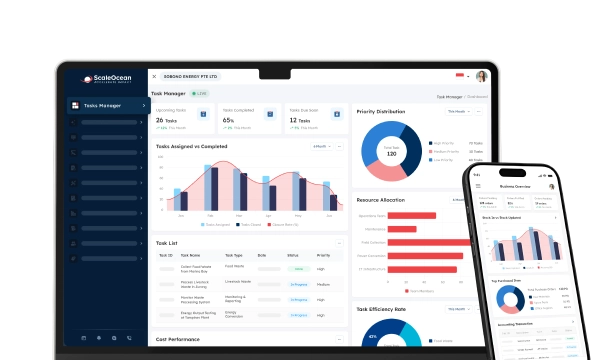
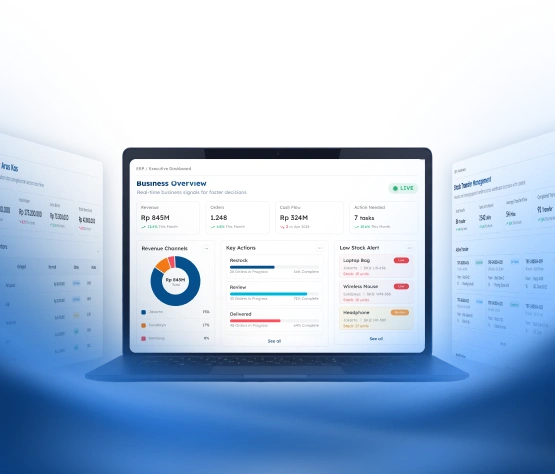
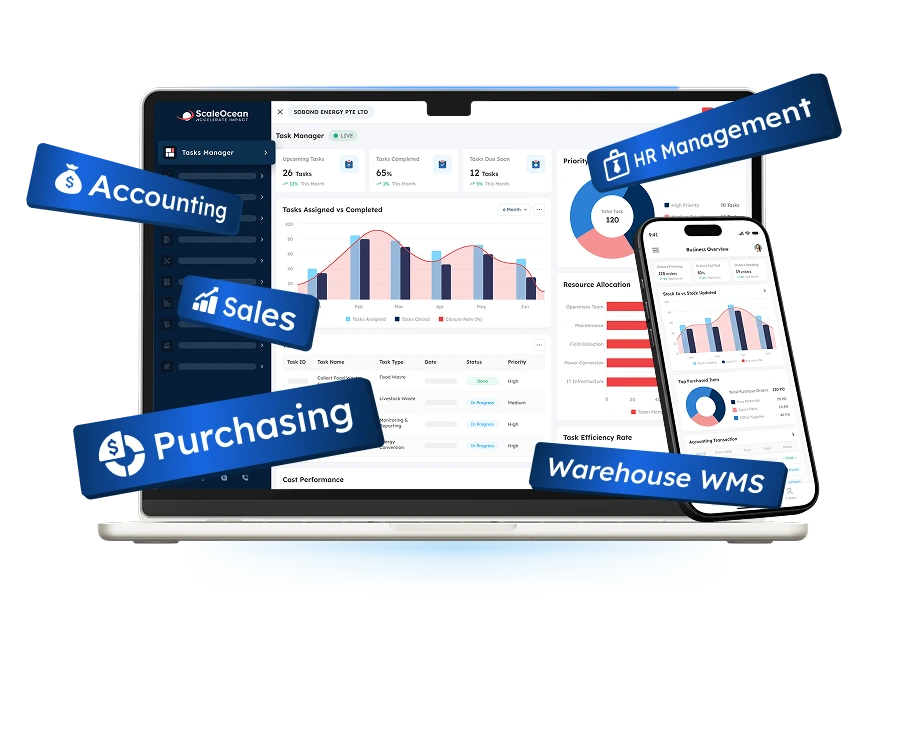
ScaleOcean provides ScaleMind AI-assisted analytics capabilities within the ScaleOcean Atlas ERP environment, helping businesses analyse operational data and generate insights from connected business processes. ScaleMind works within an integrated ERP ecosystem that connects finance, sales, procurement, inventory, and operational workflows.
For enterprises managing complex operations, fragmented data can make it difficult to identify trends, forecast outcomes, and make timely decisions. ScaleMind helps businesses transform connected operational information into AI-assisted insights while maintaining better visibility, governance, and control over business data.
The system supports configurable workflows, role-based access, approval processes, and audit trails. ScaleMind in ScaleOcean has been optimized and complies with PDPA regulations and local financial reporting standards, including IRAS and GST requirements in Singapore. Schedule a consultation with ScaleOcean to explore how AI-powered analytics can support your business decisions.
ℹ️Why choose ScaleMind in ScaleOcean?
ScaleMind helps businesses apply AI analytics within their ERP environment by connecting operational data with intelligent insights. This allows enterprises to analyse business information more effectively while maintaining stronger governance and visibility across departments.
2. Julius AI
Julius AI is an AI-powered data analysis platform that helps users explore datasets, generate insights, and create visualisations through natural language interactions. It allows users to analyse uploaded data without requiring advanced programming knowledge.
The platform supports teams that need faster data exploration and simplified analysis processes. Users can interact with datasets, identify patterns, and generate analytical outputs through AI-assisted capabilities.
ℹ️Why choose Julius AI?
Julius AI provides an accessible way for users to analyse datasets through AI-assisted conversations and visualisations, making data exploration easier for teams without extensive technical expertise.
3. Claude
Claude is a generative AI platform that can support data analysis through information processing, document interpretation, and conversational insights. It helps users understand complex information by generating summaries, explanations, and responses based on provided data.
The platform can assist business teams when reviewing reports, analysing documents, or extracting insights from large amounts of information. It provides a conversational approach to working with business data.
ℹ️Why choose Claude?
Claude helps businesses simplify information analysis by using conversational AI to interpret documents, summarise complex information, and support knowledge-based decision-making.
4. Quadratic
Quadratic is an AI-enhanced spreadsheet platform that combines traditional spreadsheet workflows with modern data analysis capabilities. It allows users to work with datasets, perform calculations, and explore information through a more flexible analytical environment.
The platform is suitable for teams that already rely on spreadsheets but require additional AI support to analyse data and improve productivity.
ℹ️Why choose Quadratic?
Quadratic provides an AI-supported spreadsheet experience that helps users analyse data within a familiar working environment while improving flexibility in data exploration.
5. ThoughtSpot
ThoughtSpot is an AI-powered analytics platform that enables users to explore business data through search-driven analytics and natural language interactions. It helps organisations access insights without relying entirely on technical reporting processes.
The platform focuses on making analytics more accessible by allowing users to search for information and discover trends from business datasets.
ℹ️Why choose ThoughtSpot?
ThoughtSpot helps businesses simplify data exploration by enabling users to interact with analytics through natural language and access insights more efficiently.
6. Microsoft Copilot in Power BI
Microsoft Copilot in Power BI integrates AI capabilities into Microsoft’s business intelligence platform to support reporting, data exploration, and insight generation. It helps users analyse information and create reports through AI-assisted features.
The platform is suitable for organisations already using Microsoft solutions and looking to enhance existing analytics workflows with AI capabilities.
ℹ️Why choose Microsoft Copilot in Power BI?
Microsoft Copilot in Power BI helps businesses enhance their existing analytics environment by adding AI-assisted reporting and data exploration capabilities within the Microsoft ecosystem.
7. AnalyzeData
AnalyzeData is an AI-assisted analytics platform designed to help users process information, analyse datasets, and generate insights. It supports businesses that want to simplify data analysis and improve accessibility to important information.
The platform focuses on helping users extract meaningful insights from available data through automated analytical capabilities.
ℹ️Why choose AnalyzeData?
AnalyzeData helps businesses improve their data analysis processes by providing AI-assisted capabilities for processing information and generating insights from datasets.
8. Tableau AI
Tableau AI enhances Tableau’s analytics capabilities by combining artificial intelligence with data visualisation and business intelligence features. It helps businesses transform complex datasets into clearer dashboards and analytical insights.
The platform supports organisations that require advanced visual analytics capabilities to understand performance trends and make data-driven decisions.
ℹ️Why choose Tableau AI?
Tableau AI helps businesses improve analytics accessibility by combining AI capabilities with visual data exploration, allowing users to better understand trends and business performance.
What to Look for in AI Data Analytics Software
Businesses need to consider more than just the AI capabilities when choosing the right AI data analytics software. The solution must integrate with existing business processes, data needs, security requirements, and future business objectives.
For businesses, the ideal analytics solution should integrate business data, streamline analytics, provide insights for better decision-making, and ensure proper governance across departments.
1. Data Integration Capabilities
The AI analytics software should be able to integrate with various data sources, such as ERP systems, CRM platforms, finance applications, operational tools, and external databases.
AI models can operate on integrated data to gain a more comprehensive understanding of the business, while the strong integration capabilities help eliminate data silos.
2. Natural Language Analytics
Natural language analysis enables users to query data using natural language rather than complex queries. This simplifies the use of Analytics for business users who may not have technical skills.
This feature can be beneficial for companies to gain insights faster, delve into trends, and decrease reliance on technical teams for basic data analysis.
3. Predictive Analytics
Predictive analytics features enable companies to forecast future trends and events from existing and past data. This can be useful for forecasting activities like sales forecasting, demand planning, financial analysis, and operational planning.
The key factor to consider when choosing an AI analytics solution is its ability to provide accurate predictions and assist with real-time decision-making.
4. Real-Time Dashboards
Real-time dashboards deliver real-time insights into critical business metrics and conditions. They enable teams to track performance, detect changes, and act on problems more quickly.
Real-time dashboards can offer enterprises a more cohesive perspective on business activities for enterprises with multiple departments or locations.
5. Role-Based Data Access
Access rights should be given to users so that they can only see information that is relevant to their role. This is particularly crucial for companies that process sensitive financial, customer, operational, or employee information.
Role-based access supports stronger governance while allowing different departments to use analytics securely.
6. Data Governance and Auditability
Effective governance, such as monitoring and auditing access to data, tracking, and using audit logs, is essential for reliable AI analytics. These features enable businesses to be aware of data utilization and stay accountable.
For businesses that are subject to regulatory obligations and store vast amounts of data, audit trails and governance features are significant.
7. Scalability
For businesses, it is important to think about how an AI analytics solution is going to help them grow in the future. Data volume, users, locations, and complexity of operations may grow considerably as businesses grow.
A scalable platform provides companies with the ability to increase their analytics capacity without having to replace the system or make significant changes to their processes frequently.
8. Workflow Integration
AI analytics becomes more valuable when insights are connected with daily business processes. Instead of generating reports separately, businesses should consider platforms that can integrate analytics with operational workflows.
Insights can be fed into workflows in real time, enabling teams to leverage insights directly for activities like planning, procurement, finance management, inventory control, and operational decision-making.
9. Industry-Specific Analytics
The data needs and decision-making are different in various industries. AI analytics solutions should be explored by businesses to see if they can be used for the business’s operational needs.
However, industry-specific analytics can provide more relevant insights by taking into account different industry-specific data such as production performance, inventory movements, customer behaviour, project costs, or activities within the supply chain.
Conclusion
AI data analytics is a method that leverages artificial intelligence technologies to process and analyze business data, detect patterns, make predictions, and offer insights that can guide actions. It assists organisations to go beyond the reporting paradigm and to gain a deeper understanding and awareness of operational information.
For businesses managing fragmented data, slow reporting processes, limited visibility, and complex decision-making requirements, AI data analytics provides a way to connect information and generate faster insights. However, businesses need reliable data, proper governance, and integrated systems to ensure AI recommendations remain accurate and valuable.
ScaleOcean Atlas helps enterprises connect business workflows with intelligent analytics. By integrating finance, procurement, inventory, and operational data within one ERP environment, businesses can improve visibility, support data-driven decisions, and maintain stronger governance. Schedule a consultation with ScaleOcean to explore how AI-powered analytics can support your business transformation.
Frequently Asked Questions AI Data Analytics:
1. Can AI analyze Excel data?
Yes, AI can analyze Excel data by identifying patterns, summarizing information, detecting trends, and generating insights from structured datasets. However, businesses should ensure the data is accurate, complete, and properly formatted to improve the reliability of AI-generated analysis.
2. Can AI analyze data without SQL?
Yes, many AI analytics solutions allow users to analyze data without writing SQL queries through natural language interactions, automated analysis, and visual exploration features. This enables non-technical users to access insights without depending entirely on technical teams.
3. How can businesses ensure AI-generated insights are accurate?
Businesses can improve AI insight accuracy by maintaining high-quality data, validating AI-generated recommendations, standardizing information across departments, monitoring model performance, and keeping human review involved in important decisions.
4. How should businesses choose an AI analytics solution?
Businesses should evaluate AI analytics solutions based on data integration capabilities, scalability, governance features, ease of use, predictive capabilities, security controls, and how well the platform aligns with existing business workflows and industry requirements.





















.png)