



Human resource planning, or HRP, is often seen as just a fancy term for recruitment. But it’s so much more than that. It’s the strategic heart of your business’s future success. It’s about looking ahead and ensuring you have the right people with the right skills, exactly when you need them to achieve your company goals.
According to MOM, the HR Industry Transformation Plan (HR ITP) seeks to develop HR competencies and leadership, transforming HR professionals into strategic enablers of industry transformation. This project enables firms to plan their workforce effectively, resulting in business success through the right talent.
This process really aligns your people strategy with your overall business objectives, moving HR from a reactive department to a proactive, strategic partner. We’ll explore the entire human resource planning process, from the basic steps to the tools that make it all possible.
 Key Takeaways
- Human Resource Planning (HRP) is the process of predicting and planning how to best utilize an organization’s staff.
- The HRP process involves several key steps, starting from analyzing organizational goals and ending with continuous monitoring and evaluation of the plan.
- Various types of HRP, from long-term strategic and succession planning to operational and contingency planning, address different organizational needs.
- ScaleOcean’s HRIS software provides a centralized platform to overcome these challenges by offering robust data analytics, forecasting tools, and streamlined workflows.
What Is Human Resource Planning (HRP)?
Human Resource Planning (HRP) is the process of predicting and planning how to best utilize an organization’s staff. It ensures that the right people with the correct capabilities are in place, aligned with corporate objectives, and avoids skill gaps or excessive payroll expenses.
Human resource planning combines people management into the overall strategy, allowing organizations to plan for hiring, training, and succession in advance. This foresight promotes long-term growth and ensures that businesses have sufficient talent to achieve future objectives.
Steps in the Human Resource Planning (HRP) Process
HRP is a process that is iterative, involves detailed analysis, and frequent changes to be effective in line with the organizational needs. This ensures that people plan follows the business plan. Steps for HRP process:
1. Analyze Organizational Objective
First off, really, what’s on the horizon for the business? You’ll need to review business strategies and objectives, look at future growth, or changes, and the introduction of new technology. Essentially, you want to make sure that the people plan complements the overall business strategy.
Otherwise, you could end up recruiting for redundant skills or failing to develop future needs. Ultimately, you want to ask what the business wants to achieve and how it wants to get there.
2. Evaluate Current Workforce Supply
Okay, so now, we want to be really clear about your existing talent. So, here, you would conduct a comprehensive skills inventory of all your employees’ qualifications, experience, past performances, and development potential. Basically, an all-inclusive look at your current human resources.
This exercise is really valuable as it will enable you to identify both the strengths of your workforce and (let’s face it) where you have some deficits. You can see which departments are already brimming with talent and those that may be beginning to encounter some future problems.
Taking stock of your current workforce is imperative to your strategic planning of workforce needs for the future.
3. Forecast Future Workforce Demand
Right now, it’s time for you to do some forecasting. Based on the company’s strategic objectives, you will forecast your future workforce numbers and skills.
We found a report from Jobs and Skills stating that the SDFE 2025 report will help organizations plan for the demands of future work by forecasting skills, technologies, and career paths. This is not really about trying to be a fortune teller.
This is about making the most educated guess that you can by analyzing current trends. Here, you may use statistical models or consult with experts in your field and/or your business in order to anticipate your needs for the future. The more you forecast your future needs for labor, the better HR P will work.
4. Conduct a Gap Analysis
At this point, you will put the supply of your current workforce and future labor demand side-by-side to determine the differences, which may involve a surplus of workers with particular skills or a lack of workers with certain skill sets.
This is when the problem statement is discovered, like what the gaps are in the present versus the future. Here you will begin to discover what particular positions you will need to hire, or where you need to offer more training to existing employees.
Here you can see exactly where your problem lies, and then you can start working toward solving it. The gap analysis is where the problem is found, so that you know what to work on in the next step.
5. Develop an Action Plan
Once your gaps have been identified, it is time to create an action plan that will enable you to close those gaps. Your action plan may be one that incorporates some kind of hiring initiative, training and development program, a new promotion strategy, or possibly an organizational change.
The HRP action plan helps you close gaps in your labor force. If your gap analysis showed that you are not going to have enough leadership skills in the future, then your action plan will obviously include some kind of training or development program to enable this process to happen within the company.
If you require new, specific skill sets that your current workforce does not have, your plan may include a recruiting initiative for new workers to come into the company and perform that specific task. These HRP actions are a manifestation of the company’s human resource strategy.
6. Implement the Plan
At this stage, your HR department will begin the work of executing the human resource plan. In this phase, HR managers work closely with their managers to ensure that the organization’s human resource strategy is actually implemented.
Successful implementation requires effective communication and collaboration between many departments.
During implementation, your department may go about recruiting for new positions, or assigning current employees to appropriate training and development programs, or making significant changes in organizational structure, for instance.
It is here that you see your HR plan put into action. Careful implementation requires strong cooperation and leadership throughout your organization.
7. Monitor and Evaluate
HRP is not something you can simply set in motion and then forget about it. It needs to be monitored so that you can continuously improve it. There are so many factors that affect your workforce that things can quickly change.
Throughout the monitoring and evaluation phase of HRP, you will want to be looking at your HR KPI examples, such as retention, turnover rates, training effectiveness, and other important indicators.
By getting feedback from employees and managers, and always reviewing what your goals were, you can continue to tweak and improve your human resource plan. The iterative nature of HRP ensures its relevance.
Types of Human Resource Planning

Human resource planning is not a one-size-fits-all solution. Different types handle different timelines and organizational needs. Thus, it is critical to select the appropriate technique for each case. Types of HRP include:
1. Strategic Human Resource Planning
This step looks several years in advance (usually between 3-5 years) and will ensure that you are ensuring your workforce is perfectly aligned with the organization’s future strategic goals and future vision, particularly when an organization is going through a significant change.
Strategic HR P helps you address the larger organizational concerns, such as the kind of workers you will need when entering a new market or launching a new product line. Fundamentally, strategic HR P works to ensure that a company has the necessary leadership and competencies for success in the long run.
2. Operational Human Resource Planning
This is a short-term step of HR P and looks approximately one year into the future.
The point of operational HR P is to address the everyday needs of your workforce, whether that is hiring to fill open positions or providing staffing in anticipation of the need for more workers during seasonal demands, which all directly impact the daily operations of the business.
Operational HR P puts those broader strategic goals into day-to-day hiring and training initiatives, making it a key step in the overall HR P. The process ensures that departments are staffed accordingly to reach the year’s objectives.
3. Workforce Planning
Although Workforce Planning often accompanies HR P, it can be more specific in its goals. Workforce Planning often involves analysis and forecasting for a specific number of jobs and/or skill families, and makes sure that the organization has the right workers, in the right place, and at the right time.
This is a more specific step as it often takes the analysis of data, including, but not limited to, current headcount, turnover rates, and the distribution of workforce skills across a department, job, or organization. The analysis of workforce planning ensures continuity.
4. Succession Planning
This specialized type of HR P looks at the internal employees that you will need for the company’s leadership posts over the long haul.
The more you look at those who are capable of coming up the corporate ladder at a faster pace, the better you can ensure a smooth transition after current senior positions have opened up due to movement or retirement.
The process of succession planning is undeniably important to organizational stability and its longevity.
Succession planning helps mitigate the risks associated with unexpected leadership departures and encourages employees to perform better, as they will see there is indeed a pathway for advancement within the company.
5. Contingency Planning
This means planning for when the unexpected happens. It could be when a key team member decides to leave suddenly, or maybe the economy hits a dip, or a new competitor emerges. Basically, it is about having an excellent alternative workforce plan ready to go!
Often involves identifying the critical roles that need to be filled at short notice, and a solid plan is already in place. Sometimes, cross-training employees can help, or pre-vetting a list of temporary staff is also a great tool. It makes business resilient to unpredictable changes.
6. Hard and Soft Planning
There are two methods to HRP, which are either a more Quantitative approach with a Hard approach, which focuses on data, headcounts, and numbers, or a softer, more Qualitative approach, which centers on employee morale, the company culture, and important employee engagement levels.
When it comes to actually building effective HRP, a blend of the two approaches normally gives the best results. Hard data makes a business’s HRP strategy solid, while human resource management ensures the business stays competitive, effective, and productive.
7. Short-Term Planning
Short-term planning is about meeting the most immediate needs, with the general plan to operate over the 6-12 months ahead. Short-term planning is concerned with immediate shortages of staffing and seasonal hiring.
It can also be aimed at immediate, specific project work. The focus here is highly tactical and immediate.
This kind of planning is, without question, essential for operational stability, ensuring the immediate resources are available to cope with current work without disruption. This is the most reactive form of HRP, yet the most vital day-to-day task.
8. Employee Reskilling and Upskilling Planning
This kind of planning centers on building up your workforce by improving the skills that employees have to prepare them for current demands.
Upskilling is developing and strengthening your current workforce’s skills further, while reskilling involves a business investing in teaching existing staff new, more relevant skills to match current demands.
With the rate that technology is moving at today, it has never been more vital than today for businesses to be using employee reskilling and upskilling planning to train them to keep up with changes.
It is not only often cheaper than taking on new staff to do the job, but also incredibly useful when it comes to employee engagement and morale levels, which then in turn increase retention rates.
Importance of Human Resource Planning
Human Resource Planning (HRP) is not just about administration, and it’s also about a strategic commitment to have HR take on a more proactive role in business success. The benefits of HRP are recognized in many businesses:
1. Aligns with Business Strategy
When your HR approach and efforts closely match the organization’s business strategy, it ensures that every decision regarding employees, whether it be hiring, training, or development, directly relates to the company’s ultimate goal.
This promotes a highly cohesive business approach and one that is truly purposeful.
When your company’s people plan and business strategy fully integrate with each other, it creates great synergy when your employees become not only a cost but a crucial tool towards achieving the desired outcome, and this alone will provide your company with immense future success.
2. Increases Productivity
Having the right employees with the correct skills in the right positions through human resource planning will only boost your business’s productivity. Employees will be more satisfied in their role, which leads to greater productivity and the elimination of inefficiency from skills mismatch.
An employee’s productivity is dramatically enhanced when a role aligns with a team member’s existing skill sets, and they are motivated within the position. Higher output, increased quality of work, and better team dynamics result in a highly productive business.
3. Controls Costs
HR P can be highly successful in keeping staffing costs down. It ensures there are enough employees within the company because both too many staff and too few would be financially detrimental to the company.
Having too many employees results in greater wage costs, whereas having too many members of staff will cause burnout, increased turnover rates, and missed business opportunities. With proactive planning, costs such as recruitment expenses are dramatically reduced.
Through lower levels of turnover, there are no new staff required, and employees can be trained in order to fill the vacancies. Controls such as these over your biggest expense (labor costs) are extremely important, considering corporate tax in Singapore or financial constraints.
4. Improves Employee Retention
Employees will be more willing to commit to the company when they see they are of real value to them, and when they see that there are clear growth prospects and career advancement opportunities available to them. HRP will highlight to the employee the career possibilities available.
It is costly and inefficient for any business to experience high employee turnover. With appropriate HR practices such as talent management or succession planning, the levels of staff retention can significantly improve.
5. Support Talent Management
HRP acts as the fundamental cornerstone to any talent management strategy. It helps to identify high potentials and ensure there is adequate talent, while enabling you to make decisions about future promotion opportunities, employee training, etc.
to promote growth and provide a stream of skilled leaders to take the company forward.
Careful planning can enable businesses to move past simple immediate needs in terms of employees and focus on proactive workforce management strategies, which result in a more competitive and successful company.
6. Enhances Decision-Making
In an effective HRP, the ability to rely on a database or a form of analytics makes the workforce planning element very much fact-based and less assumption-based. It supports you as a manager or leader to know that the choices you make concerning personnel are beneficial to both your staff and the business.
The planning gives you the data needed to make informed choices about workforce development, investment in employee training, or department expansion, enabling you to efficiently utilize resources and manage your staff much more productively.
7. Fosters a Competitive Edge
In the modern business environment, people can and will be your most defining characteristic and greatest competitive edge.
With well-planned and skilled employees, you can innovate faster, deal with customers more effectively, adapt to the market more readily, and generally gain competitive advantages over your rivals.
This makes people the number one priority, and so ensuring there is a clear, precise plan for who is to fill what role ensures the company is in a strong position and therefore allows it to thrive against its competitors.
Human Resource Planning (HRP) is a critical element of any business success, and by employing tools such as ScaleOcean ERP, businesses can bring human resource strategies and operational requirements together seamlessly.
Features within ScaleOcean make HRP manageable while increasing efficiency, productivity, and reducing costs, along with keeping employee retention high.

Common Challenges of Human Resource Planning (HRP)
Human resource planning can be an invaluable asset to a company, but there are challenges involved that might hinder your progress. Knowing these challenges ahead of time will aid in preventing problems. Here are common Human resource management challenges:
1. Inaccurate Forecasting
We all know predicting the future is really difficult, to say the least. Unpredictability in rapid changes of market conditions, technological advancements, and economic uncertainty could lead to workforce forecasts being rather inaccurate. Hence, a plan based on incorrect data is not a correct plan at all.
To avoid or at least limit this problem, we have to use more than one type of forecasting model, also forecastings must be updated and reviewed at regular intervals, since adaptability is key here, not absolute prediction, and an HRIS plan is supposed to be a rather flexible process.
2. Resistance to Change
The implementation of an HRIS plan will likely involve reshaping work teams and roles, as well as implementing new processes and policies, which can be difficult to achieve.
Failure can be attributed to resistance to change, especially in employee or management acceptance, which can be a result of poor communication.
According to the report we found from Singapore Business Review, ManpowerGroup questioned 515 workers across Singapore from September to October 2025 and revealed the national talent sentiment score had dipped marginally to 63%, which was a 1% drop from the 2025 sentiment.
The report clearly illustrates the significance of leadership, communication, and employee involvement in conquering such resistance.
3. Data Challenges
Accurate, timely, and comprehensive data is a fundamental requirement for effective HRP and a large consideration when it comes to the HRIS. Most organizations currently hold their employee data in a variety of separate, fragmented, and not always accurate databases.
Such data needs to be compiled into one effective and accessible HRIS system. Centralized employee data within an HRIS can resolve these issues and can be easily assessed to provide the HR team with essential information.
4. Budget Limitations
Costs incurred on initiatives such as the introduction of new training programs or new recruitment drives, which are part of the Human Resource Planning process, can sometimes be prohibitive and form a significant obstacle to its implementation.
In many organizations, HR is predominantly considered a cost center and therefore, is under pressure to reduce spending, limiting the extent of the HRP.
To overcome this obstacle, leaders of HRP initiatives need to clearly communicate the business case and the benefits of implementing the HRP by proving a good ROI through productivity, lower turnover, and enhanced output.
5. Integration with Business Strategy
HR sometimes operates in its own silo, separate from the strategic planning process in business, which leads to a failure of the workforce plan to take into account the needs and direction of the entire business.
Leaders of HR need to ensure that they are involved in strategic planning at the earliest stages possible, linking people strategies with business strategy to integrate HR into business strategy.
Best Practices for Effective HRP
Executing a strategic approach towards Human Resource Planning may prove to be difficult, but the impact of a few best practices is massive. They are the practices that turn a decent HRP into one that constantly yields reliable results. Best practices in HRP include:
1. Review and Evaluate Your Plan Regularly
Human Resource Planning is not an exercise you do once, and it remains fixed in its form forever. As the business environment changes rapidly, it is necessary to revise your HRP frequently to ensure it complies with current HR compliance standards. Treat your HR plan as a living document.
It is vital to check the progress you have made against the plan from time to time to make sure that everything goes as it is supposed to. New inputs can be incorporated so that the plan is always relevant and effective.
2. Regular Review
In addition to checking on the HRP itself, the overall Human Resource Planning process needs to be scrutinized. Departmental heads and senior leaders need to be involved in this review. This will ensure that the workforce plan meets the needs of the business as a whole.
These regular check-ins help in refining not only the HR plan but also develop an ownership across the organization, making HR a true partner of the business.
3. Continuous Improvement
An efficient Human Resource Planning process aims constantly for development. Keep searching for newer, better methods to implement HRP, whether it’s a new HRIS system, improving your models, or collecting data, etc.
This mentality helps you always improve your workforce planning efforts and learn from your previous actions.
4. Watch What Your Competitors Are Doing
Talent doesn’t happen in isolation, so make sure you are observing your competitors so you can recruit and retain people as successfully as possible. Understanding the competitors can help inform your Human Resource Planning process and guide the strategy you develop.
Knowing HR Trends and what other people in your industry are doing can help avoid obvious mistakes or discover new, effective strategies.
5. Invest in Employee Retention
To be brutally honest, it almost always makes sense and costs less to keep a good employee working for you than to hire a new one. Therefore, your HR plan should make retaining people a major focus through decent pay, career advancement opportunities, and a rewarding workplace environment.
Investing in existing team members builds more experience, skills, and stability while reducing the recruitment cost and increasing productivity of your business.
Tools for Human Resources Planning
Modern human resources management requires specific tools to facilitate the collection and processing of data regarding employees, which results in more efficient and strategic Human Resource Planning:
1. Surveys
Employee surveys are a very effective way to measure the “soft” aspect of HRP, i.e., employee engagement, job satisfaction, and training needs. They help to understand company culture and are thus crucial for successful human resource planning.
Pulse surveys are excellent for monitoring employee morale, which, if not monitored, could result in poor employee retention in the future.
2. HR Dashboards
HR Dashboards provide a real-time graphical representation of key workforce metrics, i.e., the count of employees, their churn rate, recruitments, etc. This provides easy understanding of the current state and enables quicker strategic decisions.
The need for lengthy data analysis will become redundant, and key decision-making from the workforce plan will be sped up from time to time using a single report, by having your HRP available in the form of a dashboard.
3. Performance Management Systems
A performance management system is an essential component for understanding your workforce supply. It provides you with the data on employee performance, skills, etc.
And enables you to pinpoint the employees that can be promoted/are good performers, and also recognize the skills gaps in your team. The data gained from performance management can be linked directly to your HRP to formulate better training and developmental plans for the business.
4. Human Resource Management Systems (HRIS)
An HRIS is a platform used for the management and retrieval of human resource information, i.e., Payroll, benefits, etc., by providing a single data source for the entire workforce. This system offers a holistic view of the employee and is necessary for efficient Human Resource Planning.
An HRMS greatly automates processes that are performed within an organization as they enable direct access to human resources information, hence providing HR the capacity for focusing on strategic elements within the business.
Optimize Human Resource Planning with Scaleocean HRIS software
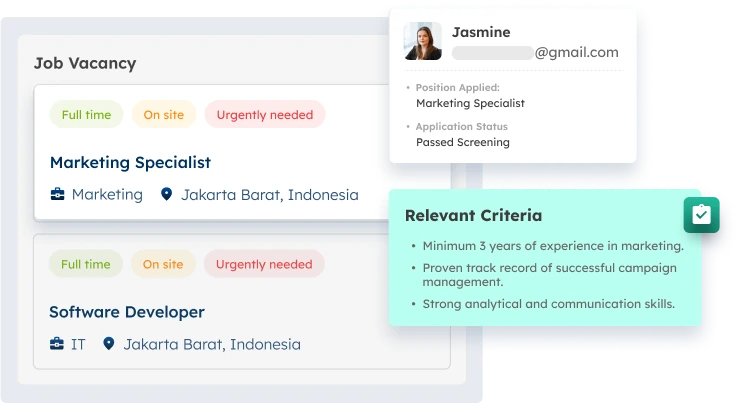
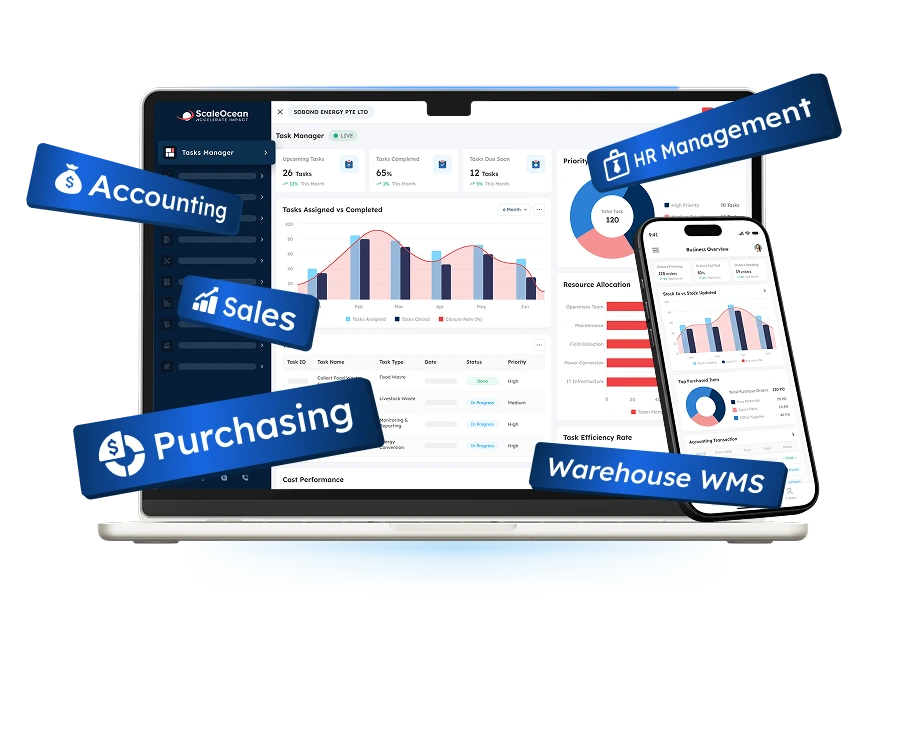
Human resource planning can be overwhelming as the data is scattered across many systems. The ScaleOcean’s HRIS software has been created to provide a single integrated location for all your employee data in one secure system.
ScaleOcean offers the best HR planning by providing unlimited users, zero hidden charges, and AI-driven solutions.
The HR planning is aligned to business goals by providing an industry-specific and customizable solution. ScaleOcean’s HRIS solution offers dedicated and responsive support to ensure that your company experiences high ROI and compliance with the system.
ScaleOcean has been certified for the CTC grant, and you will get access to additional funds for your company. ScaleOcean Software Main features:
- Automated Recruitment Process with Workforce Forecasting: Automates recruitment from sourcing to offers with AI-driven workforce forecasting for efficient hiring.
- Integrated Talent Management: Manages performance, succession planning, and tracks employee development with a built-in learning system.
- Singapore Compliance: Ensures payroll compliance and foreign worker quota management according to Singapore’s labor laws.
- Centralized Employee Database: Tracks skills, certifications, and training, with real-time updates accessible through an Employee Self-Service portal.
- Real-Time Data Access and Employee Self-Service (ESS): Provides employees with real-time access to personal data and enables HR transparency through the ESS portal.
Conclusion
Human Resource Planning is a function that supports business growth and sustainability. The ability to build a future-proof team requires forward-thinking and it’s what differentiates industry leaders from the pack. A forward-thinking HRP approach ensures the workforce is positioned to innovate and thrive.
It is very possible to gain proficiency at HRP by following certain best practices and leveraging the right tool. ScaleOcean HRIS Software offers customized and industry-specific solutions for a streamlined HRP. The provider also offers a free demo so you can explore their solution.
FAQ:
1. What is an example of HR planning?
HR planning can involve predicting future talent requirements, recognizing skill deficiencies, and creating strategies for hiring, training, and retaining employees to fulfill the company’s long-term vision and objectives.
2. What is HR planning’s main goal?
The primary aim of HR planning is to ensure that the organization has the right number of qualified employees at the right time, aligning workforce capabilities with business goals to support current and future success.
3. What happens without HR planning?
Without proper HR planning, a company may experience issues like workforce imbalances, lower operational efficiency, higher turnover, and difficulty in achieving business targets, all of which can hurt productivity and growth.
4. What are the consequences of poor HR planning?
Ineffective HR planning can result in mismatched skills, low employee morale, frequent turnover, higher recruitment costs, and lost productivity, making it difficult for businesses to achieve strategic objectives and maintain growth.





















.png)