




HR KPIs are quantitative measures that capture the effectiveness of human resources initiatives in meeting organizational objectives, aiding companies in structuring and making data-driven assessments of their workforces’ productivity and performance, and their broader organizational well-being.
For many businesses, however, developing solid HR KPIs can still be a challenge and can result in varying reports and ineffective workforce planning, thereby costing the business more in terms of operations. This year, median annual HR budgets are growing, jumping 9.1% over the 2024 mark, according to SHRM‘s new benchmark, adding to the financial stresses on HR teams.
Further, you may assume that you have no idea what is happening if KPIs for HR aren’t monitored effectively. It makes it hard, if not impossible, for companies to determine talent deficiencies, enhance employee engagement, or effectively optimize recruitment/organization strategies.
Thus, in this article, we will take an understanding of and the application of the right HR KPIs that help businesses make informed decisions, make sure that HR efforts are aligned with strategic efforts, and constantly increase employee performance based on measurable, actionable insights.
 Key Takeaways
- HR KPIs are measurable indicators that evaluate how effectively human resource activities contribute to organizational goals and workforce performance.
- HR KPIs are used to monitor processes, identify inefficiencies, and improve workforce outcomes through consistent evaluation and data-driven performance management.
- HR KPI Examples help organizations identify relevant metrics that measure productivity, retention, engagement, and overall workforce effectiveness.
- HR KPI Best Practices ensure consistent measurement, improve reporting accuracy, and strengthen alignment between workforce goals and organizational strategy.
- ScaleOcean HRM Software helps automate KPI tracking, centralize HR data, and deliver real-time insights that improve workforce management efficiency.
What are HR KPIs?
HR KPIs are specific, quantifiable metrics used by human resource teams to measure the success of HR functions, such as recruitment, employee performance, retention, and engagement, in supporting broader organizational objectives and long-term business growth.
In addition, these indicators provide clear benchmarks that help organizations evaluate the effectiveness of their HR strategies, allowing leaders to identify areas for improvement and ensure alignment between workforce management and company goals.
Furthermore, HR KPIs vary depending on business needs, industry standards, and company size, which means organizations must carefully select metrics that reflect their priorities, such as reducing turnover, improving hiring efficiency, or increasing employee satisfaction.
As a result, well-defined HR KPIs not only improve transparency in HR operations but also empower decision-makers to implement targeted strategies that enhance workforce productivity and drive sustainable organizational success over time.
 Also Read: What is Human Resource Management?
How Does HR Use KPIs?
HR teams can track and measure important processes, like recruitment efficiency, employee performance, and employee retention, using the KPIs, and even generate a report of all the HR KPIs to make sure that all HR efforts contribute to the organizational goals.
Furthermore, HR experts use KPI information to recognize patterns and trends, allowing them to make better-informed selections, boost human resource planning, and tweak strategies promptly to align with evolving business scenarios and worker needs.
Furthermore, with the help of KPIs, HR departments can define clear objectives and expectations, and managers can monitor progress, raise accountability, and ensure that individuals and teams operate consistently with the firm’s goals.
In conclusion, HR KPIs serve as valuable tools for organizations to continually optimize their human resource strategies, improving the overall employee experience and fostering a more agile, performance-focused environment that can drive sustainable growth and operational excellence.
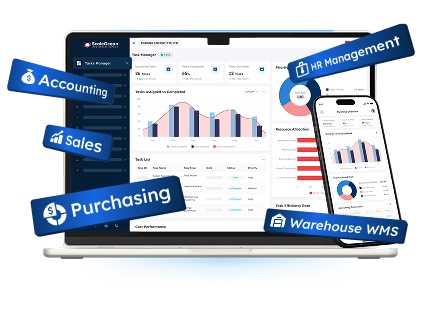
HR teams must have a system that makes it easy for them to track and report on performance across departments using KPIs. ScaleOcean HRM Software, a modern HRM solution, delivers more efficient HR KPI management by providing centralized data, automated tracking, real-time dashboards, and so much more, helping to make faster and more accurate workforce decisions.
Incorporating analytics and automatic reporting capabilities, ScaleOcean reduces manual work and enhances HR efficiency. Sign up for a free demo today and discover how the ScaleOcean HR Management System helps to track KPIs intelligently with ease.

27 HR KPI Examples
HR KPIs span a broad spectrum of metrics that are crucial in assessing the efficiency of the workforce, employee behavior, and the performance of the HR function in general, making such HR KPI metrics examples vital for effective workforce measurement.
Furthermore, these examples illustrate ways businesses can track operational and strategic HR metrics, empowering them to pinpoint inefficiencies, cut expenses, and enhance the employee journey by adjusting to emerging HR trends with better data-driven and consistent assessment systems.
Besides, the proper mix of HR KPIs helps businesses focus on meaningful metrics instead of vanity metrics, guiding them to prioritize actions that will ultimately lead to higher productivity, retention rates, and organizational growth.
As a result, HR KPI examples can be used to develop an HR strategy that is more responsive to the changing needs of the workforce, improve workforce planning, and maintain a work balance between employees’ satisfaction and the performance of the business.
1. Turnover Rate
Turnover rate indicates the proportion of people who leave the organization in a given time frame, giving HR professionals an idea of the stability of their workforce and any problems regarding employee satisfaction, management effectiveness, or organizational culture.
A very high turnover rate can be a sign of a serious issue, like dismal engagement or lack of remuneration. If there is an excessive number of employees leaving, the company needs to assess the trends carefully and identify targeted retention strategies to reverse the situation and save on unnecessary employee turnover and costs.
2. Training Effectiveness
Training effectiveness measures the accuracy of any employee training program in acquiring skills, knowledge, and job performance, ensuring that training programs can deliver value and direct impact on individual training and organizational development and success.
The HR teams can track the implementation of this KPI to enhance training strategies and prioritize the resources for further training that will have the greatest value to employee growth and productivity.
3. Employee Retention
Employee retention indicates the ease with which an organisation can keep employees over the long term, capturing the organisation’s effectiveness in keeping employee satisfaction, engagement, and loyalty in a dynamic, competitive job market.
Retention rates in both instances signal an effective HR strategy; high retention suggests an effective HR strategy; low retention suggests a need to make changes to workplace culture, career development, and compensation to ensure a stable, motivated workforce.
4. Duration in the Position
Duration in the job reflects the length of time that employees serve in a particular position, and it enables HR personnel to understand the stability of the job, career path, employee’s comfort, and sense of comfort in the job, etc. Duration in the Job provides information about how long employees are staying on a job, which helps HR teams to assess the stability of a role, career progression, and employee comfort and sense of comfort in a job.
Short periods can indicate either a misfit in the job or not enough growth potential. However, if they are too long, it may mean that employees are not growing and learning, and developing and retaining them properly is essential.
5. Dismissal Rate
The firing rate is calculated as the proportion of workers who have been fired by the company and offers a window into how well the company is hiring, managingperformance,e and the quality of the company’s workforce in departments and roles.
If businesses have a high number of employees being let go, it could indicate that they have recruitment or onboarding problems; if it did, they should take steps to improve how they recruit to ensure that they are letting the right people go, and to address performance management problems to make it easier to hold employees accountable when they are not performing.
6. Time to Fill
The Time to Fill metric, which measures the average number of days needed to fill an open role, provides HR teams with insights into their efficiency in recruitment and any issues that hinder the hiring process and could stall business operations.
Time to fill reflects an organisation’s recruitment agility. With HR technology, companies can streamline candidate screening and identify relevant talent faster, helping them respond more effectively to workforce needs.
7. Absenteeism Rate
The absenteeism rate shows the number of employees who are known to be absent from work for no justifiable cause and indicates employee engagement, job satisfaction, or overall conditions in the workplace among employees.
Burnout and lack of morale can lead to high absenteeism rates, so HR teams need to find out the root causes for this through having a better workplace, having flexible working arrangements, and having the right type of support for the workers.
8. Absence Cost
Absence cost measures the financial impact of employee absences, including lost productivity and additional expenses, such as temporary staffing or overtime, required to maintain business operations.
Absence cost calculates the economic damage done by workers missing work, such as lost productivity, extra work costs to keep the business running, and other related costs. Measuring the costs of absenteeism will help organizations identify strategies to avoid the situation in the first place, whether by tackling employee wellness initiatives or better scheduling, for instance.
9. Overtime Expenses
In addition to costing an organization labour spend, overtime expenses will also track any additional expenses incurred when employees work outside of their normal schedule, to help identify any inefficiencies in labour planning or scheduling.
When employees work more than overtime, there are likely insufficient workers or an inefficient way resources are distributed among the staff, so adjustments should be made that ensure that the resources are distributed efficiently and aid in controlling costs while helping to prevent employee burnout.
10. Healthcare Cost per Employee
Healthcare cost per employee is the average benefit cost paid for the health care of employees, and is important for the measurement of the overall health of the workforce, as well as the financing of the healthcare program.
As healthcare expenses continue to climb, it is crucial for organizations to carefully consider their benefit plans, not only to meet the needs of their employees, but also within the limits of available funds and to encourage employees to live a healthy lifestyle to prevent unnecessary high future costs.
11. Revenue per Employee
Revenue per employee is the average revenue produced by each member of the staff is a good indicator of the productivity of other employees and how productive the entire company is at generating company value.
A higher RPE is an indication of good performance and making the best use of the resources, and a lower value could signal inefficiencies that need to be addressed through better existing work practices, training, and processes.
12. Day Quit Rate
Day quit rate is the percentage of employees who leave the organization shortly after the creation of a work contract, often the first few days or weeks in. If quit rates are high, the company may have some poor onboarding experiences or mismatched expectations, so company communication when recruiting and the first few weeks after hire is crucial to having more seamless transitions.
13. Benefits Satisfaction
Benefits satisfaction looks at how workers feel about and appreciate their workplace benefits, such as health and welfare, employee bonuses, benefits for work-life balance, among others, that help improve their overall job satisfaction.
This KPI can be tracked on a regular basis and through surveys and feedback to inform HR teams, helping them fine-tune benefit packages to remain competitive and relevant to employees’ changing needs and expectations.
14. Employee Productivity Rate (EPR)
Employee Productivity Rate tracks the productivity of employees with regard to the resources they are consuming, providing an indication of efficiency and ensuring that the workforce is contributing positively to the business.
Monitoring, Process Management, and continuous process optimization are essential on the path to productivity improvement, helping companies unlock employee potential without compromising quality and optimising operations.
15. Employee Satisfaction Index
The Employee Satisfaction Index assesses whether employees are happy with the work they do, the environment they work in, and their overall experience at the company. It’s designed to reveal the status of employee morale and the workplace in organizations, which have a direct impact on employee retention and long-term stability.
HR teams have a range of tools to collect this information, such as surveys and feedback, which can be used to pinpoint areas of dissatisfaction and inform improvements to management practices, workplace policies, and employee support measures to help boost satisfaction levels.
16. Employee Engagement Index
Employee Engagement Index measures the emotional engagement of an employee towards his/her work and organization, which is a representation of the employees’ motivation, involvement, and willingness to contribute beyond their core job roles during normal operations.
The more they are engaged, the more productive and retained they remain, and companies need to build robust communication, recognition, and a good work culture that keeps them happy and enthusiastic about their jobs.
17. Employee Innovation Index
It is a measure that indicates an employee’s regularity of providing new ideas, improvement, or creative solutions in an organization and helps it ascertain if the organization fosters an innovative culture and a culture of continuous improvement.
To nurture innovation, employees need to be free to come up with ideas and to feel safe in sharing them, and organizations need to acknowledge the good ones and make use of them.
18. Employee Well-Being Index
By evaluating the index of overall employee physical, mental, and emotional health, the Employee Well-Being Index (EWBI) allows an organization to ensure that a healthy work environment is provided that promotes sustainable employee performance and continuity of the workforce.
Wellness programs and consistent check-ins are typically employed to keep track of this KPI, enabling HR departments to attend to stress and burnout, along with health-related issues, before they severely overwhelm productivity and worker satisfaction.
19. Internal Promotion Rate
Internal Promotion Rate is the percentage of job openings that go to internal candidates, a measurement that demonstrates career development and the skills of an organisation to develop internal promotions.
If there is a high rate of promotion, it shows that the company has a high degree of internal mobility, and if there is a low rate of promotion, it can be seen that the company needs to invest more in the training and development plan.
20. Net Promoter Score (NPS)
Net Promoter Score measures how likely employees are to recommend the organization as a workplace, providing a clear indicator of overall satisfaction, loyalty, and employer brand perception in the talent market.
Organizations collect NPS data through surveys, and they use the results to improve workplace culture, strengthen employer branding, and address concerns that may discourage employees from recommending the company to others.
21. Manager Effectiveness
Manager Effectiveness evaluates how well managers lead, support, and develop their teams, directly influencing employee performance, engagement, and overall workplace satisfaction across different departments and functions.
HR teams often assess this KPI through feedback and performance reviews, allowing organizations to identify leadership gaps and provide targeted training to improve management capabilities and team outcomes.
22. Percentage of the Cost of the Workforce
HR teams can evaluate it via feedback and performance reviews, helping businesses detect areas for improvement, like leadership gaps, and fill those gaps with specific training to boost management skills and team performance, including obligations such as corporate tax in Singapore.
To calculate the Cost of the Workforce, divide the cost of Singapore work lost by the total number of workers in Singapore. By tracking this metric, companies can fine-tune their labor investments and align them with their productivity results to achieve a sustainable workforce that not only optimizes productivity but also enables a company to remain competitive.
23. Quality of Hire
Quality of hire evaluates the value new employees bring to the organization, considering factors such as performance, cultural fit, and long-term contribution to business objectives and team dynamics.
The performance data and retention figures capture this KPI, assisting HR within the organisation to fine-tune their recruiting approaches and consistently attract and select quality employees.
24. Involuntary & Voluntary Turnover Rate
The involuntary and voluntary turnover rates distinguish between employees who leave by choice and those who are terminated, providing deeper insight into workforce dynamics and underlying HR challenges.
If the two types of analyses are conducted together, this helps organizations figure out if there is employee dissatisfaction or if it is related to internal performance management, allowing them to make a more targeted and effective HR strategy.
25. Unwanted Turnover Rate
Unwanted turnover rate measures the loss of high-performing or critical employees, which can significantly impact productivity, team stability, and overall business performance if not addressed properly.
Reducing unwanted turnover requires strong retention strategies, including career development opportunities, competitive compensation, and proactive engagement efforts to keep top talent within the organization.
26. Training ROI (Return on Investment)
Training ROI evaluates the financial return generated by an employee training program by comparing training costs with measurable improvements in performance, productivity, or business outcomes.
Monitoring this KPI helps organizations verify that their training budget is having an impact, allowing HR professionals to fine-tune training programs and target the ones that are most likely to make a difference.
27. 90-Day Quit Rate
90-Day Quit Rate measures the percentage of employees who leave within the first three months of employment, highlighting issues related to recruitment accuracy, onboarding, or early employee experience.
This high 90-day turnover rate may be indicative of expectations that have not been met or integration issues, as companies need to focus more on adapting new employees.
Characteristics of Good HR KPIs: KPI Frameworks

HR KPIs must follow a clear framework that ensures relevance, usability, and alignment with business objectives to deliver meaningful, actionable insights. This strategic approach transforms raw data into meaningful, actionable insights that drive organizational performance.
Moreover, without a structured KPI framework, companies often track excessive or irrelevant metrics, creating confusion, reducing focus, and preventing HR teams from making strategic decisions that truly impact workforce performance.
Therefore, adopting a proven KPI framework helps HR teams prioritize the right indicators, improve clarity, and ensure that every metric supports both operational efficiency and long-term organizational success.
One widely recognized approach is Eckerson’s KPI framework and the SMART goals framework, which outlines key characteristics that make KPIs effective, practical, and aligned with business needs across different functions, including human resource management.
Eckerson’s KPI Framework
Eckerson’s KPI framework highlights essential characteristics that ensure HR KPIs remain focused, useful, and aligned with business goals, helping organizations avoid unnecessary complexity while improving decision-making and performance tracking.
- Sparse: Effective HR KPIs remain limited in number, ensuring teams focus only on the most critical metrics that directly impact business performance instead of overwhelming decision-makers with excessive and unnecessary data.
- Drillable: Good KPIs enable deeper analysis, allowing HR teams to break down data by specific departments, roles, or time periods to identify root causes and make more precise improvements.
- Simple: Clear and straightforward KPIs are easier to understand and communicate, ensuring that all stakeholders, including managers and executives, can quickly interpret results and take appropriate action without confusion.
- Actionable: Strong KPIs provide insights that lead directly to decisions, helping HR teams implement targeted strategies rather than simply reporting numbers without clear direction or practical outcomes.
- Owner: Each KPI must have a defined owner responsible for monitoring performance, analyzing results, and ensuring appropriate actions are taken to achieve the desired targets.
- Correlated: Effective KPIs should connect logically with other business metrics, ensuring that improvements in HR performance also contribute to broader organizational goals and overall company success.
- Aligned: HR KPIs must align with strategic objectives, ensuring that every metric supports the company’s vision, priorities, and long-term growth rather than operating in isolation.
SMART Goals Framework
Organisations can use the SMART Goals to build HR KPIs that are clear, systematic, and targeted for results, ensuring all metrics are realistic, measurable, and tied to short-term goals and long-term business objectives.
- Specific: Effective HR KPIs are clear in meaning, because targets must be clear and focused in order to ensure there is no misinterpretation or confusion about what is to be achieved and people are working towards it.
- Measurable: Good KPIs are measurable in some way to make it easy for HR teams to accurately track progress and determine if objectives are being met based on data and consistent performance measures.
- Attainable: Realistic KPIs will ensure that goals are achievable within the means and constraints provided and will motivate the workforce by avoiding unrealistic and impracticable targets that can cause employee frustration.
- Relevant: Strong KPIs are aligned to business priorities – ensuring that every HR metric has a direct business impact vs those that are geared towards an activity that has little strategic business value or measure.
- Time-Bound: Effective KPIs are those that have a clear timeframe and can help companies measure their performance over a specific time period, increasing accountability and setting a clear deadline for reaching the target.
HR KPIs vs. Metrics
HR KPIs and metrics both measure workforce data, but they serve different purposes: KPIs focus on strategic outcomes, while metrics track operational activities that support day-to-day human resource functions.
Moreover, businesses often confuse these terms, leading to tracking too many irrelevant metrics rather than focusing on indicators that directly impact organizational goals and long-term workforce performance.
Therefore, understanding the distinction helps HR teams prioritize meaningful data, improve decision-making, and ensure that measurement efforts align with broader business strategies rather than isolated operational tracking.
| Aspects | HR KPIs | HR Metrics |
|---|---|---|
| Purpose | Focus on strategic goals and business impact | Track operational activities and processes |
| Scope | High-level and outcome-driven | Detailed and process-oriented |
| Usage | Guide decision-making and performance evaluation | Support monitoring and reporting |
| Example | Employee retention rate | Number of training sessions conducted |
Leading vs. Lagging KPIs
Leading and lagging KPIs help organizations understand both future performance drivers and past results, allowing HR teams to take proactive actions while still evaluating the effectiveness of previous strategies.
Additionally, relying solely on lagging indicators limits responsiveness, whereas combining both types enables companies to anticipate issues, improve planning, and continuously refine HR strategies using real-time and historical data.
As a result, balancing these KPIs ensures a more comprehensive performance management approach that supports both short-term improvements and long-term organizational success.
| Aspects | Leading KPIs | Lagging KPIs |
|---|---|---|
| Focus | Predict future performance outcomes | Reflect past performance results |
| Nature | Proactive and forward-looking | Reactive and historical |
| Purpose | Enable early action and prevention | Evaluate success and outcomes |
| Example | Employee engagement | Employee turnover rate |
HR KPIs Case Study
A leading mid-scale manufacturing plant in the consumer goods sector faced difficulties relating to workforce inefficiencies and higher employee attrition rates that were impacting various aspects of the manufacturing process, and consequently causing delays in production schedules and increasing operational costs for multiple departments.
The business used to track attendance, employee retention, and hiring timelines through manual spreadsheets, making attendance data inconsistencies, delayed employee reporting, and lack of employee performance trend visibility harder.
The number of people turning over and the rates of absenteeism being so high, production delays were happening more often, and overtime costs started to increase. This not only impacted employee morale but also lowered productivity goals and negatively impacted the consistent operation of leadership.
The company introduced some new HR KPIs, including turnover rate, absenteeism rate, and time-to-fill positions; it then used some of the best HR KPI metrics examples to optimize workforce planning and lower overtime expenses.
In addition, structured reporting allows the company to continuously track HR KPIs, providing better insights into the trend in times where employees. It enhanced the accuracy of long-term planning and allowed managers to make quicker decisions and ensure consistent productivity under varying demands on the operational system.
HR KPI Template
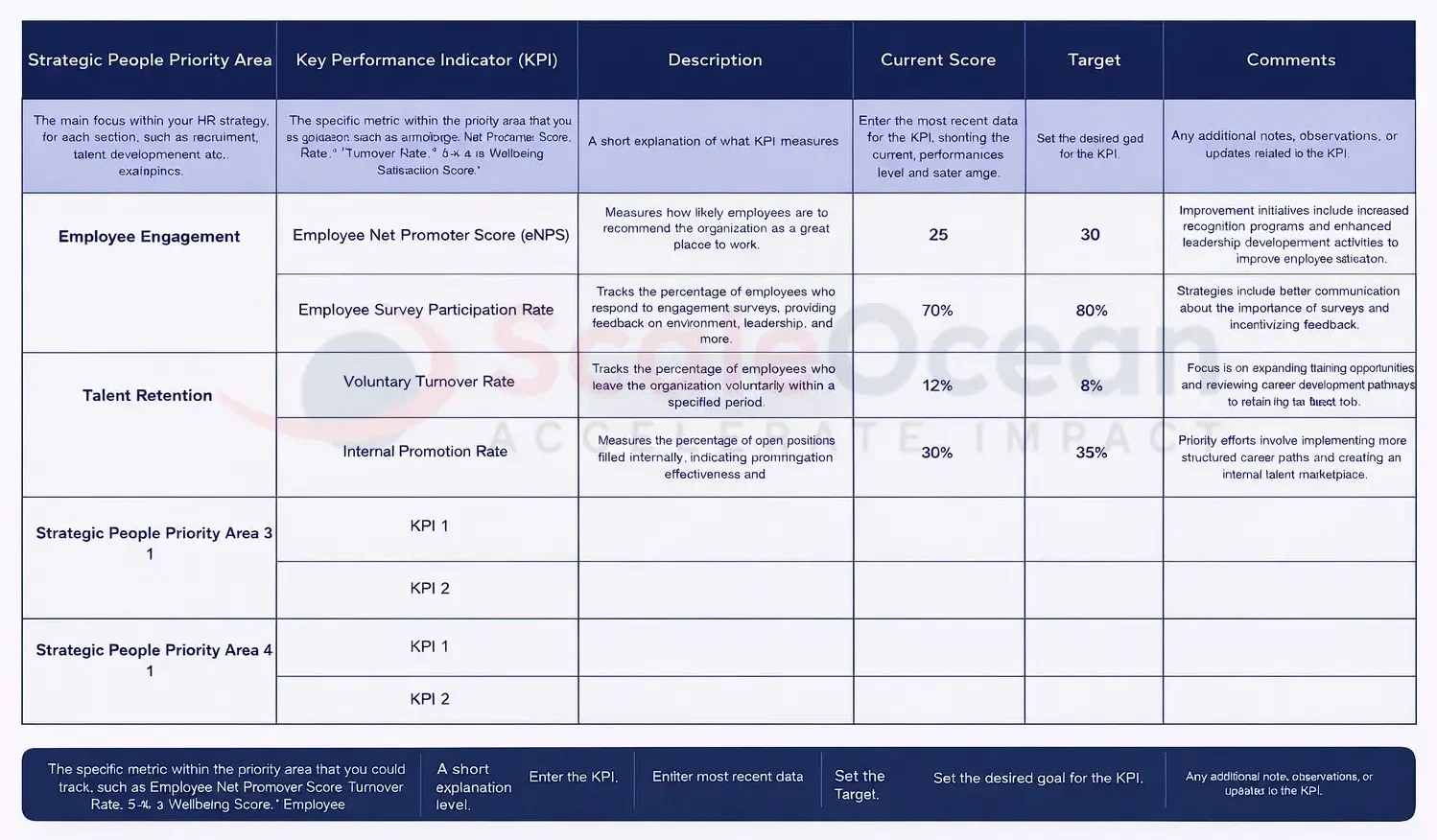
Organizations require a consistent and streamlined approach to measuring the performance of their HR KPIs to make it easier to create a structured report on HR KPIs. Use the HR KPI template below to quickly download and manage HR metrics and gain insight into workforce progress.
An HR KPI template will not only help define, track, and evaluate the KPIs but will also help generate an HR KPI report for easy workforce monitoring. A typical template will contain a KPI name, description, target, data source, and comments am ong other things, which will standardise KPI management, making it more accountable.
Further, if a consistent template is used, it is possible to compare performance between years, develop trends, and base decisions on reliable and accurate data. As a result, an HR KPI template streamlines reporting on the metrics as well as makes sure that all the metrics are tied to business, improving transparency and efficiency in HR operations.
Once a KPI template is developed, companies must have systems in place to correctly enter the data and report it on a regular basis. ScaleOcean HR Management Software automates KPI tracking, integrates HR data streams, and provides instant performance dashboards for greater insight and control.
Teams can benefit from flexible reporting tools and real-time monitoring to ensure consistency in their HR operations with ScaleOcean. To experience the benefits the scaleOcean HR Management System brings to KPI management, schedule a free demo today for free.
HR KPI Best Practices

Effectively implementing HR KPIs involves more than just choosing the right HR metrics. Companies need to also ensure that best practices are adhered to for HR functions and business units to be in alignment with HR compliance in order to ensure clarity and relevance.
Furthermore, even the best KPIs, if not properly implemented, can lack value, making companies need to take a structured approach to enhance consistency, accuracy, and strategic alignment.
In conclusion, businesses can benefit from HR KPIs more effectively if they adopt these best practices, which will help them make better decisions and make necessary adjustments in their HR management.
- Relate to Business Strategy: HR KPIs must relate directly to the organization’s goals and should correspond to measurable business results (not to little or insignificant actions).
- Prioritize leading metrics with Data: Keep KPIs as limited in number as possible, ensuring that it is not a case of data overload, but focus on key metrics for performance improvements.
- Combine both the Leading & Leading Indicators: Predictive and outcome-based KPIs are needed to help businesses identify problems in advance and assess the outcomes and success of past strategies and decisions.
- Set a Reporting Cadence: A reporting cadence will help you ensure that the data is analyzed regularly, and HR teams can take prompt action on unforeseen changes while keeping a record of performance.
- Prepare a KPI Glossary: The uniform glossary provides uniformly understood definitions, formulas, as aobjectivesive behind the various KPIs, eliminating the confusion and improving the communication between different items.
- Implement Automated Dashboards: Digital dashboards help to enhance the accuracy and accessibility of this data, allowing it to be effectively monitored and decision-making to take place at a quicker pace, at varied levels of the organization.
- AI Adoption & Fluency: HR teams can leverage AI tools for data analysis, making better decisions, predicting trends, planning their workforces more efficiently, and more, as part of AI Adoption & Fluency.
Conclusion
By defining, analyzing, and optimizing HR KPIs, businesses can ensure their workforce goals match organizational objectives, make more informed decisions, and leverage objective data and actionable insights to sustain growth in the long run.
With the greater need for businesses to have accurate workforce data, they are looking for a solution that should not only be able to track HR KPIs but also dovetail those same data points with other business processes. With its unique ability to integrate and consolidate HR data, automate KPI tracking, and provide timely analysis, ScaleOcean HR Management Software enables organizations to optimize workforce planning and performance management.
Further, with built-in dashboards and powerful analytics, HR professionals can rapidly keep track of essential metrics, cut down on manual reporting, and be part of the informed decision-making process more efficiently. Get your business a free demo from ScaleOcean today and see how it can affect your HR performance monitoring and business efficiency.
FAQ:
1. How is a step-by-step implementation roadmap for a specific function like recruitment or retention?
1. Audit: Evaluate existing metrics (such as Time-to-Hire) to identify obstacles.
2. Define: Establish SMART objectives and assign responsible individuals.
3. Optimize: Streamline processes, for example, using structured interviews.
4. Tooling: Implement technology solutions like an ATS or retention surveys.
5. Launch: Train the team and initiate the process.
6. Review: Monitor monthly data and make necessary adjustments.
2. What are the 5 key performance indicators for human resources?
The main HR KPIs include time-to-hire, employee turnover rate, absenteeism rate, training effectiveness, and employee satisfaction scores. These metrics offer valuable insights into essential HR functions, enabling organizations to evaluate the effectiveness of their HR operations and their alignment with business goals.
3. What are the top 5 HR metrics?
Important HR metrics include:
1. Employee turnover and retention rates
2. First-year turnover rate
3. Cost per hire
4. Time to hire and time to fill vacancies
5. Diversity, equity, inclusion, and accessibility (DEI&A).
4. What are the top 5 HR priorities?
The current top priorities for HR leaders are:
1. Developing critical skills and competencies
2. Managing work design and organizational change
3. Ensuring effective current and future leadership
4. Preparing for the future of work
5. Enhancing employee experience and wellbeing




















.png)