

Equipment rental software is a system that helps equipment rental businesses manage assets, bookings, and billing efficiently. Yet many still rely on spreadsheets or disconnected systems, which create errors, delays, and missed revenue opportunities across operations, especially as rental demand continues to grow in competitive markets.
According to The Insight Partners, the global equipment rental software market is projected to grow from USD 284.6 million in 2023 to USD 504.1 million by 2031, registering a CAGR of 7.4%, reflecting a clear and accelerating shift toward dedicated digital solutions across the rental industry.
Without a centralized system, companies struggle with inventory visibility, scheduling conflicts, and inaccurate invoicing, which directly impact customer satisfaction and operational efficiency. Therefore, adopting a structured digital solution is essential to reliably scale rental operations and maintain consistent service quality.
Modern rental businesses need real-time tracking, automated workflows, and integrated financial management. Consequently, equipment rental software provides a practical way to reduce manual tasks, improve accuracy, and support data-driven decisions across multiple locations and complex rental cycles.
To help businesses navigate these options, this article explores key features, benefits, and a curated list of equipment rental software solutions, including ScaleOcean, Point of Rental, Booqable, Texada, and more, to support more informed decision-making.
 Key Takeaways
- The Best Equipment Rental Software in Singapore helps businesses compare solutions based on scalability, features, and suitability for different operational complexities and industries.
- Equipment Rental Management Software is a digital system that helps businesses manage rental operations, including asset tracking, booking schedules, maintenance, invoicing, and customer data.
- Choosing the Best Equipment Rental Software requires evaluating features, scalability, and integration capabilities to ensure long-term alignment with business growth and operational needs.
- ScaleOcean Equipment Rental Software helps businesses streamline complex rental workflows through customizable, all-in-one solutions that improve efficiency, visibility, and long-term operational scalability.
List of 10 Top Equipment Rental Software in Singapore 2026
Before reviewing each platform in detail, the following comparison highlights key differences among the top 10 best equipment rental software solutions in Singapore. This table overview helps businesses quickly identify which system aligns with their operational scale and rental complexity.
| Vendor | Best For | Key Features |
|---|---|---|
| ScaleOcean | Customized enterprise workflows tailored to specific organizational needs | End-to-end ERP, asset tracking, GST compliance, customizable dashboards |
| Point of Rental | Large rental enterprises | Inventory tracking, contracts, and reporting tools |
| Booqable | Small rental businesses | Online booking, inventory management, website integration |
| Texada | Heavy equipment rental | Fleet management, telematics, maintenance tracking |
| EZRentOut | Mid-sized businesses | Asset tracking, barcode scanning, and maintenance scheduling |
| TapGoods Pro | Event and party rentals | CRM tools, logistics management, and pricing tools |
| HireHop | Growing rental companies | Cloud-based rental tracking, order management |
| RentalMan | Enterprise-level operations | ERP integration, financial tools, and reporting systems |
| Quipli | Digital-first rental startups | E-commerce integration, online booking, and customer management |
| Yo!Rent | Marketplace-based rentals | Multi-vendor platform, booking system, customizable workflows |
Choosing the best equipment rental software requires more than comparing features on paper, as equipment rental software reviews often highlight differences in usability, scalability, and real-world performance.
Businesses need to ensure the system supports long-term growth rather than creating additional limitations. Below are the detailed reviews of 10 of the best Equipment rental software available in 2026.
10 Best Equipment Rental Software Singapore 2026
Selecting the best equipment rental software is not only about functionality but also about how well the system aligns with daily operations. Each business has different workflows, asset types, and customer expectations, which makes choosing the right platform a strategic decision.
Therefore, the following list reviews 10 equipment rental software solutions in Singapore based on their core functions, typical use cases, and operational strengths. This breakdown helps businesses evaluate which system fits their size, industry requirements, and long-term operational goals.
1. ScaleOcean
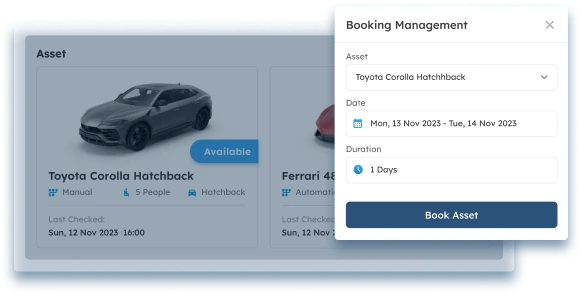
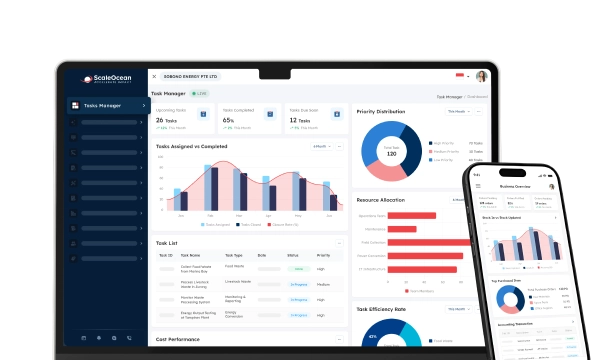
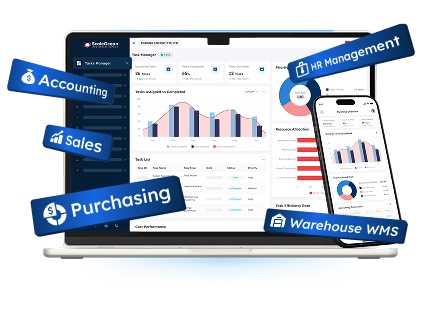
ScaleOcean Atlas Rental ERP Software is designed to centralize and streamline the entire rental lifecycle in a single integrated system. It connects asset management, booking processes, maintenance tracking, financial operations, invoicing, and customer relationship management into a unified platform.
Furthermore, the system adapts to different industry needs through flexible configuration. Businesses can define rental schemes, deposits, late fees, and approval workflows, and customize dashboards to reflect operational priorities and real-time performance insights.
In addition, ScaleOcean supports unlimited users without additional licensing costs, using a flat pricing structure based on system complexity. It also aligns with Singapore GST requirements and local financial reporting standards, and is eligible for government co-funding up to 50% through the PSG (Productivity Solutions Grant) or EDG (Enterprise Development Grant), and up to 75% through the CTC (Company Training Committee).
Moreover, the platform strengthens operational control through advanced features such as real-time asset tracking, preventive maintenance scheduling aligned with MOM regulations, multi-branch coordination, and a customer portal that enables 24/7 self-service booking and order management.
Key Features of ScaleOcean Atlas Rental ERP Software:
- Asset Management: Tracking assets through GPS, telematics, QR/barcode scanning, and monitoring their real-time availability to optimize utilization and maintenance.
- Booking Management: Includes scheduling tools, automated reminders to clients or staff, and mechanisms to prevent double bookings, ensuring efficient appointment handling.
- Multi-Branch Integration: Enables centralized oversight across multiple locations, facilitating seamless inter-location transfers and consolidated resource management.
- Finance and Invoicing features automate billing processes, handle deposits, and generate financial reports to streamline financial operations and maintain transparency.
- Maintenance and Compliance Management: Ensures that all practices adhere to standards set by the Ministry of Manpower (MOM), helping the company stay compliant with legal and regulatory requirements.
- Customer Portal: Offers online booking, access to product catalogs, and delivery scheduling, enhancing the customer experience through convenient digital interfaces.
| Pros | Cons |
|---|---|
|
|
Best for: Medium to large businesses that manage complex rental operations across multiple branches, requiring robust features to handle diverse workflows, streamline asset management, and support scalable growth in competitive markets.
Pricing: Contact our expert to see custom pricing based on your business requirements.
2. Point of Rental
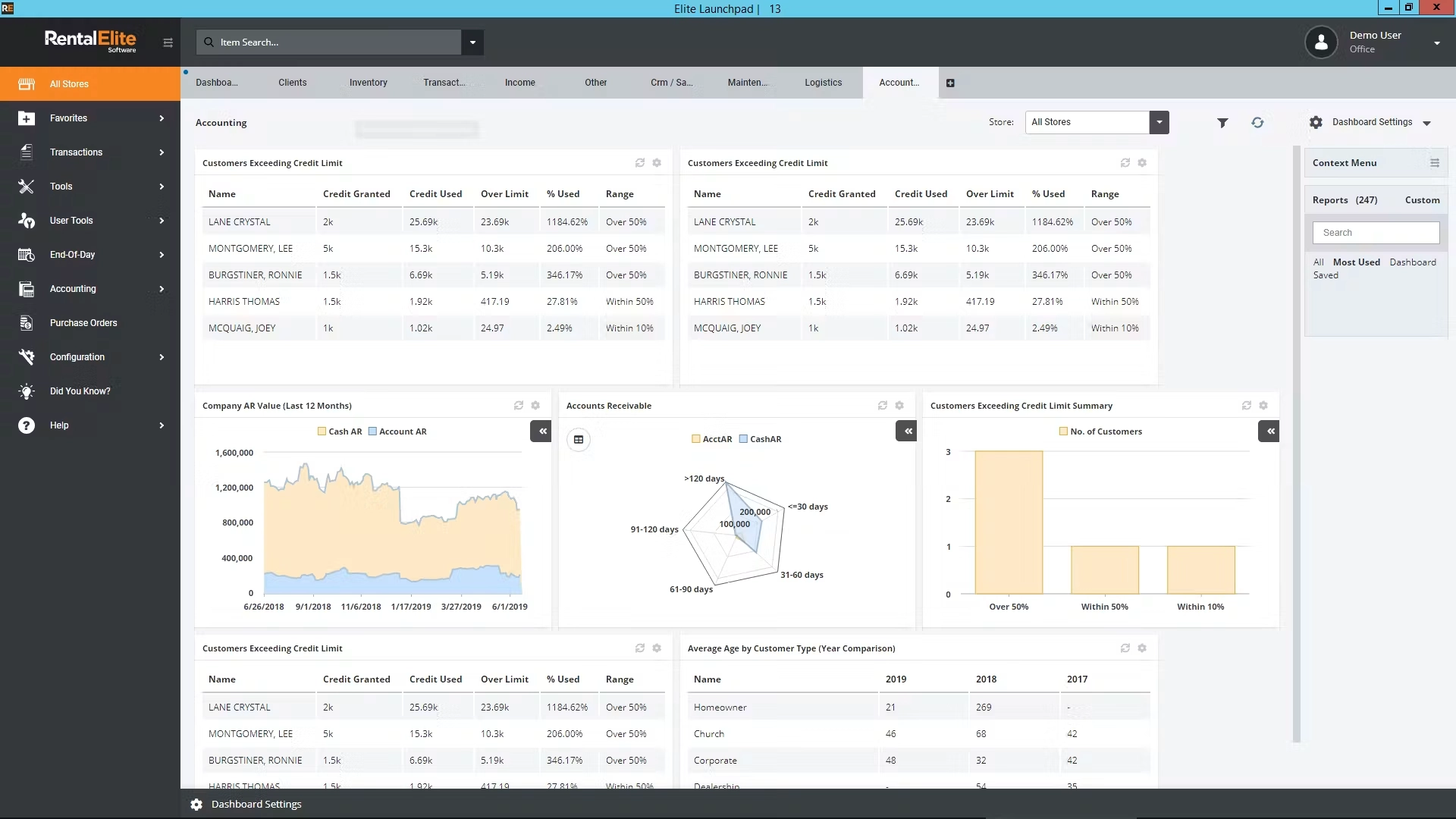 Point of Rental rental management software is designed to help businesses manage inventory, contracts, and operational workflows across multiple rental categories. It provides structured tools that support asset tracking and rental order processing within centralized systems.
Additionally, the platform offers reporting and analytics features that help businesses monitor performance and identify operational inefficiencies. It also supports both cloud-based and on-premises deployments, giving companies flexibility based on their infrastructure and data control requirements.
Key Features:
- Inventory and asset tracking
- Contract and document management
- Reporting and analytics tools
- Multi-location support
| Pros | Cons |
|---|---|
|
|
Best for: Large rental companies or enterprises that require structured workflows, multi-location coordination, and the flexibility to choose between cloud or on-premises system deployment.
Pricing: ~SGD 700+/month
3. Booqable
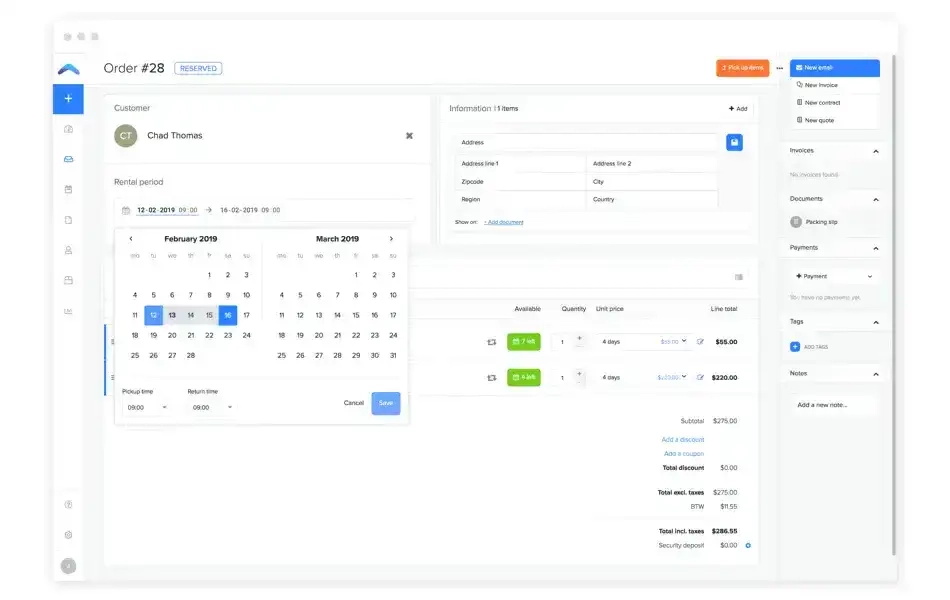 Booqable rental management software is a cloud-based rental software designed to simplify booking and inventory management for small rental businesses. It allows users to track product availability, manage reservations, and streamline order processing through an intuitive interface.
Moreover, the platform integrates with websites, enabling businesses to accept online bookings and payments directly. This approach helps improve customer experience while reducing manual coordination, especially for businesses that rely heavily on digital storefronts and self-service transactions.
Key Features:
- Online booking system
- Inventory management
- Website integration
- Payment processing tools
| Pros | Cons |
|---|---|
|
|
Best for: Small businesses, startups, or niche rental providers that prioritize quick implementation, simple workflows, and strong online booking capabilities without requiring complex operational features.
Pricing:~SGD 40–200/month
4. Texada
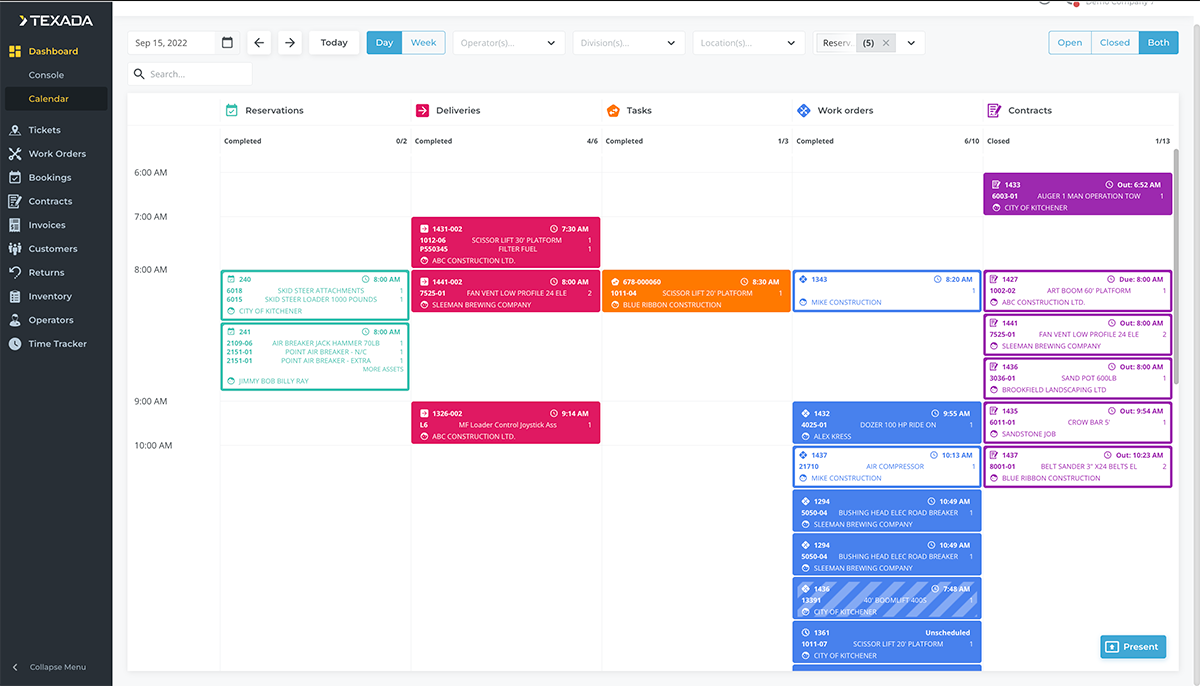
Texada rental software is a rental software solution designed for heavy equipment and fleet management operations. It focuses on providing visibility into equipment usage, maintenance schedules, and performance through integrated tracking systems and telematics capabilities.
Furthermore, the platform supports detailed reporting and operational analysis, helping businesses monitor equipment efficiency and reduce downtime. It is commonly used in industries where equipment reliability, utilization tracking, and maintenance planning are critical to daily operations.
Key Features:
- Fleet and equipment tracking
- Telematics integration
- Maintenance management
- Reporting tools
| Pros | Cons |
|---|---|
|
|
Best for: Large construction or heavy equipment rental companies that require detailed fleet monitoring, advanced maintenance tracking, and operational insights to manage high-value assets efficiently.
Pricing:~SGD 250+/month
5. EZRentOut
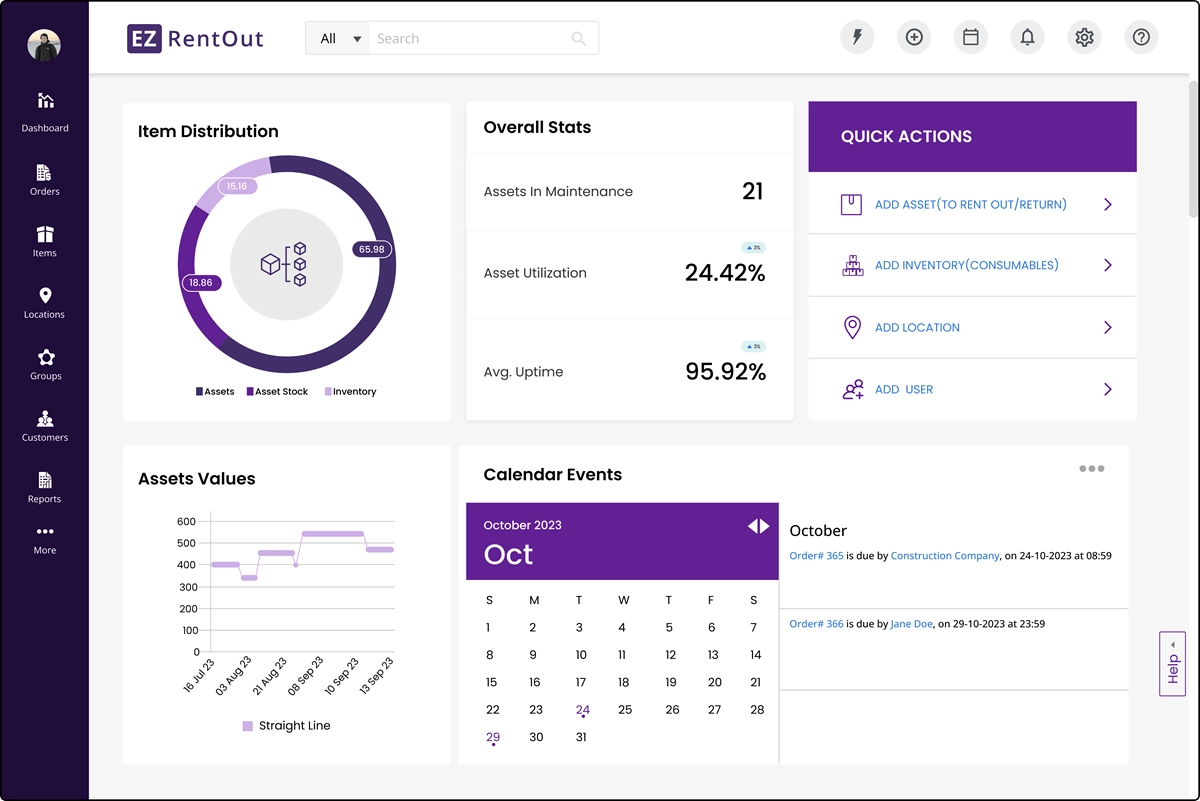 EZRentOut rental management software emphasizes asset tracking and maintenance scheduling. It helps businesses monitor equipment usage, manage inventory, and ensure timely servicing through automated alerts and maintenance workflows.
In addition, the platform supports barcode and QR code scanning, improving tracking accuracy and reducing manual errors. It also provides reporting tools that help businesses evaluate asset performance and optimize operational efficiency over time.
Key Features:
- Asset tracking with barcode/QR scanning
- Maintenance scheduling
- Inventory management
- Reporting and analytics
| Pros | Cons |
|---|---|
|
|
Best for: Medium-sized businesses that need reliable asset tracking and maintenance scheduling without requiring highly complex system customization or full enterprise-level integration.
Pricing: ~SGD 80–300/month
6. TapGoods Pro
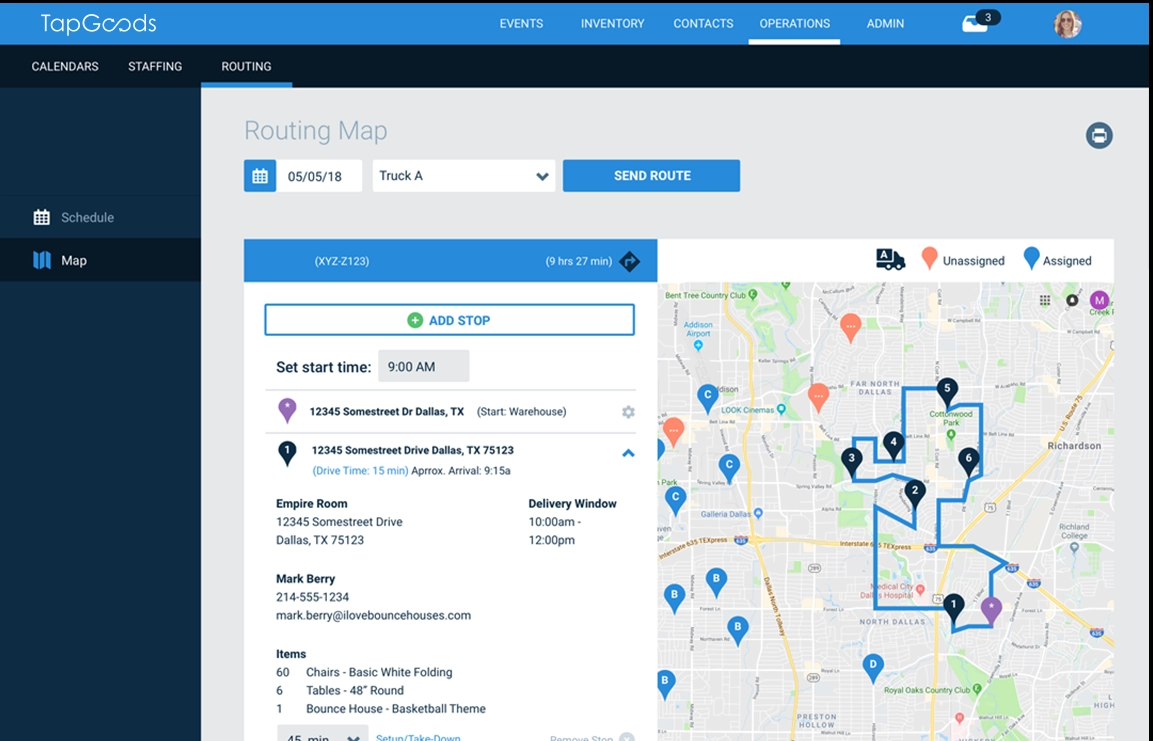 TapGoods Pro equipment rental software is designed primarily for event and party rental businesses. It helps manage inventory, customer relationships, and logistics, allowing businesses to coordinate orders, pricing, and delivery schedules more efficiently.
Additionally, the platform includes CRM functionality that supports customer tracking and communication. It also provides tools for managing quotes and pricing, which are important for businesses that handle customized rental packages and event-based services.
Key Features:
- CRM tools
- Inventory and order management
- Logistics and delivery tracking
- Pricing and quotation tools
| Pros | Cons |
|---|---|
|
|
Best for: Small to medium event rental companies that need to manage customer interactions, delivery logistics, and customized rental packages within a single operational system.
Pricing: ~SGD 100–500/month
7. HireHop
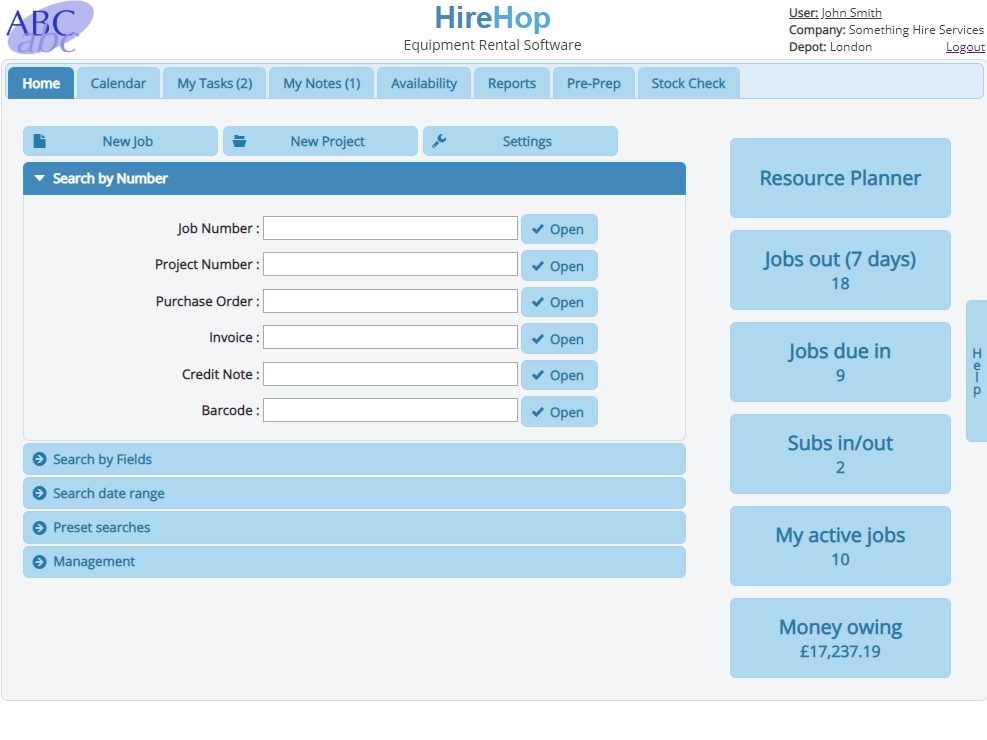 HireHop rental software is a cloud-based rental software platform that simplifies inventory tracking and order management. It enables businesses to manage rental schedules, track equipment availability, and process customer orders through a centralized digital platform.
Moreover, the system is designed to be flexible and accessible, making it suitable for businesses transitioning from manual processes. It offers essential tools without excessive complexity, allowing teams to adopt digital workflows more easily.
Key Features:
- Order management
- Inventory tracking
- Cloud-based access
- Scheduling tools
| Pros | Cons |
|---|---|
|
|
Best for: Small to medium businesses that are transitioning from manual systems to digital solutions and need a straightforward platform for managing orders, inventory, and scheduling.
Pricing: ~SGD 60–250/month
8. RentalMan
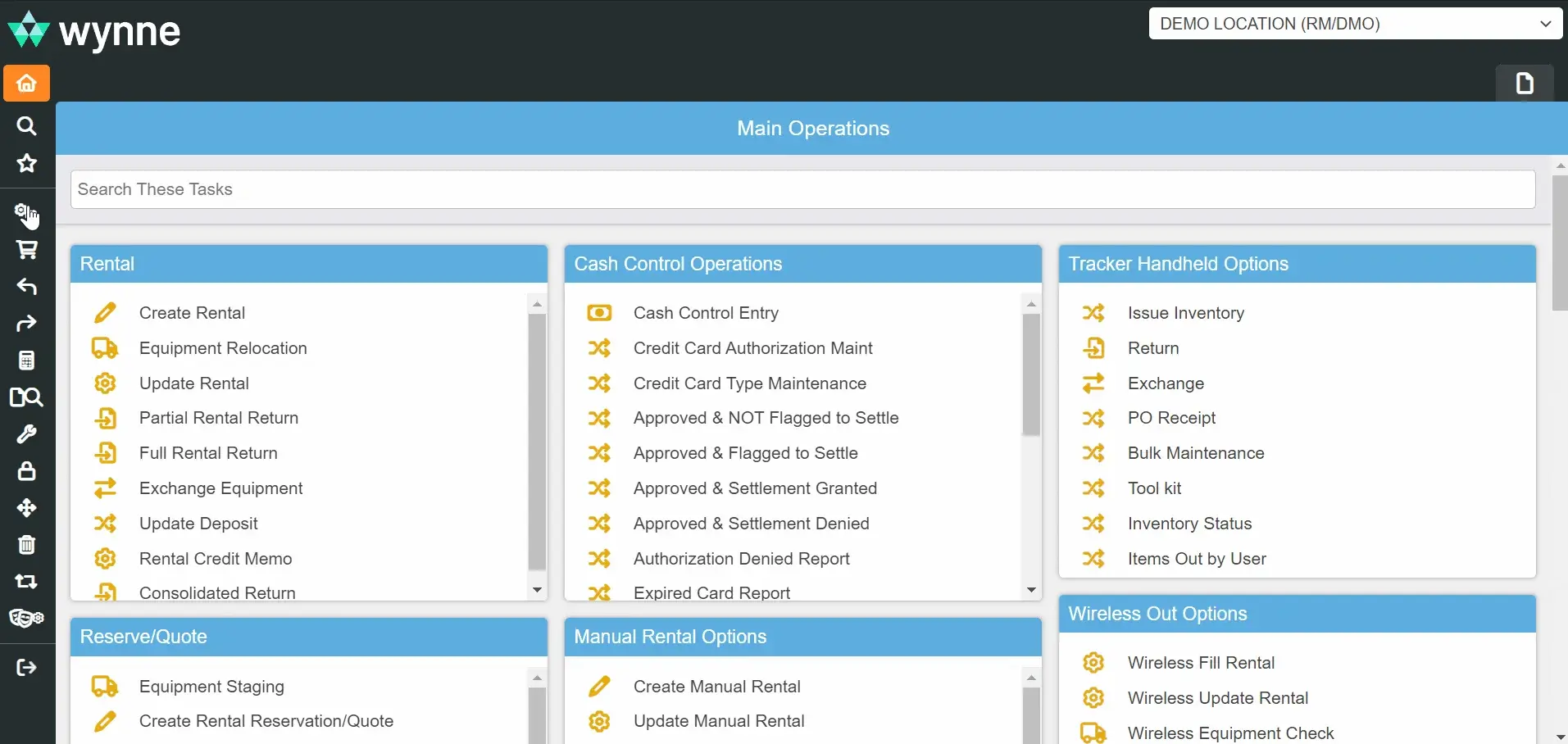
RentalMan rental software is an enterprise-level rental software that integrates operational and financial processes into a centralized system. It provides tools for managing inventory, contracts, and financial reporting, supporting large-scale rental operations with complex workflows.
Furthermore, the platform is often used alongside broader ERP systems, enabling businesses to maintain consistency across departments. It offers detailed reporting capabilities, which help organizations track performance and maintain control over large operational structures.
Key Features:
- ERP integration
- Financial management tools
- Inventory tracking
- Reporting systems
| Pros | Cons |
|---|---|
|
|
Best for: Large enterprises that require deep integration between rental operations and financial systems, along with advanced reporting capabilities for managing complex and high-volume rental activities.
Pricing: Custom pricing
9. Quipli
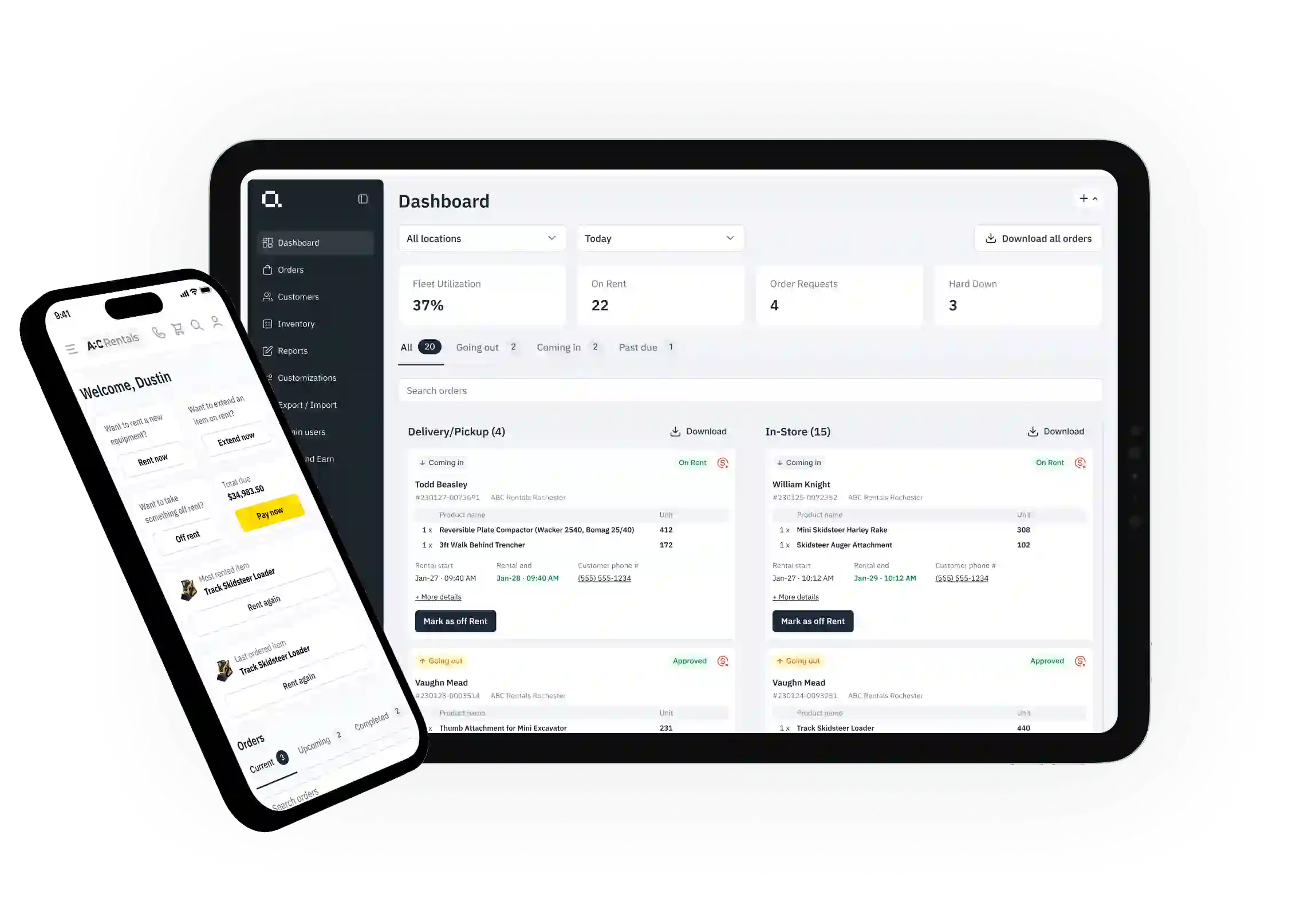 Quipli rental management software is designed for digital-first operations, combining rental management with e-commerce functionality. It allows businesses to manage inventory, bookings, and customer interactions through an integrated online system.
Additionally, the platform supports online transactions and storefront integration, making it easier for businesses to offer self-service booking experiences. This approach helps improve accessibility and customer convenience in digitally driven rental environments.
Key Features:
- Online booking system
- Customer management
- Inventory tracking
- E-commerce integration
| Pros | Cons |
|---|---|
|
|
Best for: Small to medium businesses that prioritize online bookings, digital customer interaction, and e-commerce integration rather than complex operational or multi-branch rental management.
Pricing: ~SGD 100–400/month
10. Yo!Rent
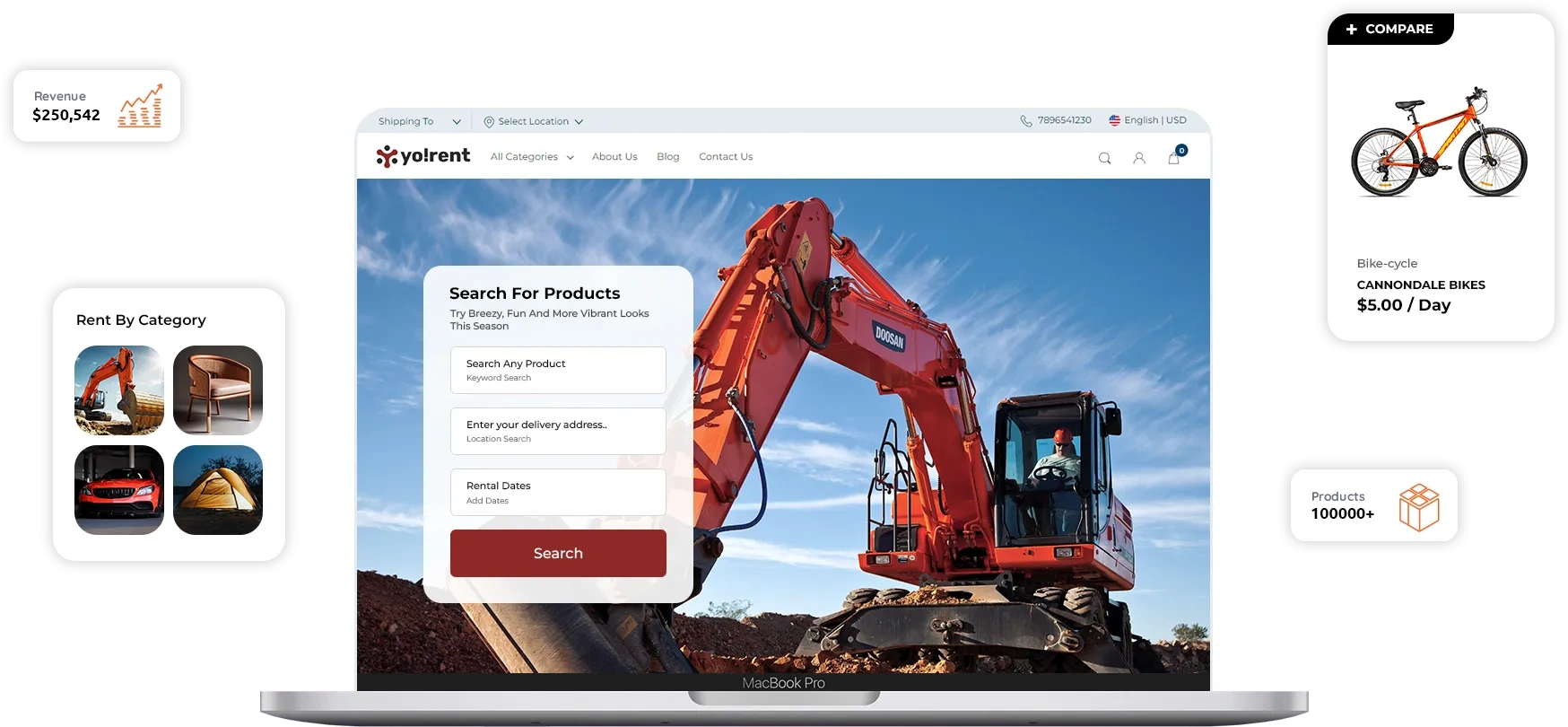 Yo!Rent rental software is designed to support multi-vendor marketplaces, where multiple providers can list and manage rental products. It enables businesses to build platforms that connect vendors and customers within a shared ecosystem.
Moreover, the system includes customizable workflows and booking features that allow platform owners to define how vendors operate. It is typically used for marketplace development rather than internal rental management for a single company.
Key Features:
- Multi-vendor marketplace support
- Booking system
- Customizable workflows
- Payment integration
| Pros | Cons |
|---|---|
|
|
Best for: Businesses aiming to build rental marketplaces or platforms that connect multiple vendors, rather than companies focused solely on managing internal rental operations.
Pricing: ~SGD 2,000–8,000+ one-time license/custom setup
As businesses look to choose their system, it becomes essential to make the right decision. You can consider ScaleOcean Atlas Rental ERP Software, which offers an integrated solution that helps companies manage assets, bookings, maintenance, finance, and customer relationships within a single, customizable platform.
ScaleOcean meets complex operational needs through flexible workflows, unlimited users, compliance with Singapore standards, and support for government grants. It helps businesses scale efficiently, reduce manual work, and control rental operations. Request a free demo today to see its streamlining capabilities.

What Is Equipment Rental Management Software?
Equipment rental management software is a digital system that helps businesses manage rental operations, including asset tracking, booking schedules, maintenance, invoicing, and customer data. It replaces manual processes with centralized workflows to improve accuracy and operational efficiency.
The software allows businesses to monitor equipment availability in real time and prevent scheduling conflicts, such as double bookings. It also tracks asset condition, usage history, and maintenance schedules, ensuring that equipment remains in optimal condition and ready for deployment.
In addition, equipment rental software integrates financial processes, including billing, deposits, and payment tracking. This integration helps businesses maintain accurate financial records, reduce errors, and streamline administrative tasks that often consume significant operational time.
Moreover, many modern solutions include customer portals, reporting tools, and multi-location management capabilities. which are often highlighted in equipment rental software reviews when comparing system capabilities across different vendors.
These features enable businesses to scale operations, improve customer experience, and gain better visibility into performance across different branches and rental activities.
Benefits of Using Equipment Rental Software

Equipment rental software provides a structured approach to managing daily operations, reducing reliance on manual processes that often lead to errors and inefficiencies. By digitizing workflows, businesses can improve coordination, accuracy, and overall operational control across rental activities.
As rental operations grow more complex, businesses need systems that support scalability without increasing administrative burden. Equipment rental software enables companies to handle higher transaction volumes, manage more assets, and maintain service quality without significantly expanding their workforce.
In addition, the software improves visibility across all aspects of the business, from asset availability to financial performance. This transparency allows managers to make faster, data-driven decisions while reducing risks associated with miscommunication and incomplete information.
Ultimately, adopting equipment rental software in Singapore helps businesses stay competitive in a fast-moving market. It enhances efficiency, supports better customer service, and ensures that operations remain consistent, even as demand and operational complexity continue to increase.
Centralized Rent Management
Equipment rental software programs centralize all rental activities in a single system, allowing businesses to manage inventory, bookings, and customer data without switching between multiple tools. This reduces confusion and ensures consistent data across departments and operational teams.
Furthermore, centralized management improves coordination between branches and teams. Businesses can monitor equipment availability, track usage, and manage transfers between locations, which helps maintain efficiency and prevent resource shortages during peak demand periods.
Simplify Rental Process
Equipment rental software programs simplify the entire rental workflow by automating key processes such as booking, scheduling, and order tracking. It reduces manual input and minimizes errors that often occur when managing rentals through spreadsheets or disconnected systems.
Additionally, automation helps standardize processes, making it easier for staff to follow consistent procedures. As a result, businesses can reduce training time, improve operational speed, and ensure that rental transactions are handled accurately and efficiently.
Boost Sales
Equipment rental software Singapore helps increase sales by improving availability and visibility and enabling faster responses to customer inquiries. Businesses can quickly confirm bookings, suggest alternatives, and optimize asset utilization to maximize revenue opportunities.
Moreover, many systems support online booking and digital catalogs, allowing customers to browse and reserve equipment independently. This will expand sales channels and enable businesses to capture demand beyond traditional business hours or physical locations.
Improve Customer Satisfaction
Equipment rental software enhances customer satisfaction by providing faster service and more accurate information. Customers can check availability, receive confirmations, and track their orders without delays, which improves their overall experience with the business.
In addition, features such as automated notifications and the best customer portals in Singapore create transparency throughout the rental process. This reduces misunderstandings, builds trust, and encourages repeat business by delivering consistent and reliable service.
Automate Payment and Billing
Equipment rental software automates payment processing and billing workflows, reducing the need for manual calculations and data entry. This helps ensure that invoices are generated accurately and on time, minimizing disputes and payment delays.
Furthermore, automation supports various payment methods and tracks deposits, balances, and overdue invoices. Businesses can maintain better financial control while reducing administrative workload and improving cash flow management.
Generate Detailed Insight
Equipment rental software provides detailed reporting and analytics that help businesses understand operational performance. It tracks metrics such as equipment utilization, revenue trends, and maintenance frequency, enabling more informed decision-making.
Additionally, these insights help identify inefficiencies and opportunities for improvement. Businesses can optimize asset usage, adjust pricing strategies, and plan future investments based on accurate, data-driven analysis rather than assumptions.
Common Features of Equipment Rental Software
Equipment rental software programs typically include a range of features designed to simplify operations and improve control over assets, bookings, and customer interactions. These features help businesses manage complex rental workflows more efficiently while reducing manual errors and delays.
As rental businesses scale, having the right set of features becomes essential for maintaining operational consistency. From tracking equipment availability to managing maintenance schedules, these tools ensure that every part of the rental process runs smoothly and remains well-coordinated.
Inventory Rent Management
Inventory rent management allows businesses to track all rental assets in a centralized system, including their locations, conditions, and availability. This ensures that equipment is properly accounted for and reduces the risk of misplaced or underutilized assets.
Additionally, the feature supports better planning by providing real-time visibility into inventory levels. Businesses can allocate resources more effectively, avoid shortages, and ensure that high-demand items are always available when customers need them.
Order Tracking & Availability
Order tracking and availability features enable businesses to monitor rental orders from booking to return. This ensures that every transaction is recorded accurately and that equipment is allocated without conflicts or scheduling overlaps.
Moreover, real-time availability tracking helps staff respond quickly to customer inquiries. Businesses can confirm bookings instantly, suggest alternatives when needed, and maintain a smooth rental process without unnecessary delays or confusion.
Available Schedule Tracking
Available schedule tracking helps businesses manage rental timelines by clearly displaying when equipment is booked, in use, or available. This prevents double bookings and minimizes scheduling conflicts across all operations.
Furthermore, this feature allows teams to plan ahead by identifying gaps in the schedule. Businesses can optimize equipment utilization, improve turnaround times, and maximize revenue by ensuring assets are used efficiently.
Maintenance & Repair Tracking
Maintenance and repair tracking ensures that all equipment is serviced regularly and remains in good working condition. The system can schedule preventive maintenance and send reminders, reducing the likelihood of unexpected breakdowns during rentals.
In addition, tracking maintenance history helps businesses identify recurring issues and plan repairs more effectively. This improves equipment reliability, extends asset lifespan, and enhances overall operational efficiency.
e-Commerce Integration
E-commerce integration allows businesses to connect their rental systems to online platforms, enabling customers to browse products, check availability, and place orders directly on a website. This expands sales channels and improves accessibility.
Additionally, integration with online payment systems simplifies transactions and reduces manual processing. Businesses can manage both online and offline bookings in a single system, ensuring consistency and better coordination across all sales channels.
Mobile Accessibility
Mobile accessibility enables staff to manage rental operations from smartphones or tablets, providing flexibility and real-time access to important information. This is especially useful for teams working across multiple locations or in the field.
Moreover, mobile access improves responsiveness by allowing quick updates to bookings, inventory, and schedules. Businesses can maintain operational efficiency even when employees are not working from a central office.
Online Equipment Reservations
Online equipment reservation features allow customers to book rentals independently without needing direct assistance from staff. This improves convenience and reduces the workload on customer service teams.
Furthermore, self-service booking systems operate around the clock, enabling businesses to capture demand at any time. This not only enhances customer experience but also increases booking opportunities and overall revenue potential.
Quoting and Proposals
Quoting and proposal features enable businesses to quickly create detailed rental quotations that include pricing, rental duration, and additional services. This helps ensure consistent pricing while reducing the time required to prepare customer offers.
Additionally, automated proposal generation improves professionalism and accuracy. Businesses can respond faster to inquiries, customize offers to customer needs, and increase the likelihood of closing deals through clear, well-structured quotations.
Service Management
Service management helps businesses coordinate additional services such as delivery, setup, and equipment pickup. It ensures that all service-related tasks are properly scheduled and tracked throughout the rental process.
Moreover, this feature improves operational efficiency by aligning service teams with rental schedules. Businesses can reduce delays, avoid miscommunication, and ensure services are delivered on time, thereby enhancing the overall customer experience.
Customer Management
Customer management features allow businesses to store and organize customer information, including contact details, rental history, and transaction records. This helps create a centralized database for better relationship management and communication.
Furthermore, having access to customer insights enables businesses to personalize services and improve engagement. Companies can track preferences, identify repeat customers, and build stronger relationships that support long-term business growth.
Automating Payment Processing
Automating payment processing helps businesses handle transactions more efficiently by reducing manual data entry and minimizing errors. The system can generate invoices, track payments, and manage deposits without requiring constant administrative oversight.
In addition, automated payment systems support multiple payment methods and ensure timely billing. This improves cash flow, reduces delays, and provides better financial visibility across all rental transactions and customer accounts.
Employee Management
Employee management features help businesses assign tasks, monitor staff performance, and coordinate responsibilities across teams. This ensures that each part of the rental process is handled efficiently and without confusion.
Additionally, the system provides visibility into workloads and schedules, allowing managers to allocate resources more effectively. It improves productivity and ensures that operations run smoothly even during busy periods or peak demand.
Reporting and Analytics
Reporting and analytics features provide businesses with insights into key performance metrics such as revenue, equipment utilization, and customer activity. This helps managers understand how the business is performing and identify areas for improvement.
Moreover, data-driven insights support better decision-making by highlighting trends and operational patterns. Businesses can optimize pricing strategies, improve asset utilization, and plan for future growth based on accurate, reliable information.
How to Choose the Best Equipment Rental Booking Software

Choosing the right equipment rental booking software requires careful evaluation of business needs, operational complexity, long-term scalability and insights from equipment rental software reviews that reflect real implementation challenges and system performance.
Not every system is suitable for all companies, so it is essential for businesses to carefully evaluate and select solutions that seamlessly align with their business-specific workflows and long-term growth plans.
Additionally, decision-makers should look beyond basic features and consider how the software supports efficiency, integration, and customer experience. A well-chosen system not only solves current challenges but also adapts as operations expand and become more complex.
Essential Software Features
Businesses should prioritize software that includes core rental functionalities such as inventory tracking, booking management, invoicing, and maintenance scheduling. These features form the foundation of efficient rental operations and ensure that daily processes run smoothly.
Furthermore, having complete and well-integrated features reduces the need for additional tools. This helps minimize system fragmentation, improve data consistency, and allows teams to manage operations within a single, unified platform.
Scheduling & Dispatch Tools
A good equipment rental system should simplify reservations, rental periods, returns, and extensions. Look for features that allow teams to view equipment calendars, check availability, and manage rental workflows efficiently. Scheduling and dispatch tools help businesses manage equipment availability and coordinate deliveries or pickups efficiently.
Furthermore, effective scheduling reduces conflicts and improves asset utilization. Businesses can optimize their rental timelines, respond to customer demands faster, and maintain a well-organized workflow across teams and locations.
Industry Specialization
Different industries have unique rental requirements, so choosing software that aligns with specific operational needs is important, much like how businesses evaluate the best property management software for managing property assets and operations.
Another example: construction rentals may require heavy asset tracking, while event rentals focus more on logistics and scheduling. Additionally, industry-specific solutions often include tailored workflows and compliance support. It reduces the need for heavy customization and ensures that the system can handle specialized processes more effectively.
Mobile Accessibility
Mobile accessibility is essential for businesses that operate across multiple locations or require field coordination. Software that works on mobile devices allows staff to access information, update bookings, and manage tasks in real time.
Moreover, mobile functionality improves responsiveness and operational flexibility. Teams can handle changes quickly, reduce delays, and maintain accurate data even when they are not working from a central office.
Flexible Pricing & Billing
Flexible pricing and billing features allow businesses to manage various rental models, including hourly, daily, and long-term pricing. This ensures that the system can adapt to various customer needs and business strategies.
The ability to manage deposits, discounts, and late fees helps maintain accurate financial tracking. Businesses can reduce billing errors, improve transparency, and ensure consistent revenue management across all rental transactions.
When evaluating pricing, also check whether the software is listed on IMDA’s SMEs Go Digital portal. PSG-approved solutions qualify for up to 50% co-funding, which significantly reduces the upfront investment.
Integration & Automation
Integration and automation capabilities allow software to connect with other systems such as accounting, CRM, and e-commerce platforms. It ensures seamless data flow and reduces the need for manual data entry across different tools. In Singapore, the best software must integrate with IRAS InvoiceNow/Peppol for GST e-invoicing.
Additionally, automation streamlines repetitive tasks such as invoicing, notifications, and reporting. This improves efficiency, reduces human error, and allows teams to focus on higher-value activities within the business.
Scalability & Multi-Location Support
Scalability is important for businesses planning to grow, as the software must handle increasing transaction volumes, additional asset categories, and growing user numbers without performance degradation.
For Singapore businesses operating across multiple sites such as JTC industrial estates in Jurong, Tuas, and Changi, the system must support centralised multi-branch coordination and consolidated reporting from a single platform.
Moreover, multi-location support enables centralized management across branches. Businesses can monitor operations, transfer assets, and maintain consistency while managing multiple locations within a single system.
Conclusion
Equipment rental software helps businesses streamline operations, optimize asset utilization, and maintain accurate control over bookings, maintenance, and finances. Choosing the right system reduces inefficiencies, improves customer experience, and supports sustainable growth in Singapore’s competitive rental markets.
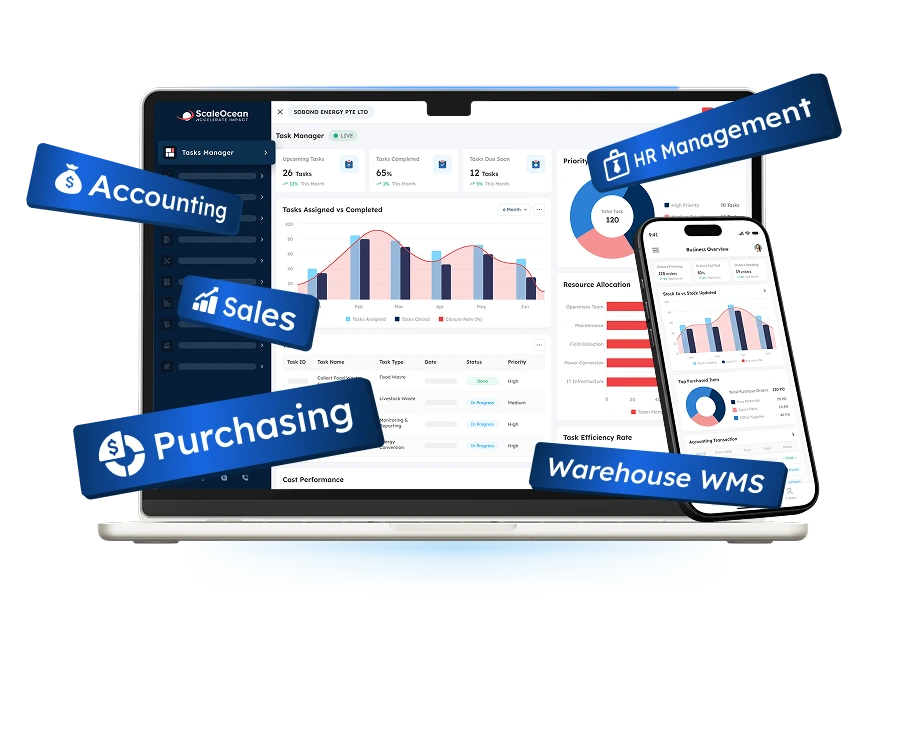
As businesses look for a solution that goes beyond basic rental management, ScaleOcean provides a comprehensive system that handles complex workflows on a single platform. From asset tracking and booking management to finance, maintenance, and CRM, it ensures every process stays connected and efficient.
ScaleOcean Atlas offers flexible customization, unlimited users, and Singapore standards compliance, fitting diverse needs without complexity. Companies can access PSG, EDG, and CTC grants in Singapore, making it a scalable, practical choice. Request a consultation with our expert today to see how it streamlines equipment rental operations.
FAQ:
1. How to compare specific pricing models of equipment rental software for mid-sized fleets?
Pricing models vary between subscription, per-user, or modular pricing, so mid-sized fleets should compare total cost, scalability, and included features to avoid hidden costs and ensure long-term affordability.
2. What are the industry-specific modules of equipment rental software for heavy machinery versus event planning?
Heavy machinery software focuses on fleet tracking, maintenance, and telematics, while event rental systems emphasize logistics, scheduling, and customer coordination tailored to short-term, high-turnover rental operations.
3. What is equipment rental software that specifically integrates with existing accounting tools?
Equipment rental software like ScaleOcean Atlas integrates directly with accounting tools by connecting financial data, automating invoicing, and syncing transactions across systems to enable real-time reporting and reduce manual entry.
4. What is an all-in-one ERP that handles your books?
An all-in-one system like ScaleOcean Atlas handles your books by integrating accounting with operations, centralizing financial data, and automating processes such as billing, reporting, and reconciliation within a single system.



















.png)