


E-procurement software is a digital solution that automates the entire purchasing cycle, from sourcing to final payment. Centralizing all vendor interactions, it allows businesses to manage their supply chains with high efficiency.
However, relying on manual sourcing often leads to hidden costs and fraud. According to the data we found from GovTech, the government spent $3.3 billion on ICT in 2024 to update infrastructure and strengthen cooperation, proving that modern tech is vital for secure spending.
Because of these rising stakes, e-procurement software is essential for businesses to eliminate risks and ensure transparency. By adopting this technology, your firm can prevent errors and maintain a competitive edge through 2026.
This article will break down what e-procurement software is all about. We’ll look at why it’s so critical for companies here in Singapore, and explore the top e-procurement software in Singapore, such as ScaleOcean, SAP Ariba, Coupa, Jaggaer, and more, and also on how to pick the best one for your specific needs, using an e-procurement software example to help you achieve your goals.
 Key Takeaways
- E-procurement software is a cloud-based solution that digitizes, consolidates, and automates the entire purchasing workflow.
- The benefits of e-Procurement software are cost savings, improved transparency, strengthened supplier relationships, real-time visibility, automated manual processes, and more.
- e-Procurement software works by defining the requirement, centralizing data, submitting a purchase requisition, conducting negotiations, generating and sending a purchase order, and so on.
- Discoverthe top 14 e-procurement platforms and tools such as ScaleOcean, SAP Ariba, Coupa, Jaggaer, Ivalua, GEP SMART, Procurify, Precoro, and more.
- ScaleOcean’s e-Procurement Software integrates seamlessly with several other modules within its ERP system to create a more streamlined procurement process.
What is E-Procurement Software?
E-procurement software is a cloud-based solution that digitizes, consolidates, and automates the entire purchasing workflow, from requisition to payment, enhancing operational efficiency and providing better control over the supply chain.
Using e-procurement software can help businesses to manage all their buying activities online, covering everything from finding suppliers to making purchase orders, all within one consolidated system.
Think of it, honestly, as the central hub for your company’s entire purchasing. It’s the kind of system that connects your team directly with suppliers, automates all those necessary approvals, and keeps a complete electronic record of every transaction, which is pretty vital for good management.
 Also Read: Top 10 Purchase Order Software Singapore: 2026 Review and Comparison
How Does an E-Procurement Solution Work?
E-procurement solutions simplify the procurement process by automating tasks and bringing everything into one system. From identifying needs to processing invoices, it streamlines workflows, saving time, reducing costs, and ensuring more control over every purchase.
Here’s a look at how the e-procurement process works:
1. Defining the requirement
The first step in e-procurement is identifying exactly what you need. This includes understanding the type, quantity, and specifications of the products or services required. Getting clear on these details helps prevent mistakes and ensures that purchases align with business needs.
Once the requirement is clear, everyone involved in the procurement process can move forward with the same goal in mind. A well-defined requirement reduces the risk of making incorrect or unnecessary purchases, making the whole process more efficient.
2. Submitting a purchase requisition
After defining the requirement, the next step is submitting a purchase requisition. This formal request is sent through the e-procurement system, which includes all the necessary details like quantity, product description, and estimated cost. It helps get the ball rolling for approval.
Once submitted, the requisition is reviewed by the relevant authorities, who ensure the request aligns with the company’s budget and needs. Automating this process not only speeds up approvals but also reduces errors and keeps things organized.
3. Evaluating suppliers
After approval, it’s time to evaluate potential suppliers. e-procurement systems make it easier to compare vendors by providing key information such as pricing, delivery schedules, and past performance. This ensures the best suppliers are selected based on reliability and value.
By looking at all the available data, companies can choose suppliers who offer the best mix of price, quality, and service. This also helps avoid the risks of working with unqualified or unreliable suppliers, ensuring smoother procurement experiences.
4. Conducting negotiations
Once you’ve identified a supplier, the next step is negotiation. This is where terms, such as pricing, payment schedules, and delivery timelines, are discussed and agreed upon. e-procurement systems often provide integrated tools that help track and manage these discussions to make sure both sides are aligned.
Effective negotiation ensures that both parties understand their responsibilities. By using an e-procurement platform to track these discussions, it’s easier to keep everything organized and make sure nothing is missed during the negotiation process.
5. Generating and sending a purchase order
After negotiations, a purchase order (PO) is created and sent to the supplier. This document clearly outlines what’s being ordered, at what price, and with the agreed-upon terms. e-procurement systems automate the creation and sending of POs, reducing the chances of errors.
A purchase order serves as the official agreement between buyer and supplier, setting clear expectations. The e-procurement system ensures that POs are sent promptly, keeping everything moving smoothly and reducing the risk of delays.
6. Fulfilling the order
Once the purchase order is accepted, the supplier begins fulfilling the order. e-procurement systems help track the status of the order in real-time, providing updates to the procurement team. This ensures that the order is being processed correctly and on time.
Tracking orders through an e-procurement platform allows companies to spot any delays early on. This gives businesses time to address any issues before they become larger problems, ensuring that the delivery process runs smoothly and as planned.
7. Performing three-way matching
Once the order is fulfilled, the next step is performing a three-way match. eProcurement solutions also involve comparing the purchase order, the goods receipt, and the supplier’s invoice to ensure they align in terms of price, quantity, and quality. e-procurement systems automate this process for quick verification.
Three-way matching ensures that businesses only pay for what they ordered and received. This not only prevents errors but also protects the company from overpayments, fraud, and misunderstandings, ensuring that every payment is accurate and justified.
8. Approving and reconciling invoices
Once everything matches, the invoice can be approved and reconciled. E-procurement systems help streamline this process by automatically matching invoices to the purchase order and receipt. This reduces manual work and ensures payments are processed quickly.
Reconciliation ensures that the payment amount matches the agreed-upon price and terms. By using an e-procurement system, businesses can automate much of this work, ensuring that payments are made promptly and without discrepancies, improving financial control.
9. Documenting the procurement process
The final step in the e-procurement solutions process is documenting everything. This includes keeping records of purchase requisitions, supplier communications, orders, and payments. With Singapore procurement software, all these documents are stored in a centralized system, making it easy to access and review them when needed.
Keeping a detailed record of the procurement process ensures transparency and compliance. It also offers insights for better decision-making, helping businesses improve processes. Also, procurement report templates help generate quick and comprehensive updates.
The Benefits of Using an eProcurement Software
In Singapore’s competitive market, being efficient isn’t just a bonus anymore. It’s really the core of everything. Businesses are always on the lookout for ways to trim expenses and just generally make things run better.
Getting the right procurement software in Singapore can seriously change a company’s financial health and how quickly it can adapt. The benefits are pretty significant, ranging from tighter spend control to fostering much better relationships with suppliers. Here are the key reasons why e-procurement is crucial for businesses in Singapore:
Cost Savings
E-procurement software provides businesses with improved visibility into their spending patterns, enabling better contract management and identifying potential savings opportunities.
By analyzing purchasing data, companies can negotiate better terms with suppliers and avoid unnecessary purchases, ultimately reducing costs and improving the bottom line.
Improved Transparency
With e-procurement software, all transactions and expenditures are visible in one centralized platform. This increased transparency makes it easier for businesses to monitor and track their budgets, ensuring that spending aligns with strategic objectives.
It enhances accountability, making it simpler to identify discrepancies or inefficiencies in the purchasing process.
Strengthened Supplier Relationships
By improving communication and providing a streamlined process, e-procurement software fosters stronger relationships with suppliers.
The ability to quickly process orders, manage contracts, and collaborate more effectively helps build trust and reliability, creating a foundation for long-term, mutually beneficial partnerships.
Gain Real-Time Visibility and Control Over Spending
Honestly, a major headache for any business is truly understanding where all the money is headed. Older, traditional ways usually mean spending data is scattered and often out of date, which isn’t very helpful at all.
E-procurement systems provide a centralized dashboard with real-time insights into every purchase. This kind of setup allows decision-makers to actually observe spending patterns unfolding live.
They can then easily track budgets, pinpoint any overspending, and make immediate adjustments as needed. That degree of real-time control is pretty crucial for managing cash flow effectively and keeping things financially stable.
Automate Manual Processes
Manual procurement, let’s be honest, often means a whole lot of repetitive tasks, things like endless data entry and mountains of paperwork. These processes are not just slow, but they’re also super susceptible to human error, which is a real problem.
This is where e-procurement software really shines, as it automates these routine tasks, everything from creating requisitions to handling invoice processing. This automation essentially frees up your team, allowing them to concentrate on much more strategic activities, like working out better deals with suppliers.
Ensure Policy Compliance
Maverick spending, when purchases happen outside official contracts, leads to waste. Employees often feel the official process is too slow or complicated. According to GeBIZ, the Singapore government awards tenders based on the best value for money, using a holistic approach.
An e-procurement system, though, changes the game by enforcing purchasing policies automatically, which is super helpful. It essentially guides employees directly to approved suppliers and those pre-negotiated contracts, making it genuinely easy for them to just do the right thing.
Navigate Complex Global Supply Chains Efficiently
For a lot of businesses here in Singapore, the supply chain isn’t just global, it’s often incredibly complex, really. Trying to manage international suppliers, juggle different currencies, and navigate all those varying regulations is a genuinely massive undertaking for any team.
The good news is, e-procurement platforms are specifically designed to handle exactly this kind of complexity. They’re built to help you manage suppliers from various regions and give you the necessary visibility to track orders no matter where they are globally.
Faster Purchasing Cycles
Procurement software Singapore speeds up purchasing cycles by automating tasks like requisitions, approvals, and purchase orders. This reduces the time spent on manual processes and minimizes delays, allowing businesses to meet their needs more quickly.
By streamlining workflows, eProcurement software helps ensure that orders are placed and approved efficiently. The automation reduces bottlenecks, accelerates decision-making, and ensures a smooth purchasing process from start to finish, improving overall speed.
Better Inventory Control
With eProcurement software, businesses can gain better control over their inventory. The software centralizes inventory data, providing real-time updates that help businesses track stock levels and anticipate future demand.
This improved visibility helps businesses avoid overstocking or stockouts, ensuring that the right amount of inventory is maintained. Automated notifications about low stock levels, usually supported by AI in procurement, help streamline procurement, preventing unnecessary delays in operations.
Enhanced Purchase Quality
eProcurement software enhances purchase quality by providing better visibility into supplier performance and purchasing trends. It allows businesses to analyze supplier data, making it easier to identify reliable vendors and ensure product quality.
Additionally, the software helps businesses track and manage product specifications, ensuring that the correct products are ordered every time. With automated quality checks in place, businesses can ensure consistent, high-quality purchases, reducing errors.
Main Features of eProcurement Software
Procurement software Singapore offers a variety of features that make the procurement process smoother and more efficient. From managing requisitions to analyzing spending, these tools help businesses save time, reduce costs, and stay on top of compliance.
Here are the key features of eProcurement software:
- Vendor Management System (VMS): With a VMS, businesses can easily manage their suppliers, track their performance, and streamline the onboarding process. This helps companies work with qualified suppliers and keeps communication flowing smoothly.
- Spend Analysis and Reporting Tools: These tools provide detailed insights into spending patterns, helping businesses spot potential savings. By analyzing purchasing behavior, companies can make smarter decisions and fine-tune their procurement strategies.
- Requisition and Purchase Order (PO) Control: eProcurement software automates the requisition process, ensuring that approvals and purchase orders are handled efficiently. This reduces errors and makes the purchasing cycle faster and more accurate.
- Invoice Management and 3-Way Matching: This feature automates the process of matching invoices with purchase orders and receipts, ensuring that payments are made accurately and only for authorized purchases. It helps businesses reduce errors and prevent fraudulent transactions.
- E-Catalog Management System: An e-catalog feature makes it easy for users to find and select products or services from approved suppliers. It centralizes purchasing options, ensuring accurate orders and minimizing the risk of unauthorized buying.
Main Tools and Applications of the eProcurement Software Process
The eProcurement solutions process involves a variety of tools and applications that help automate and simplify procurement tasks. These solutions make it easier to manage supplier relationships, streamline orders, and improve overall efficiency, all while reducing costs.
Here are the main tools and applications in the eProcurement solutions:
- Internet-enabled Electronic Data Interchange (EDI) System: EDI systems make it easy to exchange business documents like purchase orders and invoices between organizations. By going digital, transactions become faster, more accurate, and less reliant on paper, making the whole process more efficient.
- E-sourcing System: E-sourcing systems help companies find and evaluate suppliers through online platforms. These tools make it quicker and easier to search for the best suppliers based on factors like price, quality, and delivery time, saving valuable time during procurement.
- E-tendering System: E-tendering systems manage the bidding process electronically, allowing suppliers to submit their proposals through a secure platform. This approach streamlines the process, ensuring that everything is handled transparently and efficiently without unnecessary paperwork.
- E-auction System: E-auction systems provide a platform for businesses to hold online auctions for goods or services. These systems promote healthy competition among suppliers, helping companies secure the best prices and terms while providing clear and immediate feedback during the auction.
- E-ordering Systems: E-ordering systems make it simple for buyers to place orders directly with suppliers through a digital platform. These systems cut down on errors, speed up the order process, and ensure purchases are made according to company guidelines, enhancing overall efficiency.
Top 14 eProcurement Software Platforms
Honestly, with so many options swirling around, figuring out where to even begin your search for procurement software in Singapore can feel a bit overwhelming, right? This list is meant to give you a good starting point for your research, helping you navigate the many solutions available.
Each one of these e-procurement platforms brings something a bit different to the table, so truly, it’s pretty important to really dig into the ones that initially seem like they could be a good match for your company’s particular needs. Here are the top e-procurement software solutions for Singapore businesses:
1. ScaleOcean
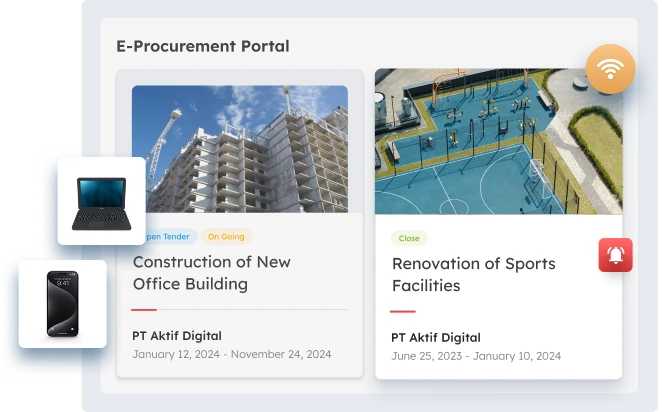
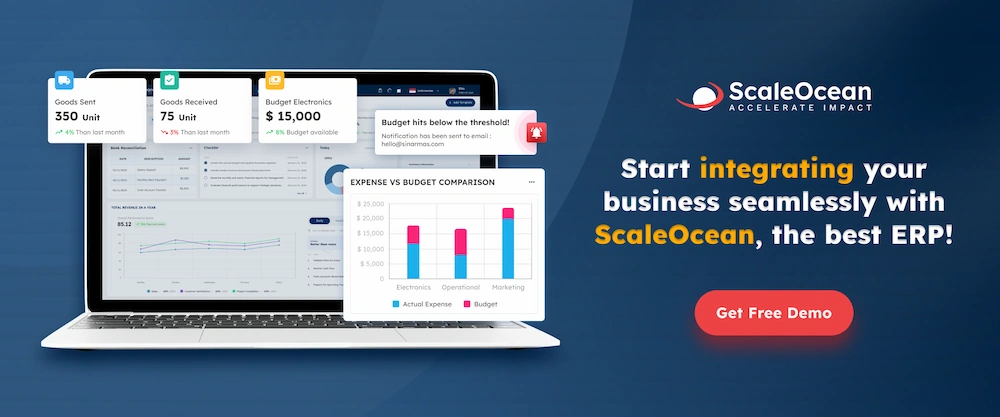
With real-time spending insight, efficient budget control, and automation to lower errors, the ScaleOcean e-Procurement Platform tackles the fundamental procurement problems. Its strong features increase overall productivity and save team time by streamlining manual tasks.
ScaleOcean’s best e-procurement software optimizes procurement processes with supplier management optimization, enabling seamless supplier integration and communication. It also automates workflows, reduces manual effort, boosts efficiency, and Spend Analytics offers insights for smarter purchasing.
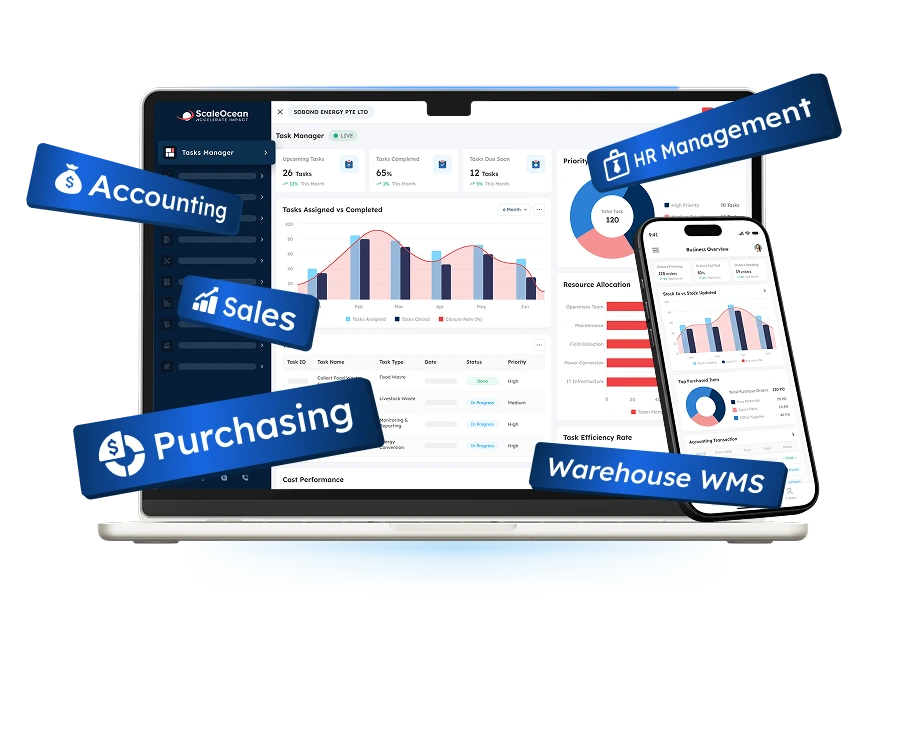
ScaleOcean also integrates seamlessly with several other modules within its ERP system to create a more streamlined procurement process, such as inventory management, accounting and finance, supplier relationship management, project management, and even human resource management
The user-friendly supplier management tools from ScaleOcean improve compliance and negotiation while lowering maverick spending. If you want to try it, check out ScaleOcean’s free demo and see how it works with CTC grants. Examine the ScaleOcean software features below:
Key Features:
- Automated Procurement Workflow: Automates the entire procurement process, from purchase request (RFP) to purchase order creation and invoice management, ensuring streamlined operations.
- Vendor Management: Facilitates the management of vendor relationships, including tracking vendor performance, negotiations, and maintaining a centralized database of suppliers.
- Purchase Order Management: Allows for the creation, tracking, and management of purchase orders in a digital format, making it easy to track the status and reduce manual errors.
- Approval Workflow: Includes a built-in approval process for procurement, ensuring that all purchases are reviewed and approved by the relevant authority before proceeding.
- Real-Time Reporting & Analytics: Provides detailed reports and dashboards to track procurement activities, analyze costs, monitor supplier performance, and make data-driven decisions.
- Supplier Collaboration: Enables communication and collaboration between the company and its suppliers, making it easier to negotiate terms, track deliveries, and resolve issues quickly.
Scaleocean has been widely trusted by the business industry to streamline and optimize procurement processes. One example is the Sobono Group. Before using Scaleocean, Sobono struggled to manage delivery schedules, often resulting in mismatches between delivered goods and project requirements.
This issue was resolved by using Scaleocean’s procurement software in Singapore, which features delivery forecasts. They have now easily managed procurement efficiently and have achieved more accurate scheduling. For more information, please watch the following video:

| Pros | Cons |
|---|---|
|
|
2. SAP Ariba
SAP Ariba, recognized for its robust enterprise capabilities and AI-driven sourcing, can also connect suppliers and buyers through a global network. It is ideal for large companies with complex operations and a global presence because it covers all aspects of procurement, from sourcing to payments.
Smaller organizations may find it time-consuming to integrate the platform’s many features due to its steep learning curve. SAP Ariba provides a scalable solution with integrated procurement capabilities for businesses that have the resources to handle this complexity.
Key Features:
- Comprehensive procurement solution from sourcing to payments
- Global supplier network
- Contract management tools
- Strong reporting and analytics
- Integration with other SAP solutions
| Pros | Cons |
|---|---|
|
|
3. Coupa
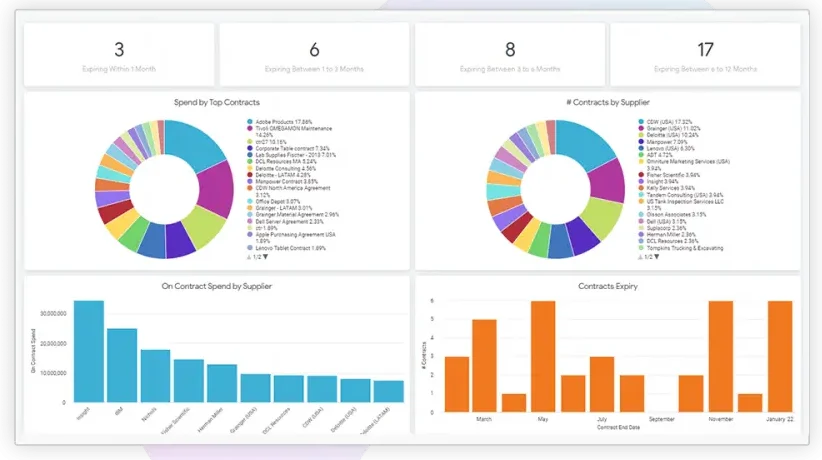
Coupa is ideal for user adoption and thorough spend management. This software is excellent at simplifying expenditure management, but it might not have the features needed for intricate procurement requirements.
It’s a good option for companies looking for a comprehensive perspective of their spending, but larger organizations may need more sophisticated features.
Key Features:
- Unified spend management platform
- Expense report handling
- Invoicing and procurement management
- Real-time spend visibility
- High employee adoption rate
| Pros | Cons |
|---|---|
|
|
4. Jaggaer
Jagger offers a comprehensive range of eProcurement solutions, especially for sectors like industry and education. With an emphasis on tailored capabilities to meet particular sector demands and boost procurement efficiency, the platform offers both direct and indirect expenditure control.
Because of its industry-specific strategy, Jaggaer is attractive to some verticals but might not be as interesting to companies in other sectors. Jaggaer offers specialized eProcurement solutions and strong sourcing tools to people in its target industries.
Key Features:
- Procurement solutions for direct and indirect spend
- Industry-specific tools for manufacturing, education, and the public sectors
- Powerful sourcing capabilities
- Spend analysis tools
- Supplier relationship management
| Pros | Cons |
|---|---|
|
|
5. Ivalua
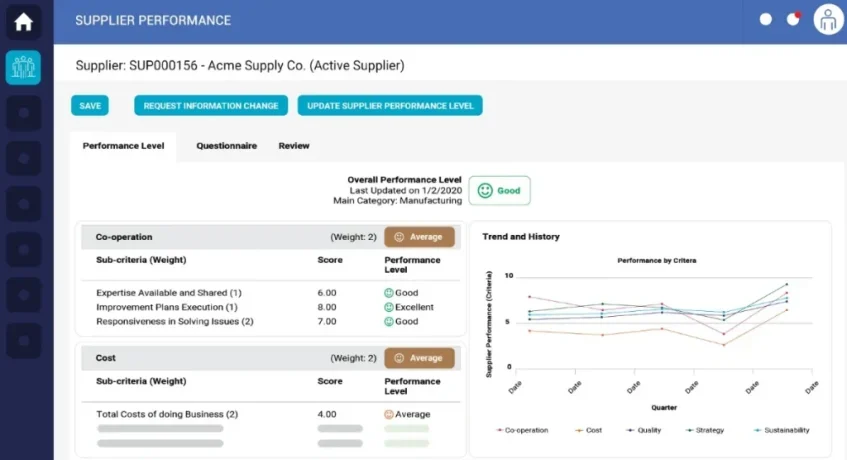
Ivalua is a versatile platform for procurement that enables companies to centrally manage their suppliers and spending. Its modular architecture accommodates businesses seeking scalability and customisation, allowing it to gradually adjust to changing business requirements.
Ivalua is a great option for companies with dynamic procurement processes because of its versatility. It is more appropriate for medium-sized to large companies. Nevertheless, it is, because of the intricacy of its features, which may necessitate specialized personnel to completely install and optimize.
Key Features:
- Modular design for easy scaling
- Supplier management
- Spend analysis tools
- Customizable workflows
- Integration with existing systems
| Pros | Cons |
|---|---|
|
|
6. GEP SMART
GEP SMART provides a consolidated eprocurement solution that unifies all apps on a single platform. It integrates spend analysis, contract administration, and supplier management in a smooth interface and is renowned for its user-centric design.
The cost and complexity of GEP SMART may make it unsuitable for smaller organizations, despite the effectiveness of its integrated approach. Although the solution is widely available due to its cloud-native design, further training and support may be necessary for complete team adoption.
Key Features:
- Unified procurement platform
- Real-time analytics and reporting
- Spend analysis tools
- Supplier management
- Cloud-based access
| Pros | Cons |
|---|---|
|
|
7. Procurify
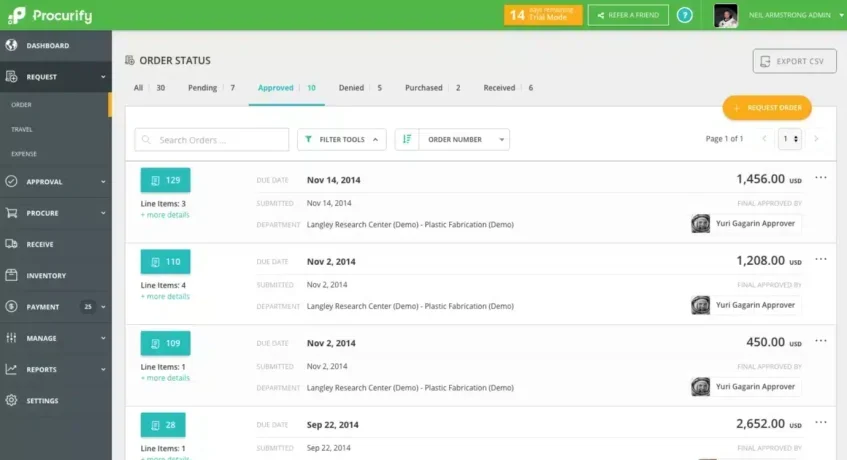
Procurify is an easy-to-use platform centered on proactive expenditure control that streamlines the procurement process. It gives businesses more insight and control over their spending by enabling real-time management of purchase requests, approvals, and spending.
Procurify lacks some of the more sophisticated features available in enterprise solutions, despite being an excellent tool for mid-sized businesses. Although it is simple to use, it might not be able to satisfy the demands of larger enterprises that need more complex integrations and procurement capabilities.
Key Features:
- User-friendly interface
- Purchase request and approval workflows
- Real-time spend tracking
- Integration with accounting systems
- Mobile app for on-the-go purchasing
| Pros | Cons |
|---|---|
|
|
8. Precoro
Precoro is an easy-to-use procurement tool that automates invoice approvals and purchases. It works well with widely used accounting software, facilitating the seamless exchange of financial data and assisting companies in streamlining their procurement procedures.
This platform is a wonderful choice for companies looking for a simple e-procurement solution because it is affordable and simple to use. It might not, however, provide the sophisticated capabilities or degree of flexibility that larger businesses need in a procurement system.
Key Features:
- Automated purchase orders and approvals
- Integration with Xero and QuickBooks
- Invoice management
- Streamlined procurement process
- Easy setup and implementation
| Pros | Cons |
|---|---|
|
|
9. Tipalti
Tipalti is an expert in automating accounts payable. Its platform effectively manages tax compliance, payment processing, and supplier onboarding, which makes it especially helpful for companies with a lot of foreign suppliers.
Tipalti is excellent at handling international payments, but because of its emphasis on accounts payable, it is devoid of more comprehensive procurement capabilities. Tipalti automates a lot of processes for businesses with a lot of international transactions, although it might not be as useful for basic procurement management.
Key Features:
- Accounts payable automation
- Supplier onboarding
- Tax compliance management
- Global payment processing
- Payment reconciliation
| Pros | Cons |
|---|---|
|
|
10. Spendesk
Spendesk provides a seven-in-one expenditure management solution. It gives finance teams authority while giving employees the freedom to make purchases by integrating corporate cards, invoice payments, and expenditure approvals.
Spendesk provides a complete expenditure management solution, albeit being less of a conventional procurement tool. Its decentralized strategy may not be appropriate for larger organizations that require more specialized procurement features or system integrations, but it does work effectively for rapidly expanding firms.
Key Features:
- Corporate cards for employee spending
- Invoice payment and approval workflows
- Expense management
- Real-time spend tracking
- Integration with accounting systems
| Pros | Cons |
|---|---|
|
|
11. Oracle NetSuite Procurement Software
Oracle NetSuite gives firms an all-in-one platform for managing operations by integrating procurement with its larger ERP system. For businesses that currently use Oracle, the platform’s automation of procurement procedures and enterprise-wide visibility are advantageous.
Businesses that simply want procurement features may find Oracle NetSuite to be an overkill ERP solution. Smaller businesses that need a more specialized, stand-alone procurement system rather than an entire ERP package may find it inappropriate due to its high cost and complexity.
Key Features:
- Full ERP integration
- Procurement automation
- Spend visibility
- Supplier management
- Cloud-based solution
| Pros | Cons |
|---|---|
|
|
12. Basware
Basware focuses on complete supplier transparency and end-to-end visibility. It connects suppliers and buyers via a global business network, specializing in network-based procure-to-pay solutions. The eProcurement solution is excellent at automating accounts payable and invoicing procedures, which improves procurement transaction accuracy and efficiency.
Although Basware’s network is highly automated and efficient, businesses looking for a full procurement solution may find that its emphasis on e-invoicing and AP automation is insufficient. Large organizations benefit greatly from their network-based strategy, but smaller companies or specialized industries might not find it appropriate.
Key Features:
- E-invoicing and AP automation
- Global supplier network
- Network-based procurement
- Spend analysis tools
- Payment reconciliation
| Pros | Cons |
|---|---|
|
|
13. Zycus
Zycus is an AI-powered platform for procurement that provides a range of source-to-pay process solutions. Its main goals are to automate procurement processes and offer thorough spend analysis, with AI assisting in the optimization of sourcing and decision-making processes.
Zycus is a forward-thinking solution because it relies on artificial intelligence, but smaller organizations may find it prohibitively expensive and complicated. Zycus provides extensive tools for companies looking for a cutting-edge, AI-powered procurement system, but it necessitates a large investment and level of experience.
Key Features:
- AI-powered procurement solutions
- Supplier management
- Spend analysis tools
- Contract management
- Spend visibility
| Pros | Cons |
|---|---|
|
|
14. Kissflow
Kissflow procurement cloud comes across as a very flexible platform, specifically built to let you create really custom procurement workflows, which is great for unique business needs.
It’s clearly designed for those companies that realize a simple “one-size-fits-all” solution just won’t cut it, as you can meticulously tailor the entire process to match exactly how your business operates.
Key Features:
- Customizable procurement workflows
- Supplier management
- Invoice and payment processing
- Workflow automation
- Cloud-based solution
| Pros | Cons |
|---|---|
|
|
In conclusion, selecting the right e-procurement software is key to streamlining processes and improving vendor management. So, ScaleOcean ERP offers a flexible, integrated platform that enhances procurement efficiency, real-time insights, and cost control for your business.

What Industries is E-Procurement Software for?
E-procurement software is versatile and can be applied across various industries, offering significant benefits in terms of efficiency, cost savings, and transparency.
Below, we explore the specific sectors that can greatly benefit from e-procurement solutions and how these industries leverage the software for optimal procurement management.
1. Manufacturing and Industrial Sectors
In the manufacturing and industrial sectors, e-procurement software plays a vital role in managing complex procurement needs, from raw materials to production equipment. It streamlines supplier management, reduces lead times, and improves inventory control.
By integrating procurement with production schedules and inventory systems, the best eProcurement software Singapore helps manufacturing companies optimize their supply chains, reduce operational costs, and maintain a steady flow of materials.
2. Commercial Businesses
Commercial businesses across various sectors, including retail, wholesale, and services, can benefit from e-procurement software to streamline their purchasing processes.
eProcurement solutions automate routine tasks such as order management, supplier communication, and invoice processing, improving efficiency and reducing administrative costs. Commercial businesses can also gain real-time insights into spending trends, optimize procurement strategies, and improve profitability.
3. Healthcare and Nonprofits
For healthcare organizations and nonprofits, e-procurement software streamlines the purchasing process by automating procurement tasks such as requisitions, supplier management, and inventory control.
This helps reduce costs, improve supplier relationships, and ensure compliance with regulations. With better control over spending, these organizations can allocate more resources to their core missions, such as patient care or community service.
4. Government Agencies
Government agencies benefit from e-procurement software by enhancing transparency, compliance, and accountability. The software ensures that all procurement activities adhere to strict regulatory standards, reducing the risk of fraud and waste.
By automating the procurement process across the procurement life cycle steps, government entities can achieve better supplier management, more accurate tracking of expenditures, and increased operational efficiency, leading to a more cost-effective use of taxpayer funds.
5. Education
Educational institutions, such as K-12 schools and higher education organizations, can leverage e-procurement to improve their purchasing process.
By automating tasks such as vendor selection, requisition approval, and budgeting, educational institutions can ensure that they make smarter purchasing decisions while staying within budget. It also enhances compliance with state and federal funding regulations, ensuring the responsible use of educational resources.
6. Travel and Hospitality
For the travel and hospitality industry, e-procurement software streamlines the procurement of goods and services, from hotel supplies to transportation services.
The software helps businesses in this sector manage supplier contracts, optimize spending, and maintain service quality. By centralizing procurement data, travel and hospitality companies can improve decision-making, reduce operational costs, and ensure the timely delivery of services to customers.
The Future of e-Procurement Software
You know, procurement isn’t just sitting still these days. It’s really getting a shake-up. Technology and new business goals are always changing how companies actually go about buying things, and looking forward, a few big trends are shaping how procurement will evolve to be smarter, more strategic, and certainly more responsible, too.
For businesses, especially in places like Singapore, keeping up with these shifts is going to be super important for staying competitive. It’s about building a resilient, ethical, and forward-thinking procurement team, which is the direction we’re heading towards. The future of procurement is shaped by three key trends:
1. Adopting AI
Artificial intelligence is not just for sci-fi movies anymore; it’s really becoming a foundational part of how modern procurement operates. AI can handle complex tasks automatically, sift through spending data to spot savings, and even give us a heads-up about potential issues in the supply chain.
You’ll find AI being used for a lot of things, from picking apart contracts to figuring out procurement risks, and this way of really using data is, frankly, a huge shift. It will make procurement more intelligent and data-driven, which is a practical choice in most scenarios for sure.
2. Sustainability
There’s definitely a lot more pressure on businesses these days to operate in a more sustainable way, and procurement actually has a pretty big part to play in all of that. Companies aren’t just looking at the price tag or how good something is anymore, but also considering the procurement and purchasing processes that align with sustainability goals.
Interestingly, e-procurement software is really stepping up, evolving to help track these very important metrics. This means keeping tabs on supplier sustainability ratings and making sure everything aligns with environmental rules, making procurement a core part of a company’s corporate social responsibility goals.
3. Transparency
With our world being so interconnected now, knowing exactly what’s happening in your supply chain, that transparency, is more crucial than it’s ever been before. Businesses really do need to pinpoint where their products originate to handle potential risks, whether that’s about ethics, quality standards, or even geopolitical stability.
Thankfully, modern procurement platforms are doing a lot to bring this transparency to light. They might use technologies like blockchain, for example, to build a secure, unchangeable record of a product’s entire journey, and this kind of visibility really does help build more resilient and ethical supply chains for the future.
How to Choose the Best e-Procurement Software for Your Business
Choosing the right e-procurement software, you know, it’s really a big decision for any business, and honestly, not every platform out there is created equal. What works perfectly for a huge multinational corporation might not, in fact, be the best fit at all for a local enterprise that’s still growing.
This whole selection process really needs to be thoughtful, bringing in key people from all sorts of departments. That way, everyone feels included. Taking the time to truly evaluate all your options, very carefully, will definitely pay off over the long haul. Here’s how to choose the right e-procurement software for your business:
Assess Your Company’s Needs and Procurement Complexity
Before even thinking about what e-procurement software is out there, you absolutely need to get a handle on your own company’s processes. Go ahead and map out your current procurement workflow, from the initial request right through to payment, identifying those biggest pain points and areas where things could definitely be better.
So, are you finding it tough with invoice processing, maybe supplier management, or is it something else entirely that’s causing issues? Figuring out your specific challenges will truly help you focus on finding actual solutions, ones that can really solve those problems.
Prioritize Key Features
When you look at e-procurement software, there’s often a truly huge range of features available, almost too many to count. Certain ones are essential, things like purchase order management or having solid supplier databases are a must.
It’s a good idea to make a list, a clear distinction between what features are absolute must-haves and which ones are just nice-to-have extras. This really helps you filter through all the available options, so you’re not just paying for functionality that your team won’t even use.
Consider Scalability for Future Growth
Your business isn’t going to stay the same, right? So, it really makes sense that your e-procurement software shouldn’t be static either. You need to take a moment and think, genuinely, about where your company is heading in the next three to five years. Will those procurement needs get more complex as you grow?
You really want to pick a solution that can, you know, grow along with you. A truly scalable platform will effortlessly handle more users, a bigger volume of transactions, and those increasingly complex workflows without ever needing a total overhaul, which is huge.
Evaluate User Interface (UI) and Ease of Adoption
Honestly, the greatest procurement software in the world is just useless if your team isn’t actually using it, right? A really clunky or overly complicated interface will almost always lead to low adoption, and people will just go back to their old, inefficient ways.
So, when you’re looking around, definitely keep an eye out for a design that’s clean and, importantly, really user-friendly. A lot of vendors offer free demos or trial periods, and these are truly excellent ways to test out the software’s actual usability before committing.
Check for Local Support and Integration Capabilities
Having local support available can seriously be a huge advantage, especially when you’re going through that initial implementation phase. A support team that really gets the Singapore market and its specific business hours can often provide much more effective and timely assistance, which is so helpful.
The e-procurement platform you choose absolutely needs to integrate, and seamlessly at that, with your current accounting software or your ERP system. If the integration is poor, it’ll just create these annoying data silos, totally defeating the entire purpose of even having a unified system to begin with.
Controls expenditures
When looking for the best e-Procurement software, it’s important to find one that helps you stay on top of your spending. The right software should give you real-time insights into your expenses, allowing you to set budgets and track savings as you go.
A great system will help you manage your finances by providing tools for setting spending limits, tracking costs, and generating detailed reports. This makes it easier to avoid overspending, maintain transparency, and keep your procurement process running smoothly.
Manages supplier relationships
Effective procurement software in Singapore should help you maintain strong relationships with your suppliers. Look for software that allows you to track supplier performance, manage contracts, and ensure payments are made on time. Clear communication is key to building lasting partnerships.
The software should centralize all supplier information, making it easy to monitor delivery schedules, review contracts, and ensure suppliers meet their obligations. With real-time updates and easy access to this data, you can nurture stronger, more efficient supplier relationships.
Provides effective customer support
When choosing e-Procurement software, make sure the vendor offers reliable customer support to assist with any challenges that arise. Good support can make all the difference in keeping things on track and resolving issues quickly, avoiding disruptions to your procurement process.
Look for software providers that offer several ways to get support, such as phone, email, and live chat. With the right customer support, you can get the help you need when you need it, making sure your procurement system stays efficient and effective.
Conclusion
In Singapore’s dynamic business environment, simply managing procurement isn’t enough anymore. The real goal is to optimize it, turning a traditional cost center into a strategic driver of growth and efficiency. This shift is driven by e-procurement software, providing visibility, automation, and control throughout the purchasing lifecycle.
The advantages are obvious, which are fewer mistakes, lower expenses, and stronger ties with suppliers. The ScaleOcan’s e-Procurement Software makes procurement more efficient and guarantees smooth supplier management. Request a free demo to get the best ScaleOcean solutions for your business.
E-Procurement Software FAQ:
1. What is an example of eProcurement?
Examples of e-procurement include e-auctions, e-tendering, automated purchase order issuance along with related invoicing and receipting, online ordering, the use of purchasing cards, and systems like electronic data interchange (EDI) and enterprise resource planning (ERP) systems.
2. What is the difference between procurement and e-procurement?
Traditional procurement depends on manual processes and physical documentation, whereas e-procurement utilizes digital platforms and electronic systems. E-procurement provides benefits such as enhanced efficiency, cost reductions, greater transparency, and quicker order processing.
3. How is AI used in e-procurement?
AI in procurement helps identify issues like fraud, compliance violations, and potential risks across the supply chain. Predictive analytics, powered by AI, analyzes historical sales data and market trends to generate accurate demand forecasts.
4. How to implement e-procurement?
6 steps to develop and execute an e-procurement strategy:
1. Assess your current procurement strategy.
2. Identify gaps in the existing process.
3. Involve key stakeholders.
4. Develop an e-procurement plan and establish KPIs.
5. Utilize e-procurement software.
6. Execute the plan and conduct regular reviews.


















.png)