

CRM higher education is a specialised software solution that is used by higher education institutions to manage their relationships with prospective students, applicants, enrolled students, alumni, and other stakeholders across the entire higher education lifecycle.
For higher education institutions in Singapore, managing student information can be challenging as universities, private education providers, and training institutions handle multiple departments and communication channels. Fragmented data and disconnected systems can make it difficult to maintain accurate information and deliver consistent student experiences.
By centralizing student data, automating communication processes, enhancing the admissions experience, and offering visibility of student interactions, a higher education CRM can help institutions address these challenges. It does this by linking recruitment, admission, student services, and alumni engagement activities.
The MOE Singapore statistics indicate that there are over 80,000 undergraduate and postgraduate students in publicly funded autonomous universities. What this developing education sector reveals is the necessity of effective student management systems that enhance student engagement, administration, and operational efficiency.
In this article, we will delve into the mechanics of CRM in higher education, the importance of CRM for higher education institutions, key features to look out for, some of the top CRM platforms in Singapore, and how the right education CRM solution can enhance student lifecycle management.
 Key Takeaways
- CRM for higher education helps institutions manage student relationships, including recruitment, admissions, communication, engagement, and alumni management through a centralised platform.
- Key features of higher education CRM include student information management, admission workflows, marketing automation, communication management, analytics, system integration, and student lifecycle management.
- The top 10 CRM platforms for higher education include ScaleOcean, Salesforce Education Cloud, Slate by Technolutions, Ellucian CRM, Zoho for Education, Navigate360 by EAB, Element451, HubSpot, Recruit, and Advise.
- ScaleOcean Education Software helps education institutions manage student lifecycle processes through configurable ERP workflows that connect student relationship management, admissions, administration, reporting, and operational processes.

What Is CRM for Higher Education?
CRM for higher education is a Customer Relationship Management (CRM) system tailored to handle interactions and relationships within educational institutions, encompassing both students and their parents or guardians, applicants, alumni, and others.
Higher education-specific CRM solutions are designed around academic operations, including student enrollment, admissions management, communication, and relationship building throughout the academic lifecycle.
It serves as a unified system that allows institutions to centralize and manage information about their students, such as prospective student enquiries, application status, communication history, academic interactions, and alumni activities.
By connecting different stages of the student lifecycle, CRM software enables institutions to create more personalised experiences. Admissions teams can track prospective students more effectively, marketing teams can manage campaigns based on student interests, and student service departments can provide more relevant support.
A CRM system can also enhance collaboration among departments for enterprise education institutions. Rather than having to work with the separate spreadsheets or disparate databases of each team, institutions can collaborate with a “single source of truth” for student information.
 Also Read: Top 10 School Management System in Singapore
Why Do Higher Education Institutions Need CRM Software?
Higher education institutions require CRM (Customer Relationship Management) software to help them consolidate constituent information, automate departmental processes, and track every facet of the student lifecycle, ranging from prospective applicant to alumnus.
1. Managing Complex Student Recruitment Processes
Student recruitment is a multi-stage process starting from lead generation, enquiries, campus visits, applications, and admission decisions. If there’s no centralized CRM solution, the recruitment team might not be able to keep a good record of interactions and follow up.
A higher education CRM system allows institutions to keep track of prospective student information, track recruitment efforts, and manage communication with students throughout the admission process. Keeping all the interactions with the students on record, the institutes can find the potential candidates, enhance follow-up activities, and build more structured recruitment plans.
2. Improving Student Engagement Throughout the Student Lifecycle
It’s not just in the classroom for students. It is necessary for institutions to have communication and support throughout the student’s entire journey, from enrolment to graduation and beyond.
Institutions can use CRM software to help them monitor student interactions, preferences, and engagement activities. This enables the departments to communicate and support the students more effectively according to their needs. A connected student lifecycle approach enables institutions to enhance the overall student experience and build stronger relationships with students.
3. Creating Better Collaboration Between Departments
Higher education institutions often involve multiple departments, including admissions, marketing, academic services, finance, and student support teams.
When information is stored separately across departments, teams may have difficulty accessing updated student information. This can result in inconsistent communication and slower responses. A CRM system creates a shared platform where departments can access relevant information, coordinate activities, and improve collaboration.
4. Increase Admission Efficiency and Application Conversion
When institutions receive high volumes of applications, there can be delays as a result of manual admissions. There is often a lot of time spent following up on applicants, providing updates, and checking on application status.
CRM software can streamline the admission process, ensure smooth communication with applicants, and offer insights into the phases of the application. Organized processes can help institutions provide faster responses and make the process easier for potential students.
5. Deliver Personalised Student Communication
Today, students are increasingly expecting relevant and timely communication from education institutions. General messages might not be able to meet the needs of various student interests, needs, and concerns.
A higher education CRM enables institutions to segment students based on profiles, interactions, and lifecycle stages. This allows teams to deliver more personalised communication through appropriate channels. Personalised engagement can help institutions build stronger relationships and improve student satisfaction.
6. Improve Data Visibility for Strategic Decision-Making
To effectively plan, market, and improve services to students, decision-makers in educational institutions need accurate information.
Institutions can use a CRM system for analytics and reporting to gain insights into student behaviour, recruitment performance, and engagement patterns. Having access to better data means management teams can make decisions using more accurate data, instead of relying on disjointed reports.
7. Strengthen Alumni Relationship Management
Long-term institutional engagement includes relationships with alumni. Keeping alumni connections can be difficult, though, when information is out of date or fragmented in several systems.
CRM software helps institutions maintain alumni records, track engagement activities, and manage communication initiatives. By improving alumni relationship management, institutions can strengthen community connections and support future engagement opportunities.
Essential Features of a Higher Education CRM System

A higher education CRM must include a single 360-degree constituent profile, automated recruitment workflows, and rich integrations with other campus applications, such as Student Information Systems (SIS).
1. Student Information and Relationship Management
Higher education CRM software is essential for student information management. It enables institutions to have all of the student’s information, communications history, interactions, and engagement records in one place.
A common student database enables departments to access the latest information and can provide students with consistent support throughout their student journey.
2. Admissions and Enrollment Management
Admissions and Enrollment management gives institutions the tools to manage applicant information, track the applicant journey, and manage admissions processes.
With the help of CRM software, organizations can automate follow-up actions, keep the applicant lifecycle in check, and monitor seamless collaboration between the admissions departments and other teams who are involved in the enrollment process.
3. Marketing Automation and Lead Management
Marketing automation helps education institutions manage prospective student engagement before they apply. CRM systems can track enquiries, campaign responses, and interactions from different communication channels.
This can help marketing departments better understand potential students and develop more relevant marketing campaigns based on their interests and engagement.
4. Communication Management Across Multiple Channels
Higher education institutions communicate with students through various channels, including email, messaging platforms, websites, and other digital touchpoints.
A CRM system helps centralize communication records and enables institutions to manage interactions more effectively. This supports timely responses and creates a more consistent communication experience.
5. Analytics and Reporting Dashboard
Analytics and reporting dashboards give institutions insights into recruitment performance, student engagement, trends in applications, and operational activities.
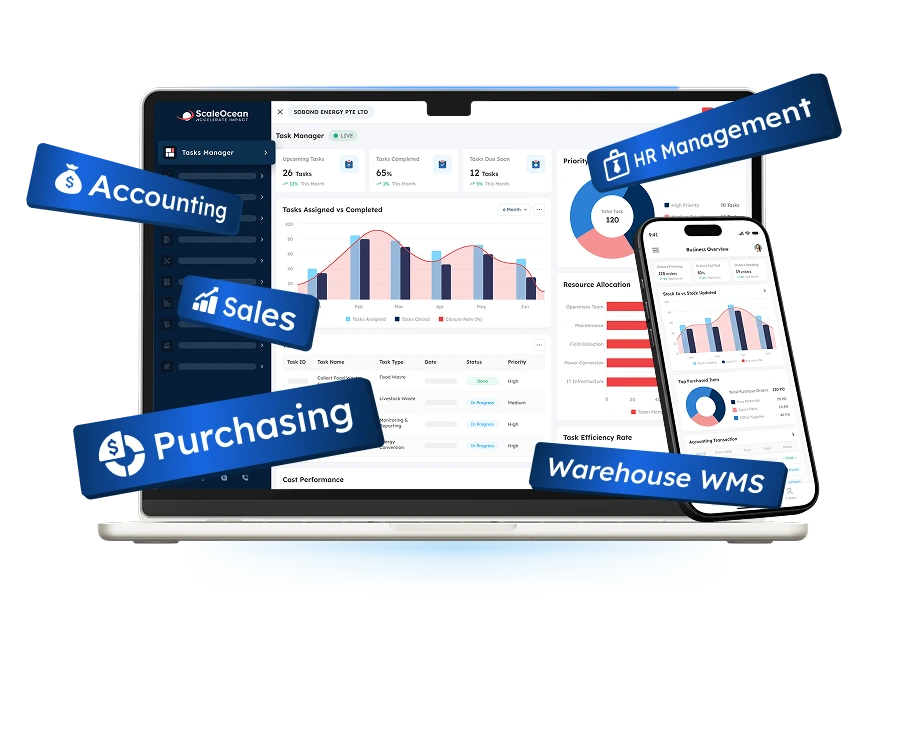
Information analysis can help education leaders recognise opportunities for improvement and inform their choices on how to manage students. ScaleOcean enables this with real-time dashboards and reporting, enabling institutions to track performance metrics and enhance decision-making in student management workflows.
6. Integration with Existing Education Systems
A higher education CRM should be able to integrate with existing systems such as Student Information Systems (SIS), learning management systems, finance platforms, and other campus applications. Integration helps eliminate disconnected data and allows institutions to maintain more consistent information across different departments.
According to data our team obtained from IMDA, Singapore continues to encourage digital transformation among organizations through initiatives that improve digital capabilities and technology adoption. This highlights the importance of connected systems that enable institutions to manage information more efficiently.
By connecting CRM with existing education systems, institutions can create a more unified digital campus environment where student information flows more efficiently across departments.
How CRM Supports the Student Lifecycle in Higher Education
A customer relationship management (CRM) system in higher education acts as a centralized platform that supports the entire student lifecycle, from first inquiry and admissions through graduation and alumni engagement.
1. Attracting Prospective Students During Recruitment
The CRM software assists institutions in handling potential student data starting from the enquiry level. Recruitment teams are able to monitor student interests, communication history, and engagement activities.
This enables the institutions to develop more specific recruitment approaches and follow up with potential candidates more effectively.
2. Supporting Applicants During Admission
Institutions can manage applications, communication, and workflow approvals using CRM during the admission process.
Admissions staff can track applicants’ applications, provide updates, and keep applicants informed throughout the application process.
3. Enhancing Student Experience After Enrollment
Once students are enrolled, the involvement of CRM software can be maintained by the management of communication and student services, as well as the management of support activities.
Departments can offer more relevant support and enhance the student experience by having a full picture of student interactions.
4. Maintaining Long-Term Alumni Relationships
CRM systems also help institutions maintain relationships with graduates after graduation. Alumni information, engagement activities, and communication records can be managed through a centralised platform.
This enables institutions to strengthen alumni communities and maintain ongoing connections beyond graduation.
Challenges of Implementing CRM in Higher Education
The implementation of a Customer Relationship Management (CRM) system in higher education is not straightforward due to a number of higher education institutions having a “data silo mentality”, decentralised forms, and cultural practices.
1. Managing Data Privacy and Compliance Requirements
Higher education institutions manage large amounts of sensitive student information, including personal details, academic records, and communication history. Protecting this information is essential to maintain trust and comply with data protection requirements.
CRM implementation should include proper security controls, access management, and governance practices to ensure student data is handled responsibly. An education management information system with structured data management capabilities can help institutions maintain better control over student information while improving visibility, security, and operational coordination.
2. Integrating CRM with Existing Campus Systems
Many institutions already use multiple systems for student information, learning management, finance, and administration. Without proper integration, data may remain fragmented across different platforms.
A CRM system should connect with existing education systems to create a more unified data environment. This allows departments to access consistent information and improve coordination across campus operations.
3. Ensuring User Adoption Across Departments
CRM adoption requires collaboration between different departments, including admissions, marketing, academic services, and student support teams.
Without proper training and change management, employees may continue relying on previous manual processes. Institutions need to ensure users understand how CRM workflows can improve daily operations and student engagement.
Core Comparison of Top Higher Education CRM System Platforms
Before selecting a higher education CRM platform, institutions should understand how different solutions compare based on their purpose, capabilities, and integration approach. Some platforms focus primarily on student recruitment and engagement, while others provide broader business workflow management.
The comparison below highlights the key differences between higher education CRM systems to help institutions evaluate which capabilities align with their operational requirements.
| Platform | Main Focus | Key Capabilities | Suitable For |
|---|---|---|---|
| Higher Education CRM | Student relationship management | Recruitment, admissions, communication, student engagement, and alumni management | Universities, colleges, and education providers managing the complete student lifecycle |
| Traditional CRM Software | General customer relationship management | Sales pipeline, marketing automation, customer communication, and account management | Businesses managing commercial customer relationships |
| Education ERP | Education operation management | Finance, HR, academic operations, student administration, and reporting | Institutions requiring broader operational management |
How Higher Education CRM Differs from Traditional CRM Software
Higher education CRM and traditional CRM software share similarities in managing relationships and communication. However, they are designed for different operational environments and user requirements.
Traditional CRM systems are generally built for commercial organizations to manage customer acquisition, sales activities, and revenue-related interactions. Meanwhile, higher education CRM focuses on managing long-term relationships with students, applicants, alumni, and academic stakeholders.
| Aspect | Higher Education CRM | Traditional CRM Software |
|---|---|---|
| Primary Purpose | Manage student relationships throughout the education lifecycle | Manage customer relationships and sales activities |
| Main Users | Admissions teams, academic departments, student services, and alumni teams | Sales, marketing, and customer service teams |
| Relationship Focus | Long-term engagement from recruitment, admission, enrolment, and alumni stages | Customer acquisition, conversion, and retention |
| Key Processes | Student recruitment, application management, communication, engagement, and alumni management | Lead management, sales pipeline, marketing campaigns, and customer support |
| Data Managed | Student profiles, applications, academic interactions, and engagement history | Customer profiles, sales activities, transactions, and communication records |
| Success Metrics | Student enrolment, engagement, satisfaction, and retention | Revenue growth, conversion rates, and customer retention |
CRM for Higher Education vs Student Information System (SIS)
Higher education CRM and Student Information Systems (SIS) both manage student-related information, but they serve different purposes. SIS platforms typically focus on administrative and academic record management, while CRM systems focus on engagement, communication, and relationship management.
Many institutions use both systems together, where SIS manages core academic information, and CRM improves interactions throughout the student lifecycle.
| Aspect | Higher Education CRM | Traditional CRM Software |
|---|---|---|
| Primary Purpose | Manage student relationships throughout the education lifecycle | Manage customer relationships and sales activities |
| Main Users | Admissions teams, academic departments, student services, and alumni teams | Sales, marketing, and customer service teams |
| Relationship Focus | Long-term engagement from recruitment, admission, enrolment, and alumni stages | Customer acquisition, conversion, and retention |
| Key Processes | Student recruitment, application management, communication, engagement, and alumni management | Lead management, sales pipeline, marketing campaigns, and customer support |
| Data Managed | Student profiles, applications, academic interactions, and engagement history | Customer profiles, sales activities, transactions, and communication records |
| Success Metrics | Student enrolment, engagement, satisfaction, and retention | Revenue growth, conversion rates, and customer retention |
Top 10 CRM Platforms for Higher Education
Higher education institutions have different CRM requirements depending on their size, student population, operational complexity, and existing technology environment. Some platforms focus specifically on recruitment and student engagement, while others provide broader enterprise capabilities.
The following CRM platforms represent solutions commonly considered by educational institutions looking to improve student relationship management.
1. ScaleOcean
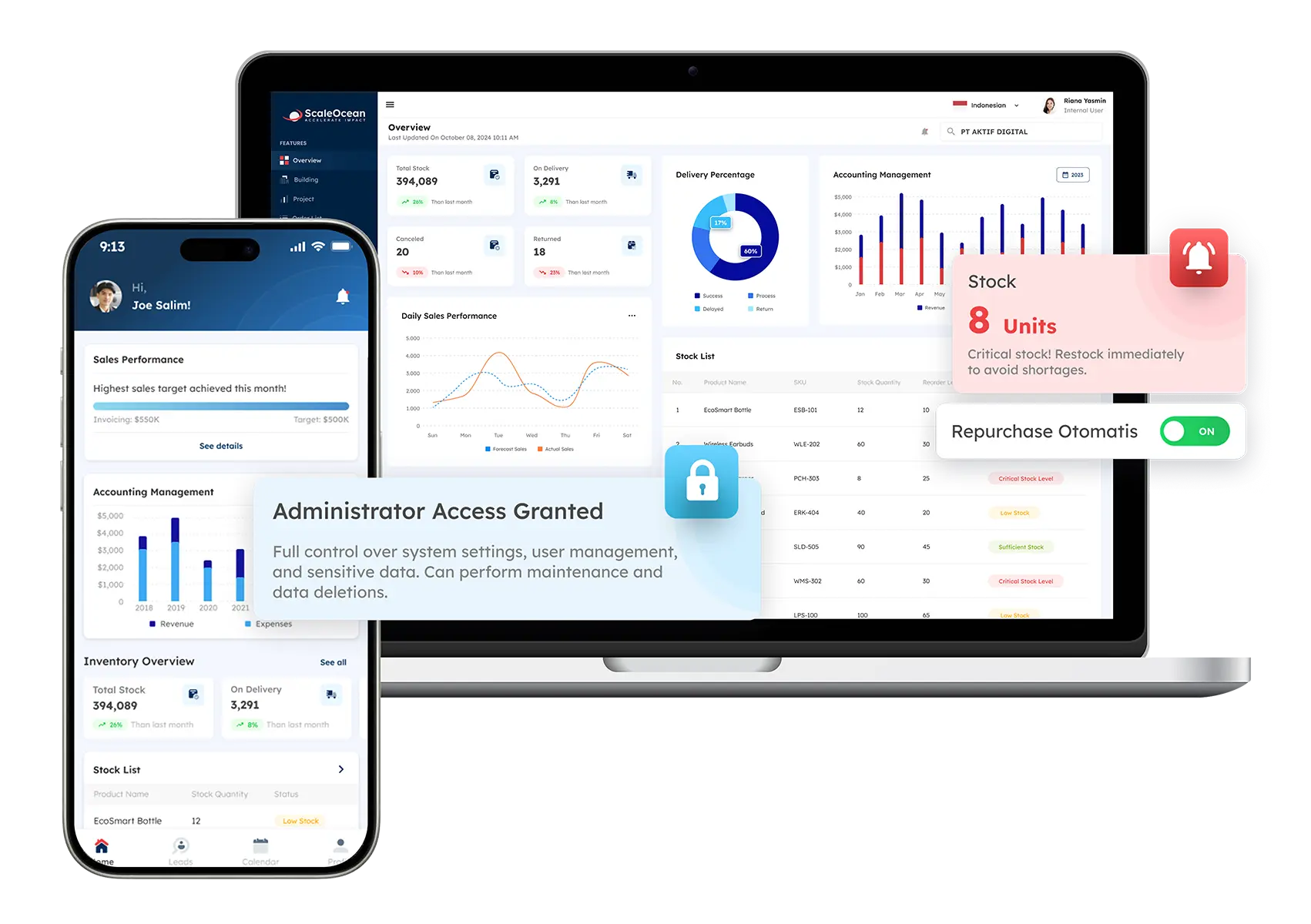
ScaleOcean is an ERP solution provider with its flagship product called ScaleOcean Atlas, which is designed to support medium and large education institutions managing complex student lifecycle processes. ScaleOcean Atlas provides an integrated ERP ecosystem that connects student relationship management with finance, workflows, reporting, and operational processes.
ScaleOcean Atlas can be configured to support different education structures, including universities, private education institutions, and training providers. The platform enables institutions to connect student engagement, admissions, administration, and reporting processes within a single system with ScaleMind-powered insights, improving visibility and coordination across departments.
A structured governance framework is also provided through access controls, approval workflows, and audit trails. The system has been optimized and complies with PDPA regulations and can be customized to meet EDG/CTC requirements. Schedule a consultation with ScaleOcean to explore how configurable ERP workflows can support your higher education CRM requirements.
Key Features:
- Student information and relationship management
- Admission and enrolment workflow management
- Student communication and engagement tracking
- Integrated finance and administrative workflows
- Real-time dashboards and reporting
- ScaleMind-powered insights for data analysis
- Role-based access control and audit trails
| Pros | Cons |
|---|---|
| Provides broader ERP capabilities that connect student management with finance, administration, and operational workflows. | May provide broader capabilities than required for small institutions with simple student management needs. |
| Offers configurable workflows that allow institutions to align the system with existing education processes. | Implementation requires business process analysis to ensure optimal configuration. |
| Connects CRM functions with other business operations through one integrated platform. | Pricing depends on implementation scope, modules, and integration requirements. |
| Supports scalable implementation for institutions with growing operational requirements. |
Best for: Medium and large universities, private education institutions, training providers, and organizations requiring integrated student relationship management with broader ERP capabilities.
ℹ️Why choose ScaleOcean?
ScaleOcean helps education institutions manage student relationships through configurable ERP workflows. Instead of adapting to a rigid CRM structure, institutions can configure workflows, modules, and integrations based on their operational requirements across admissions, student engagement, administration, finance, and reporting.
2. Salesforce Education Cloud
Salesforce Education Cloud is a CRM platform designed to help educational institutions manage student relationships, recruitment activities, engagement, and administrative interactions. Built on the Salesforce ecosystem, the platform enables institutions to connect student data and create personalised experiences throughout the education lifecycle.
The platform supports higher education institutions by providing tools for admissions management, student engagement, marketing automation, and institutional relationship management. It allows education teams to centralise information and improve collaboration between departments involved in student services.
Key Features:
- Student recruitment
- admissions management
- Student engagement tracking
- Marketing automation
- campaign management
| Pros | Cons |
|---|---|
| Provides a widely adopted CRM ecosystem with extensive capabilities for managing student relationships. | Institutions may require additional configuration and implementation resources to adapt the platform to specific education workflows. |
| Offers strong automation and analytics capabilities for recruitment and engagement activities. | Organizations with complex operational requirements may need additional integrations with existing campus systems. |
| Supports customisation through Salesforce’s platform ecosystem. | The flexibility of the platform may require technical expertise for advanced customisation. |
Best for: Large universities, higher education institutions, and education organizations requiring a scalable CRM platform with extensive customisation capabilities.
ℹ️Why choose Salesforce Education Cloud?
Salesforce Education Cloud helps institutions manage student relationships through CRM capabilities, automation tools, and connected data. It is suitable for organizations looking to improve recruitment, engagement, and communication processes through a flexible CRM ecosystem.
3. Slate by Technolutions
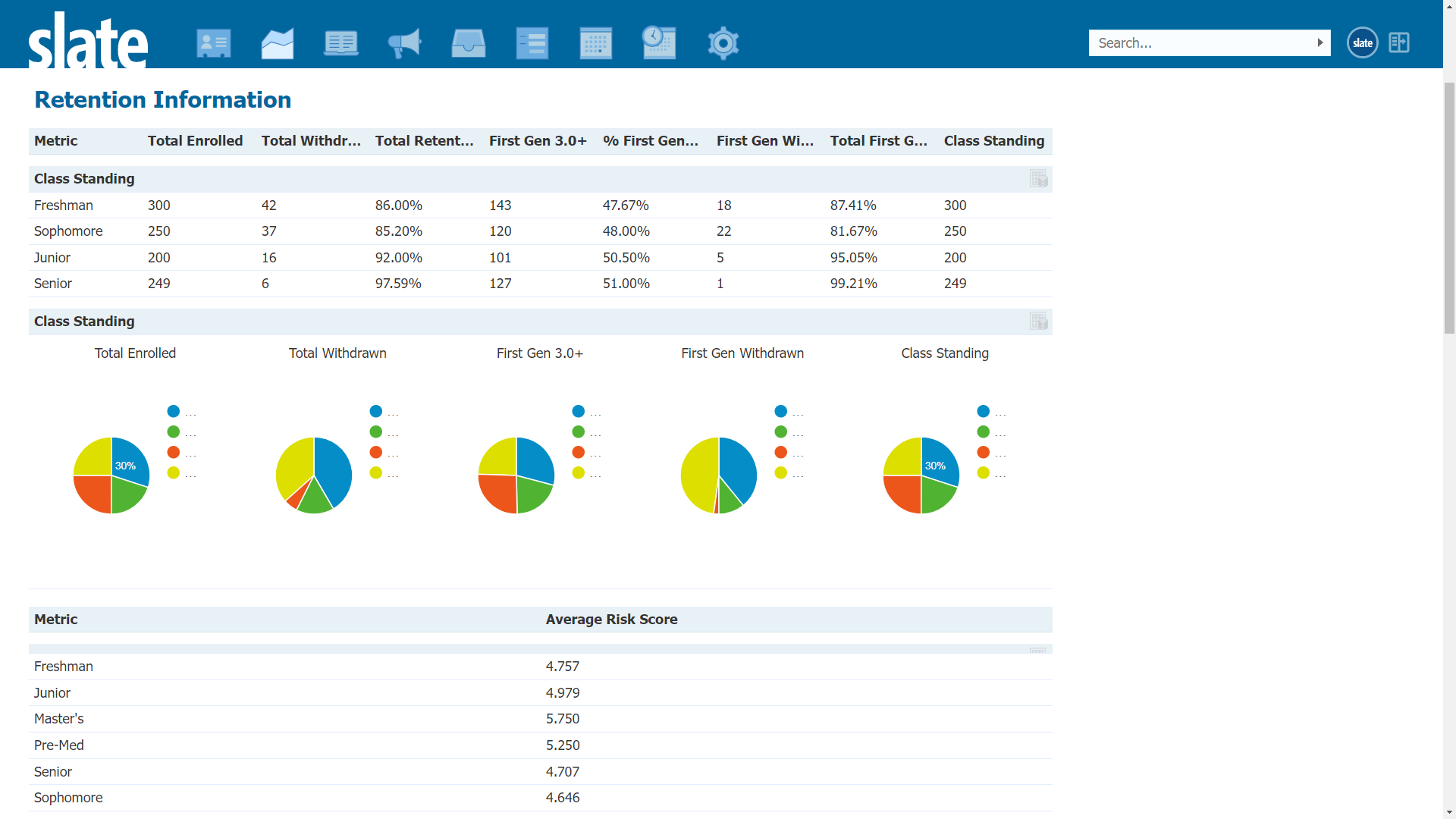
Slate by Technolutions is a higher education CRM platform designed specifically for admissions and enrolment management. The platform helps colleges and universities manage prospective student interactions, applications, recruitment campaigns, and communication activities.
Slate focuses on supporting the student recruitment journey by providing tools that help institutions track applicants, manage admissions workflows, and improve communication throughout the enrolment process.
Key Features:
- Student recruitment management
- Email communication automation
- Applicant tracking
- Recruitment analytics and reporting
- Event and engagement management
| Pros | Cons |
|---|---|
| Designed specifically for higher education recruitment and admissions processes. | Institutions seeking broader ERP capabilities may require additional systems for finance and operational management. |
| Provides strong tools for managing applicant journeys and communication workflows. | Implementation may require institutional process adjustments and user training. |
| Supports data management for recruitment and enrolment activities. | Its focus is primarily on admissions rather than complete enterprise operations. |
Best for: Universities and colleges that require specialised admissions, recruitment, and enrolment management capabilities.
ℹ️Why choose Slate by Technolutions?
Slate helps higher education institutions improve recruitment and admissions management by providing specialised tools for applicant tracking, communication, and enrolment workflows.
4. Ellucian CRM
Ellucian CRM is a higher education-focused CRM solution designed to help institutions manage student recruitment, engagement, and advancement activities. The platform is part of Ellucian’s broader education technology ecosystem, supporting institutions with tools for managing student relationships.
The solution helps universities connect information across recruitment, admissions, student engagement, and alumni activities to improve communication and institutional interactions.
Key Features:
- Recruitment and admissions management
- Student engagement tracking
- Communication automation
- Alumni relationship management
- Data analytics and reporting
| Pros | Cons |
|---|---|
| Provides education-focused CRM capabilities designed around institutional requirements. | Institutions outside the Ellucian ecosystem may require additional integration planning. |
| Supports multiple stages of the student lifecycle, including recruitment and engagement. | May require configuration to align with specific institutional workflows. |
| Helps institutions improve visibility into student interactions. | Organizations requiring broader business management functions may need complementary solutions. |
Best for: Universities and colleges already using Ellucian systems or requiring education-focused CRM capabilities.
ℹ️Why choose Ellucian CRM?
Ellucian CRM helps higher education institutions manage student engagement, recruitment, and advancement activities through education-focused CRM tools designed for institutional needs.
5. Zoho for Education
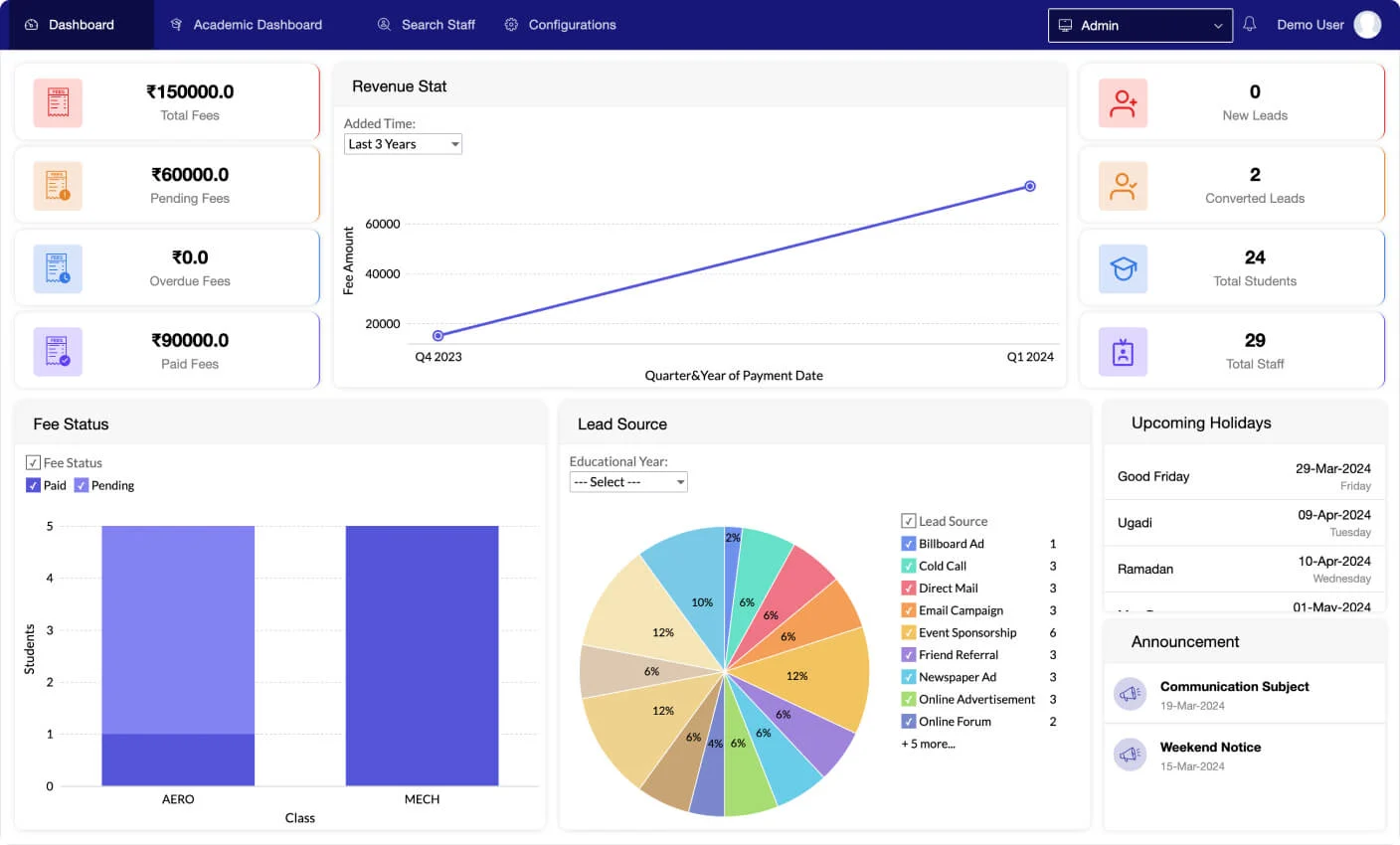
Zoho for Education is a CRM and business application ecosystem that helps educational institutions manage communication, student engagement, admissions activities, and administrative workflows. The platform provides tools that allow institutions to organise student information, automate communication, and improve collaboration between departments.
By using configurable applications within the Zoho ecosystem, education providers can adapt workflows based on their operational requirements. The platform can support institutions that need flexible CRM capabilities without requiring a highly specialised higher education system.
Key Features:
- Student relationship management
- Lead and enquiry tracking
- Communication automation
- Workflow automation
- Reporting and analytics
| Pros | Cons |
|---|---|
| Provides flexible CRM capabilities that can be configured for different education workflows. | Institutions with highly specialised higher education requirements may need additional customisation. |
| Offers automation tools to improve communication and administrative efficiency. | Advanced education-specific features may require additional applications or integrations. |
| Supports integration with multiple business applications. | Organizations may need planning to ensure all required workflows are properly configured. |
Best for: Small and medium education institutions, training providers, and organizations looking for flexible CRM and workflow automation capabilities.
ℹ️Why choose Zoho for Education?
Zoho for Education provides flexible CRM capabilities that help education providers manage communication, student information, and workflow automation based on their operational requirements.
6. Navigate360 by EAB
Navigate360 by EAB is a student success platform designed to help educational institutions improve student engagement, retention, and academic support. The platform focuses on using student data and communication tools to help institutions identify student needs and provide timely interventions.
The solution supports student success initiatives by helping institutions monitor engagement patterns, coordinate support activities, and improve communication between students and academic teams.
Key Features:
- Student success management
- Academic advising support
- Communication workflows
- Student data analytics
- Intervention management
| Pros | Cons |
|---|---|
| Provides student success-focused capabilities to support engagement and retention strategies. | Institutions seeking broader CRM functions for recruitment and enterprise workflows may require additional solutions. |
| Helps institutions identify student needs through data-driven insights. | Successful adoption requires collaboration between academic teams and student support departments. |
| Supports proactive student engagement strategies. | Implementation may require alignment with existing institutional processes. |
Best for: Universities and colleges focused on improving student retention, academic support, and student success initiatives.
ℹ️Why choose Navigate360 by EAB?
Navigate360 helps institutions improve student success initiatives by using student data, engagement tracking, and communication tools to support timely academic and student services.
7. Element451
Element451 is a higher education CRM platform designed to support student recruitment, admissions, communication, and engagement activities. The platform focuses on helping institutions manage prospective student relationships through automated communication and personalised interactions.
The solution enables education providers to organise recruitment campaigns, track applicant journeys, and improve communication throughout the admission process.
Key Features:
- Student recruitment management
- Admission workflow automation
- Communication management
- Marketing automation
- Analytics and reporting
| Pros | Cons |
|---|---|
| Provides higher education-focused CRM capabilities for recruitment and student engagement. | Institutions requiring broader ERP capabilities may need additional systems. |
| Supports personalised communication and automated engagement workflows. | Configuration may be required to align with specific admission processes. |
| Helps improve visibility into prospective student interactions. | Primarily focuses on engagement and recruitment rather than complete institutional management. |
Best for: Universities and colleges seeking specialised CRM capabilities for recruitment, admissions, and student engagement.
ℹ️Why choose Element451?
Element451 helps higher education institutions manage recruitment and engagement activities through specialised CRM tools designed to improve student communication and applicant experiences.
8. HubSpot
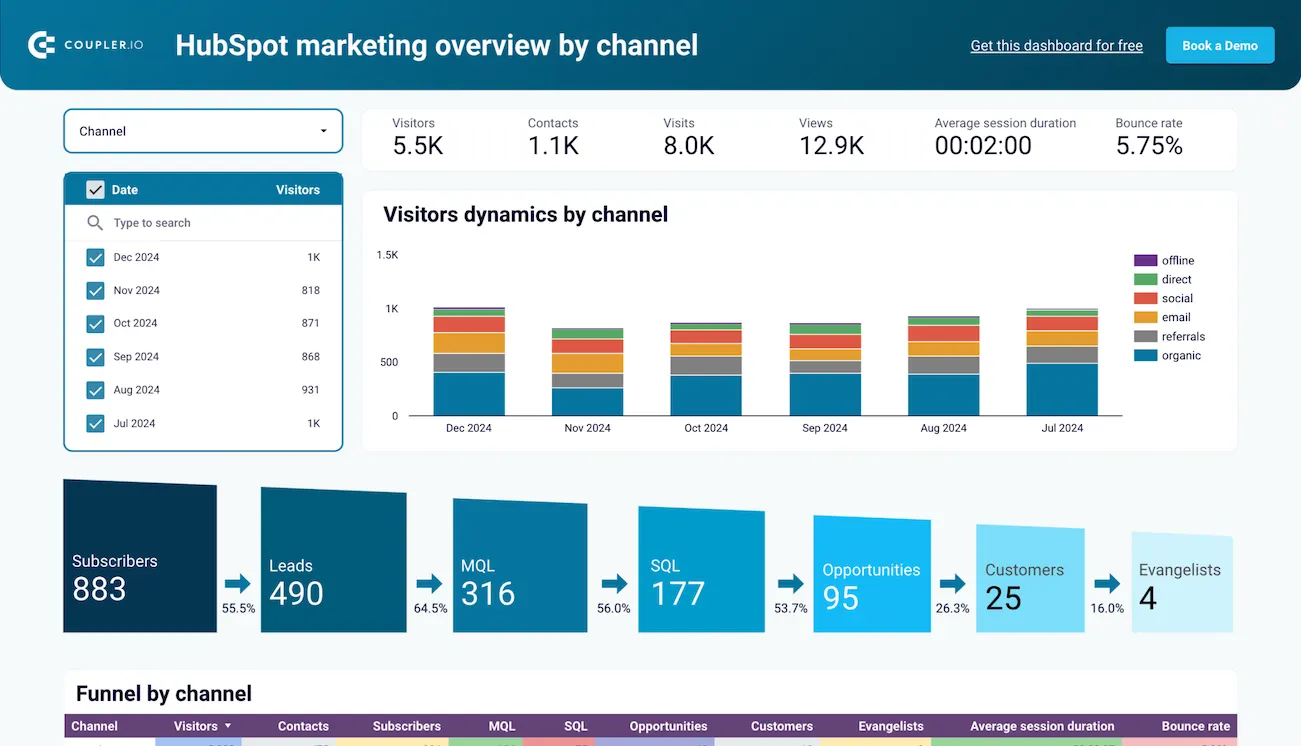
HubSpot is a CRM platform that helps organizations manage contacts, communication, marketing activities, and engagement workflows. Although it is not designed exclusively for higher education, education providers can use its CRM capabilities to manage prospective student interactions, campaigns, and communication processes.
The platform provides tools for managing leads, automating marketing activities, tracking interactions, and analyzing engagement performance. For educational institutions, HubSpot can support recruitment and outreach activities by helping teams organise student enquiries and communication journeys.
Key Features:
- Contact and relationship management
- Marketing automation
- Lead tracking and segmentation
- Email campaign management
- Reporting and analytics dashboards
| Pros | Cons |
|---|---|
| Provides user-friendly CRM capabilities for managing communication and engagement activities. | Education-specific workflows may require additional configuration or custom solutions. |
| Offers strong marketing automation and lead management capabilities. | Institutions with complex academic administration requirements may require integration with other systems. |
| Provides analytics tools to monitor engagement performance. | Primarily focuses on CRM and marketing rather than complete education operations. |
Best for: Small and medium education providers, training institutions, and organizations requiring flexible CRM and marketing automation capabilities.
ℹ️Why choose HubSpot?
HubSpot helps education institutions manage communication, marketing activities, and relationship management through a flexible CRM platform that supports engagement and outreach processes.
9. Recruit
Recruit is a CRM solution designed to help education institutions manage student recruitment and admissions activities. The platform focuses on supporting prospective student engagement, applicant tracking, and communication throughout the recruitment journey.
The solution helps institutions organise recruitment processes by providing tools to manage enquiries, applications, interactions, and communication activities between prospective students and admissions teams.
Key Features:
- Student recruitment management
- Applicant tracking
- Communication automation
- Lead management
- Recruitment reporting
- Engagement monitoring
| Pros | Cons |
|---|---|
| Provides recruitment-focused capabilities to help institutions manage prospective student journeys. | Institutions requiring broader student lifecycle management may need additional platforms. |
| Helps admissions teams organise applicant information and communication. | Additional integration may be required to connect with wider campus systems. |
| Supports more structured recruitment workflows. | The platform’s suitability depends on institutional recruitment complexity and requirements. |
Best for: Education institutions focused on improving student recruitment, admissions processes, and applicant engagement.
ℹ️Why choose Recruit?
Recruit helps education institutions improve prospective student management by providing tools for applicant tracking, communication, and recruitment workflow organization.
10. Advise
Advise is a student engagement and advising-focused platform designed to help educational institutions support student success. The platform helps institutions manage student interactions, advising activities, and communication between students and support teams.
By organising student information and engagement activities, Advise enables institutions to provide more personalised support and improve coordination between advisors and students.
Key Features:
- Student advising management
- Student engagement tracking
- Communication management
- Student profile management
- Reporting and analytics
| Pros | Cons |
|---|---|
| Supports student advising and engagement activities through organised workflows. | Institutions looking for broader recruitment and admissions CRM features may require complementary solutions. |
| Helps advisors maintain better visibility into student interactions. | Implementation effectiveness depends on adoption across student support teams. |
| Provides tools to improve student support coordination. | May require integration with existing institutional systems for broader data access. |
Best for: Universities and colleges prioritising student advising, engagement, and academic support processes.
ℹ️Why choose Advise?
Advise helps institutions improve student support processes by organising advising activities, communication, and engagement information within a structured platform.
How to Choose the Right CRM for Higher Education
Choosing the right CRM for higher education requires institutions to evaluate their operational requirements, student lifecycle processes, and long-term technology strategy. A suitable CRM should support current needs while remaining flexible as institutional requirements evolve.
1. Evaluate Student Lifecycle Management Capabilities
Institutions should assess whether a CRM can support the complete student journey, including recruitment, admission, enrolment, engagement, and alumni relationships.
A system that provides lifecycle visibility allows departments to coordinate activities and deliver more consistent student experiences.
2. Consider Integration and Scalability Requirements
A CRM should integrate effectively with existing education systems such as SIS, learning platforms, finance systems, and communication tools.
Scalable integration capabilities help institutions expand their digital environment as student numbers and operational requirements increase.
3. Review Security and Compliance Features
Education institutions handle sensitive student information, making security and compliance essential considerations.
Institutions should evaluate features such as access controls, data protection capabilities, audit records, and compliance support to ensure responsible data management.
4. Assess Customisation and Workflow Flexibility
Every education institution has different processes for admissions, communication, and student services. A CRM should provide sufficient flexibility to configure workflows based on institutional requirements.
Customisable workflows help institutions align technology with existing processes instead of changing operations to fit a rigid system. A flexible university management system allows education providers to configure processes based on their academic, administrative, and student management requirements.
How Higher Education CRM Differs from Traditional CRM Software

The concepts behind higher education CRM and traditional CRM software are the same, including managing relationships, communication, and engagement. But their goals and processes are different because educational processes are not conducted as business transactions are; they are a long-term process with students.
A traditional CRM system is generally used for sales, marketing, and customer service. However, Higher ED CRM solutions focus on the student lifecycle, from recruitment to admission to enrolment, engagement, to alumni.
Higher education CRM is all about enhancing the students’ experiences and linking interactions along the way. It aids institutions to better comprehend student needs, to tailor messages to students, and to strengthen interdepartmental communication.
CRM for Higher Education vs Student Information System (SIS)
In higher education, a Customer Relationship Management (CRM) system is used to engage and manage relationships throughout the student’s life cycle, while a Student Information System (SIS) provides the official operational infrastructure for academic records and transactions.
1. Future Trends of CRM in Higher Education
As higher education institutions continue adopting digital technologies, CRM systems are evolving beyond basic relationship management. Future CRM platforms are expected to support more intelligent engagement, connected campus experiences, and data-driven decision-making.
Institutions are increasingly focusing on using technology to improve student experiences while maintaining efficient administrative processes. ScaleOcean supports this approach by connecting student management and operational data within one platform, helping institutions create a more integrated digital campus environment.
2. AI-Powered Student Engagement and Personalisation
Artificial intelligence is becoming an important capability in higher education CRM systems. AI can help institutions analyze student behavior, identify engagement patterns, and provide more personalised communication.
AI-powered CRM solutions can support activities such as recommending relevant information, automating responses, and helping institutions understand student needs more effectively. By combining AI insights with student data, institutions can create more personalised experiences throughout the student lifecycle.
3. Data-Driven Decision Making in Higher Education
Higher education institutions generate large amounts of information from admissions, student interactions, academic activities, and administrative processes.
CRM analytics help institutions transform this information into actionable insights. Management teams can use data to evaluate recruitment performance, understand student engagement trends, and improve institutional strategies.
4. Connected Digital Campus Experience
Higher education CRM is on the path to becoming a more integrated digital campus. Institutions are embedding CRM into systems like SIS, learning management platforms, finance systems, and communication systems.
An integrated ecosystem enables seamless flow of information across departments and ensures a better student, faculty, and administration experience.
Conclusion
In higher education, CRM refers to a specialized system that enables universities, private education providers, and training institutions to effectively handle interactions with prospective students, current students, and also with alumni throughout the student life cycle.
Many institutions face challenges such as fragmented student data, disconnected campus systems, inefficient communication processes, and limited visibility into student interactions. A higher education CRM helps address these issues by centralising information, automating workflows, and improving engagement across departments.
ScaleOcean Education Software helps institutions create a connected education ecosystem by integrating student management, workflows, reporting, and operations in one platform. With configurable workflows, ScaleMind-powered insights, and secure data management, institutions can improve student engagement and operational visibility. Schedule a consultation with ScaleOcean to explore the right education solution for your needs.
Frequently Asked Questions CRM for Higher Education:
1. How does CRM improve student recruitment?
CRM improves student recruitment by helping institutions manage prospective student information, track interactions, automate communication, and monitor application progress. This enables admission teams to provide more timely and personalized engagement throughout the recruitment process.
2. How does CRM support student lifecycle management?
CRM supports student lifecycle management by connecting information across recruitment, admission, enrolment, student services, and alumni engagement. This allows institutions to maintain better visibility into student interactions and provide more consistent support.
3. Is CRM suitable for universities and private education institutions?
Yes, CRM is suitable for universities, private education institutions, and training providers that need to manage complex student relationships, improve communication, and coordinate activities across multiple departments.
4. How does CRM help institutions comply with PDPA requirements?
CRM helps institutions support PDPA requirements through features such as role-based access controls, secure data management, permission settings, and audit trails. These capabilities help organizations manage student information responsibly and maintain better visibility over data usage.


















.png)