
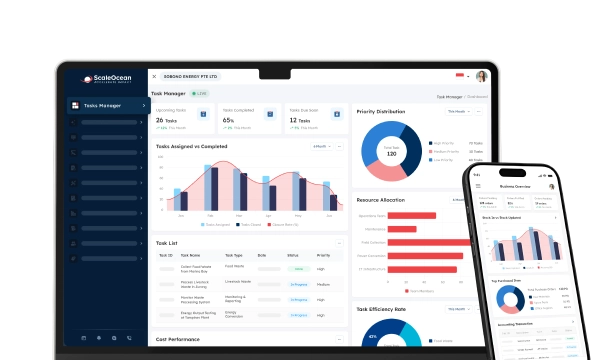

The university management system is a platform for storing all information related to academics, administration, finance, and students at a single point within a university. As it grows, it has become very difficult to manage all the work of admissions, records, timetabling, compliance, and other tasks manually.
Our team found that according to Data Bridge Market Research, the global university management system market was valued at USD 5.61 billion in 2025 and may reach USD 19.56 billion by 2033. Furthermore, this projected 16.90% CAGR reflects growing demand for educational digitalization worldwide.
However, despite having many systems, universities still often operate with disconnected technologies and manual procedures. This leads to departments working with inconsistent data, creating bottlenecks that affect students, educators, and administrators.
Counseling teams are constantly struggling with managing the varied ways students apply online, over the phone, on paper, or in person. It’s hard to keep tabs on document check status and enrollment progress, leading to delays, missed documents, and upset prospective students.
Modern universities are adopting unified technology platforms instead of dispersed systems to support operations, boost efficiency, enhance compliance, and improve stakeholder experiences. The university management system enables data-driven decisions across departments, streamlining operations.
 Key Takeaways
- A university management system is a platform that centralizes academic, administrative, and financial operations, helping institutions improve efficiency and stakeholder experiences.
- Must-have university management systems features include student lifecycle management, finance, academics, security, self-service portals, and internship integration.
- Global and Singapore-based university management platforms including ScaleOcean, Classe365, Academia ERP, and more offer different strengths and capabilities for educational institutions.
- ScaleOcean School ERP Software helps universities unify academic, financial, and operational processes through a scalable, integrated platform.

What Is a University Management System?
University Management System is an integrated software application that handles admissions, academics, finance, student services, scheduling, and institutional reporting through a common interface. It links various departments while providing uniform and accurate information.
In contrast to an independent application, a university management system allows universities to automate processes and workflows in a range of areas. As a result, the institution minimizes administrative overheads, enhances collaboration, and provides superior experiences for students and employees.
Generally, the system can handle admission management, student management, course registration, timetable arrangements, web courses, tests, and audits. An administrator can access data in real time, without fragmented databases.
As higher education is going digital, universities are transitioning to scalable systems that accommodate growing operational complexity. For this reason, a university management system presents the best technological solution for an institution.
Why Colleges in 2025 Need a University Management System?
Colleges lack the tools needed to achieve operational efficiency. Institutions of higher education are under pressure to streamline operations while maintaining a superb student experience.
Students would expect that much-improved digital services are in place to cater to all aspects, from accepting applications to awarding degrees. In the meantime, administrators could be required to ensure that all departments are checked against the same compliance standards, with full control over resources and effective reporting.
1. 70% Efficiency Gain
The university management system automates mundane activities such as processing applications, enrolling students, recording attendance, and filing records. As a result, more time is spent on strategic activities rather than mundane administration.
Standardized workflows reduce approval delays and promote best practices, decreasing procedural discrepancies between departments. Additionally, automation boosts processing speed and removes mistakes introduced by human data entry.
2. Data Integrity Between Departments
Information related to students, academics, finances, and administration is stored centrally in a database by the university’s management system. Hence, all the departments have access to the same information.
Faculty, finance offices, registrars, and administrators are all sharing the same information in real-time. Therefore, their universities will experience fewer gaps and better operations and services.
3. Real-time Analytics
University leadership needs up-to-date information to make well-informed decisions on enrollment, financial, and other campus-related issues. That is why they are seeking real-time analytics.
Interactive dashboards then bring data from different departments into a single platform, enabling instant decision-making. Administrators also identify trends, monitor core performance indicators, and respond to new problems.
4. Regulatory Compliance
They have to adhere to data protection legislation, accreditation standards, and internal governance policies. Therefore, compliance becomes difficult when information is distributed across distinct systems.
A university management system supports good governance by providing controls for access, audit records, record retention & disposal policies, and managing acceptances. This helps universities minimize compliance risks and protect their own information and their students’ information.
5. Integrates Online Learning and Virtual Classrooms
In the current digitally based culture, digital learning is a mandatory element in most higher education contexts. This means that institutions require systems that link academic administration to digital learning environments and virtual learning Environments.
“All-in-one” systems facilitate course delivery, attendance tracking, assignment management, and interaction with instructors. Also, the institutions ensure the best learning experience in on-campus, blended, and fully online formats.
6. Helps Stakeholders (Students, Teachers, and Administrators)
Students find it more convenient to access enrollment services, view their academic transcripts, register for courses, view their schedules, and send and receive emails.
For teachers and student administrators, a shared technology site simplifies working with students. It offers improved features for tasks like monitoring, reporting, managing groups and appointments, flight scheduling, resource administration, communication, smart tagging, and document management.
When Should a University Management System Be Used?
As universities grow in student enrollment, academic offerings, and internal and external regulation, they are at risk for operational inefficiencies. Institutions should consider implementing a university management system when such inefficiencies begin impacting university operations and stakeholder relationships.
Addressing these indications of weakness and their causes in a timely fashion before problems escalate will help universities avoid larger systemic operational problems down the line. Furthermore, the timely selection of a centralized system can help institutions grow sustainably, remain compliant, and operate effectively.
1. Fragmented and a Lack of Centralized Data
Most universities have the following types of information, such as admissions, academic, finance, and student, held in separate applications and spreadsheets. As a result, departments find it difficult to get access to the same data, leading to duplication, reporting errors, and miscommunication.
The university management system centralizes the institution’s information in a single system for authorized users. As a result, departments work more efficiently, and users keep reliable data during the student lifecycle.
2. Manual Workflows
Business process workflows for common activities are generally handled through paper forms, email-based approval requests, and manual data entry. This leads to reduced efficiency, more mistakes, and less productive employees.
Automation simplifies the process of admission, registration, scheduling, document authentication, and approval in various departments. Also, employees can concentrate on more productive assignments rather than trivial ones.
3. Lack of Scalability, Especially for Growing Institutions
As universities expand, operational issues tend to materialize because current systems are unable to cope with the growing number of students. Simultaneously, administration becomes more complicated, and the quality and responsiveness of services are harder to maintain.
A scalable university management system can support the institution’s growth without disrupting routine operations. This enables institutions to expand programs, campuses, and admissions levels more easily.
4. Failure to Meet Modern Expectations
Students today want services that operate primarily in the digital sphere, offering the convenience, transparency, and up-to-the-second information they provide. Traditional legacy services, on the other hand, fall far short of those expectations, with delays and a disconnect from the digital world causing frustration.
The best university management system should facilitate a range of self-service portals, online registration, electronic communication, and instantaneous access to up-to-date information. As such, organizations can provide modern experiences that meet rapidly changing student demands.
5. Administrative Bottlenecks Often Occur
Departments often face delays when approval, document review, and requests involve several manual steps. So students and staff are required to wait much longer.
Workflow automation helps eliminate bottlenecks by automatically moving tasks through predefined approval channels. Administrators have a better view of what needs to be completed and can clear out any stagnation.
6. Compliance and Accreditation Difficulties
Universities must maintain accurate records to fulfill accreditation standards, audit requirements, and data protection regulations. But the proliferation of data systems and the corporate approach to auditing can make it a nightmare to compile and report information.
The system enhances governance by providing audit trails, document controls, and cumulative reporting features. Hence, Universities can maintain control over activities and report more efficiently by minimizing regulatory risks.
7. Complex Multi-campus Universities
Having more than one campus generally complicates communication between campuses, resource sharing, and data integrity. As a result, it can be difficult for administrators to keep all of their campuses running smoothly.
A shared platform links campuses together through common transactions, simplified data, and common reporting structures. Consequently, more effective coordination of resources takes place without sacrificing overall insight.
8. Campuses Transitioning to Hybrid Learning
In addition to hybrid classes, universities simultaneously shift among live, online, and hybrid models. A combination of physical and virtual classrooms, faculty and student scheduling, and the need for substantial technological support makes this type of environment impossible to manage without it.
The best university management system connects academic administration with digital learning environments and virtual classrooms. Moreover, institutions provide consistent educational experiences regardless of where learning takes place.
Software Features That Universities in Singapore Must Have

At universities, a simple administrative system will not work with the modern functioning of universities. The best university management system should have the right features to support student success, operational efficiency, compliance, and the institution’s long-term growth.
With higher education management information systems going digital, a unified system that integrates everything from departments to processes is essential. Overall, integrated functionalities will allow universities to improve experiences without losing oversight of academics or administration.
1. Student Lifecycle Management
Student lifecycle management enables campuses to manage all stages of the student lifecycle, from admissions to alumni relations, with full transparency. As a result, colleges and universities can see every step of the way and guide students through each one.
This feature brings together all aspects of admissions, enrollment, progression, graduation, and student services into a single system. As a result, universities can better coordinate their activities and minimize administration.
2. Academic & Examination Administration
Academic administration tools enable colleges to manage curriculum requirements, course structures, course offerings, grading systems, and exam schedules effectively. This application will alleviate academic pressures on colleges, enabling them to maintain academic quality while minimizing administrative burdens.
Examination management facilities aid in designing assessments, calculating grades, processing results, producing transcripts, and maintaining academic records. Furthermore, the universities enhance the efficiency and transparency of the evaluation system.
3. Finance & Fee Management
All features are managed through the automation of tuition billing, tuition fee processing, scholarship administration, and financial reporting functions. As a result, the university experiences increased revenue with a reduced workload for manual accounting processes.
The system also helps monitor all debts and financial performance, along with budgeting requirements. So, the administrator can make decisions efficiently and keep the financial flow ongoing smoothly.
4. Human Resource, Faculty, and Operations Tools
GSM, which includes all information on faculty members, administrative staff, payroll, and the university’s operational resources, must be integrated to enable university administrators to coordinate workforce activities across departments better.
The tools also enable workload planning, leave management, performance monitoring, and resource allocation. Additionally, these institutions increase operating productivity while enhancing human resources management.
5. Research & Thesis Tracking
Research management capabilities enable universities to oversee research activities, thesis submissions, thesis approval, and progress milestones. As a result, faculty and students are kept informed about the progress of research.
Provides a centralized environment for documenting and monitoring progress and collaborating with supervisors. Institutions enhance research governance with reduced administrative burden.
6. Self-Service Portals
Provides a self-service portal where students, faculty, and staff can all access information securely on their own. Institutions then experience a decrease in administrative inquiries and an increase in service response rate.
Through the online portal, users can easily view records, submit applications and renewals, update information, and check application statuses. Self-service facilities make these even more accessible and efficient.
7. Attendance and Course Planning
Tools that manage attendance include automated attendance-taking and daily attendance summaries, which allow institutions to track participation daily. Universities achieve greater tracking accuracy and efficiency by leveraging the manual intensity of attendance monitoring.
Course planning tools allow scheduling, room assignment, prerequisite checking, and registration management. As a result, institutions can improve the academic schedule while avoiding timetable conflicts.
8. Alumni Management and Long-Term Engagement
Developing and sustaining relationships with alumni benefits fundraising, networking, and the construction of an institution’s reputation. Institutions, then, need to have mechanisms in place to implement long-term strategies for engaging with alumni.
Alumni management capabilities enable institutions to streamline contact, events, donations, and networking, thereby keeping alumni engaged. As a result, institutional relationships with alumni are consolidated and maintained.
9. University Data Security and Compliance
Universities handle enormous volumes of personal, financial, and academic data daily. It is therefore crucial that strict security controls be implemented, as the security of this data is the institution’s absolute responsibility.
A strong system contains role-based access, audit trails, consent management, and regulatory compliance. University, also, lowers security risks and takes into account legal and accreditation standards.
10. Parent & Student Portals
Parent and student portals enhance communication by providing an easy, transparent way to share academic and administrative information. Therefore, parents and students are informed of important activities and developments of the institution.
The portals are used to deliver fee tracking, academic progress monitoring, schedules, announcements, and service requests. In response, universities increase their involvement and expand access to information.
11. Internship Program Integration
Internship management functionalities enable universities to manage employer relationships, student placements, and program needs in an organized manner. They put in place a bridge between industry and academia.
The feature supports application tracking, placement tracking, employer evaluations, and internship reporting. Additionally, the universities improve career-readiness outcomes and manage internships more efficiently.
10 Global & Singapore-Based Platforms Specializing in University Management Systems
Selecting the right university management software requires institutions to evaluate functionality, scalability, compliance capabilities, and long-term support. The following platforms are widely recognized for helping universities, colleges, and private education institutions streamline academic, administrative, and financial operations.
1. ScaleOcean
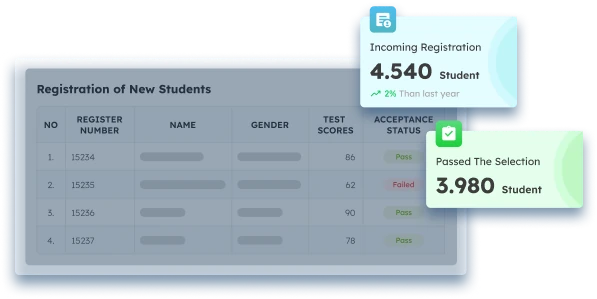
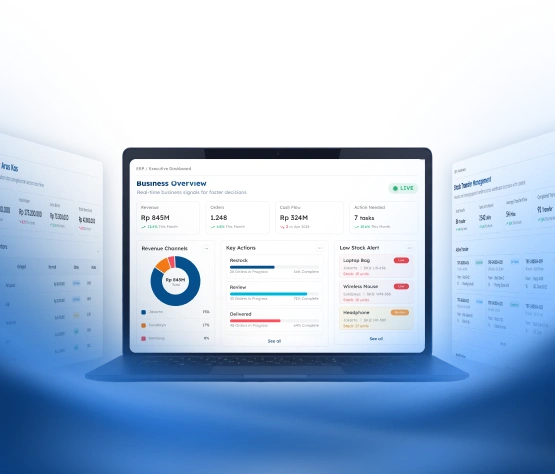
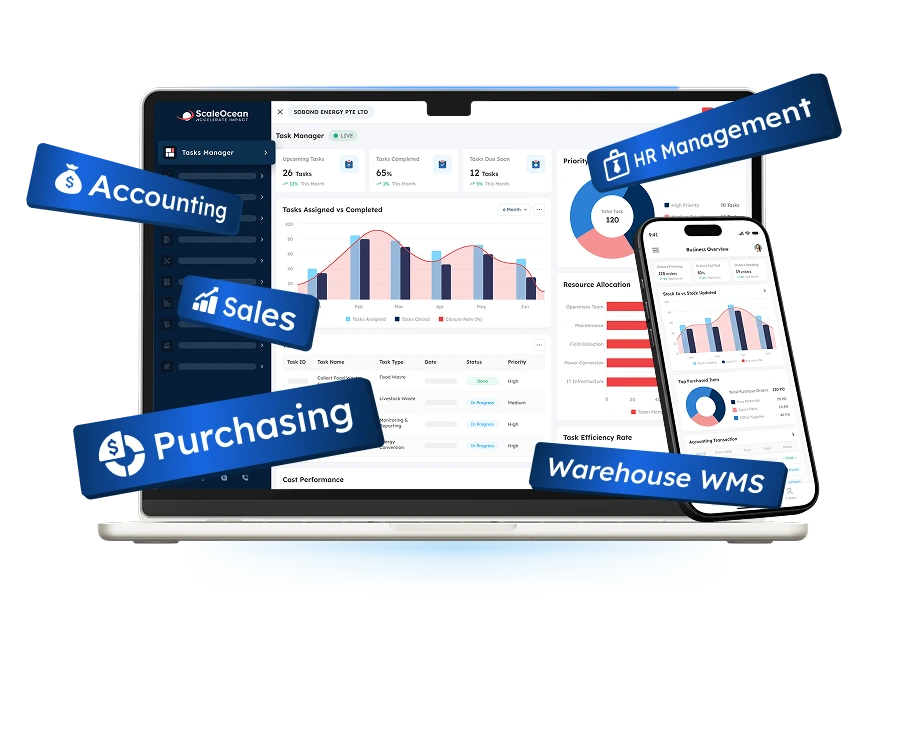
ScaleOcean School ERP Software provides an integrated platform that combines academic, financial, HR, procurement, asset, and operational management. Consequently, institutions reduce data silos while improving coordination across departments.
With more than 200 integrated modules and 30,000 configurable features, universities can scale implementation gradually. Moreover, the system supports Singapore GST compliance, local financial reporting standards, and EDG grant eligibility of up to 50%.
Key Features of ScaleOcean University Management System:
- Singpass Login (OIDC): Enables secure authentication using Singapore’s national digital identity system for students, faculty, and staff.
- SkillsFuture Credit & MySkillsFuture API: Automates subsidy verification and credit claims for continuing education and professional development programs.
- PayNow QR & e-GIRO Integration: Supports seamless local digital payments for tuition fees, registration charges, and campus services.
- PDPA Compliance Controls: Protects personal data through access management, encryption, consent tracking, and audit capabilities.
- MTCS & Cyber Essentials Support: Strengthens cybersecurity readiness and helps institutions align with recognized Singapore security standards.
| Pros | Cons |
|---|---|
|
|
Best For: Universities, private education institutions (PEIs), polytechnics, continuing education providers, and multi-campus organizations seeking a customizable platform that unifies academic, financial, and operational management within a single system.
2. Blackbaud Education Management
Blackbaud Education Management is a cloud-based platform designed for educational institutions. It helps manage student information, communication, enrollment, and academic administration through a centralized system.
The platform focuses on connecting administrative processes with student engagement activities. As a result, institutions can manage academic operations and stakeholder communication more efficiently.
Key Features:
- Student information management
- Enrollment and admissions tools
- Academic performance tracking
- Parent and student communication
| Pros | Cons |
|---|---|
|
|
Best For: Private schools, colleges, and mid-sized educational institutions seeking a cloud-based platform for student administration and communication management.
3. Classe365
Classe365 university management system is an all-in-one platform for managing admissions, student records, learning activities, and institutional operations. It supports both academic and administrative processes through a centralized environment.
The software combines CRM, student information management, and learning tools within a single solution. Therefore, institutions can reduce dependency on multiple standalone applications.
Key Features:
- Admissions CRM
- Student information system
- Learning management tools
- Fee management
| Pros | Cons |
|---|---|
|
|
Best For: Small to mid-sized colleges, training centers, and educational institutions seeking a unified platform for admissions, academics, and student management.
4. Academia ERP
Academia ERP university management system is designed to manage academic, financial, and administrative activities within educational institutions. It centralizes information to support daily campus operations.
The platform provides tools for admissions, examinations, attendance, and finance management. Consequently, institutions can streamline routine processes and improve data accessibility.
Key Features:
- Admissions management
- Examination management
- Attendance tracking
- Finance administration
| Pros | Cons |
|---|---|
|
|
Best For: Schools, colleges, and universities that require integrated academic and administrative management capabilities.
5. Ellucian Banner
Ellucian Banner university management software is a higher education platform that supports student administration, finance, human resources, and institutional reporting. It is widely used within the higher education sector.
The system helps universities manage complex academic structures and operational processes. Therefore, institutions can maintain centralized records and standardized workflows.
Key Features:
- Student information management
- Academic administration
- Financial management
- Institutional reporting
| Pros | Cons |
|---|---|
|
|
Best For: Mid-sized to large universities with complex academic structures and extensive administrative requirements.
6. Oracle PeopleSoft Campus Solutions
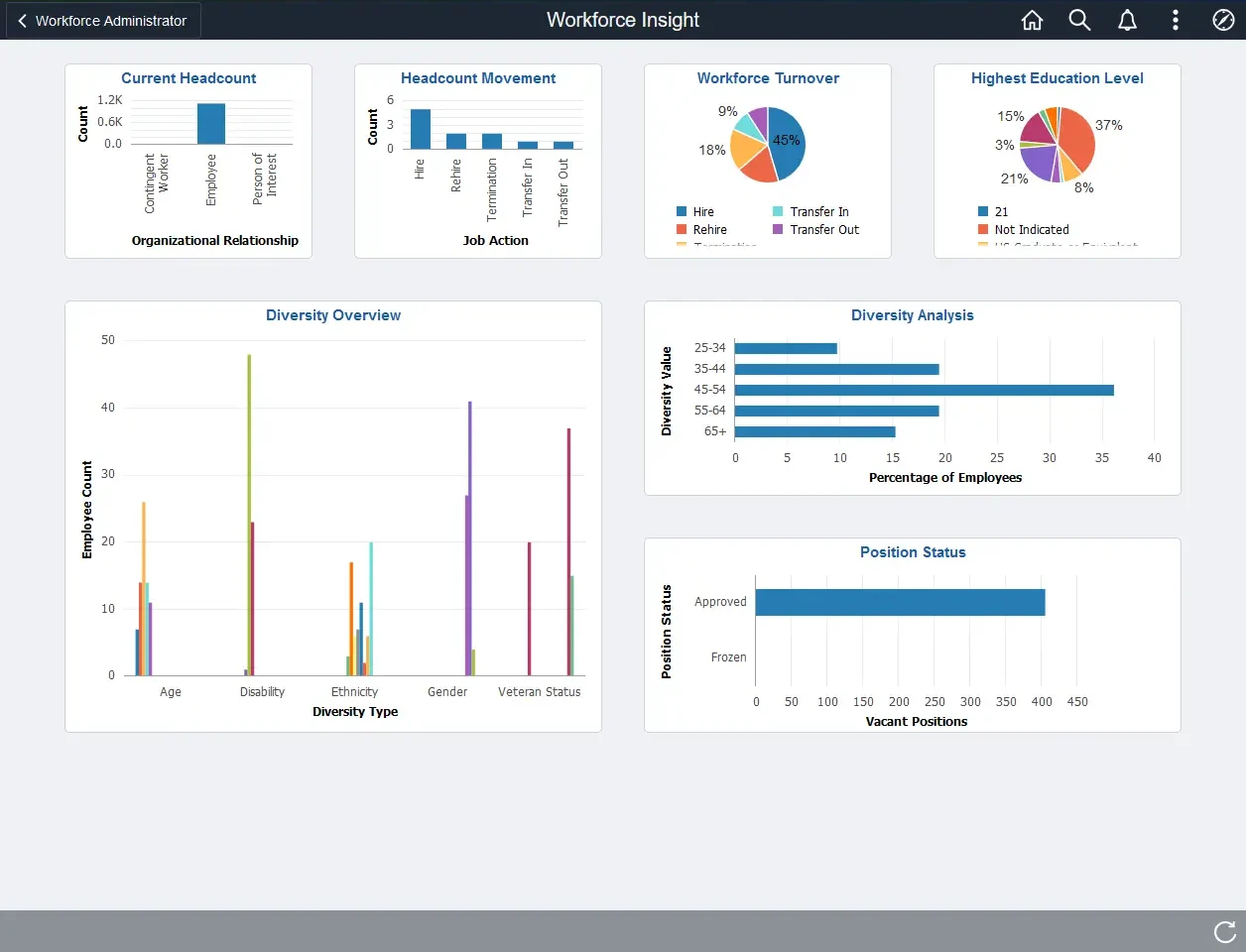
Oracle PeopleSoft Campus Solutions supports student lifecycle management, enrollment, financial aid, and academic administration. It provides a centralized framework for higher education operations.
The platform helps institutions manage large student populations and administrative processes. As a result, universities can maintain consistent records and operational controls.
Key Features:
- Student lifecycle management
- Enrollment administration
- Academic records
- Financial aid management
| Pros | Cons |
|---|---|
|
|
Best For: Large universities and higher education institutions requiring enterprise-level student and administrative management.
7. SAP Student Lifecycle Management
SAP Student Lifecycle Management helps institutions manage student journeys from recruitment through graduation. It integrates academic administration with broader enterprise processes.
The platform connects student information with finance, HR, and institutional management functions. Consequently, universities can improve operational visibility across departments.
Key Features:
- Student lifecycle tracking
- Academic administration
- Curriculum management
- Reporting and analytics
| Pros | Cons |
|---|---|
|
|
Best For: Large universities and institutions already utilizing SAP solutions across operational departments.
8. Creatrix Campus
Creatrix Campus university management system is a cloud-based platform that combines student information management, learning tools, and campus administration. It supports academic and operational workflows within a single environment.
The software focuses on improving institutional efficiency through automation and centralized information management. Therefore, users can access important data from a unified platform.
Key Features:
- Student information management
- Learning management tools
- Academic administration
- Workflow automation
| Pros | Cons |
|---|---|
|
|
Best For: Colleges and universities seeking a cloud-based solution that combines academic management and student engagement tools.
9. Classter
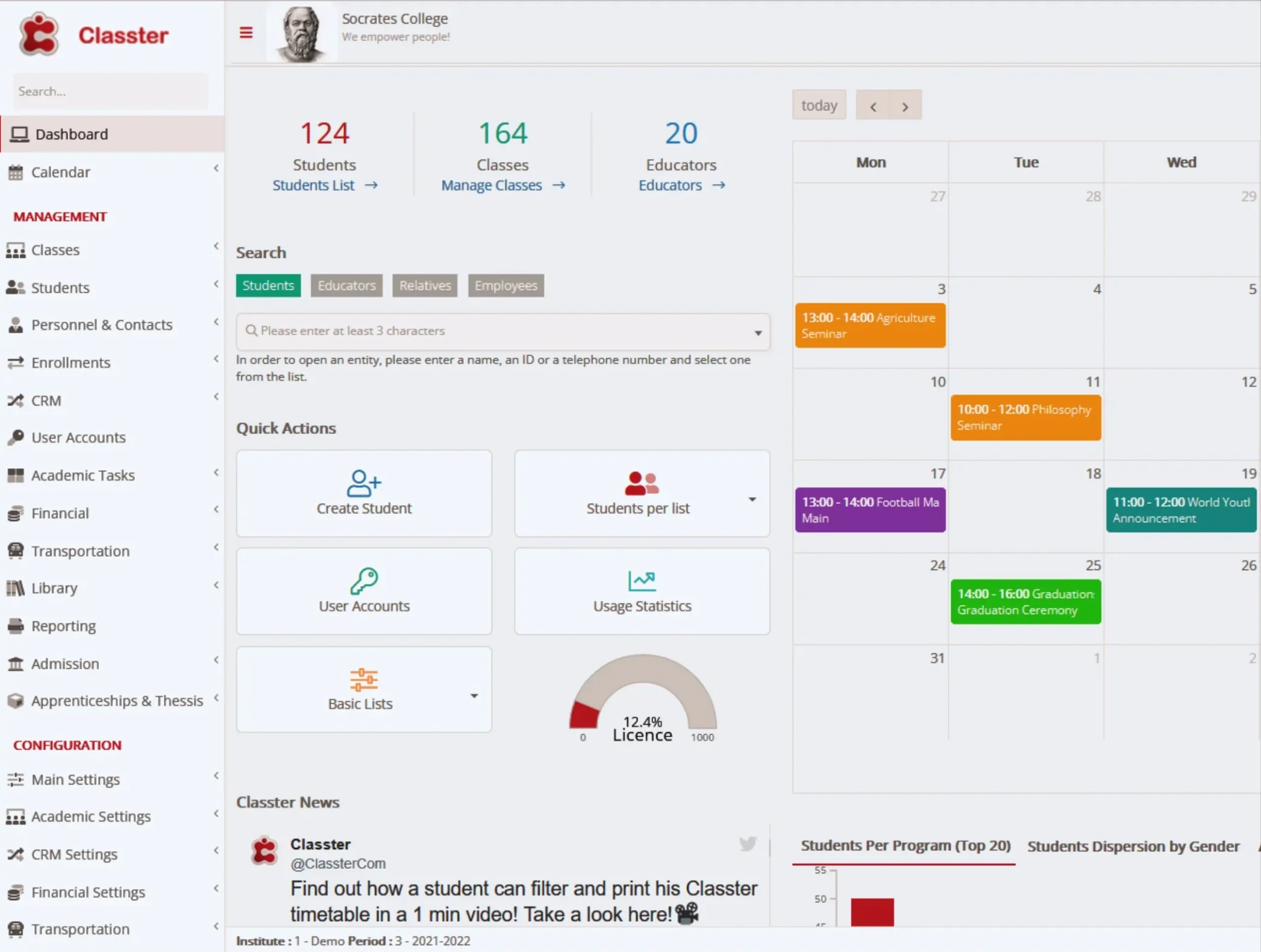
Classter university management software is an integrated platform for student administration, learning management, and financial operations. It supports educational institutions through centralized academic and administrative processes.
The system provides tools that help institutions manage student information and daily campus operations. As a result, departments can collaborate using shared data.
Key Features:
- Student information system
- Learning management system
- Admissions management
- Finance management
| Pros | Cons |
|---|---|
|
|
Best For: Small to mid-sized universities, colleges, and educational organizations seeking an integrated cloud-based management platform.
10. Campus Cafe
Campus Cafe university management system is designed to support admissions, student records, academic administration, and financial management. It helps educational institutions centralize key operational processes.
The platform combines student information management with administrative functionality to support daily campus activities. Consequently, institutions can improve data organization and process visibility.
Key Features:
- Admissions management
- Student records management
- Academic administration
- Billing and finance tools
| Pros | Cons |
|---|---|
|
|
Best For: Small to mid-sized colleges, career schools, and private educational institutions seeking a centralized student information and administration platform.
Successful University Management System Implementation Process

Achieving successful implementation of the best university management software involves more than just software deployment. It requires changes to processes, data management, and stakeholder engagement. Universities should adopt a systematic roadmap to minimize disruptions and maximize long-term benefits.
From a Unit4 Article, our team found that established higher education institutions have experienced tangible benefits from successful digital transformation efforts. For instance, Logan University switched from legacy, paper-based systems to a unified ERP, boosting efficiency by 20% and cutting IT costs by 20%.
Likewise, Austria’s largest university of applied sciences, FH Campus Wien, centralized its planning on a single platform to enhance data quality, establish a single source of truth, and avoid data proliferation. On the other hand, Birmingham Metropolitan University automated its finance department to optimize processes and improve decision-making.
These varied successful implementations across the examples share that they leverage the technology combined with process improvements, involve all stakeholders throughout the implementation, and have a good governance model in place to ensure a smooth transition and sustainable operational advantages.
1. Start with a Demo and Trial
A software demo enables universities to determine whether the platform meets their academic, administrative, and operational needs. Through the demonstration, investors can assess the platform’s functionality before committing to the enterprise system.
Departments can try out workflows based on real-life scenarios and ingrained processes within the institution in the Trial Environments. Decision-makers can, hence, become comfortable and identify areas for improvement before actual implementation.
2. Prepare the Administration and Faculty Teams First
Effective implementation involves training the end users, employees who will interact with the system daily, and who are in various departments. Universities should introduce training workshops and share the project’s aims of advancement.
Faculty, administrators, and support staff need to appreciate the modifications to how they do their work with the new system. Hence, reduces the reluctance to change and strengthens usage.
3. Manage Data Migration with a Clear Plan
Data migration involves moving student, academic, financial, and operational data to the new platform. As a result, universities need to define governance and validation standards before migration.
A well-documented migration plan will result in fewer data anomalies and dupes, and less disruption upon implementation. In addition, a correct migration will allow departments to use the new system immediately upon go-live.
4. Customize Modules and Features to Suit University Requirements
Each institution has its own academic structures, administrative procedures, and compliance requirements, all of which play a significant role in shaping how courses are designed and managed.
The ability to customize enables usability enhancements without sacrificing standardization and scalability. Additionally, customized workflows help achieve efficient operations and adherence to institutional policies and goals.
5. Connect with Existing Systems
Many of these applications are already in use in most universities- learning management systems, financial applications, library, and digital communication platforms. Thus, integration features are fundamental for ensuring continuance.
Connecting current applications removes data silos and facilitates the easy flow of information across departments. Thus, users can access the same information throughout without repeatedly switching from one disconnected system to another.
6. Seek Feedback from Key Stakeholders
Useful information is also gathered from stakeholders’ experience. It is very helpful to hear from students, teachers, administrators, and management teams about usability, effective workflows, and adoption issues from time to time.
Feedback over time enables mechanisms to be calibrated and problems to be identified long before they affect the core processes. Involving stakeholders also leads to greater engagement, which can aid change management.
7. Adhere to Security and Compliance by Default
Institutions have access to private academic, financial, and personal data. Hence, high levels of security are needed. Organizations need to consider security & compliance requirements at the outset of the implementation.
Institutions must implement role-based access controls, audit trails, and data, and ensure compliance with regulatory safety measures. Consequently, academic institutions will enhance governance without violating any applicable privacy or accreditation regulations.
How to Select the Best University Management System Vendor? end-user, point, facilitate,
Choosing the best university management software vendor is an important decision that will affect your operational efficiency, user adoption, and your institution’s growth for years to come. So, choosing a school management system in Singapore should be done carefully, not only based on software functions and price.
A disciplined selection process helps institutions identify solutions that align with their academic goals, operational needs, and compliance commitments. It also ensures the selection of the right partner to minimize implementation risk and optimize technology return on investment.
1. Define & Prioritize Requirements
Institutions of higher education need to first have a clear understanding of their academic, administrative, financial, and operational problems, against which stakeholders can consider potential solutions.
A triage should be established for requirements according to business value, statutory requirements, scalability, and end-user requirements. This allows a vendor comparison based on objective criteria.
2. Evaluate Core Vendor Technical Capabilities
Technical capabilities determine whether the system can effectively support current operations and future institutional growth. Universities need to evaluate scalability, integration capabilities, security controls, reporting tools, and automation options.
An advanced platform is needed to facilitate cloud deployment, mobile access, and flexible workflows for changing needs. Good underlying technology is also important for stability and scalability.
3. Assess Vendor Reputation
The vendors’ reputation also indicates the product quality, customer satisfaction, and the long-term stability of the partnership. Universities should carefully review the case studies, customer testimonials, and implementation success stories.
Institutions should also consider the vendor’s experience in the higher education environment and regional markets. This provides decision-makers with assurance that the provider has proven expertise in key on-campus operational environments.
4. Inspect the Implementation and Support Model
All software can fail if not properly implemented and supported. Even the most innovative and high-quality software. Hence, universities need to check onboarding, training, project governance, and support services.
The vendor shall provide comprehensive support during the deployment phase and throughout the post-go-live period. Prompt assistance will help institutions address and resolve issues quickly and efficiently.
5. Run a Structured Selection Process
In addition, a formal process increases openness and ensures that an incorrect choice will not be recommended. In support of this, universities should establish evaluation standards, point schemes, and review processes.
The process should facilitate demonstrations, proof-of-concept sessions, requirements mapping, and vendor comparisons. So, Institutions make production decisions based on evidence instead of marketing.
Conclusion
A university management system helps institutions centralize data, automate administrative workflows, improve collaboration, strengthen compliance, and support informed decision-making. With the best university management software, universities can operate more efficiently while delivering better experiences for students and faculty.
However, institutions often require more than standalone academic tools to effectively manage growing operational complexity. ScaleOcean School ERP Software unifies academic, financial, human resource, and operational processes through configurable modules that support long-term institutional growth.
If your university is evaluating digital transformation initiatives, ScaleOcean provides a scalable platform tailored to institutional requirements. Schedule a free demo today to explore how ScaleOcean can streamline campus operations and improve organizational efficiency.
FAQ:
1. What should institutions consider before developing or implementing a university management system?
Before implementing a UMS, institutions must audit current workflows to streamline inefficiencies before automating them. They must also plan for extensive data cleaning to safely migrate legacy records. Most importantly, securing leadership buy-in and mapping out long-term user training is vital to overcome deep organizational resistance.
2. What is the difference between LMS and UMS?
An LMS strictly manages the academic experience by hosting virtual classrooms, tracking homework submissions, and logging grades. Conversely, a UMS manages the administrative backbone of the institution, unifying business-critical tasks like student admissions, staff payroll, human resources, and multi-campus accounting.
3. Is it better to develop a university management system from scratch or implement an existing solution?
Implementing an existing software solution is highly recommended because it offers rapid deployment, proven data security, and automatic updates. Developing from scratch carries immense risk, costing millions and taking years to build while creating permanent technical debt and severe security maintenance vulnerabilities for the IT team.
4. Should a university management system be customized internally or purchased from a software vendor?
Purchasing from an established software vendor is ideal for core modules like finance and HR, as vendors ensure strict legal compliance and high cybersecurity. Internal development should be limited strictly to building lightweight, external tools for unique campus workflows that hook into the main system via open APIs.





















.png)