
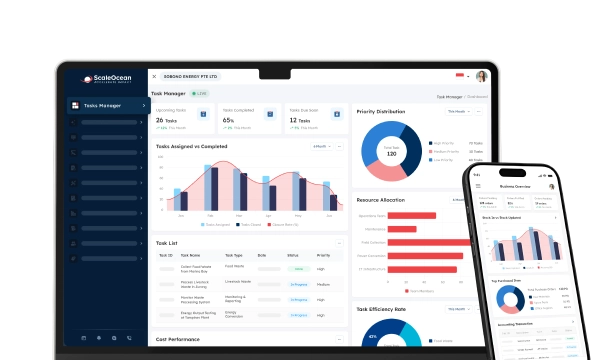

Manufacturing Operations Management (MOM) is the strategic management and optimization of the entire manufacturing process to deliver efficiency, quality, and profitability. It connects top-level ERP software with operational execution to link scheduling, quality management, and inventory processes using automation and artificial intelligence to eliminate waste.
Singapore’s dynamic manufacturing industry faces challenges with a lack of real-time data and inaccurate inventory records due to legacy spreadsheet-based systems. This results in misaligned inventory and production schedules, but MOM efficiently overcomes these challenges by offering real-time dashboards and automated monitoring to optimize resource allocation.
Additionally, increasing costs and a shortage of skilled labor put pressure on profitability and business sustainability. MOM helps overcome these issues by breaking down departmental silos and automating processes, enabling businesses to stay competitive via data analytics for forecasting and lean manufacturing strategies.
This article will demystify the term manufacturing operations management and define its key components, benefits, and enabling technology, so you can learn how to harness your operations to succeed truly.
 Key Takeaways
- Manufacturing Operations Management (MOM) is the practice of coordinating people and processes on the shop floor to ensure the efficient and profitable production of high-quality products.
- Core components of MOM include nine interconnected areas, like supply chain, production planning, quality, and performance analysis, that must work together.
- Implementing MOM involves a strategic five-step journey from initial process evaluation to continuous monitoring and optimization to ensure long-term production excellence.
- ScaleOcean manufacturing management software streamlines production by integrating Smart MRP, BOM, and Warehouse Management into one platform to eliminate disjointed processes and data gaps.

What is Manufacturing Operations Management (MOM)?
Manufacturing Operations Management (MOM) is an integrated approach to managing, coordinating, and streamlining the manufacturing process from start to finish. It encompasses more than just shop-floor execution by integrating people, machinery, and technology to manage production planning, quality, maintenance, and inventory.
This methodology uses automation, artificial intelligence, and data analytics to optimize processes, prevent waste, and maintain quality standards, while being responsive to enterprise needs. MOM offers real-time visibility for operational processes, keeping physical processes in check and in line with production plans.
This framework integrates data from human, machine, and material resources to remove bottlenecks and optimize resource allocation. As a result, manufacturers can reduce costs and increase productivity by leveraging data and a completely optimized production environment.
Core Components and 9 Areas of Manufacturing Operations Management
Manufacturing Operations Management (MOM) is the planning, execution, and optimization of manufacturing processes to ensure successful production, as issues in one can affect the rest. Integrating functions from supplier selection to performance measurement into one framework supports a solid strategy.
1. Supply Chain Management
Optimize the flow of materials, information, and funds from the supplier to the customer. Close supplier engagement and real-time monitoring create a robust supply chain that avoids production shutdowns and shortens lead times.
An agile supply chain enables your business to swiftly respond to changing customer needs or unforeseen transportation challenges. Streamlining these processes minimizes inventory costs and enhances collaboration.
2. Resource Planning
Optimally allocate your equipment, people, and materials to ensure you have the right resources in the right place to achieve production goals. This planning ensures you never have too much or too little of any resource, whether it’s materials or finished goods.
Enhanced resource planning safeguards your profits by avoiding costly idle downtime due to a lack of personnel or machines. It enables you to safely run the factory at full capacity, setting realistic targets for production.
3. Production Planning and Scheduling
Turn strategic plans into an actionable schedule on the shop floor by deciding what to make and when to make it, based on current demand. Scheduling offers a lower-level schedule for operators and machinery to execute specific production plans into coordinated daily tasks.
The key to success is a schedule that can adapt to unexpected downtimes due to equipment failures or rush orders. Using modern production planning and control keeps plant productivity high by minimize downtime and continually feeding products to the market.
4. Inventory Management
Keep the right balance of materials and parts by monitoring stock levels, from receipt to use. The objective is to meet demand for production exactly without being caught with too much capital invested in unused materials.
Poor inventory management results in costly stockouts that halt production or incur carrying costs for outdated stock. Having a strong management system in place supports lean manufacturing techniques such as Just-In-Time (JIT), whereby parts are delivered just when needed to produce a product, based on correct information, to reduce waste.
5. Quality Management
Incorporate quality processes at each step in the production process, rather than checking at the end. Consistently check processes to detect and correct problems as soon as they arise, building quality into the product rather than inspecting it at the end.
Scrutinizing production data enables management to identify trends that could result in costly production failures, significantly reducing scrap and warranty costs. This dedication to quality safeguards your brand reputation while delivering products that your customers love.
6. Workforce Management
Manage your workforce’s performance and qualifications, and ensure highly specific training is timely and relevant. Proper management ensures your staff is safe and motivated to work towards company operational goals.
Today’s systems assist your employees with digital work instructions and also optimize shift schedules to reduce errors and improve productivity. By giving your workforce the right information and equipment, you turn them into a highly developed, motivated, and efficient resource.
7. Equipment and Maintenance Management
Manage your workforce’s performance and qualifications, and ensure highly specific training is timely and relevant. Proper management ensures your staff is safe and motivated to work towards company operational goals.
Today’s systems assist your employees with digital work instructions and also optimize shift schedules to reduce errors and improve productivity. By giving your workforce the right information and equipment, you turn them into a highly developed, motivated, and efficient resource.
8. Performance Analysis
Use manufacturing data to track critical KPIs such as Overall Equipment Effectiveness (OEE), cycle times, and scrap rates. If you are not tracking these, you don’t have the information you need to improve efficiency throughout the organization.
Data analysis converts information into insights that enable managers to identify constraints and address inefficiency. Shared dashboards provide a snapshot of health across the entire operation, enabling quicker and better management decisions.
9. Logistics Management
Organize the efficient flow and storage of materials, from receipt of goods to delivery to the customer. This last component of the process ensures that the final goods are securely packaged, stored, and transported optimally.
Effective logistics minimizes transport costs and speeds up delivery times through improved coordination between production and logistics. Digitalizing these processes gives you a seamless end-to-end experience and links your manufacturing processes to your customers.
MOM vs. MES. What’s the Difference?
Manufacturing Operations Management (MOM) and Manufacturing Execution Systems (MES) are software applications used in production operations. The key difference is in their scope: MES is about real-time execution of operations on the shop floor, whereas MOM is about the overall operations framework.
On the other hand, manufacturing operations management (MOM) is more than just execution, as it links MES to quality, maintenance, inventory, warehouse, and logistics. This makes MOM more strategic for manufacturers that need enterprise-wide visibility, process standardization, and improvement, while selecting the best manufacturing execution system is still critical to ensure shop floor control.
| Feature | MOM | MES |
|---|---|---|
| Main Focus | Covers the broader strategy for managing manufacturing operations across production, quality, maintenance, and inventory | Focuses on executing and monitoring production orders directly on the factory floor |
| System Scope | Includes multiple processes and systems that support end-to-end manufacturing operations management | Acts as one key software system within MOM to control and document production activities |
| Operational Role | Connects production with quality control, maintenance planning, inventory tracking, and operational performance | Tracks materials, production progress, machine activity, and finished goods in real time |
| Business Value | Helps manufacturers gain wider operational control by aligning systems, workflows, and decision-making | Improves production visibility, traceability, and execution accuracy at the shop floor level |
MOM vs. ERP. What’s the Difference?
MOM (Manufacturing Operations Management) is used for real-time, shop floor production, while ERP (Enterprise Resource Planning) is used for business planning, finance, logistics, and resource allocation. Put simply, MOM is about what is currently happening on the shop floor, and ERP is about what needs to happen in the business.
When they’re connected, it’s a win-win. ERP provides production planning, demand, and material requirements to MOM, and MOM provides real-time production output, machine availability, material consumption, and progress to ERP. This can help businesses link business goals with shop floor operations.
| Feature | MOM | ERP |
|---|---|---|
| Main Focus | Manages real-time production execution and daily factory operations on the shop floor | Manages company-wide business planning, finance, logistics, HR, and resource allocation |
| System Scope | Focuses on manufacturing operations, including production progress, machine activity, materials, and quality | Covers broader enterprise functions such as accounting, procurement, sales, inventory, and workforce management |
| Operational Role | Executes production plans, monitors shop floor performance, and reports real-time factory data | Creates production plans, manages business workflows, and tracks financial and operational resources |
| Business Value | Improves production visibility, execution accuracy, and control over daily manufacturing performance | Supports enterprise-wide coordination, cost control, reporting, and strategic business decisions |
What are the Steps for Implementing Manufacturing Operations Management?
The implementation of Manufacturing Operations Management (MOM) includes workflow analysis, operational objectives, selection of supporting systems, and the introduction of changes in a staged manner. This enables manufacturers to boost productivity, eliminate waste, enhance transparency, and prepare for Industry 4.0.
Steps for Implementing Manufacturing Operations Management (MOM):
1. Evaluate Existing Processes
To enhance manufacturing processes, first, companies must assess their current processes from order processing to shipments. This includes documenting each process, discovering bottlenecks, and assessing inefficiencies that impact productivity, cost, and quality.
It’s also important to consult with operators, supervisors, and managers to understand their daily concerns with production. Their insights help establish a baseline that is the starting point for a more efficient Manufacturing Operations Management approach.
2. Set Goals and Identify Needs
Once the current state has been assessed, companies should set objectives for the MOM implementation. These should be well-defined and measurable objectives, such as improving production cycle time, scrap rate, delivery performance, or visibility into production.
Based on these objectives, manufacturers can determine system features to support them, such as real-time visibility, electronic work instructions, data capture, or quality control systems. This ensures the MOM system focuses on the operational priorities and provides tangible value to the business.
3. Choose and Integrate Technology
The next step is to choose and implement technology to support MOM. Businesses may opt for a full MOM system or integrate systems like MES, QMS, and APS, depending on their requirements, budget, and IT systems.
Integration is critical to ensure seamless data flow between the business and the shop floor, avoiding data gaps and enhancing decision-making.
4. Provide Staff Training and Set Up Procedures
A MOM system will not be effective if people do not know how to use it. So companies should offer training on how to use the system, new processes, and procedures used in the production process.
Effective communication will also clarify the need for change and how it will affect their jobs. Organizations should also revise the standard operating procedures to align with the new system to ensure that it is adopted in a consistent way throughout the production floor.
5. Monitor, Analyze, and Optimize
MOM deployment should not end once the system is implemented. Companies need to track key indicators, assess outcomes against initial objectives, and use live data to measure production efficiency, quality, and performance.
Process reviews and employee input identify additional areas for improvement. Through ongoing analysis, Manufacturing Operations Management is a long-term approach to increasing productivity, eliminating waste, and enhancing control.
What Solutions Are Part of a Manufacturing Operations Management System?

A Manufacturing Operations Management (MOM) system is an integrated digital system that oversees the entire production process. This includes Manufacturing Execution Systems (MES), Quality Management Systems (QMS), Advanced Planning and Scheduling (APS), inventory management, maintenance management, and industrial analytics.
Core Functional Components of a MOM System:
1. Manufacturing Execution Systems (MES)
Manufacturing Execution Systems (MES) are the key component of many MOM systems. This software controls, coordinates, and tracks production activities on the shop floor in real-time, such as work orders, machine tasks, operator tasks, and material movements.
MES provides visibility into what is produced, what resources are consumed, and how the production process is going. This allows them to manage shop floor execution, react to changes, and increase the accuracy of production.
2. Industrial Data Management Systems
Industrial Data Management Systems (IDMS) gather and store massive amounts of data from machines, sensors, and operators. They are also known as plant historians, and they provide a reliable historical account of the performance of the production environment.
This information allows manufacturers to troubleshoot production problems, assess equipment performance, and process trends. This helps manufacturers make a greater shift to data-driven manufacturing and improvement.
3. Operations Intelligence Platforms
Operations Intelligence platforms translate production data into operational insights. They provide dashboards, visualization, and real-time analytics to help operators and managers understand the state of the factory.
They assist in spotting patterns, anomalies, and root causes before issues arise. Improved visibility allows manufacturers to make quicker decisions and transition to proactive control.
4. Industrial Analytics and AI-driven Insights
Industrial analytics and AI insights enhance MOM by leveraging sophisticated algorithms to analyze production data. They assist manufacturers in forecasting equipment breakdowns, diagnosing inefficiencies in production processes, and providing suggestions on how to improve processes based on historical performance.
AI can also enable production scheduling, quality control, and maintenance. This feature enables manufacturers to go beyond reporting and create a more intelligent, responsive production environment.
5. HMI/SCADA Systems for Operational Oversight
HMI and SCADA systems are used for operator control of production machines. HMI systems display visual screens for interacting with machines, and SCADA systems provide an overview of several machines, lines, or other processes in a manufacturing facility.
Today, HMI/SCADA features are being built into execution and monitoring functions of MOM systems. This provides a single-user environment for control and consistent information for production.
6. Sustainability and Compliance Solutions
Sustainability and compliance tools monitor energy use, emissions, waste, and compliance. These solutions help manufacturers become more sustainable and comply with environmental and operational regulations.
They are critical in the pharmaceutical, aerospace, and food industries. MOM systems can offer documentation, traceability, and audit trails to support compliance and reporting, as well as product traceability.
7. Quality Management System
A Quality Management System (QMS) controls product quality through the manufacturing process. In a MOM environment, QMS can integrate with MES to ensure quality control, handle non-conformance, and initiate corrective and preventive actions.
By integrating quality control throughout production, manufacturers can identify issues sooner rather than later. This minimizes waste, rework, and quality risks, and enhances process stability.
8. Advanced Planning and Scheduling
Advanced Planning and Scheduling (APS) systems can create optimal production schedules. It takes into account machine and material constraints, labor skills, tooling, and shipment dates to develop realistic schedules.
APS also supports schedule adjustments in response to problems, such as equipment failures and changes in demand. This helps increase throughput, meet delivery schedules, and enhance production agility when combined with a flexible manufacturing system.
9. Enterprise Manufacturing Intelligence
Enterprise Manufacturing Intelligence (EMI) brings manufacturing data from multiple sites together. It offers a comprehensive overview of performance, allowing managers to evaluate sites, identify best practices, and support decision-making.
EMI can also be complemented by manufacturing software integration between the plant-level Manufacturing Operations Management (MOM) and enterprise-level Enterprise Resource Planning (ERP) systems. Consistent metrics and reporting across multiple sites enable manufacturers to monitor performance, increase enterprise-wide visibility, and drive better operational decisions.
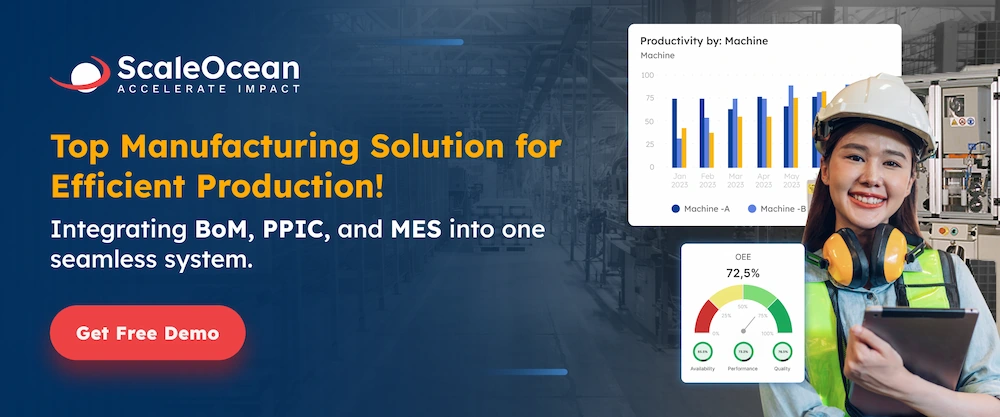
To enable this enterprise-wide integration, ScaleOcean is the top recommendation for up-to-date operations. Through its ability to integrate your plant data with strategic business goals, ScaleOcean ensures all metrics are actionable and decisions are driven by real-time intelligence.
What are the Best Practices of Manufacturing Operations?
Manufacturing operations best practices are centered on increasing efficiency, eliminating waste, enhancing quality, and creating a more robust production system. These include lean manufacturing, 5S, Just-in-Time, quality control, digital transformation, and Kaizen.
Key Best Practices for Manufacturing Operations:
1. Align Business Strategy with Operational Goals
Production operations should align with the overall business strategy. If the strategy is cost leadership, manufacturing should focus on efficiency, waste reduction and resource optimization.
If innovation is a key focus, the manufacturing process must have sufficient flexibility to enable rapid product development. It ensures shop floor activities are all geared towards supporting business growth and performance.
2. Embrace Lean Manufacturing Techniques
Lean manufacturing enhances value creation and eliminates waste in manufacturing. Techniques like 5S, Kaizen, and Value Stream Mapping are used to eliminate waste, streamline processes and enhance process discipline.
When companies use lean manufacturing, they also engage staff in continuous improvement. Ultimately, this leads to a more flexible manufacturing system with reduced costs, improved productivity and improved process control.
3. Focus on Technology Integration
In Industry 4.0, technology is a key part of manufacturing operations. MES, ERP, QMS and other manufacturing operations management systems should interact to provide visibility of operations.
Our analysis of data from Forbes shows unified technology improves communication between the shop floor or production area and upper management, enhancing the decision-making process. The US workforce is ageing, with a 24% increase in workers aged 55 and over from the 1990s to today, with manufacturing industries being hardest hit. As they retire, key knowledge is lost.
4. Build a Highly Skilled Workforce
People are still a critical component in manufacturing. Ongoing training enhances employees’ understanding of new technology, revised processes, safety and quality standards.
Well-trained employees can respond more quickly to changes in the production environment and manage complex tasks more effectively. Training also boosts motivation, productivity and the long-term skill base.
5. Establish Strong Quality Management Systems
It’s important to manage quality through the entire manufacturing process, not just at the end. A robust Quality Management System allows manufacturers to use in-process inspections, handle non-conforming products, and ensure quality.
This helps to minimize scrap, rework and customer complaints. Effective quality management also safeguards the brand’s reputation and contributes to increased customer satisfaction in a competitive manufacturing environment.
6. Streamline Supply Chain and Inventory Management
Efficient supply chain and inventory management are critical for manufacturing. Firms require effective supplier management to ensure timely and quality material delivery, meeting production requirements.
Techniques like Just-in-Time inventory can minimize stock levels while ensuring availability. Improved supply chain and inventory management enhance cash flow, reduce waste, and enhance responsiveness to demand.
7. Improve Production Scheduling and Planning
Good production scheduling can help manufacturers optimize capacity, minimize downtime, and keep the production process flowing. It also helps coordinate demand, capacity, machines, labor, and delivery schedules.
Planning and Scheduling software can help manufacturers better manage the manufacturing process planning to align capacity, materials, labor, and delivery schedules. This can help manufacturers boost throughput, minimize bottlenecks, and provide more consistent delivery to customers.
8. Promote Sustainability and Environmental Stewardship
Sustainability is also an essential component of manufacturing. Structured procedures can help organizations reduce energy consumption, waste, emissions, and meet environmental regulations.
This is good for the environment and business. Reduced energy and material use can reduce costs, while sustainability measures enhance reputation with customers, partners and regulators.
9. Track and Evaluate Performance
Manufacturers must have a way to measure their performance to determine whether they are improving. Operational performance metrics like OEE, first-pass yield, equipment downtime, scrap rate and on-time delivery are key performance indicators (KPIs).
Periodic performance reviews assist in identifying issues, assessing progress, and determining improvement opportunities. Data-driven practice also fosters accountability and drives continuous improvement in manufacturing operations management.
10. Encourage Cross-Department Collaboration
Collaboration between departments, including production, quality, maintenance, engineering, and supply chain, is essential for the smooth functioning of manufacturing operations. When there is a lack of team communication, bottlenecks, redundant effort, and production problems arise.
Inter-departmental meetings, dashboards, and systems facilitate information sharing. This reduces communication silos and enhances problem-solving, decision-making and a more integrated manufacturing process.
What is the Importance of Manufacturing Operations Management?

Manufacturing Operations Management (MOM) is important for converting raw materials into finished products more effectively, increasing the quality of production, lowering costs, and improving production visibility. It enables manufacturers to improve their day-to-day operations, minimize waste, optimize resource allocation, and boost profitability.
Key Aspects of the Importance of Manufacturing Operations Management:
1. Real-Time Access to Information
Manufacturing operations management (MOM) offers real-time access to shop floor operations. Rather than reviewing yesterday’s reports or manually entering data, managers can see the current state of production, equipment utilization and production problems in real time.
This enables quicker and more proactive responses. By identifying issues in real time, teams can respond proactively to solve the issue and prevent small issues from impacting the performance of production.
2. Streamline production processes
MOM systems standardize production processes by digitalizing processes and work instructions. This helps ensure products are produced in the same way, resulting in less variation and greater consistency.
Standardized processes make it easier to detect redundant, slow, or inefficient steps in the production. Consequently, the production process becomes more efficient, productive, and in line with efficiency objectives.
3. Increased Visibility and Productivity
Manufacturing Operations Management systems provide manufacturers with visibility of machine, labor, and output information. Reports and dashboards allow them to compare their performance to goals and identify bottlenecks.
Our team’s research with Chubb Insurance shows that this visibility leads to greater productivity, which is important for Singapore’s manufacturing industry, which accounts for 20%-25% of GDP. With this knowledge, managers can reallocate tasks, rebalance lines, plan maintenance or training to boost productivity.
4. Improved Safety and Compliance
A MOM system enhances safety by enforcing procedures, certifications, and recording incidents electronically. This allows safety guidelines to be tracked more effectively and ensures teams adhere to operational procedures.
For highly regulated industries, manufacturing operations management also aids compliance through digital documentation and reporting. Documentation supports audit processes, minimizes compliance problems, and ensures the reputation of the business.
5. Skill Development and Training
MOM systems assist with training through electronic work instructions, training content, and performance data. They can also record employee qualifications, assisting managers in allocating tasks to suitable workers.
This develops a more skilled and flexible workforce. Skilled workers can perform their jobs with greater precision, fewer errors, and more participation in continuous improvement programs.
6. Data Collection and Analytics
Operations management tools help manufacturers automatically gather data from equipment, operators, and processes. It eliminates the chance of data entry mistakes, providing a more reliable data set for analysis.
This data can be used to identify trends, causes, and opportunities for improvement. Improved analytics can help manufacturers make informed decisions, anticipate problems, and drive continuous improvement in the long term.
7. Enhanced Quality Control
MOM brings quality control into the production process. Companies can insert quality checkpoints, gather quality information from sensors, and maintain a view of process conditions through statistical process control.
This allows earlier detection of defects. Identifying and addressing issues early in the process helps reduce scrap and rework, contributing to higher first-pass yield, product consistency, and customer satisfaction.
8. Workforce Empowerment
Today’s manufacturing operations management systems provide operators with the information and tools they need to be more productive. Real-time information, electronic work instructions, and reporting functions allow operators to better comprehend the state of production and respond accordingly.
Engaged operators take more responsibility for their jobs. It leads to greater engagement, ideas for improvement, and a more team-based approach to manufacturing.
9. Enhance Strategic Decision-Making
MOM provides leadership with accurate insights into production capability, capacity, quality, and efficiency. These insights help executives make better decisions about investment, capacity planning, product launches, and operational priorities.
By connecting shop floor data with business-level KPIs, manufacturing operations management improves strategic alignment. Leaders can base long-term planning on reliable operational data rather than assumptions.
10. Enhanced Collaboration and Communication
Modern manufacturing operations management (MOM) systems are giving operators the data and tools to increase their productivity. With timely information, e-work instructions, and reporting capability, operators get a better understanding of the production status and respond accordingly.
Motivated operators are more invested in their work. This results in higher engagement, suggestions for improvements, and more collaborative manufacturing.
Optimize the Implementation of Manufacturing Operation Management with ScaleOcean
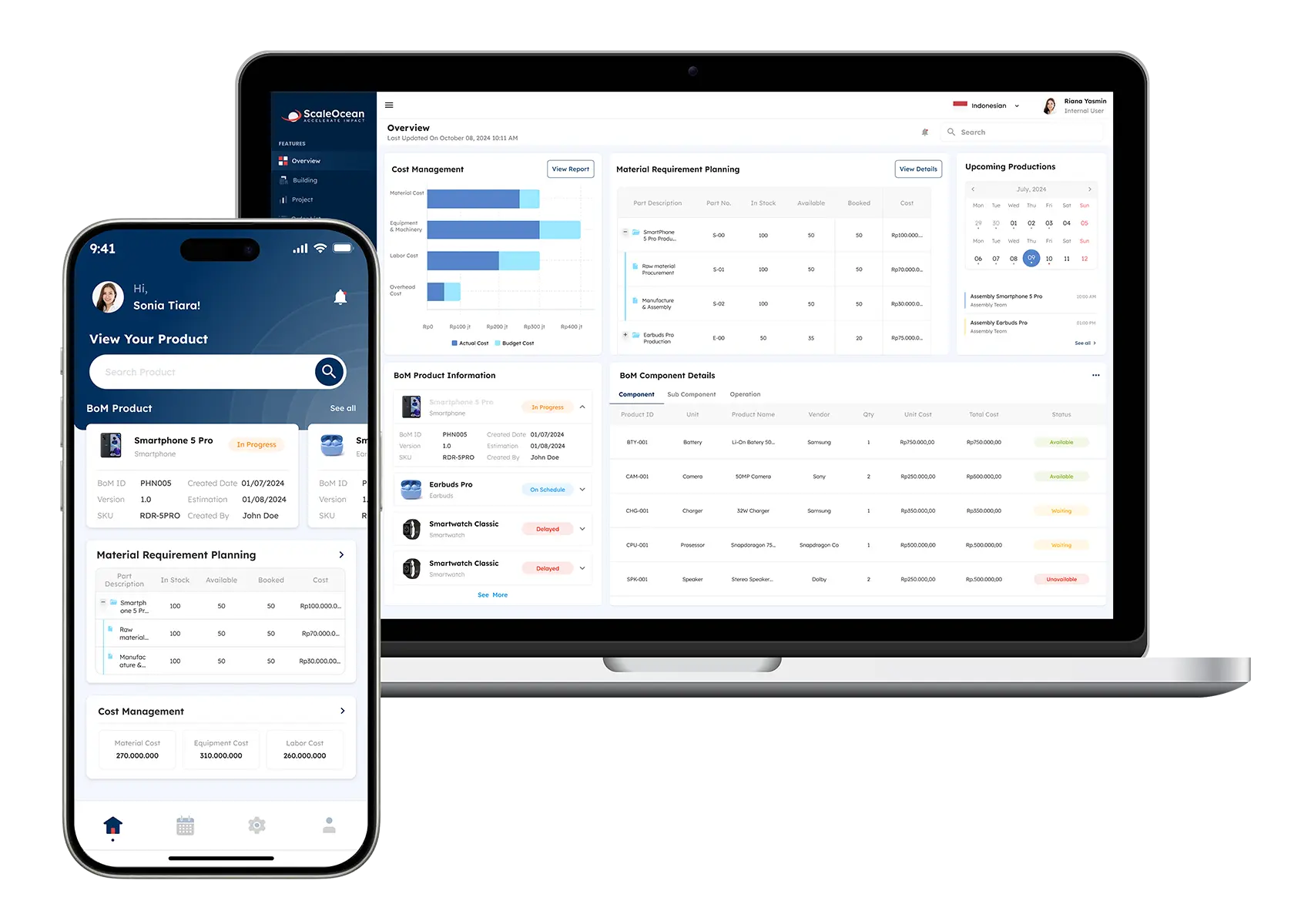
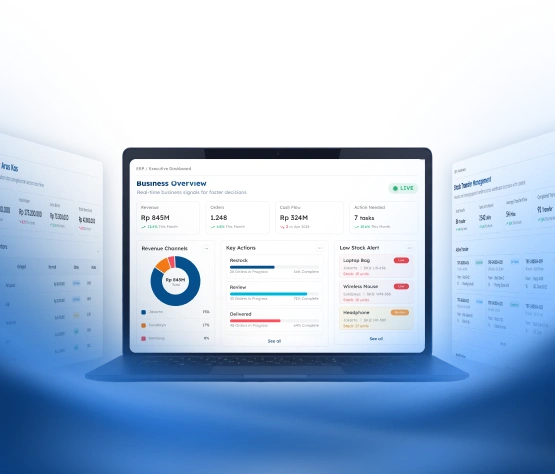
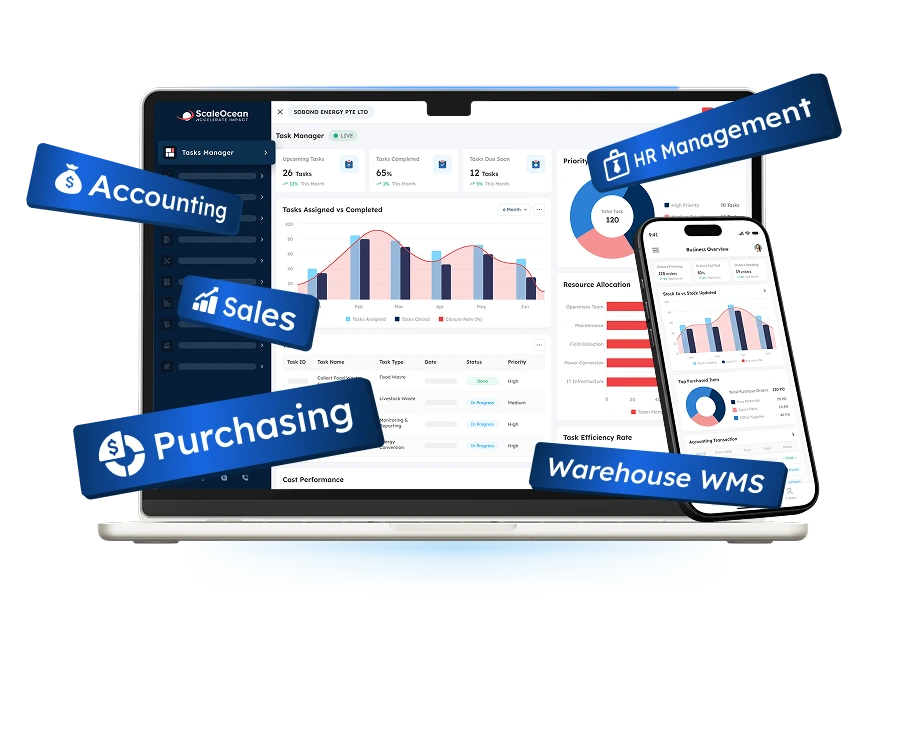
Manufacturing companies often face disjointed processes, a lack of real-time production information, and unreliable inventory data. ScaleOcean manufacturing software management addresses these issues with a comprehensive platform that integrates Smart MRP, BOM Management, and Warehouse Management, enabling streamlined production across the organization.
ScaleOcean’s straightforward pricing structure and absence of hidden fees allow manufacturers to manage their manufacturing costs effectively without hidden charges. This cost-effective model helps manufacturers plan for growth with confident budgeting.
In addition, ScaleOcean is CTC grant eligible, which can provide up to 70% in grants for eligible transformation projects, enabling manufacturers to more affordably upgrade their manufacturing.
Here is a list of some of the latest features from ScaleOcean to streamline your manufacturing:
- Smart MRP: Plan production, material, procurement, and work orders more efficiently to ensure the manufacturing process is in line with demand.
- Quality Management: Ensure product quality with planned QA/QC, inspection control, and quality checks during various stages of production.
- Inventory Management: Monitor real-time stock of raw materials and finished products to avoid stock-outs, over-stocking, and inaccurate MRP.
- Maintenance Management: Plan preventive maintenance, track machine reliability, and minimize downtime across your operations.
- Reporting & Analytics: Generate real-time reports and insights into production operations to inform quicker, more informed decisions.
Beyond these operational benefits, this software is an investment for your company. To learn more about how our system can improve your business, you can schedule a free demo with our team to see the impact!
Conclusion
Manufacturing Operations Management (MOM) is a holistic digital strategy for coordinating and monitoring the entire manufacturing process, including scheduling, quality control, and performance analysis.
Through software integration that links manufacturing processes, MOM enables businesses to increase productivity, eliminate waste, and speed up decision-making with real-time insights into the production process. Separate systems, manual processes, and poor visibility of the shop floor can complicate manufacturing operations.
Using ScaleOcean manufacturing software addresses these problems by providing a single platform for managing production planning, Smart MRP, quality, inventory, maintenance, and analytics. See how ScaleOcean can improve your manufacturing processes and give you better visibility into operations with a free demo from our team.
FAQ:
1. What is manufacturing operations management?
Manufacturing Operations Management (MOM) is the practice of coordinating people and processes on the shop floor to ensure the efficient and profitable production of high-quality products.
2. What is the difference between MOM and MES?
MOM covers a broader operational framework, overseeing the entire manufacturing process, from planning and scheduling to quality control, while MES focuses on real-time execution on the shop floor, managing tasks and machine performance directly during production.
3. What are the 7 main functions of operations management?
This article delves into the seven main functions of operations management, such as operational planning, finance, product design, quality control, forecasting, strategy, and supply chain management, highlighting the key skills required for mastering each.





















.png)