

Construction Procurement is the heart of any construction project, but it’s rarely easy. Rising costs and tight deadlines often create huge headaches. Issues like supply chain delays or budget gaps can easily throw even the best-laid plans off track.
With the Building and Construction Authority (BCA) forecasting Singapore’s 2025 construction demand at S$47B to S$53B, the stakes are even higher. This massive boom brings extra pressure on costs and resources, making smart procurement management essential for success.
In this guide, we’ll look at why procurement matters and how to beat common hurdles. We’ll share practical tips to keep your projects on time and within budget, helping you deliver the high quality expected in today’s busy market.
 Key Takeaways
- Construction procurement is the process by which we obtain the goods and services required for a project.
- The construction procurement process involves several key phases, such as identifying project needs, selecting vendors, tendering, and contract management.
- There are various construction procurement methods to choose from, including traditional, design-build, and construction management approaches.
- ScaleOcean’s construction ERP does so much more than basic procurement. It supports your entire project by automating material buys, managing vendors, and tracking budgets
What is Construction Procurement?
Construction procurement is the process by which we obtain the goods and services required for a project. It’s all about sourcing the right materials and contractors to ensure everything gets finished on time and stays within budget.
Effective procurement involves selecting the right suppliers and managing contracts effectively. This ensures resources are used wisely, which is a huge part of a project’s success, keeping quality high and everything delivered on schedule.
Why is Construction Procurement Important?
Smart construction procurement is key to keeping projects efficient and on budget. By picking the right vendors and managing resources well, you ensure everything runs smoothly from the first day to the final handover.
According to Nexdigm, the Singapore Digital Construction Market is expected to reach S$3 billion in 2024, growing at a CAGR of 8.6% from 2024-2030. As the market expands, smart construction procurement ensures efficient, on-budget projects by selecting the right vendors and managing resources well.
A solid procurement process leads to better cost control and top-quality results. It helps you manage risks and avoid delays by making sure every decision is made at the right time through careful, proactive planning.
The Construction Procurement Process Explained

Construction procurement involves several vital steps, from finding needs to managing contracts. Each of these phases, like tendering and negotiation, is essential for making sure your project is a total success:
1. Needs Identification and Planning
Procurement starts with identifying what the project needs and building a solid plan. This means defining the scope, timeline, and resources. Good planning really sets the foundation for the whole process.
Effective construction scheduling software clarifies project requirements, guides vendor selection, and supports resource allocation, helping teams prevent delays, cost overruns, and unexpected issues later.
2. Vendor Selection
Choosing the right vendors is a huge part of construction procurement. It’s all about looking at potential suppliers and contractors based on their pricing, the quality of their work, and their overall reputation.
The goal is to find the perfect fit with suppliers who deliver on time and within budget. A clear evaluation process helps lower risks and ensures your chosen partners truly contribute to the project’s overall success.
3. Tendering
Tendering is when contractors send in their project proposals. This competitive approach lets you look at multiple vendors at once, making it much easier to compare prices and quality before making a final choice.
Through tendering, firms get bids that truly fit their budget and specs. This step is vital for making sure you pick the most competitive and qualified vendors who are actually the best match for the job.
4. Evaluation and Negotiation
After the tenders come in, it’s time to evaluate. This means looking closely at costs, technical skills, and timelines. The main goal is to pick the most qualified bidder who truly fits the project’s specific needs.
Next up is negotiation, where you discuss prices, timing, and conditions. Good negotiation makes sure everyone agrees on fair, realistic terms, setting the stage for a smooth contract and a successful partnership.
5. Contract Award
The contract award phase is where agreements between the client and vendor become official. This document clearly outlines the work scope, terms, and what everyone expects to achieve throughout the partnership.
A well-defined contract helps prevent misunderstandings and keeps expectations clear. It acts as a helpful legal framework for solving any disputes, making sure the construction project moves forward exactly as planned.
6. Contract Management & Delivery
Good contract management makes sure everyone sticks to the agreed terms. It’s all about staying on top of progress, handling any changes smoothly, and ensuring that every delivery arrives right on schedule.
Delivery is the final goal, the successful handover of your project. Strong contract management ensures you finish on time and within budget, while making sure the work meets the high-quality standards you expect.
7 Types of Construction Procurement Methods
Procurement methods change based on a project’s complexity. The choices below define how you pick contractors, share risks, and deliver the final build, ensuring everything fits your specific needs perfectly:
1. Traditional Construction Procurement
With this method, design and construction are handled under separate contracts. As the most common approach, it relies on keeping the design phase and the actual building work clearly distinct from one another.
While separate stages can sometimes be slower, this traditional route offers very clear roles for everyone. It’s a great fit for projects that have well-defined requirements and a straightforward timeline to follow.
2. Design and Build Construction Procurement
With this method, one contractor handles both design and construction. This really cuts down on the back-and-forth between different teams, helping the whole project move much faster from start to finish.
Design-build often saves money since the contractor manages everything in one place. It’s a great way to lower the risk of miscommunication or unexpected delays, keeping your project smoothly on track.
3. Construction Management Procurement
With this approach, a construction manager takes the lead to oversee the whole project. They hire and manage subcontractors, making sure everything stays efficient and, most importantly, right within your budget.
This method offers great flexibility and faster decision-making. It’s perfect for large, complex projects that require tight coordination between different teams and contractors. With a strong construction project management in place, coordination and efficiency are significantly enhanced, ensuring smooth project execution.
4. Public-Private Construction Procurement
This method is all about partnerships between public entities and private firms. It’s a popular choice for big infrastructure projects like roads, bridges, and public buildings that benefit the whole community.
A public-private approach lets both sides share risks and costs fairly. It’s a great way to balance public interests with the speed and efficiency that private companies bring to a project.
5. Contract Construction Procurement
Fixed-price contracts are a great way to handle construction procurement. By agreeing on a set price upfront, both sides gain a lot of clarity, which really helps in cutting down financial uncertainty for everyone.
This method works perfectly for projects with a very clear scope. It helps clients budget accurately while giving contractors a clear goal to deliver the work within the price they both agreed on from the start.
6. Integrated Project Delivery (IPD)
IPD is a team-based approach where everyone joins the decision-making process right from the start. It’s all about working together to boost efficiency, cut costs, and deliver top-notch quality by uniting the whole team.
IPD builds trust and teamwork, so everyone is focused on the same goals. This leads to far fewer delays, lower costs, and much better results for the project overall because everyone is finally on the same page.
7. Framework Agreements
Framework agreements build a solid, long-term bond between clients and suppliers. They are perfect for recurring construction work where you need reliable services over an extended period without starting from scratch.
This approach offers great flexibility and cost savings. With ScaleOcean’s construction software, businesses can easily streamline procurement for future projects, reducing administrative workload while ensuring efficient vendor management and timely project execution.
Who is Responsible for Construction Procurement?
Procurement duties are usually split across the team. The procurement manager leads the way, making sure the right vendors are picked and that all contracts are handled efficiently to keep things moving.
Senior leaders like CEOs and project managers play a big part too. They make the final calls to ensure procurement stays in line with the company’s bigger goals and that everything stays on track with the timeline.
Construction Procurement Responsibilities
Great procurement happens when everyone knows their role. The key tasks below include checking bids, managing resources, and keeping a close eye on project performance to make sure everything stays on the right track:
1. Evaluating Bids and RFPs
Evaluating bids means looking at cost, skills, and reputation. This step is vital to ensure the vendor you choose is a perfect match for your project’s specific goals and technical needs. A robust construction cost management system can also help assess the financial feasibility of each bid.
This process weeds out poor proposals so you only work with the best. Keeping your criteria clear and objective is key to making fair decisions and avoiding any bias throughout the selection process.
2. Managing Resources and Deadlines
Staying on top of resources and deadlines is a must for project success. This means balancing labor, materials, and equipment effectively to make sure everything lines up perfectly with the project schedule.
Smart resource management helps teams avoid delays and extra costs. By planning, you can prevent bottlenecks and keep the whole project moving smoothly on the right track without any unnecessary stress.
3. Project Monitoring
Project monitoring ensures construction work stays on track. It involves tracking progress, managing the budget, and ensuring every task meets high-quality standards. Effective project monitoring also ties into construction asset management, ensuring resources and assets are utilized efficiently throughout the project.
Regular check-ins help procurement teams spot issues early. This proactive approach makes it easier to manage risks and ensures any needed adjustments are made quickly to keep everything moving smoothly.
Common Challenges in Construction Procurement
Construction procurement can be tricky with issues like cost overruns and delays. If not handled well, these hurdles can quickly mess up your timelines and budgets, making quality control much harder to maintain.
Picking the wrong vendor is another big risk. Poor contract terms often lead to disputes and extra costs. Having a solid process in place helps fix these problems early, ensuring your project stays on the right track.
Construction Procurement Best Practices
The best way to handle procurement is by picking the right vendors and negotiating fair terms. Using tech to simplify things really helps reduce risks and ensures you deliver the project without overspending.
Clear talk and transparency between everyone involved are just as vital. Sticking to industry standards helps keep everyone accountable and makes the whole procurement experience much smoother for the entire team.
Construction Procurement Technology
Tech has totally changed how we handle construction procurement. New software, like the best construction ERP software, offers automation and real-time data, making decisions much sharper and procurement processes more efficient.
Check out these tools that can really optimize your process:
- Streamlines vendor management: Technology helps manage vendor relationships efficiently by automating tracking, performance evaluations, and communications. It simplifies vendor selection and ensures long-term partnerships are nurtured effectively.
- Automates purchase orders and contracts: Automation tools help reduce manual tasks, automatically generating purchase orders and contracts. This minimizes human errors and accelerates procurement cycles, ensuring seamless document management.
- Provides real-time budget tracking and reporting: Real-time tracking tools provide instant updates on spending and project costs. They help teams stay within budget by offering actionable insights and alerts to prevent overspending.
- Facilitates communication and collaboration between teams: Construction software enhances communication between project managers, vendors, and internal teams. It streamlines collaboration through shared dashboards, document sharing, and integrated messaging systems.
- Enhances data-driven decision-making for procurement: Procurement technology enables businesses to make decisions based on accurate, up-to-date data. It improves forecasting, trend analysis, and procurement strategy development, leading to more informed decisions.
Streamline Construction Procurement with ScaleOcean
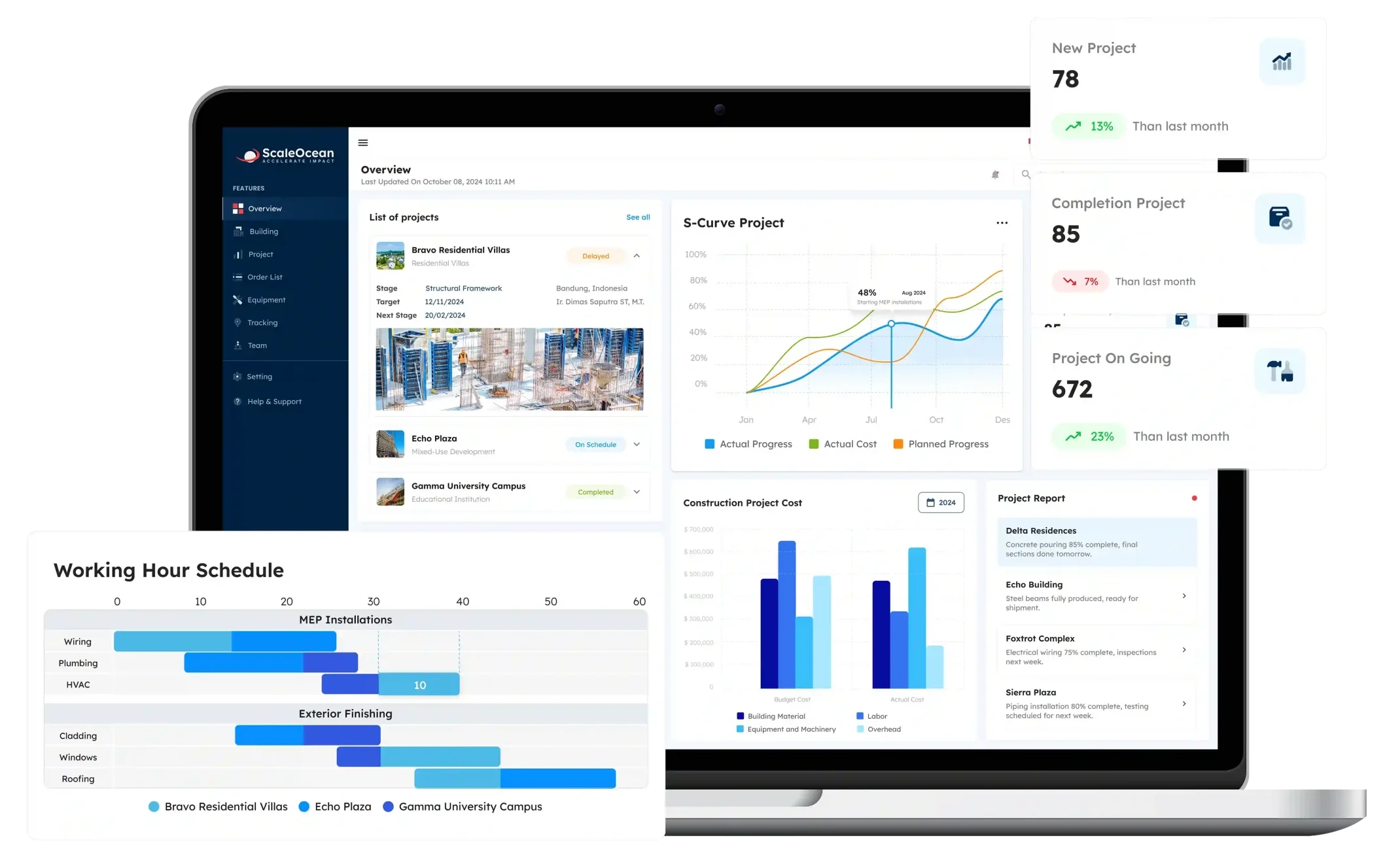
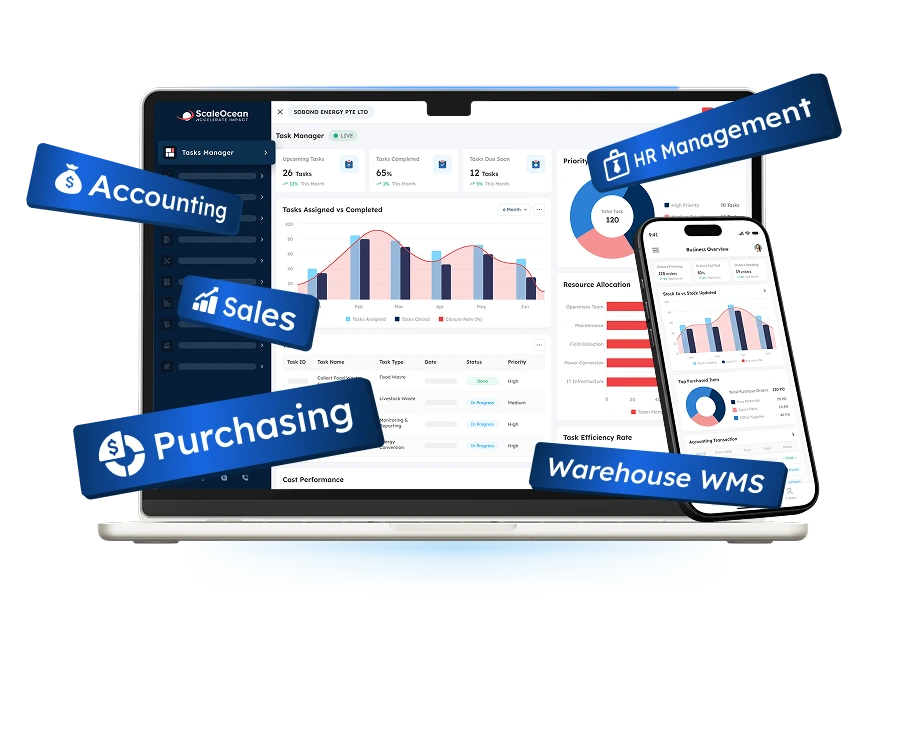
Simplify your construction projects with ScaleOcean’s construction ERP. It integrates purchasing, inventory, and accounting together in one easy place. Since it’s fully customizable, it fits your unique needs perfectly, helping your team work faster and avoid costly delays.
With ScaleOcean, you can even leverage CTC grants while automating tasks. Its smart features simplify management, cut down on errors, and ensure you finish on time and within budget, giving your team the power to succeed.
And here are the key features of ScaleOcean’s software:
- Multi-Device Accessibility: Access project workflows seamlessly on mobile devices, enabling real-time management on-site, ensuring your team stays connected and productive anywhere.
- Operational Construction Process Management: Enables structured management of every phase of the construction project for better efficiency.
- WIP and CIP Management: Tracks project costs and progress in real-time, ensuring accurate financial and operational records.
- Budget and Cost Management: Helps calculate and track project budgets (RAB), ensuring projects stay within financial limits.
- Vendor and Contract Management: Facilitates vendor negotiations, contract creation, and performance tracking throughout the project lifecycle.
- AI-Powered Analytics: Leverages AI for scheduling optimization, risk prediction, and prevention, helping to identify and address potential project risks before they escalate.
- Unlimited Users, No Extra Fees: ScaleOcean allows unlimited user access without additional fees, providing flexibility for teams of all sizes to collaborate without restrictions.
ScaleOcean offers all these features in one easy-to-use platform, or you can tailor them to fit your unique business. Check out a free demo and chat with their experts to see how ScaleOcean can simplify your work and help your team succeed like never before!
Conclusion
Construction procurement is all about getting the right materials and services for a project. It takes smart planning and vendor selection to make sure everything is delivered on time and within budget.
With ScaleOcean construction ERP, you can simplify procurement and track everything in real-time. It helps reduce risks and manage vendors easily. ScaleOcean offers a free demo, so you can see these benefits for yourself!
FAQ:
1. What is an example of procurement in construction?
An example of construction procurement is acquiring building materials such as steel, concrete, and machinery, while managing supplier contracts and delivery timelines to ensure that resources are delivered on time and within the allocated budget for successful project completion.
2. What does a procurement manager do in construction?
A procurement manager in construction handles purchasing materials, equipment, and services, evaluates vendor bids, negotiates terms, and ensures that all supplies are delivered on time, meeting cost and quality standards to support the smooth progression of the project.
3. What is the role of procurement in construction?
Procurement in construction involves sourcing, obtaining, and managing materials, services, and contracts to ensure timely delivery, cost-effectiveness, and quality, enabling successful and efficient project execution while meeting all project requirements.
4. What is the most common procurement method in construction?
The most common procurement method in construction is design-bid-build, where the design phase is completed first, followed by competitive bidding for construction contractors, allowing the owner to have control over the design before construction starts.


















.png)