

A Transportation Management System can help businesses effectively plan, execute, and monitor their freight operations through centralized digital coordination. Yet many organizations still experience delayed deliveries, scattered communication, and inconsistent visibility into transportation throughout the supply chain.
Logistics disruption can increase operational costs because teams have to rely heavily on manual coordination and disparate transportation data, leading to slower customer response times, inaccurate shipment appointments, and weaker operational control over the distribution network.
Many companies struggle to track shipments when using multiple carriers and modes of transport in daily operations, which prevents them from making rapid operational decisions in response to disruptions and ultimately impacts customer satisfaction.
In addition, our team found that a market report by Fortune Business Insights showed that the global transportation management system market was valued at USD 18.70 billion in 2025 and is projected to reach USD 44.84 billion by 2034, reflecting growing demand for logistics automation and transportation visibility.
Therefore, businesses increasingly adopt transportation management system solutions to enhance visibility, automate workflows, and improve the accuracy of transportation planning. In this article, we will explore the functions, benefits, features, and future trends of the Transportation Management System TMS in modern business operations.
 Key Takeaways
- A transportation management system is a platform that centralizes shipment planning, carrier coordination, and logistics execution to significantly improve transportation efficiency.
- Common transportation management mistakes often increase logistics costs, reduce shipment visibility, and create operational inefficiencies throughout transportation processes.
- Transportation management systems’ benefits include cost savings, greater visibility, improved customer satisfaction, and transportation analytics for better operational decision-making.
- Transportation management software in Singapore helps businesses improve transportation visibility, automate logistics workflows, and consistently strengthen operational coordination.
- ScaleOcean Fleet Management Software helps businesses optimize transportation coordination, improve fleet visibility, and efficiently support scalable logistics operations.
What is a Transportation Management System (TMS)?
A transportation management system (TMS) is a centralized digital platform for freight planning, shipment execution, carrier coordination, and shipment tracking across land, air, and sea. Businesses commonly use TMS software to manage their logistics operations and improve operational visibility.
Companies can use a Transportation Management System TMS to reduce transportation costs while increasing delivery speed and service reliability by enabling automated routing, scheduling, documentation, and communication across their business processes.
By using modern transportation management system platforms and integrating ERP, WMS, accounting, and other software systems, businesses streamline operations, gain better control over transportation data, and improve communication among the logistics, finance, and customer service departments.
What’s the Difference between TMS, WMS, MES, and OMS?
Organizations use multiple systems because logistics, warehousing, manufacturing, and order management systems operate differently and handle separate, specific functions. Knowing the differences between these systems enables organizations to integrate better and coordinate the supply chain.
- Transportation Management System: The focus of a TMS is on transportation planning, shipment execution, route optimization, and carrier management. Transportation Management System TMS helps companies to achieve improved visibility and efficiency across supply chain operations.
- Warehouse Management System: A WMS controls inventory movement, storage, and utilization, as well as picking and other warehouse operations. Warehousing systems are implemented in organizations to improve inventory accuracy and optimize warehouse fulfillment processes.
- Manufacturing Execution System: An MES manages and monitors the progress of manufacturing workflows, production schedules, and factory floor activities. By effectively using an MES system, manufacturing operations can gain greater visibility into the manufacturing process.
- Order Management System: The focus of an OMS is on managing order processing, inventory synchronization, customer order data and sales, and coordinating order fulfillment processes across all sales channels, helping businesses achieve greater order accuracy and a better customer experience.
What are the Common Mistakes in Transportation Management?

Transportation management is inefficient due to overreliance on manual operations, poor communication, and limited visibility into transportation management processes. This results in higher logistics costs, delays, and operational inconsistencies.
Transportation problems will multiply as an organization simultaneously uses more carriers and routes to meet increasing customer demand. It needs a structure that enables consistent logistics performance.
1. Rising Cost and Fuel Price Fluctuations
Managing transportation costs can be very difficult for many businesses because fuel prices continue to fluctuate, and delivery demands keep growing. Organizations face mounting logistical costs, and finding a profit margin becomes a struggle in uncertain market conditions.
In addition, insufficient transportation planning and decreased vehicle capacity utilization unnecessarily increase transportation costs in the logistics operation. Hence, companies need to improve transportation planning by implementing an effective transportation optimization strategy that minimizes fuel costs while ensuring higher operational efficiency.
2. Visibility and Tracking Issues
Poor visibility into shipment locations will prevent logistics teams from proactively addressing transportation disruptions and shipping delays. This leads to poor communication with clients, inaccurate shipping information, and reduced client satisfaction with the delivery process.
Additionally, organizations that still use multiple carrier-tracking systems will face significant challenges with transport data across a network of carriers, leaving their leaders unable to track shipments efficiently and handle disruptions before they escalate into more serious issues.
3. Operational Inefficiencies
Poor operational efficiency is typically associated with situations where a logistics team still uses spreadsheets and emails and communicates manually across all their transportation management processes. As a result, the process becomes slow, while the number of clerical jobs increases.
Inadequate collaboration between transportation, warehouse, and third-party carrier teams results in a fragmented workflow. The main result of poor coordination of shipments and deliveries within the organization is scheduling conflicts and lower efficiency and productivity.
How Does a Transportation Management System (TMS) Work?
The transportation management system software uses several integrated processes to control planning, execution, and carrier management efficiently, and to report on all shipments, enabling greater control over business processes, reducing operational expenses, and ensuring greater customer satisfaction.
The systems combine and automate all logistics operations through integrated access with warehouses, suppliers, carriers, and the finance department.
1. Planning
The planning stage begins when the system starts analyzing information on delivery, required time frames, available carriers, and routes. Additionally, a Transportation Management System TMS will then recommend the best possible routes.
It will allow the business to ship goods at the lowest possible cost and in the least time. Organizations will also be able to consolidate their shipments through their system and balance loads effectively across different logistics departments.
2. Execution
The transportation management system software handles shipment release, carrier assignment, delivery coordination, and processing of transportation documentation. It allows the business to maintain better control over its shipments by centralizing information.
Using alerts and automatic notifications from the transportation management system, business operations can respond to delivery disruptions much faster than with other, less organized and connected systems.
3. Tracking
With transportation management systems (TMS), businesses can track their shipments and delivery routes with remarkable precision. This level of visibility allows companies to monitor their products at every stage of the shipping process, from departure to arrival.
Automatic updates on shipment locations are a vital feature of modern TMS. These updates not only keep businesses informed about the status of their shipments at any given moment but also enable proactive management of potential delays.
4. Payments
A transportation management system can significantly streamline the payment process, simplifying the often complex task of managing shipping costs. By consolidating all vendor payments on a single platform, organizations can achieve a more efficient, organized workflow.
Additionally, TMS allows companies to verify shipments against contracts. By analyzing shipping costs against agreed-upon terms, organizations gain valuable insights into their financial performance.
5. Reporting
Transportation management system software provides extensive reporting capabilities that are integral for analyzing logistics data and performance metrics. By leveraging these insights, businesses can identify trends and track key performance indicators (KPIs), which ultimately lead to more informed decision-making.
Furthermore, detailed reports generated by TMS enable organizations to pinpoint specific areas for improvement. Whether it’s reducing transit times, lowering shipping costs, or enhancing service quality, these insights are crucial for continuous improvement.
What are the Must-Have Features of a Transportation Management System?
A transportation management system has several capabilities because of the sheer volume of data involved in managing an entire transportation operation from start to finish. The business needs an optimal, transparent, automated, and scalable way to manage all logistics operations.
By using these advanced features, a business can significantly reduce administrative costs and inconsistencies while improving both its operational coordination and delivery performance.
1. Transportation Planning and Execution
Transportation planning and execution features enable businesses to automatically optimize their delivery schedules, transportation routes, shipment assignments, and resource allocation. It also improves logistics coordination while significantly decreasing operational delays and transportation planning inefficiency.
These features improve shipment processing speeds by keeping all transportation data centralized across logistics operations and carrier coordination. Therefore, they consistently improve transportation accuracy while significantly enhancing operational efficiency and performance.
2. Freight Management
Freight management features enable organizations to effectively manage pricing, carrier rates, and contracts across logistics operations. Additionally, they create a more insightful understanding of costs, enabling businesses to manage their transportation expenses even more efficiently by centralizing all freight management processes.
Freight management systems can automate all your freight cost calculations, invoice validation, and shipment cost computation, thereby reducing manual tasks considerably. As a result, organizations achieve more accurate accounting and gain much better control over operational procedures.
3. Carrier Management
Carrier management features enable organizations to continuously assess and compare transportation provider costs, delivery performance, and operational reliability. Moreover, centralizing carrier data enables improved communication for stronger transportation decisions in logistics.
The tools are used by businesses to manage carrier onboarding, monitor and manage contracts, and accurately support operational accountability. Therefore, organizations achieve improved operational efficiency while strengthening coordination across all logistics operations and processes.
4. Shipment Management
Shipment management features enable companies to accurately coordinate delivery schedules, documentation, delivery processes, and order fulfillment. Furthermore, unified shipment visibility can help reduce confusion and facilitate better communication throughout the transportation management system.
The features also make transportation more flexible, as delivery schedules and shipment priority levels can be quickly adjusted when a disruption occurs in the logistics operation. Therefore, organizations can improve logistical responsiveness while continuing to support customer satisfaction and high transportation performance.
5. Tracking and Visibility
Tracking and visibility features allow organizations to manage transportation, carriers, and delivery routes in real time. Additionally, centralized visibility can provide organizations with better logistical responsiveness and stronger communication in the logistics coordination process.
Automated tracking will enable the quick detection of transportation issues before operations are disrupted or customer service is damaged. Therefore, organizations can effectively control transportation logistics and ensure good transportation performance.
6. Analytics and Reporting
Analytics and reporting features enable organizations to consistently assess logistics performance through operational dashboards, transportation metrics, shipment trends, and other operational reports. Also, they are crucial for strategic logistics planning and better transportation decision-making across the logistics operation.
Moreover, it regularly identifies and reduces logistics inefficiencies, carrier performance issues, and unnecessary transportation expenses across logistics activities. Therefore, organizations achieve better operational performance, continuous optimization of transportation processes, and overall stronger business growth.
What are the Benefits of a Transportation Management System?

Transportation management systems help businesses improve logistics coordination, reduce transportation inefficiencies, and strengthen operational visibility across the supply chain. Furthermore, companies gain better transportation control, significantly improving delivery consistency and operational responsiveness.
In addition, enterprises adopt TMS systems because modern logistics requires more efficient management and effective coordination of shipments, enabling companies to not only improve efficiency but also reduce disruptions and improve transportation manageability.
1. Cost Savings
A transportation management system can minimize your business expenses by optimizing delivery routes, using vehicle capacity effectively, and automating your transportation plan. You can therefore save both money and fuel costs throughout the supply chain activities.
With the TMS system, freight calculation, invoice checking, and shipment coordination could be automated. Consequently, businesses using fleet management software in Singapore improve operational efficiency while maintaining stronger financial control throughout transportation activities.
2. Real-time Visibility
With real-time visibility, you will be informed about the shipments, carriers, and deliveries. As a result, logistics personnel will gain greater control and respond more quickly to events and disruptions in the logistics chain.
Also, you will receive immediate notifications of any delays, detours, or other transportation exceptions from your TMS system, further increasing the responsiveness and reliability of shipment management and delivery services.
3. Greater Customer Satisfaction
TMS system supports fast delivery and provides precise shipping updates, ensuring more reliable transportation processes. It also enhances the enterprise’s credibility by establishing its reputation as a dependable service provider among customers.
In addition, your customers can use the visibility feature to track their shipments’ progress and receive accurate estimated delivery times, which significantly contributes to a positive customer experience and reduces complaints about delivery delays or lack of communication.
4. Data Analytics
The Transportation management system collects information that is then used to optimize your logistics performance, operations, and transportation expenses. In turn, it generates new opportunities to strengthen operational improvements and the strategy for transportation development.
You can use advanced reporting tools to identify potential bottlenecks or carrier performance issues and make better decisions, ultimately improving transportation performance in the long run.
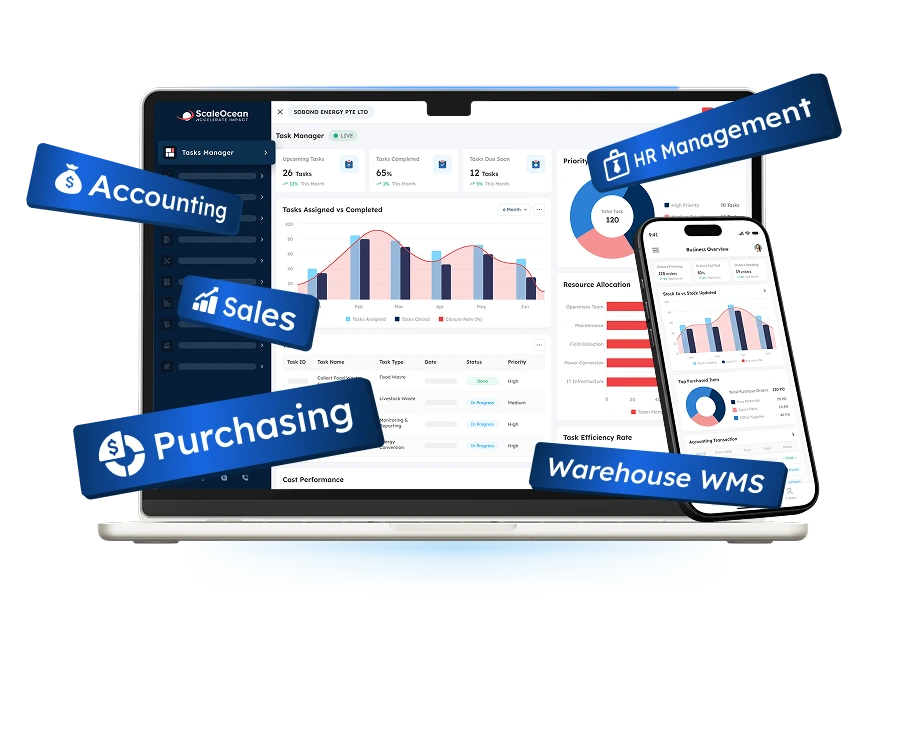
After understanding the benefits of transportation management systems, businesses should evaluate software based on logistics visibility, scalability, and workflow flexibility across supply chain activities. ScaleOcean TMS helps enterprises centralize transportation and support long-term operational efficiency and scalable digital transformation in logistics.
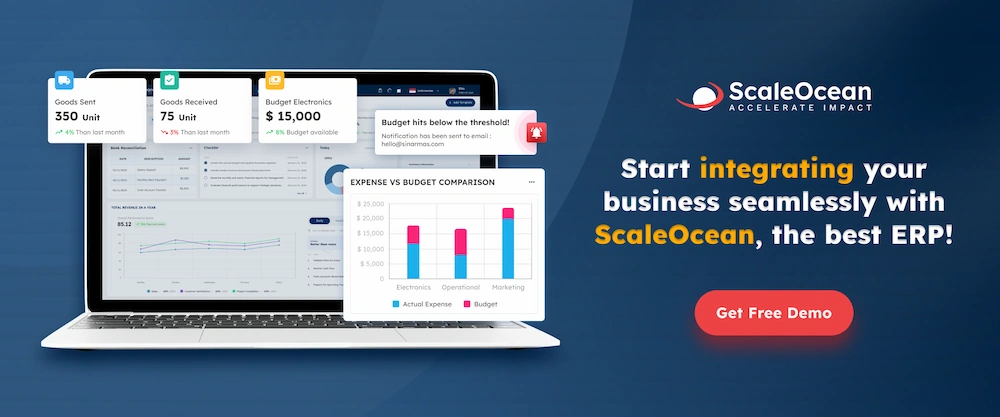
ScaleOcean helps businesses manage shipment planning, fleet coordination, route optimization, transportation tracking, and warehouse integration within a single ecosystem. You can request a free demo to explore ScaleOcean TMS and see how it can improve your business’s logistics visibility and efficiency.
Who Uses a Transportation Management System?
As an effective tool for shipment coordination, visibility across the entire chain, and control of the entire transportation process, a TMS system can be applied to almost all industries. The specific features may differ, but are likely to address similar logistics needs effectively.
Moreover, complex supply chains are ideal candidates for TMS due to the efficiency this system delivers to business operations through transportation automation, centralized communication, and consolidated logistics data across its network.
1. Resellers, e-Commerce Providers, and Retailers
Retailers and e-commerce businesses may benefit from a transportation management system to coordinate deliveries and shipping schedules, improving delivery performance and customer satisfaction.
It enables automated tracking for every shipment, providing seamless service across fulfillment and delivery and increasing the efficiency and reliability of customer support throughout the chain.
2. Manufacturers
For manufacturers, TMS helps coordinate inbound raw material deliveries, outbound shipments, and general transportation activities. In addition, a clear logistics view improves operational efficiency and streamlines manufacturing operations, helping to avoid disruptions from transportation delays and to coordinate the supply chain effectively.
Transportation management systems also help manufacturers reduce transportation delays that could significantly disrupt production schedules and supply chain coordination. Therefore, companies improve operational consistency while effectively managing reliable material movement and product distribution.
3. Distributors
Distributors would greatly rely on the TMS system for shipment coordination, scheduled deliveries, and even warehousing and distribution tasks. Enhanced logistics visualization would also lead to better inventory management across all distribution processes.
A TMS (Transportation Management System) can significantly enhance overall productivity by efficiently optimizing delivery routes, reducing transit times, and ensuring optimal utilization of transportation resources, leading to cost savings and improved service levels.
4. 3PLs
As 3PLs typically handle multi-client transportation, shipment coordination, and carrier communications, TMS systems will definitely play a significant role for you. A transportation management system improves visibility and service by enhancing communication with clients and transportation activities.
Additionally, automated processes and increased visibility help in tracking logistics for multiple clients, ensuring better client performance across the entire network.
5. Carriers or Freight Service Providers
Carriers can integrate their operations more effectively into the overall chain by optimizing route planning and transportation scheduling. With it, your business will minimize transportation costs, increase the load factor, and save more time.
Furthermore, your services will be more attractive as you improve on-time performance by minimizing delivery time, which is also key to achieving customer loyalty.
6. Freight brokers
As a logistics broker, you can use the TMS system to manage transportation efficiently across multiple transportation providers and even different modes of transportation. This gives you greater control over transportation documentation and shipment monitoring, boosting your performance and client satisfaction.
Comparing carrier performance, pricing, and shipping availability can give you a more comprehensive understanding, enabling you to make more informed decisions and support higher-level strategic performance.
7. Shipping Yards and Warehouses
It improves operational efficiency, control, and the coordinated scheduling of inbound deliveries, outward shipments, and all transportation-related tasks. Centralized control can improve logistics and communication, making them more efficient and reducing delays, usually with the help of the best logistics management software.
Using the TMS system provides a more detailed, comprehensive visualization of transportation scheduling throughout the process, significantly enhancing your operational management capabilities.
Case Study of Transportation Management System Usage
According to an article our team found from Smart Maritime Network, A global logistics company improved ocean freight by implementing a transportation management system for shipment coordination and digital eBooking. The company gained enhanced operational visibility and cut manual communication in international transportation management.
The company used Neurored TMS & SCM software integrated with Coneksion to automate ocean booking workflows and improve logistics coordination efficiency significantly. Additionally, the platform centralized shipment information, carrier communication, and transportation tracking within one connected operational environment.
Previously, logistics teams struggled to manage fragmented transportation workflows, disconnected shipment updates, and inefficient manual booking coordination across global shipping activities. Consequently, operational delays increased while transportation visibility and logistics responsiveness became more difficult to maintain consistently.
After implementing the transportation management system, the company improved shipment visibility while accelerating transportation coordination and reducing operational inefficiencies significantly. Therefore, logistics teams responded faster to disruptions, improving transportation accuracy and shipment reliability.
Although Neurored effectively supports transportation digitization, but businesses often need broader operational integration and scalable logistics management for long-term growth. Therefore, companies can consider ScaleOcean’s Fleet Management Software as a comprehensive solution for transportation planning, tracking, fleet coordination, and analytics.
ScaleOcean helps businesses integrate transportation management with inventory, warehouse, procurement, and financial operations within one centralized ecosystem efficiently. Additionally, the platform supports AI powered analytics, real time monitoring, and automated reporting, that improve logistics scalability and transportation decision making consistently.
Additionally, you can request a free demo of ScaleOcean to see how it enhances your logistics scalability and operational decisions.
Types of TMS: Which One Is Right For Your Business?
Organizations often choose transport management systems based on complexity, scalability, and technology preferences. Therefore, firms should clearly outline their transport and logistics operations needs when selecting an appropriate TMS system to suit their business going forward.
Each transport management system also has distinct advantages concerning deployment flexibility, system integration potential, and transport and logistics visibility.
1. On-Premises
On-premises transport management systems have their infrastructure hosted on internal company systems, so control over transport data is more defined. It is one of the most used types in the transportation management system case study. Firms will also be able to perform in-house modifications easily, without system limitations, while managing security with their own private systems.
Nonetheless, the main drawback of on-premises systems is their higher upfront cost, and firms must cover hardware, maintenance, and any necessary upgrades themselves. They are only applicable to firms that require extreme customization along with maximum control over their network.
2. Cloud-Based
A benefit for businesses choosing a cloud-based transport management system is reduced reliance on internal hardware and maintenance, allowing them to focus more on improving operational efficiency. Furthermore, this method of deploying systems significantly increases the scalability of transportation management systems.
Real-time data visibility for transports is also achievable, as data from any location can be accessed via an internet connection, enabling logistics teams to stay connected to their network 24/7 and helping companies improve collaboration and flexibility across their branches. Which is why it is also the most used type in the transportation management system case study
3. Standalone TMS
Standalone TMSs are systems that focus solely on transportation and logistics processes, without integrating with existing company-wide management systems. Organizations implement this solution to efficiently organize the transportation part of their operations by streamlining shipping coordination, route planning, and carrier selection.
Standalone transport management systems work best for businesses that need to establish a system for their transport and logistics section but want their own separate management systems for other sections, like WMS and Accounts, and will thus support them efficiently.
4. Integrated TMS
Integrated transport management systems provide connectivity and data synchronization across transport and logistics processes and with ERP systems, accounting systems, inventory management systems, WMS systems, etc so that the departments may work together more effectively and avoid communication problems.
With an integrated transport management system, companies will improve their overall visibility and ability to make smarter, more efficient decisions about their transportation networks, while continuing to work smoothly with other sections of the company.
What are the Examples of Transportation Management System Software in Singapore?
Businesses in Singapore use transportation management system software to enhance logistics visibility, automate shipment coordination, and optimize transportation operations. Furthermore, modern TMS platforms help organizations improve delivery performance while reducing inefficiencies in complex supply chains.
Additionally, companies often continuously evaluate transportation management systems based on scalability, integration flexibility, automation capabilities, and operational visibility. Consequently, selecting the right TMS software helps businesses improve transportation coordination and support long-term logistics growth.
1. ScaleOcean TMS
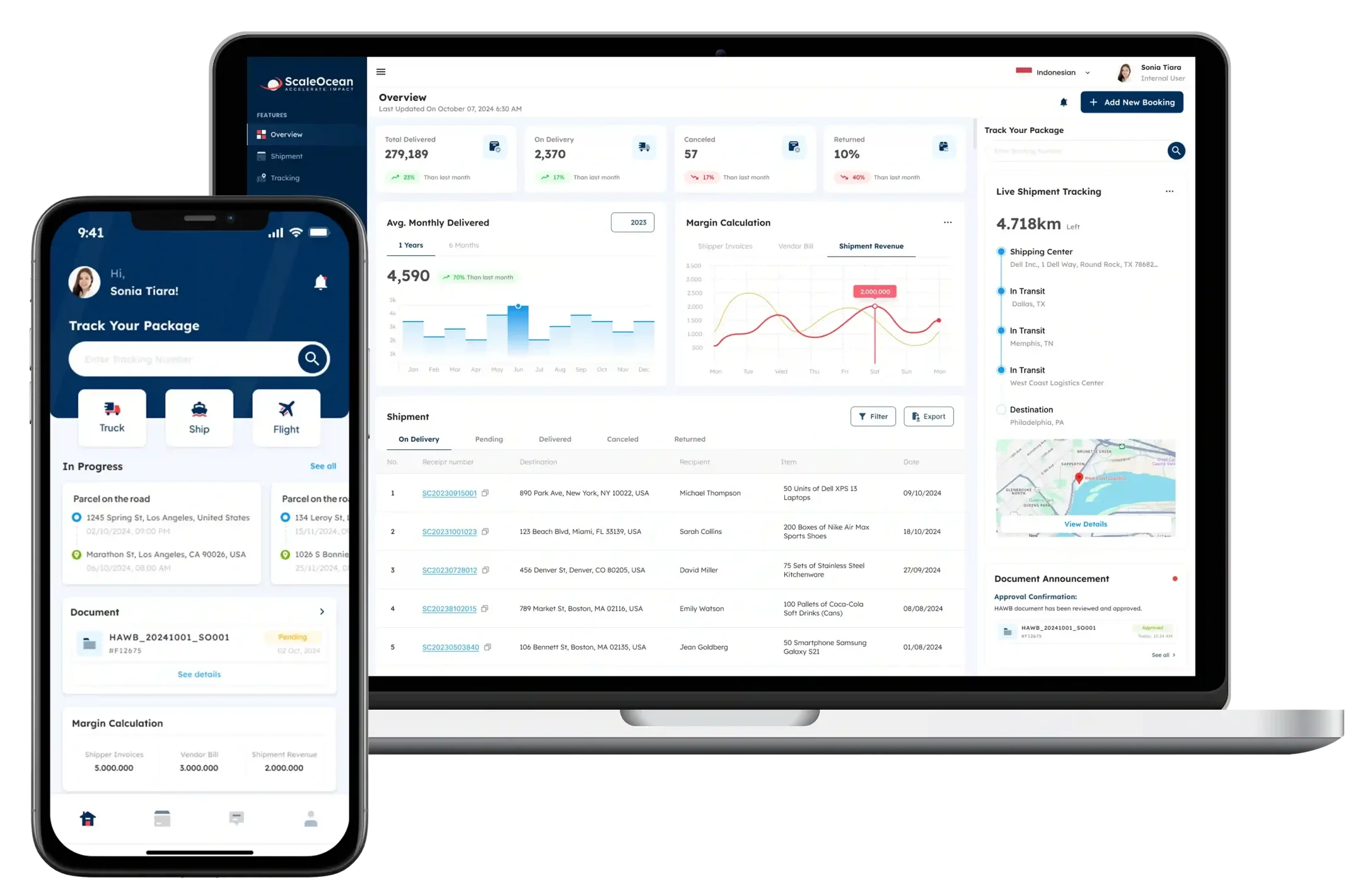
ScaleOcean Fleet Management Software is a platform for medium to large enterprises that offers integrated transportation management to efficiently automate shipment coordination, fleet scheduling, route planning, and logistics monitoring. Moreover, it supports unlimited users without extra licensing, promoting collaboration across warehouses, branches, and logistics teams.
ScaleOcean also supports multi-branch integration and customizable workflows that efficiently adapt to specific transportation operations and Singapore logistics requirements. In addition, Businesses can integrate TMS with local e-commerce platforms and customer portals to automate booking, shipment scheduling, and transportation tracking.
Furthermore, ScaleOcean supports Singapore’s digital transformation by helping businesses qualify for grants such as the Enterprise Development Grant (EDG), and eligible companies may receive subsidies of 50–70%. Request a free demo today to see how ScaleOcean can simplify and strengthen your transport operations.
2. Oracle Transportation Management
Oracle Transportation Management is a transportation management solution that aids enterprises in shipment planning, carrier management, freight movement, and logistics visibility with a centralized approach to the whole process.
The platform is typically suitable for large-scale businesses that handle high transportation volumes and continuously manage multi-regional logistics and transportation operations. It is also widely adopted to enhance logistics planning, improve freight visibility, and overall transportation operational efficiency of enterprises.
3. Uber Freight TMS
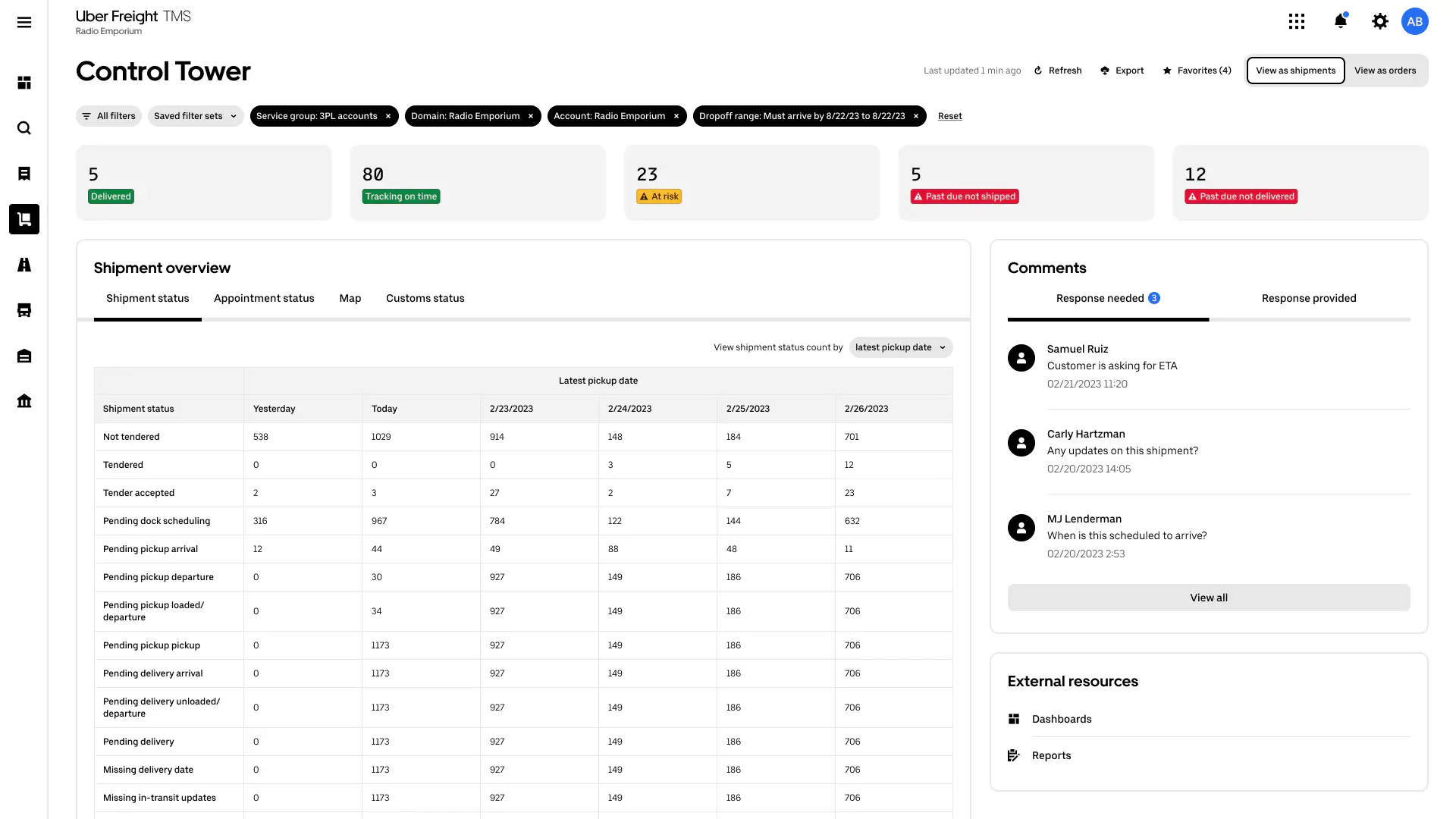
Uber Freight TMS is a transportation management solution that supports shipping coordination, freight visibility, carrier communication, and transportation planning across logistics operations, improving efficiency. Further, it assists businesses in streamlining logistics workflows and achieving steady improvements in shipment monitoring and responsiveness.
The transportation management system is best suited for organizations that need the flexibility of central freight coordination and transportation visibility in their operations. It further enhances communication throughout the logistics network while ensuring optimized transportation activities.
4. Descartes TMS
Descartes TMS is a transportation management platform that assists organizations with logistics execution, route coordination, logistics visibility, and documentation management for transportation processes through a central operational workflow. Additionally, the platform effectively enables transportation monitoring and enhanced communication among logistics teams and transportation providers.
This system is best suited for organizations with multi-carrier transportation compliance needs and international logistics management across logistics networks. It aids in the overall enhancement of the supply chain through logistics visibility and strengthened transportation process efficiency.
5. SAP Transportation Management
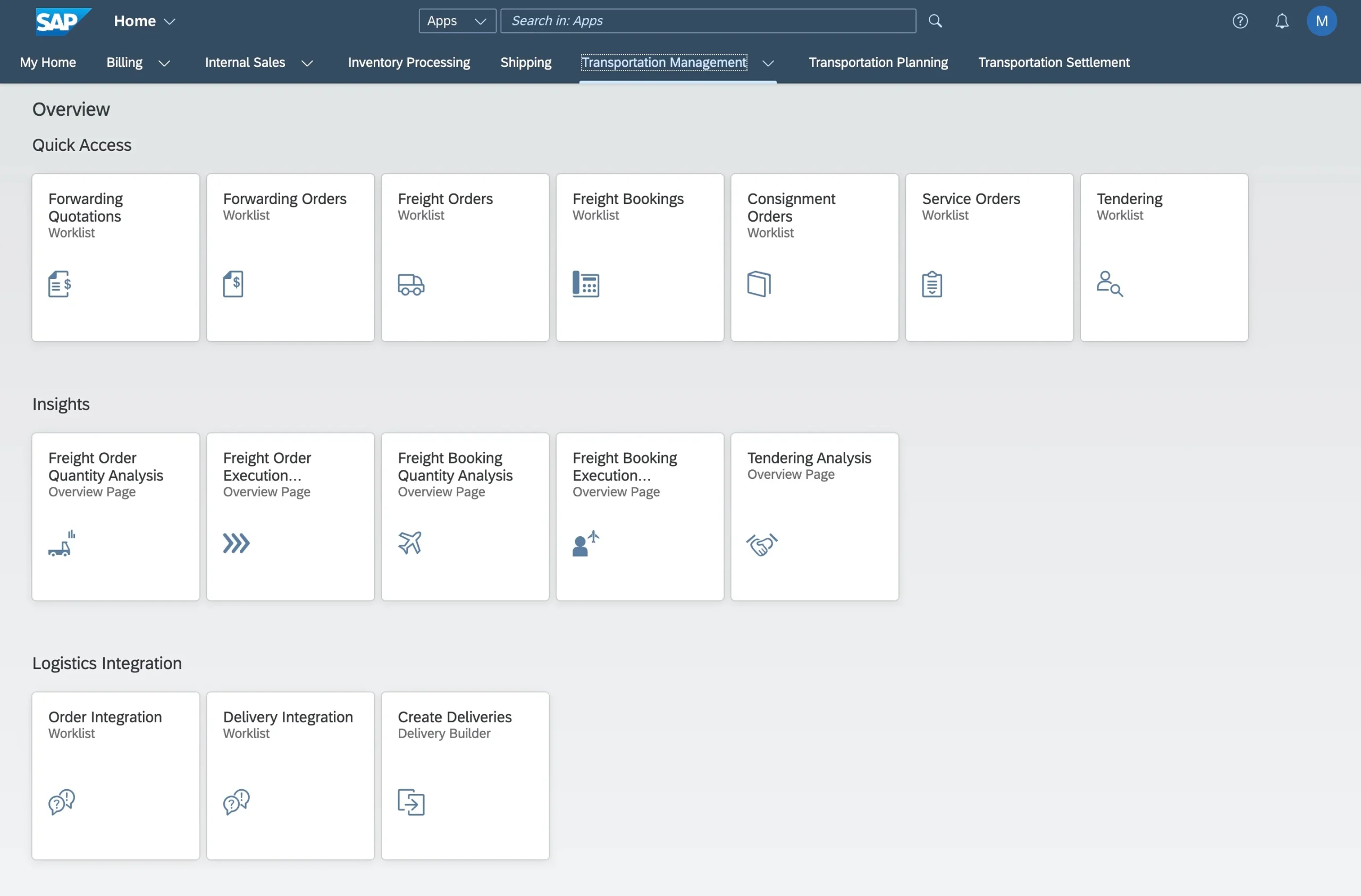
SAP Transportation Management is a transportation management solution that assists organizations with logistics and transportation processes, including planning, freight coordination, shipment execution, and overall analytics, all in an integrated, efficient environment.
The transportation management platform is best suited for enterprises with integrated supply chains and intricate transportation networks throughout the logistics operations. Hence, businesses can use this type of solution to enable logistics synchronicity with increased operational and logistics efficiency in an enterprise environment.
The Future of TMS
Because of increasing demand for automation, real-time operational visibility, and predictive capabilities, transportation management systems will evolve into fully automated systems. They will assist businesses in improving overall transportation efficiency and becoming more responsive to supply chain demand.
Moreover, new technology is transforming transportation management through advanced automation, integrated logistics infrastructure, and greater operational intelligence. Consequently, businesses can simultaneously enhance logistics responsiveness, transportation efficiency, and operational decision-making.
1. IoT Fleet Monitoring
IoT fleet monitoring helps businesses continuously monitor vehicle operational status, driver actions, shipment progress, and fuel usage using connected transportation devices. Furthermore, real-time operational visibility improves the efficiency of transportation coordination and enables faster response to logistics problems.
Such technology also assists with predictive maintenance by identifying potential issues before vehicle failures disrupt delivery schedules. As a result, transportation operational downtime is reduced, and fleet operational performance is enhanced.
2. Digital Assistants
Digital assistants help transportation and logistics professionals automate communication, delivery scheduling, notifications, and transportation coordination. Automated assistance would also reduce the operational team’s manual workload and increase the responsiveness of the transportation process.
Businesses can also benefit from this technology, as it enables faster access to transportation information through a centralized system and automated workflows. As such, the logistics team will be more productive and better able to make efficient decisions in transportation planning and delivery coordination.
3. Adaptive Intelligence and Machine Learning
Adaptive intelligence and machine learning improve the transportation management system’s ability to analyze operational performance patterns, predict logistics disruptions, and automate transportation planning. This can ultimately allow businesses to optimize transportation operations and enhance operational intelligence.
Other potential applications in this domain include using it for more precise route optimization and demand prediction for shipments, which could enable more cost-effective logistics operations.
4. Blockchain
Blockchain technology has the potential to provide a transportation management system with much better shipment transparency, transaction security, and data integrity for logistics document handling. With enhanced security features, it can significantly reduce operational risks from disputes within the logistics network.
Businesses will also benefit from using blockchain for logistics by ensuring delivery traceability and strengthening data consistency throughout the process, thereby enabling more robust operational accountability.
5. Cold Chain Management
Cold chain management technology is vital in transportation and logistics for monitoring temperature-sensitive shipments throughout delivery. With real-time monitoring, the risk of damage or expiration of sensitive goods could be significantly reduced, and transportation reliability improved.
Automated alarms would notify the logistics operators immediately when transportation fails to meet the required temperature standard, ensuring the successful delivery of food and pharmaceuticals.
Conclusion
Transportation management systems enhance logistics visibility, automate coordination, optimize delivery planning, and boost operational efficiency across supply chains. Additionally, modern TMS platforms enable faster decision-making while significantly reducing disruptions, costs, and manual workloads.
Using ScaleOcean’s Fleet Management Software, you can centralize shipment coordination, automate workflows, and improve visibility across transportation activities. Furthermore, it consistently offers customizable workflows, multi-branch integration, real-time tracking, and seamless connectivity to ERP, warehouse, and e-commerce systems.
Moreover, ScaleOcean supports Singapore businesses with scalable solutions aligned to growth and digital transformation. Consequently, eligible companies may access Enterprise Development Grant subsidies of 50–70%. You can request a free demo of ScaleOcean to see how it helps your business streamline industry processes.
FAQ:
1. What are the key elements of TMS?
Transportation management systems contain several important features that help businesses manage logistics operations more efficiently. Common capabilities include carrier management, route optimization, freight auditing, dock scheduling, shipment tracking, and transportation analytics reporting.
2. What are the two main categories of TMS systems?
Transportation management systems are generally divided into two main categories: on-premises and cloud-based solutions. On-premises systems operate through internal company infrastructure, while cloud-based platforms provide online accessibility without requiring complex local server installations.
3. What are the 4 types of transport systems?
Transportation systems are commonly divided into four main categories based on the modes of passenger and cargo movement. These categories include road, railway, air, and water transportation across logistics and mobility operations.
4. What is the best transportation software?
ScaleOcean sits at the top because of its flexible transportation management software that supports customizable logistics across industries. It offers comprehensive features and industry-specific customization, helping businesses adapt workflows to meet unique logistics requirements effectively.




















.png)