
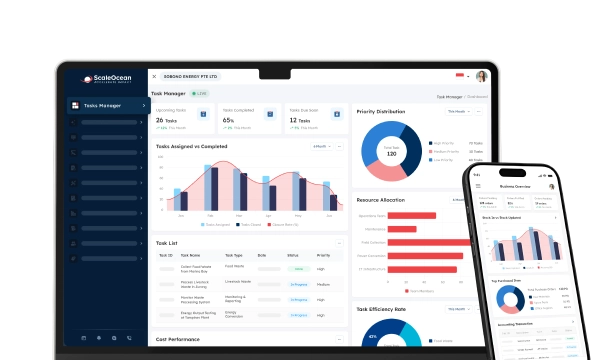

Logistics management software is a computer-based system that helps companies plan, implement, and control logistics activities within supply chains. It centralizes visibility and supports faster decision-making in complex settings.
Yet not all businesses can afford to have end-to-end visibility into logistics networks. The data is usually stored in disconnected systems, which slows insights, reduces accuracy, and creates inefficiencies in tracking shipments, inventory, and delivery processes.
The growing reliance on logistics technology is also reflected in market trends. Data from Fortune Business Insights, compiled by our team, found that the global logistics software market was valued at USD 16.24 billion in 2025 and is projected to reach USD 31.74 billion by 2034, exhibiting a 7.75% CAGR.
As a result, managing multiple transport modes and partners creates operational challenges for companies. Without real-time updates, teams cannot respond quickly to disruptions, resulting in delays, higher costs, and customer dissatisfaction.
To overcome this, the best logistics management software will combine tracking systems with dashboards and automated alerts. It enables real-time monitoring, improves coordination, and ensures businesses can control logistics operations from source to final delivery.
So in this article, we will explore what logistics management software is, its core components, key benefits, and essential features. We will also review top platforms and guide you in choosing the right solution.
 Key Takeaways
- Logistics management software is a platform that centralizes inventory, transportation, warehousing, and order processes into a single system to improve coordination and operational efficiency.
- Core components of logistics management software include inventory tracking, transportation coordination, warehouse operations, order fulfillment, and data analytics for better decision-making.
- Must-have features in logistics management software include real-time tracking, system integration, automation, scalability, and analytics to support efficient and flexible operations.
- Top logistics management software platforms vary in capabilities, with some focusing on specific functions while others provide more comprehensive supply chain management solutions.
- ScaleOcean Logistics Management Software helps unify operations, improve real-time visibility, and streamline workflows, making it easier for businesses to manage complex logistics efficiently
What is Logistics Management Software?
Logistics management software is a centralized system for managing the flow of goods, information, and resources within the supply chain. This system brings together a variety of logistics operations in a seamless, efficient way, making everything run more smoothly.
This software lets companies monitor shipments, manage inventory, coordinate transportation, optimize operations, and enhance visibility and control across multiple locations and partners.
It is also compatible with other enterprise systems, such as ERP and warehouse logistics systems. This integration provides a seamless flow of data, fewer manual errors, and quicker, more informed decision-making.
Moreover, logistics management software helps businesses streamline processes, reduce costs, and improve service levels. Through automation and real-time information, businesses can respond quickly to changing market needs and operational problems.
Why is Logistics Management Software Important?
Logistics management software is important because businesses must coordinate inventory, transportation, warehouses, orders, and deliveries without relying on disconnected systems that slow operations and increase errors.
Moreover, centralized logistics data gives companies better visibility across daily activities, helping them respond faster to delays, changing demand, inventory issues, and delivery disruptions while maintaining consistent service.
What Are the Types of Logistics Management Software?
Logistics management software includes several system types, each designed for different operational needs across transportation, warehousing, delivery, inventory, and broader supply chain management.
Therefore, businesses should identify their primary logistics activities before selecting software, because the right system depends on whether they prioritize transportation, warehousing, deliveries, freight, or integrated operations.
Transportation Management System (TMS)
A TMS manages the planning, execution, and monitoring of transportation operations, including freight and carrier management, shipment planning and routing, and scheduling and movement across multiple transportation modes and networks.
TMS integrations can also enhance transportation visibility by consolidating shipment data in one place and helping teams streamline routes, track carrier performance, manage freight costs, and gain insight into processes at any time.
Warehouse Management System (WMS)
A Warehouse Management System oversees warehouse operations like receiving, put-away, picking, packing, moving inventory, and shipping to ensure accurate inventory management across your facilities.
A WMS solution links warehouse execution to inventory and order processes, helping teams improve fulfillment accuracy, reduce picking errors, and keep stock accurate.
Fleet Management Software
Businesses use fleet management software to track drivers, vehicles, maintenance, routes, fuel costs, and vehicle utilization across their transportation and distribution network.
In addition, tracking and fleet data help managers detect problems sooner, optimize vehicle utilization, assign drivers, and maintain tighter delivery schedules.
Delivery Management Software
Delivery management software handles the entire last mile, including dispatching, optimization, route planning, monitoring, proof of delivery, and delivery confirmation.
As a result, companies can improve delivery visibility and allocate drivers, customers, and internal resources more efficiently, especially when handling a high volume of deliveries across multiple locations and service regions.
Freight Forwarding Software
Freight forwarding software coordinates goods transit, documentation, and customs clearance to keep international logistics operations seamless for carriers, customers, and others.
Furthermore, content creators can send and scan freight data centrally, allowing forwarders to optimize international freight handling, reduce administrative effort, and improve visibility into the full operational cycle of a shipment.
Logistics ERP Software
Logistics ERP software integrates logistics processes with overall business functions such as finance, purchasing, inventory management, sales management, warehouse management, customer relationship management, and operational planning.
As a result, companies can manage logistics in one holistic environment, reducing data silos and giving decision-makers better access to costs, inventory, projects, and work execution performance.
The Core Components of Logistics Management Software
Logistics management software includes several core components that work together to keep operations running smoothly across the supply chain. Each component plays a specific role in improving visibility, coordination, and overall efficiency.
By integrating these components into a single system, Singapore businesses can eliminate data silos and enhance interdepartmental communication. As a result, operations become more streamlined, accurate, and responsive to changing logistics demands.
1. Inventory Management
Inventory management is the process that keeps businesses at optimal stock levels in warehouses and distribution centers. It monitors inventory flow in real time, helping companies avert stockouts, overstocking, and unnecessary storage costs.
Moreover, the system provides accurate forecasting and demand planning insights. This helps businesses match inventory to customer demand, enhance transportation efficiency, increase order accuracy, and minimize waste across the supply chain using a transportation management system.
2. Transportation Coordination
Transportation coordination involves planning, executing, and optimizing various modes of transport. It ensures prompt delivery, reduces transportation expenses, and improves route efficiency.
Moreover, the system allows real-time monitoring and communication with the carriers. This improves coordination, minimizes delays, and helps address unforeseen disruptions in the transportation process.
In complex global operations, companies may also rely on freight forwarder software to handle customs documentation and ensure smoother coordination across international shipping partners.
3. Warehouse Operations
Warehouse operations management involves storage, picking, packing, and shipping in distribution centers. It ensures effective labor utilization and accurate inventory records.
Moreover, automating these operations can improve speed and reduce errors, leading to faster order handling, greater accuracy, and higher overall productivity in warehouse settings.
4. Order Fulfillment
Order fulfillment oversees the journey from order receipt to final delivery. It ensures that orders are entered and packed correctly and shipped on schedule to meet customer expectations.
The system also offers real-time order tracking and status updates. This increases transparency and customer satisfaction, and helps businesses manage high volumes of orders more effectively.
5. Supplier & Customer Relationship Management
This element focuses on how to handle dealings with suppliers and customers in the logistics process. It provides effective communication, prompt updates, and enhanced cooperation among all stakeholders involved.
Furthermore, it centralizes data for analyzing customer behavior. This enables better decisions, enhances relationships, and makes coordination across the supply chain network more efficient.
6. Information Management & Analytics
Analytics and information management can deliver insights into logistics performance by collecting and analyzing data, helping companies identify areas for improvement, and continuously streamlining operations.
Real-time dashboards and reports also help Singapore companies to make decisions faster. This enables organizations to respond to their overall logistics performance actively using data-driven strategies.
The Benefits of Logistics Management Software

Logistics management software delivers significant advantages by improving efficiency, reducing costs, and enhancing visibility across supply chain operations. It enables businesses to manage complex logistics activities with greater accuracy and control.
With real-time data and automation, companies can respond quickly to disruptions and changing demands. This flexibility ensures smoother operations and helps maintain consistent service levels in dynamic market conditions.
Ultimately, these benefits improve operational performance and customer satisfaction. By leveraging logistics management software, organizations can stay competitive and adapt effectively to evolving industry challenges.
1. Better Inventory Tracking And Management.
The best logistics software helps track inventory in real time across multiple locations, ensuring accurate visibility into stock levels. As a result, these businesses maintain optimal inventory levels at all times.
For Singapore logistics operators, real-time fleet tracking can help coordinate dense urban delivery routes, while integration with inventory, warehouse, and finance systems reduces manual reconciliation across high-volume operations
In addition, automated updates eliminate manual tracking and enhance efficiency. This enables businesses to react swiftly to demand shifts while gaining more efficient control over inventory flows and warehouse activities.
2. Improved Supply Chain Management.
The software brings all logistics functions into a single system, improving coordination among suppliers, warehouses, and distributors. As a result, businesses are better synchronized and minimize operational inefficiencies.
Moreover, sharing real-time data can strengthen cooperation among stakeholders. This enables faster, more responsive decision-making and helps organizations build a more agile supply chain network.
3. Streamlined Transportation & Route Optimization
Logistics software streamlines delivery routes with real-time data and advanced algorithms. This saves on fuel and delivery time and significantly enhances overall transportation efficiency.
Moreover, companies can track shipments in real time and reroute when needed. The best logistics management software helps avoid delays, improves service reliability, and ensures timely deliveries even in dynamic logistics environments.
4. Effective Warehouse Management & Fulfillment.
The system automates warehouse processes, including picking, packing, and inventory updates. This enhances operational speed, reduces errors, and improves overall warehouse productivity.
More efficient space management and workflow optimization also improve overall efficiency. This helps businesses handle increased order volumes while maintaining accuracy and delivering consistent service quality.
5. Effective Order & Delivery Management
The best logistics software simplifies order processing, including placement and delivery. It guarantees proper fulfillment, on-time deliveries, and enhanced tracking capabilities for both companies and consumers.
In addition, automated notifications keep stakeholders informed of delivery status. This improves customer experience and minimizes issues, while 3PL logistics software helps providers coordinate deliveries and maintain clearer visibility across regional operations.
6. Improved Data Analytics & Reporting
The software will provide detailed insights into logistics operations through real-time dashboards and reports. This helps businesses detect inefficiencies and make well-informed decisions quickly.
Moreover, predictive analytics can support demand forecasting and optimal resource use, enhancing organizations’ competitiveness in a complex legal environment.
What Features Should Every Logistics Management Platform Have?

Some basic logistics management software features enhance visibility, coordination, and operational efficiency in supply chains. These capabilities help businesses manage complex logistics processes, ensure proper data flow, and enable faster decision-making.
By choosing the appropriate features, companies can eliminate manual inefficiencies and enhance overall process control. As a result, organizations gain greater visibility, reduce delays, and sustain steady logistics performance across various operational settings.
These properties also enable real-time automation of logistics monitoring processes. This will enable companies to respond more swiftly to disruptions, use resources more effectively, and achieve smooth integration among suppliers, warehouses, and transportation partners.
Given its scalability and long-term viability, investing in feature-rich logistics management software is a good choice. This allows businesses to adapt to increased demand without compromising efficiency, visibility, or control in increasingly complex supply chains.
1. Real-time Tracking and Visibility
Real-time visibility and tracking help businesses monitor shipments, inventory, and operational status across the supply chain. This provides timely updates and allows teams to respond quickly to delays or unexpected disruptions.
In addition, centralized dashboards provide a single view of real-time logistics operations. As a result, organizations improve transparency, coordination, and decision-making speed with accurate, up-to-date operational data.
2. Inventory Control and Forecasting.
The inventory management and forecasting services help companies maintain optimal inventory levels by using historical data and analyzing demand trends. This reduces the risk of overstocking and stockouts in other storage facilities.
Additionally, predictive analytics improves planning and resource allocation accuracy. As a result, businesses can balance inventory with customer demand, minimize waste, and maintain consistent supply chain efficiency across operations.
3. Custom workflows and Automations.
Tailor-made workflows and automations can help businesses establish logistics processes that best suit their operational requirements. This flexibility ensures workflows align with industry standards and improve the efficiency of various logistics activities.
Automation also reduces reliance on manual labor and minimizes human error. This improves productivity, consistency, and logistics activities across departments and supply chain functions.
4. Third-Party Integration
Third-party logistics integration enables logistics management software to interface with external systems, such as suppliers, carriers, and service providers. It enables effective communication and greater coordination among supply chain stakeholders.
Additionally, integration can be used to eliminate the problem of data silo and enhance visibility during logistics activities. As a result, businesses simplify workflows, enhance collaboration, and ensure data across the entire logistics network is accurate and consistent.
5. Route Optimization
Route optimization uses advanced algorithms to determine the best delivery routes based on real-time data. It helps companies save fuel, reduce transportation expenses, and speed up delivery schedules.
Additionally, companies can respond to dynamic route adjustments based on traffic conditions and disruptions. As a result, organizations can maintain operational efficiency, improve delivery reliability, and ensure consistent performance across all transportation operations.
6. Multi-Modal Shipping Management
Multi-modal shipping management helps companies plan shipments across different modes of transportation, including air, sea, and land, which is ideal to be combined with export import software. This flexibility ensures effective logistics planning and accommodates a wide variety of operational needs across supply chains.
Moreover, centralized management can improve coordination among transport modes and carriers. Consequently, companies can simplify shipping processes, reduce costs, and ensure consistent, effective delivery services within complex logistics systems.
7. Smooth Interdependence with ERP or SCM.
Close integration with ERP or SCM systems will ensure a smooth flow of data between logistics and other business operations. This enhances visibility and coordination, improving planning and execution.
In addition, integrated systems eliminate duplication and minimize errors that occur during manual operations. This makes organizations more efficient by ensuring data consistency and supporting better decisions across interconnected enterprise platforms and logistics workflows.
8. Mobile Access and Alerts.
Mobile access and alerts enable users to track logistics activities in real time from any location. This provides continuous visibility and helps teams respond quickly to issues or changes in logistics operations.
Moreover, automated notifications can update stakeholders about significant changes and disruptions. This helps businesses improve communication, reduce delays, and exercise more effective control over logistics processes in distributed operating environments.
9. Data Analytics and Reporting.
Data analytics and reporting provide actionable information on logistics performance through real-time dashboards and detailed reports. This will help businesses identify inefficiencies and continuously optimize operations across the supply chain.
Moreover, predictive analytics helps to make better predictions and plans. As a result, companies make better decisions, lower operational costs, and increase overall logistics efficiency in an increasingly complex business environment.
Top 12 Logistics Management Software Platforms
Choosing the right logistics management software requires careful evaluation of features, scalability, and integration capabilities. While many platforms offer solid functionality, not all deliver the same level of flexibility and end-to-end visibility.
Businesses today need more than just basic logistics tools. They require systems that unify operations, eliminate data silos, and provide real-time insights across the entire supply chain. This is where platform differences become more apparent.
Some solutions focus on niche capabilities such as shipping or route optimization, while others offer broader but less flexible systems. Therefore, selecting the right platform depends on how well it supports customization, automation, and long-term operational growth.
The comparison below highlights each platform’s key strengths, helping businesses choose the solution that best fits their logistics complexity, scalability needs, and demand for real-time operational control.
| Vendor/Software | Best For | Key Strength |
|---|---|---|
| ScaleOcean | Medium to large enterprise logistics businesses that need workflows tailored to specific logistics management needs | End-to-end visibility with highly customizable and flexible ERP-integrated workflows |
| ShipStation | E-commerce and SMB shipping operations | Multi-carrier shipping and label automation |
| Magaya | Freight forwarding and international logistics | Freight handling with integrated documentation processes |
| Oracle NetSuite | Large enterprises with complex operations | Integrated ERP and supply chain visibility |
| Locus & Routific | Last-mile delivery and route optimization | Strong route planning and delivery efficiency tools |
| AscendTMS | Freight brokers and trucking companies | Accessible cloud-based transportation management features |
| FreightPOP | Manufacturers, distributors, and retailers | Unified TMS with multi-carrier integration |
| Route4Me | Businesses focused on delivery route planning | Advanced route optimization and fleet tracking |
| LogiNext | Enterprises managing delivery operations at scale | Logistics automation with delivery tracking and planning tools |
| Tookan | On-demand delivery and service management | Task and delivery tracking for distributed workforce operations |
| Fishbowl | Inventory-driven businesses | Inventory control with basic logistics coordination features |
| SAP Logistics Management | Enterprises with extensive supply chains | End-to-end supply chain integration and analytics |
This comparison shows that while many platforms specialize in specific logistics functions, only a few offer truly unified, customizable systems. Businesses aiming for long-term scalability should prioritize solutions that combine flexibility, real-time visibility, and seamless integration across all logistics processes.
1. ScaleOcean
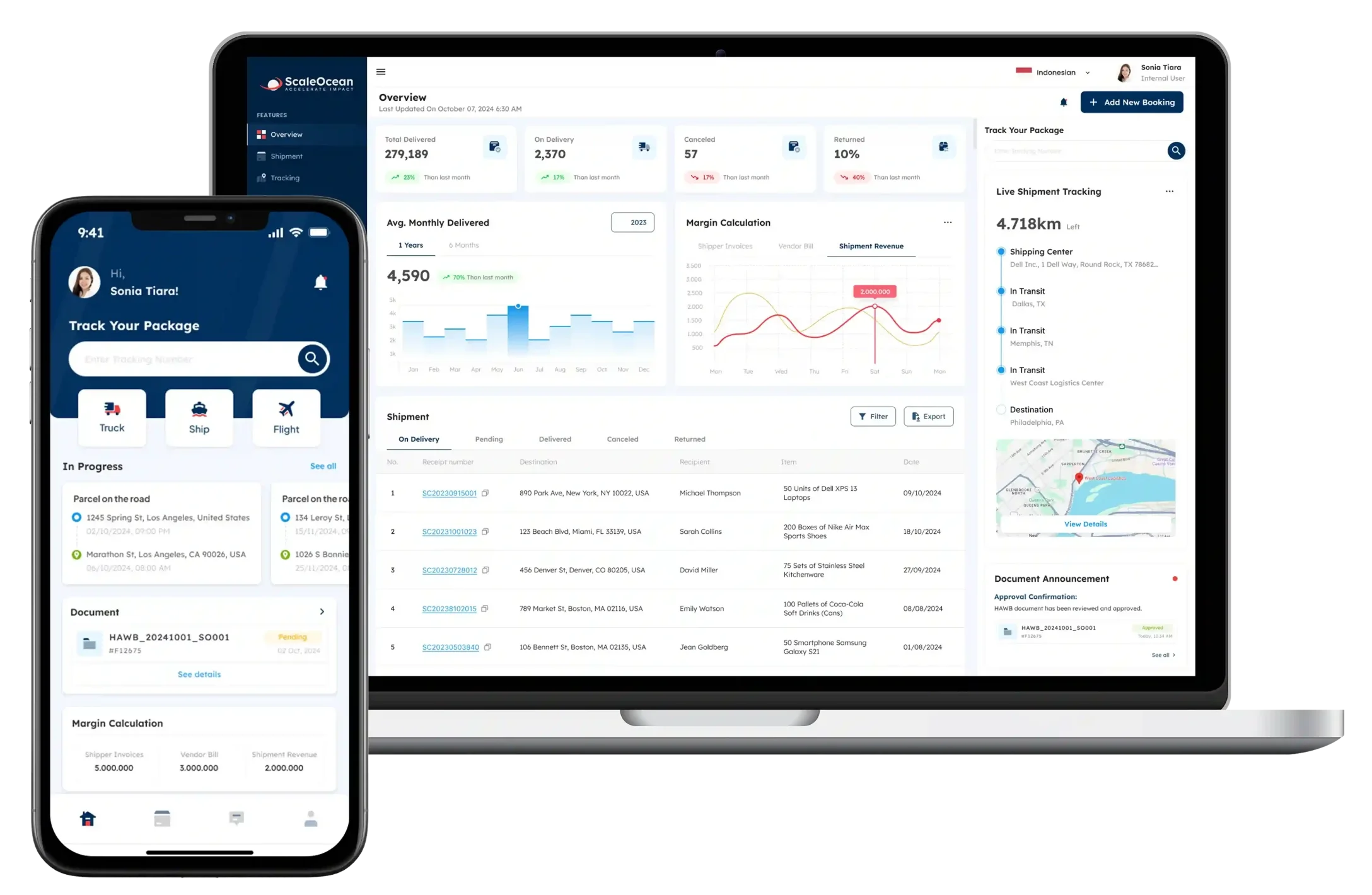
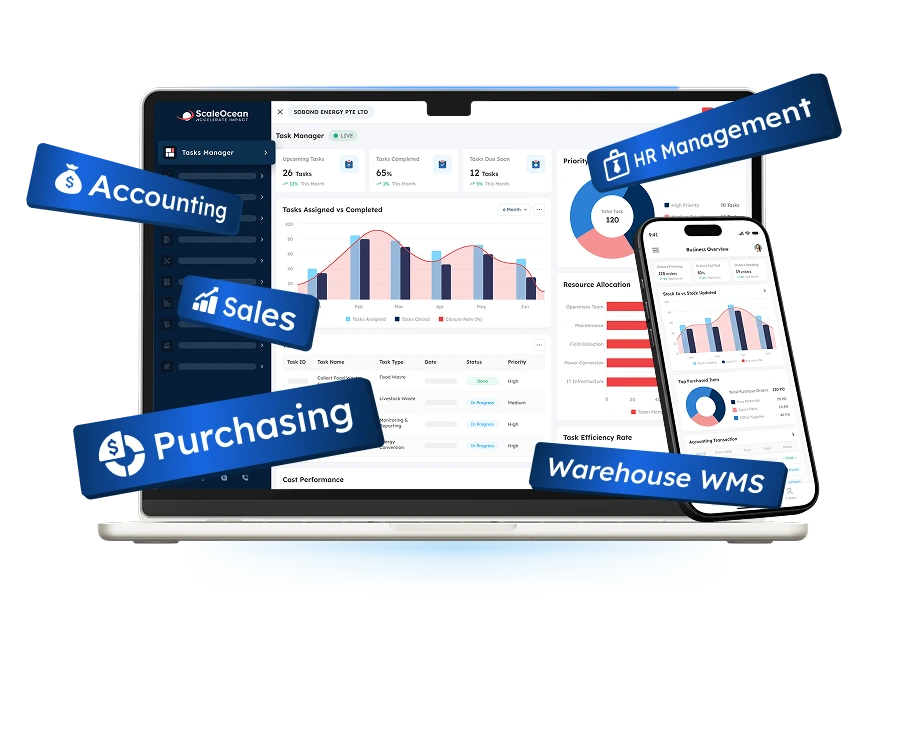
ScaleOcean logistics management software is an ERP solution that integrates seamlessly with various business functions. It offers unlimited user access at no additional cost, ideal for businesses experiencing rapid growth and expansion. With its flagship platform, ScaleOcean Atlas, the system’s flexibility and customization options let businesses tailor workflows and interfaces to their unique logistics needs.
The software integrates over 200+ modules to support logistics, shipping, inventory, procurement, and customer relations. Its real-time capabilities provide full visibility into business operations, ensuring efficient, effective logistics management on a single, unified platform.
ScaleOcean is optimized for compliance with Singapore’s GST and local financial reporting standards. It also qualifies for digitalization grants such as PSG and CTC, enabling businesses to benefit from government subsidies of up to 70%.
Key Features of ScaleOcean Logistics Management Software:
- Real-Time GPS Tracking: Monitor fleet movements in real-time to ensure timely deliveries, which is crucial for meeting customer expectations in Singapore’s competitive market.
- Automated Route Optimization: Calculate the fastest route to reduce fuel costs and save time, highly effective for navigating traffic congestion in urban areas.
- Warehouse Management System (WMS): Manage stock, picking, and packing automatically to minimize human error and optimize warehouse space.
- Last-Mile Delivery Integration: Manage final-stage deliveries to customers/businesses with digital Proof of Delivery (POD) and electronic signatures.
- Demand Forecasting & Analytics: Use historical data to forecast order volumes, supporting management in workforce planning and fleet availability.
- Customs & Compliance Modules: Integrate export-import documentation (such as TradeNet declarations) to reinforce Singapore’s position as a global logistics hub.
- Multi-Channel Order Management: Synchronize orders from multiple platforms (e-commerce, B2B portals, and offline channels) into a single dashboard for efficient tracking.
- Driver & Customer App: Separate apps for drivers to accept tasks and for customers to track orders and manage statuses independently (self-service).
| Pros | Cons |
|---|---|
|
|
Best For: ScaleOcean is best for medium to large-sized enterprises with complex logistics needs. It suits companies that want to streamline operations, improve collaboration, and scale efficiently while staying compliant with local regulations.
ℹ️ Why Choose ScaleOcean
ScaleOcean combines logistics operations with broader ERP functions, allowing medium and large businesses to manage inventory, procurement, warehousing, transportation, finance, and customer processes within one integrated platform.
2. ShipStation
ShipStation logistics management software helps businesses manage order fulfillment and shipping processes across multiple sales channels. It simplifies label creation, carrier selection, and shipment tracking within a centralized system.
It also connects with e-commerce platforms to streamline order processing. As a result, businesses can handle higher order volumes while maintaining consistent shipping workflows and reducing manual coordination efforts.
Key Features of ShipStation:
- Multi-carrier shipping integration
- Automated label creation
- Order management dashboard
| Pros | Cons |
|---|---|
|
|
Best For: Small to mid-sized e-commerce businesses that manage frequent shipments and need a simple system to handle multi-channel order fulfillment without complex logistics requirements.
ℹ️ Why Choose ShipStation for Logistics Management Software
ShipStation focuses on simplifying order fulfillment and shipping for businesses that manage frequent shipments across multiple sales channels, especially e-commerce operations that need centralized shipping coordination.
3. Magaya
Magaya logistics software supports freight forwarding and international logistics operations. It helps manage shipments, documentation, and customs processes within a centralized logistics environment.
Additionally, it provides tools for tracking cargo and managing supply chain workflows. This allows logistics providers to maintain better control over international shipping operations and documentation requirements.
Key Features of Magaya:
- Freight and shipment management
- Customs documentation tools
- Cargo tracking system
| Pros | Cons |
|---|---|
|
|
Best For: Mid-sized to large logistics providers or freight forwarders handling international shipments and requiring structured tools for documentation and cargo tracking processes.
ℹ️ Why Choose Magaya for Logistics Management Software
Magaya supports freight forwarding and international logistics by bringing shipment management, cargo tracking, documentation, and customs-related processes into a centralized operational environment for logistics providers.
4. Oracle NetSuite
Oracle NetSuite logistics software is part of a broader ERP system that includes supply chain and logistics capabilities. It helps businesses manage inventory, orders, and distribution within a unified platform.
It also integrates financial and operational data to improve cross-department coordination. This gives companies better visibility and control over enterprise-level logistics processes.
Key Features of Oracle NetSuite:
- Integrated ERP system
- Inventory and order management
- Supply chain visibility tools
| Pros | Cons |
|---|---|
|
|
Best For: Large enterprises that need an all-in-one ERP solution with logistics capabilities to manage complex operations across multiple departments and global supply chains.
ℹ️ Why Choose Oracle NetSuite for Logistics Management Software
Oracle NetSuite combines logistics capabilities with enterprise resource planning, helping organizations connect inventory, orders, distribution, finance, and other business functions through a unified business management platform.
5. Locus & Routific
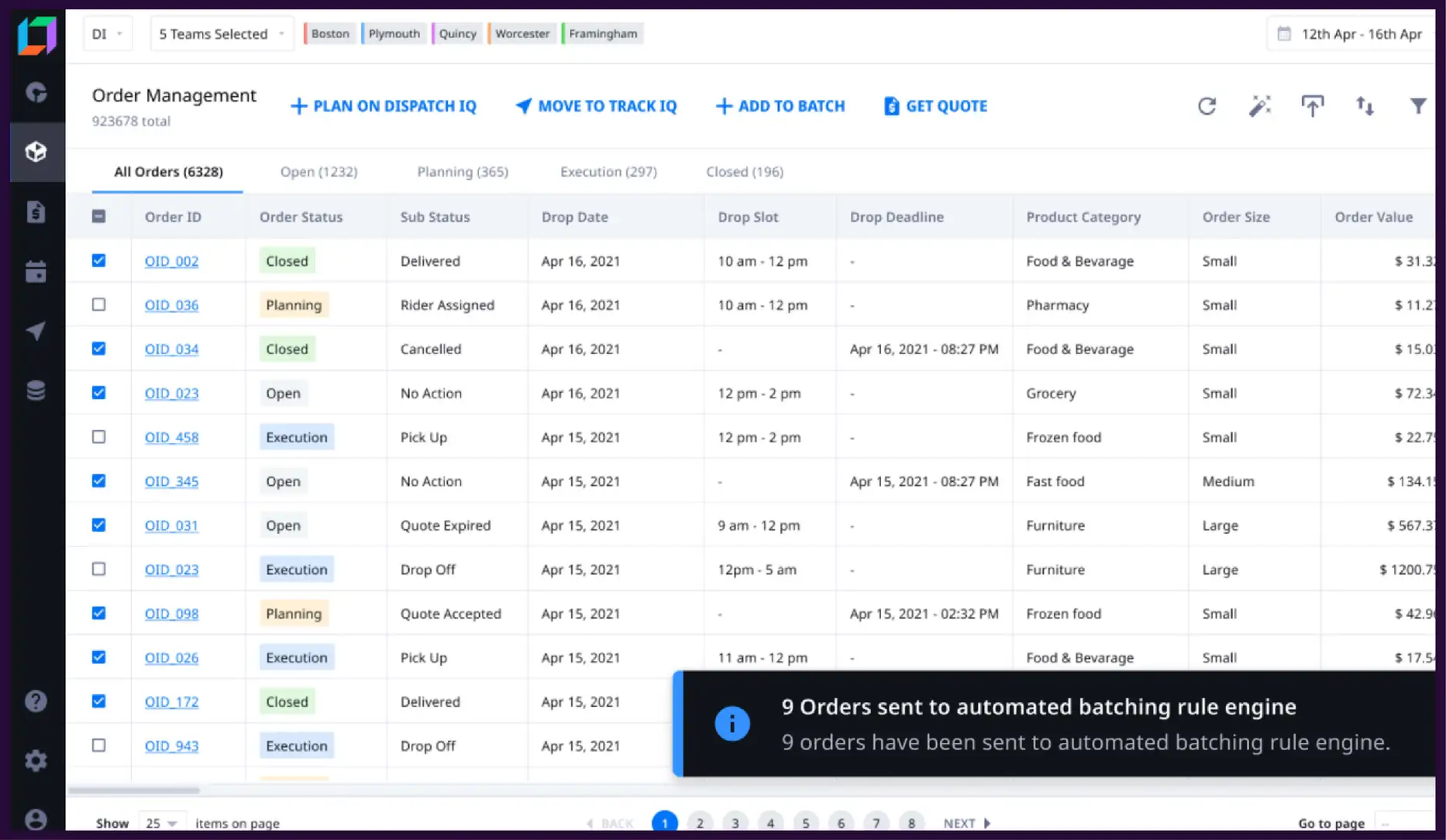
Locus & Routific logistics software focuses on optimizing last-mile delivery operations. It helps businesses plan routes, assign deliveries, and improve overall transportation efficiency.
The system uses algorithms to enhance route planning and reduce delivery time. As a result, companies can improve delivery performance while minimizing transportation costs.
Key Features of Locus & Routific:
- Route optimization tools
- Delivery planning system
- Real-time tracking
| Pros | Cons |
|---|---|
|
|
Best For: Small to mid-sized delivery-focused businesses that rely on efficient route planning and need tools to optimize last-mile operations without full supply chain management features.
ℹ️ Why Choose Locus & Routific for Logistics Management Software
Locus and Routific focus strongly on last-mile delivery and route optimization, making them suitable for businesses that need to coordinate delivery planning, route assignments, and transportation activities.
6. AscendTMS
AscendTMS logistics management software provides transportation management tools for freight brokers and carriers. It helps manage loads, track shipments, and coordinate transportation activities within a single platform.
It also offers cloud-based access for easier system usage across teams. This allows businesses to manage transportation workflows more efficiently without relying on complex infrastructure.
Key Features of AscendTMS:
- Load management system
- Shipment tracking tools
- Cloud-based access
| Pros | Cons |
|---|---|
|
|
Best For: Small to mid-sized freight brokers and trucking companies that need a simple and accessible transportation management system without requiring advanced logistics automation.
ℹ️ Why Choose AscendTMS for Logistics Management Software
AscendTMS provides transportation management capabilities for freight brokers and carriers, supporting load management, shipment tracking, and transportation coordination through a centralized system for daily operations.
7. FreightPOP
FreightPOP logistics management software helps businesses manage shipping operations across multiple carriers. It centralizes shipment processing and provides visibility into transportation activities.
It also integrates with business systems to streamline workflows. As a result, companies can better coordinate shipping operations with other internal processes.
Key Features of FreightPOP:
- Multi-carrier shipping management
- Shipment tracking
- System integration tools
| Pros | Cons |
|---|---|
|
|
Best For: Mid-sized businesses that handle multi-carrier shipping and need a centralized platform to manage shipments without requiring a fully integrated end-to-end logistics system.
ℹ️ Why Choose FreightPOP for Logistics Management Software
FreightPOP focuses on transportation management and multi-carrier coordination, making it relevant for manufacturers, distributors, retailers, and other businesses managing shipments across different logistics providers.
8. Route4Me
Route4Me logistics management software focuses on route planning and delivery optimization for businesses managing field operations. It helps organize delivery schedules and improve efficiency across transportation activities.
It also provides tracking capabilities to monitor driver performance and delivery progress. As a result, businesses can reduce delays and improve overall route execution without having to manage full logistics workflows.
Key Features of Route4Me:
- Route optimization tools
- GPS tracking system
- Delivery scheduling
| Pros | Cons |
|---|---|
|
|
Best For: Small to mid-sized businesses that rely heavily on delivery operations and need a dedicated solution for route planning without requiring full logistics management capabilities.
ℹ️ Why Choose Route4Me for Logistics Management Software
Route4Me specializes in route planning and optimization, helping businesses organize delivery routes, monitor fleet movements, and improve transportation efficiency across recurring and complex delivery operations.
9. LogiNext
LogiNext logistics management software provides tools for managing delivery operations and logistics automation. It helps businesses coordinate shipments, track deliveries, and improve operational efficiency across logistics processes.
It also supports planning and monitoring through dashboards. This enables organizations to maintain better visibility over delivery performance and logistics activities.
Key Features of LogiNext:
- Delivery tracking system
- Route planning tools
- Logistics automation features
| Pros | Cons |
|---|---|
|
|
Best For: Mid-sized to large businesses managing high delivery volumes that need structured tools for tracking and planning logistics operations without requiring highly customizable workflows.
ℹ️ Why Choose LogiNext for Logistics Management Software
LogiNext focuses on logistics automation, delivery planning, shipment tracking, and operational visibility, making it suitable for enterprises managing substantial delivery volumes across multiple locations and workflows.
10. Tookan
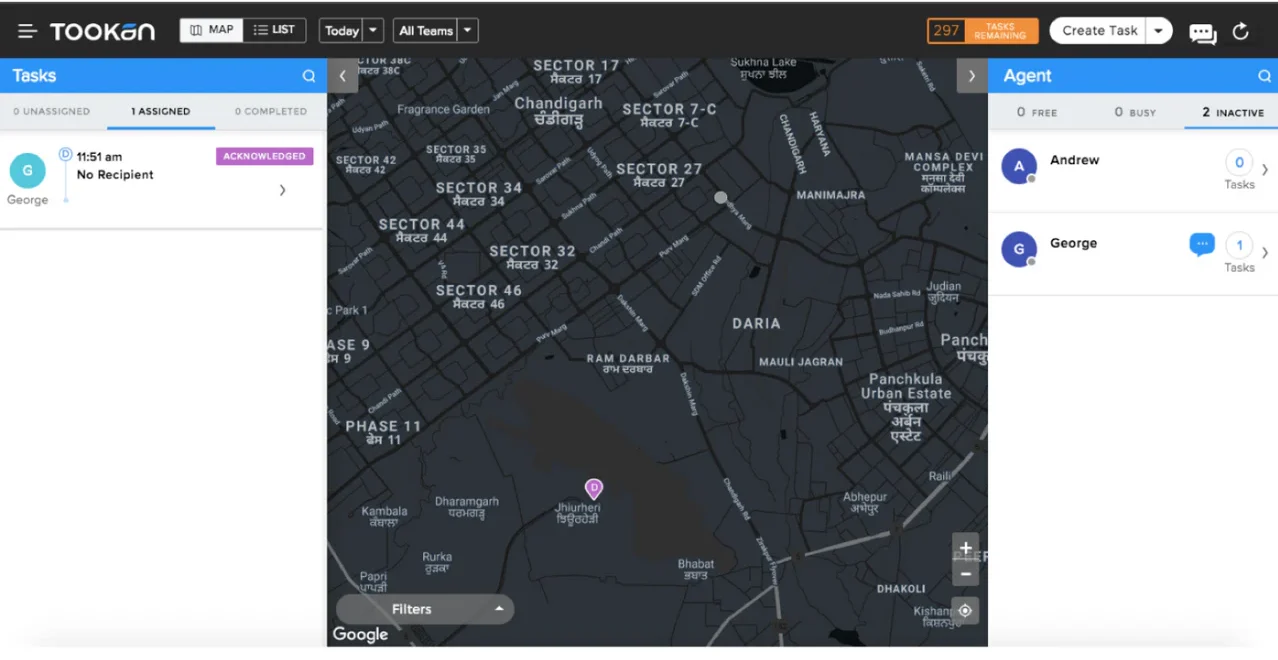
Tookan logistics management software supports delivery management and workforce coordination. It helps businesses assign tasks, track deliveries, and manage field service operations in real time.
It also provides mobile access for drivers and field teams. As a result, companies can improve communication, monitor activities, and maintain better control over distributed operations.
Key Features of Tookan:
- Task management system
- Real-time delivery tracking
- Mobile workforce tools
| Pros | Cons |
|---|---|
|
|
Best For: Small to mid-sized businesses with delivery or field service teams that need simple tools to manage tasks, track operations, and improve coordination without complex logistics requirements.
ℹ️ Why Choose Tookan for Logistics Management Software
Tookan supports on-demand delivery and field service operations by helping businesses assign tasks, coordinate distributed workers, track deliveries, and manage operational activities through centralized workflows.
11. Fishbowl
Fishbowl logistics management software focuses on inventory management and warehouse coordination. It helps businesses track stock levels, manage orders, and maintain inventory accuracy across storage locations.
It also integrates with accounting systems to support operational workflows. This lets companies manage inventory more efficiently while maintaining visibility into stock movements.
Key Features of Fishbowl:
- Inventory tracking system
- Order management tools
- Warehouse coordination
| Pros | Cons |
|---|---|
|
|
Best For: Small to mid-sized businesses with inventory-heavy operations that need strong stock management and basic logistics coordination without requiring advanced transportation or supply chain features.
ℹ️ Why Choose Fishbowl for Logistics Management Software
Fishbowl emphasizes inventory management, making it suitable for businesses that need stronger control over stock levels, warehouse activities, and inventory-related operational processes.
12. SAP Logistics Management
SAP Logistics Management software provides enterprise-level tools for managing complex supply chain and logistics operations. It supports planning, execution, and monitoring across large-scale logistics environments.
It also integrates deeply with enterprise systems to unify data across departments. As a result, organizations can manage logistics processes with greater consistency and control at scale.
Key Features of SAP Logistics Management:
- Supply chain planning tools
- Logistics execution system
- Enterprise integration capabilities
| Pros | Cons |
|---|---|
|
|
Best For: Large enterprises with complex, global supply chains that require a comprehensive logistics system integrated with broader enterprise operations and capable of handling high operational complexity.
ℹ️ Why Choose SAP Logistics Management for LMS
SAP Logistics Management supports extensive supply chain operations by connecting logistics processes with broader enterprise systems, making it suitable for organizations managing complex and distributed operations.
After reviewing these logistics management software options, businesses may notice that ScaleOcean Logistics Management Software takes a more unified approach by combining visibility, flexibility, and integration into a single system. This approach better supports complex, evolving logistics operations.
ScaleOcean Logistics Management Software provides real-time tracking, customizable workflows, and seamless system integration to help improve operational clarity and efficiency. Explore its capabilities further and schedule a consultation with our experts today.
How to Choose the Right Logistics Management Software?
Choosing the right logistics management software requires aligning system capabilities with your operational needs and long-term business goals. Without a clear evaluation process, businesses risk adopting tools that limit visibility and scalability.
A structured approach helps businesses avoid mismatched solutions and unnecessary costs. By focusing on core requirements and critical evaluation factors, companies can select software that supports efficiency, flexibility, and real-time logistics control.
For Singapore enterprises, evaluate logistics software based on logistics type, shipment volume, ERP/WMS integration, GST-related finance workflows, multi-location requirements, and the level of workflow customization needed.
1. Identify Your Logistics Type
Start by identifying the type of logistics operations your business manages, such as warehousing, transportation, last-mile delivery, or full supply chain coordination. This ensures the software matches your specific operational complexity and requirements.
Additionally, consider whether your logistics involve multi-location operations, international shipping, or high-volume order fulfillment. This helps you narrow down solutions that support your workflows rather than forcing later adjustments. Below are the specific logistics types and features that you must have.
- If you operate a 3PL: prioritize multi-client inventory, billing, warehouse integration, and customer portals.
- If you operate a fleet: prioritize dispatching, GPS, route optimization, driver management, and proof of delivery.
- If you’re a distributor: prioritize inventory, procurement, warehouse, and delivery integration.
- If you’re an enterprise group: prioritize ERP integration, approvals, multi-entity support, analytics, and configurable workflows.
2. Core Evaluation Checklist
Before selecting a platform, businesses should evaluate key criteria that directly impact performance, integration, and long-term scalability. These factors help ensure the system delivers both immediate and future operational value.
- Integration Capabilities: Ensure the software connects seamlessly with ERP, WMS, and other existing systems to eliminate data silos and improve workflow efficiency.
- Scalability: Choose a system that can grow with your business and handle increasing logistics complexity without requiring frequent system changes.
- Usability: Evaluate how easy the system is to use. Complex interfaces can slow adoption and reduce operational efficiency across teams.
- Real-Time Visibility: Prioritize platforms that offer live tracking and centralized dashboards to improve decision-making and operational control.
- Total Cost of Ownership: Consider not only initial costs but also implementation, maintenance, and potential upgrade expenses over time.
3. Critical Questions for Software Demos
When evaluating software demos, businesses should ask practical, scenario-based questions rather than relying on feature lists alone. This approach helps reveal how the system performs in real operational conditions.
Ask how the software handles real-time disruptions, integrates with existing systems, and adapts to workflow changes. This helps you assess whether the platform provides the flexibility, visibility, and control needed for long-term logistics success.
Real-World Example of Logistics Management Software
As a real-world example of an LMS, Sobono Group is a Southeast Asian bioenergy holding company founded in 2007 that operates across green energy and bioresource management through several business entities and projects.
As its operations expanded, the company needed better coordination across inventory, procurement, finance, and projects, and teams needed faster access to accurate information. Therefore, Sobono Group sought an integrated ERP to connect these functions and support growth.
The company has used ScaleOcean ERP for the past 7 years to track inventory in real time, coordinate delivery schedules, monitor project progress, and manage budgets, supporting more accurate decisions across operations.
Before implementing ScaleOcean, Sobono Group managed increasingly complex inventory and delivery requirements across growing projects, while fragmented processes made stock visibility and coordination more difficult. Additionally, teams struggled to track project progress and control budgets, making it harder to identify delays, monitor spending, and coordinate material deliveries with project requirements.
Through its flagship platform, ScaleOcean Atlas connected inventory, procurement, delivery scheduling, project management, and financial processes, giving Sobono Group centralized visibility across activities that previously required more fragmented coordination.
As a result, ScaleOcean for Sobono Group can now manage more than 150 new projects weekly and process over 10,000 request orders monthly, while generating financial reports in approximately 10 seconds. The system also helped Sobono monitor budgets and spending in real time, with automated alerts supporting better cost control and contributing to an 87% increase in profitability.
Founder and Managing Director of Sobono Group, Oh Wee Khoon, highlighted the operational improvement directly:
“Since we began using ScaleOcean, tracking our inventory, project milestones, and budgets has become much simpler, quicker, and more precise.”
Sobono Group’s implementation story shows how they leverage ScaleOcean to improve inventory visibility, streamline delivery coordination, strengthen financial management, and oversee projects effectively across their operations. View the Sobono Group ERP implementation story below:

This case shows why businesses should evaluate logistics management software based on workflow integration rather than isolated features, especially when logistics connects closely with procurement, inventory, projects, and finance.
Conclusion
Logistics management software plays a critical role in improving visibility, coordination, and efficiency across supply chain operations. By integrating key functions into one system, businesses can reduce delays, eliminate data silos, and make faster, more accurate decisions.
However, not all solutions offer the same level of flexibility and control. ScaleOcean Logistics Management Software stands out for fully integrated workflows, real-time visibility, and high customization that adapts to complex, growing business needs.
If you are looking for a solution that goes beyond basic logistics tools, ScaleOcean provides the scalability and operational clarity needed to stay competitive. Schedule a consultation with ScaleOcean today to see how it can optimize your logistics processes end-to-end.
FAQ:
1. What software do logistics companies use?
Companies use several specialized tools: TMS (Transportation Management Systems) for freight, WMS (Warehouse Management Systems) for inventory, and Fleet Management software for tracking vehicles. Popular providers include SAP, Oracle, and Trimble.
2. What is ERP in logistics?
An Enterprise Resource Planning (ERP) system is a centralized platform that integrates all business processes. In logistics, it integrates sales, inventory, finance, and human resources into a single database, ensuring that shipping data aligns perfectly with billing and stock levels.
3. How does logistics software work?
Logistics software uses real-time data and algorithms to automate manual tasks. It tracks shipments via GPS, optimizes delivery routes to save fuel, manages stock levels to prevent shortages, and generates digital paperwork, providing end-to-end visibility across the supply chain.
4. What are the 5 types of logistics management?
1. Inbound: Moving goods from suppliers to a business.
2. Outbound: Shipping finished products to customers.
3. Reverse: Handling returns and recycling.
4. Third-Party (3PL): Outsourcing logistics to a provider.
5. Fourth-Party (4PL): Managing the entire supply chain and multiple 3PLs.




















.png)