Artificial Intelligence for Sales refers to the application of AI tools and capabilities, such as machine learning, generative AI, predictive analysis, conversational AI, and automated agents, to guide sales efforts in gaining insights into customer behavior, prioritizing sales opportunities, automating routine tasks, and making commercial decisions.
The challenge for enterprise sales teams begins with data that’s spread out across ERP, CRM, marketing, quoting, and communication systems. This can lead to incorrect predictions, poor follow-up, fewer insights into upselling opportunities, and manual reporting, making it hard for teams to see which customers need attention and which deals are best to capitalize on.
AI for sales addresses these issues by bringing customer, sales, transaction, pipeline, and operational information into more actionable workflows. AI can summarize account activity, find promising leads, suggest next steps, predict your revenue, send personalized communication, and surface opportunities or risks before you do, instead of sifting through mountains of disjointed records.
Based on the data our team got from Singapore Business Review, 80% of all sales organizations in Singapore already utilize AI for prospecting, forecasting, lead scoring, and email drafting. This report also revealed that 32% of the sellers in Singapore believe AI agents can save them 32% of their time researching prospects and 34% of their time drafting emails.
Understand the concept of AI for sales, its key types, beneficial AI sales tools, practical sales use cases, business advantages, implementation techniques, prominent AI solutions providers, and how enterprises can pick AI technology that complements their current sales processes.
Key Takeaways
AI for sales is the use of artificial intelligence to automate sales tasks, analyze customer data, and provide insights for better decisions.
AI for sales platforms enable teams to evaluate opportunities, optimize pipelines, improve forecasting accuracy, and create more personalized customer interactions.
Top AI sales platforms include ScaleOcean, Salesforce Einstein, Zams, Pipedrive, Shopify, and Zendesk Tools, each supporting different sales requirements, workflows, and business scales.
ScaleOcean sales system supports enterprise sales operations by connecting customer, sales, CRM, inventory, finance, and operational data to deliver more contextual insights and improve revenue decisions.
AI for sales is a technologies that help with the entire sales cycle, ranging from lead generation and lead qualification to quotation preparation, conversation management, forecasting, and account expansion. The technology is able to analyze sales and customer data to uncover patterns that would be time-consuming and challenging for employees to spot.
Its value becomes stronger when AI works within the actual sales process rather than operating as a separate chatbot. An AI assistant that understands leads, previous transactions, product availability, quotation history, customer interactions, and pipeline status can provide more relevant recommendations than a tool working from isolated prompts.
AI can therefore complement salespeople rather than simply automate their responsibilities. Routine research, summaries, CRM updates, follow-up preparation, and data analysis can be handled faster, while sales representatives remain responsible for commercial judgment, negotiation, relationship development, and complex customer decisions.
As AI continues to support sales teams with faster data analysis, customer insights, and workflow automation, businesses are increasingly adopting structured sales management platforms to organize these capabilities. A connected sales system helps teams manage customer interactions and maintain consistent sales processes while allowing representatives to focus on strategic activities.
Sales AI leverages machine learning and automation to streamline the sales cycle, divided into key capability types and operational pillars. Different approaches solve different commercial problems, ranging from content generation and forecasting to conversation analysis and autonomous task execution.
1. Generative AI in Sales
Generative AI produces new content from existing information and user instructions. Sales teams can use it to prepare prospecting emails, meeting summaries, account briefs, proposal drafts, follow-up messages, sales scripts, and explanations of products or commercial terms.
The strongest applications use company and customer context rather than generic prompts. A sales representative preparing for a meeting, for example, may ask AI to summarize previous interactions, open quotations, purchase history, outstanding issues, and relevant products before generating discussion points.
2. Conversational Intelligence
Conversational intelligence analyzes calls, meetings, chat messages, and other customer conversations. It can identify discussion topics, questions, objections, commitments, competitor mentions, sentiment, and follow-up actions.
These insights can help sales managers to gauge how their reps interact with customers and determine the need for coaching. Managers can select meaningful opportunities, risks, and unusual patterns in conversations and ignore the rest.
3. Predictive AI
Predictive AI is based on past data and statistical models to forecast future results. In the sales realm, this can range from win probability to expected revenue, churn, likelihood of purchase, lead conversion, the expected closing date, or future product demand.
Its usefulness depends heavily on data quality. Companies considering sales forecasting software should therefore evaluate whether forecasting models can work from reliable CRM, quotation, transaction, customer, and operational information instead of incomplete pipeline records.
4. Autonomous Sales Agents or Agentic AI
Autonomous sales agents can interpret objectives, gather information, decide which predefined actions are appropriate, interact with connected tools, and execute multi-step tasks with less manual intervention. An agent might research an account, prepare a summary, recommend a follow-up, draft outreach, and update CRM information within an approved workflow.
Clear limits must still be drawn for enterprises on what an agent can and cannot do on her own. Despite these changes, there are still high-impact decisions that need human sign-off, such as pricing, contracts, major discounts, delicate customer communication, and more.
5. Computer Vision
Computer vision is a key piece of technology that enables artificial intelligence systems to understand visual data, including images, videos, shelf imagery, product displays, documents, and the physical environment. While it’s not as prevalent as generative or predictive AI in the sales process, it can have applications in industries where visual conditions influence business decisions.
Retail stores can understand the availability of their shelves and product positioning, and industrial sales teams can visually know the condition of the equipment or product configuration. This data can be used to aid in account planning, merchandising, service-to-sales opportunities, or better product suggestions.
Tools in Sales AI
AI for sales normally operates through several connected software categories to automate outreach, analyze customer data, and streamline the entire sales pipeline.
1. Customer Relationship Management (CRM)
CRM systems are used to store customer data, leads, opportunities, contact history, pipeline stages, activities, and account details. AI can analyze these records to summarize the activities of customers, prioritize their opportunities, find accounts that haven’t been active for a while, and suggest follow-up steps.
The better the quality of the CRM, the better the AI output. Even with a complex AI model, inconsistent activity history, missing pipeline stages, and duplicate accounts can compromise the strength of the recommendations.
2. Sales Engagement & Autonomous Platforms
Sales engagement tools manage effort for emails, calls, social media, tasks, and follow-up sequences. AI can serve as a valuable tool to tailor messages, suggest timing, prioritize prospects, and decide on the next action to take.
With agentic capabilities, this can be even further extended to implementing authorized actions in connected applications. Businesses need to have precise oversight of communication guidelines, permissions, escalation routes, and the actions that need to be reviewed by the sales manager.
3. Conversation Intelligence & Call Assistants
Conversation-intelligence tools capture, transcribe, summarize, and analyze sales conversations. Representatives can get the answers to key decisions, objections, questions, commitments, and action items without having to manually prepare full meeting notes.
Managers can also leverage the conversation data to identify coaching opportunities and to grasp customer concerns that occur again and again. Yet, to accurately record and analyze customer conversations, consent and privacy management and organizational governance are crucial.
4. Revenue Intelligence & Workflow Automation
Revenue intelligence platforms blend pipeline, activity, quotation, transaction, and forecasting data to offer more complete insights into likely commercial results. AI can spot pipeline risks, deadlocked opportunities, inconsistent forecasts, or accounts that need attention.
These insights are then translated into actions, like requesting a quote, assigning follow-up, preparing a quotation, or escalating a deal, via workflow automation. This process can also be integrated with the best quoting software, ensuring that pricing, margins, approvals, and quote conversion stay seamlessly integrated with the broader sales process for companies handling complex offers.
10 Use Cases of AI in Sales
AI delivers the greatest impact when it addresses specific sales challenges instead of being adopted simply for its available features. By automating repetitive administrative tasks and analyzing customer patterns, AI can help transform sales pipelines through more accurate predictions, faster decision-making, and improved buyer engagement.
1. Autonomous Lead Qualification
Based on company characteristics, engagement activity, previous interactions, purchase behavior, and other factors, AI can analyze whether a lead looks like a successful lead.
Sales staff can then focus on the leads that need human attention, and those that don’t, or aren’t complete, can be pushed through a different nurturing or qualification process.
2. Instant Meeting Routing
AI can review a prospect’s needs and connect them with a salesperson who has the most relevant industry, territory, product expertise, language, account, or technical expertise.
This decreases the burden of administrative scheduling and allows customers to contact a representative at an earlier stage in the purchasing process to an appropriate contact.
3. Hyper-Personalized Outreach
AI can customize outreach efforts according to customer industry, previous purchases, open opportunities, website activity, conversations, or any other signal that is available. The sales representatives can create a draft that is relevant instead of writing all the messages manually.
Through the data we received from CNA, Singapore-based company Crestar Fan observed an 80% jump in sales following the rollout of GenAI-powered chatbots, with manual handling of customer enquiries and work hours for routine tasks reduced by over 50%. The example illustrates the impact of quicker responses and AI-driven suggestions on enhancing businesses’ sales process and making it more efficient and scalable.
4. Dynamic Lead Scoring
The traditional approach to lead scoring is more often than not based on static values like industry, company size, or the number of downloaded content. AI can process a wider range of behavioral and transactional data and adjust these lead priorities as needs evolve.
This adds dynamism to the scoring, but sales teams need to know what factors are affecting recommendations and regularly check if the model is still accurate for actual conversion.
5. Automated Call Summaries
AI can transform sales interactions into well-defined, comprehensive reports that include customer needs, concerns, commitments, decision factors, and next steps.
Representatives have less time to prepare CRM notes, and other employees have a consistent record of what happened during the customer conversation.
6. Customer Sentiment Analysis
Sentiment analysis can detect positive, negative, neutral, frustrated, uncertain, and decreased customer sentiment in conversations or written interactions.
These signals can be an added value for salespeople in determining accounts to pursue. So the rules are: sentiment should complement, not take the place of, human interpretation, as there are elements in context, culture, and communication that can alter meaning.
7. Automated CRM Hygiene
AI can assist in discovering duplicate records, missing data, mismatched formats, out-of-date fields, and unrecorded activities.
Better quality of downstream forecasting, segmentation, reporting, and recommendations due to cleaner CRM info to analyze by AI modelling.
8. Cross-Sell Recommendation
AI can analyse customer buying habits, product preferences, industry trends, lifecycle stages, and account characteristics to identify potential products or services that may interest existing customers. Sales pipeline management software can further support this process by helping teams track customer opportunities and improve sales planning based on customer insights.
The recommendations are best when they are based on actual customer requirements. Despite the array of options that can be recommended by an algorithm, salespeople should still confirm suitability before making any recommendations.
9. Scalable Coaching & Role Play
AI can provide a mock-up of customer scenarios for objection handling, discovery conversations, negotiations, and product discussions. Representatives can repeat exercises without having to have the manager in the room each time.
This allows managers to focus their coaching hours on more advanced development requirements and have AI handle the analysis of regular practice and feedback.
10. Real-Time Pipeline Visibility
AI can provide pipeline movements, inactive opportunities, predicted closing dates, recent customer activity, forecast changes, and deals needing attention.
This allows sales managers to see the overall commercial picture quickly while still having the flexibility to explore detailed opportunity records and make informed decisions. By connecting insights with solutions such as best quoting software, teams can also improve pricing accuracy, streamline approvals, and maintain better visibility across the sales cycle.
Benefits of Using AI in Sales
AI improves sales productivity by reducing repetitive administrative tasks while providing customer insights for better decisions. By automating workflows, prioritizing leads, and analyzing buyer behavior, AI helps teams accelerate sales cycles and focus on higher-value activities.
1. Maximized Selling Time
Salespeople frequently spend substantial time searching for information, updating records, summarizing calls, preparing emails, and compiling reports. AI can reduce some of this administrative workload.
The recovered time can be redirected toward prospect conversations, account planning, negotiations, relationship development, and other activities where human interaction has greater commercial value.
2. Higher Conversion Rates
AI helps representatives prioritize opportunities based on stronger combinations of customer, pipeline, behavioral, and transactional signals.
It can also support more relevant engagement by helping teams understand customer context before making contact. Higher conversion still depends on product fit, pricing, competitive position, and salesperson execution.
3. Shorter Sales Cycles or Better Deal Velocity
AI can reduce delays between pipeline stages by automating summaries, reminders, information retrieval, approval triggers, and follow-up preparation.
Teams can also identify stalled opportunities earlier. This allows representatives to address missing decisions, incomplete quotations, approvals, or customer concerns before the opportunity remains inactive for an extended period.
4. Data-Driven Sales Management
AI gives managers faster access to pipeline trends, activity patterns, forecasts, risks, customer signals, and salesperson performance. Leaders can spend less time manually combining reports before deciding where attention is needed.
A structured sales management approach remains important because AI insights still need to be translated into targets, coaching, account strategies, pricing decisions, and commercial actions.
Best Practices for Implementing AI in Sales
Successful AI adoption relies not on having the most features, but on ensuring sales data, workflows, governance, and team readiness are properly prepared. Businesses should begin with clearly defined use cases, improve data quality, and optimize existing processes before introducing automation to achieve sustainable results.
1. Standardize and Map Workflows First
Document how leads move through qualification, opportunity management, quotation, approval, order creation, fulfilment, and account management before introducing automation.
AI should support actual workflows rather than automate unnecessary steps. Mapping also identifies where human review needs to remain.
2. Establish AI-Ready Data Hygiene
Before heavily leaning on AI recommendations, it’s essential to eliminate duplicate customer records, inconsistent formats, missing fields, outdated accounts, and conflicting identifiers.
Assign ownership to customer, pricing, inventory, transaction, and commercial information, preventing AI from having to try to understand multiple conflicting sources of truth.
3. Run a Structured Pilot
Begin with a well-defined use case such as call summarization, lead prioritization, account research, or forecasting rather than enabling every AI feature simultaneously.
Compare baseline performance with pilot results and gather feedback from representatives, managers, operations, IT, and compliance teams before expanding implementation.
4. Identify Technology Gaps
Map CRM, ERP, quoting, communication, marketing, finance, and reporting systems to determine where important customer data remains disconnected.
Integration gaps matter because AI recommendations can become incomplete if account transactions, inventory, quotations, customer conversations, or sales activities are unavailable.
5. Pivot to AI-Driven Productivity Metrics
Do not measure AI success only by the number of messages generated or automated tasks completed. Track business outcomes such as selling time, conversion rate, forecast accuracy, response speed, deal velocity, pipeline coverage, and revenue contribution.
These measures help management determine whether AI is improving the actual commercial process rather than simply creating more automated activity.
6. Reskill and Upskill the Sales Team
Salespeople need to understand how to prompt AI effectively, validate recommendations, protect sensitive information, and know when human judgment should override automated suggestions.
New coaching methods are also necessary for managers, as employees are now expected to use AI responsibly in their sales processes.
7. Set a Clear Strategy
Outline what aspects of sales are expected to be solved by AI, who is responsible for implementation, what data it has access to, what is not allowed to be done, and how success will be measured.
A clear strategy avoids departments using new AI tools that are not related to your business and are just copying and pasting functionality and adding to customer silos. It also enables companies to compare the right solutions, like sales forecasting software, with their current sales processes, data formats, and revenue planning goals.
Choose the Right AI Sales Platforms for Your Business
The first step in selecting an AI sales platform is getting started with a commercial issue that the company must address. While some companies may just need CRM intelligence, others need forecasting, automated prospecting, e-commerce insights, customer-service integration, or end-to-end integration with the larger enterprise system.
Data architecture, workflows, integrations, security, scalability, implementation needs, and the correlation between AI recommendations and actual operational data should also be taken into account by enterprises.
1. ScaleOcean AI
ScaleOcean is an enterprise sales platform for medium and large businesses that brings leads, opportunities, customers, quotations, orders, inventory, finance, and operational data into a single platform. It enables the administration and management of complex sales structures across branches, business entities, industries, levels of approval, customer segments, and commercial workflows.
ScaleOcean sales system is a module within ScaleOcean Atlas that integrates Sales Management and CRM workflows with broader business operations. Through ScaleMind, an embedded AI Business Assistant, sales teams can access contextual information, summarize customer and pipeline data, identify trends, and receive relevant recommendations based on connected business data.
Teams can leverage customer activity, sales opportunities, risk information, account summary data, and other connected sales and operational context to analyze customer activity or review sales opportunities, identify risks, summarize account data, and support forecast or follow-up decisions with ScaleMind embedded in workflows.
ScaleOcean additionally supports PDPA-aligned data governance and Singapore financial requirements through role-based access, audit trails, and connected financial records, including GST-related processes relevant to IRAS requirements. Schedule a consultationto assess how this software can support your sales workflows, integrations, data structure, and growth requirements.
Key features:
Multi-entity and multi-branch sales operations
Quotation & Sales Order Management
Sales Pipeline Management
Order Fulfilment Management
Product Information Management
Marketplace & Channel Integration
Sales Performance Monitoring
Pros
Cons
Connects sales intelligence with inventory, finance, purchasing, customer, and operational information, providing broader enterprise context for commercial decisions.
Its enterprise-level depth may be unnecessary for very small teams that only need basic AI email generation or simple contact management.
Provides configurable workflows for quotations, approvals, escalation, follow-ups, and other sales processes instead of requiring one standardized workflow.
Final pricing requires consultation because modules, integrations, entities, workflows, deployment, and implementation complexity influence the scope.
Uses a consultative implementation approach that begins with the company’s customer journey, sales structure, operational requirements, and existing technology environment.
Implementation prioritizes accurate workflow and data design, system stability, and long-term suitability rather than an immediate generic setup.
Supports phased module activation and unlimited-user options, allowing enterprises to expand capabilities as adoption and commercial complexity grow.
Best for: Medium and large enterprises, multi-branch businesses, manufacturers, distributors, logistics companies, retailers, professional services firms, and organizations requiring sales intelligence connected with wider enterprise operations.
ℹ️Why choose ScaleOcean AI for Sales?
ScaleOcean combines sales, CRM, finance, inventory, and operational workflows within one configurable enterprise platform, while ScaleMind provides embedded intelligence using connected business context.
2. Salesforce Einstein
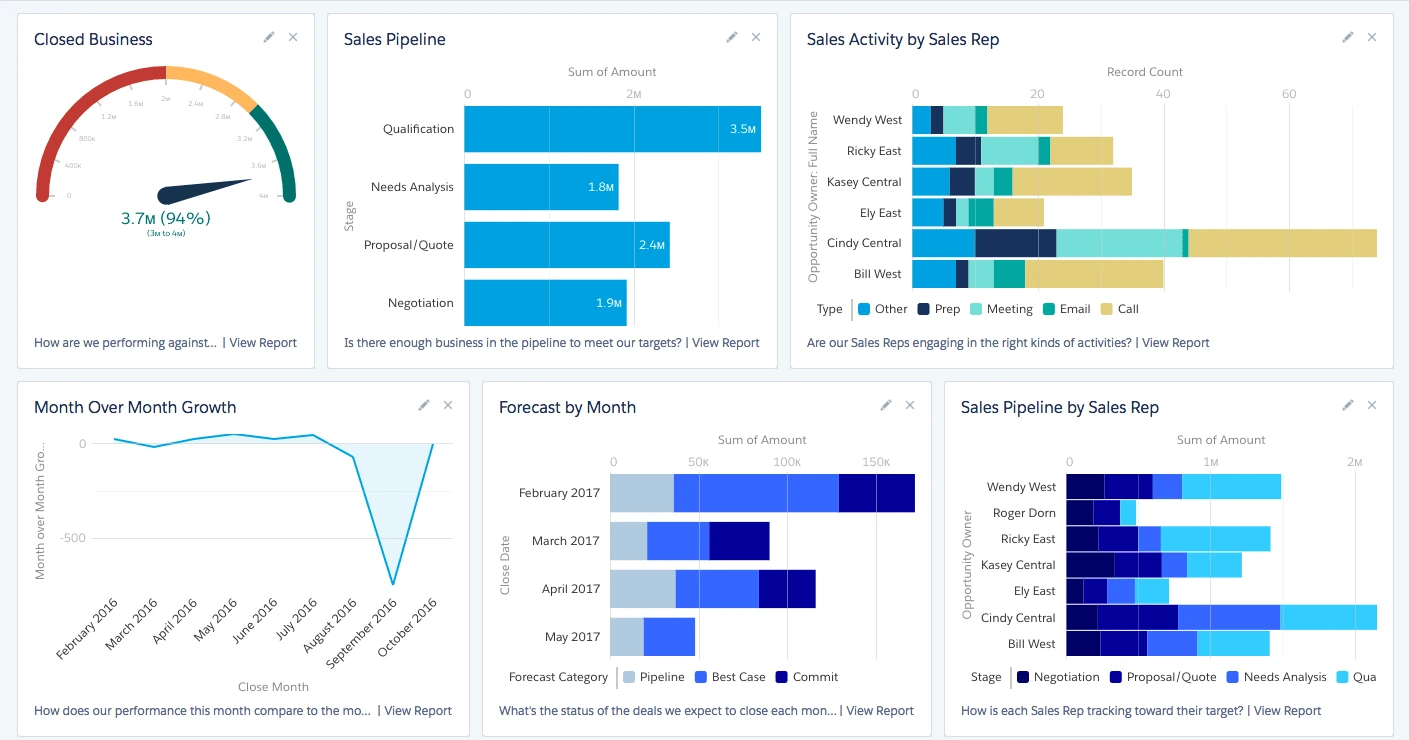
Salesforce Einstein provides AI capabilities within the Salesforce ecosystem to help sales teams analyze CRM information, prioritize opportunities, forecast revenue, generate content, and automate customer-facing or administrative work. Its AI capabilities work closely with Salesforce customer and pipeline records.
The platform is particularly relevant to companies already using Salesforce as their primary CRM environment. Sales organizations can apply intelligence across prospecting, account management, forecasting, engagement, and workflow activities while maintaining the broader Salesforce application ecosystem.
Key features:
Predictive lead and opportunity scoring
Sales forecasting
CRM data insights
Conversation intelligence
Workflow automation
Pros
Cons
Deeply integrated with Salesforce CRM records and sales workflows.
Organizations outside the Salesforce ecosystem may require substantial migration or integration work.
Supports several sales AI use cases from scoring and forecasting to content generation and automation.
Advanced configurations can require experienced Salesforce administrators or implementation partners.
Can extend across a broad customer lifecycle through Salesforce applications.
Businesses should assess licensing requirements as additional AI and platform functionality is introduced.
Best for: Medium and large businesses already operating Salesforce CRM and looking to introduce AI across sales, customer, and revenue workflows.
ℹ️Why choose Salesforce Einstein?
Salesforce Einstein provides AI-supported scoring, forecasting, content generation, and workflow intelligence within the broader Salesforce customer-data environment.
3. Zams
Zams is an AI automation platform designed to help businesses create agents and automated workflows that can operate across business applications. Sales teams can use agent-based workflows to retrieve information, perform research, update records, and coordinate actions between connected tools.
Its approach is most relevant when businesses want AI to perform multi-step tasks rather than only generate content. The effectiveness of these workflows depends on available integrations, permissions, data quality, and clearly defined operational rules.
Key features:
AI agents
Data retrieval and enrichment
Automated research
Trigger-based actions
Business-system connectivity
Pros
Cons
Focuses on agentic workflows capable of coordinating several business actions.
Organizations need clearly governed workflows before allowing agents to perform higher-impact actions.
Can reduce repetitive movement between separate sales applications.
Value depends strongly on integration coverage and source-data quality.
Teams primarily seeking a traditional CRM may still require another core customer-management system.
Best for: Medium and large organizations exploring autonomous or multi-step AI automation across their existing sales technology stack.
ℹ️Why choose Zams?
Zams focuses on AI agents and cross-application automation for companies that want AI to coordinate multi-step sales and business workflows.
4. Pipedrive
Pipedrive is a sales-focused CRM designed around visual pipeline management, opportunity tracking, activities, automation, forecasting, and sales reporting. Its AI capabilities can help salespeople summarize information, identify priorities, and reduce repetitive CRM administration.
The platform is commonly suited to companies that want a straightforward CRM-centered sales environment without the breadth of a large enterprise ERP ecosystem.
Key features:
Visual sales pipelines
Sales automation
AI-assisted insights
Forecasting
Activity management
Sales reporting
Pros
Cons
Provides a sales-focused interface centered around pipeline visibility and opportunity management.
Complex enterprise operational processes may require additional platforms and integrations.
Offers automation and AI functionality without requiring a very large CRM environment.
Businesses requiring deep multi-entity ERP integration should evaluate the broader technology architecture.
Straightforward pipeline structure can support quick adoption among sales teams.
Feature requirements can expand as sales operations become more complex.
Best for: Small and medium businesses and growing sales teams that prioritize pipeline management, CRM automation, and accessible AI assistance.
ℹ️Why choose Pipedrive?
Pipedrive combines visual pipeline management, CRM automation, forecasting, and AI-assisted sales insights within a sales-focused platform.
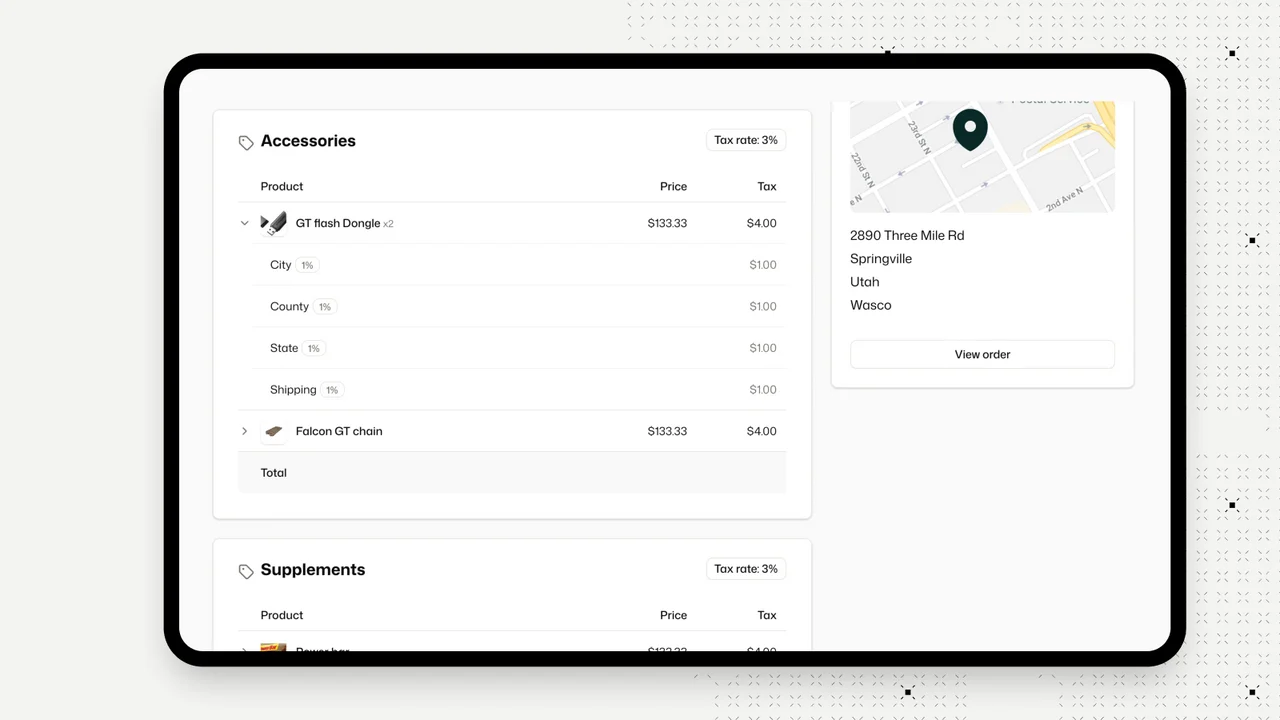
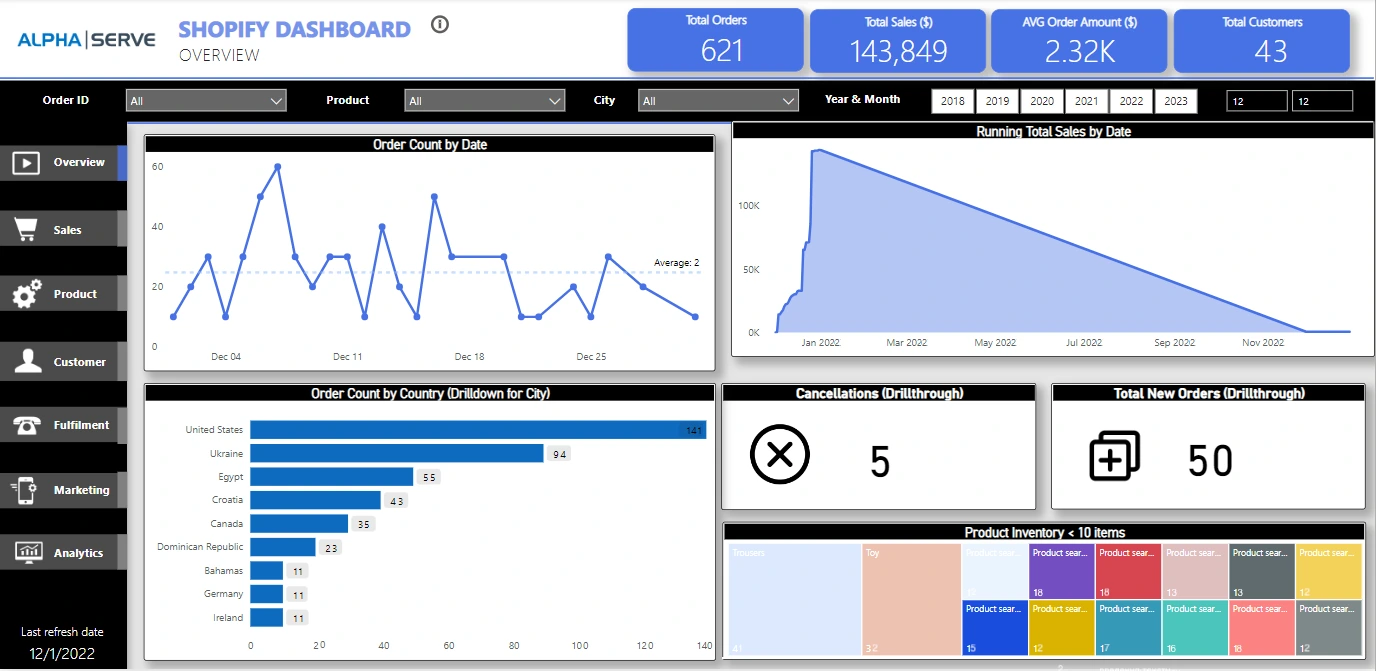
5. Shopify
Shopify is primarily a commerce platform rather than a dedicated sales CRM, but its AI capabilities support merchants with product content, customer communication, analytics, store management, and commerce-oriented tasks. These capabilities can support digital selling where the transaction occurs directly through an online storefront.
For retail and e-commerce businesses, Shopify’s customer, order, product, and transaction information provides useful context for AI-assisted selling and merchandising decisions.
Key features:
E-commerce order and customer data
AI-assisted content
Product management
Store analytics
Marketing support
Commerce automation
Pros
Cons
AI works closely with product, order, and customer data generated through commerce activities.
It is primarily a commerce platform rather than a dedicated enterprise sales-management system.
Supports merchants with content creation, customer engagement, and commerce administration.
Complex B2B opportunity, quotation, and account workflows may require connected applications.
Strong fit where sales primarily originate through online storefront activity.
Broader enterprise finance and operational requirements may extend beyond its core sales scope.
Best for: Small and medium e-commerce businesses, retailers, and digital brands whose primary selling environment is Shopify.
ℹ️Why choose Shopify?
Shopify provides commerce-oriented AI capabilities that work alongside product, customer, order, and online store information.
6. Zendesk Tools
Zendesk Tools is primarily a customer-service platform, but its AI and customer-interaction capabilities can support sales-related workflows where service conversations reveal retention, renewal, expansion, or cross-sell opportunities. AI can help categorize enquiries, summarize conversations, and route customer interactions.
The platform is therefore most relevant when companies want to connect customer-support intelligence with wider account management rather than use it as a complete replacement for CRM or ERP sales processes.
Key features:
Interaction summaries
Intent classification
Routing and workflow automation
Customer-service history
Knowledge assistance
Customer analytics
Pros
Cons
Provides valuable customer-interaction context that can reveal retention and expansion opportunities.
Its primary focus remains customer service rather than complete opportunity-to-order sales management.
AI can summarize, classify, and route high volumes of customer conversations.
Sales teams may still require CRM, quoting, forecasting, and order-management platforms.
Useful when service and sales teams need better visibility into shared customer relationships.
Integration becomes important when commercial information sits outside Zendesk.
Best for: Small, medium, and large organizations where customer-service interactions play an important role in retention, account expansion, and ongoing commercial relationships.
ℹ️Why choose Zendesk Tools?
Zendesk provides AI-assisted customer-service intelligence that can help teams identify customer needs, summarize interactions, and support retention or expansion workflows.
How to Select AI Sales Platforms for Business
AI sales platforms are not a numbers game, yet you are looking for the platform with the one that matters. The platforms should be evaluated on the basis of data architecture and current systems, business workflows, and desired business outcomes.
1. Classify by Architecture: Copilot vs. Agent
Copilots have their primary purpose of helping workers with information, recommendations, drafts, or summaries. An agent is able to perform operations that are approved by the agent on connected systems.
For each process, the autonomy needs to be set by companies. High-impact communication, contracts, and pricing might require more human oversight.
2. Match Platforms to Your Core Bottleneck
Identify problems within a business setting. It may be that one business has a mismatching of forecasts or has to accelerate their prospecting or quotation approvals, or they may need CRM hygiene or cross-sell identification.
AI features should not be added to these limitations; staff members should be addressing them head-on without being burdened with features they don’t use very often.
3. Audit the Technical Foundations
Before deployment, review and evaluate the quality of customer data, API, security, identity management, integrations, role-based access, auditability, and systems.
AI should be given access to the information it needs for such purposes, but not given access to sensitive data that is not relevant to the task.
4. Run a Proof-of-Concept Framework
Test the platform using a process, user group, dataset, and success measure that is known. Conduct performance comparison before scale-up.
The proof of concept should measure actual outcomes such as time saved, response speed, forecast improvement, conversion rate, or administrative reduction rather than simply counting AI usage.
Conclusion
AI for sales is the use of artificial intelligence to support prospecting, qualification, customer engagement, forecasting, opportunity management, quoting, and account development. It can feature generative AI, predictive analytics, conversation intelligence, autonomous agents, workflow automation, and analysis of customer data.
Without connected sales intelligence, enterprises may struggle with fragmented customer data, inaccurate forecasts, inconsistent follow-ups, manual reporting, and limited visibility into cross-sell or pipeline opportunities. AI helps resolve these issues by analyzing sales data, eliminating repetitive tasks, identifying risks, and turning customer and pipeline data into actionable insights.
ScaleOcean sales system is a plug-and-play solution that combines CRM, quotations, inventory, orders, finances, and operations. It comes with embedded ScaleMind intelligence, workflow customization, multi-entity support, unlimited users, and flexible deployment, allowing users to deploy intelligence without distraction from business processes. Schedule a consultation to assess your sales data, workflows, forecasting, integrations, and implementation priorities.
FAQ AI for Sales:
1. Can AI for Sales automate customer outreach and follow-ups?
Yes. AI can prepare personalized messages, trigger follow-up reminders, prioritize contacts, and automate approved outreach sequences, while businesses can retain human review for sensitive or high-value customer communication.
2. How does AI for Sales help sales teams manage large volumes of customer data?
AI can summarize account activity, identify patterns, prioritize opportunities, detect incomplete records, and surface relevant information from large CRM and transaction datasets so representatives spend less time searching manually.
3. Can AI for Sales integrate with CRM and ERP systems?
Yes. AI platforms can connect with CRM and ERP systems through native integrations or APIs, allowing customer, quotation, inventory, order, finance, and operational information to support more contextual sales insights.
4. How can enterprises implement AI for Sales without disrupting existing sales workflows?
Enterprises can begin with focused use cases, map existing workflows, clean required data, integrate priority systems, and introduce AI capabilities in phases. This allows teams to validate results before expanding automation across wider sales processes.













 Key Takeaways