

Supply chain risk management is a systematic process that is used by businesses to detect, evaluate, mitigate, and manage risks that can impact sourcing, production, logistics, technology, or customer deliveries. It allows businesses to keep operating and minimize the impact on operations and finances if a crisis occurs.
For enterprises in Singapore, supply chain management can become increasingly complex when operations involve multiple suppliers, international sourcing, cross-border logistics, manufacturing networks, and regional markets. Fragmented supply chain data can also make it difficult to detect supplier issues early, monitor inventory exposure, or respond quickly when disruptions occur.
A more structured approach is provided through supply chain risk management. Supplier assessment, risk monitoring, inventory planning, contingency planning, and real-time operational data all work together to offer businesses greater visibility and to better prepare them for potential disruption before it can take a major toll on operations.
Our team’s data findings from the Singapore Business Federation reveal that 43% of Singapore’s businesses suffered from supply chain disruptions during the last 12 months. 62% of Singapore businesses were also expanding their supply sources, reflecting a trend towards more resilient supply networks.
This article provides insight into the nature of supply chain risks that businesses are exposed to, how businesses can manage risks, the challenges businesses face, and the role technology can play in making the supply chain more resilient for Singapore businesses.
 Key Takeaways
- Supply chain risk management is a structured process for identifying, assessing, monitoring, and mitigating risks that could disrupt suppliers, operations, logistics, and business continuity.
- Common challenges of supply chain risk management include limited supply chain visibility, disconnected data, difficulty predicting disruptions, supplier dependencies, and the high cost of manual risk monitoring.
- Key strategies of supply chain risk management include supplier diversification, supplier risk assessment, optimal inventory planning, contingency planning, and real-time supply chain data analytics.
- ScaleOcean helps enterprises manage supply chain risk through configurable ERP workflows that connect procurement, inventory, production, logistics, finance, and supplier data within one platform.
What Is Supply Chain Risk Management?
Supply chain risk management is a process of identifying and managing events that will have a negative impact on the flow of materials, products, information, finances, or services through a supply chain. The risk can happen on the supplier sourcing, manufacturing, transportation, inventory, and delivery side at almost any stage.
The procedure is usually to start by pinpointing prospective risks, evaluating their chances of occurrence and impact on the business, and then regularly tracking changes. This enables organizations to transition from being reactive to a disruption after it happens, to being proactive in addressing a risk before it becomes an operational challenge.
For enterprises, supply chain risk management also requires visibility across interconnected processes. A supplier delay, for example, can affect production schedules, inventory availability, delivery commitments, and ultimately customer satisfaction. Managing these risks therefore requires businesses to consider how individual disruptions can affect the wider supply chain.
Why Is Supply Chain Risk Management Important for Businesses?

Supply chain risk management is crucial because it helps businesses prevent significant disruptions, loss of financial resources, or damage to their reputation by proactively identifying and addressing potential risks.
1. Protecting Business Continuity Against Supply Chain Disruptions
Production disruption, delays in customer orders, and higher operating costs can be caused by supply disruptions. Without a risk management system, companies could only find out about their exposure when a supplier, logistics company, or production site has already been impacted.
A structured method can assist companies in determining crucial connections and making backup plans. For instance, businesses can gauge which suppliers are hard to replace, which materials take a longer time to be delivered, and which products would have the most impact on operations if it suddenly became difficult to find them.
2. Improving Supply Chain Visibility and Decision-Making
Risk management relies on the correct information regarding suppliers, stock, orders, manufacturing, and delivery. If it is spread across spreadsheets and not connected, management can find it hard to get a handle on the extent of exposure to the supply chain.
Enhanced centralized visibility enables teams to keep track of pertinent metrics and detect any problems in a timely manner. This can help to expedite supplier allocation, inventory, purchasing, production plans, and logistics planning.
3. Reducing Operational Costs and Unexpected Losses
Disruptions in the supply chain may lead to additional expenses from the supplier or transportation problems. Production downtime, expedited shipping, too much inventory, scrambling to make the purchase, or delayed order placement can all add financial strain.
In order to make an appropriate mitigation decision, businesses can utilize supply chain risk management to assess the potential costs. Companies can then strike a balance between the various options, including alternate suppliers, safety stock, supplier diversification, and contingency planning, with their operations.
4. Maintaining Customer Satisfaction and Service Reliability
Businesses are expected to provide products and services that are consistent even in the face of fluctuations in the outside world. It can have an impact on customer relationships and revenue as well.
Businesses can minimize the risk of extended service interruptions by identifying critical risks in the supply chain and having plans in place for alternative solutions. Improved visibility also enables teams to communicate delays earlier and synchronize the timelines of promises to customers with actual supply availability.
Common Types of Supply Chain Risks
Supply chain risks are divided into five main categories that can interrupt the flow of goods, data, and finances.
1. Supplier and Vendor Risks
Supplier risks occur when vendors cannot consistently provide the required materials, products, services, quality, or delivery performance. These risks can result from financial instability, capacity constraints, quality issues, weak supplier governance, or over-reliance on a single supplier.
Businesses can reduce exposure by maintaining structured supplier information and regularly reviewing supplier performance. Supplier scoring, performance dashboards, and vendor evaluation metrics can help procurement teams identify suppliers that require closer monitoring.
Key areas to monitor include:
- Supplier dependency: Identify how heavily the business relies on individual suppliers and assess the impact if one becomes unavailable.
- Financial stability: Evaluate suppliers’ financial health to identify potential risks of insolvency or reduced operational capacity.
- Supplier performance: Monitor delivery, quality, responsiveness, and fulfilment consistency to identify recurring performance issues.
- Quality consistency: Track product and material quality to detect defects or variations that could disrupt production or customer fulfilment.
- Supplier scoring: Assign measurable scores based on factors such as cost, quality, delivery, reliability, and compliance.
- Supplier performance dashboards: Use centralised dashboards to monitor supplier KPIs and identify changes that require management attention.
- Vendor evaluation metrics: Compare vendors using standardised metrics to support objective supplier reviews and sourcing decisions.
2. Operational and Production Risks
Operational and production risks affect a company’s ability to manufacture or process products according to planned schedules. Material shortages, machine downtime, production delays, inaccurate MRP data, and capacity constraints can all create disruptions.
These risks can become more significant when production depends on tightly coordinated material and capacity requirements. A delay in one component may affect multiple production orders, resulting in idle resources, delayed shipments, or increased procurement costs.
Businesses should therefore monitor production schedules, material availability, machine conditions, capacity utilisation, and other operational indicators to identify potential problems earlier.
Key areas to monitor include:
- Production Scheduling Disruption: Unexpected changes in materials, capacity, or machine availability can interrupt planned production schedules.
- Material Shortage Impact: Insufficient raw materials can delay production, increase procurement costs, and affect customer delivery commitments.
- MRP Accuracy: Inaccurate demand, inventory, or bill of materials data can lead to incorrect material planning and purchasing decisions.
- Machine Downtime: Equipment failures or unplanned maintenance can reduce production capacity and create costly operational delays.
- Production Delays: Delays at one production stage can affect downstream processes, shipment schedules, and customer commitments.
- Capacity Issues: Limited machine, workforce, or production capacity can make it difficult to fulfil planned production requirements.
- Inefficient Workflows: Disconnected processes and manual coordination can slow production activities and make operational bottlenecks harder to identify.
3. Logistics and Transportation Risks
Logistics risks can occur during transportation, customs clearance, shipment handling, or route planning. Delays, freight cost changes, customs issues, and limited shipment visibility can affect both delivery timelines and overall supply chain costs.
For companies managing international shipments, real-time information can help teams understand where goods are located and whether transportation schedules are changing. This visibility becomes particularly useful when businesses need to coordinate inventory, customer commitments, and alternative transportation arrangements.
Key areas to monitor include:
- Shipment Tracking: Monitor shipment locations and status updates to identify delays or exceptions as early as possible.
- Logistics Visibility: Maintain a clear view of shipments, inventory movements, and logistics activities across the supply chain.
- Transportation Planning: Coordinate routes, carriers, schedules, and delivery requirements to improve transportation efficiency.
- Shipment Delays: Identify delays quickly to minimise their impact on inventory availability and customer delivery commitments.
- Customs Issues: Monitor documentation and clearance requirements to reduce the risk of goods being held at borders.
- Freight Cost Changes: Track changes in transportation and freight costs to identify unexpected increases that may affect logistics budgets.
- Route Disruption: Assess alternative routes when congestion, weather, infrastructure issues, or other events affect planned transportation paths.
4. Technology and Cybersecurity Risks
Technology has become closely connected with supply chain operations, making system availability and data security important components of supply chain risk management. System downtime, cyberattacks, data breaches, and third-party technology failures can interrupt critical processes.
Access management and data governance are also important when multiple employees, suppliers, branches, and departments interact with supply chain information. Businesses need appropriate controls to ensure that sensitive information is accessible only to authorised users.
Key areas to monitor include:
- Cyber Attacks: Protect supply chain systems and connected networks against threats that could disrupt operations or expose sensitive information.
- System Downtime: Monitor system availability to minimise interruptions to critical supply chain processes and business operations.
- Data Breaches: Safeguard supplier, customer, financial, and operational data against unauthorised access or exposure.
- Third-Party Technology Risks: Assess technology providers and connected systems that could introduce security, availability, or integration risks.
- ERP Security: Apply appropriate security controls to protect ERP data and ensure critical business functions remain secure.
- Access Management: Control user permissions based on roles and responsibilities so sensitive supply chain information is accessible only to authorised users.
- Data Governance: Establish clear rules for managing, validating, accessing, and maintaining supply chain data across the organisation.
5. Environmental and Geopolitical Risks
Environmental and geopolitical risks are external factors that can affect sourcing, production, transportation, and market access. Natural disasters, trade restrictions, political instability, and regulatory changes can create disruptions that businesses cannot directly control.
These risks are particularly relevant for organisations operating across multiple countries. Companies can reduce concentration risk by diversifying suppliers and sourcing locations while monitoring regulatory and geopolitical developments that may affect their supply networks.
Key areas to monitor include:
- Natural Disasters: Assess potential disruptions from events such as floods, earthquakes, storms, or other hazards that can affect suppliers, facilities, and transportation.
- Trade Restrictions: Monitor tariffs, export controls, sanctions, and other trade measures that may affect sourcing, imports, or cross-border shipments.
- Political Instability: Evaluate political developments that could disrupt supplier operations, transportation routes, market access, or regional supply networks.
- Regulatory Changes: Track changes in laws, trade regulations, environmental requirements, and industry standards that may affect supply chain processes.
How Does Supply Chain Risk Management Work?
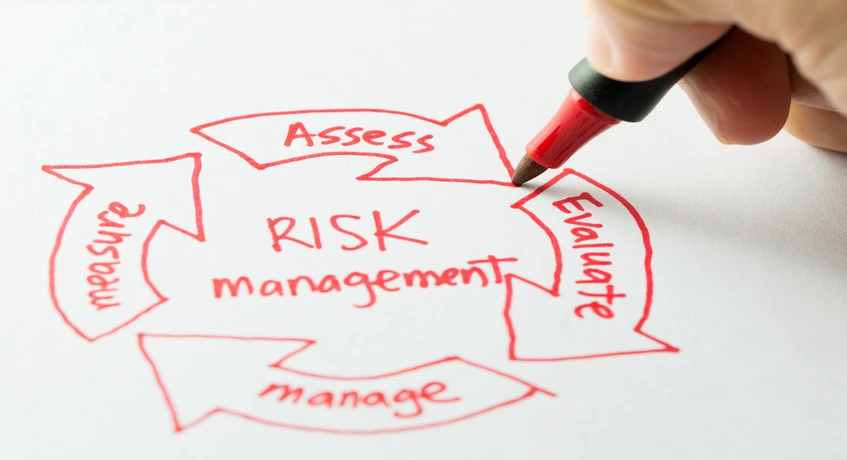
Supply Chain Risk Management (SCRM) operates through the processes of vulnerability identification, evaluation, mitigation, and ongoing monitoring of vulnerabilities in a multi-stage vendor supply chain to mitigate risks to business operations.
Step 1. Identify Supply Chain Risks
The initial step is to identify and sketch out the supply chain and the vulnerabilities of the supply chain that can occur from the suppliers, procurement, production, inventory, transportation, technology, and distribution. It’s important to take into account internal threats and external threats that may come into play and affect business operations.
A centralised view of suppliers, materials, inventory, orders, and logistics activities can make it easier to identify dependencies and areas that require closer monitoring. Supply chain execution can further help businesses coordinate procurement, inventory, logistics, and other operational activities more efficiently.
Step 2. Assess Risk Probability and Business Impact
Once potential risks have been identified, businesses should assess the probability of each risk occurring and the impact of each risk on the business. This assessment assists management in the identification of risks which need immediate attention and those which can be monitored over time.
For example, a company may prioritise a single-source supplier for a critical component because a disruption could stop production. Risk assessments can consider factors such as financial impact, operational downtime, customer impact, recovery time, and supplier availability.
Step 3. Develop Risk Mitigation Strategies
Businesses can then create the strategies to mitigate risks after they have been prioritised. They can be supplier diversification, alternative sourcing, safety stock, contingency suppliers, backup transportation routes, or alternative production arrangements.
The appropriate strategy depends on the nature and potential impact of each risk. Businesses should balance resilience requirements with costs to avoid unnecessary inventory or operational complexity. Using supply chain optimization software can also help businesses improve planning, resource allocation, and supply chain efficiency.
Step 4. Implement Risk Response Plans
A better mitigation strategy is assisted by a well-explained response plan. It is important for businesses to have roles, approvals, escalation routes, and contingency plans in place for the potential of critical events.
For instance, if a key supplier is unable to deliver the order, the response plan may include the timeframe for procurement to switch to an alternative supplier, who will authorize the purchase, and the production team’s timetable adjustments.
Step 5. Monitor and Review Risks Continuously
The risks of the supply chain can vary over time based on changes in supplier, market, regulation, transportation and customer demand. Businesses should therefore be vigilant at all times to risk indicators and review their mitigation measures regularly.
Management can leverage real-time dashboards, alerts, supplier performance data, inventory information, and operational analytics to help them recognize change sooner, and plan a supply chain shift accordingly.
Challenges in Implementing Supply Chain Risk Management
While supply chain risk management can help enhance resilience, it can be difficult to address in complex business operations. It takes an enterprise a lot of effort to achieve a unified view of supply chain exposure if the information comes from multiple suppliers, systems, locations and departments.
The main challenges and their potential business impacts include:
| Challenge | Business Impact |
|---|---|
| Fragmented Supply Chain Data | Makes it difficult to establish a complete view of suppliers, inventory, orders, and potential risks. |
| Limited Supplier Visibility | Delays identification of supplier performance issues, dependency risks, and potential disruptions. |
| Manual Risk Monitoring | Increases administrative work and can delay the detection and response to emerging risks. |
| Inaccurate or Outdated Data | Can lead to incorrect procurement, inventory, production, and logistics decisions. |
| Complex Multi-Supplier Networks | Makes it harder to identify dependencies and understand how one disruption could affect other operations. |
| Disconnected Business Systems | Creates data silos between procurement, inventory, production, logistics, and finance teams. |
| Lack of Real-Time Insights | Makes it harder for management to identify changes quickly and respond before disruptions escalate. |
1. Limited Supply Chain Visibility Across Multiple Partners
When suppliers, logistics providers, distributors, and other partners operate through separate systems, businesses may struggle to obtain a complete view of supply chain activities. This makes it harder to identify supplier dependencies, shipment issues, inventory risks, and disruptions before they affect operations.
Poor visibility can also make supplier diversification more complex as the management may not have adequate data to understand which suppliers, locations or materials they have the highest concentration risk.
Based on data our team obtained from The Business Times, 8 in 10 ASEAN businesses are looking to move more of their supply chains into the region amid trade tensions and disruptions. The survey also revealed that 35% of respondents said supply chain resilience is a factor in their investment decisions in the region.
This is yet another reason for businesses to be more visible when they diversify their suppliers and supply sources. A centralised system can enable management to link supplier, procurement, inventory and logistics information which can help to gain an understanding of potential exposure in the supply chain.
2. Managing Data From Disconnected Systems
Supply chain information is often spread across procurement systems, ERP platforms, spreadsheets, warehouse applications, logistics tools, and supplier portals. When these systems do not share data effectively, teams may spend considerable time consolidating information manually.
Disconnected data can also create inconsistent records and make it difficult to determine which information is current. As a result, procurement, inventory, production, and logistics teams may make decisions based on different versions of the same information.
3. Difficulty Predicting Future Supply Chain Disruptions
Not every disruption can be predicted, particularly when risks originate from geopolitical events, natural disasters, trade restrictions, or sudden changes in transportation conditions. Businesses therefore need to monitor risk indicators rather than relying only on historical information.
The challenge becomes greater when companies lack real-time data or analytical tools that can identify changes in supplier performance, demand, inventory, or logistics conditions. Without these insights, management may only respond after a disruption has already affected operations.
4. High Cost of Manual Risk Monitoring
Manually reviewing supplier performance, inventory exposure, shipment status, and risk indicators can require significant time from procurement, supply chain, and management teams. As the number of suppliers and transactions grows, maintaining this approach becomes increasingly difficult.
Manual monitoring can also delay risk identification because teams must first collect and validate information before analysing it. Automating data collection, alerts, dashboards, and reporting can reduce repetitive work while helping businesses respond to potential risks more quickly.
Supply Chain Risk Management Strategies for Enterprises
Effective Supply Chain Risk Management (SCRM) for enterprises requires a structured, continuous framework to identify, assess, mitigate, and monitor disruptions across multi-tier supplier networks.
1. Build a Multi-Supplier and Diversified Supply Network
Having only one supplier or from a particular geographic area can amplify the risks in the supply chain in case of an unexpected event. A possible solution to this reliance is to develop alternate suppliers and to geographically disperse the sourcing across acceptable suppliers.
However, diversification is not just about more vendors. When selecting alternatives to critical materials to be used in business, the following factors relating to the quality and availability of suppliers, lead times, costs, financial stability and geographic exposure must be taken into account.
2. Improve Supplier Risk Assessment and Collaboration
Frequent supplier evaluations enable businesses to uncover performance, financial, quality, capacity and compliance changes in its suppliers before they become sever operational issues. A solid foundation of supplier KPIs can be established and reviewed periodically in the business.
The capability of a risk-management program can be enhanced by improved working relationships. Having some idea of customer demand, production requirements and delivery schedules and sharing relevant operational data can help suppliers anticipate changes in demand and respond to disruptions accordingly.
3. Maintain Optimal Inventory Levels
An inventory disruption can cause a disruption of the normal replenishment pattern, and inventory can serve as a safety buffer. The businesses can compute the proper safety stock based on the variability of demand, the supplier’s lead time, the critical nature of materials and the potential disruption scenarios.
The purpose is not to increase the carrying capacity. Too much and too little inventory can cause problems in terms of costs of holding product on hand, working capital needs, and loss of operation. Accurate inventory and demand information is consequently important to businesses to set an appropriate balance.
4. Create Supply Chain Contingency Plans
A contingency plan is a plan that will detail the contingency response of the business to a significant interruption in the supply chain. Can include backup suppliers, alternate transportation, alternate materials, emergency procurement process, and escalation responsibility.
These plans should also be tested and updated by business periodically. In fact, supply networks change over time and what was a contingency plan a few years ago may not reflect current suppliers, facilities, supply lines or customer needs.
5. Use Real-Time Supply Chain Data Analytics
Real-time data analytics can help businesses monitor supplier performance, inventory levels, purchase orders, shipments, production requirements, and other indicators that may signal emerging risks.
This information can then be compiled on dashboards and reports, enabling management to identify changes before they have even occurred and make decisions based on the state of the operation rather than having to manually prepare a report.
The Role of Technology in Supply Chain Risk Management
Technologies can make the supply chain risk management more efficient by providing links between procurement, inventory, production, logistics, finance and management of the supplier. Risk monitoring doesn’t have to be a dedicated role it could be part of other aspects of business.
It can help companies gain visibility, and reduce the burden of business stakeholders in information gathering and processing regarding the supply chain.
1. How ERP Software Improves Supply Chain Visibility
ERP software can connect procurement, inventory, warehouse, production, sales, and financial and supplier information to a single centralised system. This provides companies with a more comprehensive understanding of the links between activities throughout the supply chain.
For example, procurement teams can view supplier information alongside purchase orders and inventory requirements, while production teams can assess material availability against production schedules. This connected visibility can help businesses identify potential supply gaps earlier.
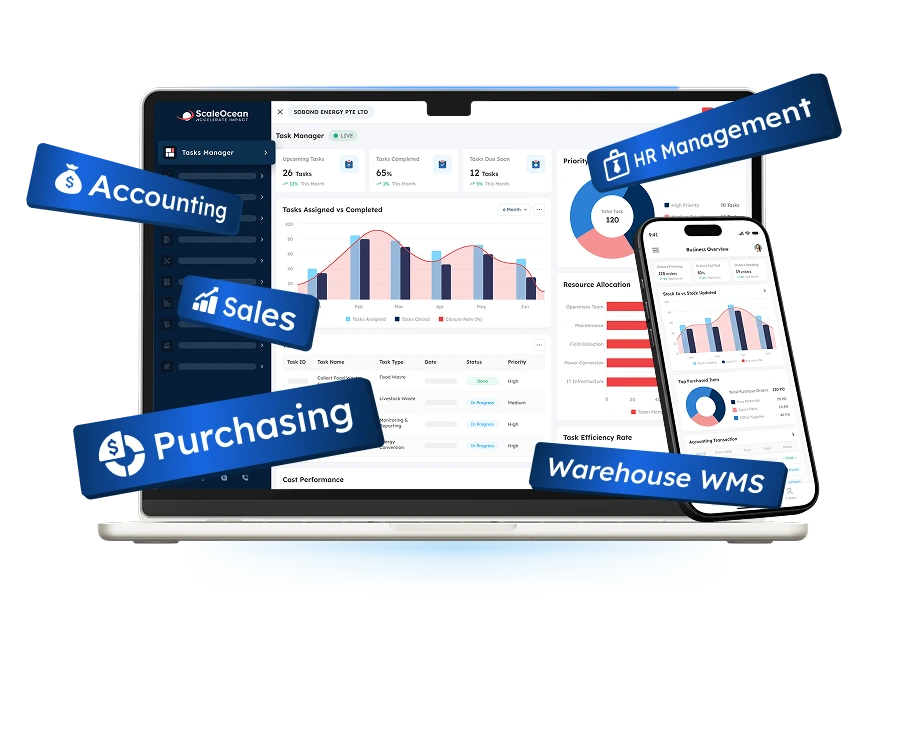
For enterprises managing multiple locations, suppliers, and operational processes, ScaleOcean Atlas can be configured to connect supply chain workflows within a broader ERP environment. Businesses can align procurement, inventory, warehouse, production, logistics, and finance data through configurable workflows, while ScaleMind-powered insights can support analysis and decision-making.
The system has been optimized and complies with PDPA regulations and local financial reporting standards, including IRAS and GST requirements in Singapore. It can also be configured to support EDG and CTC requirements, subject to eligibility and qualifying project costs. Schedule a consultation with ScaleOcean to discuss supply chain workflows suited to your business requirements.
2. AI and Predictive Analytics for Supply Chain Risk Management
With the help of AI and predictive analytics, organizations can analyze historical and current data from their supply chain to identify patterns, anomalies, and potential risks. These are all capabilities that can aid with demand forecasting, supplier analysis, inventory planning and early identification of unusual changes.
AI can identify any inconsistencies in the supplier lead time, changes in demand, or other irregularities that can require further investigation. However, AI is not meant to replace business knowledge and traditional risk management strategies.
3. IoT and Real-Time Monitoring for Supply Chain Operations
This IoT device can collect operational data for equipment, assets in the warehouse, vehicles and other connected assets directly. It enables businesses to get more timely information on physical activities on the supply chain.
The sensors can monitor equipment status, the temperature of goods, location of assets or the environment. Real-time alerts can then help operational teams to explore potential problems before they escalate into larger problems.
4. Cloud-Based Supply Chain Management Systems
The adoption of supply chain management systems based on cloud technology. Use of supply chain management systems based on cloud technologies.
The cloud-based systems provide the ability to securely share supply chain information from multiple locations through a single platform. This can be particularly beneficial for companies that have several sites, warehouses, suppliers or even markets.
Supply Chain Risk Management Framework for Singapore Companies
Singapore companies build a strong Supply Chain Risk Management (SCRM) framework by combining international standards, structured risk steps, and smart technology to protect trade and operations.
1. Assess Current Supply Chain Risk Exposure
Start by reviewing the company’s existing supply chain structure and identifying where disruptions could have the greatest operational or financial impact. This assessment should cover suppliers, sourcing locations, inventory, production, logistics, technology, and customer commitments.
Businesses can then categorise risks based on their likelihood and potential impact. This provides a clearer basis for prioritising mitigation efforts and allocating resources to the areas with the greatest exposure. Supply chain network design can further help businesses evaluate sourcing structures, locations, and dependencies when planning a more resilient supply network.
2. Map Critical Suppliers and Business Dependencies]
Identify suppliers, materials, services, systems, and logistics partners that are critical to daily operations. Businesses should understand which activities depend on a particular supplier or location and how quickly alternatives could be activated if a disruption occurs.
Mapping these dependencies can also reveal concentration risks. For example, relying on one supplier for a critical component may require an alternative sourcing strategy or additional inventory protection.
3. Establish Risk Monitoring Processes
Once critical risks have been identified, businesses should establish consistent processes for monitoring supplier performance, inventory levels, shipment status, demand changes, and other relevant indicators.
Clear ownership is also important. Procurement, supply chain, operations, finance, and management teams should understand which risks they are responsible for monitoring and when an issue should be escalated for further action.
4. Integrate Risk Management Into ERP Workflows
Risk management becomes more effective when it is connected to everyday business processes rather than handled as a separate reporting activity. Integrating procurement, inventory, supplier, production, logistics, and financial information can give businesses a more complete view of potential supply chain exposure.
For Singapore enterprises, ScaleOcean Atlas can support this approach through configurable ERP workflows that connect supply chain activities across departments and locations. Businesses can centralise operational information, establish role-based access and approval workflows, and use ScaleMind-powered insights to support supply chain analysis.
Conclusion
Supply chain risk management is a structured process for identifying, assessing, monitoring, and mitigating risks that could disrupt the flow of materials, products, information, finances, and services. It helps businesses prepare for potential disruptions while maintaining greater visibility across their supply networks.
For Singapore companies, fragmented data, supplier dependencies, limited visibility, manual monitoring, and unpredictable disruptions can make supply chain resilience more difficult to maintain. Businesses can address these challenges by diversifying suppliers, maintaining appropriate inventory, establishing contingency plans, and using connected data to monitor supply chain conditions.
ScaleOcean Atlas helps businesses manage supply chain risk as part of broader ERP operations by connecting procurement, inventory, finance, and supplier workflows. With configurable processes, businesses can improve supply chain visibility and support more informed risk management decisions. Schedule a consultation to explore a configurable supply chain management solution.
FAQ:
1. What are the 5 steps of supply chain risk management?
The five common steps are identifying potential risks, assessing their likelihood and impact, developing mitigation strategies, implementing response plans, and continuously monitoring and reviewing risks as supply chain conditions change.
2. How can ERP software help with supply chain risk management?
ERP software can connect procurement, supplier, inventory, production, logistics, and financial data in one platform, helping businesses improve visibility, monitor operational changes, identify potential risks, and coordinate responses across departments.
3. What is the difference between supply chain management and supply chain risk management?
Supply chain management focuses on planning and managing the overall flow of goods, information, and resources, while supply chain risk management specifically focuses on identifying, assessing, mitigating, and monitoring risks that could disrupt those activities.
4. How can companies improve supply chain resilience?
Companies can improve resilience by diversifying suppliers, mapping critical dependencies, maintaining appropriate safety stock, preparing contingency plans, monitoring supply chain data, and using integrated technology to improve visibility and response capabilities.





















.png)