

Warehouse distribution is the end-to-end process of receiving, storing, organizing, managing, and shipping products from a warehouse facility to their next destination within the supply chain. It involves multiple activities, including inventory handling, order fulfillment, picking and packing, and delivery coordination to ensure products move efficiently from suppliers to customers.
Managing warehouse distribution can be challenging for enterprises, particularly when dealing with a large number of SKUs, multiple warehouses, and complex supply chain logistics. Challenges that can impact overall efficiency and customer service include low inventory visibility, the absence of B2W solutions, manual order picking processes, and poorly utilized warehouse space.
To address these issues, companies should establish a more structured warehouse distribution system through technology. A connected distribution system allows enterprises greater insights into their inventories, streamlines repetitive tasks, optimizes warehouse functions, and allows warehouse activities to be absorbed by purchasing, sales, finance, and other business functions.
According to the data our team got from McKinsey & Company, 70% of surveyed logistics and supply chain executives plan to invest approximately USD 100 million in automation over the next five years to improve speed and reduce labor dependency. This highlights the growing importance of warehouse technologies that help businesses improve operational visibility and distribution.
Read this article to understand what warehouse distribution is, how it works, the different distribution models, common challenges, key performance indicators, and how technology can help businesses build more efficient warehouse operations.
 Key Takeaways
- Warehouse distribution is the process of managing product movement from receiving, storage, order fulfillment, and shipping within the supply chain.
- Effective warehouse distribution helps businesses improve fulfillment speed, reduce operational costs, maintain inventory accuracy, and deliver better customer experiences.
- Modern warehouse distribution requires digital solutions that provide real-time visibility, automate workflows, and connect warehouse operations with other business functions.
- ScaleOcean helps businesses optimize warehouse distribution through configurable ERP workflows and integrated operations across inventory, sales, finance, and distribution activities.

What Is Warehouse Distribution?
The warehouse distribution process handles the movement of goods through a warehouse from receipt, in the warehouse, to the receipt by the customer. This may include the acceptance, identification, inventorying, storage, and movement of the products within the warehouse and the movement of goods to the next stage in the supply chain.
A typical distribution process in a warehouse involves receiving materials, checking inventory, storing the product, picking orders, packing, and shipping orders. Coordinating the timing of product availability in the right place, in the right amount, and at the right time is very important at each stage.
For modern businesses, warehouse distribution plays an important role in maintaining supply chain efficiency. Companies operating in manufacturing, retail, wholesale, FMCG, logistics, and e-commerce rely on effective distribution operations to manage high transaction volumes and fulfill customer expectations.
With increasing business complexity, warehouse distribution requires more than physical storage capacity. Businesses need real-time inventory visibility, accurate demand information, and connected workflows to manage warehouse activities efficiently across different locations.
Warehouse vs Distribution Center: What Is the Difference?
While the terms warehouse and distribution center are often applied interchangeably, they have different functions in supply chain operations. The main duty of a warehouse is to store goods, while that of a distribution center is to facilitate the quicker movement of products by receiving, sorting, processing, and shipping.
Warehousing is often used when businesses require storage capacity for products in the short or long-term. Meanwhile, distribution centers concentrate more on how fast orders can be fulfilled, how much inventory moves in or out of the center, and how they can coordinate product supply and movement between the supplier, business, and customer.
| Comparison | Warehouse | Distribution Center |
|---|---|---|
| Main Purpose | Primarily used for storing goods until they are needed. | Designed to receive, process, organize, and distribute products efficiently. |
| Primary Focus | Inventory storage and stock preservation. | Product movement, order fulfillment, and delivery coordination. |
| Inventory Movement | Products may remain stored for longer periods. | Products typically move quickly through receiving and outbound processes. |
| Order Fulfillment | May support basic order preparation activities. | Provides advanced picking, packing, sorting, and shipping operations. |
| Technology Requirements | Requires inventory tracking and storage management capabilities. | Requires stronger integration, automation, and real-time operational visibility. |
| Business Use Case | Suitable for businesses requiring storage capacity. | Suitable for businesses managing high-volume distribution and customer deliveries. |
For enterprise businesses, choosing between warehouse and distribution center operations depends on factors such as product volume, customer expectations, delivery requirements, and supply chain complexity. Many growing companies combine both functions to achieve better inventory control and faster fulfillment.
What Is a Distribution Center?
A distribution center is a specialized facility designed to receive products from suppliers or manufacturers, organize inventory, process orders, and distribute goods to customers, retailers, or other business locations. Unlike traditional warehouses that mainly focus on storage, distribution centers emphasize speed, coordination, and efficient product movement.
Distribution centers are often a hub in a supply chain network. Products are received, inspected, and sorted as per customer requirements or business requirements and can be consolidated and sent to various destinations.
Distribution centers are very useful for businesses with a presence across the region as they can reduce time to market, increase supply chain responsiveness, and facilitate a more efficient flow of goods between suppliers, warehouses, and customers.
Why Warehouse Distribution Matters for Modern Businesses
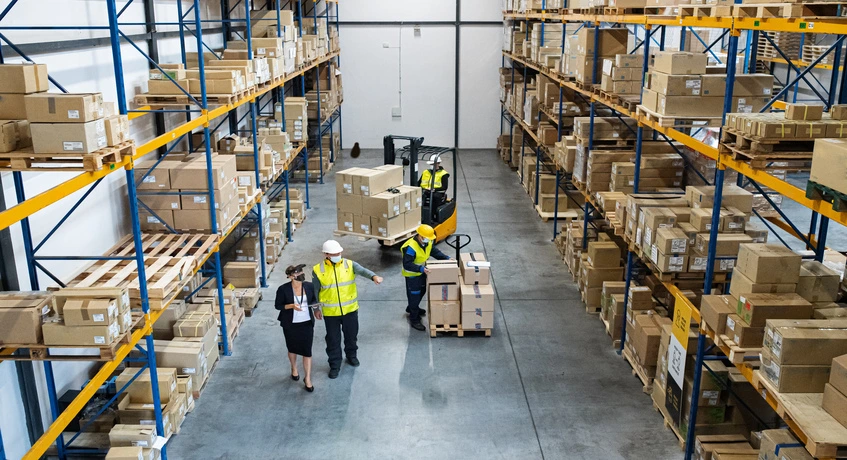
The significance of warehouse distribution is to minimize inefficiency, offer customer satisfaction, and to build a strong foundation for business expansion.
1. Faster Fulfilment
The primary benefit of good warehouse distribution is that it can be done quickly. Businesses should be able to process customer orders quickly and be able to accurately pick, pack, and ship products as required.
An optimized distribution process helps reduce delays by improving coordination between inventory availability, order processing, and shipping activities. This is especially important for businesses managing high order volumes or customers who expect shorter delivery times.
2. Lower Operational Costs
Efficient warehouse distribution helps businesses reduce unnecessary operational expenses caused by manual processes, inventory errors, inefficient workflows, and poor resource allocation.
By improving warehouse organization and automating repetitive activities, businesses can optimize labor usage, reduce unnecessary product handling, and improve overall operational efficiency. This allows companies to manage distribution activities with better cost control.
3. Improved Inventory Accuracy
When stock data is inaccurate, it can cause delays, stockouts, overstocks, and fulfillment issues, all of which impact the business’s inventory accuracy. Real-time visibility helps businesses to know the current stock levels so that they can make informed decisions about replenishment.
A structured warehouse distribution system can assist companies in monitoring product movement from receiving to storage and shipping. This helps to minimize the difference between the actual inventory and the recorded inventory.
4. Better Customer Experience
Warehouse distribution directly affects customer experience because delivery speed, order accuracy, and product availability depend on efficient warehouse operations.
Businesses with optimized distribution processes can provide more reliable order fulfillment, reduce delivery delays, and improve service consistency. This creates stronger customer satisfaction, especially for industries where fast and accurate delivery is a competitive advantage.
By improving coordination between inventory, fulfillment, and delivery processes, businesses can create a more responsive supply chain that supports changing customer expectations.
How Does Warehouse Distribution Work?
Warehouse distribution refers to the complete process of receiving goods from suppliers, storing inventory securely, and returning orders to retail stores or customers.
Well-organized warehouse distribution can help companies minimize delays, improve inventory accuracy, and provide a consistent level of fulfillment quality.
1. Receiving and Inventory Checking
The distribution process begins with the reception of items from suppliers, manufacturers, or other company locations.
Warehouse staff receive inbound shipments, perform quality checks, and compare incoming goods to purchase orders or delivery documentation. Accurate receiving procedures can prevent inaccuracies further down the supply chain.
2. Storage and Inventory Management
Once products are received and verified, staff allocate products to storage locations for later retrieval based on storage needs, product demand, and general warehouse organization.
Good storage management makes maximum use of space, while efficient inventory management helps reduce stock inaccuracies. Businesses that deal in large volumes or multiple warehouses will benefit from real-time inventory visibility.
3. Picking, Packing, and Order Fulfilment
Picking and packing involve selecting products from storage locations, preparing customer orders, and ensuring items are packaged correctly before shipment. This stage directly affects order accuracy, fulfillment speed, and customer satisfaction.
Businesses may use different picking strategies depending on order volume and warehouse structure, including batch picking, zone picking, or wave picking. Without proper coordination, manual picking processes can lead to incorrect shipments, longer processing times, and increased operational costs.
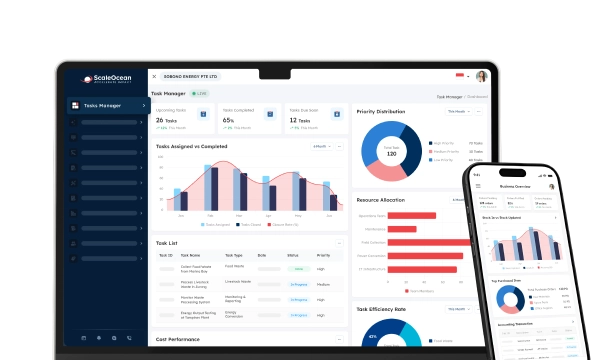
ScaleOcean Atlas supports warehouse teams by providing connected order and inventory workflows that improve fulfillment coordination. By linking customer orders with stock availability and warehouse activities, businesses can reduce fulfillment delays and improve order accuracy.
4. Shipping and Delivery Coordination
The final stage of warehouse distribution involves preparing completed orders for shipment and coordinating deliveries to customers, retailers, or other business locations. This process includes dispatch planning, transportation coordination, and delivery status tracking.
Efficient shipping coordination helps businesses improve delivery reliability and respond faster to customer requirements. For companies operating across multiple locations, having clear visibility into outbound activities is essential for maintaining consistent service levels.
An integrated distribution process enables businesses to monitor shipment progress, coordinate delivery activities, and improve communication between warehouse teams and logistics operations.
Types of Warehouse Distribution Models
Warehouse distribution models define how inventory is stored, managed, and moved from facilities to end customers. Selecting the right model helps companies improve inventory flow, reduce transportation costs, and achieve faster fulfillment.
1. Centralised Distribution Model
A centralised distribution model uses a single main distribution facility to receive, store, and distribute products to multiple locations or customers. This approach allows businesses to consolidate inventory management and maintain greater control over distribution activities.
The model enables a more centralized approach to inventory management and offers businesses control over distribution operations. Centralized models provide greater visibility over inventory positions, which helps reduce miscalculations. However, companies will need an efficient supply network to transport goods across multiple locations rapidly.
This model is commonly used by companies that want stronger control over inventory, purchasing coordination, and distribution planning.
2. Regional Distribution Centre Model
A regional distribution centre model uses multiple distribution facilities located closer to specific customer markets or operational areas. This allows businesses to reduce delivery distances and improve response times.
For companies operating across different regions, regional distribution centers help improve delivery efficiency while allowing inventory to be positioned closer to demand areas.
3. Hub-and-Spoke Distribution Model
The hub-and-spoke distribution model uses a central hub that connects with smaller distribution points or warehouses. Products are consolidated at the main hub before being distributed to smaller locations.
This model helps businesses optimize transportation networks by reducing unnecessary movement and improving coordination between distribution points.
Companies using this approach can achieve better distribution efficiency while maintaining flexibility across multiple service areas.
4. Direct-to-Customer Fulfilment Model
The model is used by many online retail businesses and a range of other industries that prioritize quick order processing. It can minimize handling times and speed up shipping, but it does require powerful supply and inventory management systems to lower the chance of order mistakes.
There are major operational challenges with conventional warehousing distribution, which include manual processes, rigid infrastructure, and a lack of interconnected systems.
However, businesses need strong inventory visibility and fulfillment management capabilities to ensure accurate order processing and customer satisfaction. This is especially important for industries with strict distribution requirements, where solutions such as pharmaceutical distribution software can help support accurate tracking, compliance, and controlled product movement.
Key Challenges of Traditional Warehousing Distribution
Traditional warehousing distribution faces major operational hurdles due to heavy reliance on manual labor, rigid legacy infrastructure, and disconnected systems.
Without an integrated approach, warehouse teams may experience difficulties tracking inventory movements, coordinating orders, optimizing storage capacity, and maintaining accurate operational data.
| Warehouse Distribution Challenge | Operational Impact |
|---|---|
| Limited Real-Time Inventory Visibility | Businesses may struggle to identify accurate stock levels, causing inventory discrepancies, delayed replenishment, overstocking, or stock shortages. |
| Manual Warehouse Processes | Repetitive activities such as stock recording, order checking, and inventory updates require more time and increase the risk of human errors. |
| Disconnected Systems Across Departments | Limited integration between warehouse, sales, purchasing, and finance creates data silos and reduces visibility across business operations. |
| Inefficient Warehouse Space Utilisation | Poor storage planning can reduce warehouse capacity, increase product retrieval time, and slow down picking activities. |
| Complex Multi-Warehouse Management | Managing inventory across multiple locations becomes more difficult without centralized data and standardized distribution workflows. |
| Limited Performance Monitoring | Without accurate warehouse data and KPI tracking, businesses may struggle to identify inefficiencies and improve operational performance. |
To overcome these challenges, businesses need warehouse distribution solutions that connect inventory, fulfillment, and operational processes within a centralized platform. A digital approach enables companies to improve visibility, automate workflows, and make data-driven decisions across their distribution network.
Warehouse Distribution Best Practices for Improving Efficiency
Improving warehouse and distribution efficiency involves having the right layout, leveraging real-time technology, and reducing picking steps.
Through these practices, businesses can avoid bottlenecks, improve resource utilization, and ensure their distribution system is adaptable for future growth.
1. Maintain Real-Time Inventory Visibility
Real-time inventory transparency provides a business with the ability to track inventory levels, movements, and changes across warehouse locations. This allows operations teams to make faster decisions with regard to replenishment, fulfilment, and inventory planning.
Failing to keep accurate inventory data can result in stock-outs, excess stock, and delays in fulfilling customers’ orders. Maintaining inventory updates provides teams with an accurate picture of the inventory state across warehouses.
2. Optimise Warehouse Layout and Space Utilisation
An optimized warehouse layout allows you to use available space efficiently and improve product accessibility. Appropriate planning of your warehouse layout factors in demand for products, storage needs, picking frequency, and movement needs.
Inefficient warehouse layouts can lead to higher travel times for operations teams, slower picking times, and higher operating costs. Creating a logical layout, businesses that manage regional logistics, manufacturing, and regional supply chains need clear insight into inventory flows across all locations and live warehouse performance data.
3. Automate Repetitive Warehouse Processes
Warehouse automation reduces the manual effort involved in operations like stocktaking, order entry, inventory updates, and reporting. Automation puts less burden on operations teams to focus on higher-value activities while improving precision.
For operations with high-volume transactions, manual work can cause delays and has greater scope for human error. Automating important operations can improve speed and accuracy across the supply chain.
Scale Ocean Atlas offers configurable warehouse workflows that automate your processes based on your operational needs. Rather than optimizing your operations around fixed standards, configure your workflows around your existing operations.
4. Monitor Warehouse Performance Metrics
Tracking warehouse performance metrics helps businesses evaluate operational efficiency and identify areas requiring improvement. Important measurements include inventory accuracy, order fulfillment speed, picking accuracy, warehouse utilization, and delivery performance.
Without proper KPI monitoring, businesses may have limited visibility into warehouse performance and struggle to identify the causes of operational delays. Regular performance analysis allows management teams to make informed decisions and continuously improve warehouse processes.
Warehouse Distribution KPIs Businesses Should Track
Without monitoring KPIs, operations teams may not have a clear insight into bottlenecks in warehouse operations and hence may not be able to correct them. Regular tracking of key data points allows managers to make informed decisions.
| Warehouse Distribution KPIs | Business Purpose |
|---|---|
| Inventory Accuracy | Measures the consistency between recorded inventory data and actual physical stock to reduce discrepancies and improve stock reliability. |
| Order Fulfillment Rate | Evaluates the percentage of customer orders completed successfully to measure fulfillment efficiency and service performance. |
| Order Cycle Time | Tracks the time required from receiving an order until the product is processed, packed, and shipped to improve delivery speed. |
| Picking Accuracy | Measures how accurately warehouse teams select products during order preparation to reduce errors and improve customer satisfaction. |
| Warehouse Utilisation Rate | Evaluates how effectively warehouse space is used to optimize storage capacity and improve operational efficiency. |
| On-Time Delivery Rate | Measures the percentage of deliveries completed according to schedule to improve reliability and customer experience. |
| Inventory Turnover Rate | Shows how efficiently inventory moves through warehouse operations and helps businesses optimize stock levels. |
By monitoring these KPIs, businesses can gain clearer insights into warehouse performance and identify areas where operational improvements can be made. Accurate warehouse data also helps management teams make better decisions regarding inventory planning, resource allocation, and distribution strategies.
How Technology Enhances Warehouse Distribution Operations
Technology can improve your warehouse distribution by increasing speeds, enhancing inventory accuracy, and reducing manual effort.
Based on the insights our team gathered from CNA, Singapore PharmaTech increased its usable warehouse capacity from approximately 30% to nearly 80% through automation, while improving inventory accuracy and reducing manual stocktaking. This demonstrates how warehouse technology can support more efficient distribution operations.
1. Warehouse Management System (WMS)
Warehouse Management System (WMS) provides you with on-the-ground control and oversight of day-to-day distribution tasks like storage, receiving, inventory tracking, picking, packing, and order dispatch. Your warehouse teams will gain visibility into inventory locations, movements, and operational metrics.
Through the benefits of WMS features, you can optimise daily workflows, reduce manual tracking, and increase inventory accuracy, especially for multi-warehouse and multi-SKU warehouse operations.
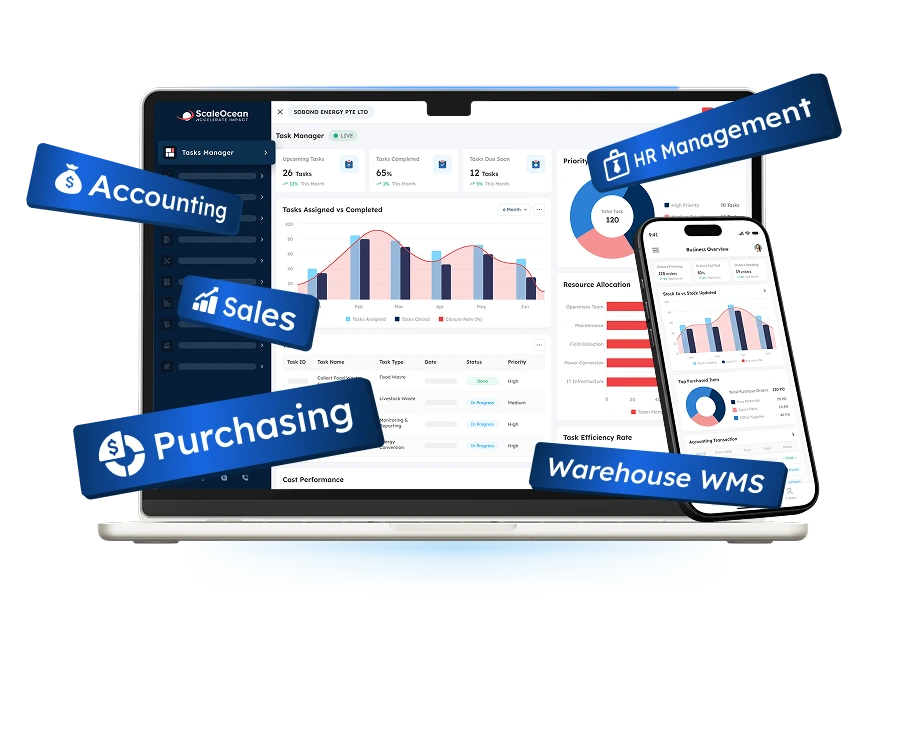
Scale Ocean Atlas connects your WMS with your broader operations to create a connected inventory, sales, purchasing, and distribution platform. This can prevent double data entry and ensure that data across your functions is consistent and accurate.
2. ERP Integration for End-to-End Visibility
By embedding ERP processes into distribution operations, businesses can create a connected ecosystem across finance, procurement, sales, inventory, and supply chain management. This enables seamless data flow, eliminates disconnected information sources, and ensures teams have access to relevant operational insights when making strategic decisions.
Through integrated ERP processes, you can promote better coordination between different departments. Your warehouse teams can plan for sales and buying needs based on live sales and inventory data, and purchasing teams can make better decisions due to access to all relevant information.
3. AI-Powered Analytics for Smarter Decisions
AI-powered analytics enables you to analyze data patterns to make better decisions in your warehouse distribution processes. Your teams can access information about the state of inventory, order speed, and distribution efficiencies to make smarter decisions.
AI can help you identify bottlenecks, monitor performance, and forecast demand and supply chain trends. This helps you plan for smarter business operations rather than relying on manual reports.
Why Singapore Businesses Need Smarter Warehouse Distribution Solutions

Singapore-based businesses operate in an interconnected environment, with many businesses relying on ensuring that their warehouses and distribution run smoothly for their regional presence to succeed. Businesses that manage regional logistics and regional supply chains need clear insight into inventory flows across all locations and live warehouse performance data.
As distribution requirements become more complex, businesses need solutions that can support multiple warehouses, improve inventory accuracy, and connect warehouse activities with other business functions. A smarter distribution approach helps companies reduce operational gaps, improve coordination, and build more scalable supply chain processes.
ScaleOcean Atlas helps Singapore businesses manage warehouse distribution through a configurable ERP platform designed around their specific operational requirements. Instead of forcing businesses to follow rigid workflows, the system can be adapted to match existing warehouse structures, inventory processes, approval flows, and business operations.
With connected workflows across inventory, sales, finance, and distribution, businesses can gain better visibility and make informed decisions. The system complies with PDPA regulations and local financial reporting standards, including IRAS and GST requirements where applicable, while supporting secure data management through access controls and audit trails. Schedule a consultation with ScaleOcean to explore a flexible warehouse distribution solution.
Conclusion
Warehouse distribution is the process of managing product movement from receiving, storage, inventory organization, order fulfillment, and shipping within the supply chain. Effective warehouse distribution helps businesses improve operational efficiency, maintain inventory accuracy, and deliver products more reliably.
However, traditional warehouse distribution methods can create challenges such as limited visibility, manual processes, disconnected systems, and difficulties managing complex operations. By implementing integrated technology solutions, businesses can automate workflows, improve data accuracy, and gain better control over warehouse performance.
ScaleOcean distribution software helps businesses manage warehouse distribution through configurable workflows, connected operations, and real-time visibility. Through its distribution capabilities, businesses can align warehouse processes with their specific requirements and improve operational efficiency. Schedule a consultation to explore how an integrated solution can support your distribution operations.
Frequently Asked Questions Warehouse Distribution:
1. How does warehouse distribution improve supply chain efficiency?
Warehouse distribution improves supply chain efficiency by optimizing inventory movement, improving fulfillment processes, reducing delays, and ensuring products are available at the right location and time.
2. What software is used for warehouse distribution?
Businesses commonly use warehouse management systems (WMS), distribution software, and ERP platforms to manage inventory, fulfillment, procurement, reporting, and warehouse operations.
3. Why is warehouse management important for businesses?
Warehouse management is important because it helps businesses maintain accurate inventory records, optimize storage space, improve order fulfillment, and reduce operational costs.
4. How can companies optimize warehouse distribution operations?
Companies can optimize warehouse distribution by improving inventory visibility, automating repetitive processes, monitoring KPIs, optimizing warehouse layouts, and implementing integrated digital solutions.





















.png)