Workforce analytics refers to the process of collecting, analyzing, and interpreting employee data to improve workforce decisions and performance outcomes. Today, companies face growing pressure to manage talent efficiently while maintaining productivity across increasingly complex operations.
However, many organizations still rely on fragmented spreadsheets or manual tracking, which slows decision-making and creates blind spots in workforce planning. As a result, leaders struggle to identify productivity gaps, skill shortages, and performance trends before they escalate into costly problems.
Moreover, workforce costs continue to rise, making it essential for businesses to understand how employees contribute to operational success. Without accurate insights, companies risk overstaffing, understaffing, or misallocating talent across departments, ultimately reducing efficiency and profitability.
According to a market report by Grand View Research, the global workforce analytics market reached USD 2.14 billion in 2023 and is projected to reach USD 5.53 billion by 2030, which further shows that businesses are increasingly depending on workforce insights.
Therefore, in this article, we will explore workforce analytics concepts, types, metrics, and implementation strategies that help organizations transform workforce data into actionable insights and align workforce planning with long-term business objectives.
 Key Takeaways
- Workforce Analytics is a systematic method that collects and analyzes employee data to support workforce decisions and improve organizational performance.
- Types of Workforce Analytics help companies move from reviewing historical workforce data to predicting outcomes and recommending effective workforce improvement actions.
- Workforce Analytics Benefits include stronger hiring accuracy, improved employee retention, higher productivity levels, and more informed workforce planning supported by reliable data insights.
- Workforce Analytics Software enables organizations to centralize workforce data, visualize performance trends, and generate insights that improve workforce decision-making efficiency.
- ScaleOcean Talent Management System helps companies implement workforce analytics efficiently by integrating HR, payroll, attendance, and performance data into customizable, scalable workforce dashboards.
What is Workforce Analytics?
Workforce analytics is a systematic approach that uses employee-related data to measure performance, identify trends, and support strategic workforce decisions. Organizations analyze metrics such as attendance, productivity, turnover, and employee engagement to improve operational outcomes.
Additionally, to answer what is workforce analytics helpful for, it helps managers move beyond intuition and base decisions on reliable data insights. By analyzing historical and real-time information, businesses can evaluate workforce effectiveness, anticipate future needs, and ensure resources align with operational goals.
Furthermore, companies integrate workforce analytics tools with HR systems, payroll platforms, and performance tracking software to centralize employee data. This integration improves visibility and enables decision-makers to quickly identify inefficiencies and opportunities for workforce optimization.
 Also Read: What Is Talent Management? The Processes and Strategies
4 Types of Workforce Analytics and Their Examples
Companies use different types of workforce analytics to address specific business questions and workforce challenges. Each type focuses on a unique level of insight, ranging from understanding past performance to recommending future workforce strategies.
Moreover, these analytics types build upon one another, forming a structured progression from basic reporting to advanced decision-making. By combining multiple approaches, companies gain a deeper understanding of workforce patterns and improve their ability to manage employees effectively.
1. Descriptive Workforce Analytics
Descriptive workforce analytics focuses on summarizing historical workforce data to understand what has already happened within an organization. Companies use this approach to generate reports that display workforce analytics trends, productivity levels, and employee performance metrics over time.
Additionally, descriptive analytics provides clear snapshots of workforce conditions, enabling managers to monitor routine operations efficiently. For example, organizations review monthly attendance reports or overtime records to identify patterns that affect workforce utilization and operational efficiency.
Example Metrics:
- Employee turnover rate: Percentage of employees leaving within a period.
- Average tenure: Average length employees stay in the company.
- Absenteeism rate: Frequency of employee absences during scheduled workdays.
- Headcount trends: Changes in workforce size over time.
2. Diagnostic Workforce Analytics
Diagnostic workforce analytics examines historical data to determine why certain workforce outcomes occurred. This method helps companies identify the root causes of workforce issues, such as declining productivity, increased absenteeism, and rising employee turnover.
Furthermore, managers use diagnostic analytics to compare performance data across departments or time periods. For instance, companies analyze engagement surveys alongside turnover records to understand how workplace conditions influence employee retention and long-term organizational performance.
Example Metrics:
- Exit interview analysis: Identifies reasons behind employee resignations.
- Department productivity comparison: Compares performance across different teams.
- Overtime pattern review: Determines causes of excessive overtime hours.
- Engagement survey results: Explains factors affecting employee satisfaction levels.
3. Predictive Workforce Analytics
Predictive workforce analytics uses statistical models and historical workforce data to forecast future trends and workforce outcomes. Organizations rely on this method to anticipate staffing needs, identify potential skill shortages, and predict employee turnover before it happens.
Moreover, predictive analytics supports proactive workforce planning by enabling leaders to prepare for upcoming operational demands. For example, companies forecast seasonal workforce requirements to ensure adequate staffing levels and maintain productivity during peak business periods.
Example Metrics:
- Turnover risk prediction: Forecasts employees likely to leave soon.
- Staffing demand forecast: Estimates future workforce staffing requirements.
- Absenteeism risk prediction: Predicts potential future attendance issues.
- Hiring demand projection: Anticipates recruitment needs based on trends.
4. Prescriptive Workforce Analytics
Prescriptive workforce analytics recommends specific actions based on predictive insights and workforce data analysis. This advanced approach helps organizations determine the best strategies to improve workforce efficiency, employee performance, and overall operational effectiveness.
Additionally, prescriptive analytics allows decision-makers to simulate different workforce scenarios before implementing changes. For instance, businesses test scheduling alternatives or training programs to identify the most effective ways to improve workforce productivity and reduce operational risks.
Example Metrics:
- Schedule optimization recommendations: Suggests optimal staffing schedules automatically.
- Training program suggestions: Recommends targeted employee development programs.
- Retention strategy recommendations: Provides actions to reduce turnover risks.
- Workforce allocation planning: Suggests efficient employee placement across teams.
The Differences of the Workforce Analytics Types
Each workforce analytics type differs in purpose, complexity, and decision-making impact. Descriptive analytics explains what happened, diagnostic analytics identifies why it happened, predictive analytics forecasts what might occur, and prescriptive analytics recommends the most effective actions.
Furthermore, organizations often combine multiple workforce analytics types to create a comprehensive workforce strategy. When leaders define workforce analytics clearly, they progress from historical reporting to forward-looking recommendations that strengthen workforce planning.
3 Workforce Analytics Examples

Organizations apply workforce analytics across multiple HR functions to solve operational challenges and improve workforce planning. These examples demonstrate how companies transform workforce data into measurable improvements across recruitment, talent development, and employee performance management.
Moreover, each example highlights how structured workforce data supports better planning and reduces uncertainty in workforce operations. Organizations that can define workforce analytics and analyze employee patterns consistently can clearly align workforce capabilities more effectively with changing business demands.
1. Recruitment Analytics
Recruitment analytics focuses on analyzing hiring data to improve recruitment efficiency and candidate selection quality. Companies evaluate metrics such as time-to-hire, cost-per-hire, and candidate sources to identify the most effective recruitment channels and strategies.
Additionally, recruitment analytics enables organizations to refine hiring processes and reduce delays in filling critical roles. By reviewing historical hiring patterns, companies forecast staffing needs more accurately and ensure that recruitment efforts align with workforce planning objectives.
2. Talent Management Analytics
Talent management analytics evaluates employee development, training effectiveness, and skill progression across the organization. Companies use workforce data to monitor employee growth, identify skill gaps, and design targeted training programs that improve long-term workforce readiness.
Furthermore, companies rely on talent management analytics to align employee development with organizational goals. By analyzing performance data and training results, managers identify high-potential employees and build structured career development pathways that strengthen workforce stability.
3. Performance Management Analytics
Performance management analytics analyzes employee performance metrics to measure productivity and identify improvement opportunities. Organizations monitor key indicators such as task completion rates, goal achievement levels, and performance review results to evaluate overall workforce effectiveness.
Additionally, this analytics approach supports fair and data-driven performance evaluations across departments. By reviewing performance trends over time, companies identify productivity barriers and implement targeted strategies that improve employee output and strengthen organizational performance.
The Benefits of Workforce Analytics
Workforce analytics provides measurable benefits that support both operational efficiency and long-term workforce planning. By transforming employee data into structured insights, companies strengthen workforce strategies and maintain better control over workforce-related risks and costs.
Moreover, these benefits extend across recruitment, retention, productivity, and financial management. When companies understand what is workforce analytics and apply its methods, they improve workforce visibility and make faster decisions that directly support operational performance and organizational growth.
Improved Talent Acquisition
Improved talent acquisition is one of the primary benefits of workforce analytics, as organizations gain clearer insights into hiring performance. Companies analyze recruitment metrics to identify efficient sourcing channels and improve candidate selection accuracy across different job roles.
Additionally, workforce analytics reduces hiring delays by identifying bottlenecks within recruitment workflows. By reviewing hiring data regularly, organizations streamline recruitment stages and ensure that qualified candidates move through the hiring process more efficiently.
Enhanced Retention
Enhanced retention becomes achievable when organizations analyze workforce data to understand employee behavior patterns. Companies evaluate turnover rates, engagement scores, and exit feedback to identify factors that contribute to employee dissatisfaction and voluntary resignations.
Furthermore, workforce analytics helps managers design targeted retention programs that address specific workforce challenges. By monitoring employee engagement trends consistently, organizations strengthen workplace satisfaction and reduce the risk of losing valuable talent.
Better Decision-Making
Better decision-making occurs when workforce leaders rely on accurate workforce data instead of assumptions. Organizations analyze performance metrics, staffing trends, and productivity data to support decisions related to workforce allocation and long-term planning strategies.
Additionally, workforce analytics improves transparency across workforce operations, allowing leaders to evaluate the impact of workforce changes. By reviewing performance data regularly, organizations make faster adjustments that support operational continuity and business stability.
Enhanced Productivity
Enhanced productivity results when organizations identify inefficiencies and optimize workforce utilization using data-driven insights. Companies analyze task completion rates, attendance patterns, and workload distribution to ensure employees contribute effectively to organizational objectives.
Moreover, workforce analytics enables managers to balance workloads across teams and prevent productivity bottlenecks. By monitoring workforce performance consistently, organizations maintain stable productivity levels and improve operational output without increasing workforce strain.
Predictive Insight
Predictive insight allows organizations to anticipate workforce challenges before they disrupt operations. Companies use predictive models to forecast turnover risks, staffing shortages, and workload increases based on historical workforce data patterns.
Additionally, predictive insight supports proactive workforce planning and resource allocation. By identifying potential workforce issues early, organizations implement preventive measures that maintain operational stability and reduce disruptions across business processes.
Optimized Costs
Optimized costs represent a critical financial benefit of workforce analytics, as organizations identify unnecessary workforce expenses. Companies analyze overtime patterns, staffing levels, and workforce allocation to reduce redundant labor costs and improve overall financial efficiency.
Furthermore, workforce analytics supports budget planning by providing accurate forecasts of workforce expenses. By aligning workforce investments with operational priorities, organizations maintain cost efficiency while ensuring sufficient staffing levels to support business performance.
11 Metrics of Workforce Analytics

Organizations rely on workforce analytics metrics to measure workforce health, productivity, and operational efficiency. These metrics provide measurable indicators that help leaders evaluate workforce performance and identify areas requiring immediate improvement or long-term planning adjustments.
Moreover, selecting the right workforce analytics metrics ensures organizations monitor workforce conditions accurately and maintain alignment with business objectives. By tracking consistent indicators, companies gain reliable insights that support workforce optimization and sustainable organizational growth strategies.
1. Employee Turnover Rate
Employee turnover rate measures the percentage of employees who leave an organization within a specific period. Companies calculate this metric to evaluate workforce stability and identify workforce analytics trends related to voluntary resignations or involuntary terminations.
Additionally, monitoring turnover rate helps organizations detect underlying workforce challenges affecting retention. By analyzing turnover patterns across departments, managers identify problem areas and implement targeted retention strategies that reduce workforce disruptions and hiring costs.
2. Average Tenure
Average tenure measures the typical length of time employees remain with an organization. Companies use this metric to understand workforce loyalty levels and assess whether employees maintain long-term commitment to organizational goals and workplace environments.
Furthermore, analyzing average tenure helps organizations evaluate retention effectiveness across different roles. By comparing tenure trends over time, managers identify departments with shorter employment durations and address workplace factors contributing to employee turnover.
3. Cost per Hire
Cost per hire measures the total expense required to recruit and onboard a new employee. Organizations calculate this metric by combining advertising costs, recruiter fees, onboarding expenses, and administrative resources associated with hiring activities.
Additionally, monitoring cost per hire supports better budgeting and recruitment planning decisions. By evaluating hiring expenses regularly, companies identify inefficient recruitment methods and shift resources toward cost-effective hiring strategies that maintain recruitment quality.
4. Absenteeism Rate
Absenteeism rate measures how frequently employees miss scheduled workdays within a defined period. Organizations track this metric to understand attendance patterns and identify potential disruptions that affect daily productivity and operational efficiency.
Moreover, analyzing absenteeism trends helps organizations detect early signs of workplace dissatisfaction or health-related concerns. By identifying recurring attendance issues, managers implement supportive policies that encourage consistent attendance and improve workforce reliability.
5. Diversity Mix
Diversity mix measures the composition of the workforce by characteristics such as gender, age, background, and skill set. Organizations monitor this metric to ensure inclusive hiring practices and maintain balanced workforce representation across roles.
Furthermore, tracking diversity mix helps organizations strengthen innovation and collaborative problem-solving. By maintaining diverse teams, companies encourage varied perspectives that support creative solutions and improve overall decision-making across departments.
6. Revenue Per Employee
Revenue per employee measures the revenue generated by each employee over a defined period. Companies use this metric to evaluate workforce productivity and determine how efficiently employees contribute to financial performance.
Additionally, monitoring revenue per employee supports workforce optimization and operational planning. By comparing productivity levels across teams, managers identify opportunities to improve efficiency and allocate workforce resources to high-impact business activities.
7. Time to Hire
Time to hire measures the number of days required to move a candidate from application to job acceptance. Organizations track this metric to evaluate recruitment efficiency and identify delays that affect workforce readiness and staffing availability.
Moreover, reducing time to hire strengthens recruitment responsiveness and prevents operational disruptions caused by vacant roles. By analyzing hiring timelines consistently, companies streamline approval workflows and accelerate recruitment stages without compromising candidate quality.
8. Employee Engagement Rating
Employee engagement rating measures how actively employees participate in workplace activities and remain committed to organizational objectives. Organizations gather engagement data through surveys, feedback tools, and performance evaluations conducted at regular intervals.
Furthermore, tracking engagement ratings helps organizations understand employee motivation levels and workplace satisfaction trends. By analyzing engagement results, managers identify improvement areas and implement initiatives that strengthen employee involvement and long-term commitment.
9. Early Turnover Rate
Early turnover rate measures the percentage of employees who leave the organization shortly after joining. Companies track this metric to evaluate onboarding effectiveness and determine whether new hires adapt successfully to workplace expectations.
Additionally, monitoring early turnover helps organizations identify hiring mismatches or inadequate onboarding processes. By reviewing departure patterns among new employees, managers refine recruitment criteria and improve orientation programs that support employee retention.
10. Employee Net Promoter Score (eNPS)
Employee net promoter score, commonly known as eNPS, measures employee willingness to recommend the organization as a workplace. Companies calculate this metric through survey responses that reflect employee satisfaction and loyalty levels.
Moreover, monitoring eNPS provides insights into workplace culture and employee advocacy strength. By evaluating employee feedback consistently, organizations identify workplace strengths and address dissatisfaction factors that influence overall workforce morale.
11. Training Effectiveness
Training effectiveness measures how well employee training programs improve skills, knowledge, and job performance. Organizations assess this metric by analyzing post-training performance results, skill assessments, and productivity changes following training initiatives.
Furthermore, evaluating training effectiveness helps organizations justify training investments and improve learning outcomes. By reviewing training performance data regularly, managers refine development programs and ensure employees gain practical skills that support operational efficiency.
How to Implement Workforce Analytics? 5 Tips
Implementing workforce analytics requires a structured approach to ensure insights lead to actionable improvements. Organizations must plan carefully, integrate reliable data sources, and prioritize decision-making aligned with business goals.
Moreover, successful implementation depends on combining technology, clear objectives, and continuous monitoring. Companies that define workforce analytics objectives clearly unlock the potential of workforce data and improve operational efficiency more consistently.
1. Define Objective
Defining objectives is the first step to effective workforce analytics. Organizations must identify specific goals, such as improving retention, optimizing staffing, or increasing productivity, to guide data collection and analysis efforts efficiently.
Additionally, clear objectives help prioritize which metrics and analytics types are most relevant. By focusing on measurable outcomes, managers ensure analytics efforts translate into actionable insights that support informed workforce decision-making.
2. Gather Data
Gathering data involves collecting relevant employee information from HR systems, payroll, performance management, and engagement surveys. Accurate and comprehensive data is crucial for generating reliable workforce analytics insights.
Moreover, organizations must ensure data quality by validating accuracy, consistency, and completeness. By maintaining clean and structured datasets, companies can perform meaningful analyses and avoid decisions based on incomplete or misleading information.
3. Build Dashboard
Building dashboards enables organizations to visualize workforce metrics clearly and access insights in real time. Dashboards provide centralized monitoring of KPI key performance indicators, simplifying the tracking of workforce analytics trends and operational patterns.
Additionally, dashboards support informed decision-making by displaying metrics in an intuitive format. Managers can identify anomalies, track progress toward goals, and communicate workforce insights effectively to key stakeholders across the organization.
4. Actionable Insight
Actionable insight involves translating workforce analytics findings into practical strategies. Organizations must focus on recommendations that address operational challenges, such as staffing gaps, skill shortages, or employee engagement issues.
Furthermore, actionable insights require collaboration between analytics teams and department managers. By aligning data-driven recommendations with operational priorities, companies implement solutions that improve workforce performance and overall business outcomes.
5. Monitoring & Evolve
Monitoring and evolving workforce analytics processes ensures continuous improvement. Organizations should track key metrics over time, assess the effectiveness of their strategies, and adapt analytics approaches to changing business needs and workforce conditions.
Moreover, ongoing evaluation fosters organizational agility. By regularly reviewing insights, companies identify emerging workforce trends and refine processes, ensuring analytics consistently support decision-making, operational efficiency, and employee satisfaction.
However, implementing workforce analytics efficiently often requires a talent management software that connects workforce data across departments. ScaleOcean Talent Management System helps organizations centralize HR, payroll, attendance, and performance data into unified dashboards, simplifying workforce monitoring and analysis.
To experience how integrated workforce analytics can improve workforce planning and operational visibility, schedule a free demo of ScaleOcean today and explore features tailored to support data-driven workforce management strategies.

Workforce Analytics Use Cases
A software-as-a-service company used workforce analytics to better understand what made certain salespeople perform successfully. The company collected HR data, including experience levels, product knowledge, and promotion histories across sales teams.
After analyzing the data, managers discovered that both successful and unsuccessful salespeople spent similar time engaging customers. However, top performers focused on fewer customers while collaborating closely with internal teams to increase the number of qualified prospects.
These insights shifted management strategies toward improving collaboration and refining sales processes. Leaders realized that successful performance relied more on intelligent effort rather than simply increasing workload or customer interaction volume.
As a result, the company introduced targeted incentives, structured training programs, and improved compensation strategies. Managers also scheduled consistent one-on-one sessions to support employees at all experience levels equally.
Over time, workforce analytics helped the company improve sales productivity and strengthen employee development practices. This data-driven approach enabled leaders to align workforce behavior with business goals and consistently increase overall organizational performance.
Case 1: Reducing Unplanned Absences
Workforce analytics helps identify patterns behind unplanned absences. Companies analyze attendance data, seasonal trends, and departmental factors to implement preventive measures and reduce disruption caused by unexpected employee absences.
Additionally, this approach enables proactive intervention, such as wellness programs or flexible scheduling. By predicting absenteeism risks, managers maintain productivity levels and ensure adequate staffing across all departments.
Case 2: Evaluating Hybrid/Remote Work
Analytics evaluates hybrid or remote work performance, helping companies optimize work arrangements. Companies analyze productivity metrics, engagement levels, and communication effectiveness to determine which work models suit different teams.
Furthermore, workforce insights guide policy adjustments and resource allocation. By monitoring remote work outcomes, managers balance flexibility with operational efficiency and support employee satisfaction across hybrid arrangements.
Case 3: AI Implementing Support
Workforce analytics can guide AI implementation to support HR operations. Companies analyze data to identify repetitive tasks suitable for automation, such as scheduling, payroll processing, or recruitment screening, improving efficiency.
Moreover, combining AI with workforce insights allows organizations to optimize human resources allocation. By automating routine processes, managers focus on strategic initiatives while reducing operational errors and increasing overall productivity.
Workforce Analytics Software
Workforce analytics software is a digital solution that collects, analyzes, and visualizes employee data to help organizations make informed HR and workforce decisions. These tools improve productivity, retention, and operational efficiency.
These software platforms centralize workforce metrics, streamline reporting, and provide actionable insights. By using dashboards and analytics modules, managers can track performance, monitor trends, and implement strategies that align workforce planning with business objectives.
Common examples include ScaleOcean, Visier, Workday Prism Analytics, SAP SuccessFactors, and ActivTrak, which are widely adopted by modern organisations.
| Provider | Key Features |
|---|---|
| ScaleOcean |
|
| Visier |
|
| Workday Prism Analytics |
|
| SAP SuccessFactors |
|
| ActivTrak |
|
Each workforce analytics software offers unique capabilities designed to support workforce visibility and decision-making. The following explanations highlight how different platforms address workforce challenges through analytics-driven features and scalable solutions.
1. ScaleOcean
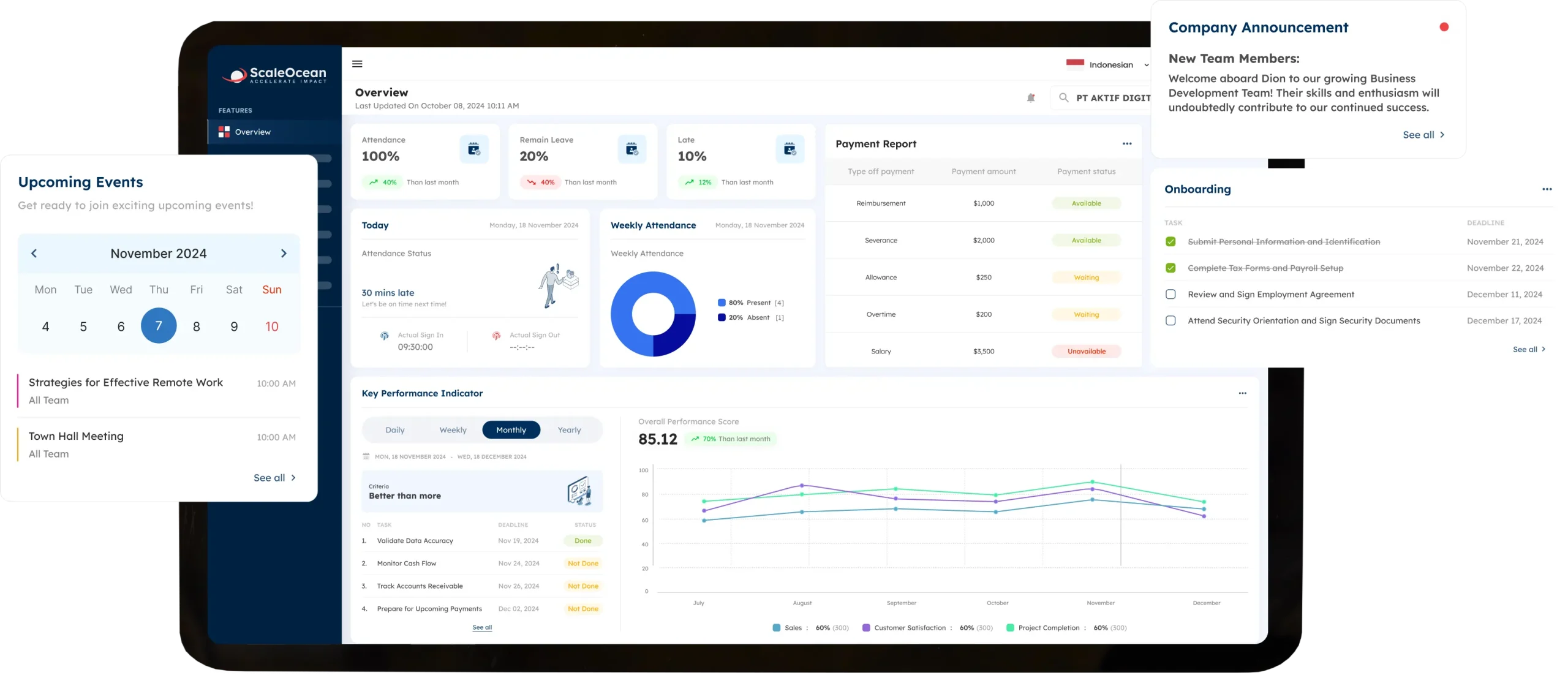
ScaleOcean Talent Management System is a workforce analytics platform designed to deliver flexible, customizable analytics aligned with specific organizational workflows and performance metrics. Companies can adjust dashboards, KPIs, and reports to match unique workforce structures and operational priorities.
Moreover, ScaleOcean offers unlimited user access without hidden costs, allowing organizations to scale workforce analytics usage across departments without increasing expenses. This flexibility supports large teams that require continuous data access for collaborative workforce planning.
Additionally, the platform applies a flat pricing structure based on module complexity rather than user count. This pricing model helps companies control costs while expanding analytics capabilities according to operational needs and workforce growth requirements.
Furthermore, ScaleOcean provides an integrated all-in-one solution that connects workforce analytics with HRM, payroll, attendance, and performance management systems. The platform also supports Singapore GST compliance and local reporting standards, enabling eligibility for digitalization grant programs up to 50-70%.
2. Visier
Visier provides advanced HR analytics that focus on workforce trends, turnover analysis, and diversity insights. It helps companies identify retention risks, optimize staffing, and support succession planning through comprehensive workforce reports.
Moreover, Visier’s predictive models allow organizations to anticipate workforce challenges and implement proactive strategies, making it a robust tool for data-driven HR and operational planning.
3. Workday Prism Analytics
Workday Prism Analytics integrates data from multiple sources to provide workforce insights and predictive analytics. It enables HR teams to visualize employee performance, monitor workforce trends, and support strategic planning decisions.
Additionally, Workday Prism Analytics allows companies to combine HR data with financial and operational metrics. This integration enhances workforce forecasting and decision-making across recruitment, retention, and performance management.
4. SAP SuccessFactors
SAP SuccessFactors offers talent management and workforce analytics capabilities, including employee performance insights, onboarding tracking, and HR reporting. Organizations can monitor employee development and align workforce strategies with business objectives.
Furthermore, the platform provides visualization tools for workforce metrics, enabling managers to track engagement, succession readiness, and performance trends. These insights support effective talent planning and retention strategies.
5. ActivTrak
ActivTrak is a workforce productivity and engagement analytics tool. It tracks employee behavior, application usage, and time allocation to identify patterns that affect team performance and operational efficiency.
Additionally, ActivTrak provides team performance dashboards, behavioral analytics, and engagement metrics. Managers use these insights to optimize workflows, enhance productivity, and implement strategies that align employee activities with organizational goals.
Conclusion
Workforce analytics enables organizations to transform workforce data into meaningful insights that improve recruitment, productivity, and retention strategies. By applying structured metrics and analytics types, businesses strengthen workforce planning and support long-term operational success.
To implement workforce analytics effectively, Companies need reliable software like ScaleOcean that connects data across HR, payroll, performance, and attendance systems. ScaleOcean provides an integrated platform that centralizes workforce data and delivers actionable insights through customizable dashboards.
Moreover, ScaleOcean offers flexible configuration, unlimited user access, and scalable modules tailored to organizational needs. Schedule a free demo today to explore how ScaleOcean can optimize workforce management and improve data-driven decision-making across your operations.
FAQ:
1. What is the difference between HR analytics and workforce analytics?
Workforce analytics uses predictive modeling to anticipate future workforce needs, while HR and people analytics focus on analyzing past trends. Workforce analytics considers the entire workforce as a whole system, whereas HR and people analytics target individuals or smaller groups.
2. What does a workforce analyst do?
A Workforce Analyst helps improve organizational efficiency by analyzing employee performance, attendance, and other metrics to identify trends and opportunities for improvement.
3. What skills do you need to be a workforce analyst?
Key skills include data analysis, forecasting, and strategic planning, with strong communication and problem-solving abilities. These skills also enable transitions into business analysis, operations management, financial planning, project management, and consulting.
4. What is the main goal of workforce analytics?
Workforce analytics involves collecting HR data and interpreting its impact on organizational goals, providing insights that support strategic decision-making and process improvements.


.webp)
.webp)

.webp)
.webp)



.webp)
.webp)



.webp)
.webp)
.webp)
.webp)


















.png)